The library is full of open laptops and empty energy drink cans. Anxiety is high, and the stakes feel significant. If you are feeling overwhelmed, many students feel the same way. Mastering finals week stress management is more than a helpful skill; it is a critical tool for academic success.
We often treat finals like a marathon of pure endurance, but acing exams is not about working yourself into the ground. It is about managing your mental and physical state so your brain has the capacity to perform when it counts. Use these strategies to stay calm, focused, and successful during finals.
The Science of Finals Stress: Why Your Brain Freezes
When you stare down a daunting exam schedule, your body doesn't see a "test." It sees a threat. This triggers a "fight or flight" response, flooding your system with cortisol and adrenaline.
Eustress is the "good" kind of stress that provides a surge of energy and keeps you alert. When stress becomes chronic, high cortisol levels do more than make you shaky; they impair memory retrieval and reduce cognitive flexibility.
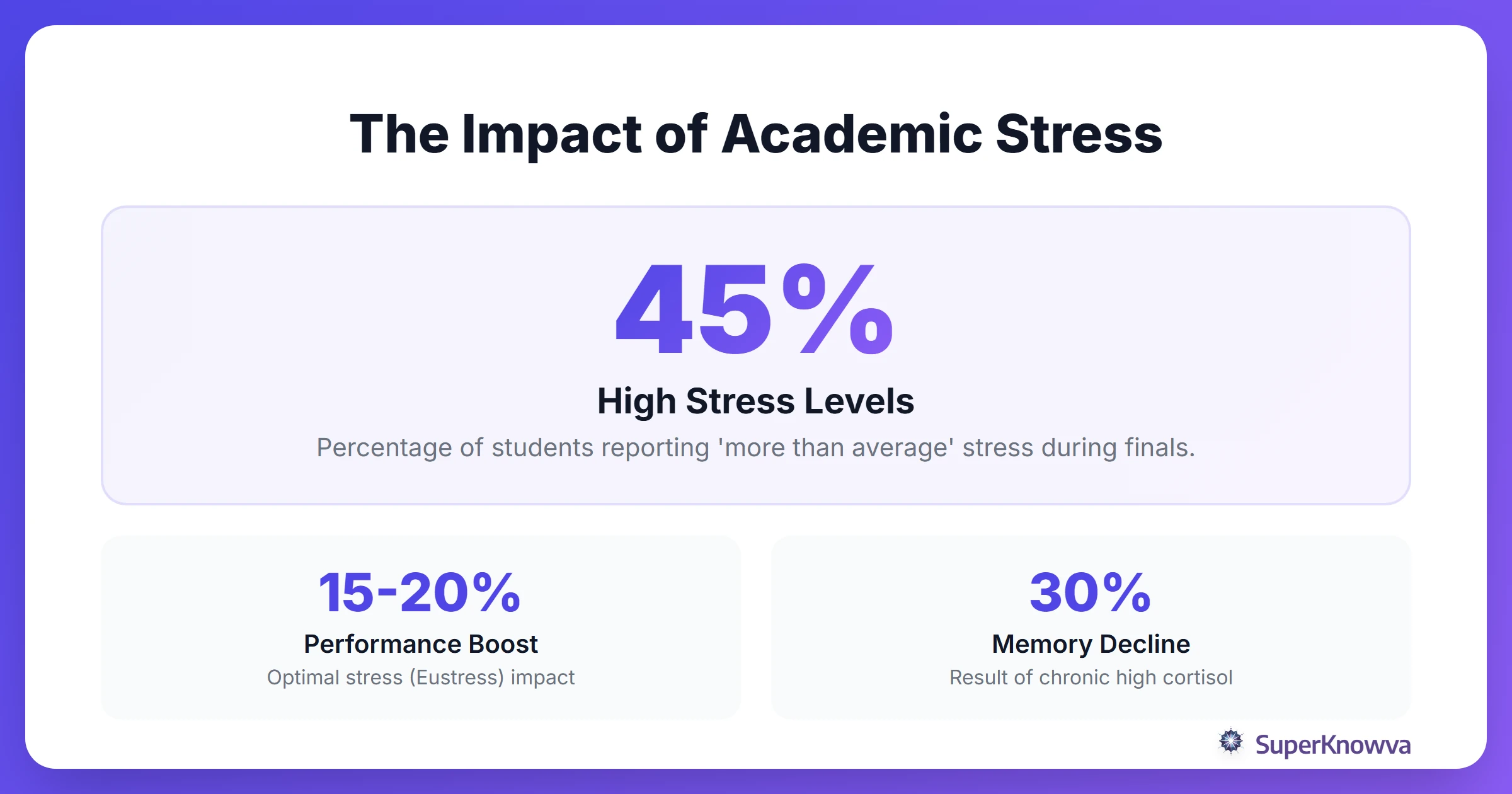
Many students view "all-nighters" as a necessity, but research shows that extreme stress hinders the ability to process complex information. Recognizing your physiological limits is not "giving up." It is the first step toward a more effective study routine.
Strategic Breaks: The 'Dead Week' Survival Guide
When your brain feels like it’s spinning at a hundred miles per hour, the most productive thing you can do is stop. Seriously. Constant cognitive load leads to diminishing returns. You know that feeling where you’ve spent an hour reading the same paragraph and still have no idea what it says? That’s your brain asking for a timeout.
Many universities offer sensory-friendly hours and wellness rooms to help students decompress during 'dead week.' Use them. As noted in these SUU Stress Management Tips, intentional disconnection is often the fastest way to regain your focus.
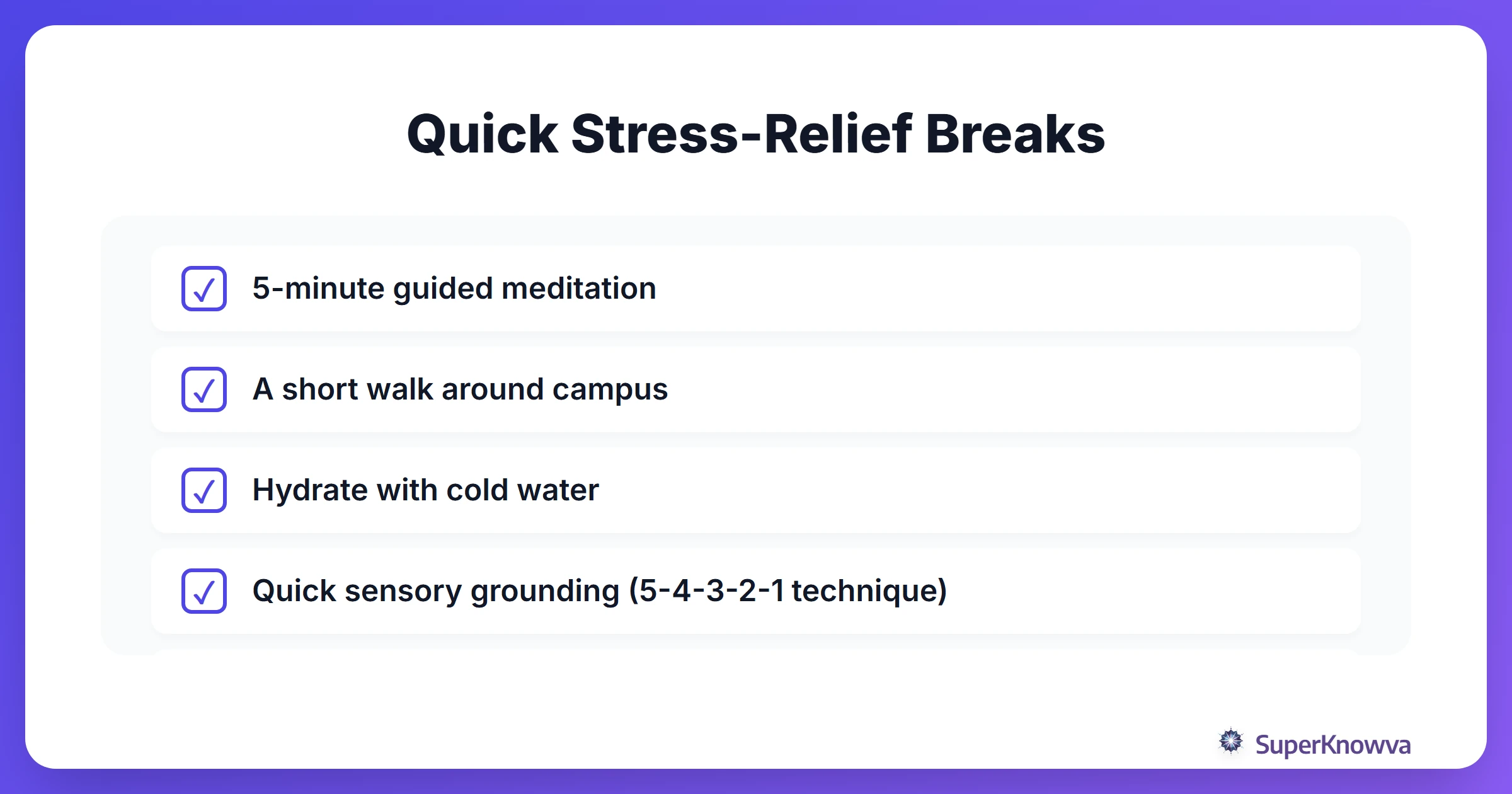
If you struggle to step away, try the Pomodoro Technique: study for 25 minutes, then take a 5-minute break. These tiny "micro-rests" act like a reset button for the mental fog that inevitably builds up during marathon sessions.
Physical Foundations: Exercise and Nutrition
Your brain is a physical organ. How you treat your body dictates how well you perform. Physical activity does more than burn off nervous energy. It boosts cognitive function, increasing blood flow to the hippocampus and helping you process information faster.
And let's talk about fuel. It’s tempting to live on vending machine snacks and espresso shots, but the resulting sugar crash will leave you useless by mid-afternoon. Finding the best diet for studying is about stability. Think "brain foods" like nuts, berries, and complex carbs that offer a slow, steady release of energy rather than a spike and a nosedive.
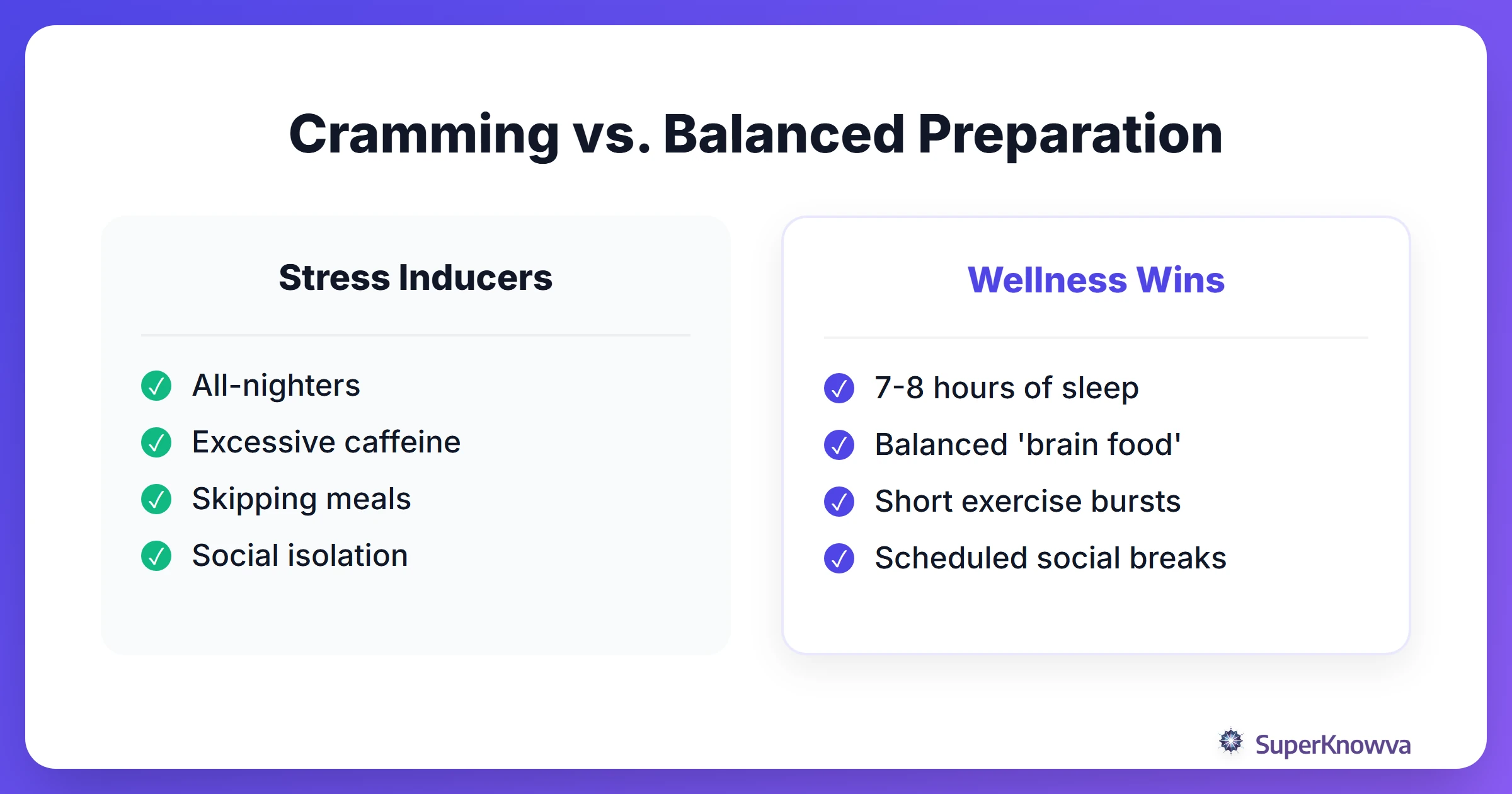
The biggest non-negotiable? Sleep. Sleep is when your brain handles memory consolidation, moving the stuff you just learned from short-term to long-term storage. If you don't sleep, those facts you memorized at 3:00 AM will likely be gone by the time the proctor says "begin."
Mindfulness and Mental Clarity
Exam anxiety usually comes from a fear of the unknown: the "what if I blank out?" panic. Incorporating simple meditation techniques can help you stay calm.
- Box Breathing: Inhale for 4 seconds, hold for 4, exhale for 4, and hold for 4. It’s a physical "kill switch" for a racing heart.
- Positive Visualization: Spend five minutes picturing yourself walking into the room, feeling prepared, and handling the questions. It sounds cheesy, but it primes your brain for composure.
- Kill the Imposter Syndrome: Remind yourself of your wins. You didn't get into this program by accident. You’ve done the work; you have the skills.
Using AI to Lighten the Load
Half the stress of finals week isn't the material itself; it is the volume of information to organize. AI-powered platforms like SuperKnowva simplify this process. Instead of wasting hours manually color-coding flashcards or typing out outlines, use AI to manage the organization.
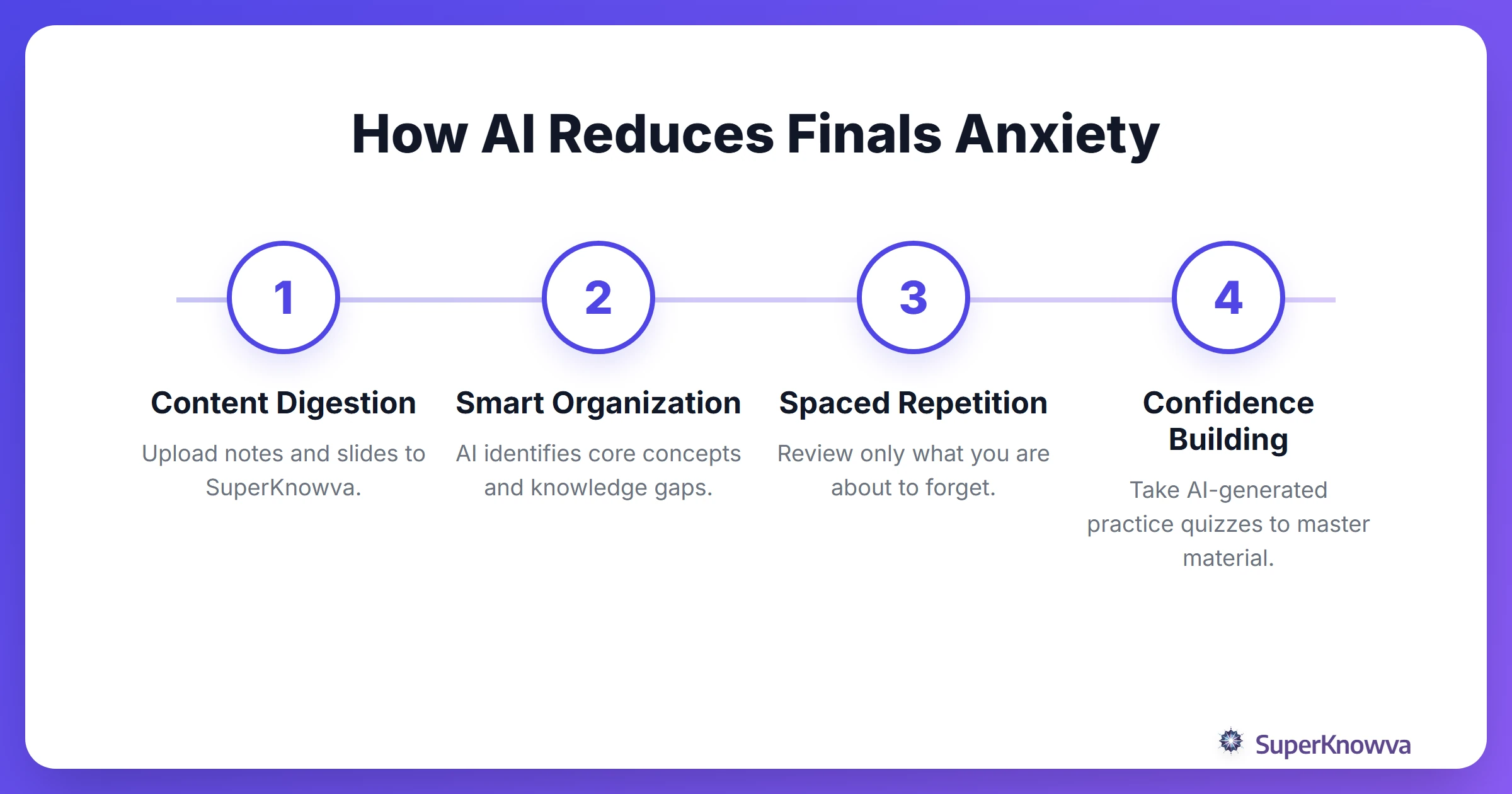
By using AI for spaced repetition, you ensure you're reviewing material exactly when your brain is about to forget it. This eliminates the need for last-minute cramming. You can turn dense lecture slides into practice quizzes quickly, helping you spot your knowledge gaps early and avoiding the "planning fallacy," the habit of thinking we have more time than we actually do.
Support Systems and Campus Resources
You don’t have to do this in a vacuum. Medical professionals agree that Final Exams and Stress Are [Annoying] Besties, but they are manageable.
Keep an eye out for campus stress-relief events. Whether it’s "therapy fluffies" (dogs in the library!) or craft stations, these small moments of joy matter. Also, don't underestimate a good study group. While solo study is great, talking through a difficult concept with a peer can clarify things in a way a textbook never will. If the pressure feels like it's becoming too much, remember that counseling services and academic centers are there specifically for this reason.
The Finish Line: Preventing the Post-Exam Crash
The second you click "submit" on that final portal, your body is going to want to collapse. It’s vital to recognize the signs of student burnout before they take a long-term toll on your health.
Plan your "wind-down" ahead of time. Whether it’s a twelve-hour nap, a movie marathon, or a dinner out with friends, give yourself a reward. Once you’ve recovered, take five minutes to think about what worked. Which techniques helped you stay sane? That reflection is what makes next semester’s finals week even easier.
Finals week is a gauntlet, no doubt. But with a mix of physical wellness, smart breaks, and the right tech like SuperKnowva, you can walk into that exam room with your head held high. You’ve got this.