You spent years studying late, mastering complex theories, and perfecting your coffee-to-study ratio. You are close to graduation. As the semester ends, many seniors realize the final challenge is not a cumulative exam. It is an Excel sheet.
Navigating the administrative maze of a university can feel like a full-time job you never applied for. That’s why we’ve put together this university graduation requirements guide. We want to make sure you actually cross that stage without a single "red tape" headache.
While SuperKnowva helps you master your course material, this guide is here to help you master the paperwork. Don't let a missing credit or a forgotten library fine stand between you and your degree.
The Degree Audit: Don't Trust the Machine
Most universities today use an automated system, usually called a degree audit, to track your progress. It’s supposed to be a digital roadmap showing every requirement you’ve met and every gap that remains. The problem? These systems are glitchy.
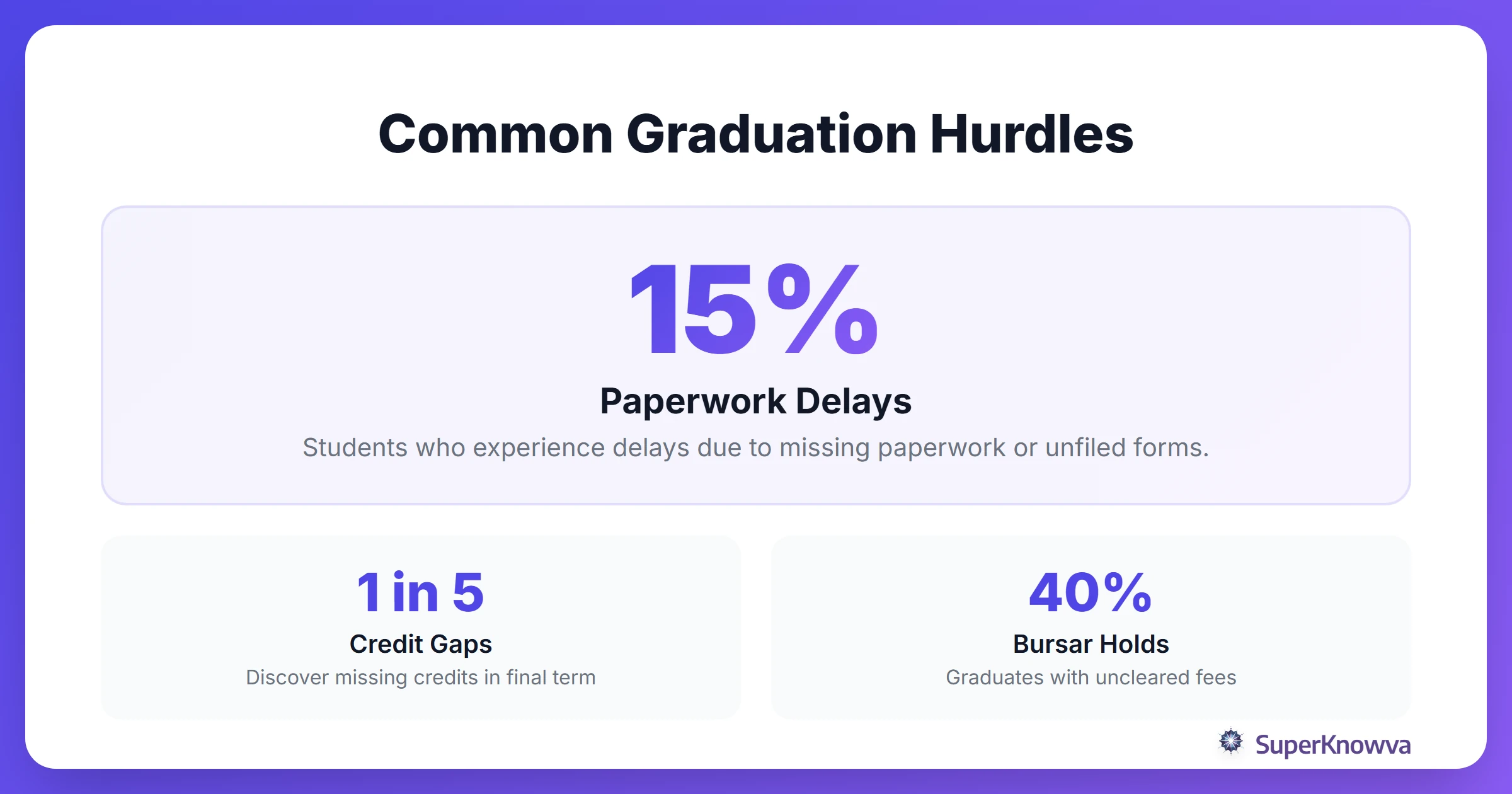
When you sit down to review your audit, look for "red flags." Are there unapplied transfer credits floating in limbo? Did a course end up in the "General Electives" section when it should be counting toward your major?
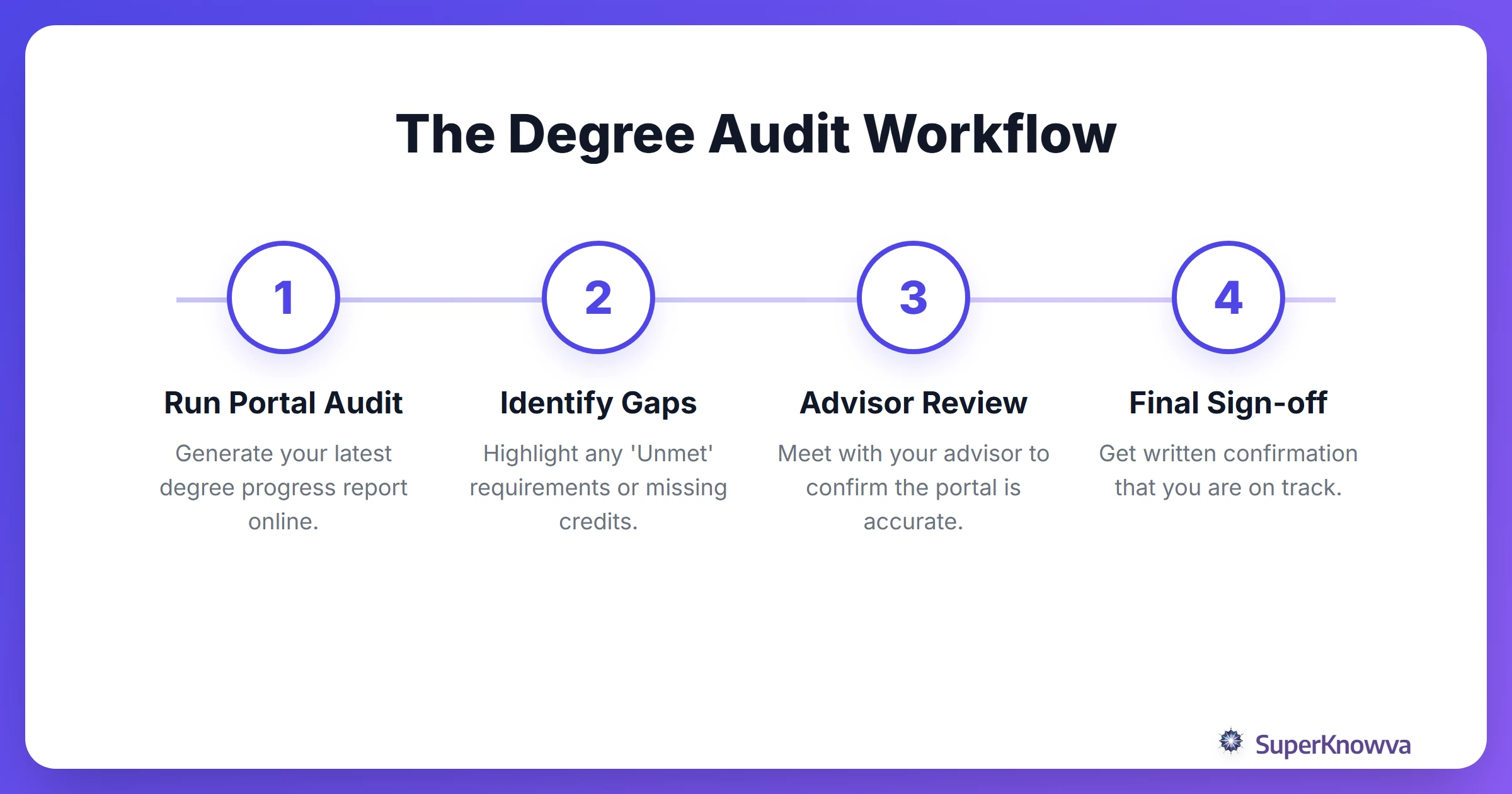
Here is the golden rule: Never rely solely on the automated system for final approval.
Schedule a meeting with your academic advisor during your final year. Think of them as your inside source. Advisors have the power to "force" credits into the right slots or spot errors that the software missed. As you balance your senior year social life with academic requirements, make this check-in a non-negotiable priority. It’s better to find an error in October than in May.
Major vs. General Education: The Hidden Gaps
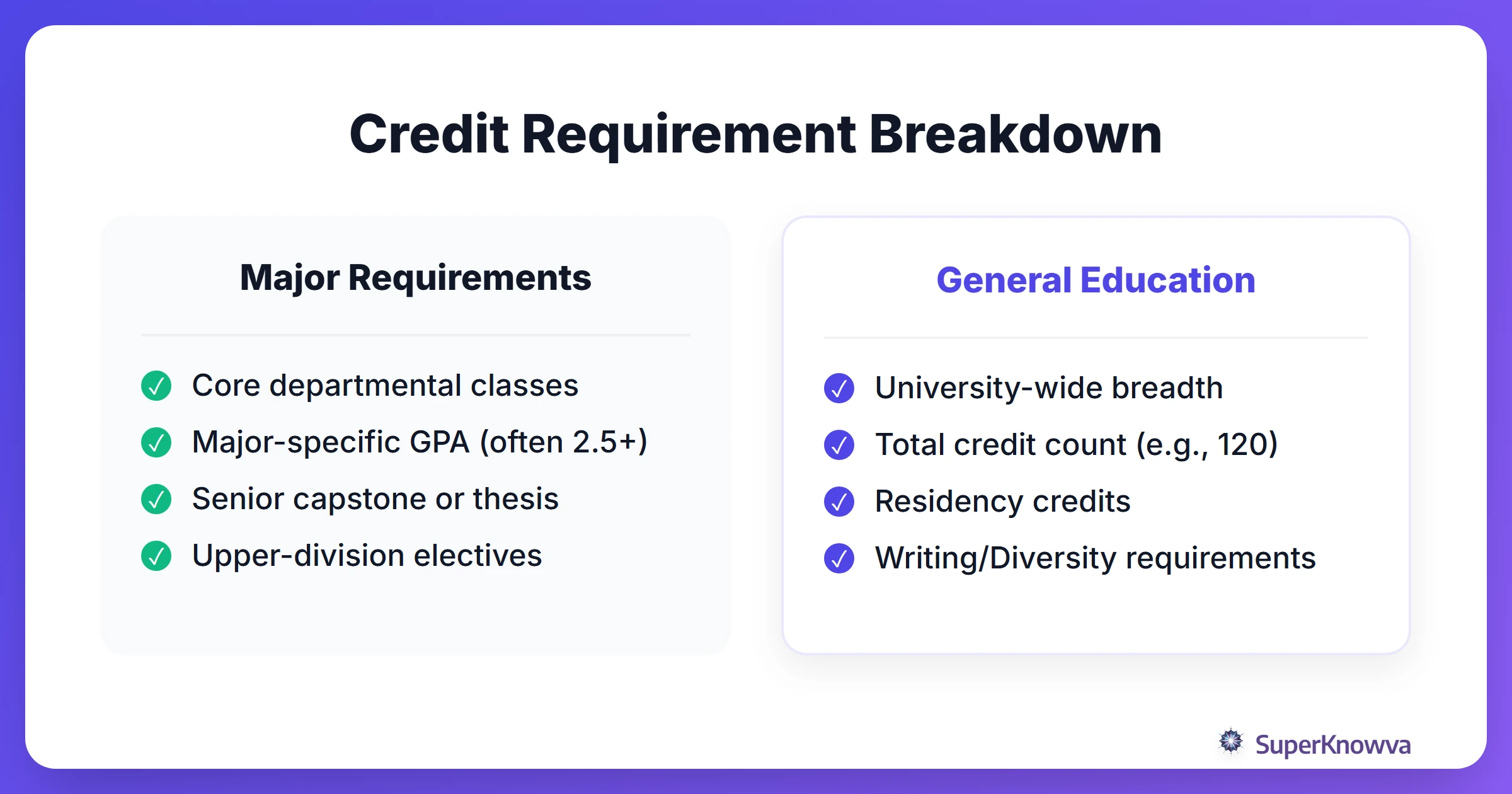
It’s a classic senior year nightmare: realizing you’ve finished every class for your major but you’re still three credits short of graduating. How? Because your degree is a puzzle made of two distinct parts: your major-specific credits and the university’s general education (Gen Ed) requirements.
Keep a close eye on these three sneaky categories:
- Residency Requirements: Most schools require you to take your final 30 or 60 credits on campus. If you took a random summer class elsewhere, it might not count toward this "residency" total.
- Upper-Division Credits: You might have 120 total credits, but do you have enough 300- or 400-level "Upper Division" hours? Many degrees require at least 40+ hours of advanced coursework.
- GPA Thresholds: Your overall GPA might be fine, but check the specific requirement for your major or minor. Often, departments require a higher GPA (like a 2.5 or 3.0) than the university's base 2.0.
For a broader look at how these standards are structured, you can review the UC Graduation Requirements Overview to see how large systems categorize their expectations.
Financial Clearance: The $5 Fine That Stops Everything
Your academic record might be spotless, but your university registrar checklist isn’t complete until your balance is zero. “Graduation holds” are the silent killers of commencement dreams.
Before you can receive your diploma, or even an official transcript for a job application, you must achieve financial clearance. This includes settling tuition and paying the mandatory college graduation fees that cover the cost of processing your degree and printing the document.
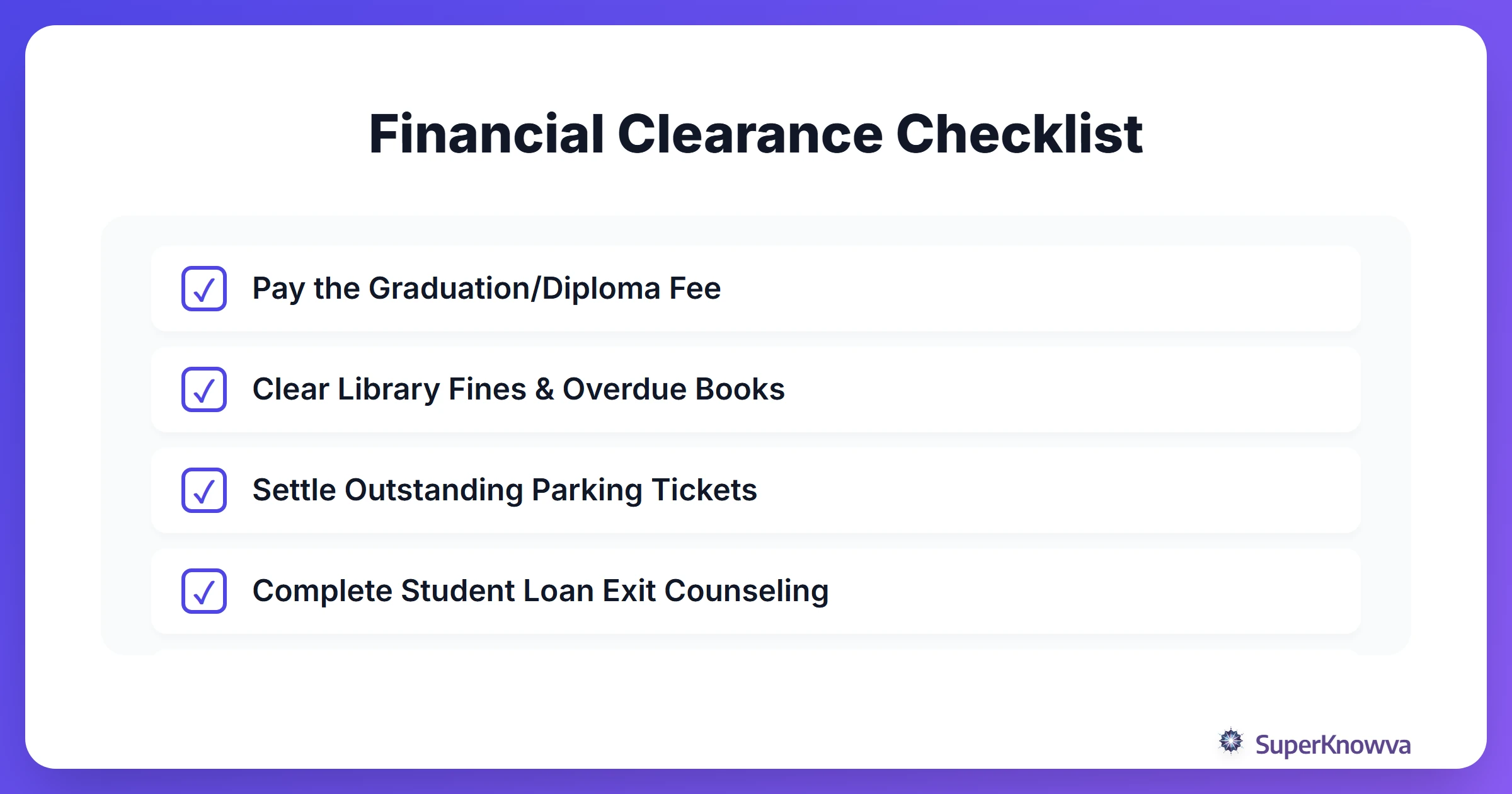
Watch out for the “small stuff.” A single $5 library fine or an unpaid parking ticket from your sophomore year can trigger a hold. Also, if you received federal loans, you are legally required to complete financial aid exit counseling. It’s easy to stop procrastinating on your graduation application but forget the bursar's office. Don't let a tiny fee stall your future.
The Graduation Application: It’s Not Automatic
Here is a distinction that trips people up: commencement is the ceremony (the party), while graduation is the legal conferral of your degree. You can walk in the ceremony without technically graduating if your paperwork isn't finalized.
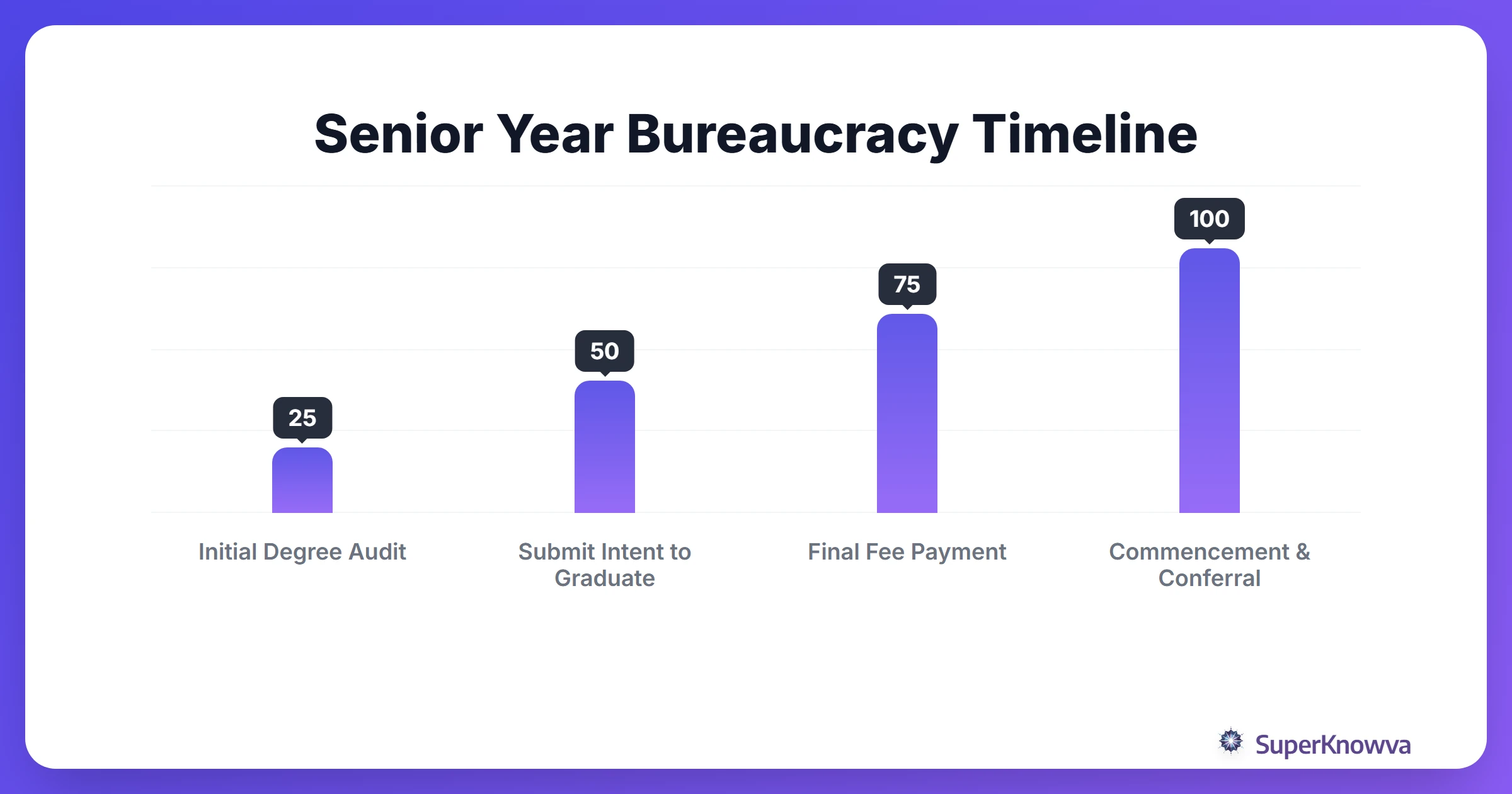
To start the process, you must submit an "Intent to Graduate" form. This is your formal notification to the school that you’re actually leaving.
- The Deadline: Missing this date is a disaster. It can result in heavy late fees or, worse, being pushed to a later graduation term (meaning you graduate in August instead of May).
- Verification: This is your chance to verify your diploma name. Make sure it matches your legal ID or your preferred professional name. Also, double-check your mailing address; you don't want your diploma sent to your freshman-year dorm.
For more tips on staying ahead of these dates, check out this guide on Georgia College Graduation Planning.
Final Transcripts and Transfer Credit Cleanup
As you enter your final weeks, your senior year paperwork should focus on "cleaning up" your transcript. Do you have any "Incomplete" (I) grades from previous semesters? Resolve them now. If you don't, they might automatically turn into failing grades the moment you try to graduate.
If you took classes at a community college over the summer or studied abroad, ensure those official transcripts have been received and the credits are actually posted.
Even after the ceremony, there is a delay while faculty submit final grades and the registrar "posts" the degree. If you are recovering from a difficult final exam in your last semester, keep a close eye on your student portal to ensure the grade is entered correctly. If you’re applying for jobs or grad school, order your "final" official transcripts in advance so they are sent the moment the degree is official.
Post-Graduation Logistics: Beyond the Diploma
Once the cap has been tossed, there are a few final items to handle. Most universities deactivate student email accounts within six months. Set up alumni email forwarding now so you don't lose access to important contacts or accounts linked to your .edu address.
A few more "to-dos":
- Access Career Services: Many schools offer lifetime access to job boards and resume reviews. Use them!
- Return Rentals: Get those textbooks back to the bookstore and clear out your campus locker.
- Confirm Diploma Delivery: Most diplomas are mailed 6–8 weeks after graduation. Confirm the delivery method and tracking options with the registrar so it doesn't get lost in the mail.
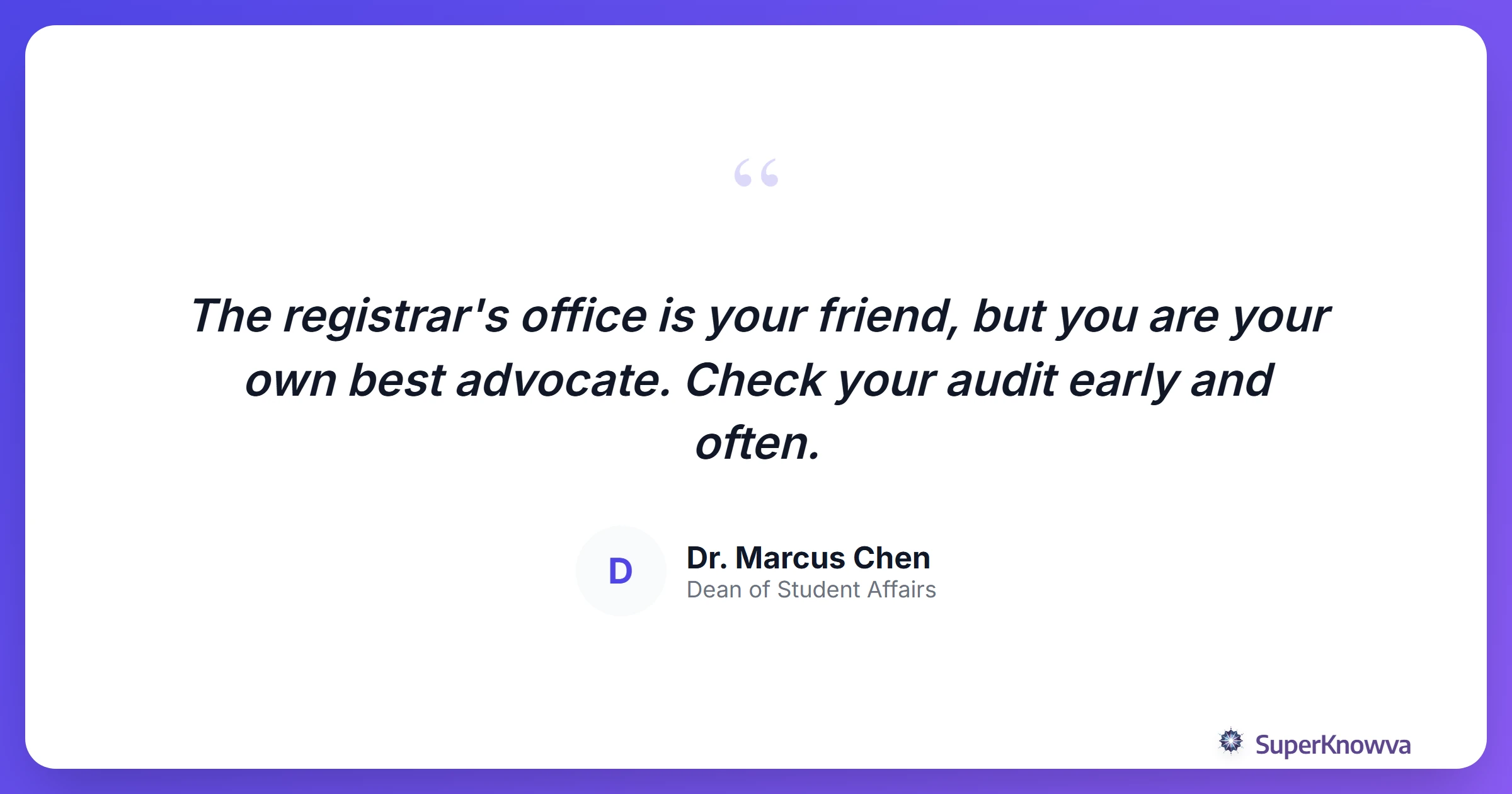
Navigating university bureaucracy is your final test as a student. It’s tedious, sure, but it’s the last thing standing between you and your career. By staying organized, checking your degree audit frequently, and hitting every deadline, you ensure your transition to "Alumni" is as smooth as possible.
Congratulations! You are almost there.