Staring at a 1,200-page Property Law casebook feels like trying to climb Everest in flip-flops. You’ve spent hours highlighting, underlining, and re-reading until your eyes blur. But then it happens: the professor calls your name for a cold call, and your mind goes completely blank.
Why? Because most traditional study habits are passive. You’re looking at the information, but you aren't owning it. If you want to survive the Socratic method and actually ace your finals, you need to ditch the highlighter and switch to active recall for law.
In this guide, we’ll look at why your current methods are letting you down and how to build legal learning strategies that actually stick when the pressure is on.
The Illusion of Competence: Why Highlighting Casebooks Fails
Most law students fall into a dangerous trap called the "Illusion of Competence." It works like this: you read a case brief or a chapter so many times that the information feels familiar. Your brain recognizes the words on the page, so you assume you’ve mastered the material.
The problem? Recognition is not the same as recall.
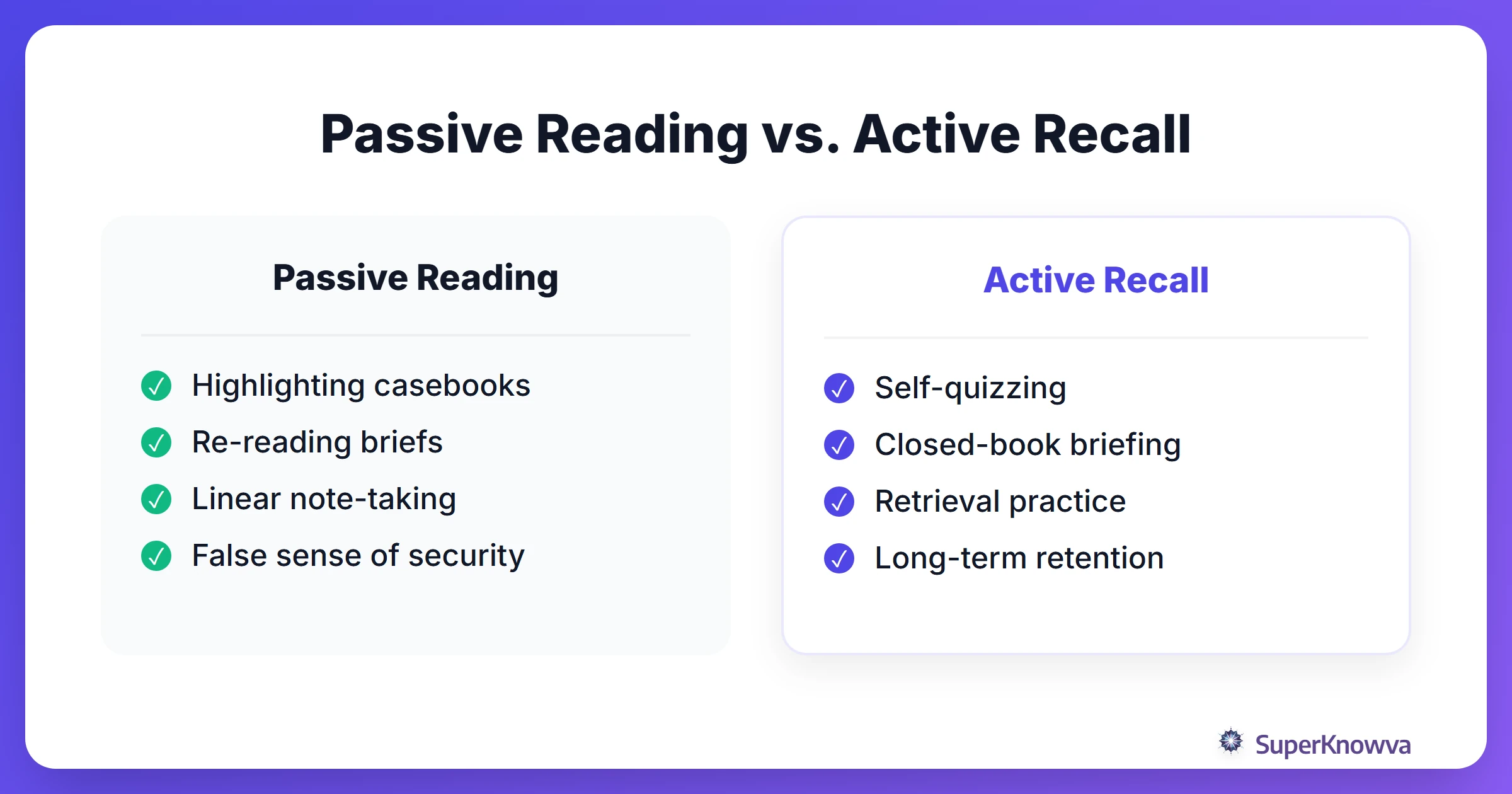
Passive reading is one of the least effective study tips for law students because it requires zero heavy lifting from your brain. You might understand the "Rule against Perpetuities" while the book is open, but the moment you close it, the details vanish. This is why 1Ls struggle to apply rules to new fact patterns during exams. They haven't memorized the logic of the law; they’ve just memorized the look of the page.
What is Active Recall and Why Does it Work for Law?
Active recall is the simple, yet painful, process of pulling information out of your head without looking at your notes. Instead of trying to put information into your brain (reading), you are practicing taking it out.
Think of it like a mental workout. Every time you struggle to remember a legal rule, you strengthen the neural pathways associated with that info. In the world of complex legal frameworks, active recall forces you to reconstruct the "why" and "how" of a court's reasoning. It prepares you for the high-stakes environment of a courtroom or a timed exam where there are no hints or cues to bail you out.
Active Recall vs. Re-reading: The Data Behind the Law
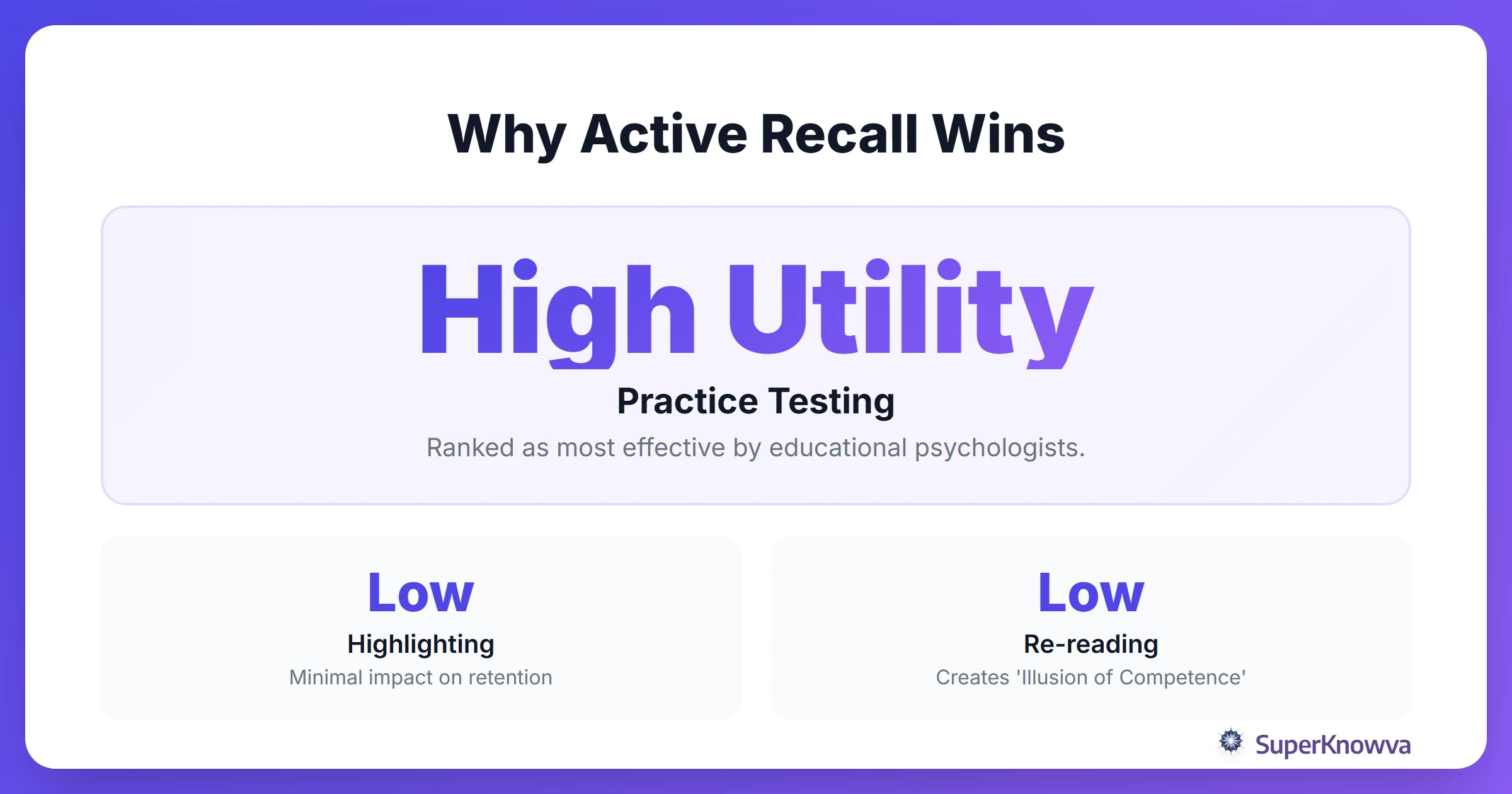
The data is pretty brutal: not all study methods are created equal. Educational psychologists have compared Active Recall vs. Re-reading for decades to see which leads to better long-term retention.
Practice testing is a core form of active recall and the most effective method. Summarizing and highlighting are consistently ranked as low-utility. We often use these methods because active recall is difficult. Psychologists call this "desirable difficulty." If studying feels easy, you probably are not learning much. When the process feels challenging, you are encoding the information.
The 'Closed Book' Method for Case Briefs
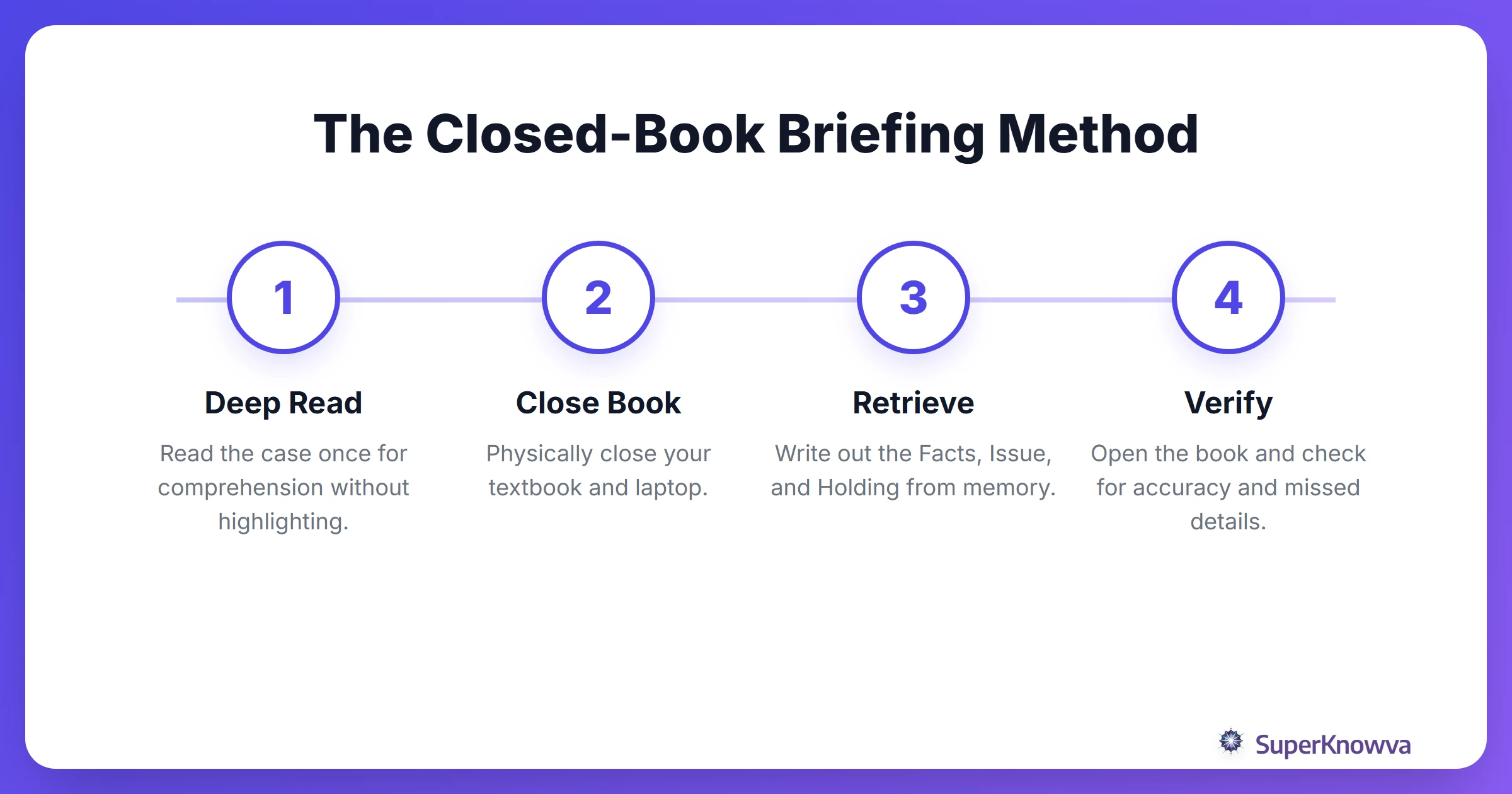
Want to actually remember your cases? Stop highlighting every second sentence and try the "Closed Book" method. This forces you to engage with the material the second you finish reading it.
- The Deep Read: Read the assigned case once. Focus on the story and the court's logic. Leave the highlighter in the drawer.
- Shut It Down: Physically close the book. Move your laptop aside.
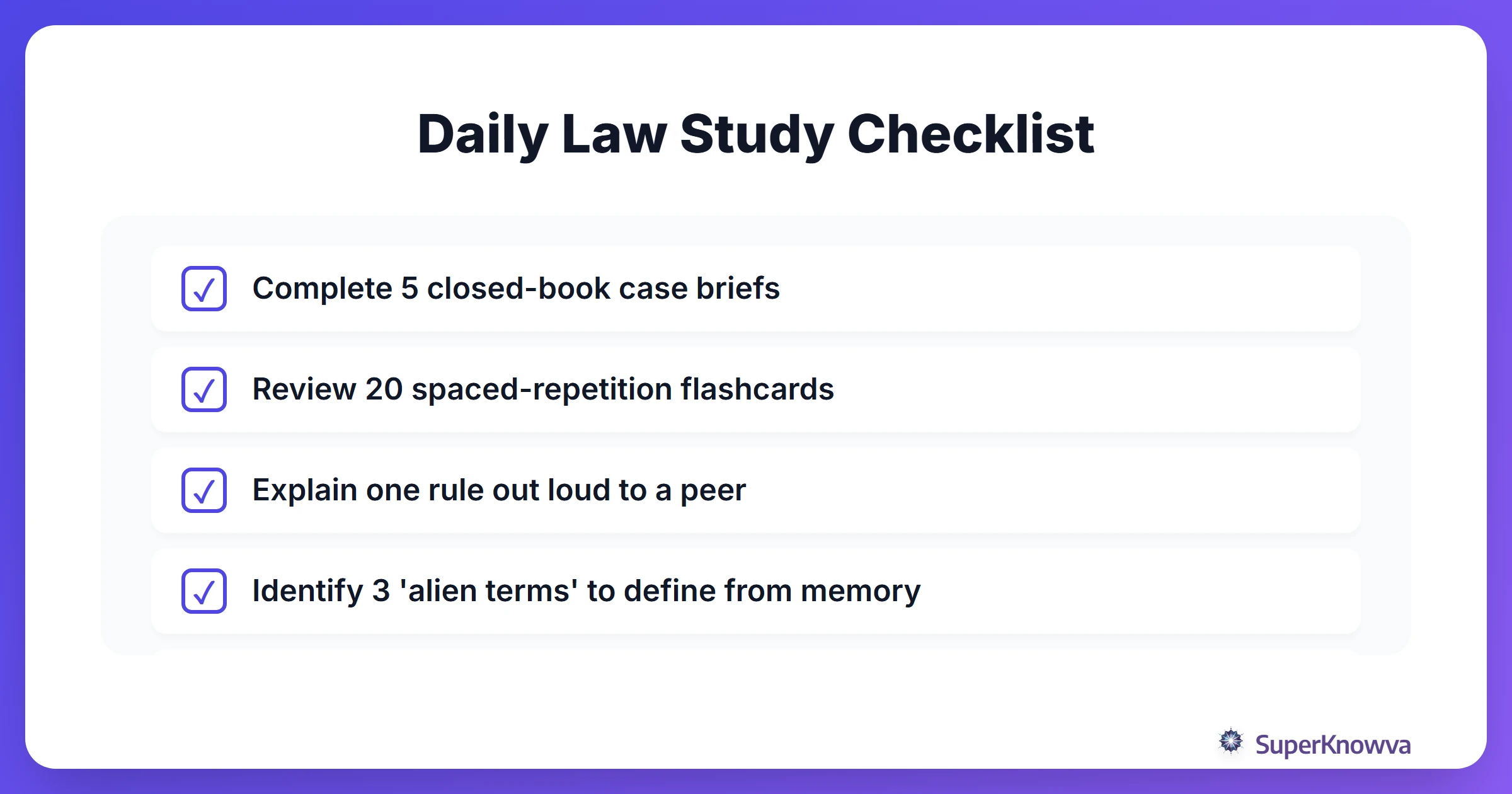
- The Retrieval: Grab a blank sheet of paper. Write down the Facts, the Issue, and the Holding. Try to reconstruct the "Rationale" (the court's reasoning) entirely from memory.
- The Reality Check: Open the book and see what you missed.
Those "gaps" you just identified? Those are exactly what would have tripped you up on an exam. This type of self-questioning is the secret sauce of how to take notes from a textbook effectively.
Mastering Statutes and Black Letter Law with Spaced Repetition
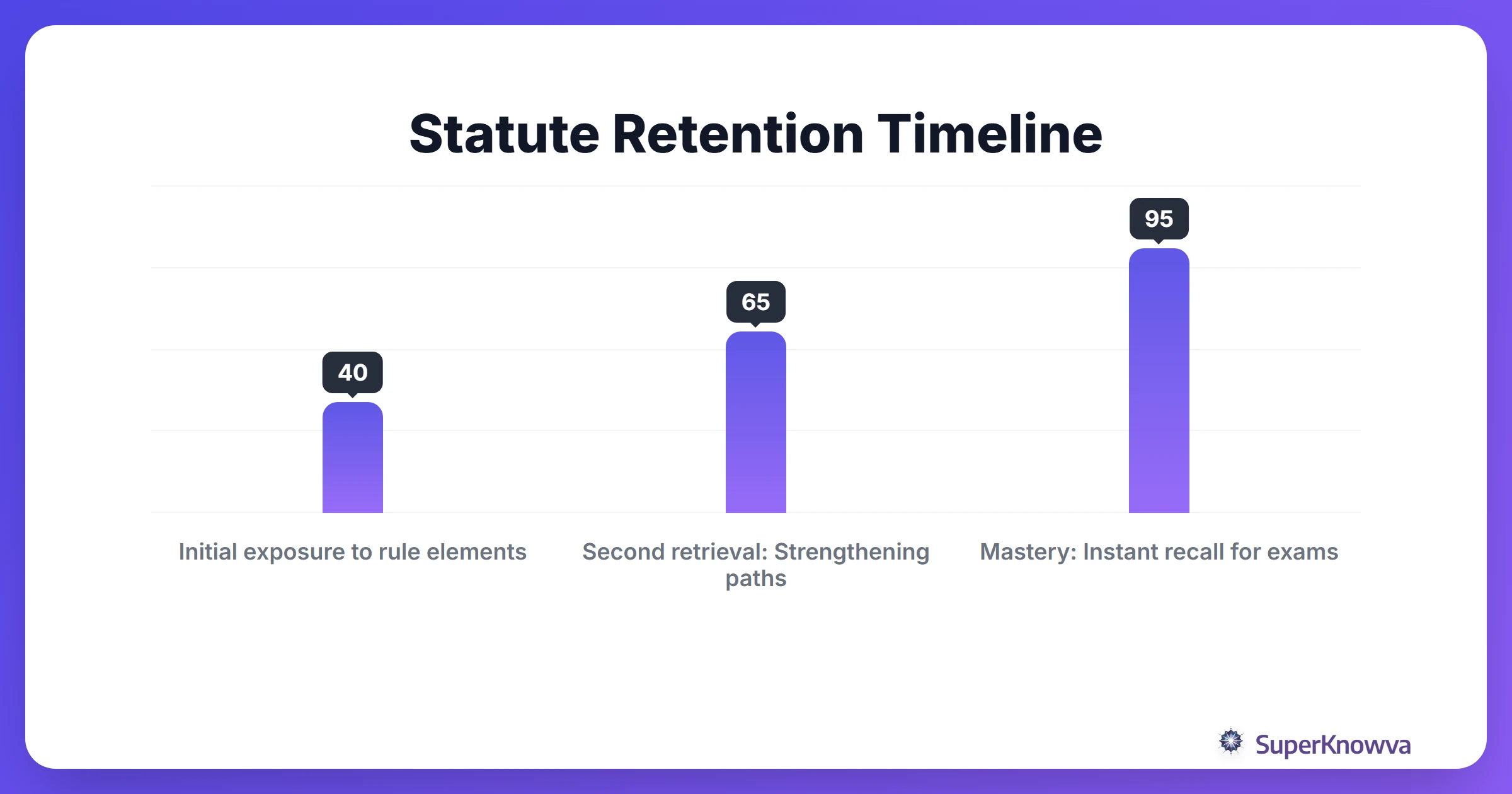
Case law is about narrative, but statutes and Black Letter Law require surgical precision. You can't just "kind of" know the elements of a tort. This is where you pair active recall with spaced repetition for law school.
Spaced repetition involves reviewing information at specific intervals (1 day, 3 days, 1 week, 1 month) to beat the "forgetting curve." For the heavy hitters like Civil Procedure deadlines or the elements of Contracts, digital tools are your best friend. Using the best study apps for students can automate this, making sure you review those "alien terms" right before they slip out of your memory.
Overcoming the 'Alien Term' Barrier in 1L
Let’s be honest: the first year of law school is basically a foreign language course. Terms like replevin, estoppel, and certiorari feel like a wall between you and the actual law.
You can't just read a definition and hope it sticks. You have to be able to retrieve it under pressure. When you hit a new term, don't just move on. Create a prompt: "What are the three requirements for Promissory Estoppel?" and answer it out loud. As the experts at UWorld Legal point out, active learning is how you move from "reading the law" to actually "thinking like a lawyer."
Building Your Law School Active Recall System
You don't need 12-hour marathon sessions to succeed. In fact, it’s much easier to study for long hours without burning out if you vary your intensity and use methods that give you instant feedback.
- The Daily Recall: Spend 30 minutes at the end of every day recalling the main rules from your lectures without looking at your notes.
- Pick Your Battles: You don't have to use the closed-book method for every 50-page case. Use it for the "landmark" cases and use spaced repetition for the smaller rules.
- The "Explain Like I'm Five" Test: Join a study group, but don't just chat. Quiz each other. If you can't explain a rule to a peer without looking at your outline, you don't know it yet. If you're looking for more community tips, check out this Reddit discussion on active recall in law school.
By making active recall for law your standard practice, you move from passive reading to mastering the material. Law school requires memory and logic. Prepare thoroughly for your exams.