Studying in July is difficult. It is like trying to focus while everyone else is at the beach. You stare at the same paragraph for twenty minutes, the words blur, and nothing is sticking.
Sound familiar?
If you feel like your brain is "full" or simply refusing to cooperate, you aren’t just lazy or tired. You’re likely hitting a bottleneck in your working memory. To survive these intense summer sessions without losing your mind, you need to understand cognitive load theory learning. It’s the closest thing to a "cheat code" for your brain.
What is Cognitive Load Theory?
In the 1980s, educational psychologist John Sweller discovered that our brains are not built to process everything at once. While long-term memory has vast capacity, your working memory, the part of the brain where you actually do the thinking, is tiny.
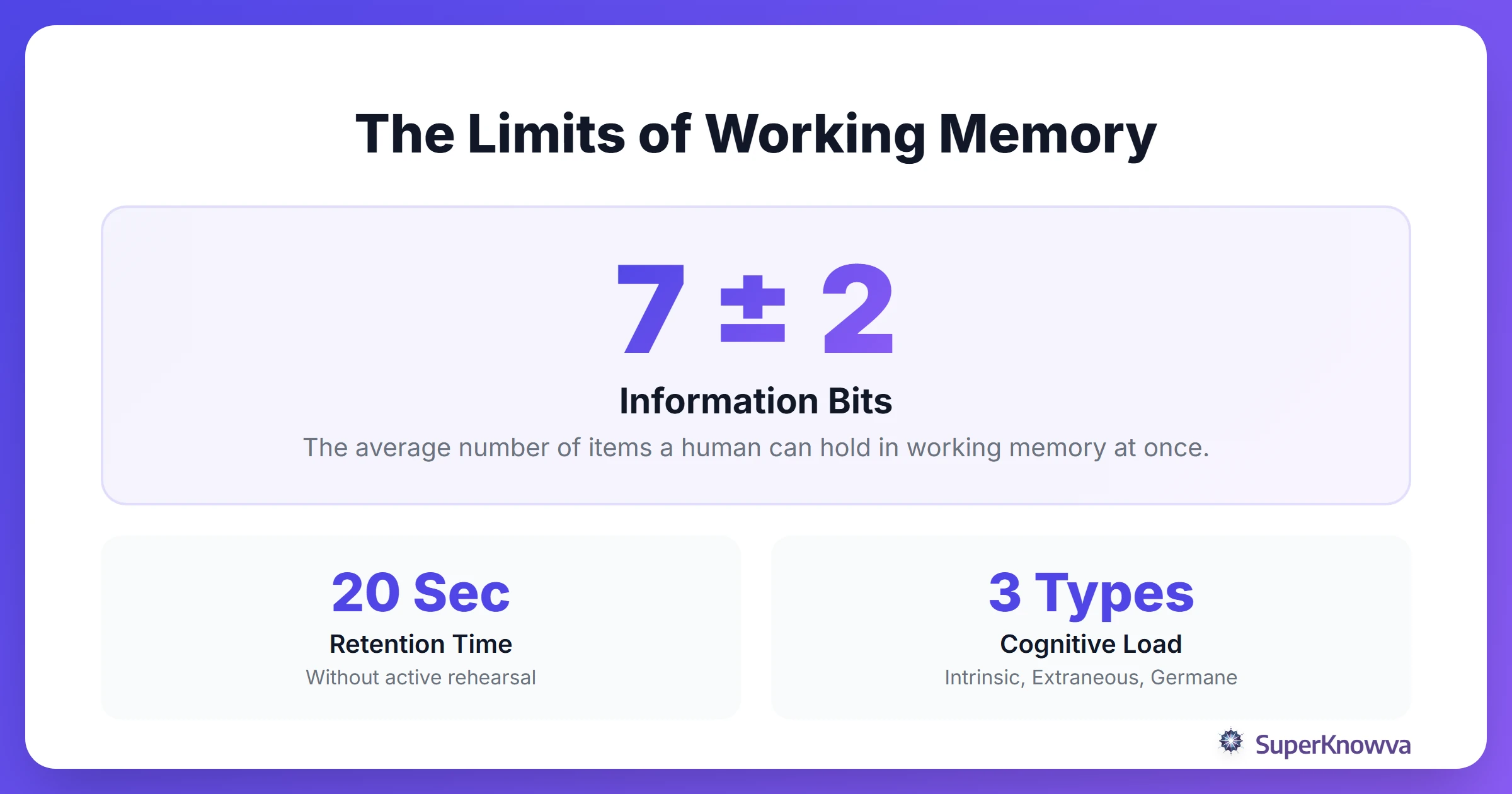
Think of your working memory as a small coffee table and your long-term memory as a massive warehouse. If you try to stack fifty heavy books on that tiny table, it’s going to collapse. Most of us can only hold about 7 ± 2 items in our conscious mind at once. As noted in The Importance of CLT in Education, if you overload that "table," learning stops dead in its tracks.
The Three Types of Cognitive Load
To study smarter, you have to realize that not all mental effort is the same. CLT breaks down your "mental load" into three distinct buckets:
- Intrinsic Load: This is the "built-in" difficulty. Basic addition is easy; organic chemistry is hard. You can’t change the subject matter, but you can change how you tackle it.
- Extraneous Load: This is "garbage" effort. It’s the brainpower you waste squinting at messy handwriting, navigating a confusing textbook, or trying to ignore a loud fan.
- Germane Load: This is the "gold" effort. This is the work your brain does to build schemas: mental maps that link new facts to things you already know.
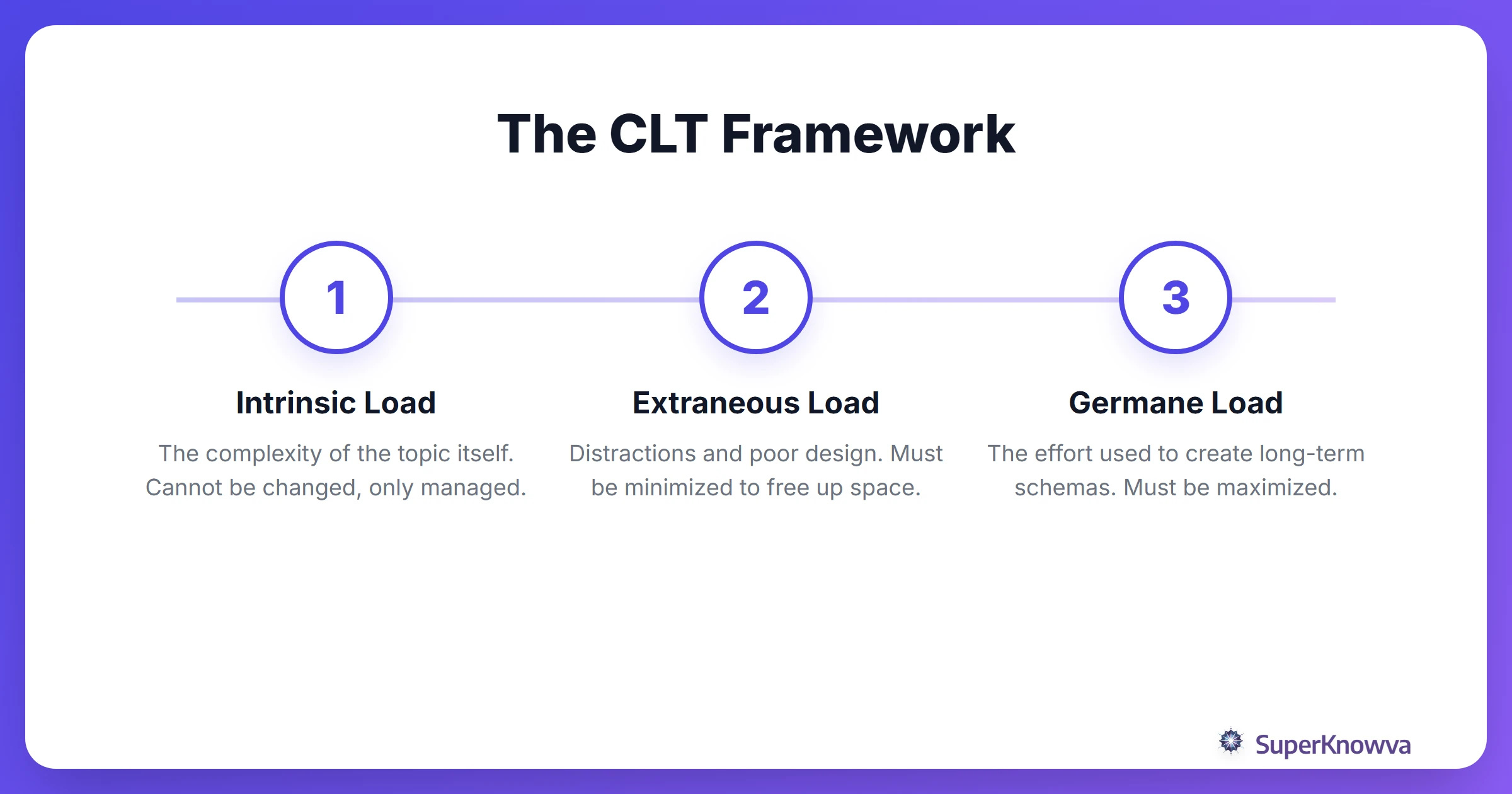
Your mission is simple: cut the extraneous, manage the intrinsic, and maximize the germane. If you want a deep dive into how these work together, check out Paul Main’s breakdown on how to Master Sweller's Cognitive Load Theory.
Summer Challenges: Heat, FOMO, and Brain Fog
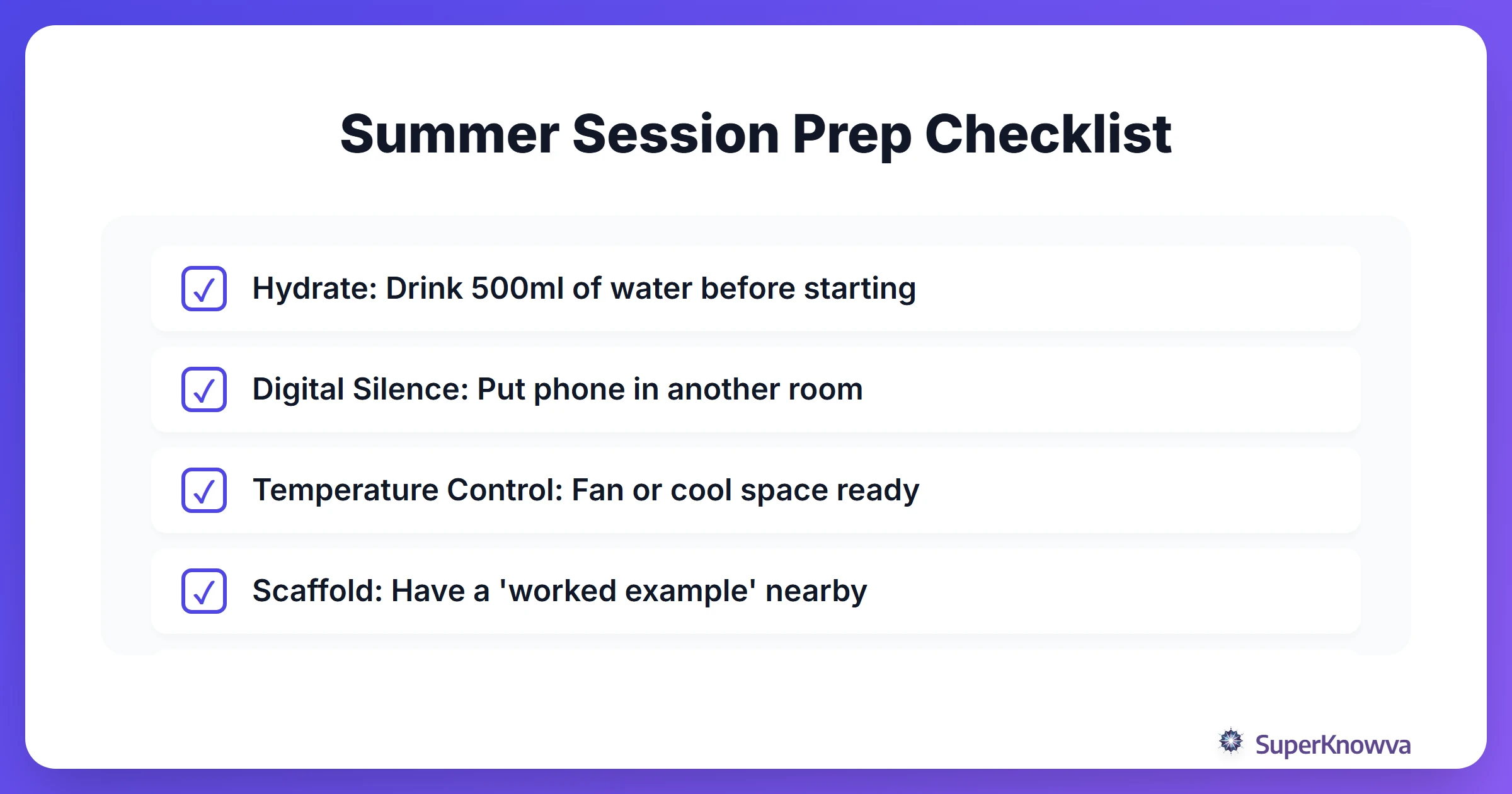
Summer creates a perfect storm for cognitive overload. High temperatures don't just make you sweaty; they actually slow down your brain. When your body is fighting to stay cool, it siphons off metabolic energy that your working memory desperately needs.
Then there’s the psychological weight of FOMO. Every time you see a friend's Instagram story from the pool, you’re using up a "slot" in your working memory to process that envy and distraction. That is pure extraneous load. Reclaiming your focus starts with your environment; our guide on Digital Minimalism for Students can help you shut out the noise.
Reducing Extraneous Load: Clearing the Path
Extraneous load is the biggest thief of your time. If your study materials are a mess, your brain spends more energy "finding" information than actually "learning" it.
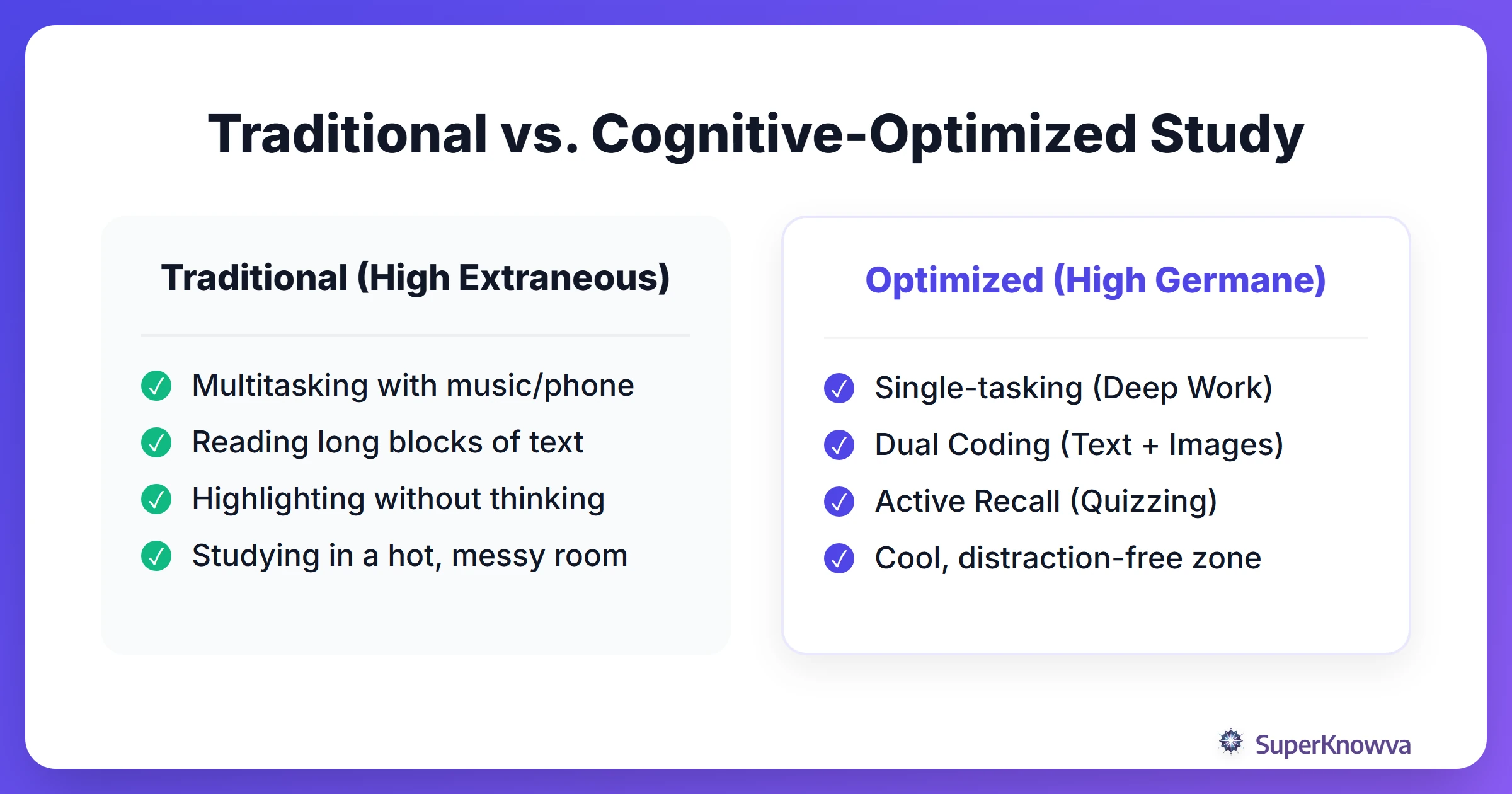
- Ditch the Clutter: A messy desk sends constant "to-do" signals to your brain. Keep it simple.
- Kill the "Split-Attention Effect": Stop checking your phone. Seriously. Every time you switch from a textbook to a text message, your brain has to "re-load" the study context. It’s a massive waste of mental RAM.
- Look at the Answer First: Instead of staring at a blank page on a hard math problem, look at a "worked example." Seeing the step-by-step solution first reduces the initial strain, making it easier to spot the pattern.
Managing Intrinsic Load: Breaking Down the Beast
When a topic feels impossible, it just means the intrinsic load is too heavy for your current working memory. You need to break it down:
- Chunking: Don't try to swallow the whole textbook. Break topics into bite-sized pieces. Master "The Causes of the French Revolution" before you even look at "The Reign of Terror."
- Sequencing: You can’t build the second floor of a house without a foundation. If you’re lost, go back one step. Master the basics before you touch the complex variables.
- Scaffolding: Use tools like SuperKnowva to get hints or simplified summaries. It’s like using training wheels until you’re ready to balance on your own.
Maximizing Germane Load: Deepening the Learning
Once you’ve cleared the distractions, you need to engage in high-effort, high-reward activities. This is where the real learning happens.
- Dual Coding: Don't just read. Draw. When you combine words with visuals, you use two different pathways in the brain. It's like doubling your bandwidth.
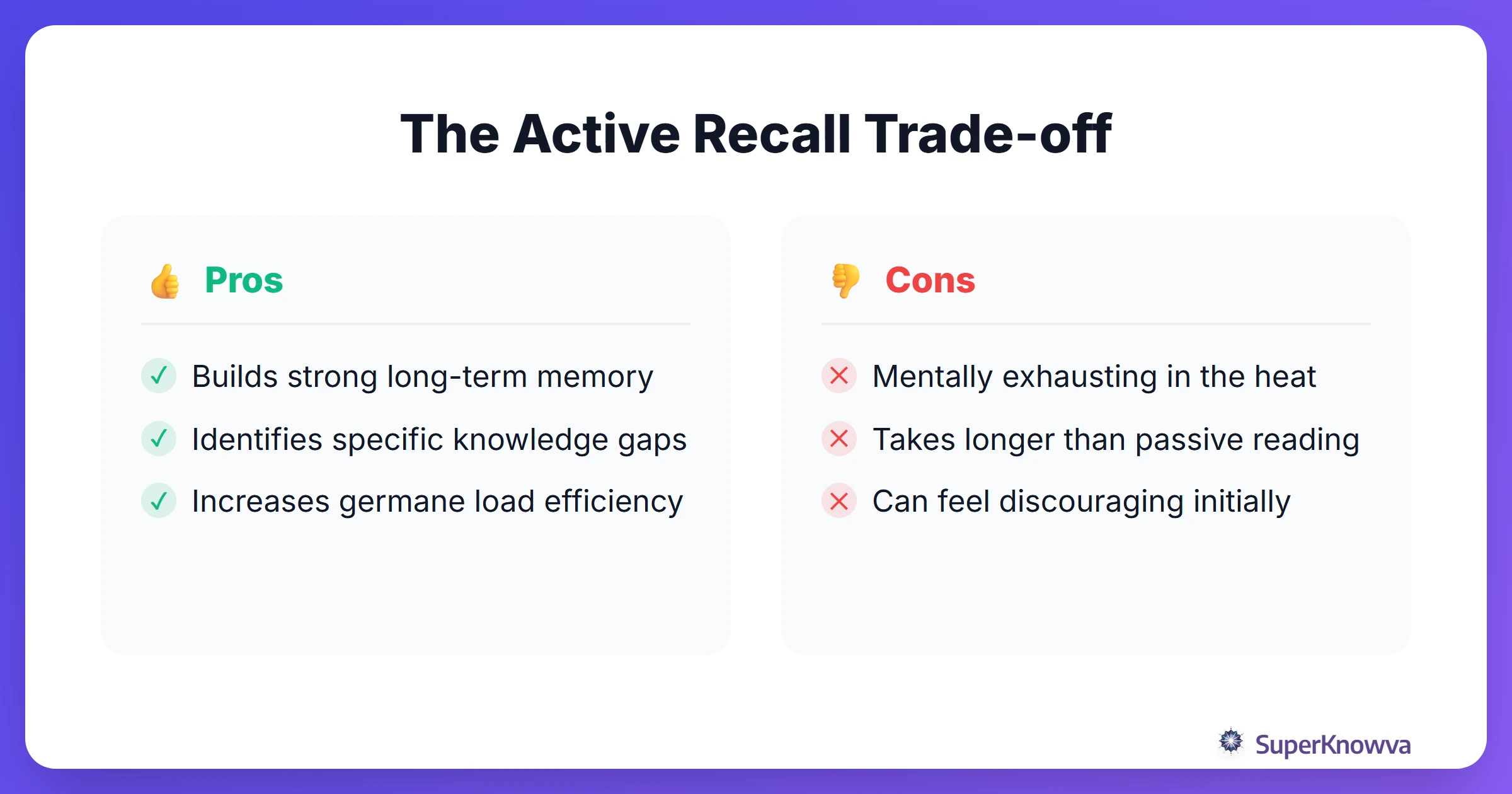
- Active Recall: Re-reading is a trap. It feels like learning, but it’s just recognition. Quiz yourself instead. The Blurting Method is a fantastic way to test your mental models under pressure.
- Interleaving: Don't spend six hours on one subject. To build better schemas, switch between related topics. Incorporate Interleaving Practice into your schedule to keep your brain on its toes.
A Cognitive-Optimized Summer Routine
To beat the heat and the brain fog, you have to work with your biology, not against it. Mastering focus in a distracted summer environment requires specific Deep Work Strategies for Students.
- The Morning Window: Do your hardest work between 8:00 AM and 11:00 AM. This is when your cognitive capacity is highest, and the sun hasn't turned your room into an oven yet.
- 90-Minute Sprints: Focus in timed blocks. After 90 minutes, your ability to process information drops. Study hard, then walk away.
- The "Consolidation" Break: Use breaks to hydrate and cool down. Your brain needs this downtime to move information from working memory into long-term storage.
By applying cognitive load theory learning to your revision, you are working with your brain's natural capacity. Clear distractions, break down complex topics, and focus on building deep mental maps to improve your results.