Have you ever sat down to study, full of good intentions, only to find yourself scrolling through TikTok or staring blankly at the same paragraph ten minutes later?
Most students blame a lack of willpower, but the problem is often the room. To optimize your study environment for focus, you need more than a tidy desk. You need a space designed for how your brain processes information. Your physical and digital surroundings are not just background noise; they directly influence your focus and your GPA.
In this guide, we’ll break down the science of productivity and give you some dead-simple, science-backed protocols to turn your workspace into a focus fortress.
The Science of Where You Sit
Your brain is a survival machine, constantly scanning for threats and rewards. When you try to study in a cluttered, dim room, your visual and auditory systems start competing for limited mental energy. That leaves very little "fuel" for the actual work.
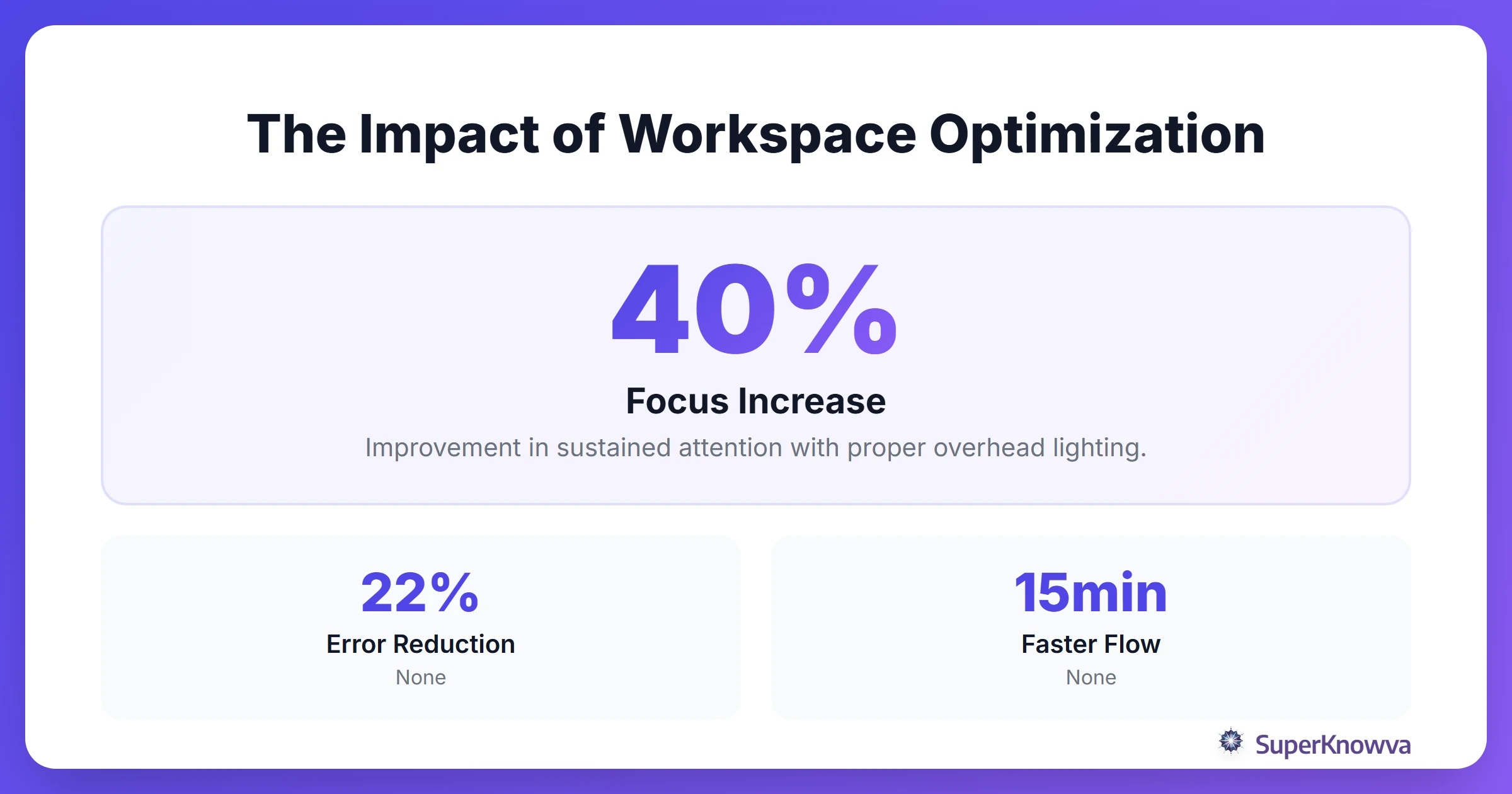
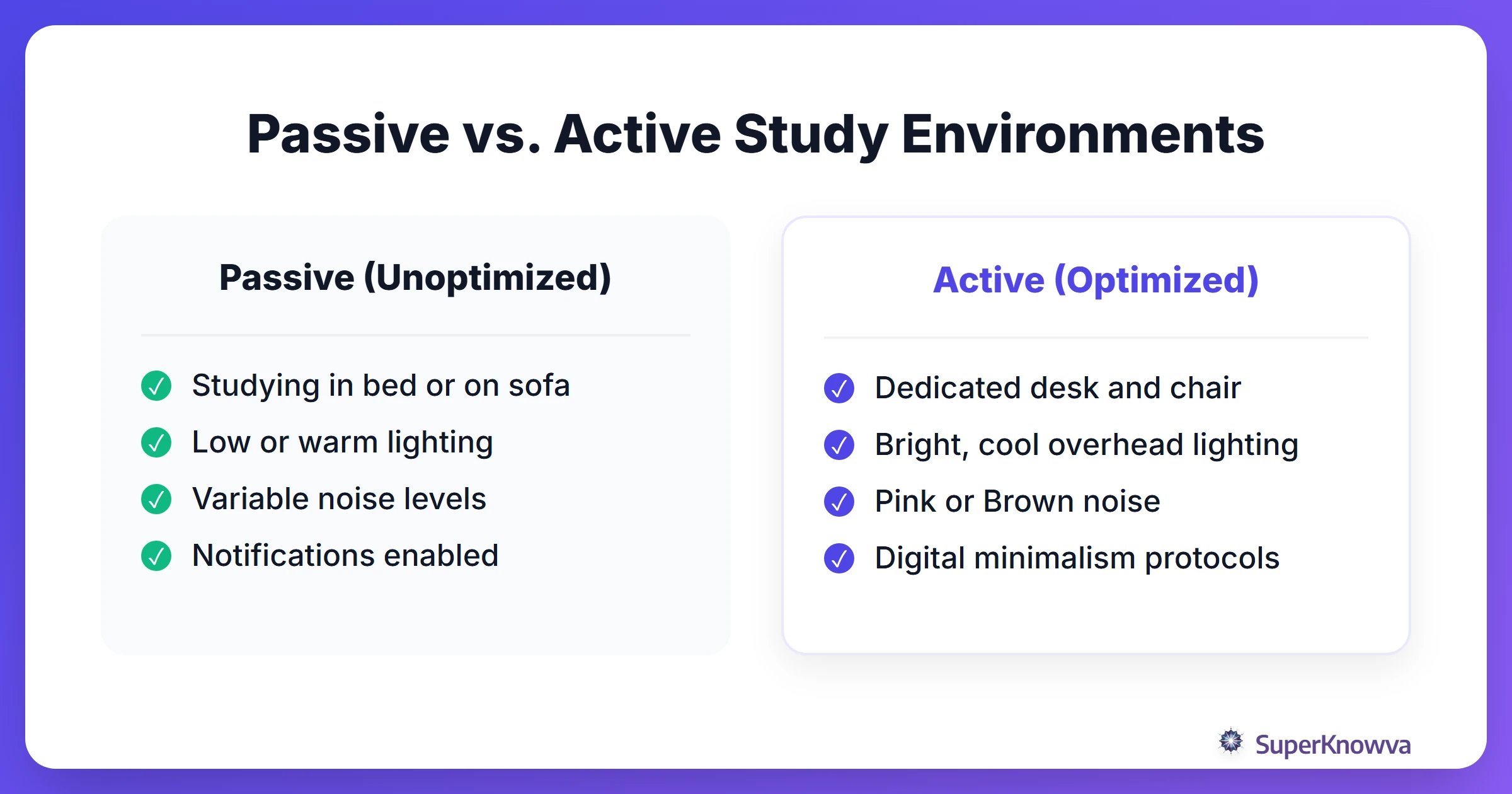
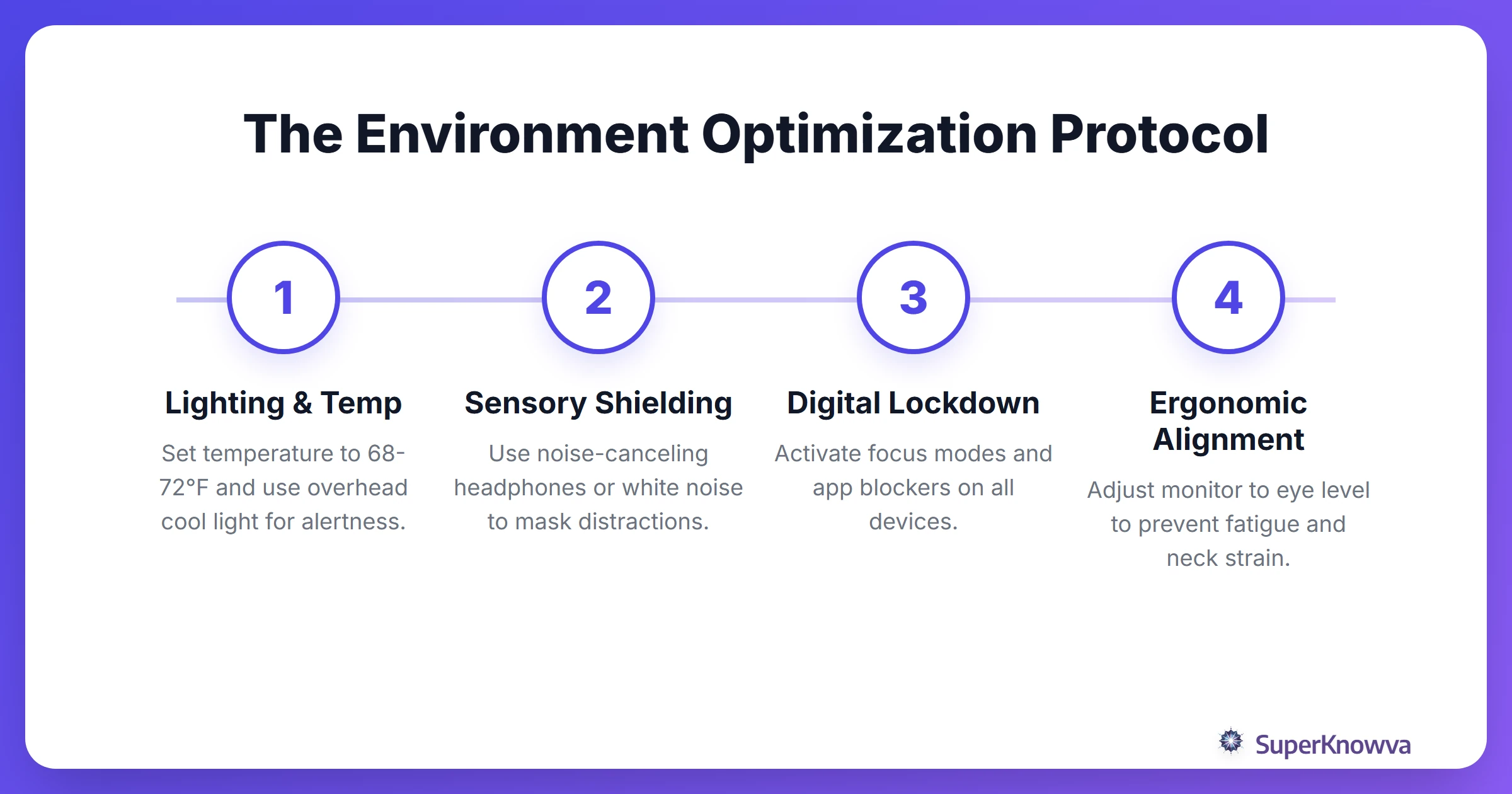
According to Optimizing Your Environment - Huberman Lab, light is your most powerful lever. Getting bright light in your eyes early in the day sets your internal clock for better focus. But the position of the light matters too. Overhead lighting is key; bright, blue-toned lights placed above eye level trigger specific neurons that tell your brain it’s time to be alert and awake.
Don't ignore the thermostat, either. Thinking is hard work, and your brain is sensitive to heat. Research suggests the "Goldilocks zone" for mental clarity is between 68-72°F. If it’s too hot, you’ll feel like taking a nap. If it’s freezing, your body spends its energy trying to stay warm instead of solving that calculus problem.
Digital Minimalism: Clearing the Virtual Noise
Even the perfect desk won't save you if your computer screen is a mess. We often talk about the "cost of context switching," the mental lag you feel when you jump from a textbook to a Discord ping. That little jump can tank your productivity by as much as 40%.
If you want to own your attention, practicing Digital Minimalism for Students isn't optional. It’s a requirement. Start by building a "boring" digital environment:
- Use App Blockers: Don't rely on self-control. Use tools like Freedom or Cold Turkey to physically lock yourself out of social media during study blocks.
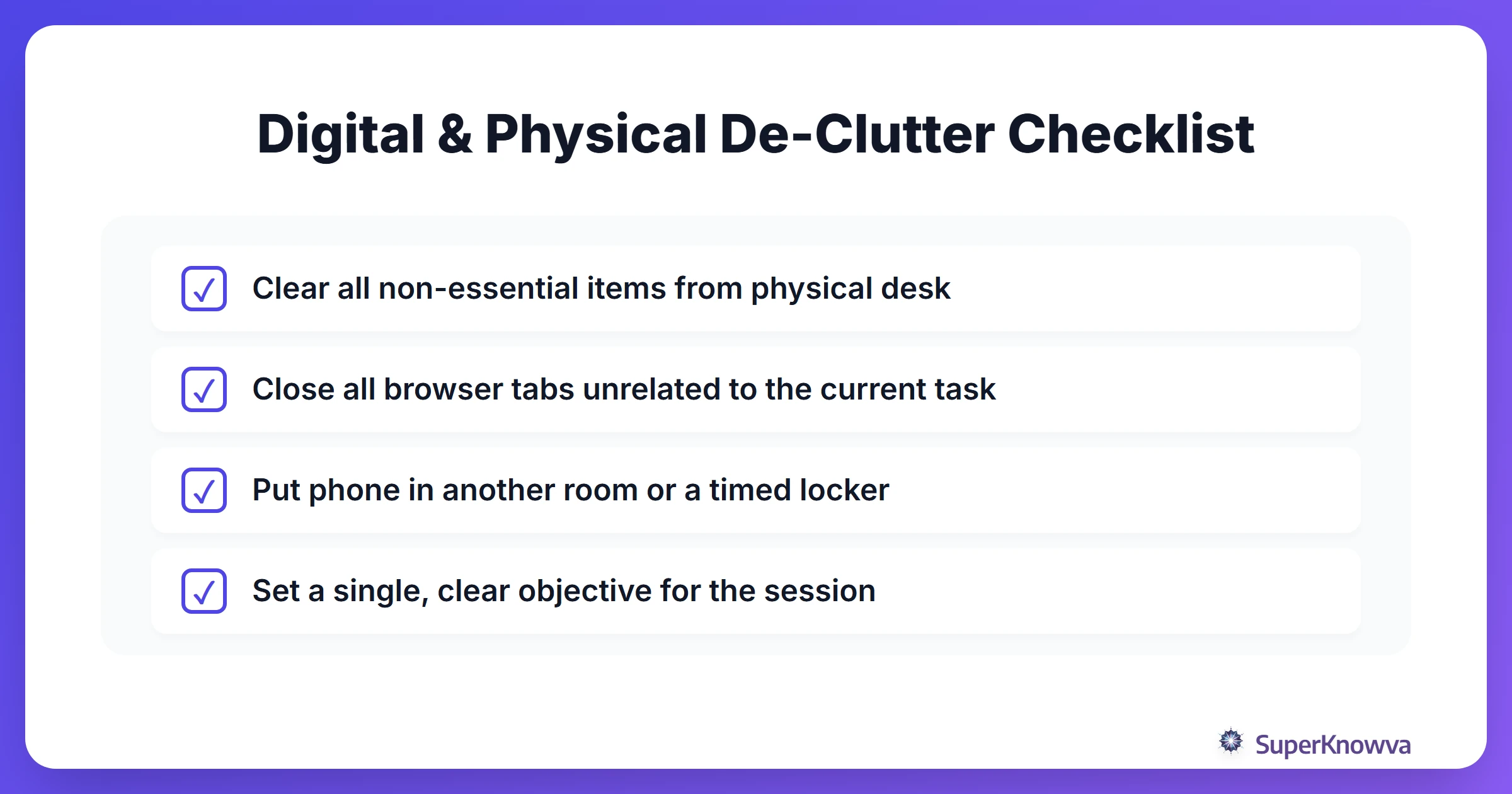
- Single-Tasking: If a browser tab isn't helping you finish your current task, close it. Every open tab is a tiny pull on your attention.
- The Phone Lockdown: Put your phone in another room. Seriously. Even if it’s face-down on your desk, your brain is using energy to ignore it. This is called the "mere presence effect," and it’s a silent focus killer.
Ergonomics: Sit Up to Think Clearly
Your posture and your brain are more connected than you think. When you’re hunched over a laptop, your ribcage collapses, your breathing gets shallow, and less oxygen reaches your brain. Result? You get tired way faster than you should.
A solid setup is the foundation for Deep Work for Students, helping you hit that "flow state" where time seems to disappear. Start by lifting your monitor to eye level so your neck stays neutral. While a good chair helps, many high-performers swear by standing desks to keep their energy up. Whatever you choose, move. A quick stretch every 45 minutes keeps the blood flowing and stops that "brain fog" from setting in.
Sensory Hacks: Sound, Scent, and Sight
Optimizing your space isn't just about what you take away. It’s about what you strategically add to help your brain stay on track.
- Sound: Total silence can be distracting for some. If you need noise, skip the lyrics. Pink noise or Brown noise (deeper and steadier than white noise) is better for long-term concentration. You can also try Binaural beats in the 40Hz range to help with focus.
- Scent: Your nose has a "fast pass" to the hippocampus, the part of the brain that handles memory. Try using a specific scent, like peppermint or rosemary, only when you study. It acts as a "sensory anchor." Using that same scent during an exam can help trigger memories of what you learned.
- Sight: If it doesn't help you learn, hide it. Visual clutter is a "to-do" list for your eyes.
Should You Move Around?
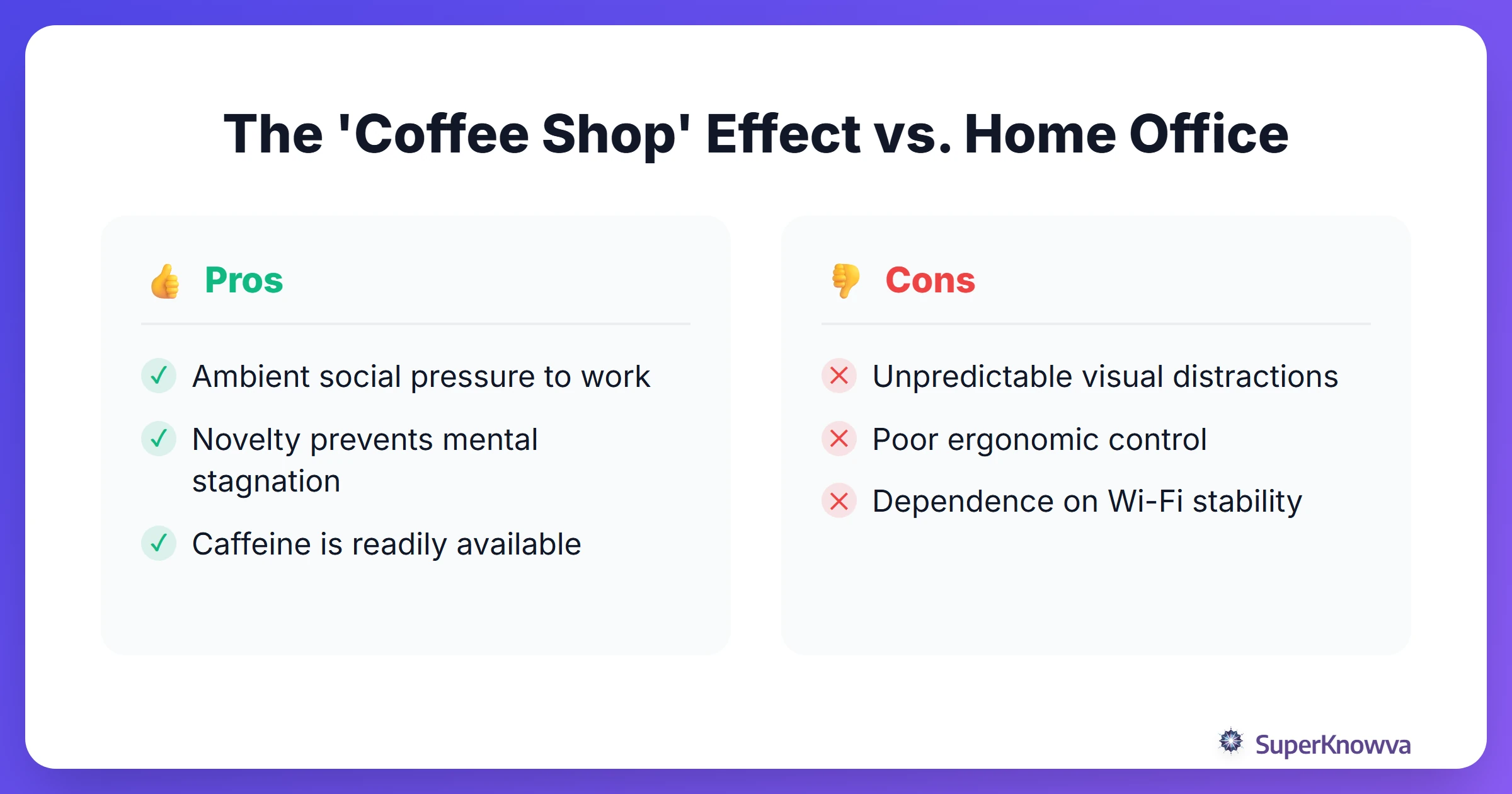
Is it better to always study in the same spot? It depends on what you're doing. Context-dependent memory tells us that if you study in a place that looks like your exam hall, you'll probably remember the material better during the test.
However, sometimes you just need a spark. The "Coffee Shop Effect" uses novelty to kickstart a stalled brain. The best move? Have one primary "Deep Work" station for the heavy lifting and a few secondary spots (like a library or a quiet cafe) for lighter tasks. Just follow one golden rule: Never study in bed. It confuses your brain, making your study sessions less effective and your sleep much worse.
Once your space is locked in, use a timing method like Pomodoro vs. Flowtime to keep your momentum going.
The 5-Minute Reset
The best study environment is the one that's ready for you the moment you sit down. To keep your focus zone from becoming a junk pile, do a 5-minute reset at the end of every day.
Think of it as "closing" your mental office. Clear the desk, file the papers, and shut down the laptop. This stops "open loops," those nagging thoughts about work that ruin your downtime. Tomorrow, you’ll be able to sit down, see a clear desk, and get straight to work.
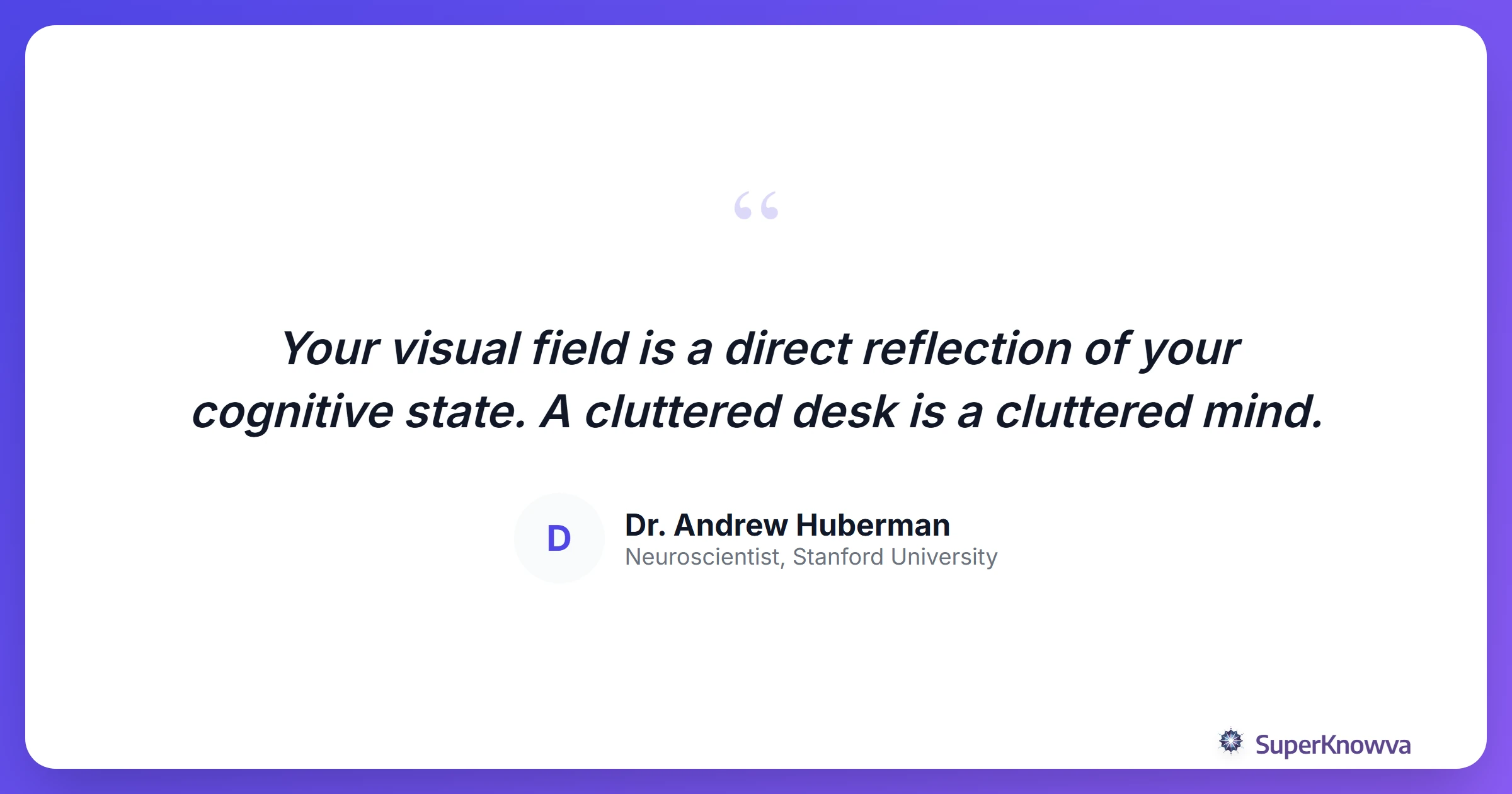
By using these protocols, you aren't just "cleaning your room"; you are building a workspace for focus. Start small. Adjust your light, hide your phone, and clear your tabs. You will work more effectively when your environment stops fighting you.