The last pen has been dropped, the final "Submit" button has been clicked, and the library caffeine runs are officially over. But instead of that immediate rush of relief you expected, do you just feel... heavy? Unmotivated? Maybe even a little bit empty?
If the silence of your post-exam life feels more haunting than peaceful, you aren't just tired. You’re likely navigating the "post-finals crash," a very real state of post-exam exhaustion.
Learning how to recover from finals week burnout is just as vital as the late-night grinding you did to survive the semester. If you don't have a strategy to recharge, that burnout won't just disappear; it’ll follow you into your break, stealing the rest you actually earned. Here is how to heal your mind and body after the academic storm.
Recognizing the Signs of Post-Finals Burnout
Before you can fix the problem, you have to name it. Burnout isn't just "being sleepy." It is a state of exhaustion caused by prolonged, high-intensity stress. This happens when your internal battery isn't just low; it struggles to hold a charge at all.
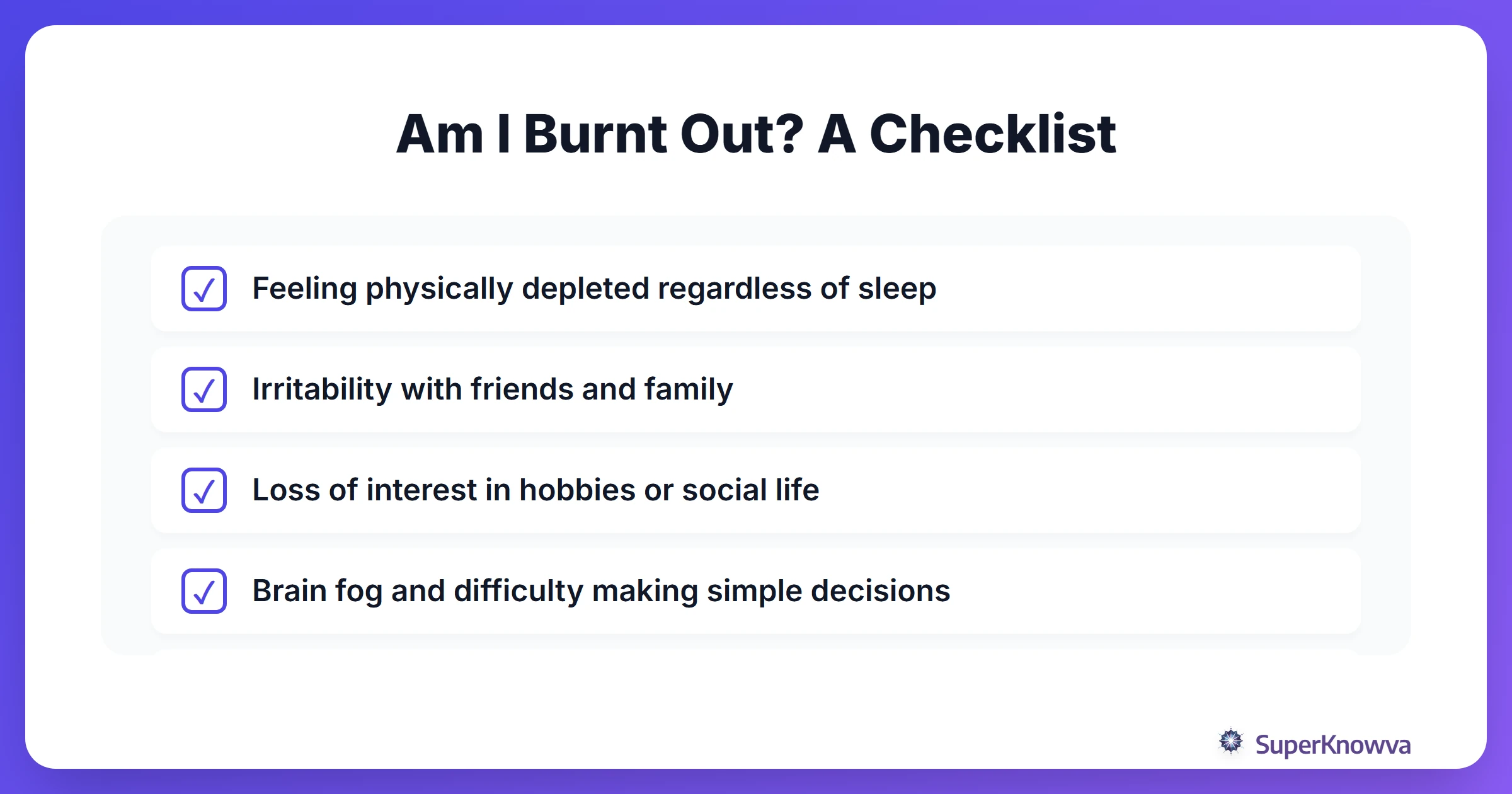
Not sure if you’re there yet? Look for these academic burnout symptoms:
- The Physical Wall: Chronic fatigue that a 12-hour sleep can’t fix, tension headaches that linger, or a sleep schedule that is completely flipped.
- The Emotional Numbness: Feeling irritable with the people you actually like, a total lack of interest in your favorite hobbies, or just feeling "checked out" from reality.
- The Cognitive Fog: You find yourself staring at the fridge for five minutes because making a sandwich feels like solving a multivariable calculus problem.
If this hits a little too close to home, check out our guide on 7 signs you're exhausted to see how deep the burnout goes.
The Immediate Recovery Phase: The First 48 Hours
Think of the first two days after your last exam as the "triage" phase of recharging after finals. Your only job is to stop the bleeding.
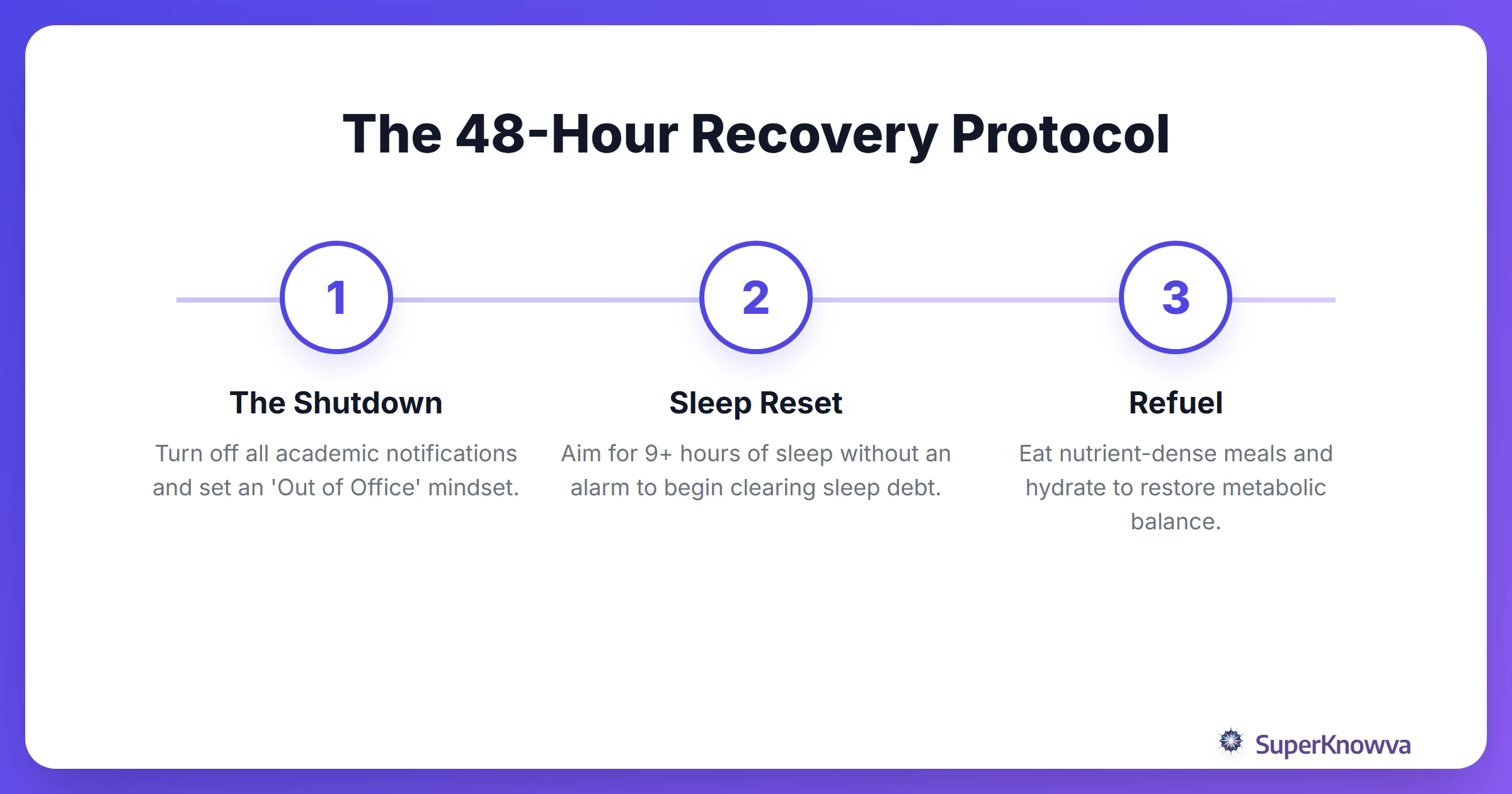
- Sleep Hygiene: You have a sleep debt to pay back. Don't just sleep; sleep well. Keep your room like a cave: cool, dark, and quiet. Most importantly, keep your phone away from the bed. Your brain needs melatonin, not more blue light.
- Unplug: You’ve been staring at screens for weeks. Give your eyes a break. For 48 hours, ignore academic emails, Canvas notifications, and social media.
- Nutrition: You’ve likely been living on sugar, caffeine, and stress. Switch back to hydration and nutrients. If you need a refresher on what your brain needs, revisit the best diet for exam performance principles. They are just as effective for recovery as they are for studying.
- Rest: This is often the hardest part. Give yourself permission to do nothing. Don't start your summer job hunt. Don't deep-clean your room. Let your nervous system settle after exams.
Rebuilding Your Routine with Low-Stakes Activity
Once the initial fog starts to lift, you might feel a weird urge to be productive again. Resist the urge to jump into something high-stress. Instead, focus on student burnout recovery through "active rest."
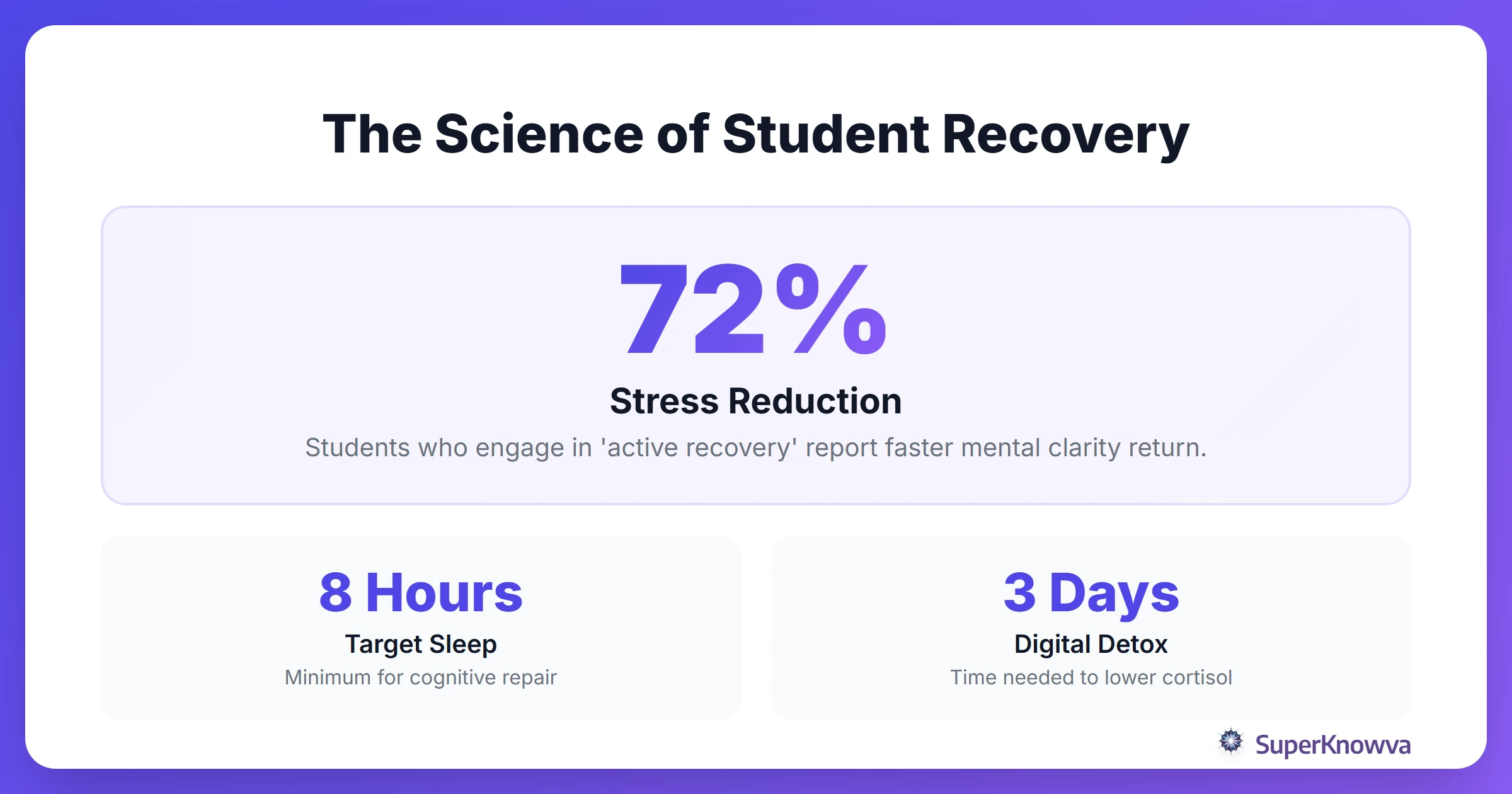
While staying in bed for a week sounds great in theory, "active recovery" is usually what actually gets your energy back. This means low-intensity movement that reminds your brain it’s okay to be alive.
- Gentle Movement: Go for a walk without headphones. Stretch. We’ve talked about how physical activity boosts cognitive function before, but right now, the goal isn't a PR at the gym; it is lowering your cortisol levels.
- Mindfulness: Try simple meditation techniques to stay present. It helps stop the worry about next semester’s syllabus before this one is even graded.
Cognitive Decompression: Reclaiming Your Identity
To truly recover from finals week burnout, you have to remember that you are a human being, not just a GPA. Cognitive decompression is about using your brain for things that don't have a "pass/fail" grade attached.
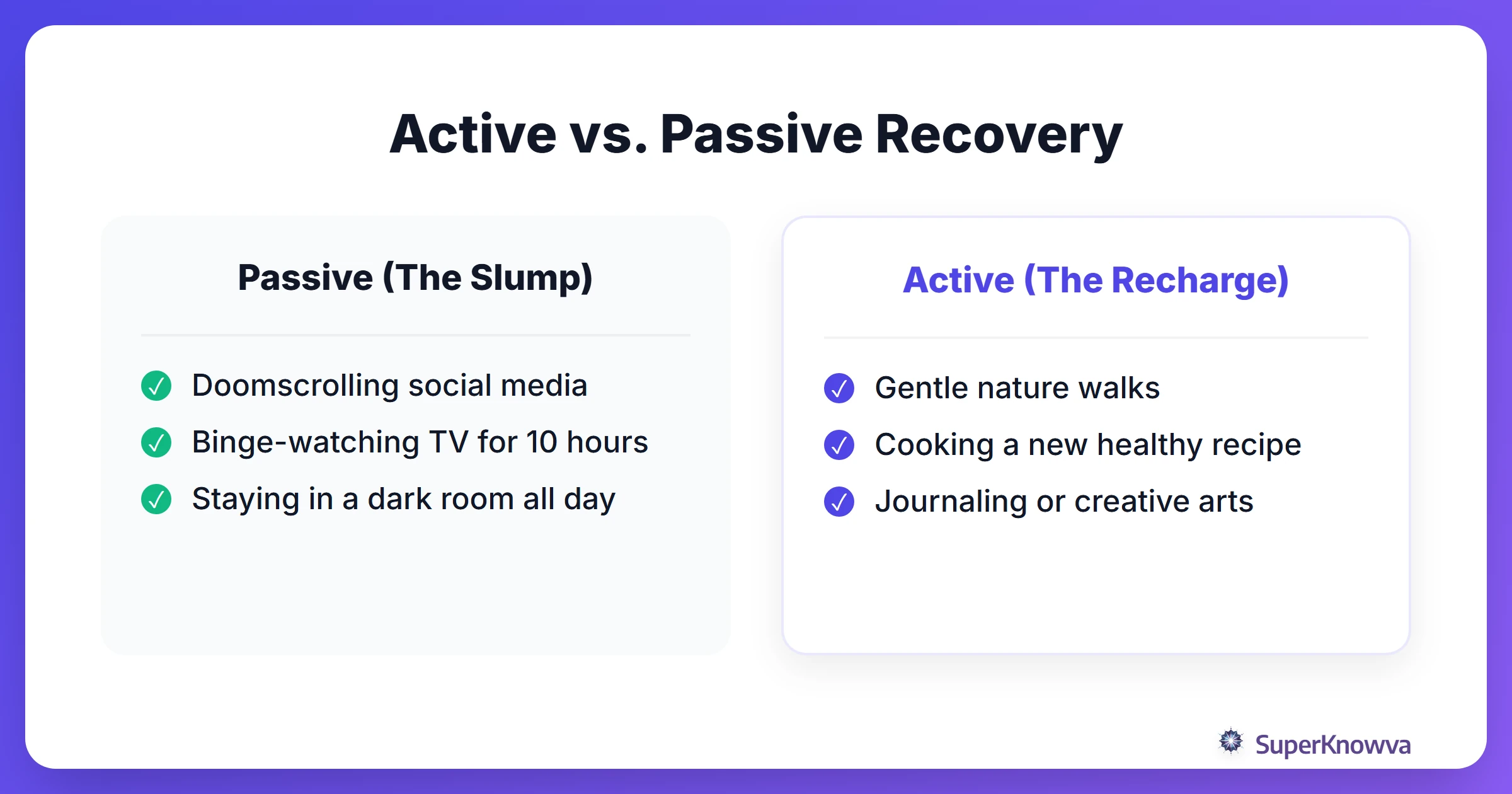
- Low-Stakes Creativity: Pick up a guitar, doodle in a notebook, or try a new recipe. The goal is the process, not the result. If you’re feeling stuck, check out these 14 Exercises & Treatments for Burnout Recovery.
- Socialize (Without School Talk): You’ve likely spent months talking about assignments. Meet up with friends specifically to not talk about school.
- Read for the Hell of It: Reclaim the joy of reading. Pick up a trashy thriller, a graphic novel, or a hobbyist magazine. Anything that isn't a textbook.
- Hard Boundaries: If you’re starting a summer job or internship, set a "hard stop" time. Protecting your mental health for students means knowing when to close the laptop and walk away.
Preventing the Next Crash: A Post-Game Review
As you start to feel like a person again, look back. Burnout isn't a character flaw. It is a sign that your system needs an upgrade.
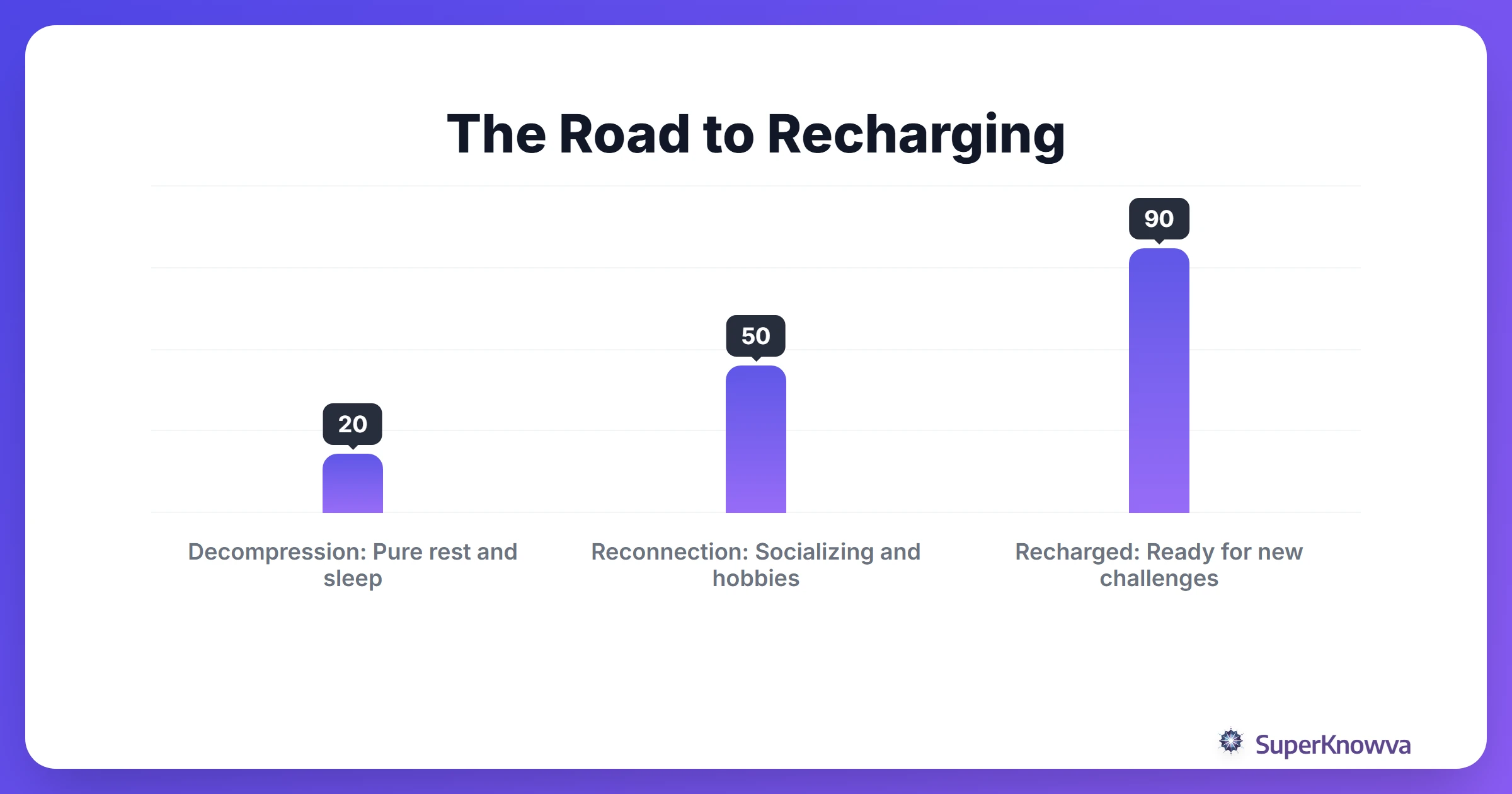
Reflect on the last few weeks:
- Where was the breaking point? Was it the all-nighters? The lack of a routine?
- Build "Buffer Zones": Next semester, try to schedule "non-negotiable" days off, even during midterms.
- Maintenance over Repair: Self-care shouldn't be the "reward" for surviving finals; it should be the fuel that gets you through them.
As this personal story on Burnout Recovery and Prevention Habits illustrates, the best way to handle a crash is to stop it before it happens next time.
By taking the time to decompress now, you aren't "slacking off." You are taking care of your mind. Enjoy the quiet. You have earned it.