May is coming. For most students, that means one thing: the annual "knot in the stomach" season. If you’ve ever stared at a final exam only to feel your mind turn into a complete blank slate, you know exactly what test anxiety feels like. It’s frustrating, it’s physical, and it’s incredibly common. But here’s the thing: the secret to staying cool under pressure isn’t just "studying more." It’s about changing how you prepare.
Preventing test anxiety with AI is quickly becoming the gold standard for modern learners. It’s not about taking shortcuts; it’s about building the kind of ironclad confidence that only comes from true mastery.
In this guide, we’ll look at how AI-driven platforms like SuperKnowva are helping students bridge the gap between "I think I’ve got this" and "I know I’ve got this."
The Link Between Preparation and Anxiety
Test anxiety is more than just a case of the jitters. It’s a full-blown physiological response: think racing hearts, shallow breathing, and that dreaded cognitive "freeze." Usually, this stress stems from the "uncertainty gap." It’s that nagging, late-night fear that you’ve missed something crucial. When you walk into a room unsure of what you don’t know, your brain treats that uncertainty as a threat.
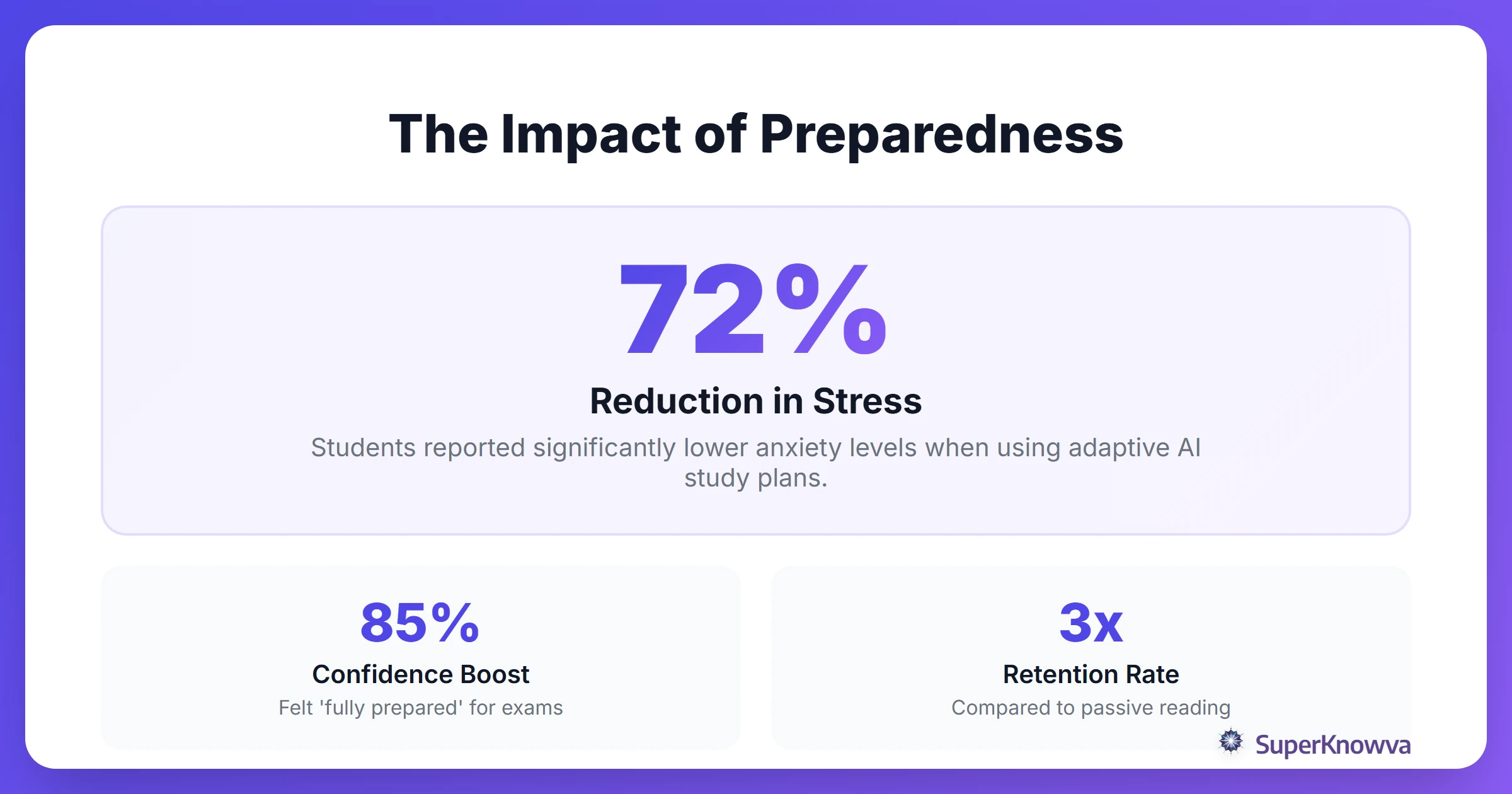
The best way to shut down that threat response? Move away from passive habits like highlighting textbooks and move toward active, AI-assisted mastery. As highlighted in Turnitin's Guide on Combating Test Anxiety, structured preparation is one of the most powerful ways to quiet the physical symptoms of stress. By using technology to map out your curriculum, you replace the mystery of the exam with a clear, data-backed roadmap.
How AI Personalization Builds Academic Confidence
Let’s be honest: traditional study guides are boring and inefficient. They’re "one-size-fits-all," forcing you to slog through concepts you already know while barely touching your weakest spots. This is a recipe for exam preparation confidence issues. You spend hours working, yet you never quite feel like you’ve tackled the hard stuff.
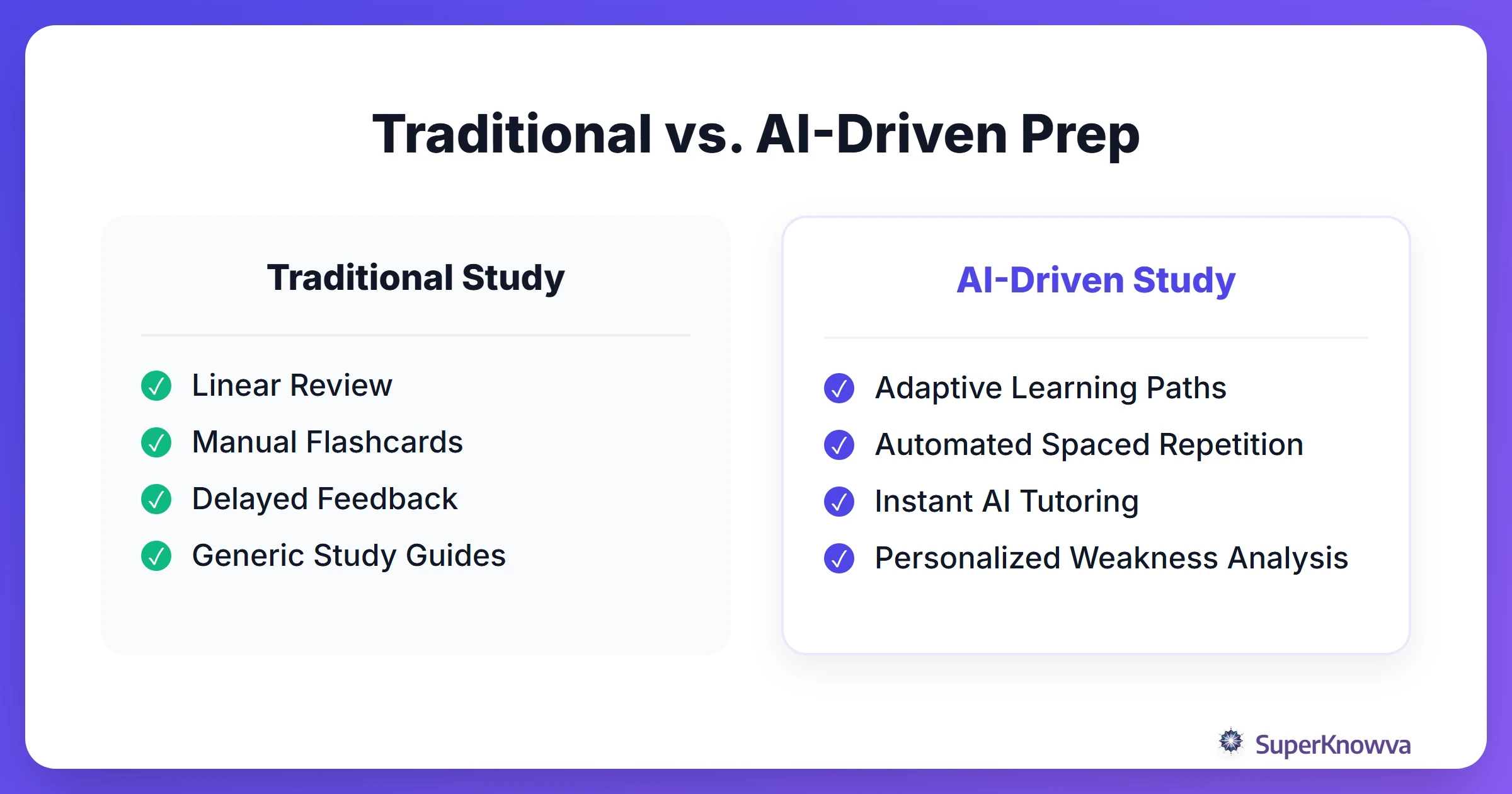
Personalized learning AI flips the script. Instead of a linear path, AI platforms analyze your performance and pivot in real-time. If you’ve mastered cell biology but struggle with genetics, the AI notices and adjusts. This ensures every minute you spend studying is actually moving the needle, giving you objective proof that you’re ready for whatever the professor throws at you.
Spaced Repetition: The AI Cure for Forgetting
The 48-hour caffeine-fueled cram session is a major trigger for exam-day panic. Forcing a semester’s worth of data into your brain at the last minute causes cognitive load to spike and retention to drop. Scientists call this the "Forgetting Curve," and it is the reason you may not remember a single fact forty minutes into the test.
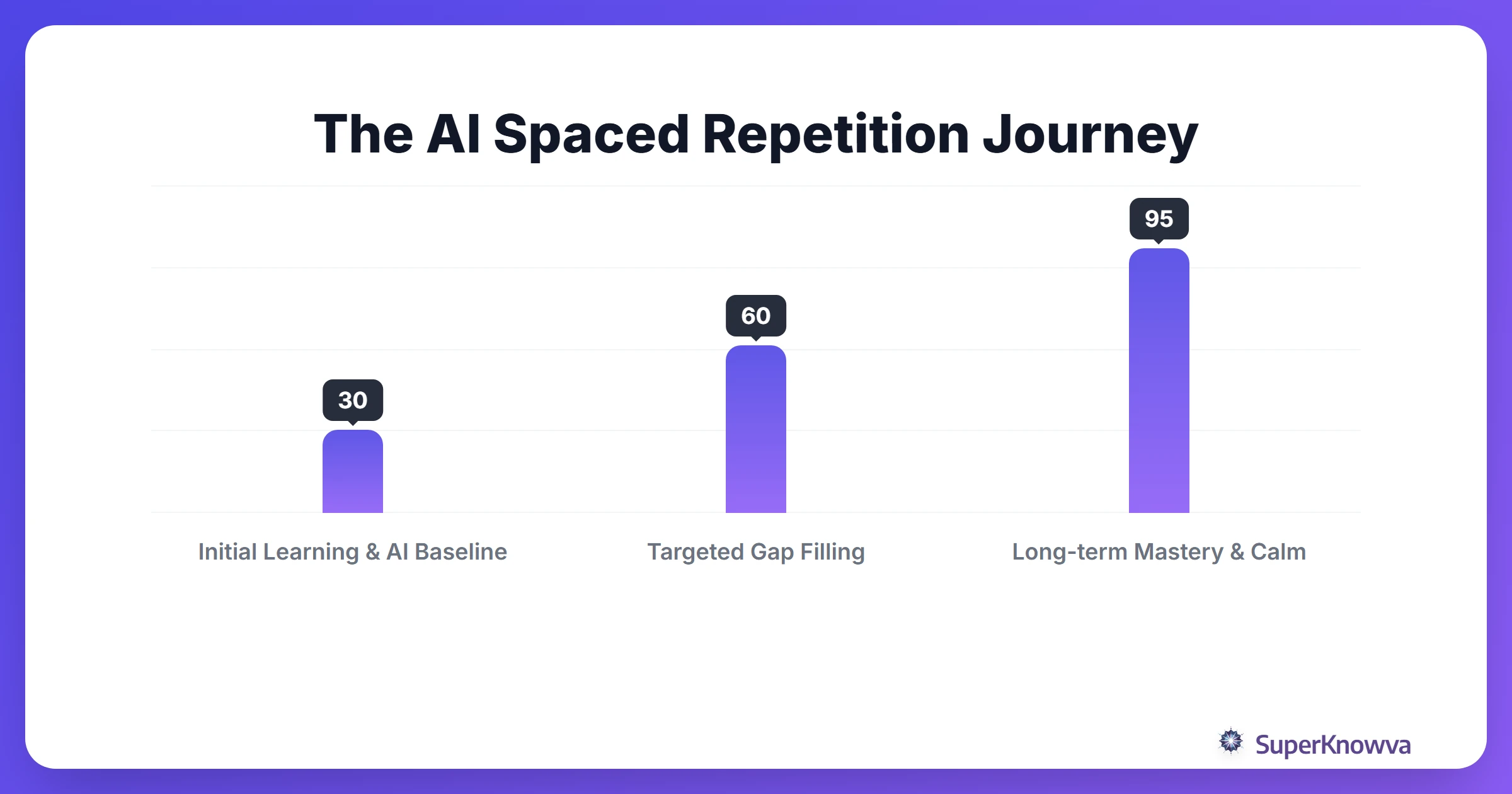
AI study plans use algorithms to predict when information is likely to be forgotten. By prompting reviews at these precise intervals, a method known as spaced repetition, the system retains knowledge in long-term memory. This approach replaces last-minute cramming.
Real-Time Feedback: Eliminating the 'Am I Ready?' Doubt
The "Am I Ready?" doubt is a silent killer of focus. Usually, students have to wait days for a graded quiz to see if they actually understand a topic. AI eliminates that agonizing wait by providing instant, 24/7 feedback.
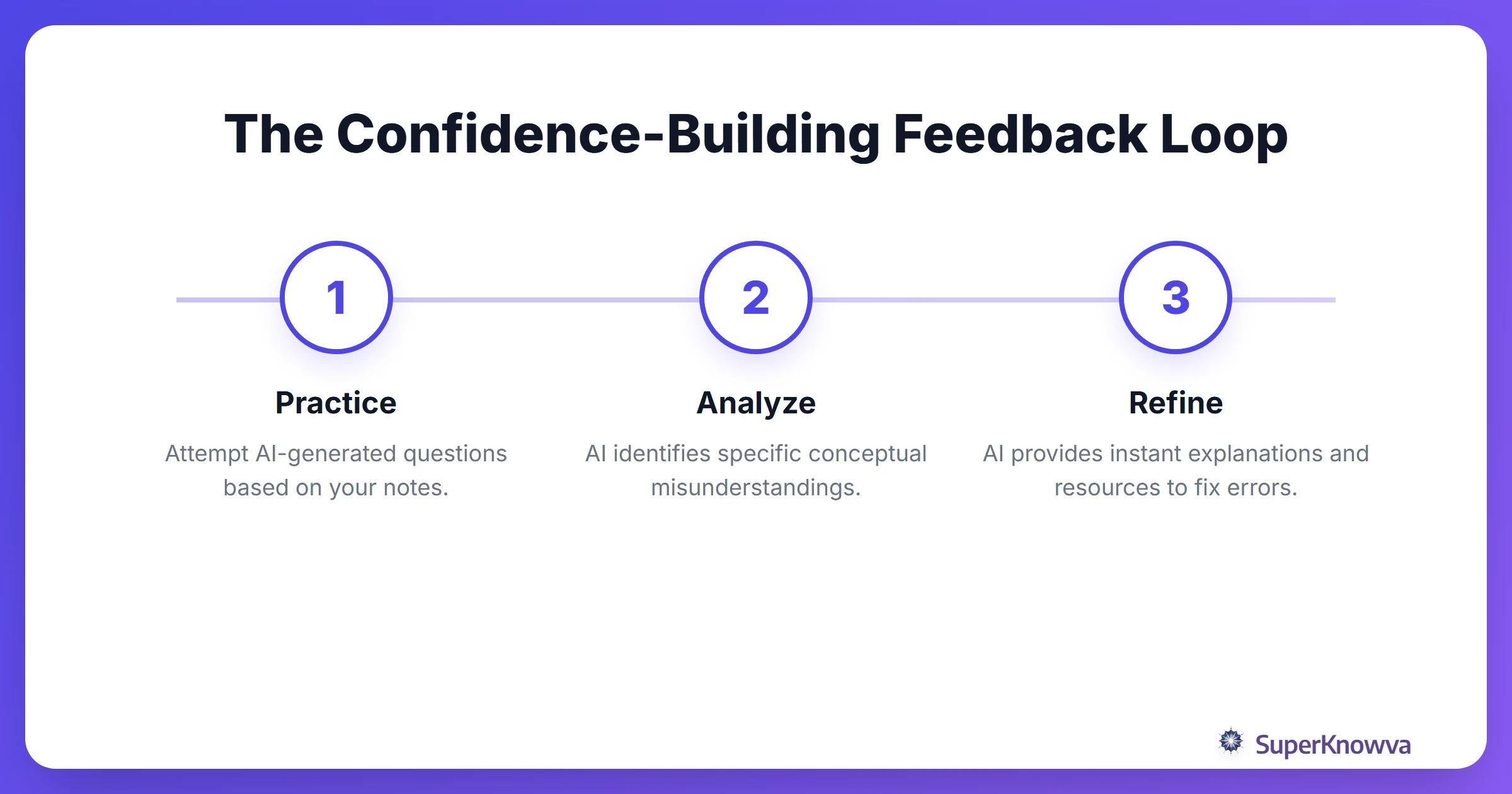
Need someone to explain a complex organic chemistry reaction at 2 AM? Or want a "readiness score" that tells you exactly how prepared you are? This technology provides the objective proof of mastery that our own intuition often lacks. Research published in JMIR Mental Health shows that AI-driven conversational agents can effectively lower anxiety by providing consistent, accessible support. When the data shows you’ve mastered 95% of the material, there’s simply no room left for doubt.
Building a Sustainable AI-Assisted Study Routine
AI is a powerhouse tool, but it works best when it’s part of a healthy, human routine. The goal is to use tech to sharpen your focus, not to create a new source of digital burnout. It is vital to recognize the signs of student burnout early so you can dial back your schedule when needed.
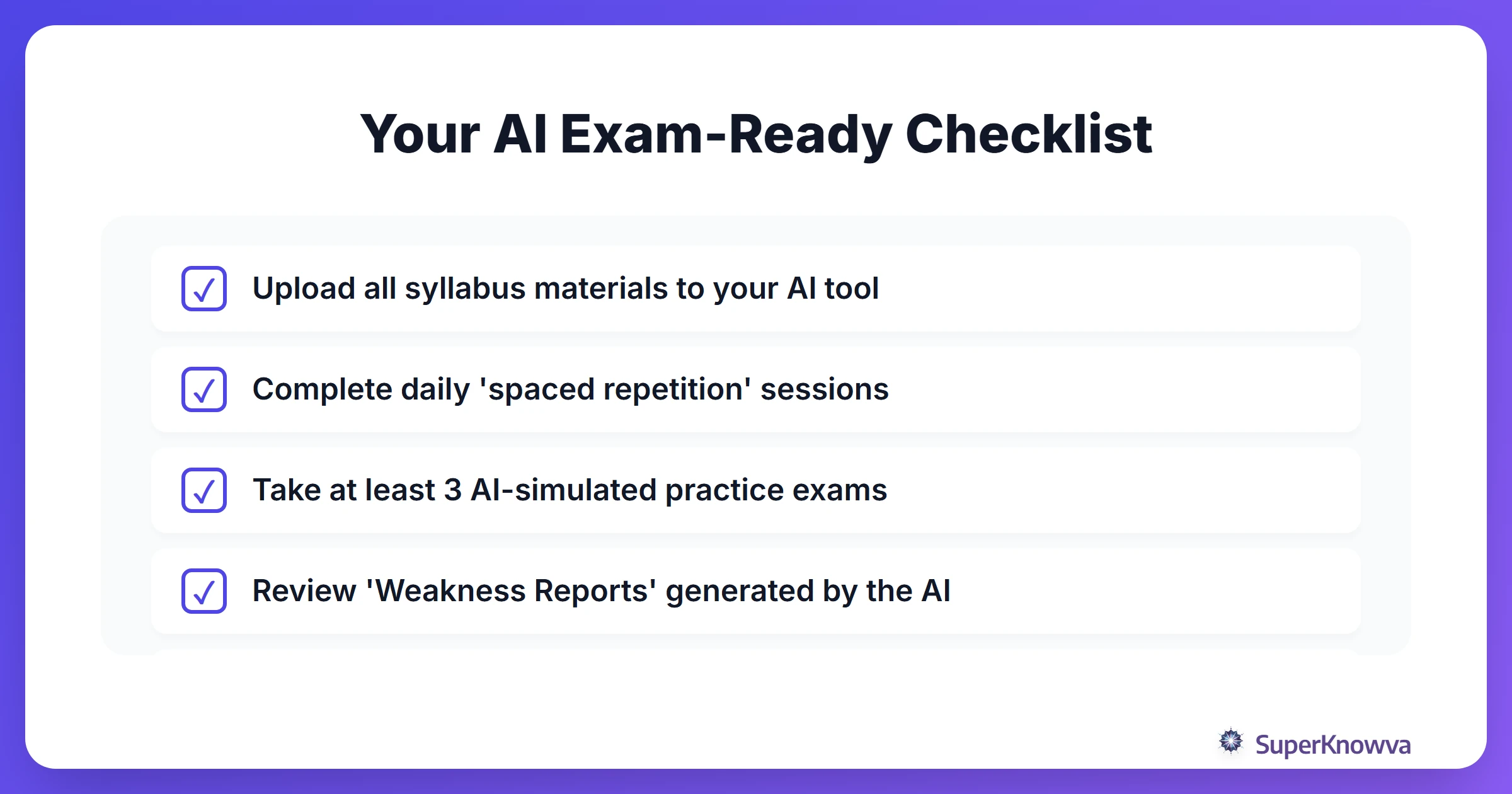
To keep things sustainable, use AI to set realistic, bite-sized milestones. Instead of a vague goal like "study biology," let your AI set a specific mission: "Complete 15 minutes of spaced repetition on cellular respiration." By breaking the mountain into manageable hills, you can maintain a balance between high-tech prep and much-needed offline downtime.
Balanced Success: AI Plus Wellness
Preparation is your foundation, but it’s only half the battle. Overcoming test anxiety requires looking after your body as much as your brain. While the AI handles your schedule, make sure you’re fueling up with the best diet for exam performance.
Student mental health technology is at its most effective when it encourages you to step away from the screen. Use your AI tools to bake in mandatory breaks and "reset" blocks. Combining high-precision tech with traditional mindfulness techniques for focus helps center your thoughts and keeps you grounded.
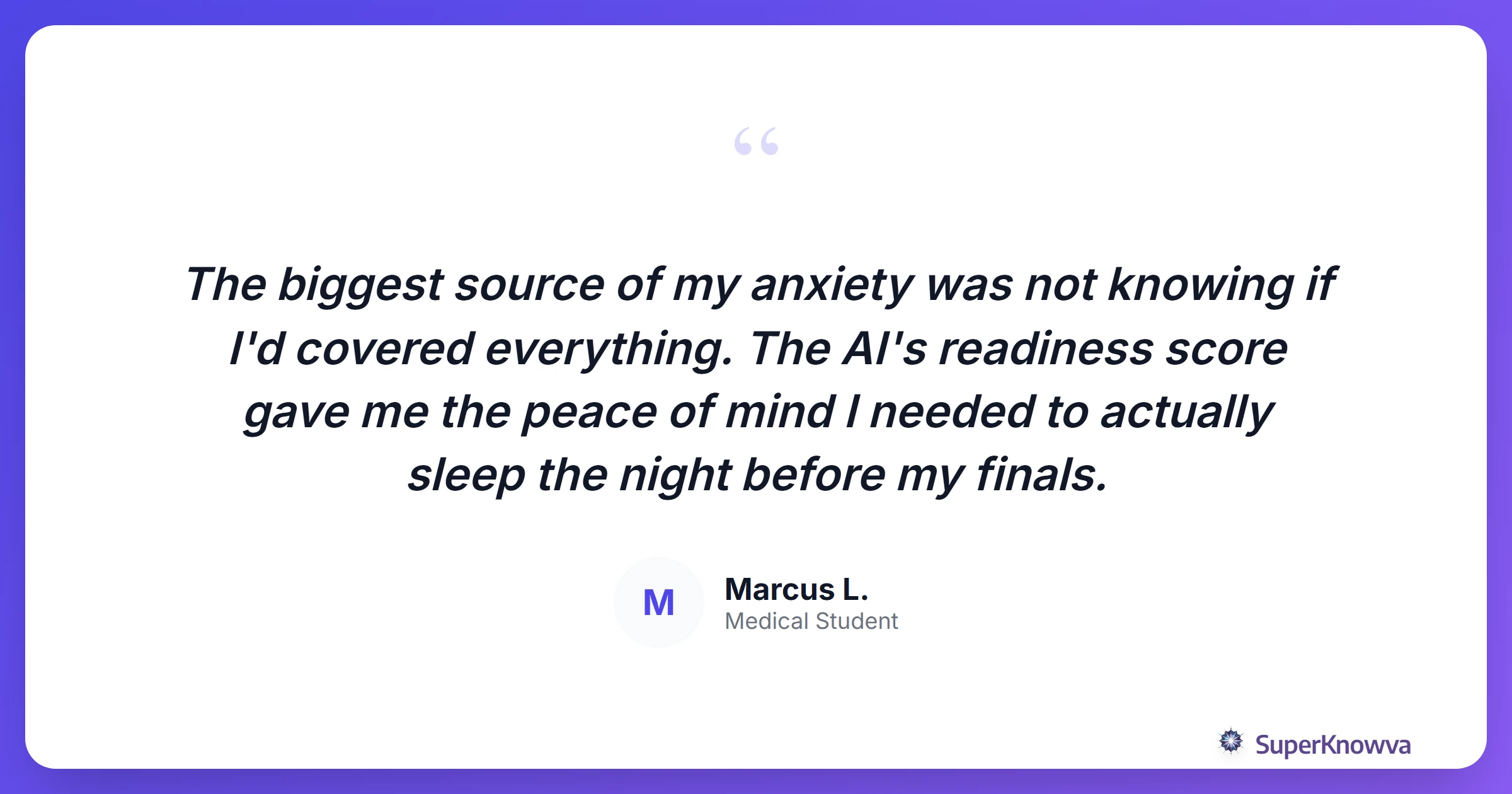
By combining AI tools with a commitment to your well-being, you can improve your exam season. This May, do more than hope for the best. Prepare with the confidence that thorough study provides.