Achieving a healthy student work life balance during the summer can feel like an impossible climb. While your friends are flooding your Instagram feed with beach trips and late-night bonfire stories, you’re likely stuck in front of a screen, buried in summer modules or research papers.
The pressure to keep your grades up doesn't vanish just because the sun is out. The need to enjoy your life is just as important. At SuperKnowva, we believe you shouldn't have to sacrifice your GPA for your sanity. With better academic time management, you can have both.
The Summer Struggle: Why Balance Isn't Optional
Summer classes are a different beast. Whether you’re trying to graduate early or just catching up on credits, these condensed terms often mean your workload is essentially doubled. It’s the perfect recipe for a massive case of FOMO (Fear Of Missing Out).
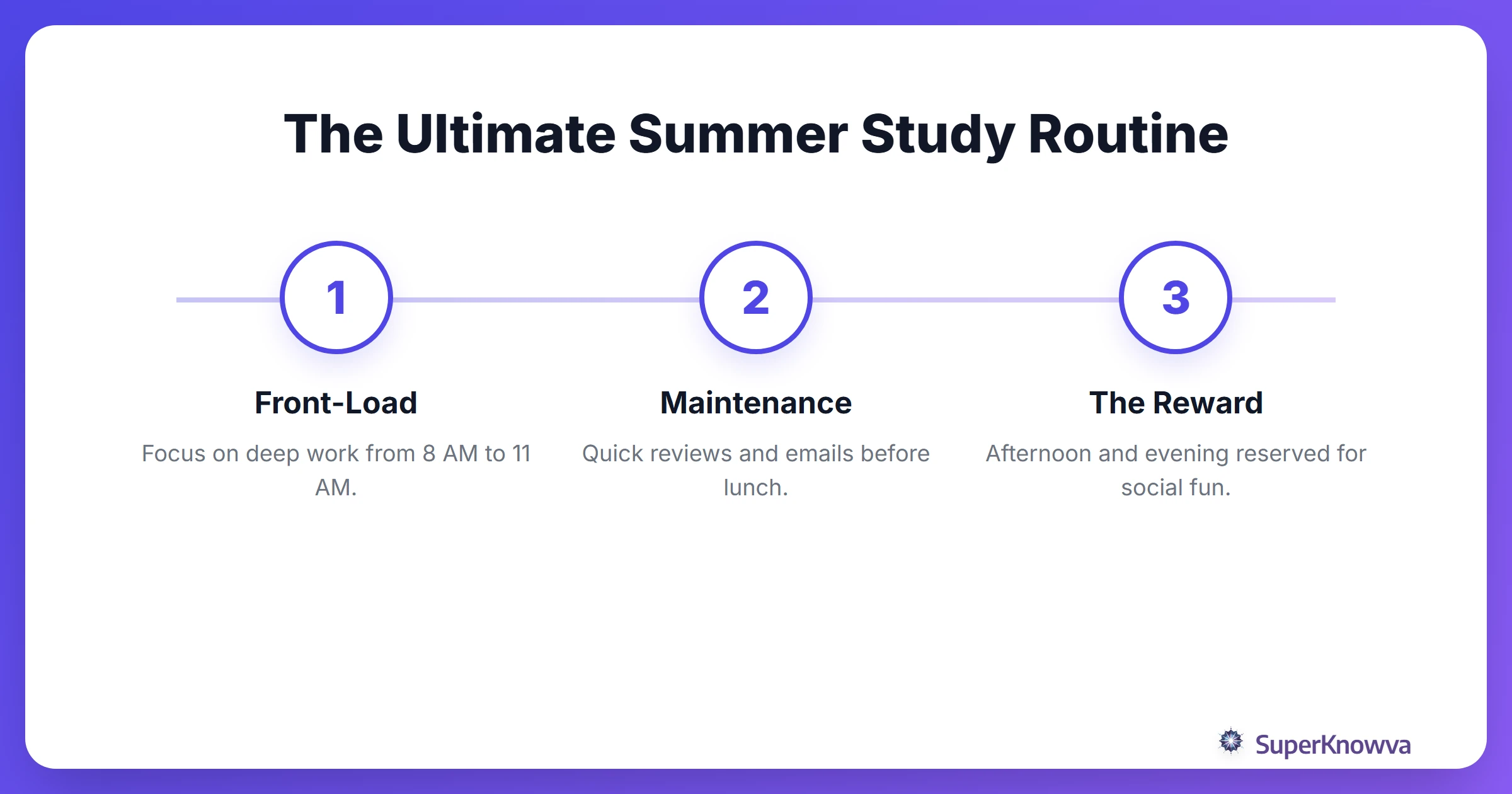
FOMO is a productivity killer. It leads to "half-work," a frustrating state where you try to study but are so distracted by social invites that you get nothing done. Working an 80-hour week is just as bad. Our research into student burnout shows that once cognitive fatigue kicks in, your brain stops absorbing information. Every extra hour you spend staring at the page is a waste of time.
The real goal? Guilt-free socializing. That’s the sweet spot where your work is finished, your brain is clear, and you can actually hang out with friends without a looming deadline ruining the vibe.
Debunking the 'All-Work' Academic Myth
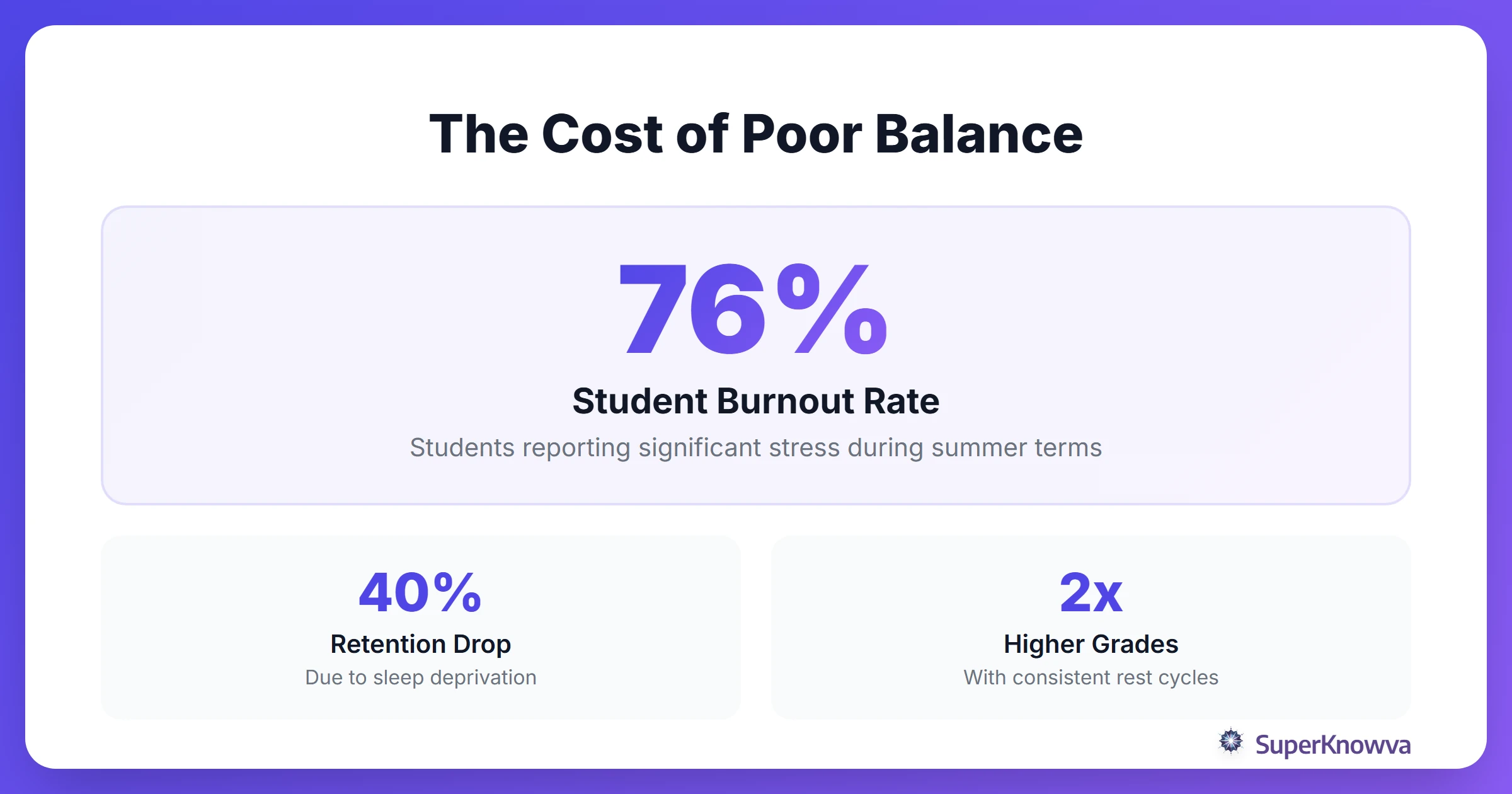
If you spend five minutes on a Discussion on PhD Work-Life Balance on Reddit, you’ll see the same horror stories: the 3 AM lab sessions, the caffeine-fueled all-nighters, and the students who haven't seen a vegetable in weeks. There’s this weird idea in academia that if you aren't suffering, you aren't working hard enough.
That’s a lie.
Overworking leads to diminishing returns. Your brain has a limit. Sustainable habits mean setting "normal" working hours, even if you’re a high-level PhD or med student. If you treat your studies like a 9-to-5 job with a hard clock-out time, you’ll find you’re actually more efficient during the day. It stops "academic creep," the phenomenon where work expands to fill every waking hour of your life.
The 'Early Bird' Strategy: Own Your Mornings
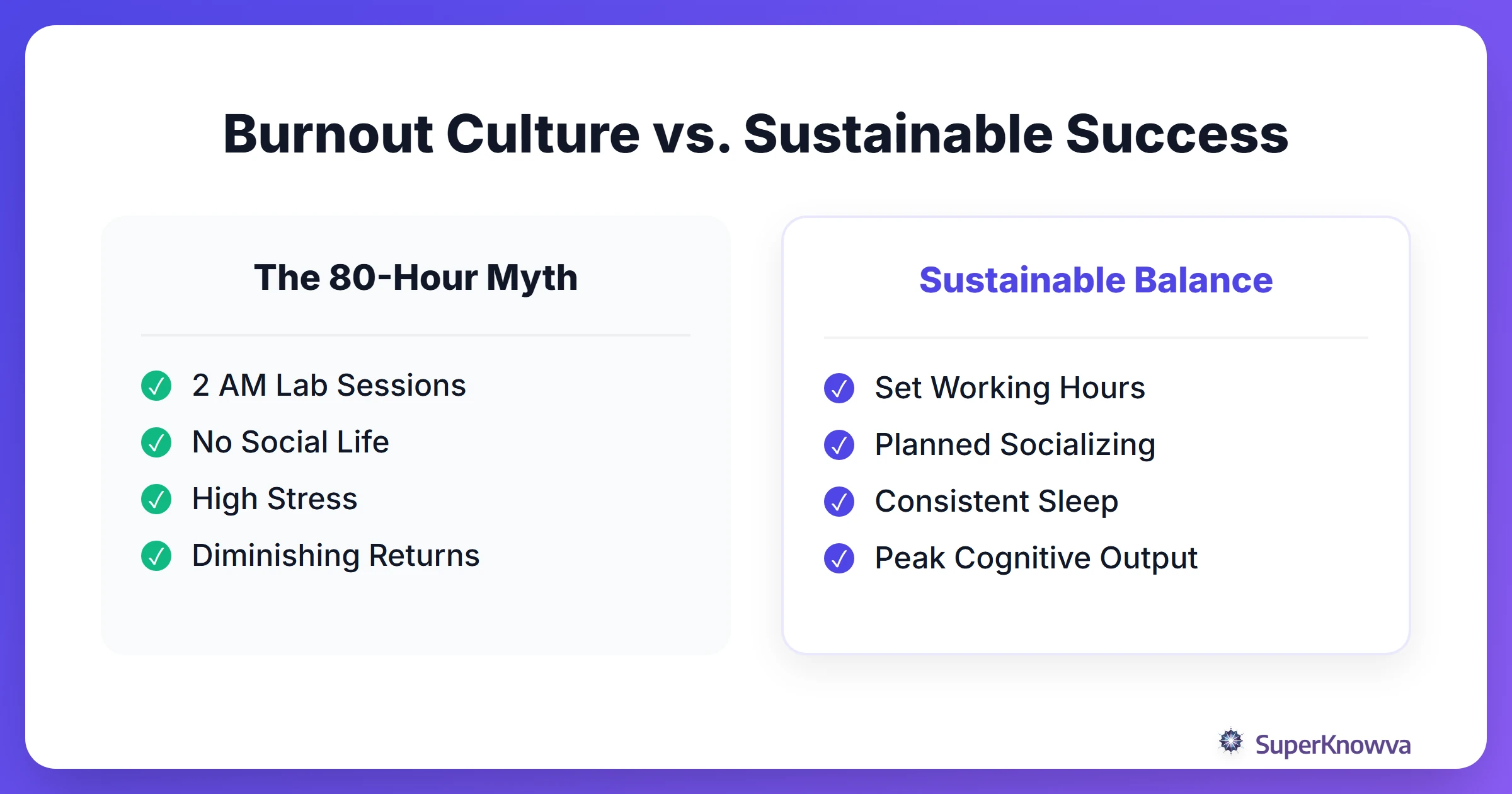
Want to know the most effective summer study tip? Front-load your day. Since the sun stays up longer, most of the "fun" stuff happens in the late afternoon and evening.
If you start your deep work sessions at 8:00 AM, you can knock out your hardest tasks by noon. Use your high-energy morning hours for the complex stuff and save the boring chores or admin tasks for later. When that "Are you coming to the lake?" text hits your phone at 4:00 PM, you can say "yes" instantly. Why? Because your workday is already over.
Staying ahead of the curve is the only way to keep your social life intact, as we break down in our guide on The Social Student: How to Maintain Friendships While Acing Exams.
Setting Boundaries (Without Being a Hermit)
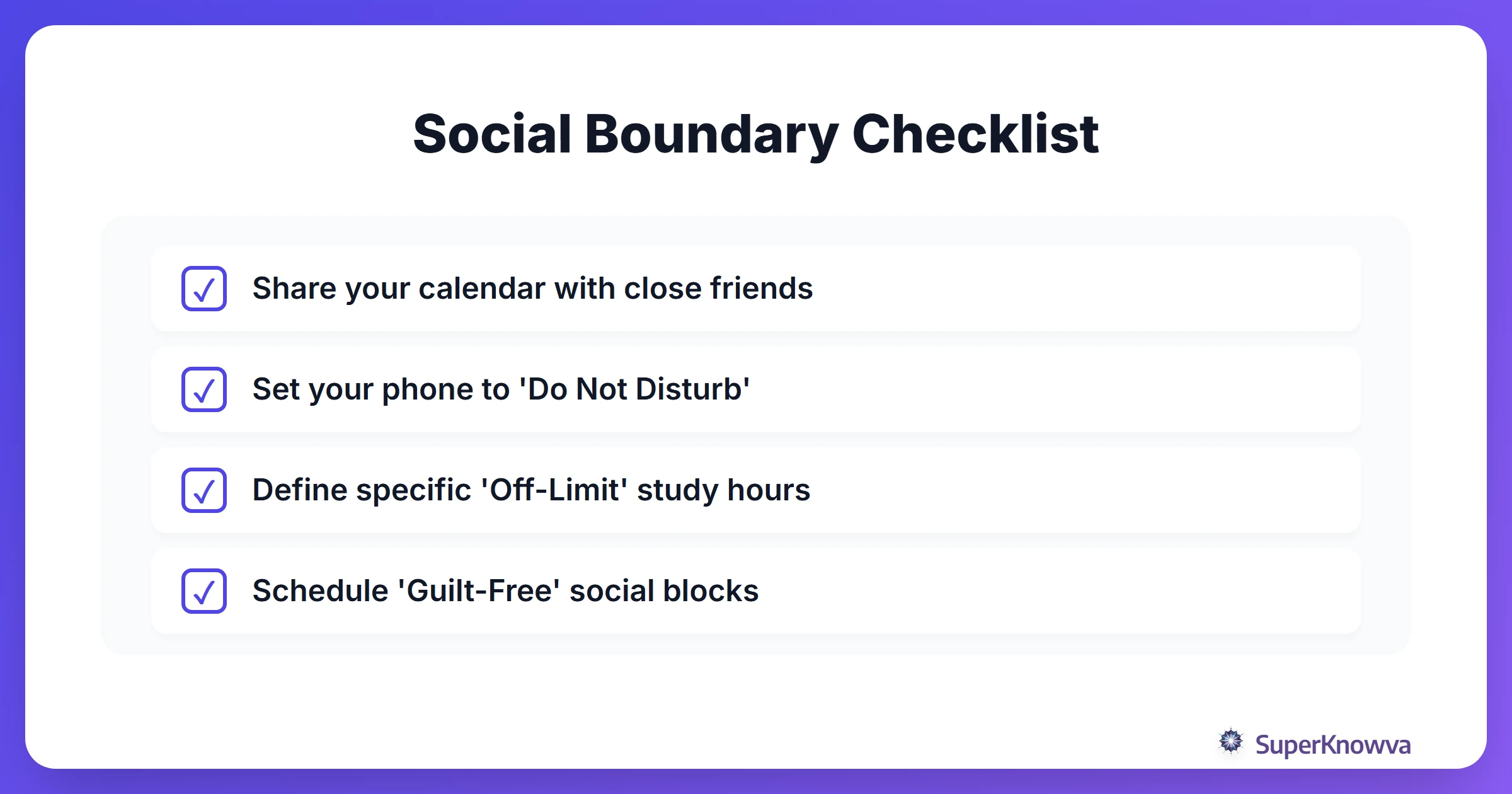
One of the hardest parts of maintaining a student work life balance is dealing with people who aren't in school. Your friends who are working 9-to-5s might not get why you can't grab drinks on a Tuesday night.
Communication is your best friend here. Let your inner circle know your schedule so they know when you’re "on the clock." Feeling isolated? Try a "study date." Invite a friend to a coffee shop where they can read or answer emails while you hit the books. You get the social fix without the academic sacrifice.
And when those big holiday weekends like the Fourth of July roll around? Set expectations early. Tell your family: "I’m all yours for the BBQ on Sunday, but Saturday morning is my locked-in study time."
For more on juggling a hectic calendar, take a look at our post on Balancing Act: Managing Part-Time Work and Full-Time Study.
Using Efficiency Tools to Buy Back Your Time
The secret to guilt-free socializing isn't just about working harder; it’s about being faster. Why spend four hours manually highlighting a textbook when SuperKnowva can identify key concepts in minutes?
- Spaced Repetition: SuperKnowva’s algorithms remind you of key concepts right before you're about to forget them. It’s the most efficient way to lock in long-term memory.
- Active Recall: Stop passive reading. Generate instant quizzes from your notes and turn a two-hour study session into a 30-minute power round.
- Time Savings: By cutting down your review time, you’re literally gaining hours back. That’s more time for the pool, the gym, or just doing nothing at all.
Self-Care: Rest is a Requirement, Not a Reward
Finally, let’s get one thing straight: rest is a biological necessity. You don’t have to "earn" a break. Even the Harvard: Maintaining Academic Work-Life Balance approach highlights that self-care is the foundation of success, not a distraction from it.
Learn to spot the red flags of burnout: irritability, lack of focus, and a heavy feeling of exhaustion. To stay sharp in the summer heat, stay active and eat nutritious meals. Make sure your breaks count. Scrolling through TikTok for 20 minutes is just more screen time. Try a quick walk outside or a Mindfulness session to reset your brain.
You don't have to choose between your social life vs grades. This summer, let SuperKnowva handle the heavy lifting so you can actually enjoy the sunshine.