The countdown to graduation is officially on. If you’re part of the Class of 2026, you already know the stakes are different for you. Entering the professional world right now isn't just about showing off a high GPA or a list of completed credits; it’s about proving you can hold your own in a workplace that’s being rewritten by technology every single day.
Resumes have changed. They are no longer just historical records of where you went to school; they are strategic marketing documents. This guide explains how to build a resume that goes beyond listing your degree to prove you are ready to contribute immediately.
The 2026 Job Market: Why Your Resume Needs an Upgrade
The "old way" of hiring is fading. We’re seeing a massive pivot from traditional, experience-heavy hiring toward skill-based assessment. To put it bluntly: employers care less about where you sat for four years and more about what you can actually execute the moment you’re hired.
As a member of the Class of 2026, you’re an "AI-native." You completed college during a period of massive disruption, and your resume needs to reflect that resilience. It’s the bridge you'll use for moving into the workplace. To win, you have to stop thinking of your resume as a static PDF and start treating it as a "living document" that you tweak, tailor, and refine for every single role.
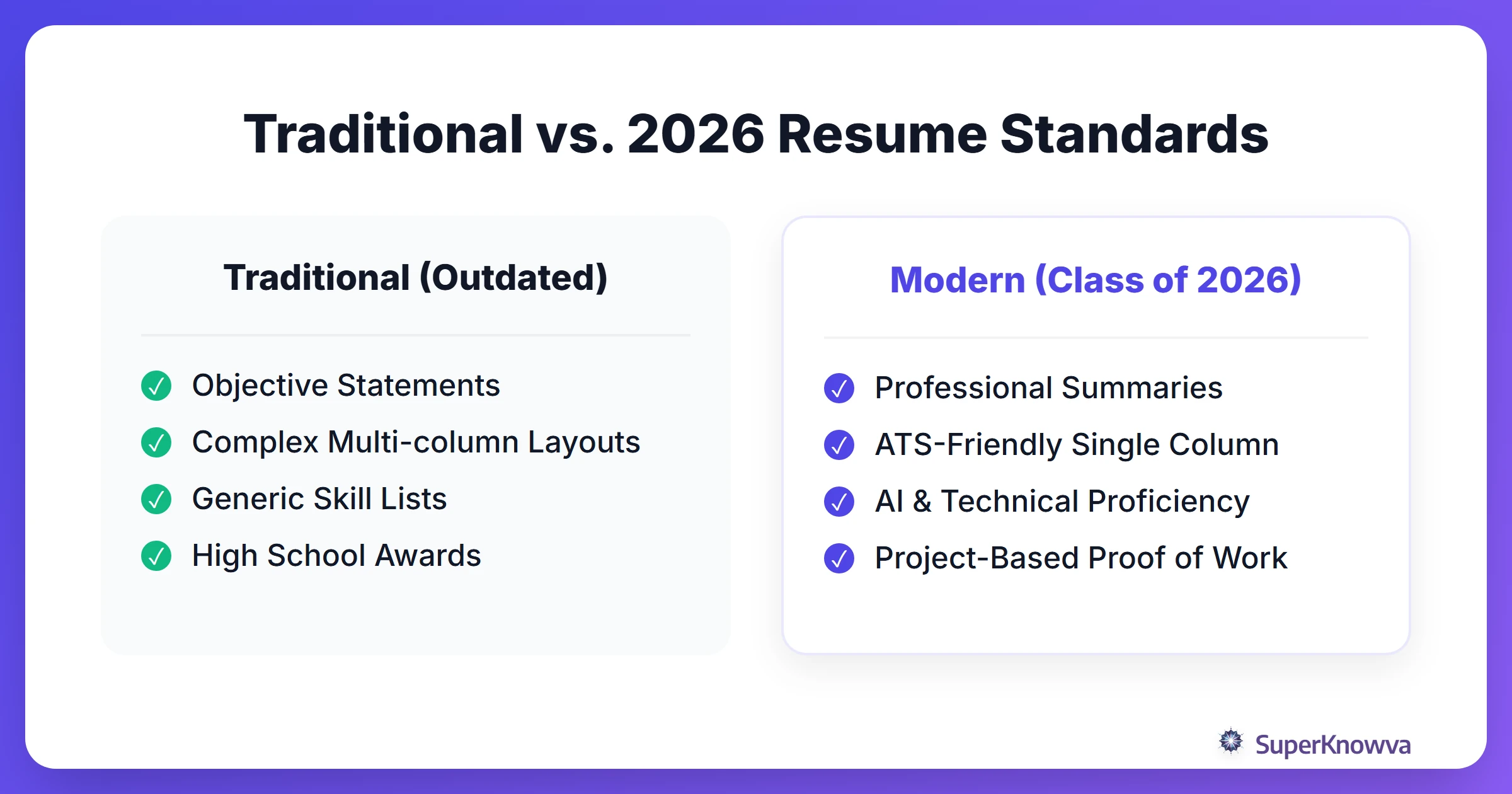
First tip? Kill the "Objective" statement. Recruiters already know your objective is to get the job. Instead, lead with a Professional Summary. Think of this as your 30-second elevator pitch in text form. In 2-3 sentences, highlight your major, your strongest skills, and the specific value you’re going to bring to the team.
Beating the Bots: Optimizing for ATS in 2026
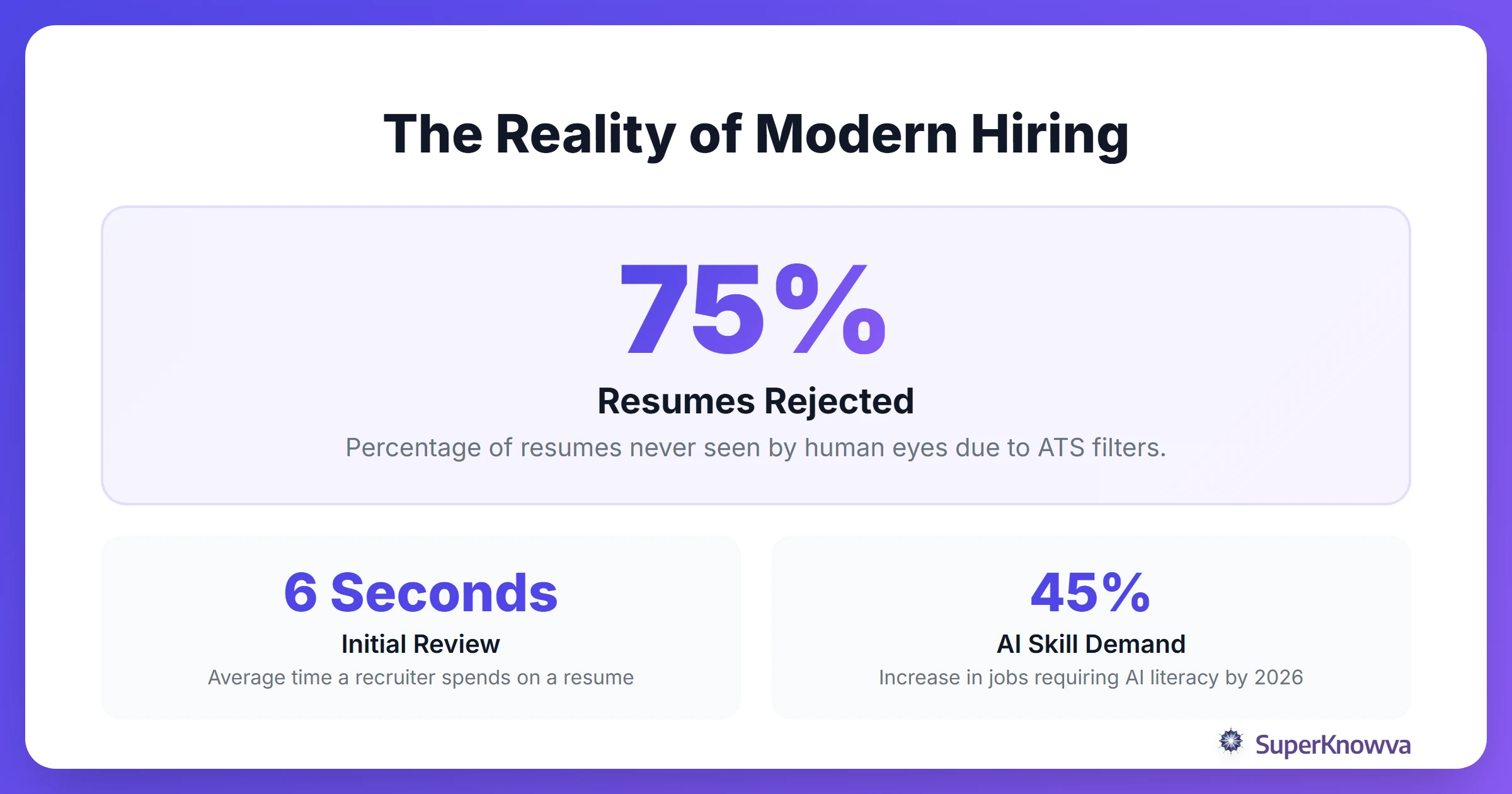
Here is the cold truth: before a human ever reads your name, a piece of software probably will. If you want to get past the gatekeepers, you have to optimize your CV for Applicant Tracking Systems. If the bot can't read it, the recruiter never will.
To make sure your application doesn't vanish into a digital black hole, keep these class of 2026 resume tips in mind:
- Keyword Optimization: Don't guess. Read the job description. If they keep mentioning "Python," "Project Management," or "Data Analysis," those words need to be in your bullet points.
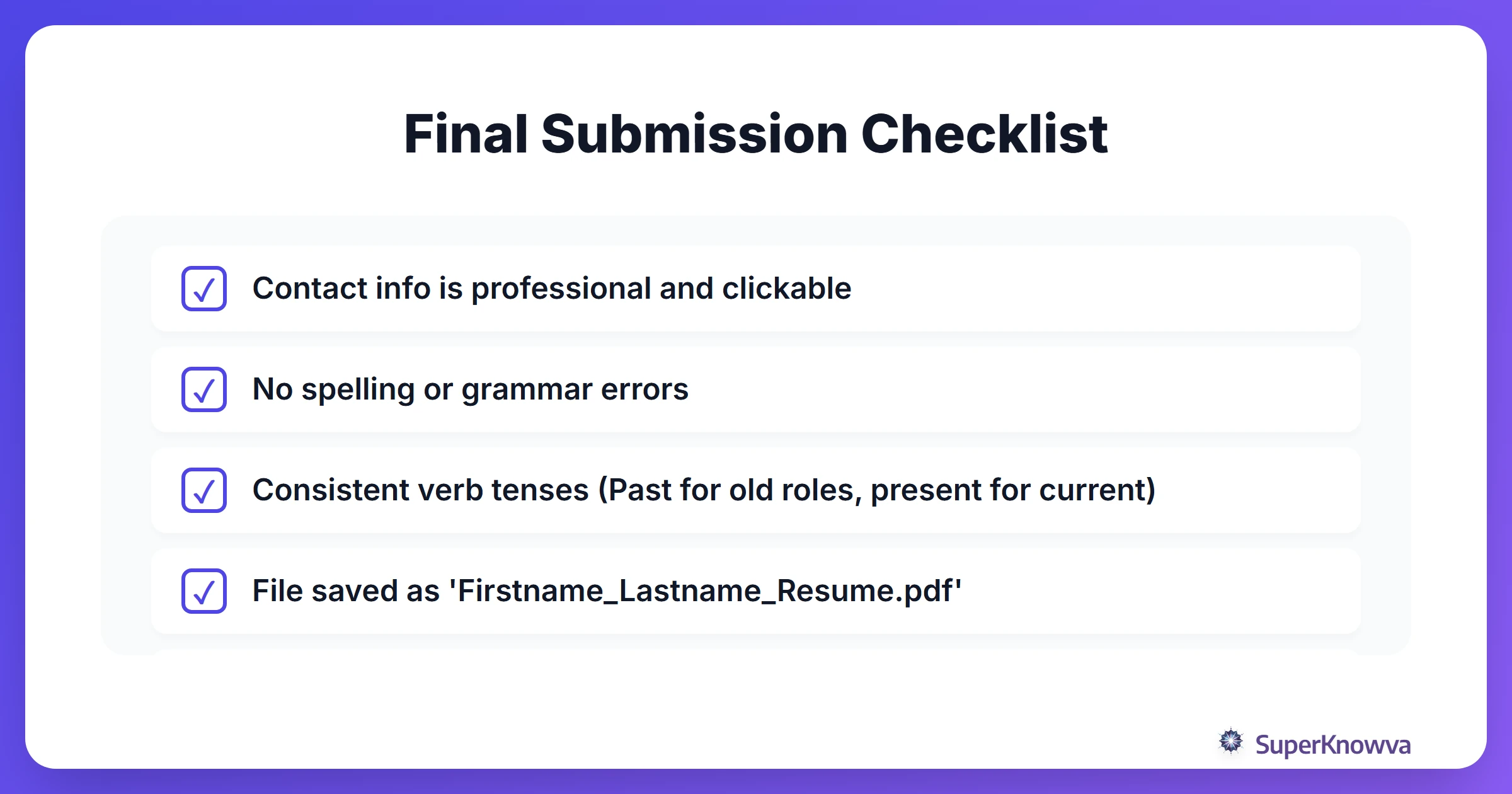
- Keep it Simple: Creative designs look great to humans, but they confuse bots. Stick to a single-column, sans-serif layout. Avoid tables, fancy headers, or sidebars that might scramble your data.
- The Right File Type: While Word is okay, a text-based PDF is still the gold standard for keeping your formatting intact across different systems. Just make sure it’s not a "scanned image" PDF, or the ATS will see a blank page.
As noted in these BestColleges Resume Tips, clarity and organization will always beat a flashy font.
Showcasing AI Literacy and Technical Proficiency
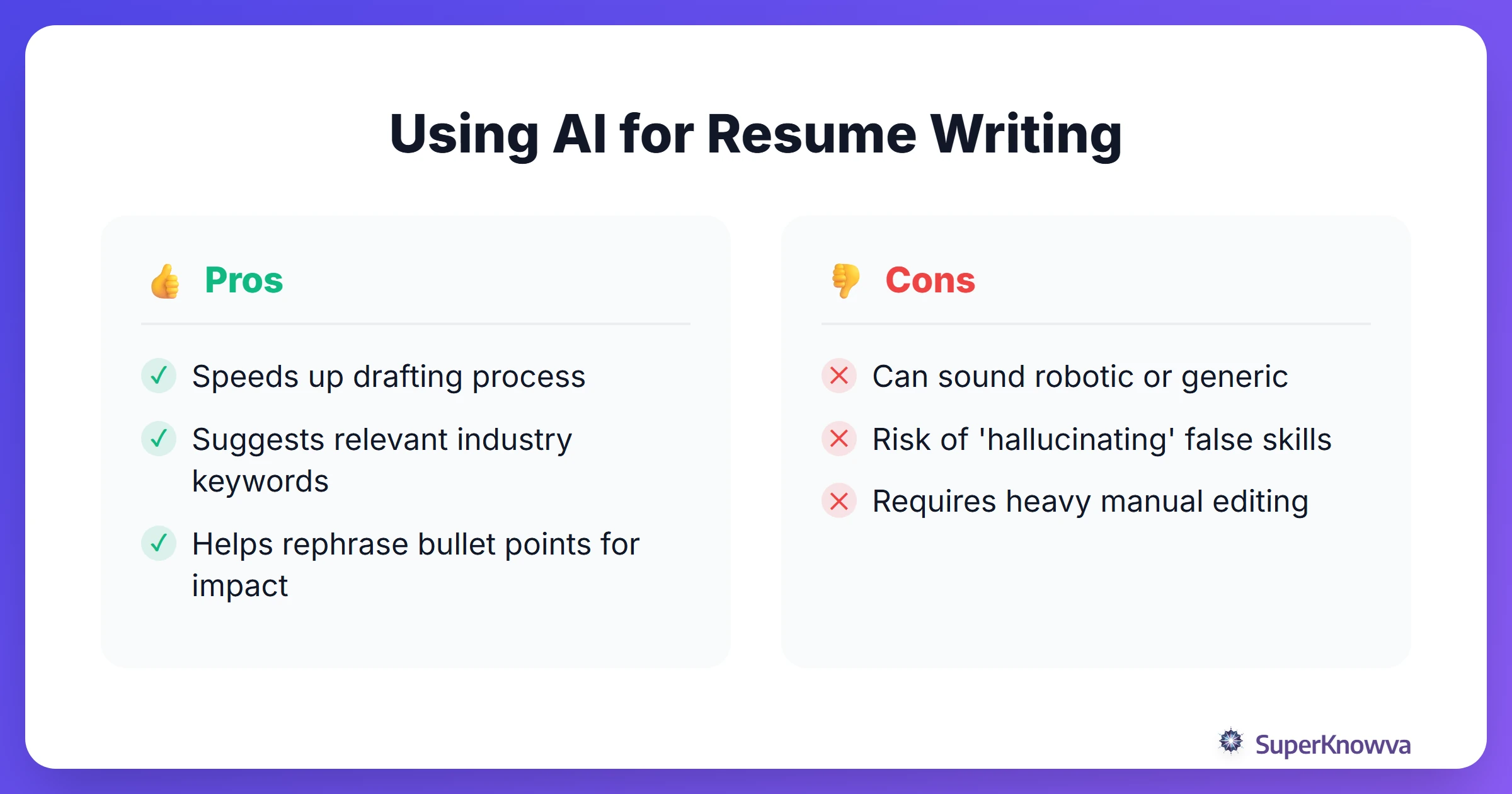
By the time you walk across that stage in 2026, AI skills on your resume will be the baseline rather than a bonus. Companies want to know you can use these tools to work efficiently and solve complex problems.
When you’re listing entry-level resume skills, skip the vague "familiar with AI" line. Be specific. Show them you know your way around the tech:
- Prompt Engineering: Show that you can work with LLMs to get high-quality, professional results.
- AI Tool Integration: Mention specific platforms like ChatGPT, DALL-E, or industry-specific tools you’ve mastered.
- Data Literacy: Can you look at AI-generated data and tell if it’s actually accurate? That’s a skill employers value.
Of course, technical skills are only half the battle. Knowing what employers are really looking for involves a mix of tech-savviness and human intuition. Don't claim "proficiency" unless you can actually use the tool to complete a project from start to finish without a tutorial.
Experience vs. Exposure: Highlighting Academic Projects
"But I don't have any 'real' experience." We hear this all the time. But for the Class of 2026, resume projects for students are often just as heavy-hitting as an internship. That capstone project, your lab research, or even a high-stakes course assignment counts as work.
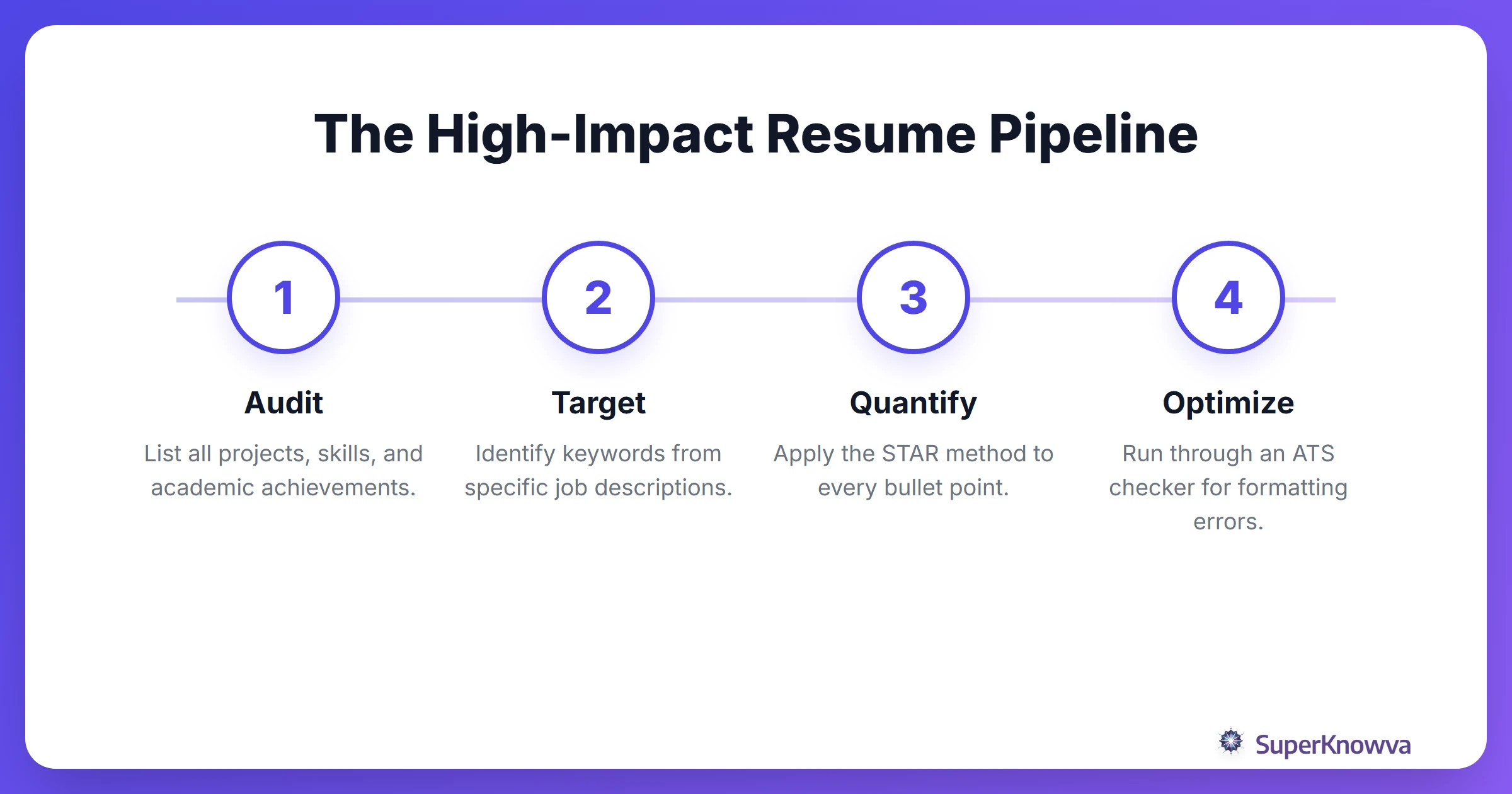
The secret is in how you frame it. Use the STAR method:
- Situation: What was the problem?
- Task: What was your job?
- Action: What did you actually do? (Use verbs like developed, led, analyzed, or built).
- Result: What happened? Quantify it.
Instead of saying "Did a marketing project," try: "Led a team of 4 to create a social media strategy that increased engagement by 20% over a 3-month period." See the difference? Numbers tell a story that adjectives can't.
The Proof of Work Strategy: Portfolio Integration
In 2026, your resume is just the "front door." Once an employer likes what they see, they’re going to go looking for more. This is why building an online presence is non-negotiable.
Your resume should include clickable links that prove you can do what you say you can:
- GitHub: If you’re in tech or data.
- Behance/Adobe Portfolio: If you’re a creative.
- Personal Websites: For the writers, marketers, and consultants.
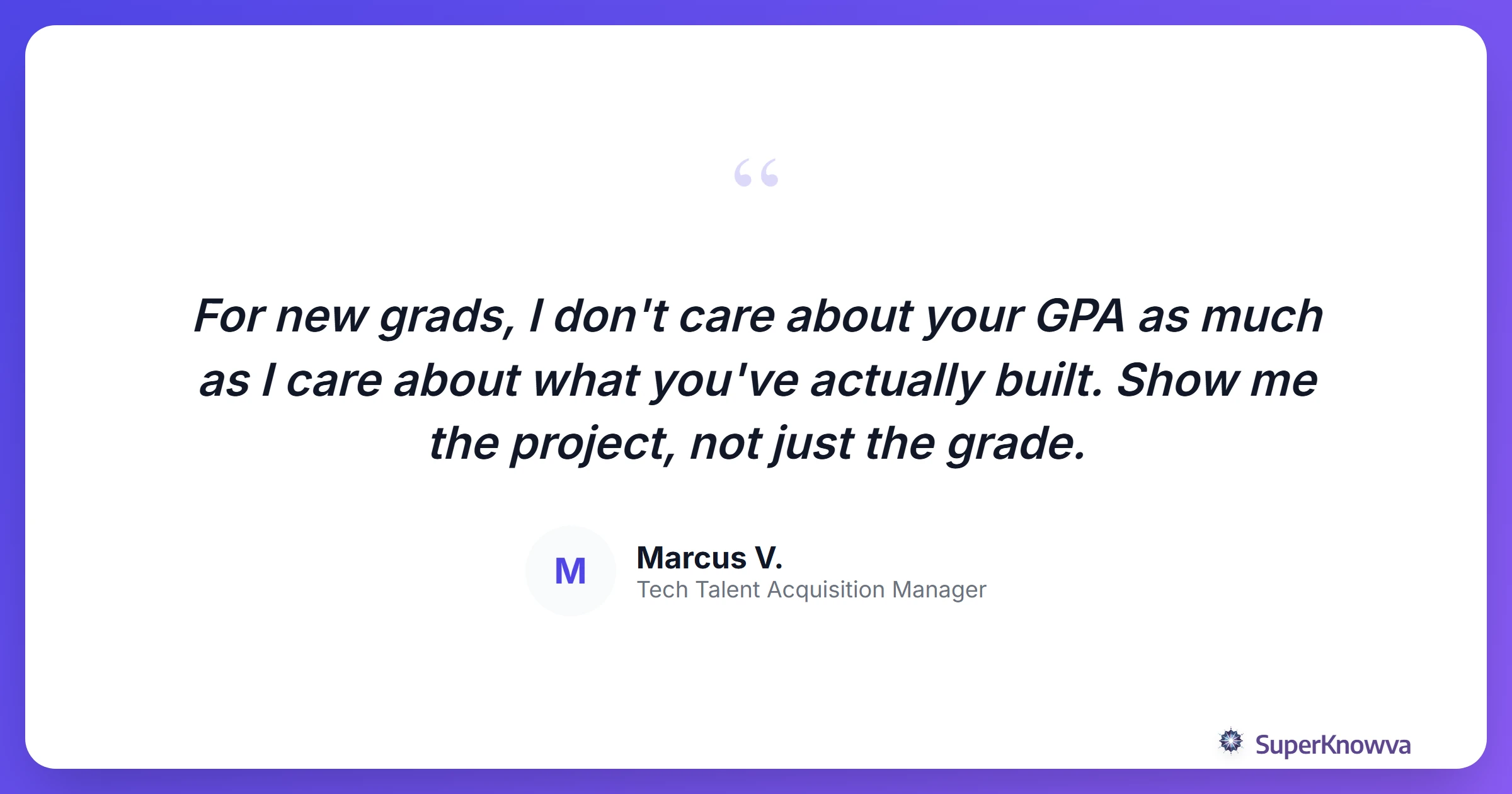
As seen in these Hiring Manager Insights (Reddit), recruiters are looking for curiosity and diligence. A "Proof of Work" strategy allows you to show your work, not just talk about it.
Common Pitfalls for New Graduates to Avoid
Even the smartest students trip up on the basics. Before you hit "send," check for these red flags:
- The "Blast" Method: Sending the same generic resume to 50 jobs is a waste of time. Tailor every single one.
- The Wall of Text: Recruiters spend about 6 seconds on an initial scan. If they see a solid block of text, they’re moving on. Use bullet points and white space.
- The High School Hangover: Unless you did something truly world-changing in high school, it’s time to take it off. Focus on your university achievements.
- Over-Designing: Don't let your "aesthetic" kill your chances with the ATS. Clarity is your best friend.
Conclusion
Building a resume for the Class of 2026 is about finding the sweet spot between traditional professionalism and modern tech-savviness. If you focus on your AI literacy, quantify your project wins, and keep the "bots" happy, you’re going to stand out.
Ready to sharpen those skills and give your resume some real teeth? Use SuperKnowva to master the technical concepts you need to fill that "Skills" section and land the interview you deserve.