You did it, Class of 2026! After years of late-night study sessions, mastering your toughest courses with SuperKnowva, and navigating the chaos of the modern job market, you finally have it: a real, live job offer. It feels amazing, doesn't it? But before you rush to sign that PDF and pop the champagne, take a breath. There is one final, high-stakes hurdle to clear: negotiating your first salary.
It is tempting to say "yes" immediately. As a new graduate, you might feel lucky just to be hired. But starting your first role without discussing compensation means leaving money on the table. You cannot negotiate without an offer in hand, and that starts with building a strong resume that gets noticed. Once you have an offer, it is time to advocate for yourself.
Your First Salary is a Financial "Anchor"
You might think a few thousand dollars won't change your life in your early twenties. You'd be wrong. Your starting salary isn't just a number; it’s the anchor for your entire financial trajectory.
Think about it: your future raises, your annual bonuses, and even your company's 401(k) match are usually calculated as a percentage of your base pay.
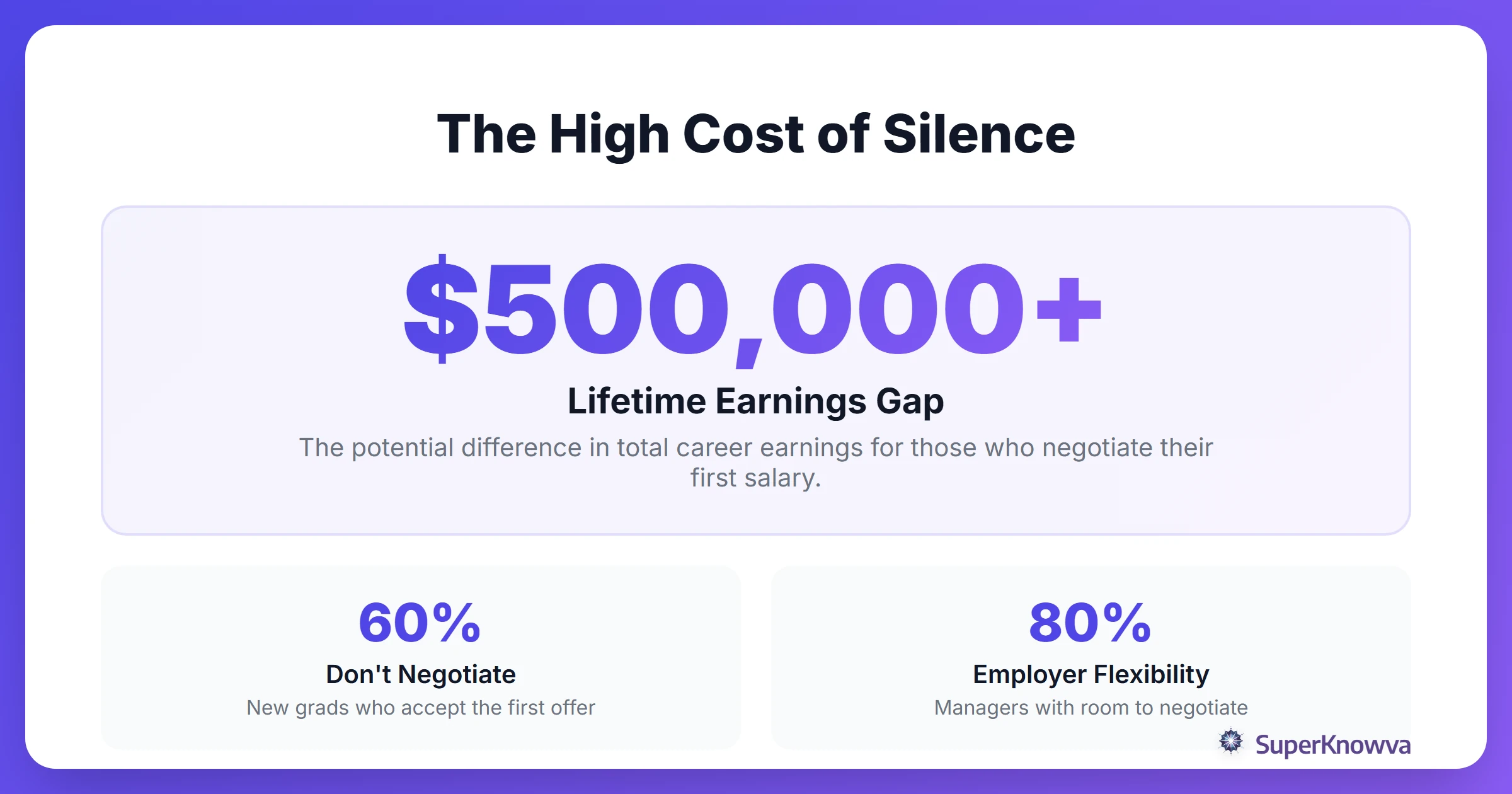
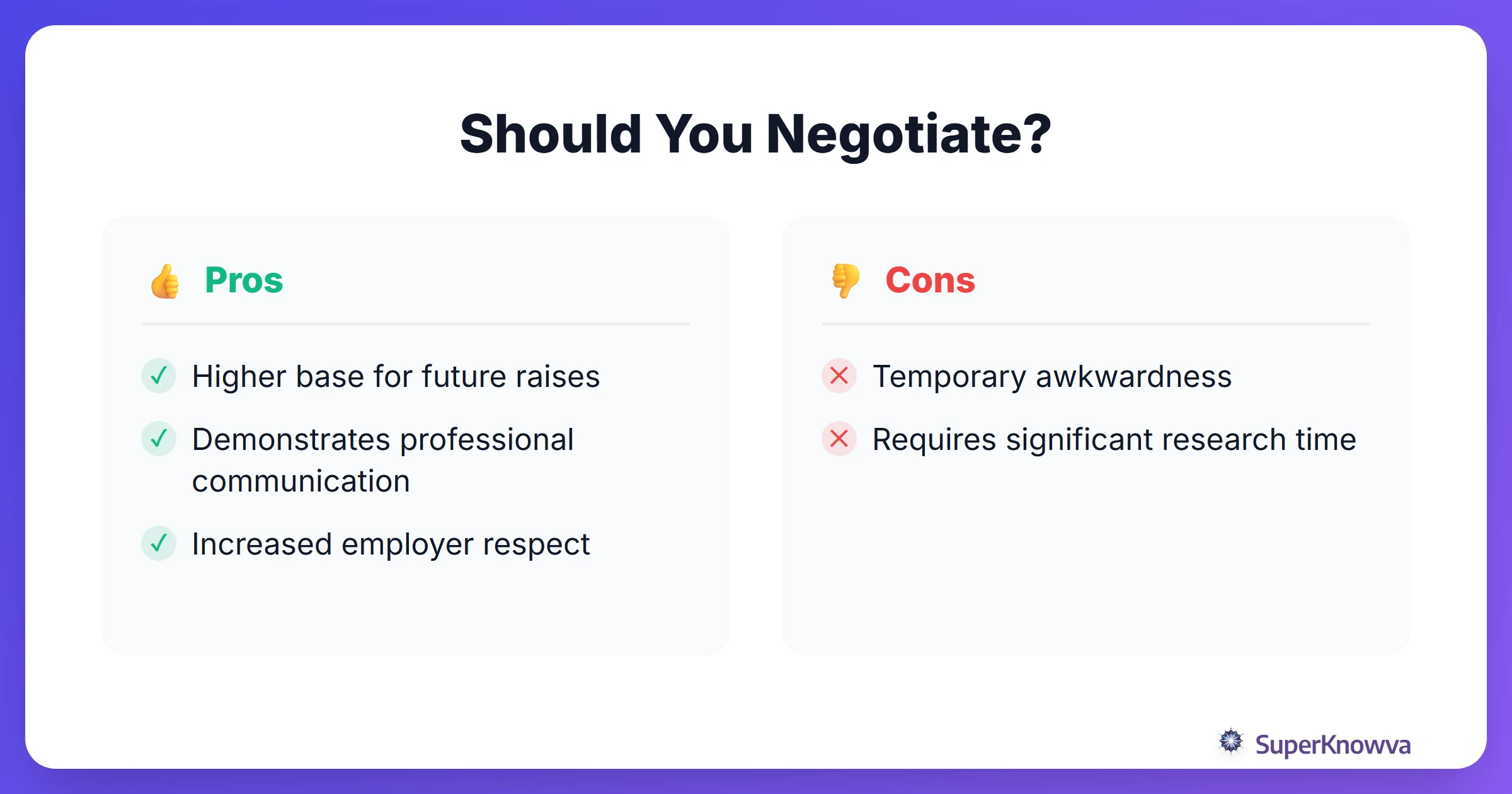
The math is honestly startling. A 500,000 in additional earnings** over a 35-year career. Despite this, many students shy away from the conversation because of the 10 Myths About Negotiating Your First Salary. You might worry about sounding ungrateful or "difficult," but here’s a secret: hiring managers expect you to negotiate. It’s a standard part of navigating the transition to the workplace.
How to Find Your Number in 2026
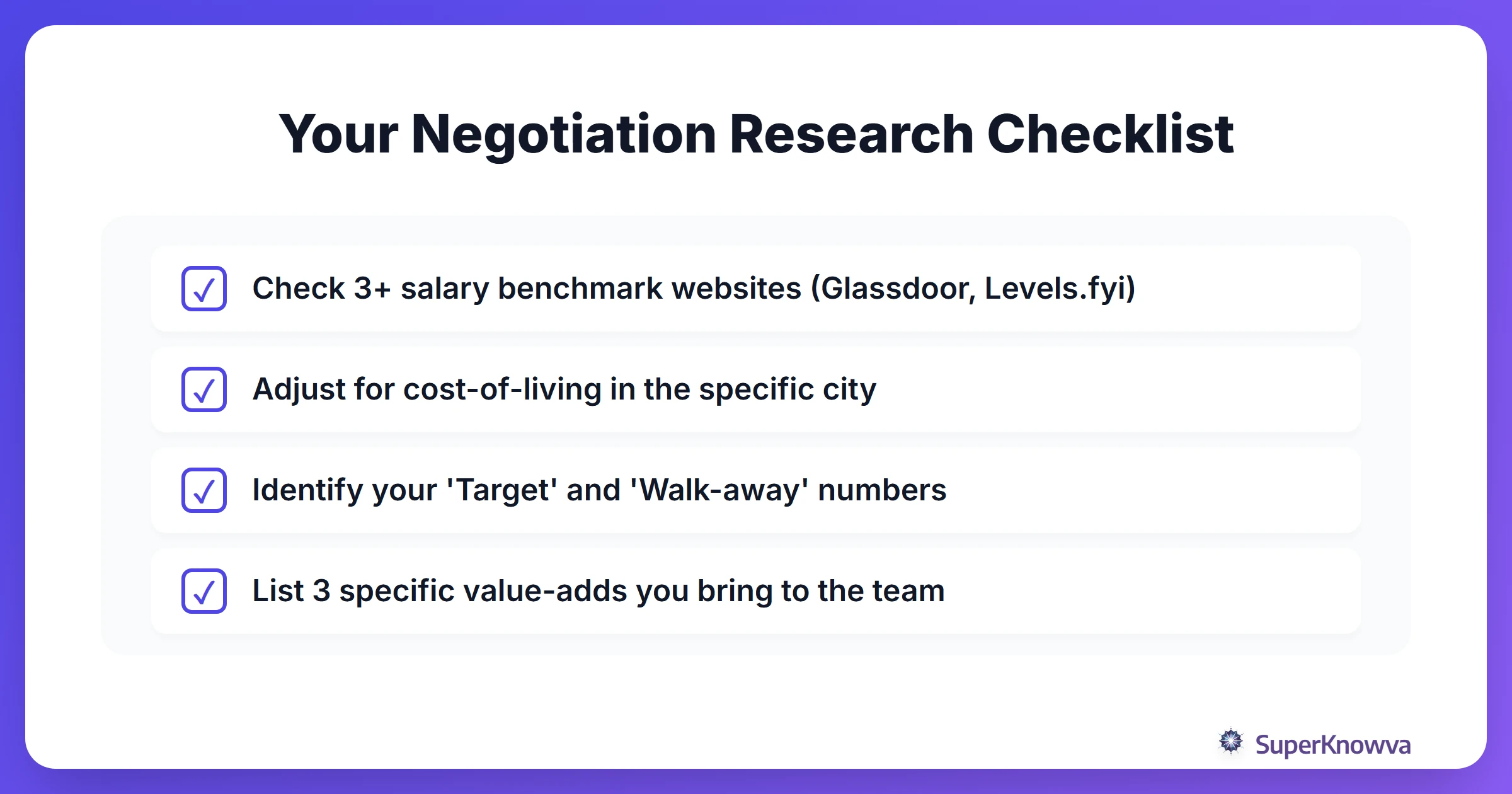
You can't walk into a negotiation with "vibes" alone. You need hard data. While the 2026 job market is transparent, it’s also noisy. You have to know where to find the signal.
- Filter for Experience: Use sites like Glassdoor, Levels.fyi, and Payscale, but be careful. Don't compare your entry-level offer to someone with five years of experience. Filter strictly for "0-1 years" to get a realistic benchmark.
- The "Location Tax": Geography still matters. A $70k offer in a mid-sized Midwest city might actually give you a better lifestyle than $85k in a coastal tech hub where rent eats half your paycheck. Use a cost-of-living calculator to see the real value.
- Talk to Humans: LinkedIn is your best friend here. Reach out to alumni from your school who graduated a year or two before you. Most people are happy to share a "typical range" for their department if you ask politely.
- Know Your "Walk-Away": Before the phone rings, have two numbers in your head. Your "target" (what you’re aiming for) and your "walk-away" (the absolute minimum you need to pay your bills and feel respected).
It’s Not Just About the Paycheck
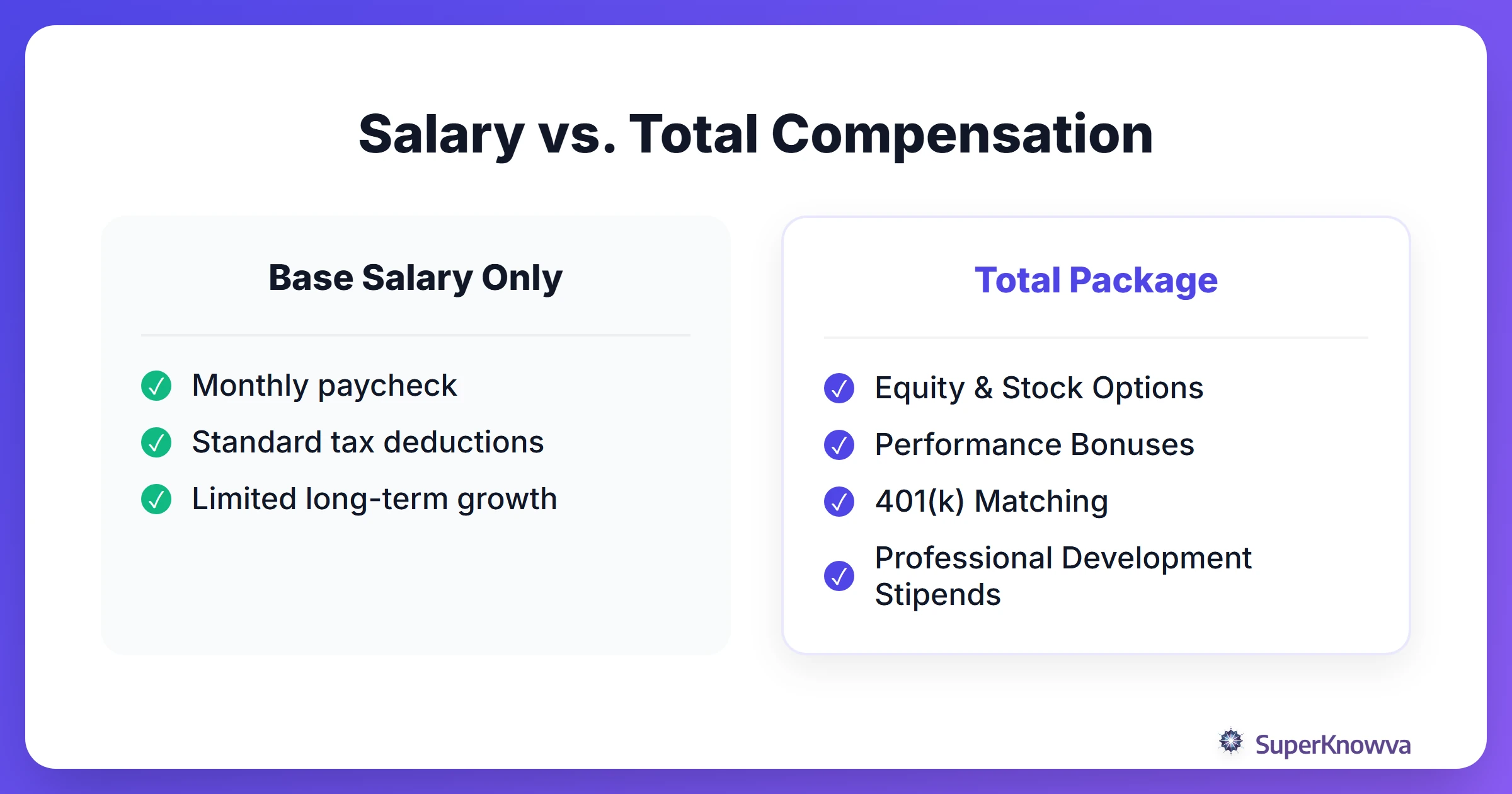
When you're negotiating a job offer after graduation, don't get blinded by the base salary. Look at the "Total Compensation" (TC). This is the sum of everything the company is giving you.
If the recruiter tells you the base salary is non-negotiable due to strict budget brackets, don't give up. Pivot to these other levers:
- The "Extras": Ask about performance bonuses or equity (RSUs). These can add up fast.
- The Safety Net: Look at the 401(k) match and the health insurance premiums. A high-deductible plan can cost you thousands in the long run.
- Flexibility and Growth: Negotiation is one of those essential soft skills that 2026 employers actually value. Use it to ask for a professional development stipend or a hybrid work schedule.
- The "Quick Fix": If they can't change your monthly pay, ask for a signing bonus or relocation assistance. It’s a one-time expense for them, making it much easier to approve.
Scripts: What to Actually Say
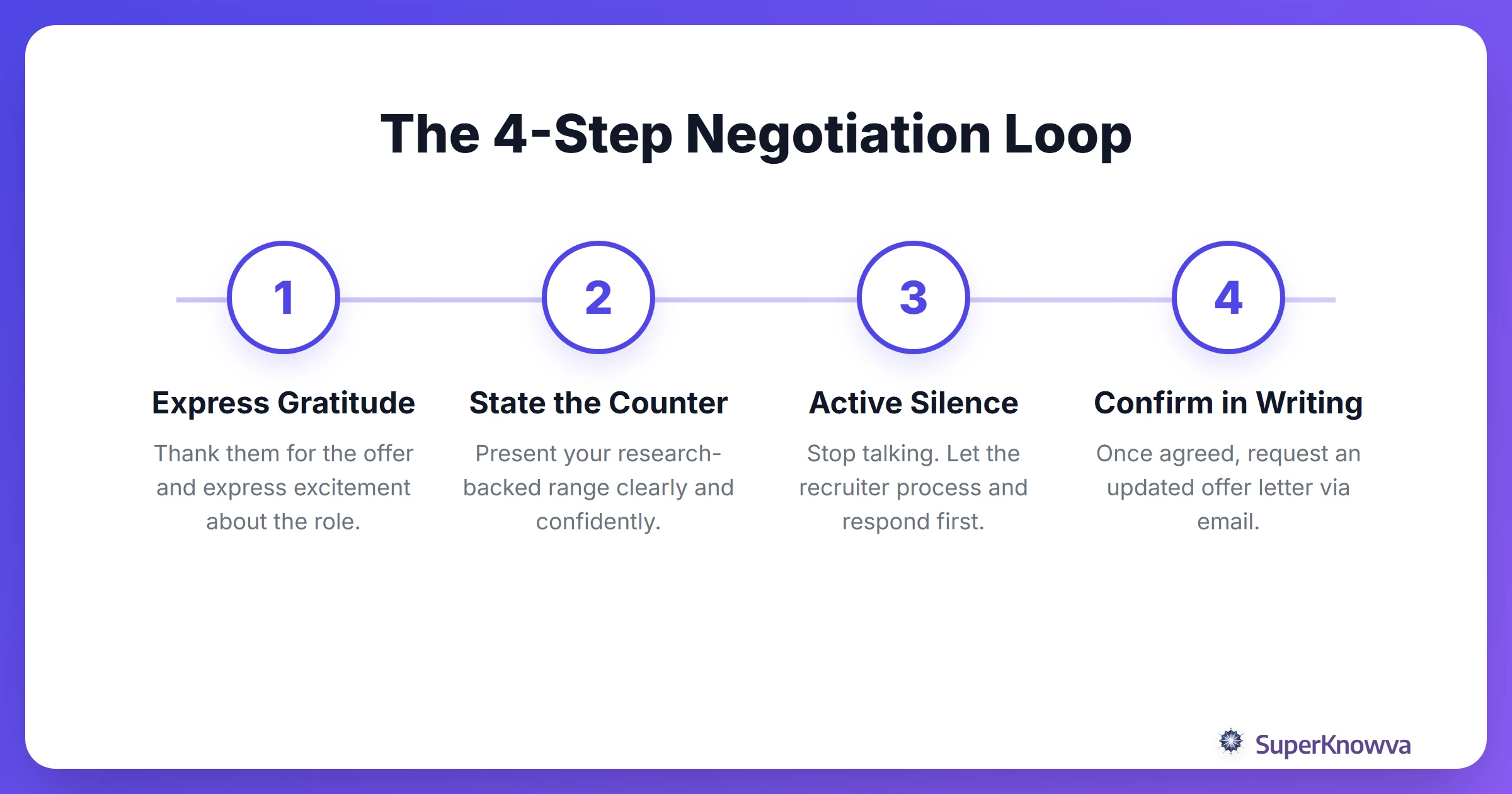
Negotiation isn't an argument; it's a collaboration. The goal is to reach a deal that makes both sides happy. Try the "Gratitude and Ask" approach.
If they ask for your salary expectations early:
- "Based on my research for similar entry-level roles in this city and the specialized AI-workflow skills I’ve developed, I’m looking for a range between $X and $Y. That said, I’m really focused on the right fit and am open to discussing the full package."
If you’re presenting a counteroffer:
- *"Thank you so much for the offer! I’m incredibly excited about the team. Based on the market data for grads in this industry, I was expecting something closer to
$Z. Is there any flexibility in the budget to get closer to that?“*
Pro Tip: The Power of the Pause. Once you ask for more money, stop talking. The silence will feel like an eternity. It’s awkward. You’ll want to start justifying yourself or taking it back. Don’t. Let the recruiter be the one to break the silence.
Fact-Checking the Myths
Don’t let social media “career gurus” get in your head. Let’s look at the reality of 2026:
- Myth: “I have no bargaining power as a new grad.”
- Reality: You bring plenty of value. You’re likely more fluent in AI-integrated tools and modern workflows than half the current staff. That’s a massive asset.
- Myth: “They’ll take the offer away if I ask for $
- Reality: Unless you’re rude or making wild demands (like asking for double the offer), this just doesn't happen. They’ve already spent thousands of dollars recruiting you. They want you to sign.
- Myth: "The first offer is their best offer."
- Reality: Almost every company leaves a little "wiggle room" in the budget. If you don't ask, you're just giving that money back to the company.
When should you stay quiet? If you’re entering a government role, a union position, or a rigid "rotational program" where pay is strictly fixed by a public grade, negotiation might not be possible. But for almost everywhere else? The door is open.
The Final Step: Get It in Writing
A verbal promise is worth the paper it’s printed on. Once you agree on a number, your next move is a quick, professional follow-up email.
"I’m thrilled to officially accept the offer for [Role]! To confirm our conversation, we’ve agreed on a base salary of $X and the inclusion of the $Y signing bonus. I’m looking forward to receiving the updated contract."
Make sure everything, from your start date to your remote work days, is in that final document. If you have another offer, use it. Let the employer know that a competing offer has a higher base and ask if they can match it.
If you want to dive even deeper into the psychology of these talks, this classic guide on making more money and being more valued is a must-read. You’ve put in the work to earn your degree; now, make sure your paycheck reflects it. You've got this, 2026 grads!