The August SAT is a bit of a psychological trap. It’s sitting there on the calendar, looming over your summer while the sun is out and your friends are at the beach. But here’s the reality: the secret to a 1500+ score isn't a frantic, caffeine-fueled cram session the week before. It’s about owning the "July Window."
By starting now, you can master the Digital SAT prep tips that actually move the needle and walk into that testing center feeling like you’ve already won. In this guide, we’re going to break down how to use AI-powered tools and a bit of strategic planning to turn your July into a high-scoring launchpad.
The July Advantage: Why Starting Early for August Matters
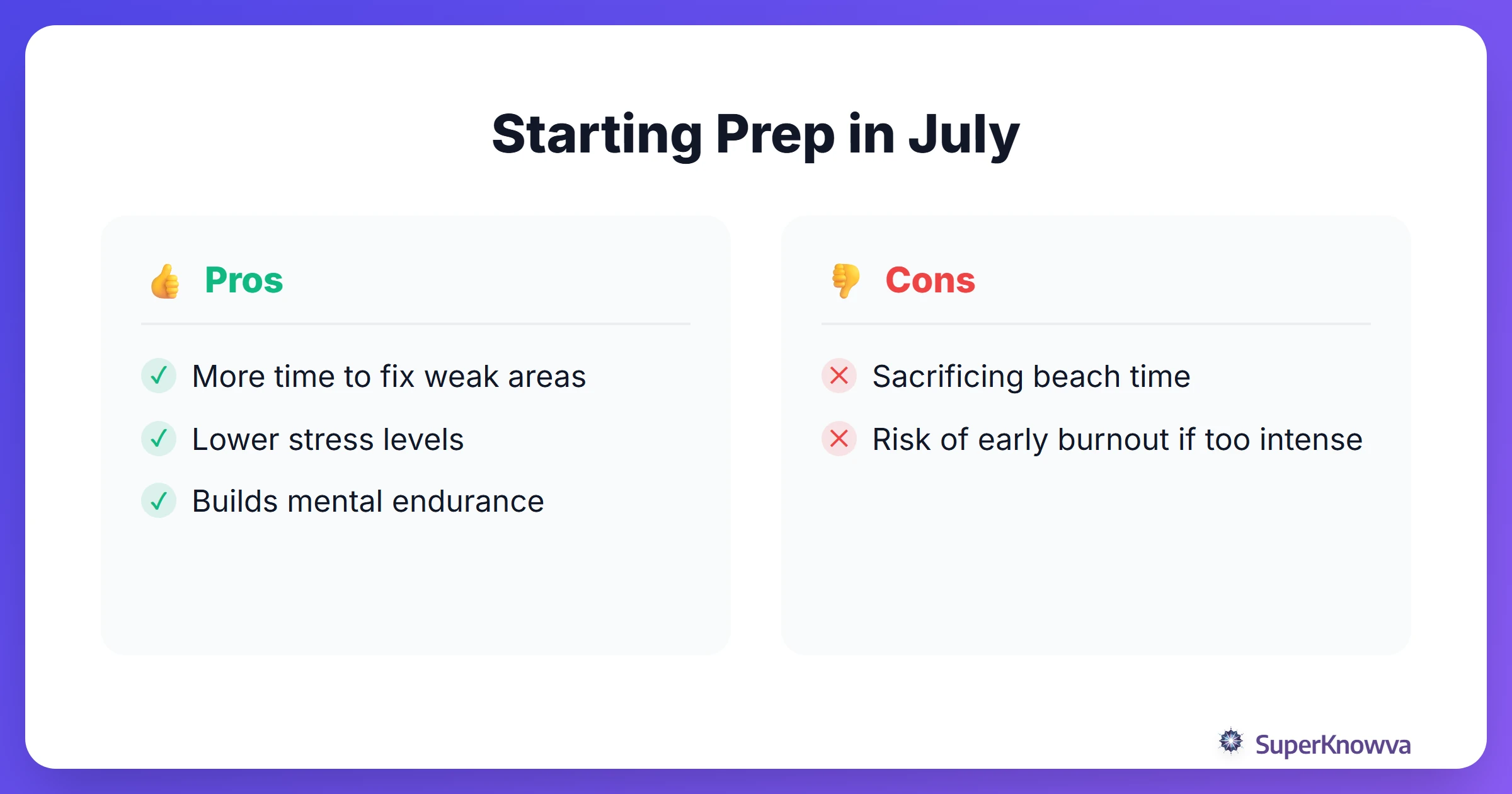
Why July? Because a six-week lead time is the absolute "sweet spot" for test prep. It’s long enough to actually fix your weak spots, but short enough that you won't burn out before test day.
We’ve all heard of the "summer slide," the process where your brain loses its edge after two months of no school. By jumping into your August SAT study plan in early July, you keep your focus sharp. You aren't just learning math formulas; you’re staying ready for the test.
Get a baseline first. Don't guess where you stand. Download the College Board’s Bluebook app and take a full-length practice test. Don't stress the result; this isn't a grade, it's just data. Knowing your starting point is the best way to manage test-day anxiety because it removes the fear of the unknown.
Mastering the Digital Format and Interface
The Digital SAT isn't just the old paper test moved to a laptop. It’s an entirely different beast. If you want to win, you have to master Bluebook app strategies long before you sit down for the real thing.
- The Adaptive Engine: The SAT is now "stage-adaptive." This means your performance on the first module of Reading and Writing (RW) or Math dictates how hard the second module will be. You need to crush Module 1 to reach the higher-scoring "Hard" module. No pressure, right?
- Built-in Tools: Use the "Mark for Review" button. If a question feels like a time-sink, flag it and move on. Use the "Strikethrough" tool to eliminate obviously wrong answers. It clears the mental clutter.
- The Desmos Advantage: The built-in Desmos calculator is a powerful tool if you know how to use it. It’s not just for multiplication; it’s for solving systems of equations and finding intercepts in seconds. For more official insights, check out College Board's Top 10 Digital SAT Tips.
Strategic Reading & Writing: The 'Second Half First' Approach
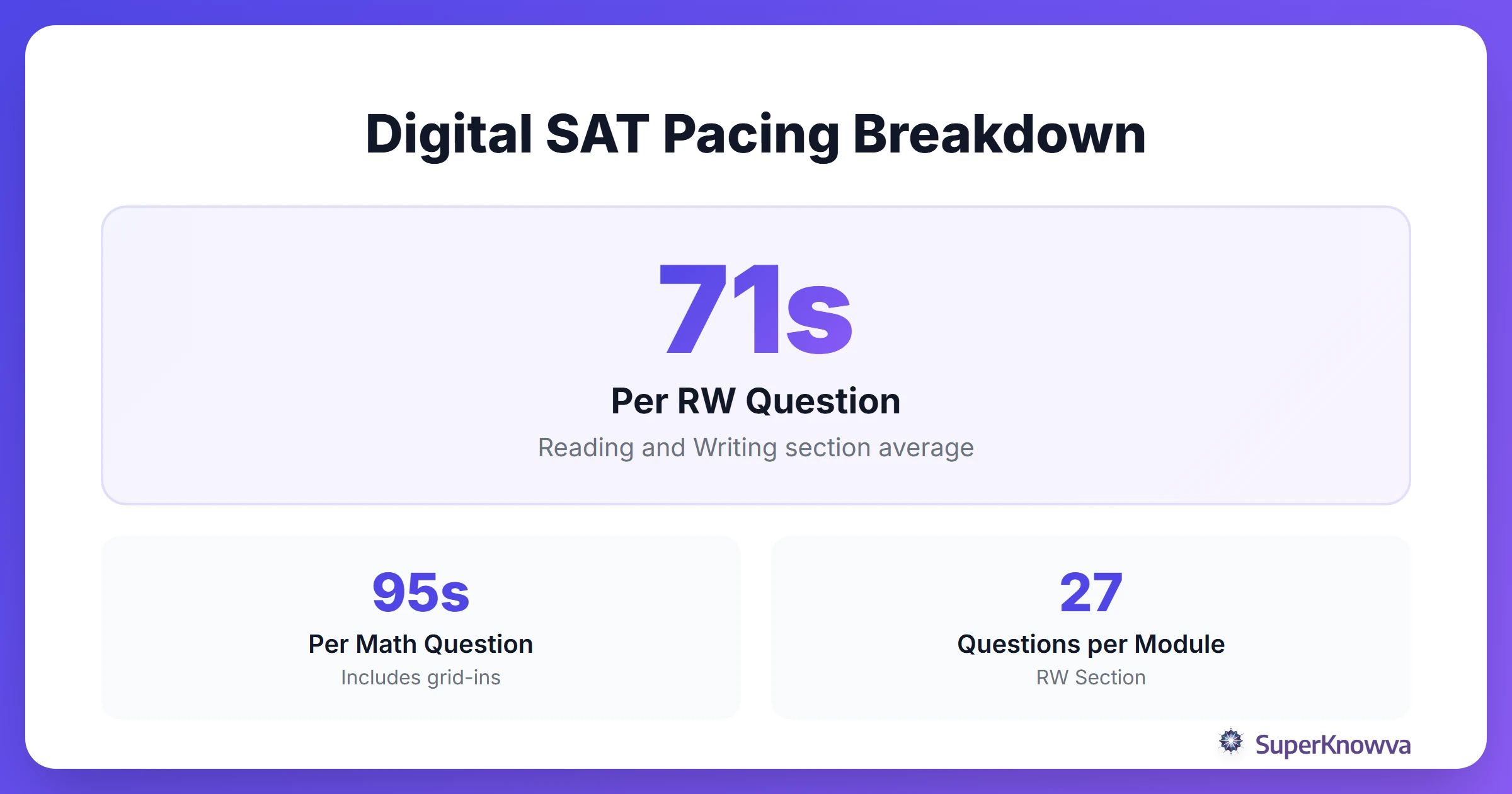
The Reading and Writing section is a sprint. You have roughly 71 seconds per question. That’s it. To keep your head above water, you need a solid SAT Reading and Writing strategy.
Many top scorers swear by the "Second Half First" method. In each RW module, questions 1-15 are usually heavy reading comprehension. Questions 16-27 move into Grammar and Synthesis.
By jumping straight to question 16, you can:
- Bank the "Easy" Points: Grammar rules are objective. You either know them or you don't, and they're usually much faster to solve than a dense literary passage.
- Save Your Time: If you fly through the grammar, you’ve just bought yourself extra minutes for those tricky reading questions at the start.
Want to get faster? You can boost your reading comprehension with AI by practicing with short, complex texts that mirror the new SAT style. For a deeper look at this specific tactic, check out The Second Half First Strategy.
Solving the 'Practice Test' Shortage with AI
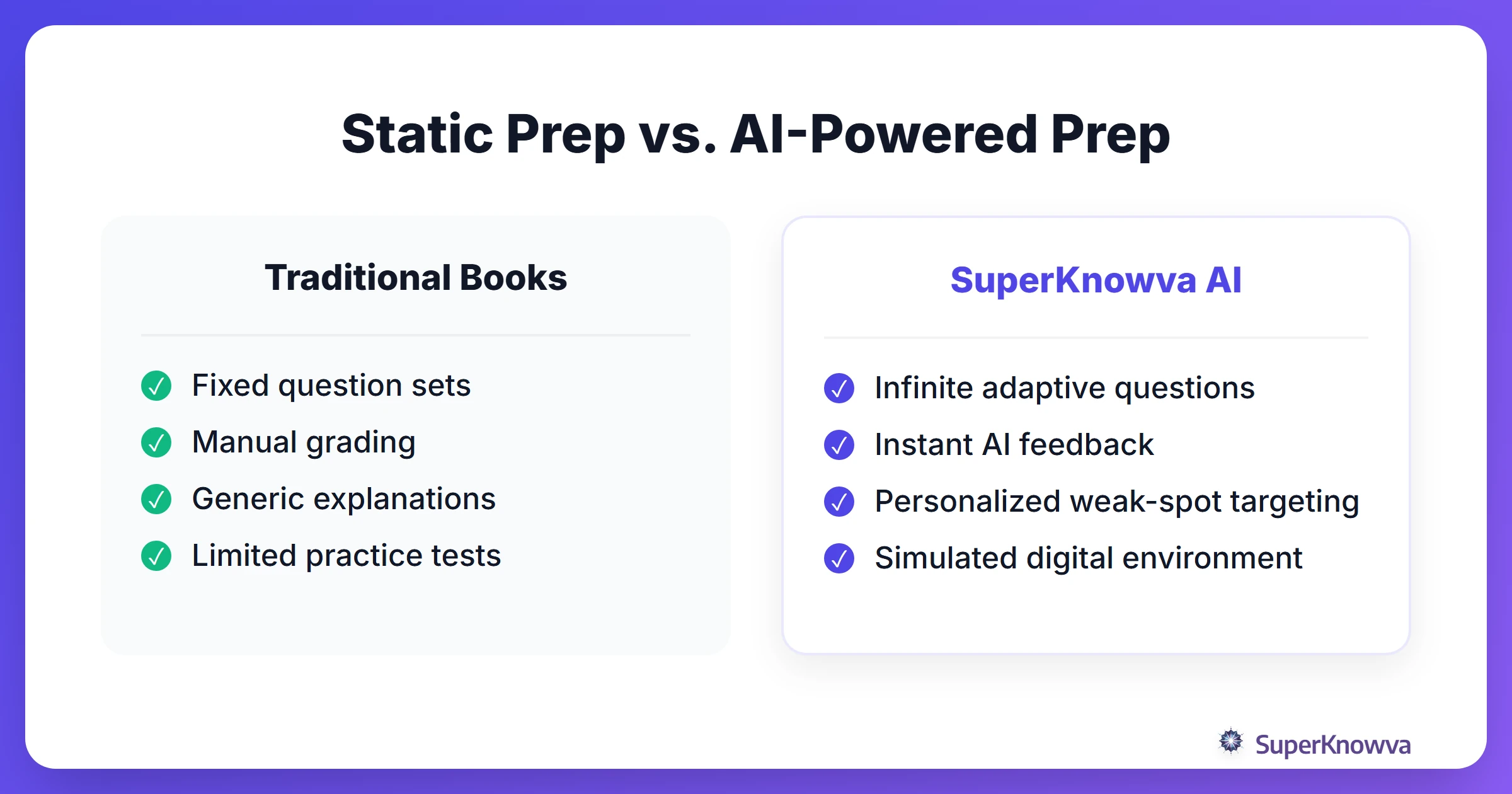
Here is the frustrating truth: the College Board doesn't provide enough practice tests. Once you’ve burned through the few official ones in the Bluebook app, what are you supposed to do?
This is where AI SAT practice tests change the game. SuperKnowva’s AI-powered question banks give you realistic, adaptive practice that doesn't run out.
- Targeted Drills: If "Transitions" or "Quadratic Equations" are your kryptonite, you don't need a whole practice test. You need targeted drills. AI can generate infinite questions for your specific weak spots.
- Instant Logic: Forget waiting for an answer key. AI gives you immediate feedback, explaining the logic behind the right answer so you don't repeat the same mistake.
- Difficulty Scaling: As you get better, the AI gets tougher. It ensures you’re actually ready for that "Hard" version of Module 2.
If you’re aiming for a perfect verbal score, using advanced verbal reasoning strategies can give you the edge needed for the most difficult SAT passages.
Math Mastery: Beyond the Basics
The Math section provides about 95 seconds per question, but the logic is often complex. Your SAT Math Desmos tips are essential for managing the time limit.
Key Desmos Tactics:
- Intersections: For "system of equations" problems, just type both into Desmos. Click the point where they cross. Done.
- Regressions: Use Desmos to find the line of best fit for stats questions instantly.
- Constants: Use sliders to see how changing a constant (like 'k' in a vertex form equation) actually shifts the graph. It’s visual, it’s fast, and it’s accurate.
One more thing: don't ditch the scratch paper. Even in a digital world, mapping out your logic by hand before you type it into the calculator prevents the "silly" input errors that tank scores.
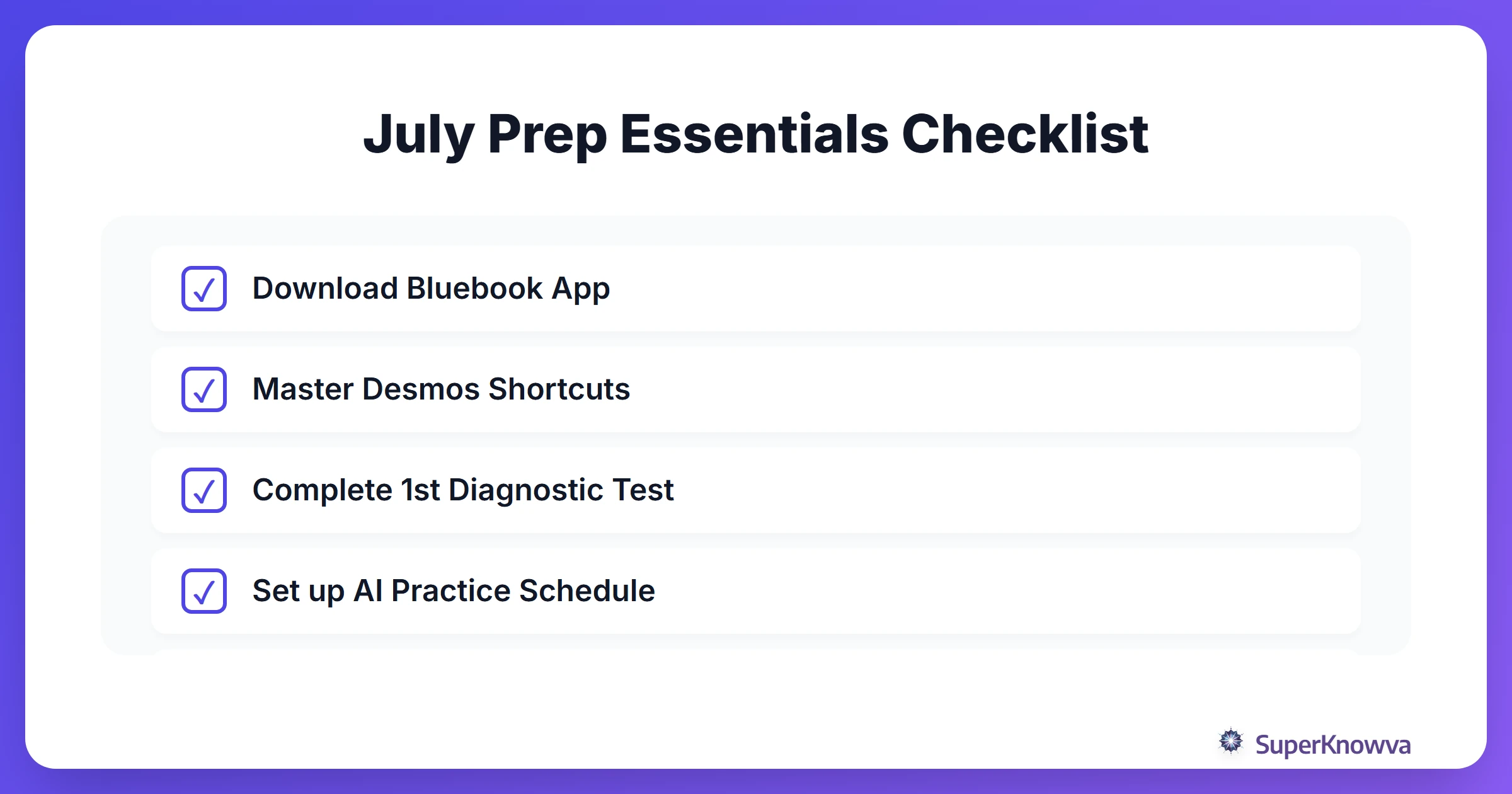
A Sample 6-Week July to August Study Timeline
Ready to get to work? Here is your roadmap from July 1st to test day.
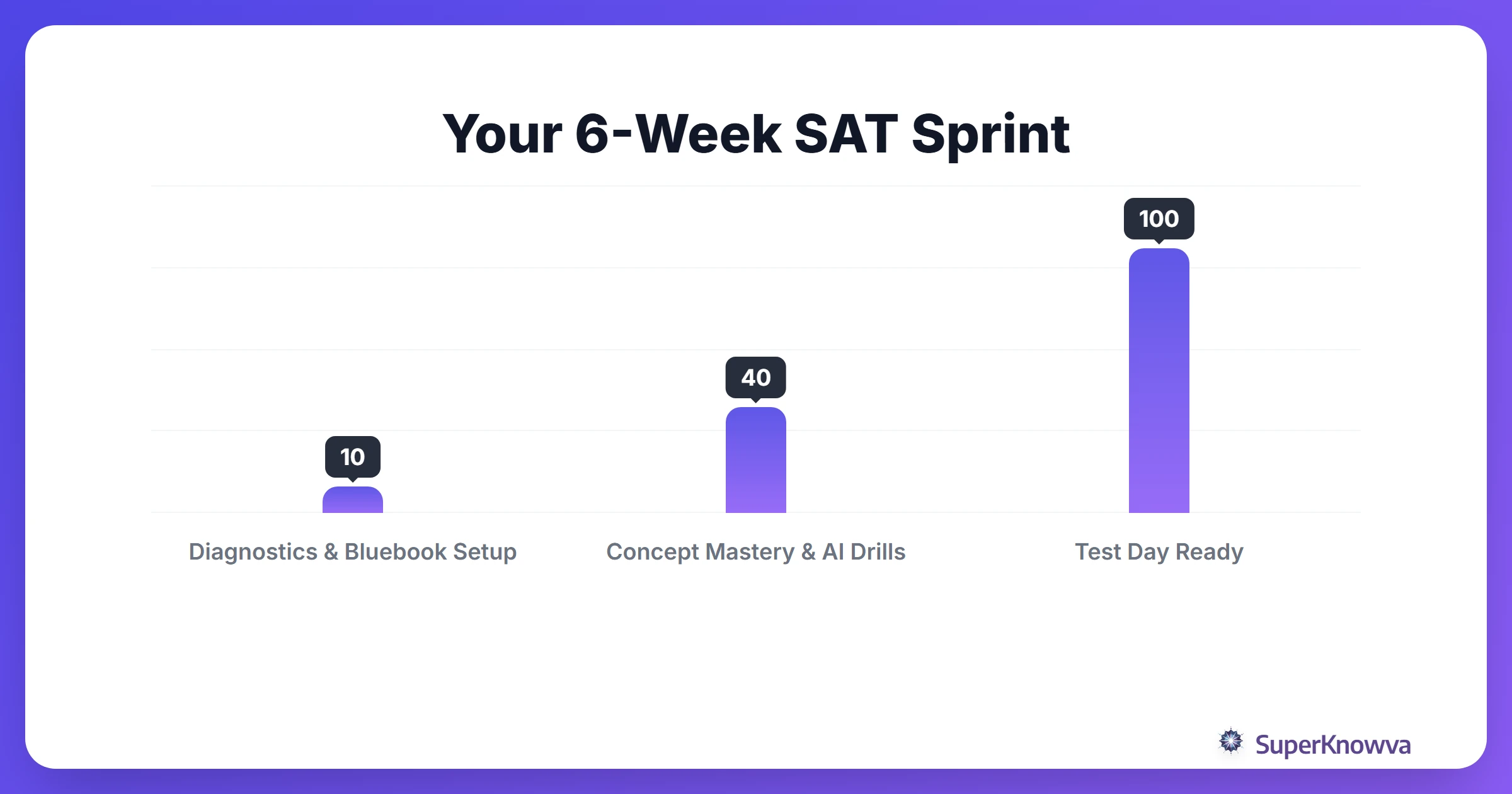
- Week 1-2: The Foundation: Take that first Bluebook test. Identify your "Big Three" weaknesses. Use SuperKnowva to hammer the core concepts of those topics until they're second nature.
- Week 3-4: The Grind: Focus on pacing. Practice the "Second Half First" strategy and master your Desmos shortcuts. Use AI-generated questions to drill your weak areas every single day.
- Week 5: The Simulation: Take two full-length, timed practice tests. No phone, no distractions, quiet room. Then, do a deep "error analysis." Why did you miss those questions? Was it because you didn't know the math, or because you ran out of time?
- Week 6: The Polish: Review your grammar and formula cheat sheets. Take one final, light practice module to stay sharp, but mostly focus on sleeping and getting your head right.
Conclusion
The Digital SAT rewards students who are more than just book-smart. It rewards those who are digitally savvy. By starting in July, you have the time to master the interface, use AI to your advantage, and perfect your timing.
Don't wait until the August heat turns into pre-test panic. Own your summer, use the tools at SuperKnowva, and show up to that test center ready to dominate.