Summer break is usually for sleeping in and hitting the beach. But for the ambitious student? It’s the ultimate competitive advantage. If you’re eyeing a top-tier university, your sat summer study schedule is the most important project on your calendar.
The game has changed. The days of lugging around an 800-page textbook and highlighter are dead. With the shift to the Digital SAT, prep needs to be faster, smarter, and more adaptive. By combining a focused 8 week SAT plan with an AI SAT tutor, you can move your score from "average" to "Ivy-ready" before the first school bell rings in September.
Why Summer is the Gold Mine for SAT Preparation
Why does everyone struggle to hit a 1500+ during the school year? It’s rarely a lack of intelligence. It’s a lack of bandwidth.
Between AP history essays, varsity soccer practice, and club meetings, your brain is constantly exhausted from context-switching. Summer is different. It offers a "Gold Mine" of focused time where you can finally adopt a boot camp mindset.
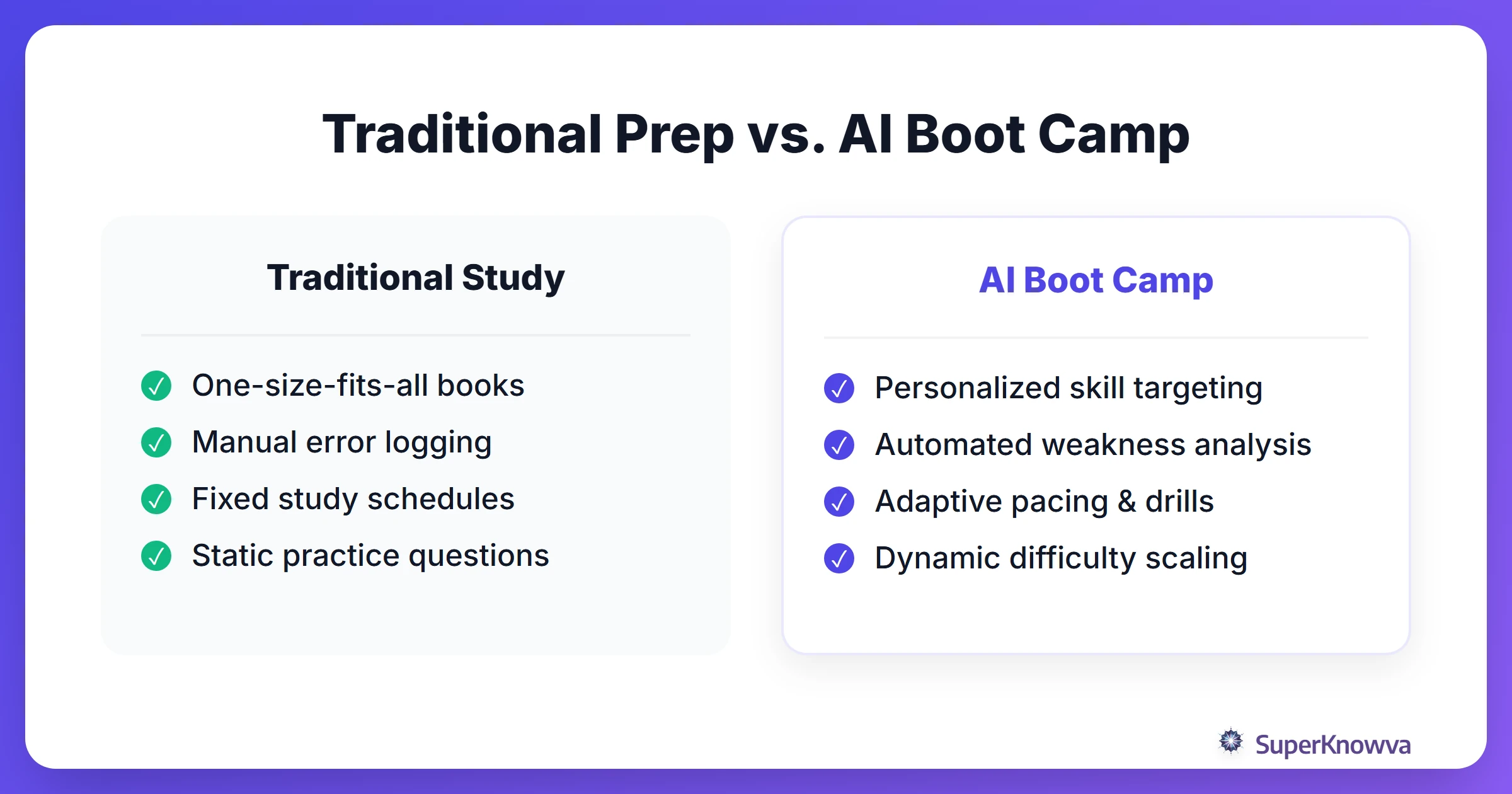
This isn't about casual studying. It’s about being intensive and immersive. Instead of manual, tedious planning where you guess which math chapter to review, you should be moving toward AI-optimized scheduling. While traditional methods leave you guessing, AI-driven platforms like SuperKnowva pinpoint exactly where your logic breaks down.
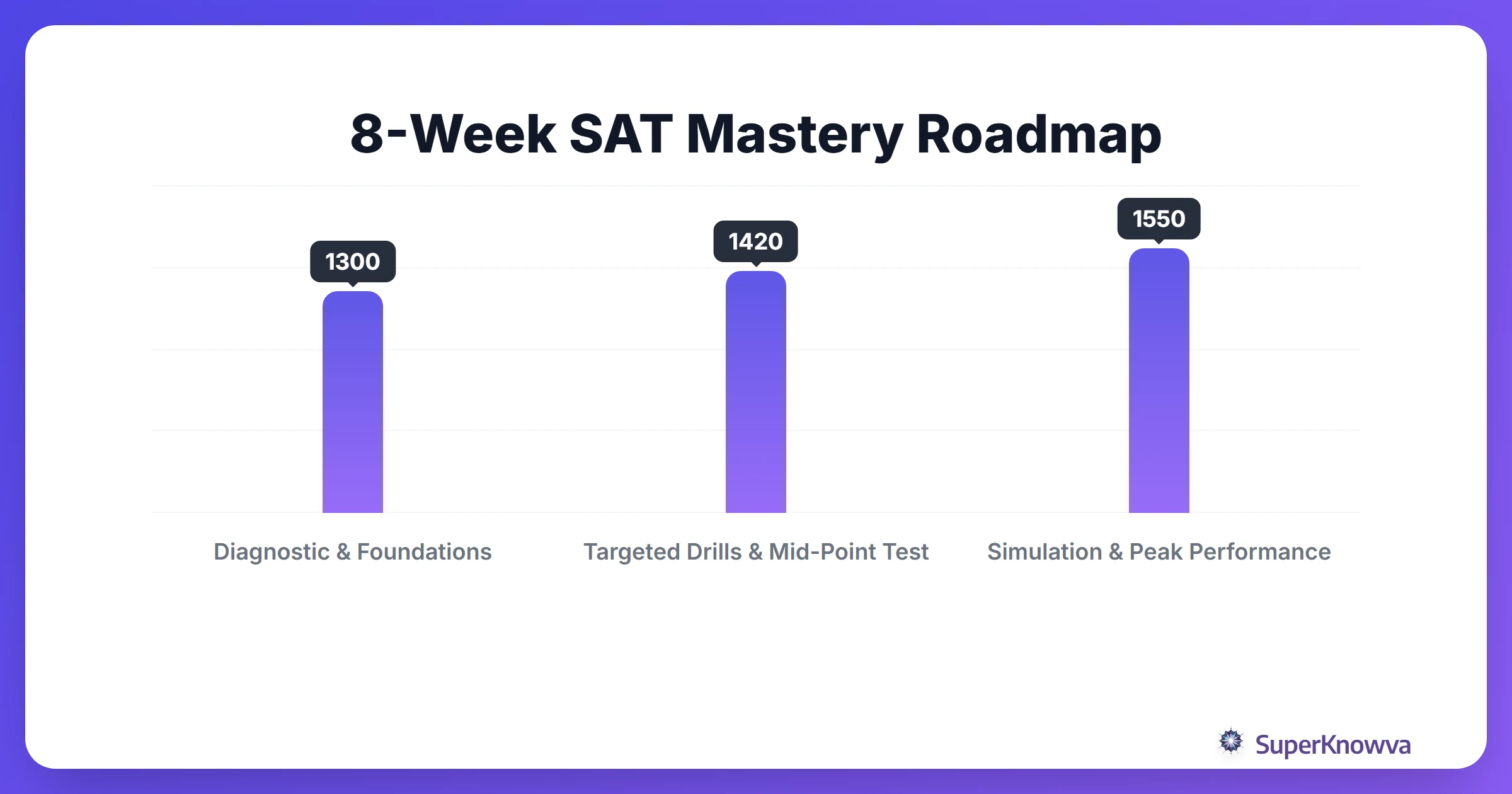
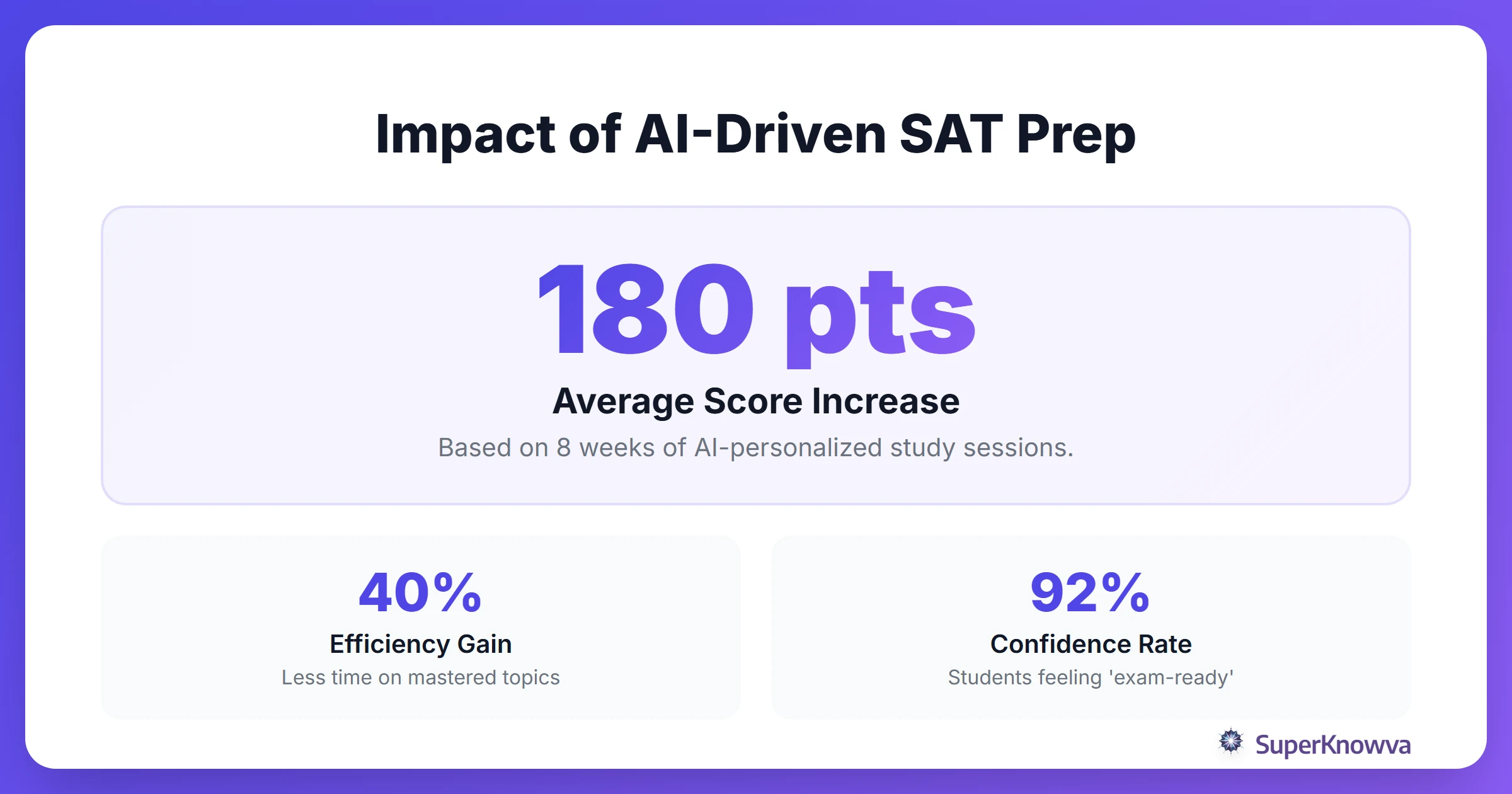
The goal? It’s more realistic than you think. Most students following a dedicated summer plan can see a 150-250 point increase. If you want to see how many hours it takes to hit your specific target, check out the PrepScholar SAT Study Plan Guide.
Phase 1: The AI Diagnostic and Foundation (Weeks 1-2)
You can't map a route if you don't know where you're starting. The first two weeks of your SAT prep summer are all about the baseline. It might feel intimidating to see your starting score, but you need that data.
- The Baseline Test: Take a full-length, timed practice test. No distractions. No phone. Just you and the screen.
- AI Error Categorization: Don't just look at what you got wrong; look at why. Use AI to separate content gaps (you forgot the circle equation) from strategy errors (you fell for a "trap" answer or ran out of time).
- High-Yield Concepts: Focus on essential topics like linear equations and punctuation rules that appear in almost every module.
Building a routine now is the only way to prevent burnout later. Resources like the Khan Academy SAT Prep Official Guide offer great foundational lessons that pair perfectly with an AI-driven boot camp. Get the basics down now so you can drill the hard stuff later.
Phase 2: Targeted AI Drills and Weakness Eradication (Weeks 3-6)
This is the "grind" phase. During the middle of your 8 week SAT plan, we move from general review to "weakness eradication."
The beauty of AI-driven drills is that they adapt in real-time. If you’ve mastered "Systems of Equations," why keep doing them? The AI recognizes your proficiency and automatically pivots your focus to "Non-linear Functions." When it comes to the verbal side, memorizing lists is a waste of time. You need AI-driven verbal strategies to help you understand how words function in context.
- Spaced Repetition: Use AI to schedule reviews of difficult formulas at increasing intervals. If you got a question wrong on Tuesday, the AI will make sure you see it again on Friday.
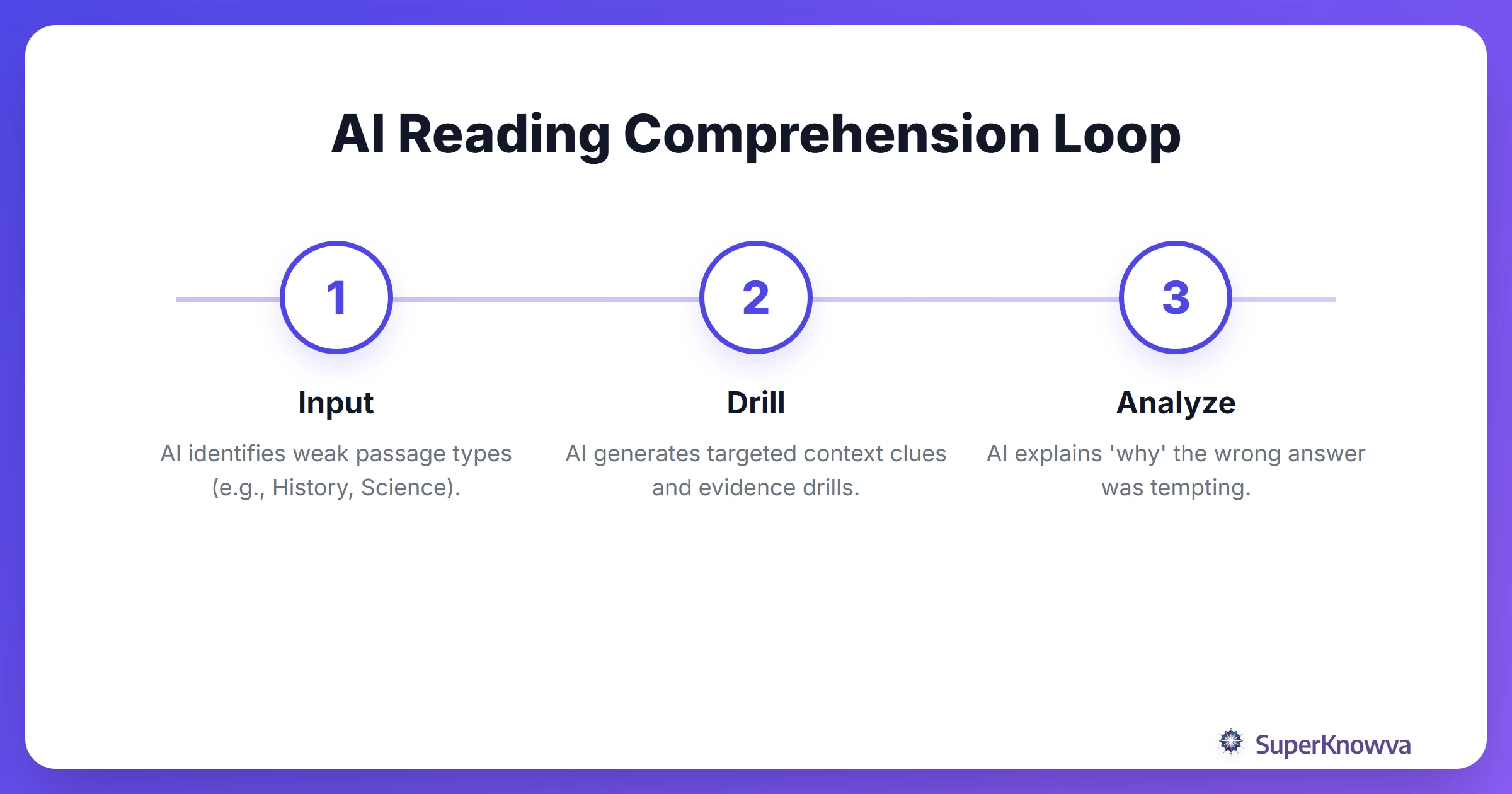
- The Hard Stuff: Dedicate specific blocks to the Reading & Writing section’s most brutal question types, like Command of Evidence. If you’re struggling to stay focused on long passages, you can boost your reading comprehension with AI tools that simulate the exact complexity of the Digital SAT.
By the end of Week 6, take another full-length practice test. It’s time to see how much that hard work has paid off.
Phase 3: Speed, Accuracy, and Test Simulation (Weeks 7-8)
In the final two weeks, we assume you know the material. Now, it’s about digital SAT practice under pressure.
The Digital SAT is a marathon of focus. You need to simulate the actual test environment using the College Board’s Bluebook app alongside SuperKnowva’s AI analysis.
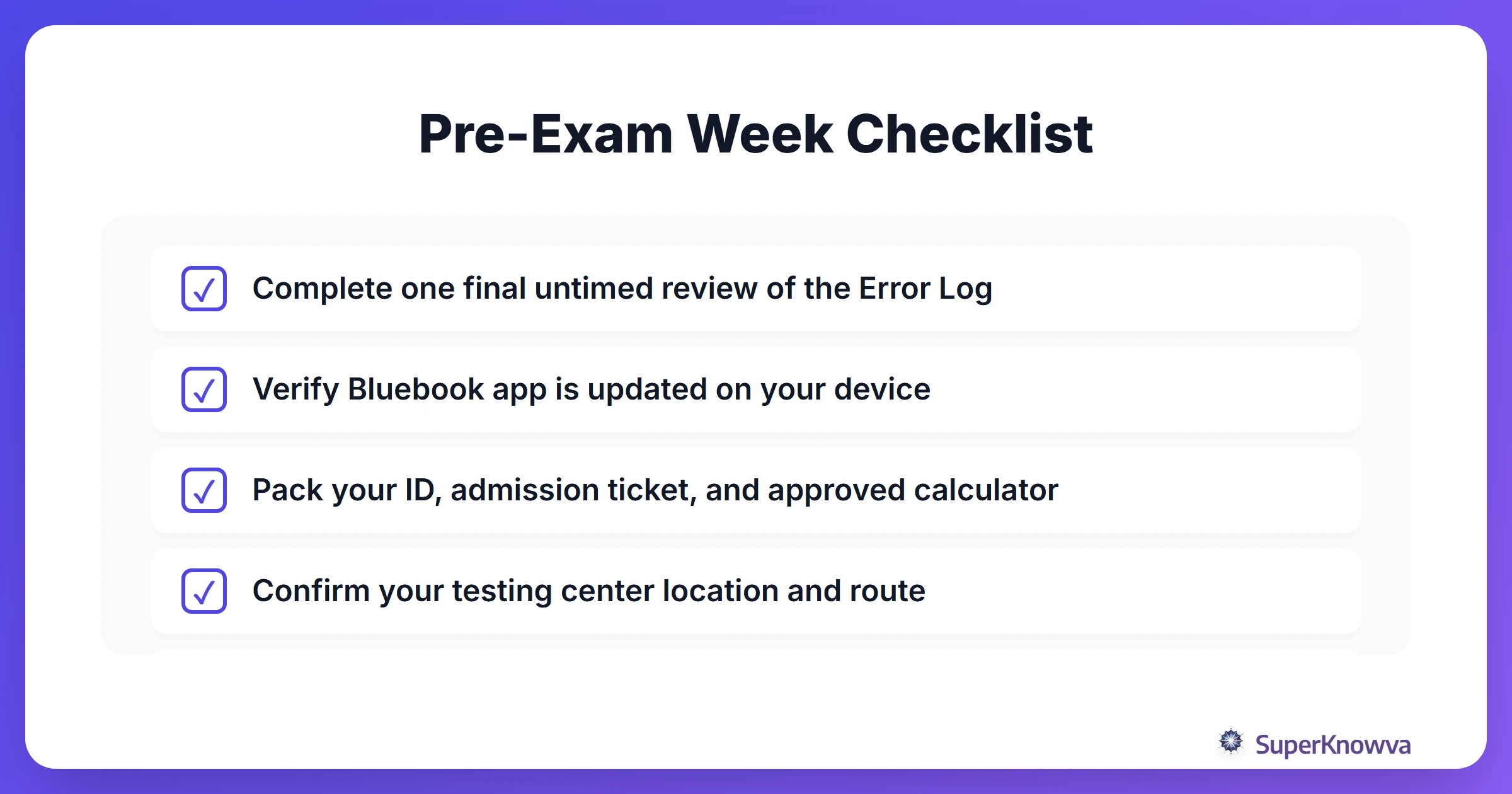
Are you finishing the Math section with time to spare? If not, you need to work on your pacing. Interestingly, some of the advanced quantitative reasoning techniques used for the GRE are incredibly helpful for high-level SAT math shortcuts. Finally, do a deep dive into your Error Log. If you’re still making the same mistakes you made in Week 1, now is the time to fix the habit.
Leveraging AI for Reading Comprehension Mastery
Let's be honest: the Reading and Writing section is usually the hardest to "hack." But AI makes it manageable.
An AI SAT tutor can generate practice passages based on topics you care about, such as space exploration or 19th-century history. This builds reading stamina by providing engaging content.
AI can also help you dissect the tone and structure of a passage. It can highlight "pivot words" (like however or nonetheless) that completely flip the meaning of a paragraph. Mastering this isn't just about a SAT score boost; it’s about building the reading skills you’ll need to survive college-level seminars.
The Final Countdown: Prepping for the August SAT
As the test date gets closer, it’s time to "taper." Just like a marathon runner doesn't run 20 miles the day before a race, you shouldn't be doing 5-hour study sessions the week of the exam. You want to be "peaking," not crashing.
- Mental Prep: Trust the data. If your practice scores are up, your real score will be too.
- Logistics: Check your calculator batteries. Print your admission ticket. Confirm your testing center. Don't let a dead battery ruin two months of work.
By following this sat summer study schedule, you aren't just crossing your fingers and hoping for a good day; you are ensuring a result. With AI tools, an 8-week commitment can change your college trajectory.
Ready to start the clock? Let's get to work.