Struggling to keep your eyes open during those long July study sessions? You’re definitely not the only one. Between the looming pressure of exams and the agonizing sight of sunshine through your window, staying glued to your notes can feel like a chore. But here’s the thing: the secret to better concentration isn't necessarily studying longer. It’s learning how to stop.
Sneaking mindfulness for students into your daily routine can completely flip the script on your productivity and take the edge off that academic burnout.
What is Mindfulness for Students, Anyway?
Forget the stereotype of sitting cross-legged on a mountain for hours. At its core, mindfulness is just intentional, kind awareness. It’s a "pause and check-in" approach. For a busy student, it’s about noticing your current state without letting it swallow you whole.
Mindfulness is different from a standard break, such as scrolling through your phone, because it requires active presence. While a typical break is a distraction from your work, a mindful break is a reconnection with yourself. It’s about observation. Instead of letting a thought like "I’m going to fail this grade" spiral into a full-blown afternoon panic, you acknowledge the thought, label it as "worry," and let it pass. For students in high-pressure environments, this is vital for emotional balance.
The Science of Mindful Breaks and Focus
Why does this actually work? It’s not just "woo-woo" magic; the data is solid. A Harvard Graduate School of Education Study suggests that mindfulness can actually blunt the negative effects of stress and help students stay engaged longer.
When we’re stressed, our brain’s "fight or flight" mode takes the wheel. Good luck trying to process organic chemistry when your nervous system thinks it's being chased by a predator.
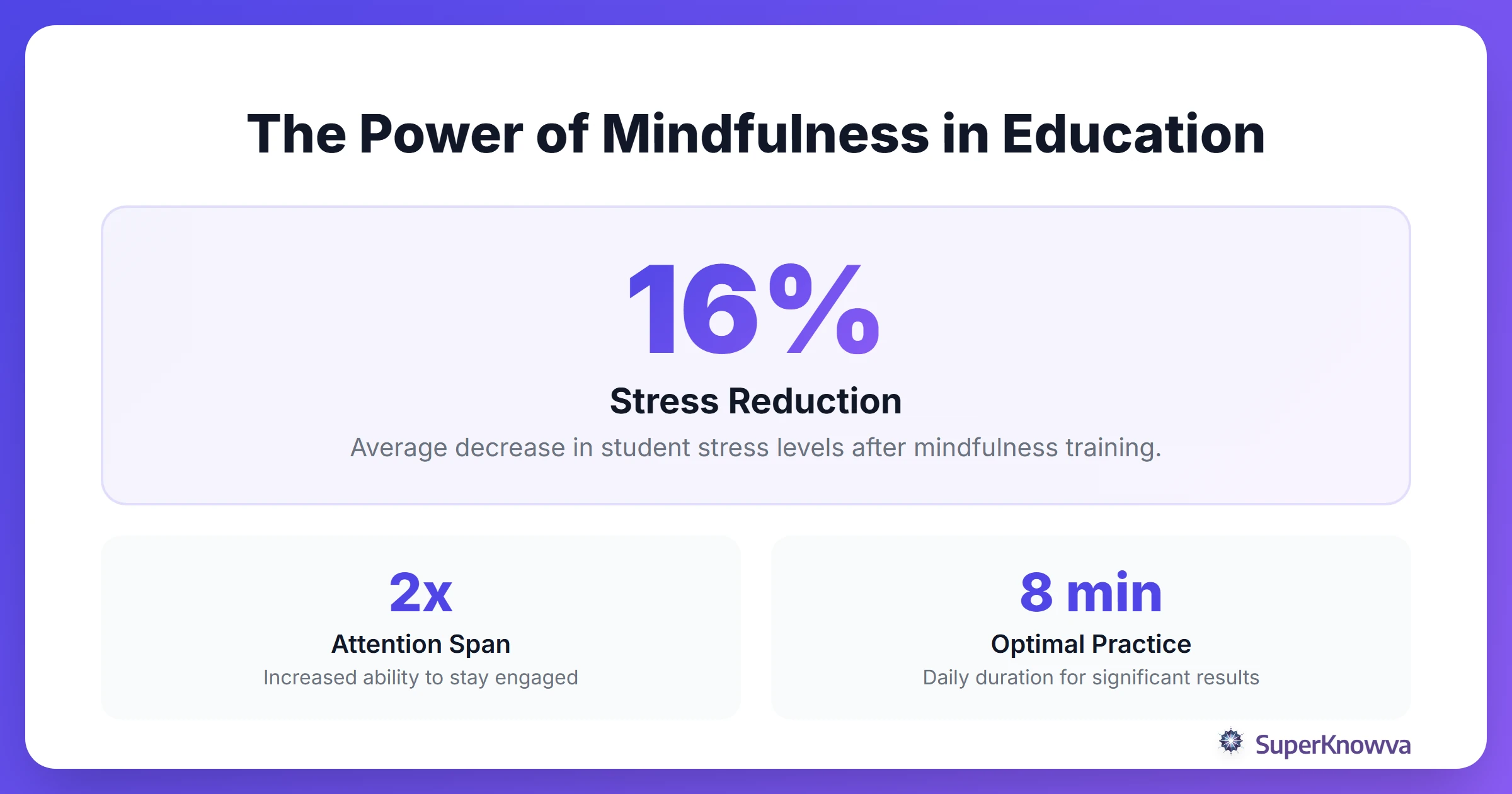
Furthermore, systematic reviews regarding mental health for university students show that consistent practice leads to better emotional regulation. By taking short, mindful pauses, you aren't just resting; you’re hitting the reset button on your nervous system. These brief moments of awareness are directly linked to better engagement in class and, more importantly, better long-term memory.
Quick Mindful Techniques for Busy Sessions
When you’re in the middle of a deep work block, you don't have thirty minutes to spare. You need study break techniques that work in five minutes or less.
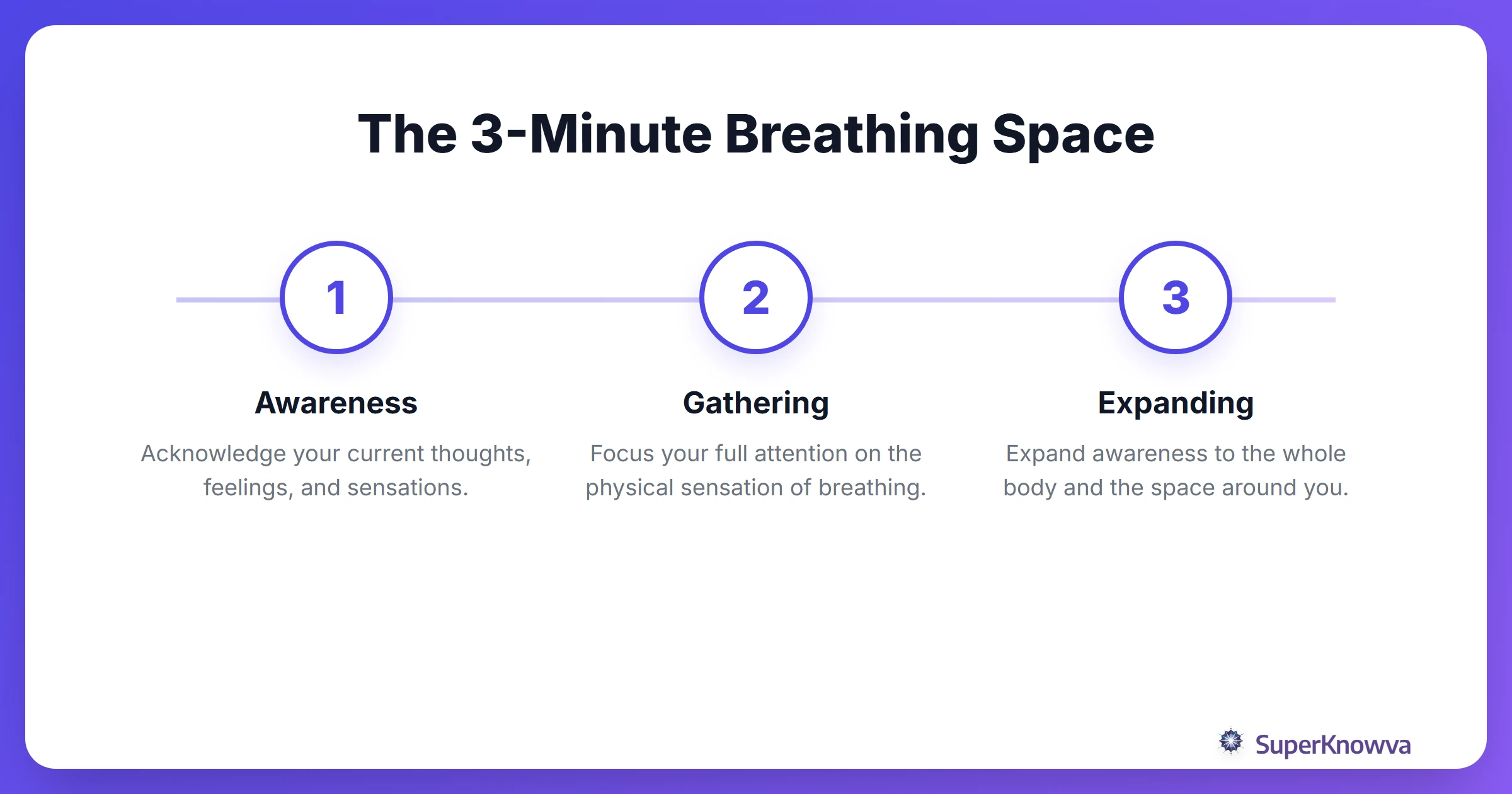
One of the most effective methods is mindful breathing for students, specifically the 3-Minute Breathing Space:
- Awareness: Spend one minute acknowledging your thoughts and feelings. Don't judge them. Just notice.
- Gathering: Spend the second minute focusing entirely on the physical sensation of your breath.
- Expanding: Spend the final minute expanding that awareness to your entire body.
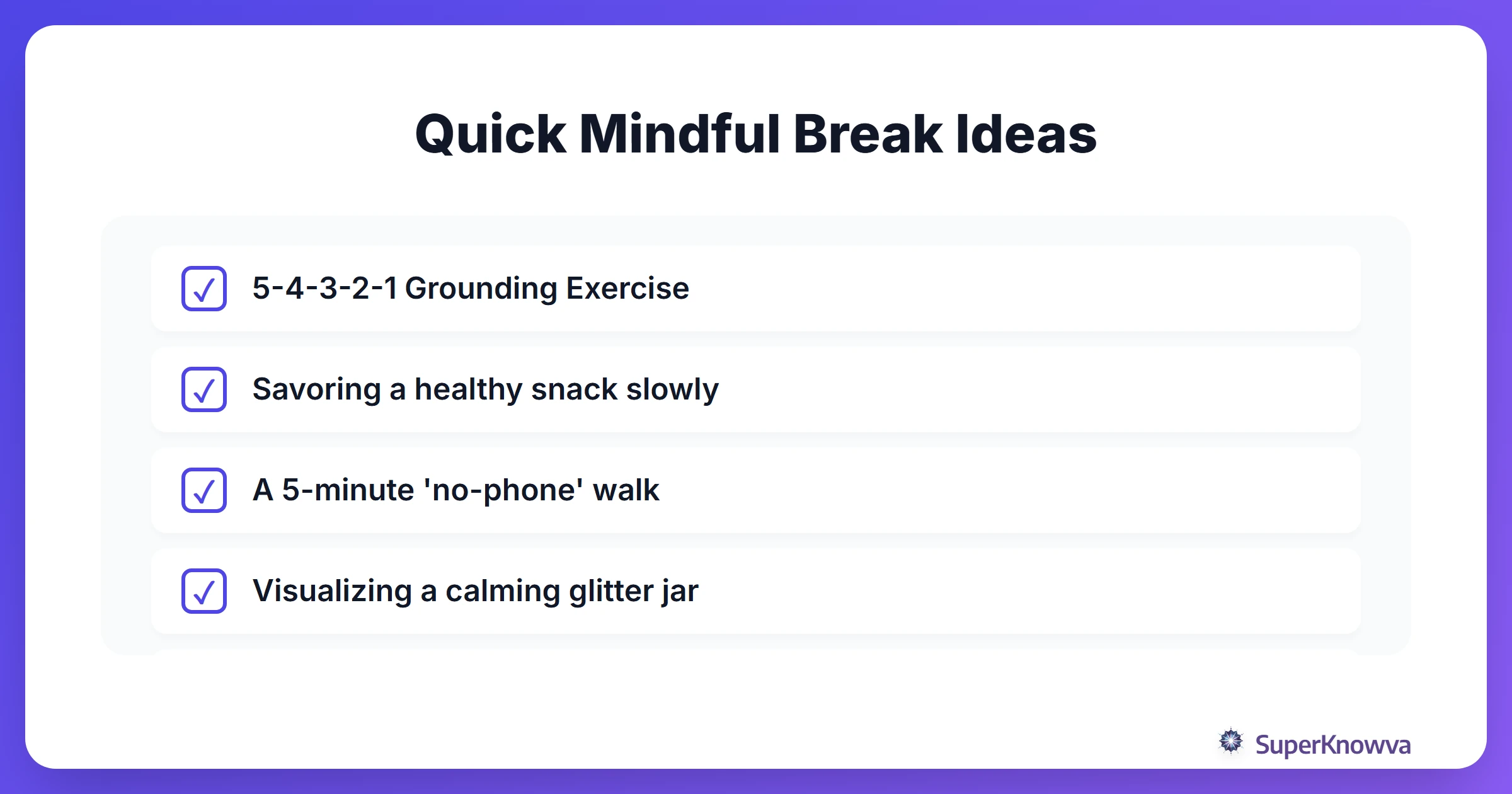
Mind racing? Try the 5-4-3-2-1 Sensory Technique. Identify five things you see, four you can touch, three you hear, two you smell, and one you can taste. This grounds you in the room and pulls you out of the "busy mind" loop. You can also try Mindful Scanning, a quick body check to release tension in your shoulders or jaw, before a big test. These are simple meditation techniques for focus that fit into even the tightest schedules.
Sensory Games and Active Mindfulness
Mindfulness doesn't have to be still. You can turn almost any mundane activity into a tool for reducing study stress.
- Savoring the Snack: Instead of eating while reading, take five minutes to just eat. Notice the texture, the temperature, and the flavor of your fruit or snack.
- The 'Glitter Jar' Visualization: Imagine your mind is a jar of glitter. When you're stressed, the glitter is swirling and cloudy. As you sit quietly, imagine the glitter settling at the bottom, leaving the water clear.
- Mindful Walking: Take a 5-minute walk without your phone. Feel the ground under your feet. Notice the air on your skin. Understanding how physical activity boosts cognitive function helps you see these walks as a vital part of your academic success, not a waste of time.
Finally, try "Three Good Things." At the end of a break, list three small things you’re grateful for. It sounds cheesy, but it builds the emotional resilience you need to handle a heavy course load.
Mindful Breaks vs. Digital Distractions
It’s tempting to reach for your phone the second you stop studying. But there’s a clear difference between a mindful break and "mindless scrolling." Digital breaks often lead to attention residue, the mental fog where your brain is still processing a TikTok or a headline while you’re trying to read a textbook.
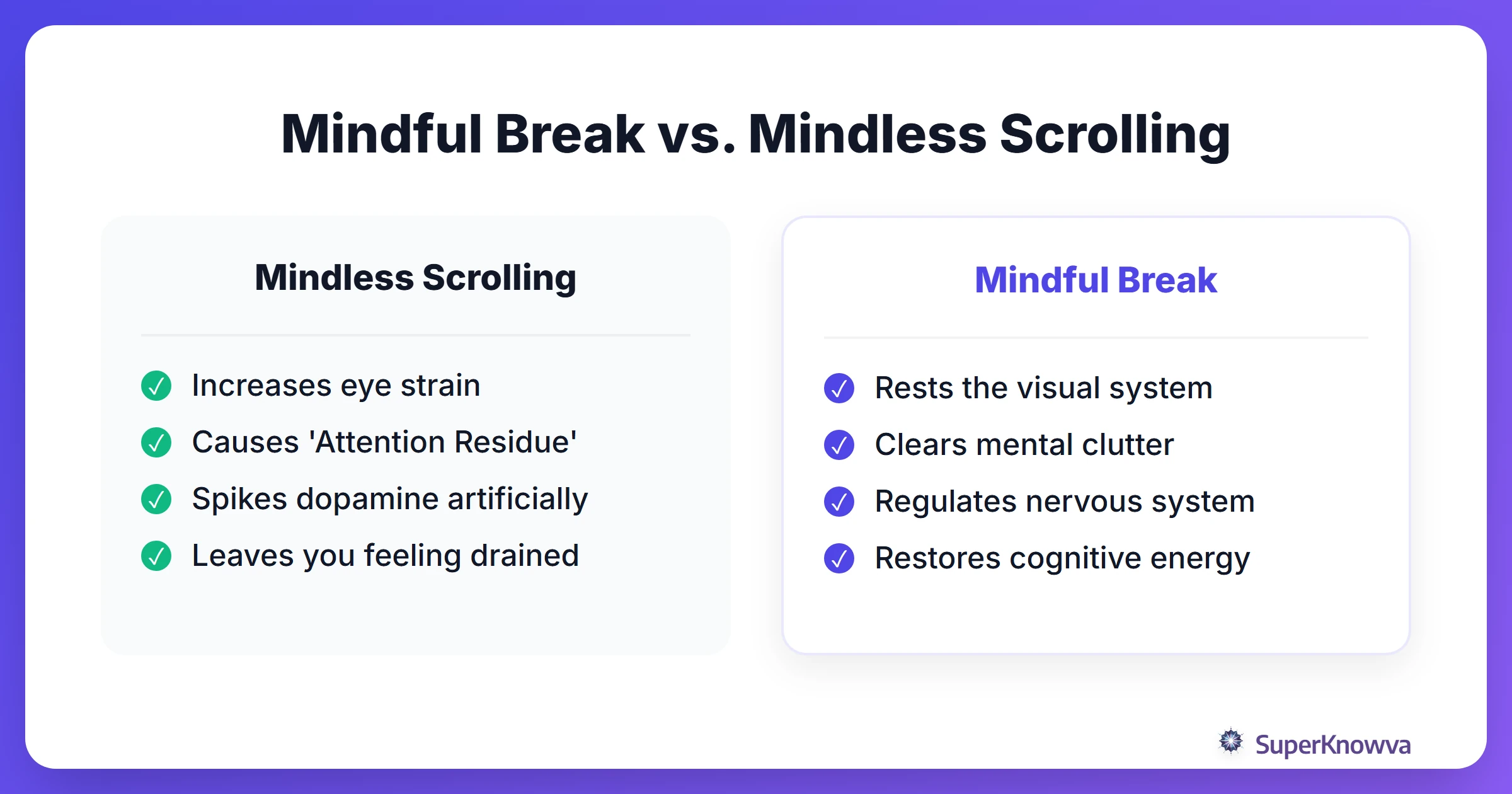
Social media might feel like "checking out," but it actually drains your cognitive battery. To choose the right break, check your exhaustion level. If your eyes hurt, a mindful walk is infinitely better than a YouTube video. Active rest allows your brain to enter "default mode," which is where it actually synthesizes and stores what you just learned.
Building a Mindful Study Routine
To make these student focus tips stick, you have to bake them into your schedule. If you use the Pomodoro method (25 minutes of work, 5 minutes of rest), try dedicating every other break to a mindful practice instead of a digital one.
Your environment matters. Clear physical clutter from your desk to minimize distractions. When your mind wanders, as it will, do not be discouraged. Acknowledge the thought and refocus.
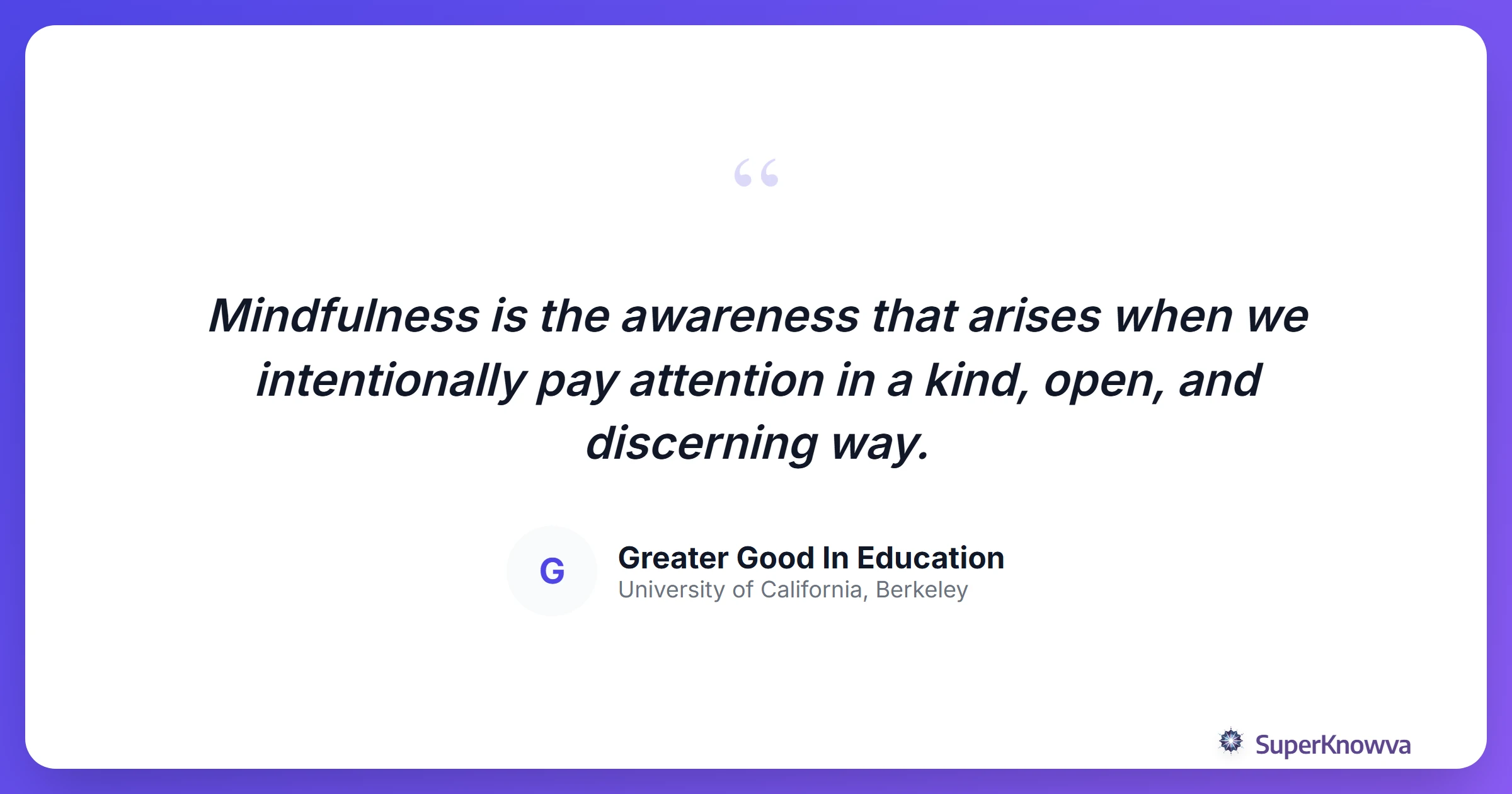
Researchers at Greater Good In Education define mindfulness as "the awareness that arises when we intentionally pay attention in a kind and open way." Using this as a preventative tool is the best way to start overcoming student burnout. Whether you are creating a winter study routine or pushing through a summer semester, consistency is more important than duration.
Conclusion: Sustaining Focus Throughout the Semester
Building a mindfulness practice is a marathon, not a sprint. It might feel "slow" or even a bit awkward at first, but the long-term benefits for your grades and your mental health are undeniable.
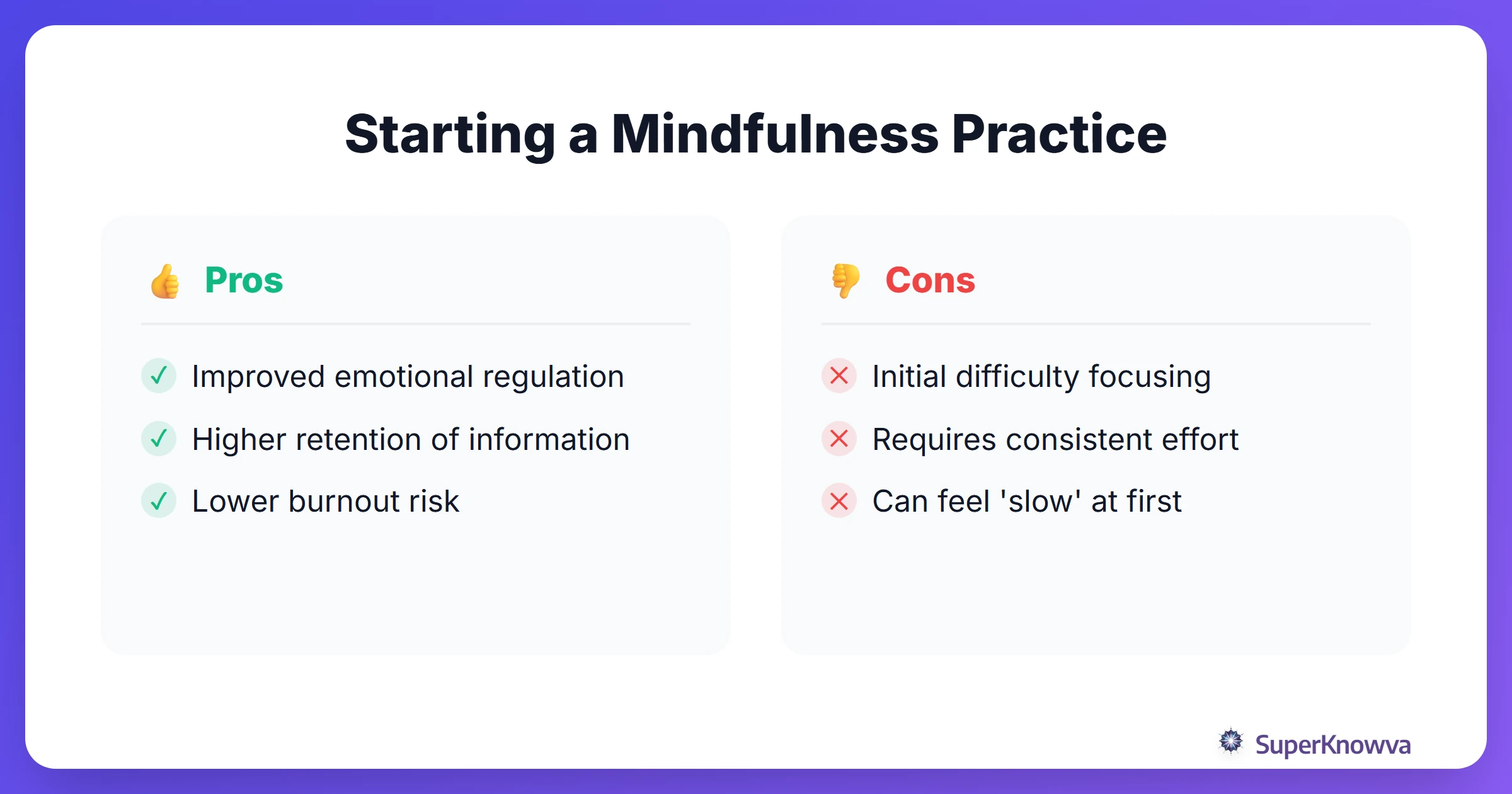
By choosing mindful breaks over digital distractions, you give your brain the space it needs to process information and lower stress. Start small. Try one 3-minute breathing exercise today and see how your focus shifts. Remember, the goal isn't to be perfect; it's just to be present. Taking these breaks supports your grades and your mental health.