Let’s be real: watching an AI tool churn out a week’s worth of coding or data analysis in thirty seconds is enough to make anyone a little uneasy. Are we all just one software update away from being obsolete? It’s a valid fear, but it misses the bigger picture.
While AI is busy mastering the "what" and the "how," it’s still completely clueless about the "why." To build a future-proof career, you don't need to out-calculate the machine; you need to double down on the things that make you human. In this environment, soft skills for the AI era aren't just "nice-to-haves" tucked at the bottom of your resume: they are your only real insurance policy.
The Shift from Technical to Human-Centric Skills
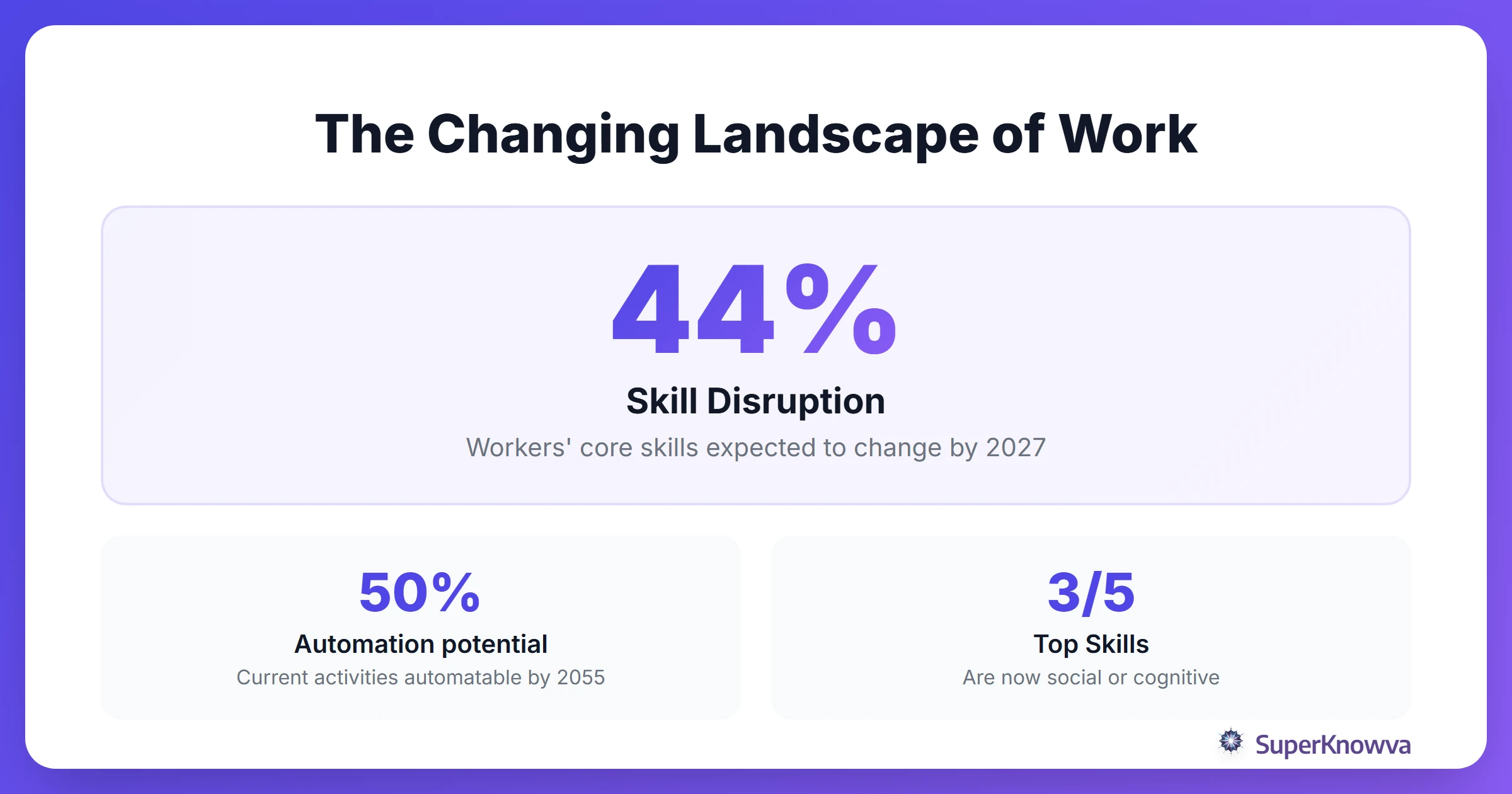
For decades, the path to a "good job" was simple: pick a niche technical skill and master it. But as algorithms start handling repetitive tasks and complex data crunching with terrifying efficiency, the value of those "hard" skills is being recalibrated. Research from Business Insider and McKinsey suggests that nearly half of our current work activities could be automated by 2055.
Jobs are not just vanishing; they are evolving. We are moving toward a human-centric economy. Employers no longer look for someone who can run a specific program. They want people who can think, relate, and adapt when that program changes. This is the "Human Advantage." AI excels with the known, but it struggles with nuance.
Knowing which skills will survive automation is the first step toward staying relevant.
Critical Thinking: Navigating Beyond the Algorithm
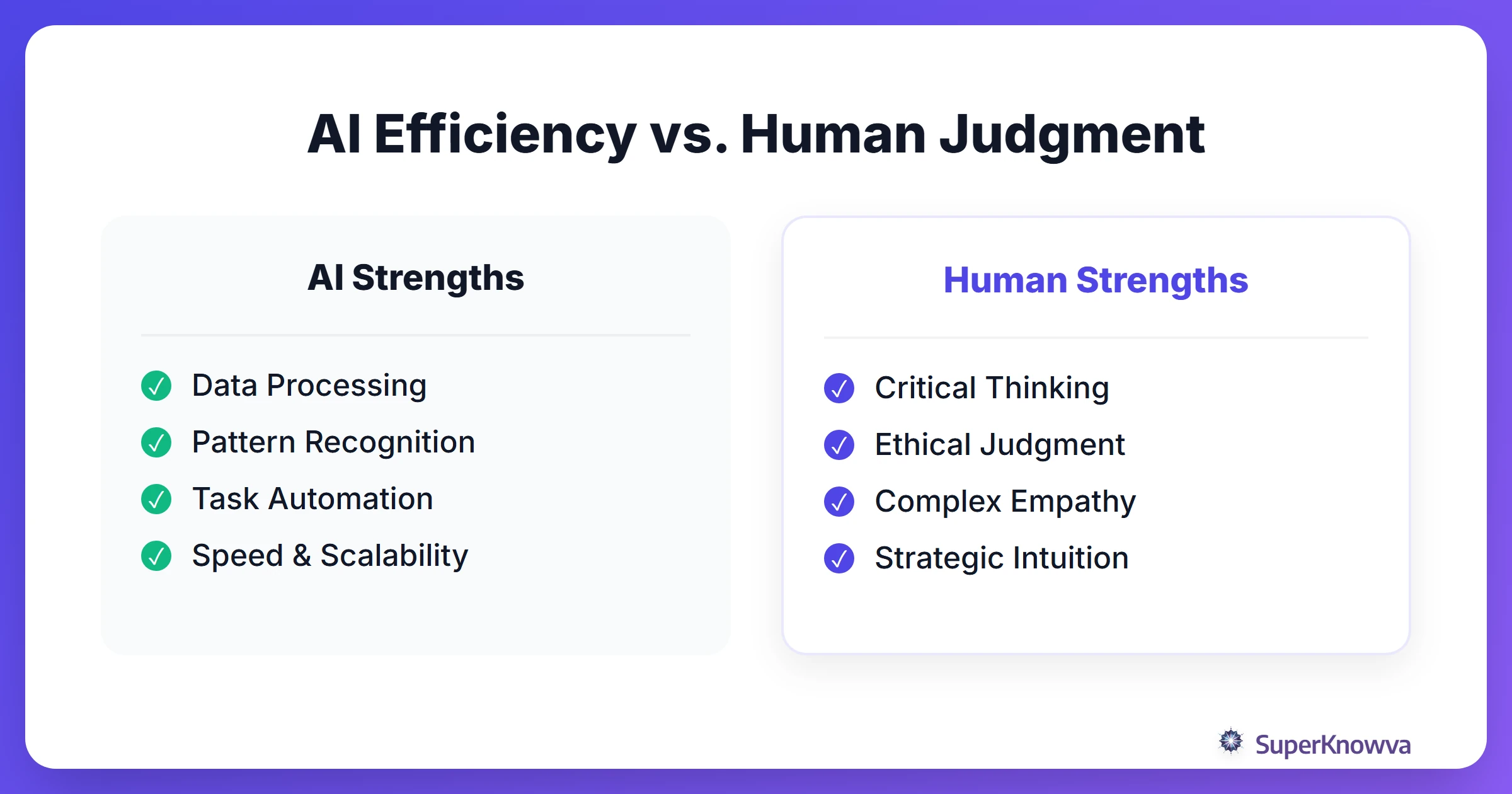
One of the most essential soft skills for the AI era is the ability to think critically. Sure, an AI can spit out a 50-page market analysis in the time it takes you to grab a coffee. But can it tell if that data is subtly biased? Can it spot a "hallucination" (when AI confidently makes things up)? Not really.
Critical thinking in the AI era looks like:
- Fact-Checking the Machine: Questioning the ethics and accuracy of AI-generated outputs.
- Context is King: Applying human judgment to data that an algorithm sees only as a series of 1s and 0s.
- Asking "Why?": AI is reactive; humans are curious. Using that curiosity to find the root of a problem is where you provide value.
In leadership, this means looking past the dashboard and asking: "What is the data not telling us?"
Emotional Intelligence (EQ) and Empathy
An AI might be able to simulate a polite conversation, but it doesn't feel the room. It can’t replicate emotional intelligence in the workplace, which is the glue that keeps teams together and clients coming back.
High EQ is your superpower for:
- Conflict Resolution: Reading the subtle body language and ego shifts in a high-pressure meeting.
- Genuine Motivation: Understanding what actually drives your colleagues (hint: it’s rarely just the paycheck).
- Empathetic Design: Building products that solve real human frustrations, not just technical gaps.
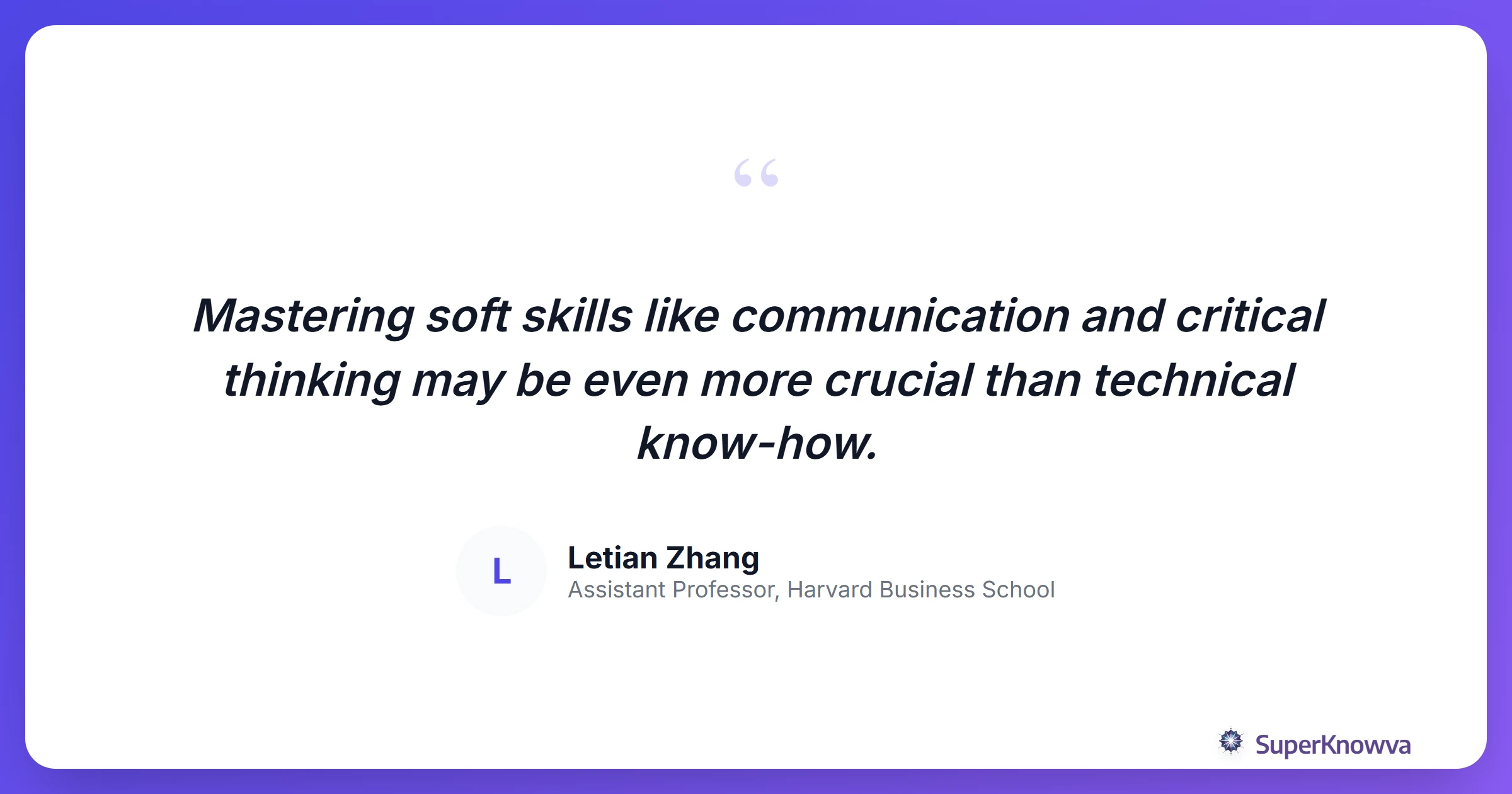
As Letian Zhang from Harvard Business School points out, these interpersonal abilities are becoming the ultimate differentiator. Read his research on Why Soft Skills Still Matter in the Age of AI.
Adaptability: Thriving in Constant Change
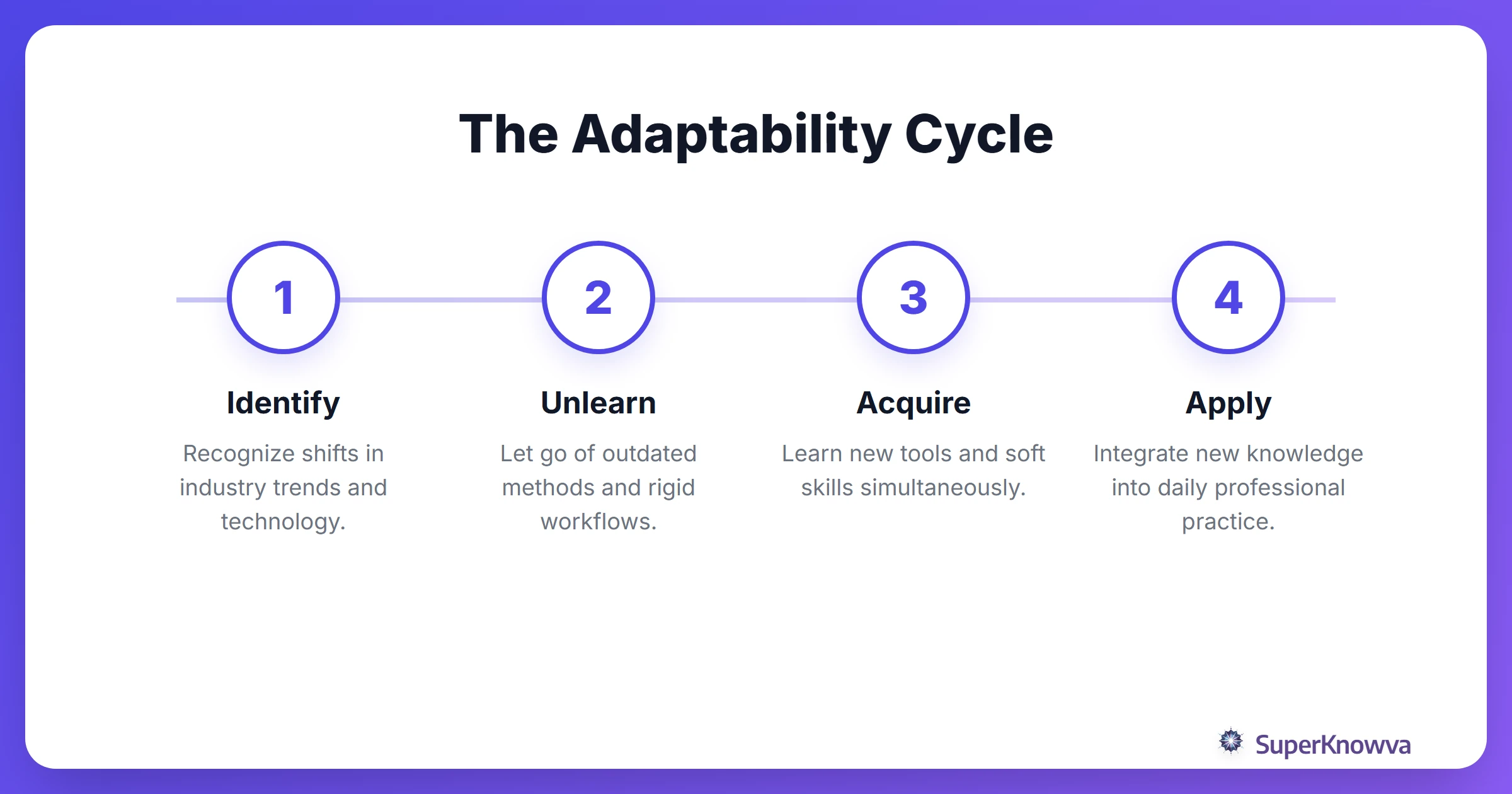
Remember when you could learn a skill and use it for twenty years? Those days are over. The "half-life" of technical skills is shrinking fast. Today, adaptability skills are a survival requirement. It’s about being comfortable with the "unlearn and relearn" cycle.
This requires a growth mindset. Instead of looking at a new AI tool as a threat, an adaptable worker asks, "How can this make me 10x more effective?" This kind of cognitive flexibility allows you to pivot as your industry shifts, ensuring you’re never the one left behind when the tech moves forward.
If you're curious about the specifics, it’s worth checking out what employers are really looking for in this fast-paced market.
Effective Communication and Collaboration with AI
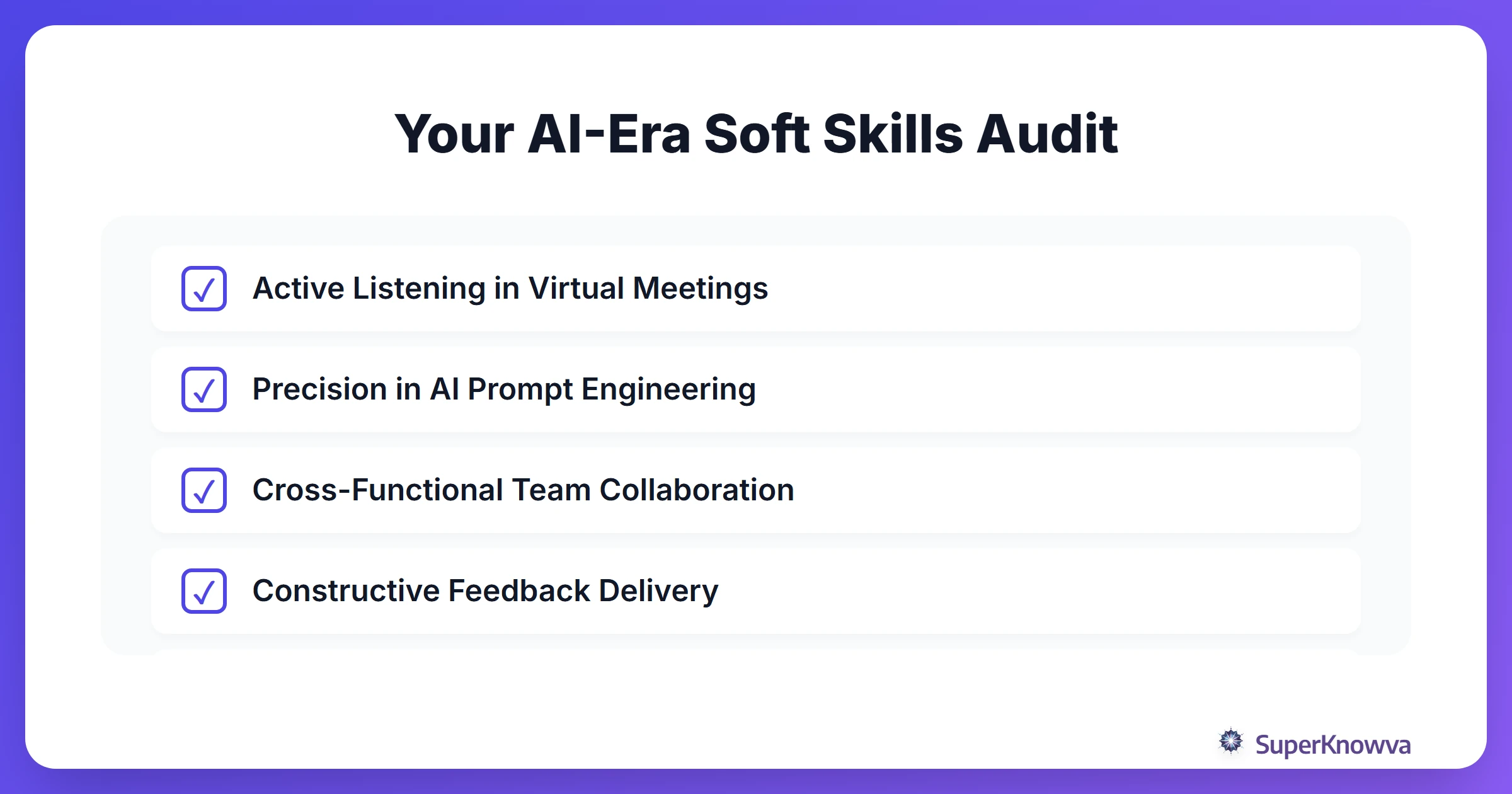
Communication is a two-way street. First, there’s human-to-human communication. With remote work and digital noise, the ability to articulate a complex idea clearly and listen actively is rare and valuable.
Then, there’s human-to-AI communication. We often call this prompt engineering, but really, it’s just modern literacy. Can you give a machine clear, context-rich instructions? Can you take a complex AI finding and translate it into a "so what?" for your boss? If you can bridge that gap, you’re on the fast track to management.
As you work on navigating the transition to the workplace, remember that your ability to play well with both humans and machines will be your biggest asset.
Ethical Judgment and AI Oversight
AI doesn't have a moral compass. It can’t tell if it’s being sexist, biased, or just plain wrong based on the data it was fed. That’s where you come in. The modern worker has to be a "moral gatekeeper."
Companies seek people who provide AI oversight: individuals who understand not just how the technology works, but whether it should be used in a certain way. Ensuring technology aligns with human values makes you essential.
For more on positioning yourself as a leader here, take a look at these 3 Soft Skills You Need in the AI Era.
Conclusion
The AI revolution isn't a battle of humans vs. machines. It's about humans working with machines. By doubling down on your critical thinking, your empathy, and your ability to adapt, you aren't just protecting your career from automation; you're enhancing it.
Start building professional connections today and focus on the human-centric skills that machines can't touch. The future belongs to those who can master the algorithm while staying authentically human.