
Summer courses are a bit of a gamble. On one hand, you get to knock out a brutal credit in just six weeks. On the other, the sheer volume of information feels like trying to drink from a firehose while someone screams the periodic table at you. By the time you hit the final, the material from week one feels less like "knowledge" and more like a half-remembered dream.
If you want to pass and keep your sanity, you need more than caffeine and a "grind" mindset. You need a system. Specifically, you need the spaced repetition study method. This cognitive science technique moves information from short-term memory into long-term storage. At SuperKnowva, we have seen this shift turn intensive exam prep from a panicked scramble into a predictable routine.
The Summer Exam Paradox: High Speed, Low Retention
Why are summer courses so much harder? It’s the compression. In a standard semester, you have months to let concepts marinate. In the summer, you might have to master three chapters of Organic Chemistry or Macroeconomics in a single 48-hour window.
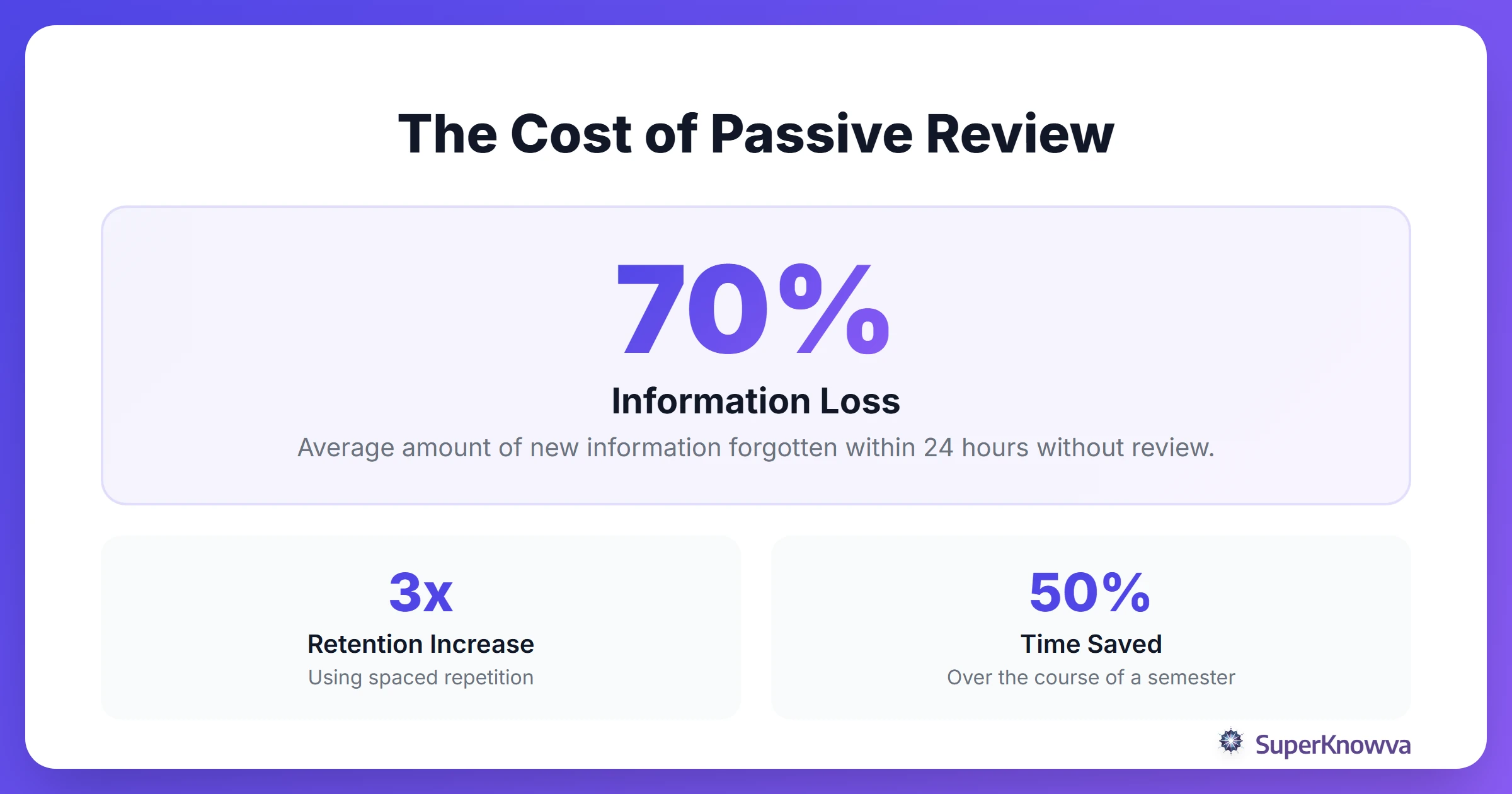
This speed plays right into the hands of the forgetting curve. Psychologist Hermann Ebbinghaus discovered that humans typically lose about 70% of new information within just 24 hours if they don't make a conscious effort to keep it. In a fast-paced course, this curve is even steeper because new material is constantly "overwriting" what you learned yesterday.
Cramming fails here because your brain’s "buffer" space is full. Without a signal that this information is worth keeping, your brain simply hits the delete key to make room for tomorrow’s lecture.
The Science of Spaced Repetition
The spaced repetition study method is all about timing. Instead of staring at your notes for three hours on a Sunday (and hating every second of it), you look at them for ten minutes on Sunday, again on Tuesday, then Friday, and so on.
Every time you’re on the verge of forgetting a fact and you successfully force your brain to retrieve it, you strengthen that neural pathway. Scientists call this "desirable difficulty." The harder your brain has to work to remember something, the stickier that information becomes.
The Neuroscience of Memory Consolidation shows us that while repetition signals importance, sleep is where the actual "saving" happens. By spacing your reviews over several days, you’re essentially giving your brain multiple "save points" during sleep cycles to cement that knowledge.
Implementing the 2-3-5-7 Method for Fast-Paced Courses
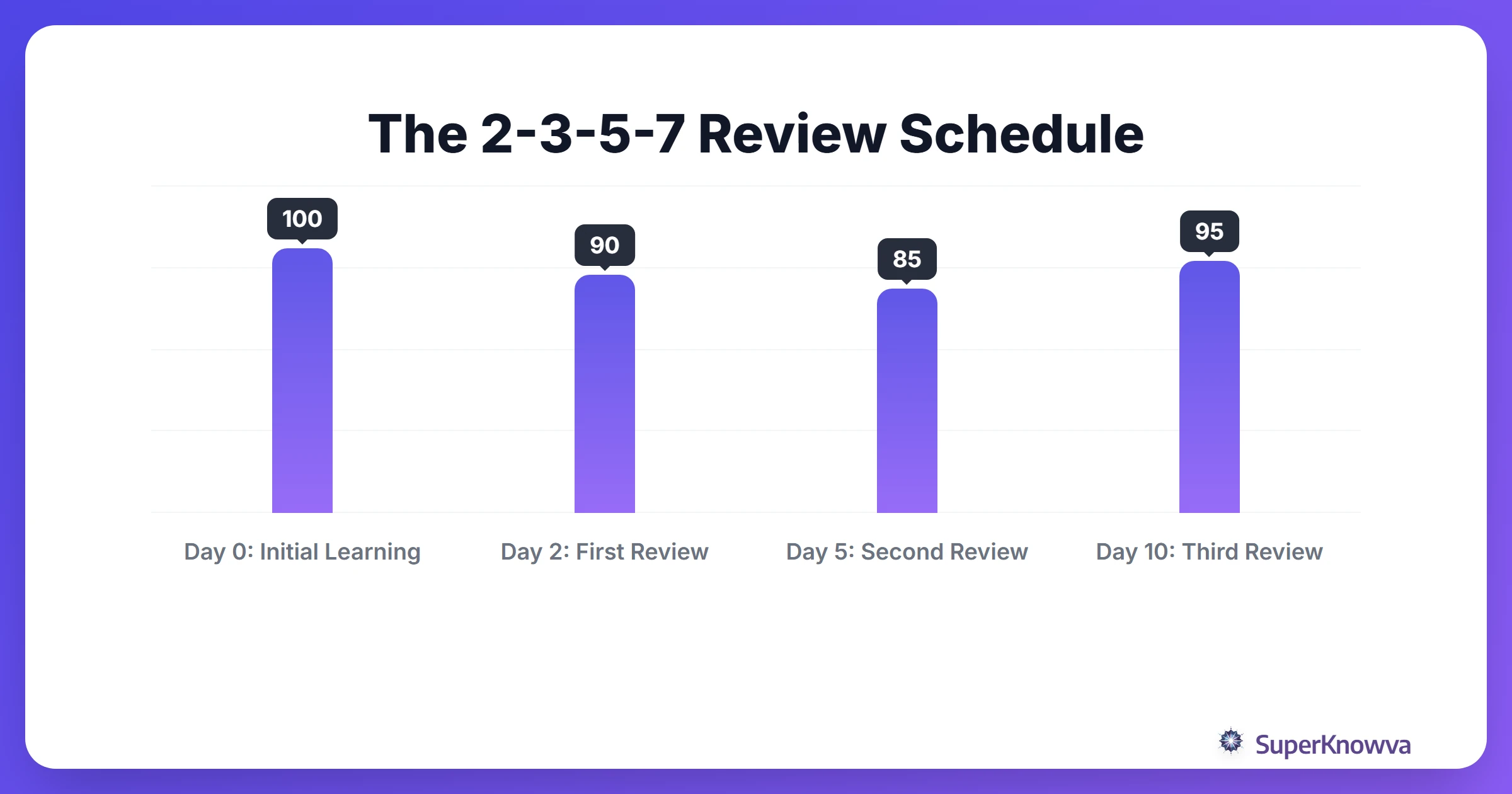
In a normal 15-week semester, you can afford to space things out. But for intensive exam prep, you need a tighter schedule. That’s where the 2357 method comes in.
The 2357 method is a specific timeline for reviewing new material:
- 2 Days after you first learn it.
- 3 Days after that first review.
- 5 Days after that.
- 7 Days after that.
According to Spaced Repetition and the 2357 Method, this framework is effective for high-intensity courses. If your class moves through chapters every two days, map your syllabus to a calendar immediately. When you finish Chapter 1 on Monday, your "Review 1" happens Wednesday, even if you are already working on Chapter 2.
Active Recall: The Engine of Spaced Repetition
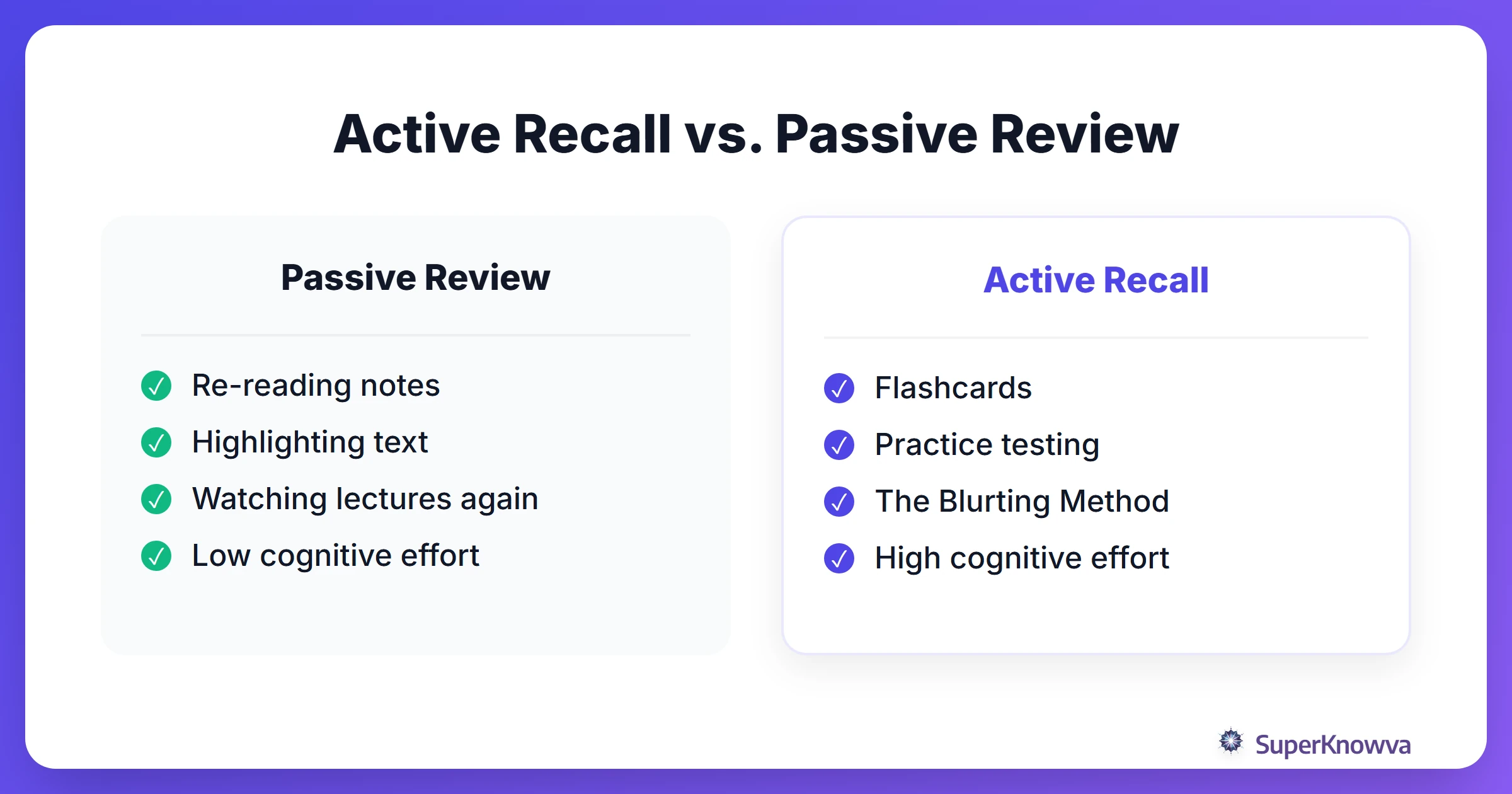
Here is the catch: Spaced repetition only works if you’re actually working. If you just re-read your highlighted notes every few days, you’re falling for "passive review." It makes you feel like you know the material (fluency), but when the exam clock starts ticking, your mind goes blank.
To make the spaced repetition study method stick, you have to pair it with active recall. This means testing yourself by forcing your brain to build the answer from scratch.
Try these instead of re-reading:
- Flashcards: Use the front as a prompt and don't flip it until you've said the answer out loud.
- The Blurting Method: Get a blank sheet of paper and write down everything you remember about a topic. Check your notes only after you're "empty."
- Practice Questions: Solve problems without looking at the step-by-step key.
The Blurting Method: A Simple Active Recall Strategy is a lifesaver for theory-heavy subjects. The key is the feedback loop: you must check your work immediately to fix mistakes before they become "hard-wired" into your memory.
Digital vs. Manual: Choosing Your Tools
How do you keep track of all these overlapping dates? You’ve got two main paths:
- Manual Systems: The Leitner Box uses physical flashcards and different compartments to track what you know and what you don't. It’s great if you want to get off your laptop and actually touch your study materials.
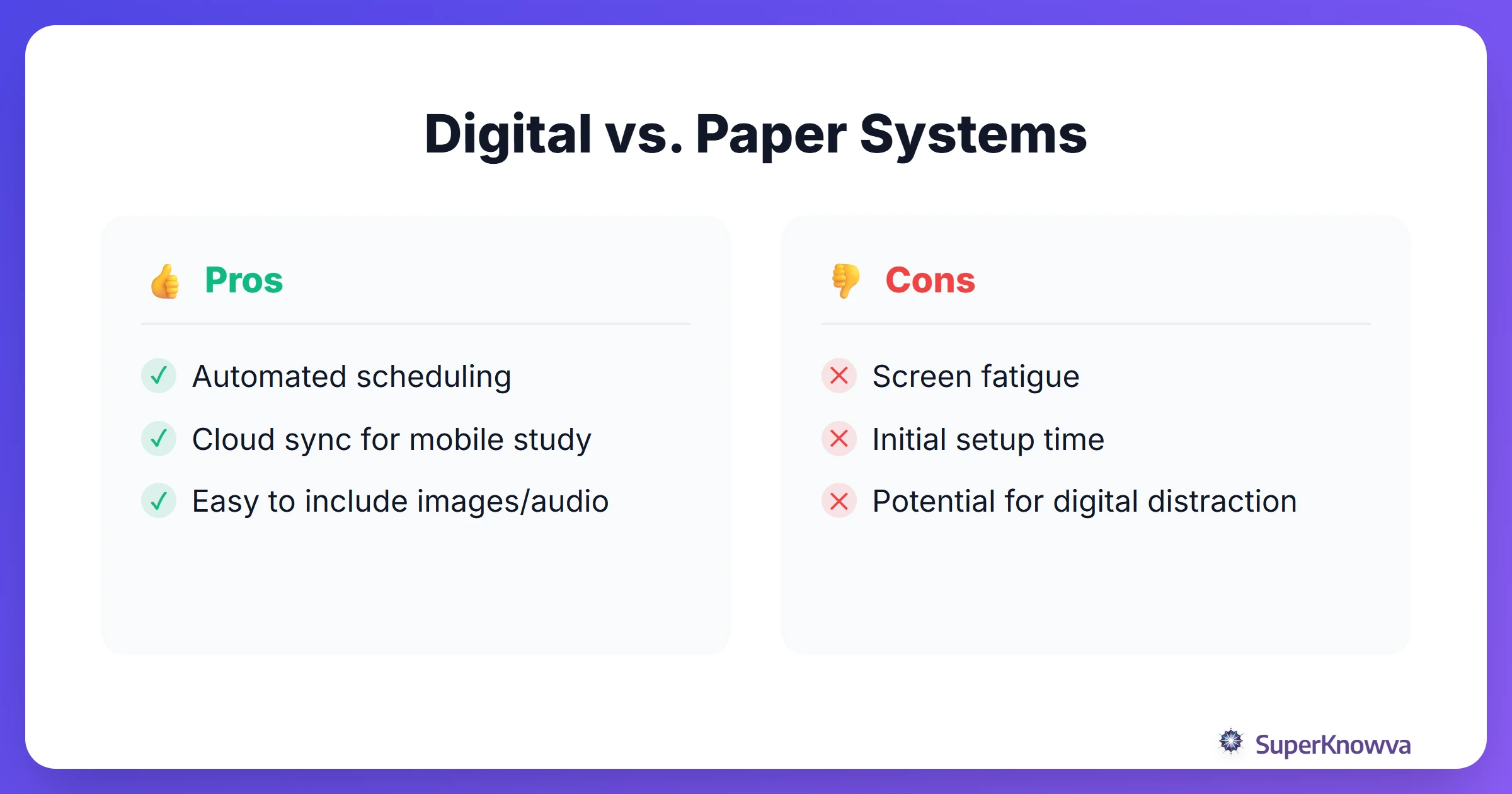
- Digital/AI Tools: Apps like Anki, Quizlet, or SuperKnowva use algorithms to do the math for you. They track exactly when you’re about to forget a concept and pop it back into your queue at the perfect moment.
As noted in this Spaced Repetition: A Guide to the Technique, digital tools are usually the winner for STEM students. When you're dealing with complex diagrams or chemical structures, being able to embed images and formulas into an AI-managed deck saves hours of admin time. For Humanities, a mix of digital cards and manual "blurting" sessions usually hits the spot.
A Sample Weekly Schedule for Intensive Summer Study
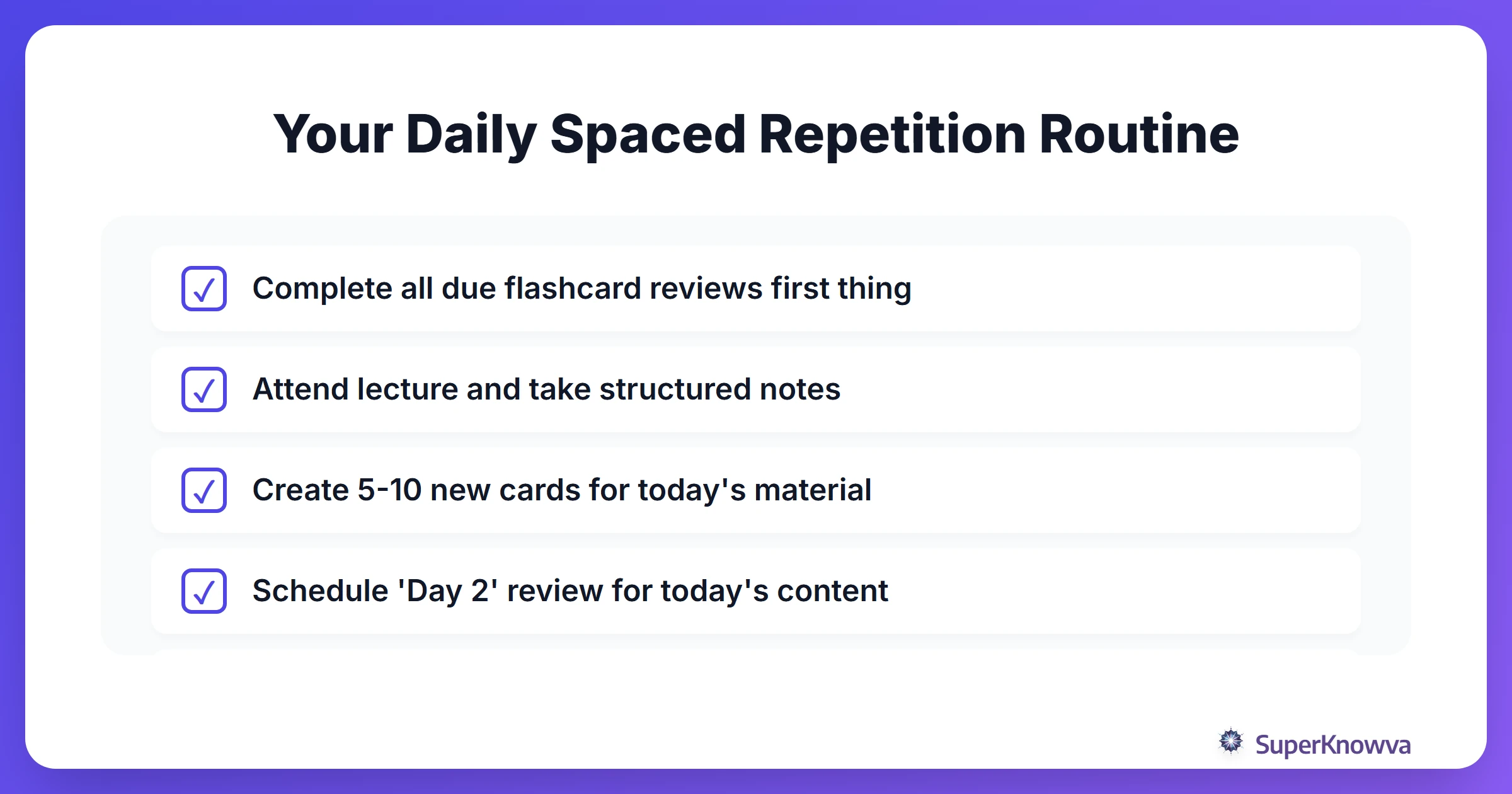
You can’t wing a six-week course. You need a daily rhythm. A typical Monday-Friday intensive schedule might look like this:
- 08:00 - 09:00: The Review Block. Clear out all the flashcards or "blurting" sessions due for the day. Do this before you learn anything new.
- 09:30 - 12:30: Lecture/New Content. This is where you take in the fresh material.
- 13:30 - 15:00: Deep Work. Create 5-10 high-quality flashcards or practice prompts based on the lecture you just finished.
- 15:00 - 16:00: The "Day 2" Review. Tackle the material you learned 48 hours ago.
To keep from burning out during these heavy sessions, try using Pomodoro vs. Flowtime techniques. The goal is a sustainable balance between the "New" (today’s firehose) and the "Old" (keeping last week’s info alive).
Avoiding the 'Maintenance Trap'
By week four, your "due" reviews might start to look intimidating. This is the "Maintenance Trap," where you’re so busy reviewing old stuff that you have no energy left for new chapters. To stay afloat:
- Prioritize High-Yield Topics: Don't memorize every footnote. Focus your repetition on the core concepts that make up 80% of the exam.
- Use Interleaving: Don't just study one subject for five hours. Interleaving Practice: Why Mixing Subjects Improves Retention suggests that mixing up topics in one session actually helps your brain distinguish between them better.
- Sleep is Non-Negotiable: You can't "hack" your way out of biology. Your brain needs REM sleep to consolidate these memories. An all-nighter doesn't just make you tired; it literally breaks the spaced repetition chain.
Using the spaced repetition study method isn't about working more hours; it's about making sure the hours you do work actually count. You’ll walk into that final exam not just "hoping" you remember week one, but knowing you do.