It’s July. Somewhere, someone is ordering a second round of margaritas at a beach bar. You? You’re likely staring at a stack of academic papers so high it has its own zip code. Whether you’re prepping for a thesis or grinding through a summer internship, that mountain of information isn't going to climb itself.
Mastering speed reading for students isn’t just about hitting a "fast-forward" button on your brain. It’s about reclaiming your summer. It's about finishing your work by 2:00 PM so you can actually see the sun, without your grades taking a hit.
At SuperKnowva, we’re all about studying smarter. By pairing elite reading strategies with AI-powered tools, you can turn your research workflow from a painful crawl into a sprint.
The Myth of 1000 WPM vs. Academic Reality
Ever seen those ads promising to teach you how to read 1,000 words per minute (WPM) with "perfect retention"? It’s a total fairy tale. While some people can skim at that speed, scientific research on speed reading limits shows there’s a physical limit to how fast the human eye and brain can process text before the meaning evaporates.
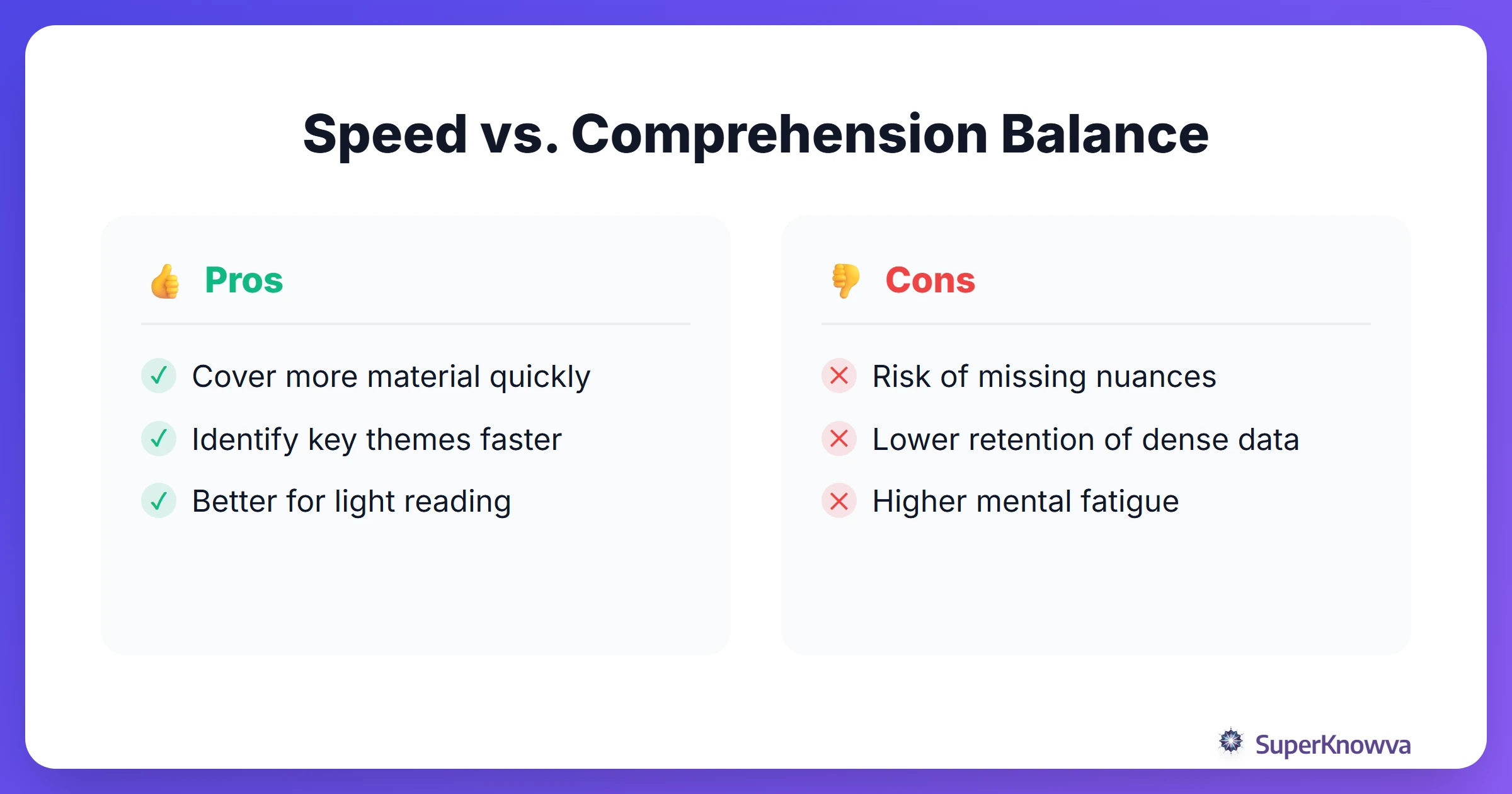
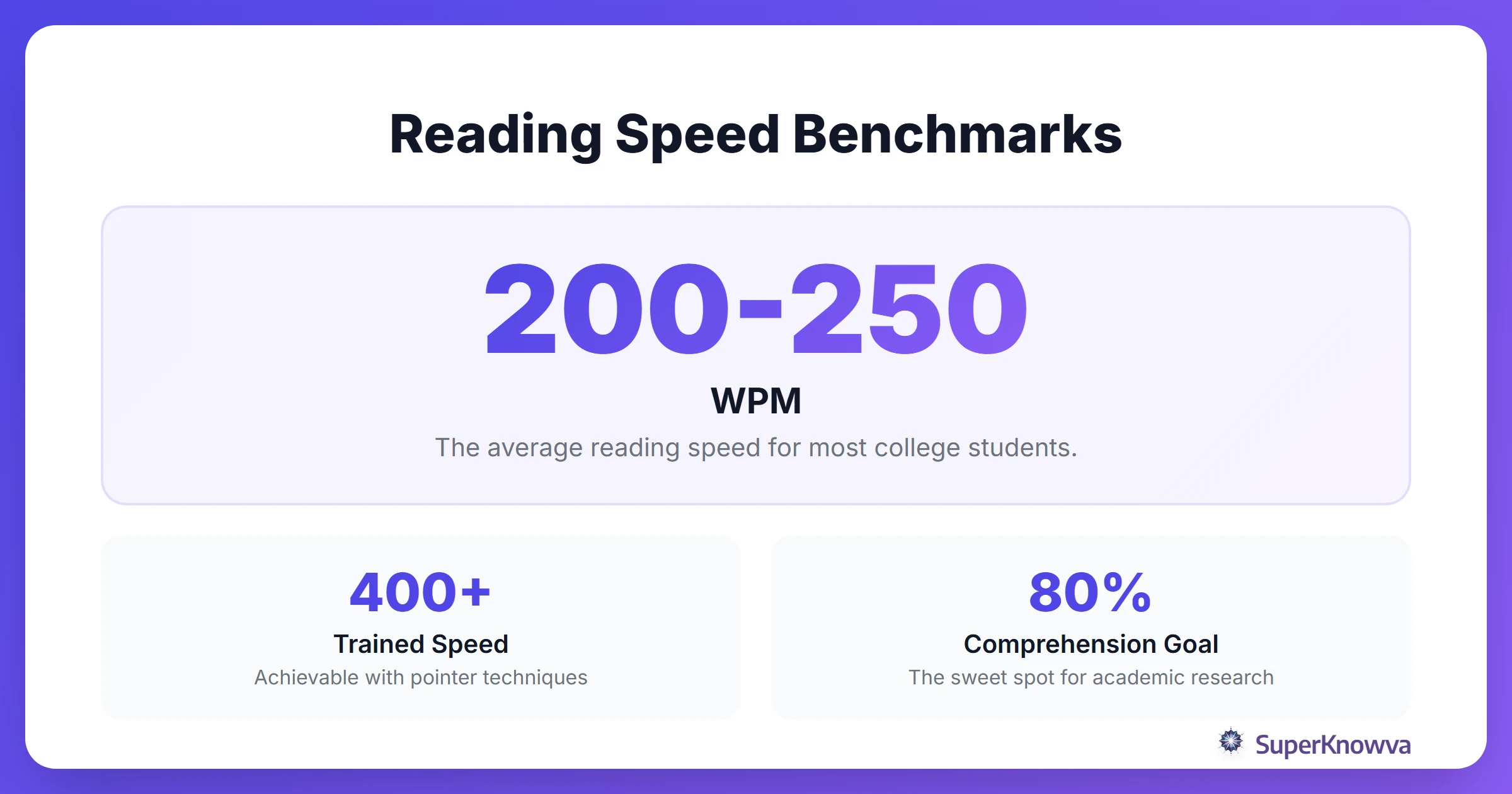
In research, comprehension is the only metric that matters. Reading a paper in three minutes is a waste of time if you cannot explain the methodology afterward. When moving from a light novel to a technical paper, your speed will naturally drop, and that is acceptable. The goal for summer research should be optimized efficiency rather than extreme speed. Aim to double your reading rate while retaining at least 80% of the information.
Killing the Voice in Your Head: Sub-vocalization
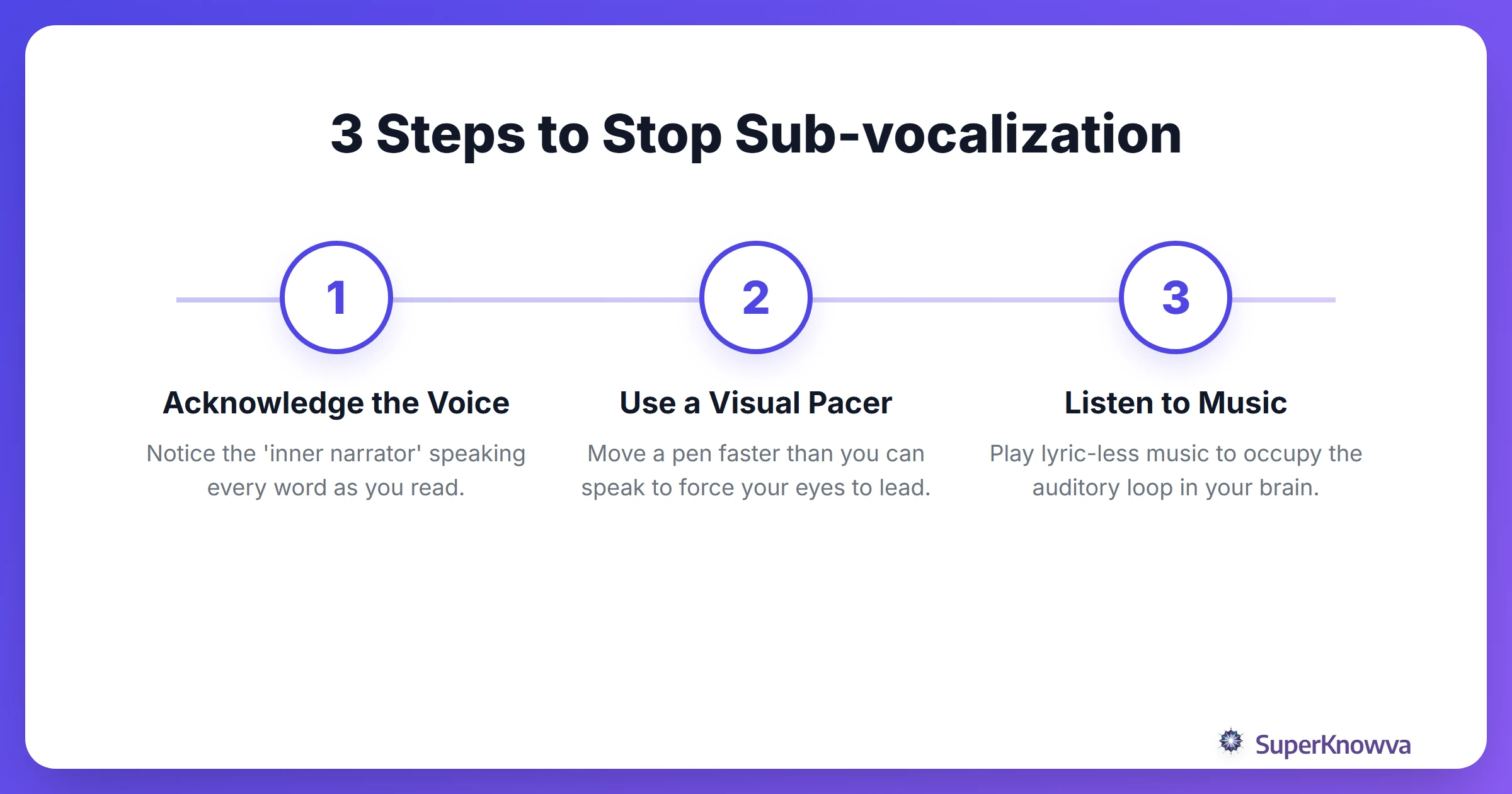
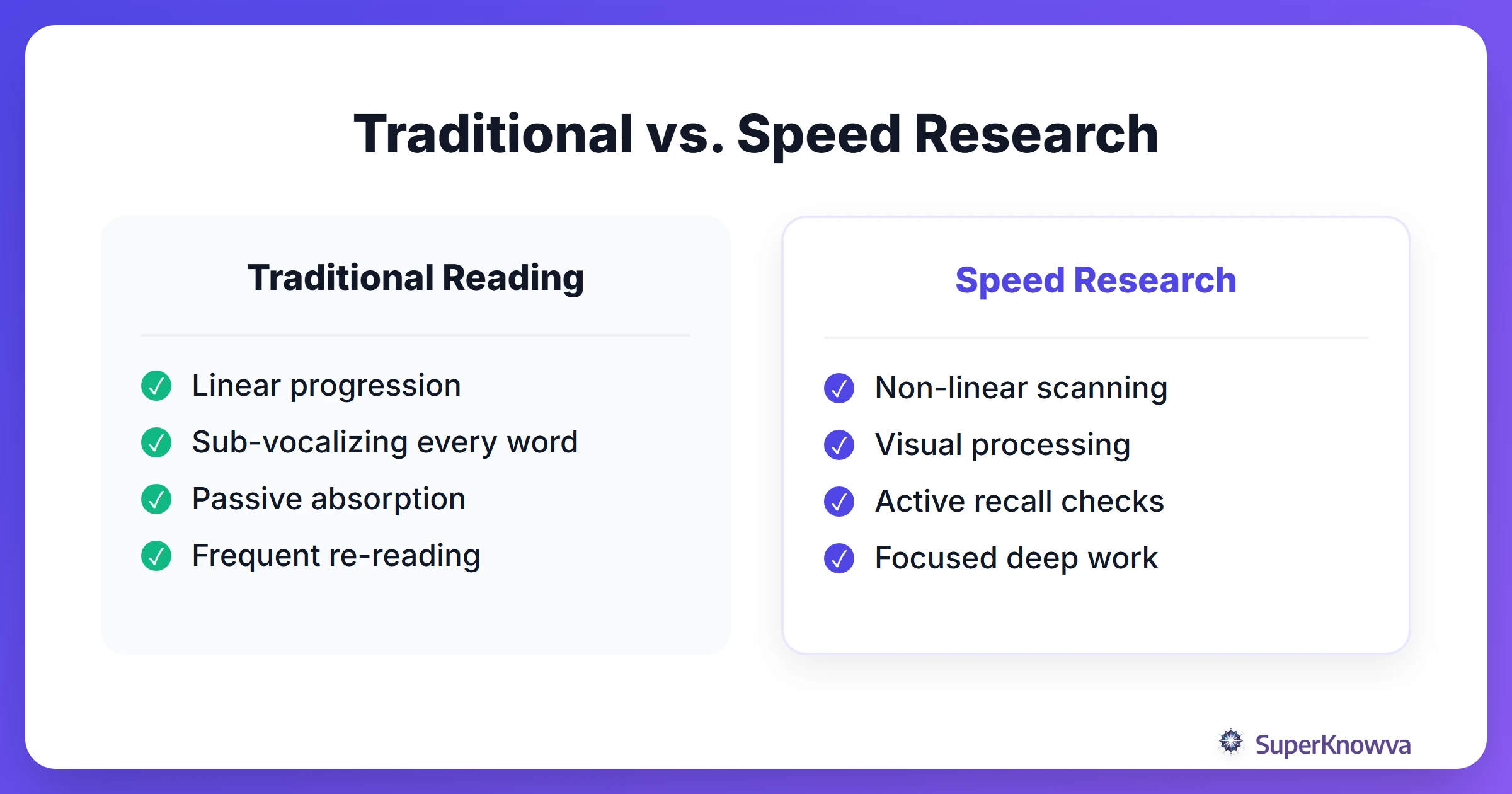
The biggest bottleneck in your reading speed is sub-vocalization. It is the narrator in your head that "speaks" every word as you read it. Because you are "listening" to yourself read, you are capped at your speaking speed, usually about 150 words per minute. This is slow for a researcher.
To break this, you have to train your brain to see words as visual symbols rather than sounds.
- The Hum Test: Try humming or counting "1, 2, 3, 4" under your breath while you read. It sounds silly, but it occupies the speech center of your brain, forcing your eyes to take the lead.
- Fight Noise with Noise: Use instrumental music or white noise. It helps drown out the "inner narrator" and keeps you locked into the visual page.
- Visualize, Don't Narrate: Instead of "hearing" the word photosynthesis, try to immediately picture a plant soaking up sunlight.
The Pointer Method: Stop the "Eye Hops"
Your eyes don't actually glide across a line of text. They make tiny, jerky jumps called saccades. Every time your eye stops (a fixation), you lose a fraction of a second. Worse, your eyes often skip backward to re-read a sentence you just finished.
The fix? Use a physical guide.
Whether it’s your finger, a pen, or even your digital cursor, a visual pacer forces your eyes to keep moving forward. This "Pointer Method" cuts down on those tiny fixations and encourages you to use your peripheral vision to grab entire phrases at once.
Try a high-intensity drill: read a page as fast as you can using a pointer, then go back and read it for deep comprehension. You’ll find your "cruising speed" naturally starts to climb.
Strategic Skimming: Don't Read Every Word
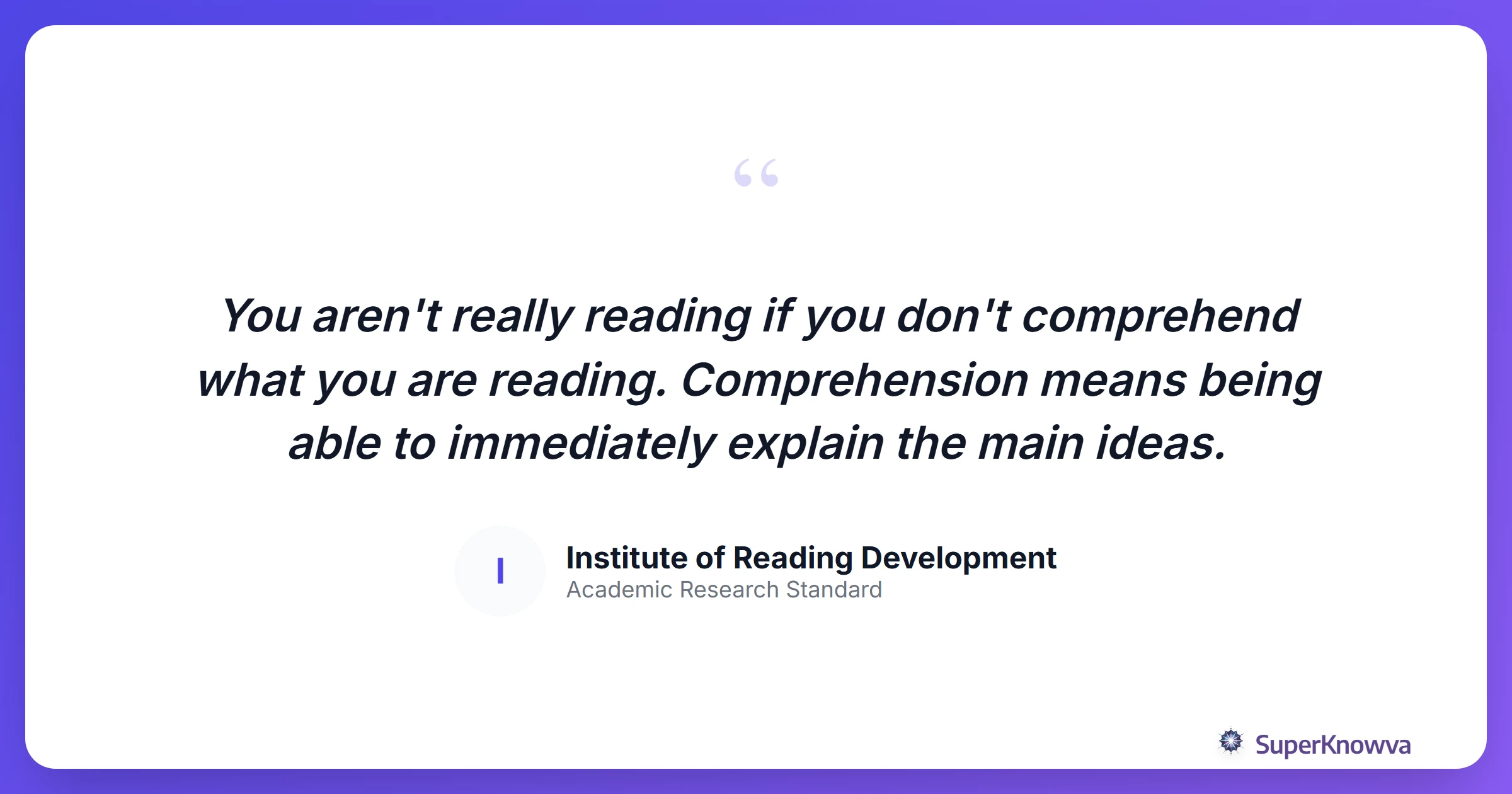
Here’s a secret: Not every word in a research paper deserves your full attention. To master speed reading for students, you have to stop reading linearly. The Institute of Reading Development methods emphasize mapping out the structure before you ever dive in.
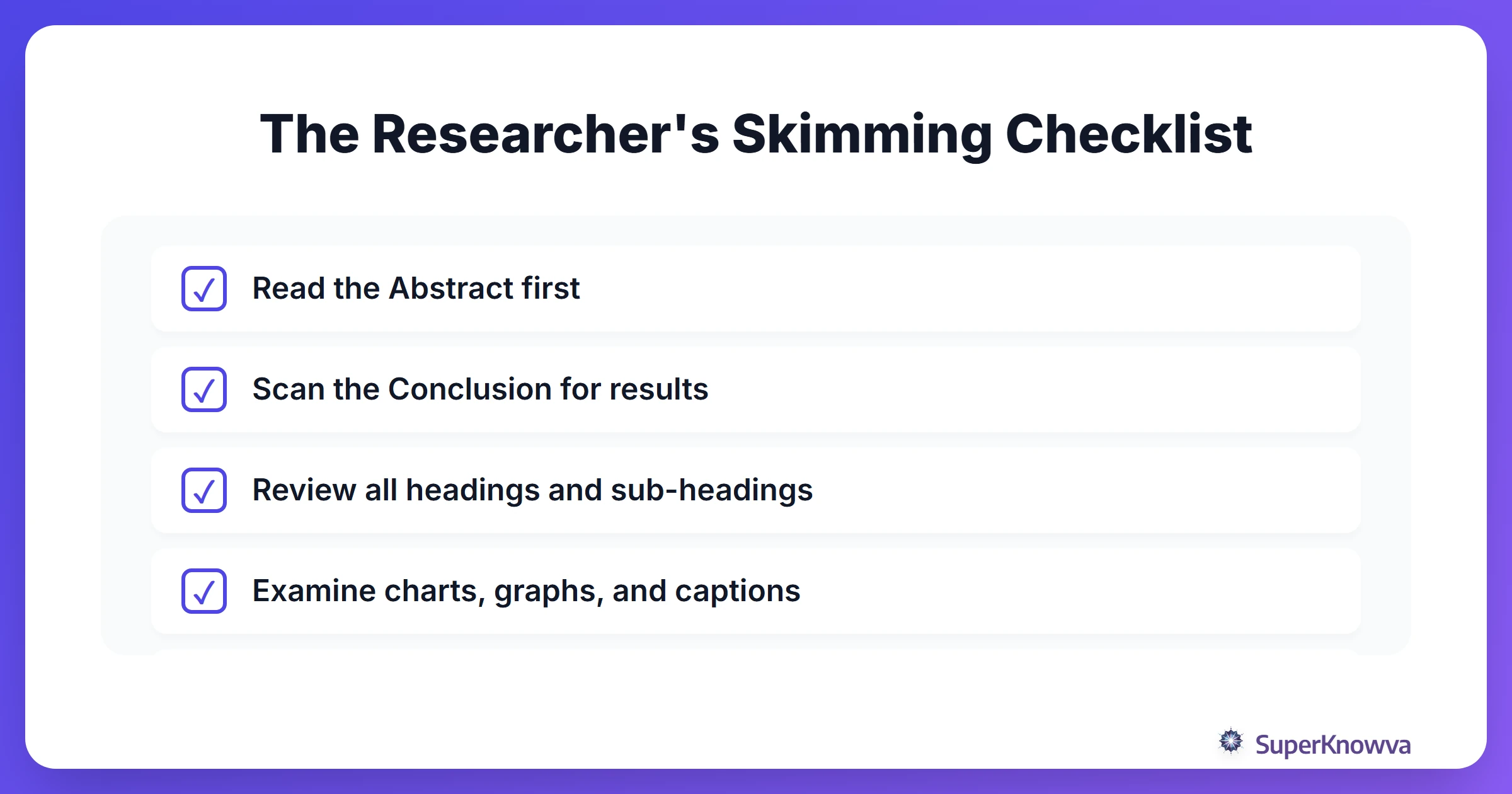
For academic papers, try the Abstract-Conclusion-Introduction workflow:
- Abstract: Is this even relevant to your work? If not, toss it.
- Conclusion: What was the result? If you know the "ending," the data leading up to it makes more sense.
- Introduction: Get the context and the problem the authors are trying to solve.
While you scan the body of the paper, look for anchor sentences, which are usually the first and last sentences of a paragraph. They hold the core arguments. Before focusing on the details, try mind mapping to visualize concepts and the overall structure. This helps organize the facts later.
Active Recall: Because Speed Without Retention is Useless
Speed is dangerous if it leads to passive reading. You might read five pages only to realize you were thinking about dinner. To ensure the information sticks, test yourself constantly.
- The Blurting Method: Finished a section? Close the book. Grab a blank sheet of paper and "blurt" out everything you remember. You can check out our guide on the Blurting Method to see why this works so well.
- The Feynman Technique: Try to explain the concept to a friend (or your dog) as if they’re five years old. Using The Feynman Technique exposes the gaps that speed reading might have left behind.
- Speed Notes: Don't stop to write essays. Use shorthand, symbols, or quick sketches in the margins to keep your momentum alive.
Managing the "Brain Drain"
Speed reading is a high-intensity workout for your brain. It’s exhausting. If you try to do it for four hours straight, your comprehension will tank.
To stay focused during long July sessions, manage your environment. Adopt Deep Work for students by building a distraction-free workspace. This means practicing digital minimalism: no notifications, no extra tabs, and no "just checking" your phone.
Finally, use the Pomodoro technique: 25 minutes of intense reading, followed by 5 minutes of actual rest (not scrolling Instagram). Your brain needs those breaks to process the data you’ve just shoved into it.
By combining these strategies with the AI-powered summarization and quiz tools at SuperKnowva, you can breeze through your research and still have time to enjoy the summer. Happy reading!