Preparing for a high-stakes exam like the CPA, PMP, or CISSP involves managing an intense amount of information. The volume of content is significant, the technicality is dense, and the pressure is constant. Most professionals fall back on the same habits that got them through college, such as re-reading notes and highlighting text, only to find those methods fail when facing a 500-page manual.
If you want to pass without burning out, you need a system built for long-term retention, not a weekend sprint. That is where spaced repetition for certifications becomes your secret weapon.
The Challenge: Why Your Brain Hits a Wall
The biggest hurdle for any certification candidate isn't usually the difficulty of the concepts. It is the sheer scale. Whether you are mapping out PMP study strategies or memorizing the tax code for SRS for CPA exam prep, you are dealing with a massive amount of information.
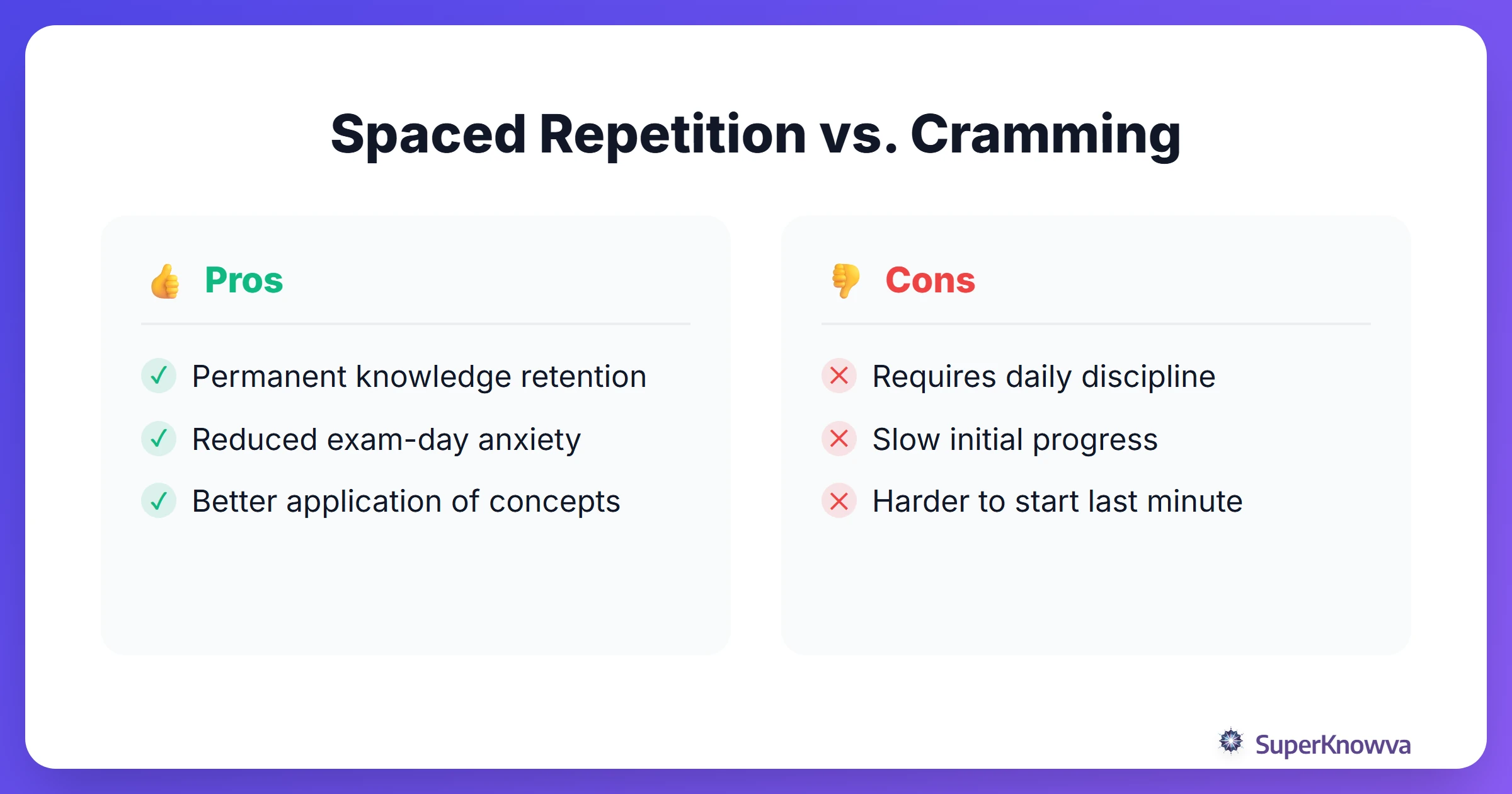
Traditional "cramming" works fine for a mid-term covering three chapters. It fails miserably for professional certifications that require a three-to-six-month study window. When you cram, you're renting the information; it sits in your short-term memory and evaporates within 48 hours. For an exam like the CISSP, where you have to synthesize eight different security domains, relying on short-term memory is a recipe for a "Fail" notice. You need to move past "exposure" and get to "internalization."
The Science: Beating the Forgetting Curve
Why do we forget? It comes down to the Ebbinghaus Forgetting Curve. This formula shows that without active review, most people lose about 50% of new information within 24 hours. By the end of the month? 80% is gone.
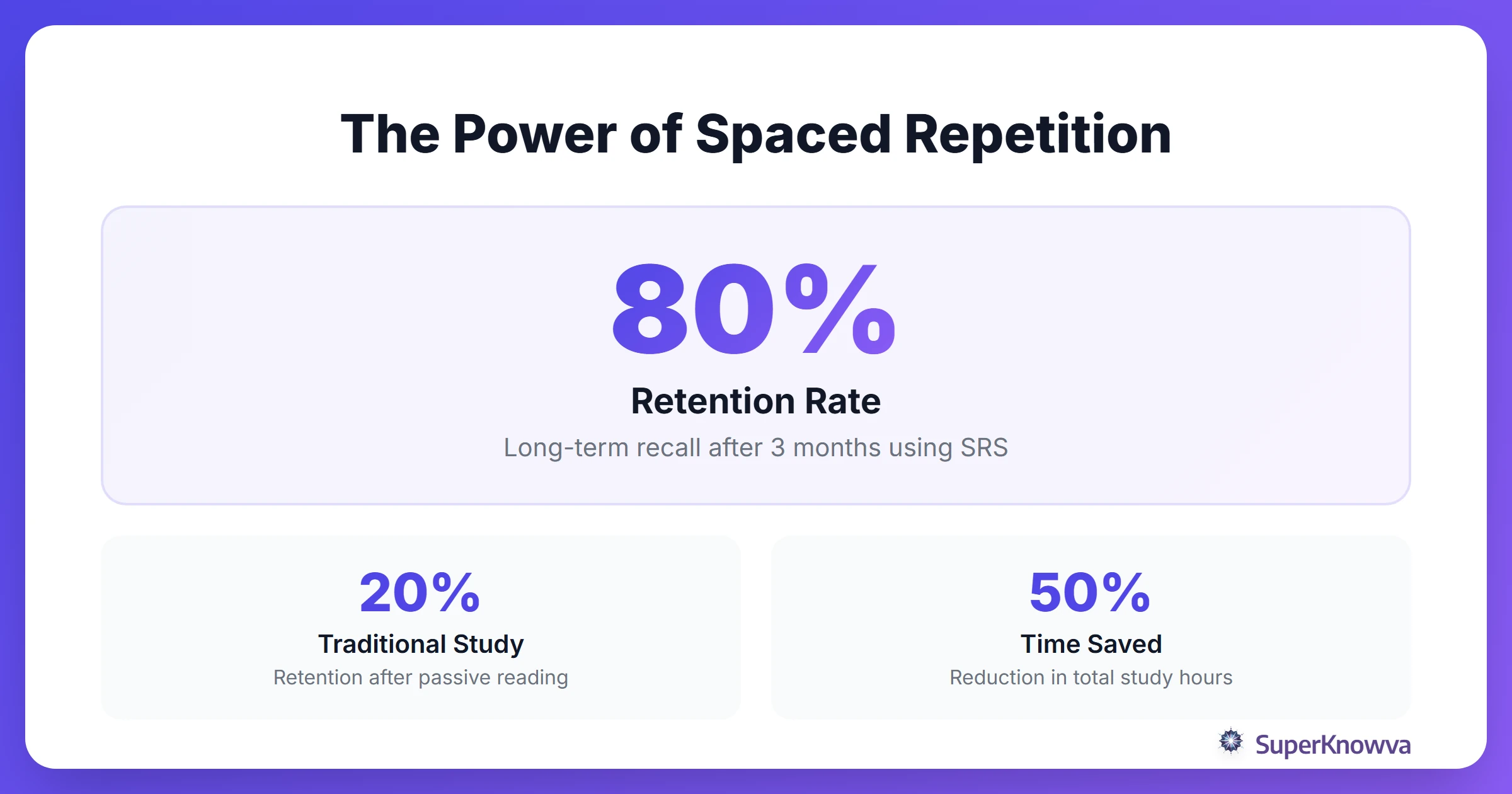
The forgetting curve for certifications is steep because the content is often abstract or technical. Spaced repetition interrupts this process. Instead of reviewing a concept five times in one afternoon (which feels productive but isn't), you review it at increasing intervals: one day later, then four days, then two weeks, then two months.
Research cited by the American Board of Family Medicine on Spaced Repetition confirms this is the gold standard for medical and technical fields. It’s the difference between "knowing" a fact for the quiz and "owning" it for the exam.
Active Recall: Stop Playing "Make-Believe" With Your Notes
If spaced repetition is the "when" of your study schedule, active recall for professional exams is the "how."
Passive reading, like highlighting a textbook or letting a lecture video play in the background, is the least effective way to learn. It creates an "illusion of competence." You recognize the words on the page, so your brain tricks you into thinking you’ve mastered the concept. But recognition isn't the same as recall.
To master your exam objectives, you have to force your brain to work. Turn your syllabus into questions.
- The Passive Way: Reading the definition of "Critical Path" in your PMP manual.
- The Active Way: Asking yourself, "If a task on the critical path is delayed by two days, what happens to the project’s float?"
Before you add a fact to your memory system, make sure you actually understand the "why" behind it. You can use the Feynman Technique to simplify complex topics first. From there, use The Blurting Method to test your initial grasp before you lock it into a long-term SRS cycle.
How to Actually Implement This
You have two real options: go old-school with manual cards or use Spaced Repetition Software (SRS).
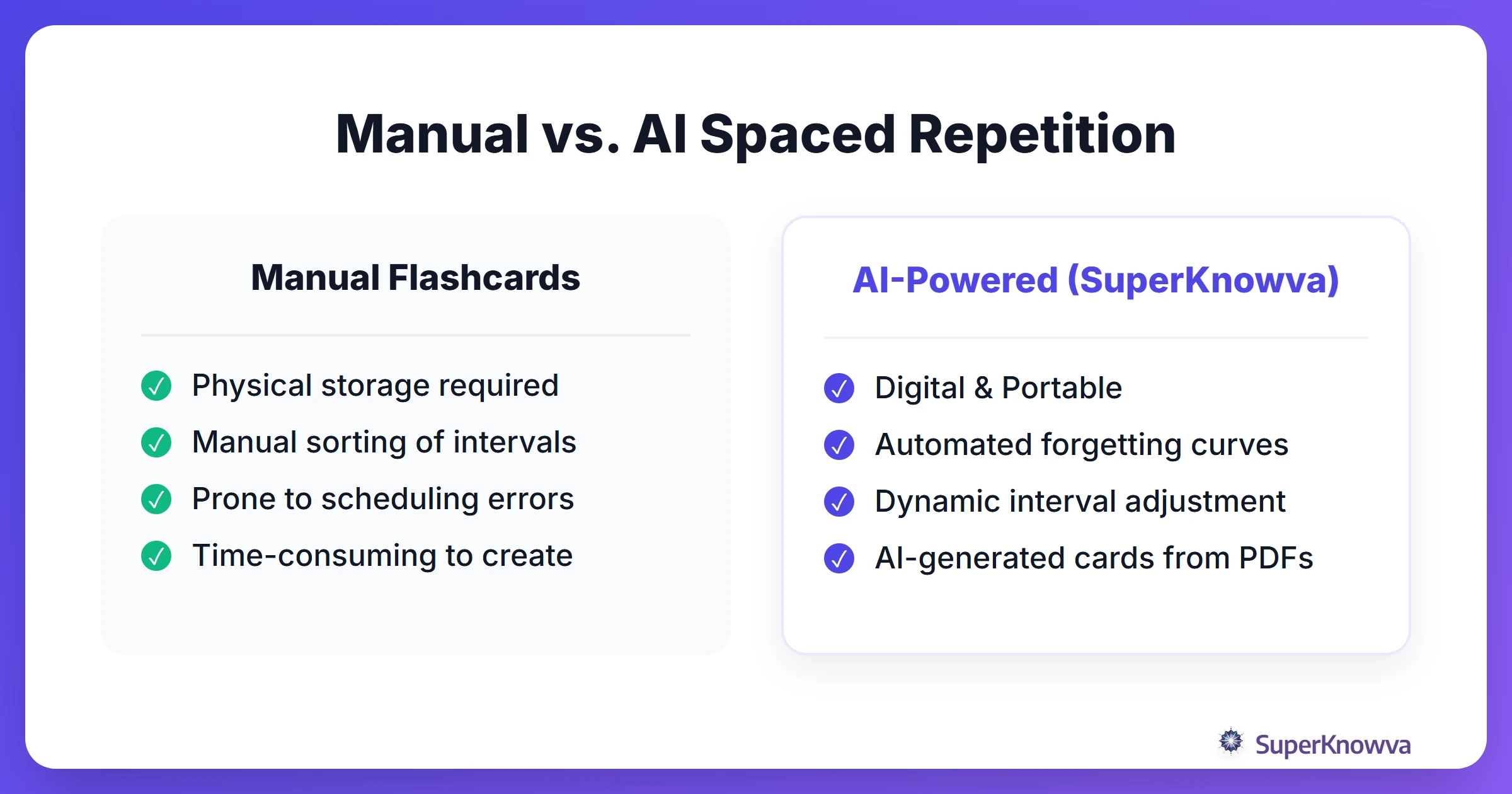
Manual cards (the Leitner System) are great for small subjects, but they become a logistical nightmare when you're managing the 2,000+ concepts required for CISSP memory techniques. AI-powered platforms like SuperKnowva do the heavy lifting for you. The algorithm tracks your hits and misses, serving up the toughest concepts exactly when you’re on the verge of forgetting them.
Your Action Plan:
- Atomize Everything: Don't make a card for "The Entire Tax Code." Break it down into "atoms," small, discrete facts.
- Create as You Go: Don't wait until you finish the book to make cards. If you learn a concept on Monday, it should be in your SRS by Monday night.
- Respect the Intervals: SRS isn't a last-minute tool. It needs time to work. Start at least 10 weeks out.
A 12-Week Certification Roadmap
Success is a marathon, not a sprint. Here is how to structure your 12-week build-up.
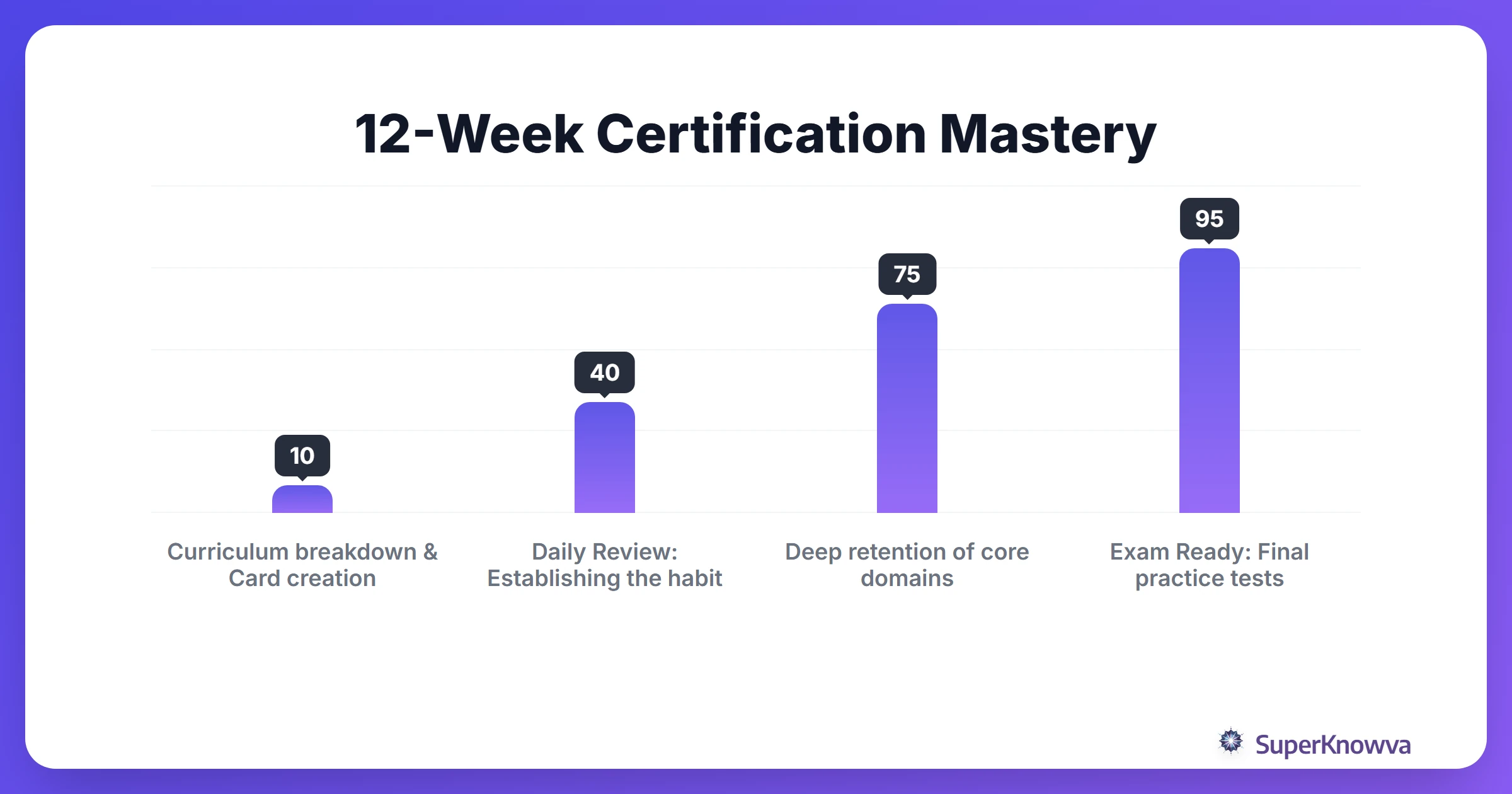
- Phase 1 (Weeks 1-4): The Build. Focus on acquisition. Read the material, watch the videos, and convert every major objective into 5-10 high-quality SRS cards.
- Phase 2 (Weeks 5-8): The Grind. This is about "card debt." Even if you don't have time to read new chapters, you must finish your daily reviews. This keeps the forgetting curve at bay.
- Phase 3 (Weeks 9-12): The Polish. Your daily reviews will actually take less time now as your intervals expand. Shift that extra energy toward full-length practice exams to build your "sitting stamina."
Avoid the "Leech" Trap
Every system has flaws. The most common is the "leech": a card you keep getting wrong. Usually, a leech means you did not understand the concept or the card is written poorly. If you get stuck, stop. Delete the card. Use Deep Work for Students (and pros!) to re-learn the core concept from a new angle before trying to memorize it again.
Finally, don't ignore the neuroscience of memory consolidation. Your brain doesn't store information while you're staring at the screen; it stores it while you sleep.
As this guide on Using Spaced Repetition for Cloud Certifications points out, the goal isn't just to pass a test and forget everything the next day. It’s to build a professional knowledge base that stays with you for your entire career. Stop cramming, start repeating, and walk into that testing center with actual confidence.