Reviewing a 400-page syllabus is often overwhelming. Many students struggle to keep up with heavy reading loads throughout the semester. The primary challenge is rarely comprehension. Instead, the bottleneck is the physical way eyes move across the page.
By mastering speed reading for large loads, you can effectively double your words-per-minute (WPM) without losing the plot. It’s about shifting from a passive observer to an active, high-speed information processor. Let’s look at how you can stop "reading" and start downloading data.
The Science of Reading Speed: What’s Dragging You Down?
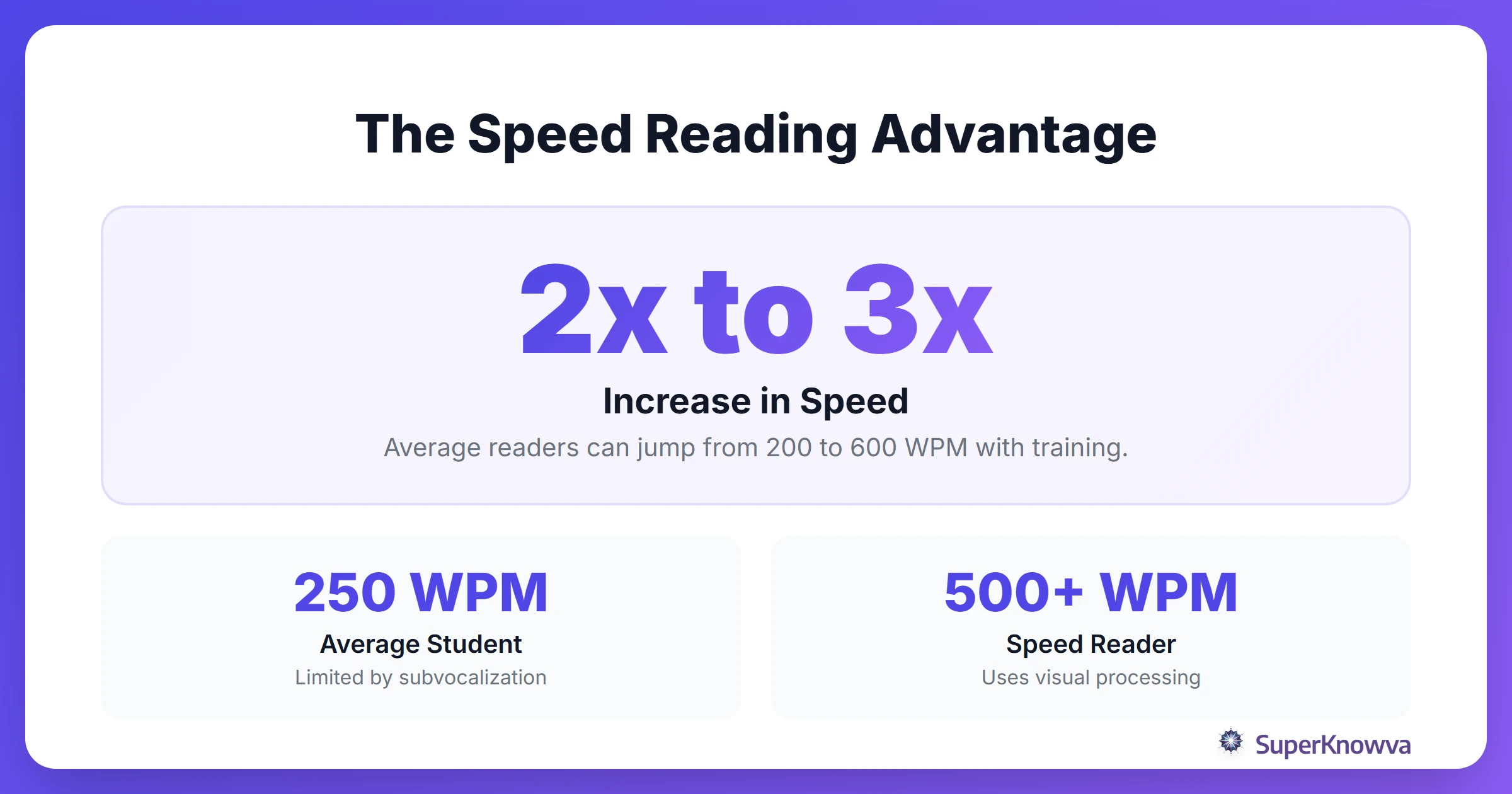
Before you can accelerate, you have to take the parking brake off. Most people read at about 200 to 250 words per minute, roughly the same speed we talk. This is not a coincidence. It is caused by subvocalization, the inner voice that narrates every word in your head. If you have to hear the word to understand it, you will never read faster than you can speak.
Then there are the "fixations" and "regressions." Your eyes naturally want to stop on every single word or, worse, jump back to re-read a sentence you finished ten seconds ago. It’s a massive waste of time. True speed reading forces your brain to switch from auditory processing (hearing) to visual processing (seeing clusters of ideas).
The Pointer Method: Use a Pacer to Find Your Flow
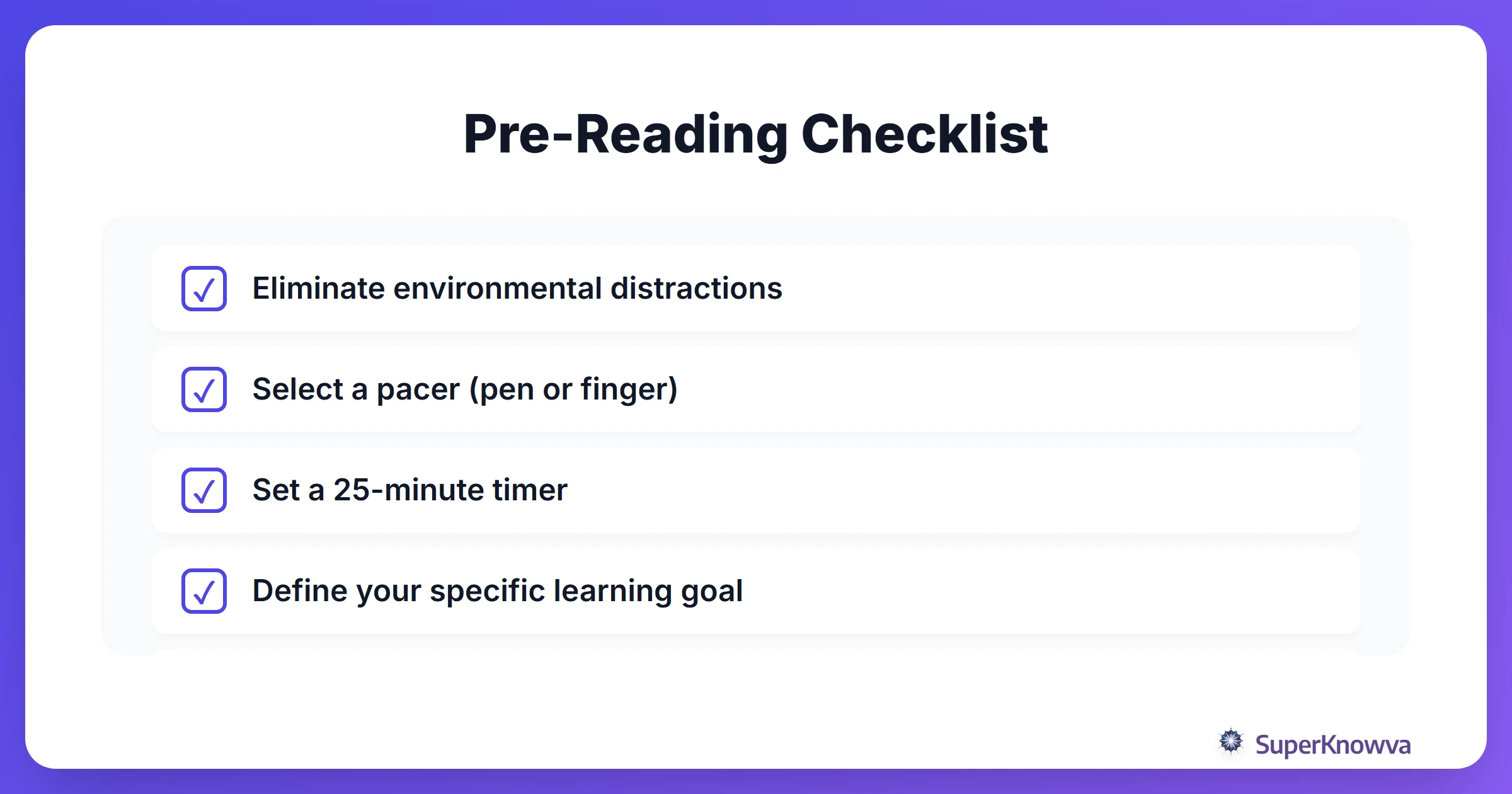
Remember when you were a kid and used your finger to follow the words? It turns out you were onto something. The Pointer Method is the easiest way to kill regression and keep your momentum. Whether it’s a pen, your finger, or your cursor, you need a visual guide to lead the way.
- Kill the Backtrack: Your eyes can’t wander backward if they’re busy chasing a moving target.
- Set the Pace: Move the pointer slightly faster than you’re comfortable with. It feels frantic at first, but your brain will adapt.
- The Indentation Trick: Don't read from the very first word to the very last. Start your pointer two words into the line and stop two words before the end. Your peripheral vision will catch the edges, saving your eyes from unnecessary travel time.
Think of it like a metronome for your focus. It keeps you in a "flow state" where you’re absorbing concepts rather than just staring at symbols.
Skimming vs. Scanning: Know When to Sprint
When you're facing speed reading for large loads, you can't treat every sentence like it’s a line of poetry. You have to be strategic. This is where you decide between skimming and scanning.
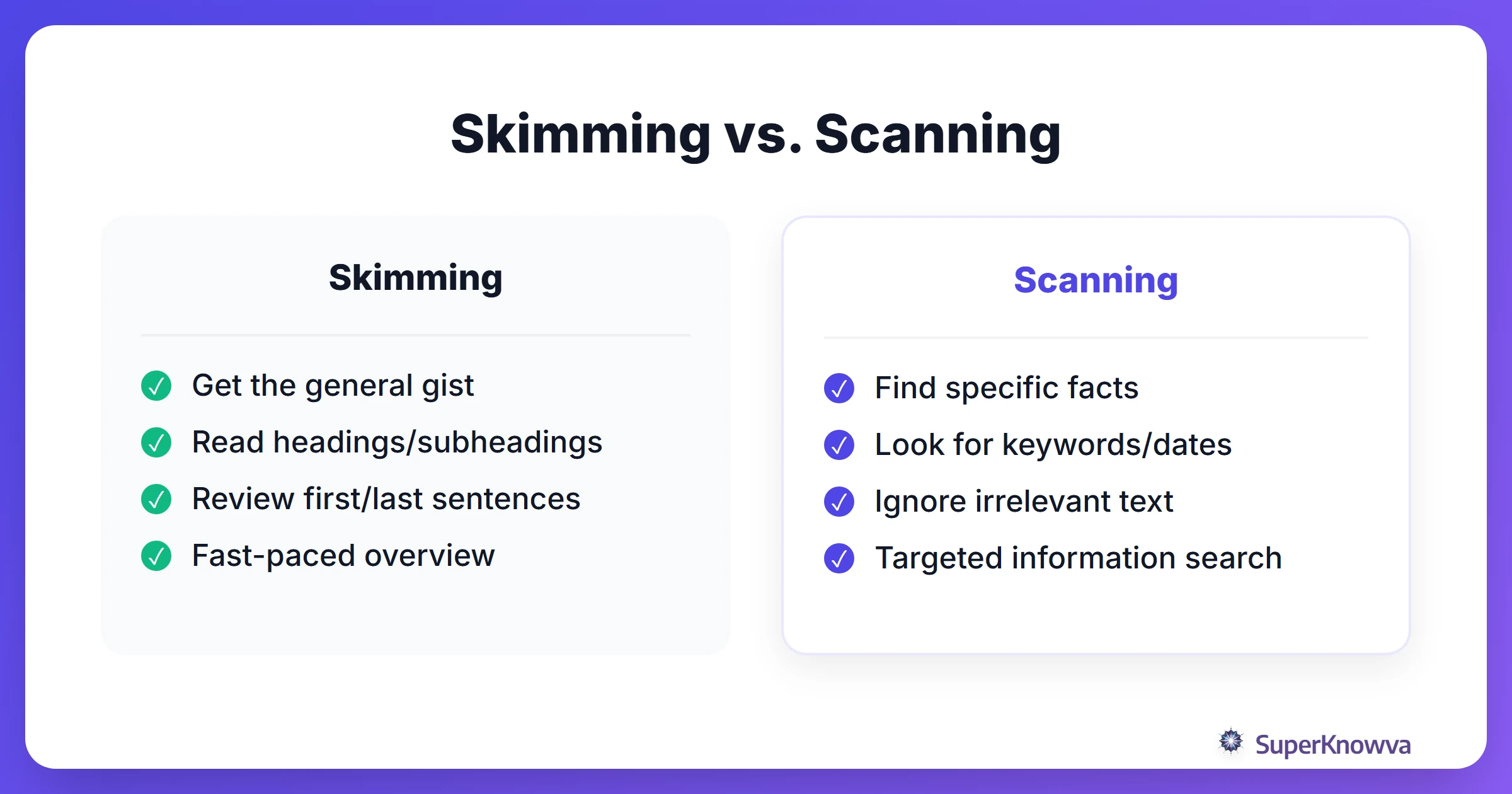
Need the general idea of a chapter? Skim it. Looking for a specific date or a chemical formula? Scan for it. To read academic texts effectively, look for "signpost words." Words like consequently, however, or in contrast signal when the author changes direction.
Also, lean on the "First and Last" rule. The first and last sentences of a paragraph almost always carry the heavy lifting (the thesis and the conclusion). Everything in the middle is usually just "fluff" or supporting evidence. If you get the gist from the bookends, move on.
The SQ3R Framework for Massive Reading Loads
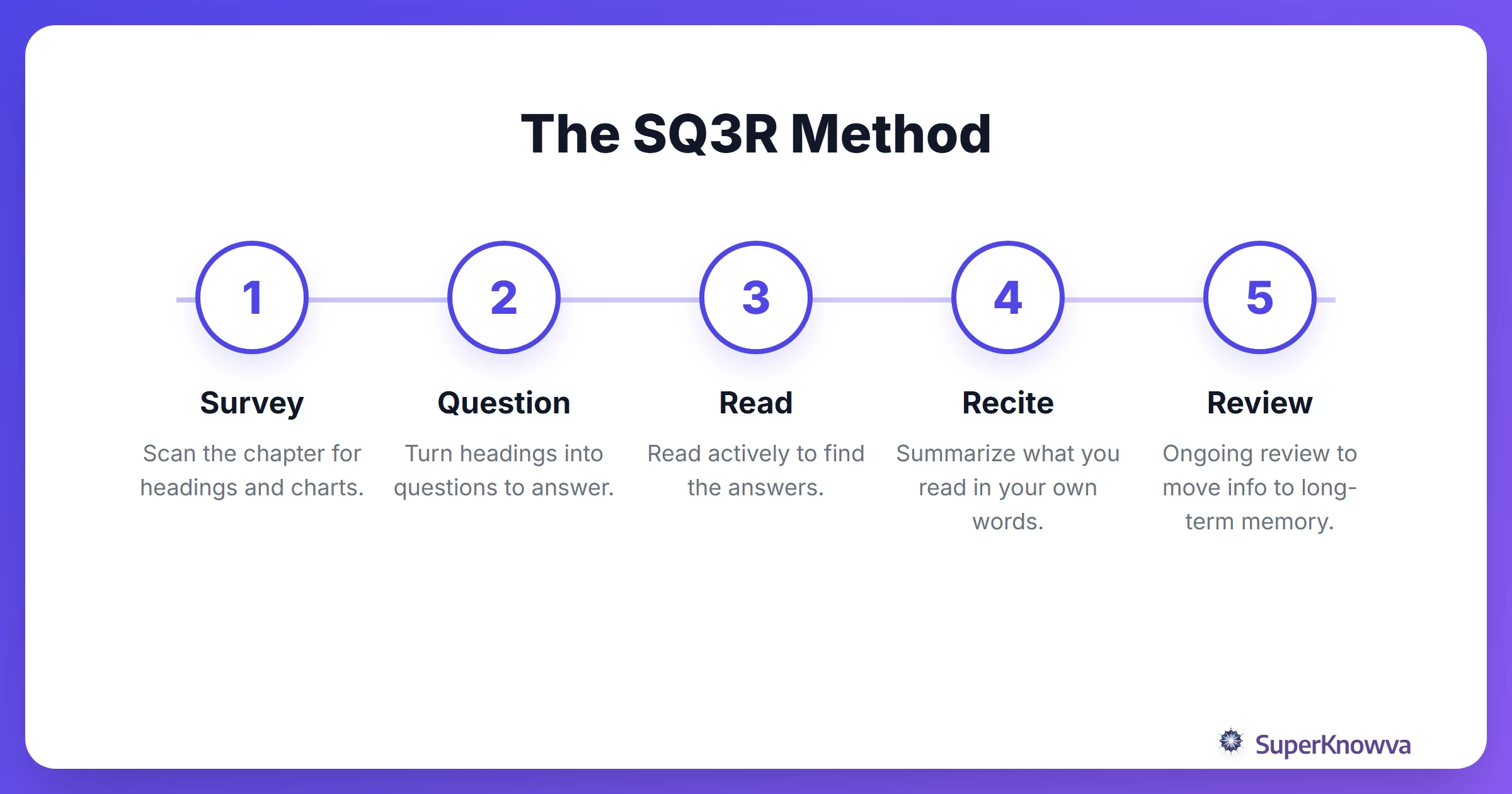
Speed is great, but it’s useless if you can’t remember what you read five minutes later. For dense textbooks, you need a system. The SQ3R method is the gold standard for high-volume study:
- Survey: Take two minutes to flip through headings, charts, and bolded terms. Get the "lay of the land."
- Question: Turn those headings into questions. If the heading is "The Causes of Inflation," ask yourself, "Okay, what are the causes?" This gives your brain a mission.
- Read: Now, use your speed reading techniques to hunt for the answers to those questions.
- Recite: Close the book. Can you explain what you just read to a five-year-old? If not, you didn't get it.
- Review: Go back over your notes periodically to make sure the info actually sticks.
Once you’ve done your high-speed pass, try The Blurting Method to see exactly where your memory has holes.
Widening Your Field of Vision
Most of us read with "tunnel vision," focusing on one word at a time. Speed readers use peripheral vision training to swallow entire "word chunks." By widening your gaze, you can see 3–5 words in a single glance. This drastically reduces the physical strain on your eye muscles and speeds up your processing.
Try the "Soft Focus" technique. Instead of squinting at the page, relax your eyes. Try to see the entire line of text as a single image. It takes intense concentration, which makes it a perfect candidate for Deep Work for Students. Since you'll need zero distractions, practicing Digital Minimalism is a must. One TikTok notification will break your rhythm instantly.
Can You Actually Remember Everything?
The biggest myth about speed reading is that it kills comprehension. It doesn't if you do it right. The trick is "Layering." Instead of reading a chapter once, very slowly, try reading it three times at different speeds: a 2-minute skim, a 10-minute speed read, and a 5-minute targeted review of the hard parts.
Using Mind Mapping 101 techniques can also help you organize the massive amount of data you're taking in. Think of speed reading like driving: you go 70 mph on the highway, but you slow down for the sharp turns. If you hit a complex philosophical argument or a difficult math proof, downshift. Speed is a tool, not a rule.
To learn more about the mechanics of literacy, Oregon State University: Speed Reading Strategies is a great resource. You can also check out the Dartmouth Academic Skills Center for more on moving from passive to active reading.
Stop letting your reading list bully you. Combine these mechanical hacks with a solid study framework, and you'll find yourself finishing your work while everyone else is still on chapter one. Happy reading!