It’s 2:00 AM. You’ve been hunched over your desk for four hours, fueled by lukewarm coffee and the mounting panic of tomorrow's exam. You figure that if you just stay in that chair long enough, the information will eventually stick. But here’s the cold, hard truth: your brain checked out two hours ago.
Many people view "marathon" study sessions as a badge of honor, but they often lead to burnout. Research indicates that optimizing study breaks for retention is essential. This is a key strategy for students who want to remember what they read.
When you push through total exhaustion, your brain stops absorbing and starts "scanning." To master a difficult subject, you have to realize that rest isn't a distraction from the work. It’s an essential part of the work itself.
The Neuroscience of the 'Rest-Effect'
Why does walking away from your desk actually make you smarter? It’s all thanks to something called the Default Mode Network (DMN).
Your brain functions like a construction site. When you focus intensely, you deliver the raw materials (the facts). When you step away, the DMN kicks in. This is when the "construction crew" takes over, organizing and filing those materials into your long-term memory.
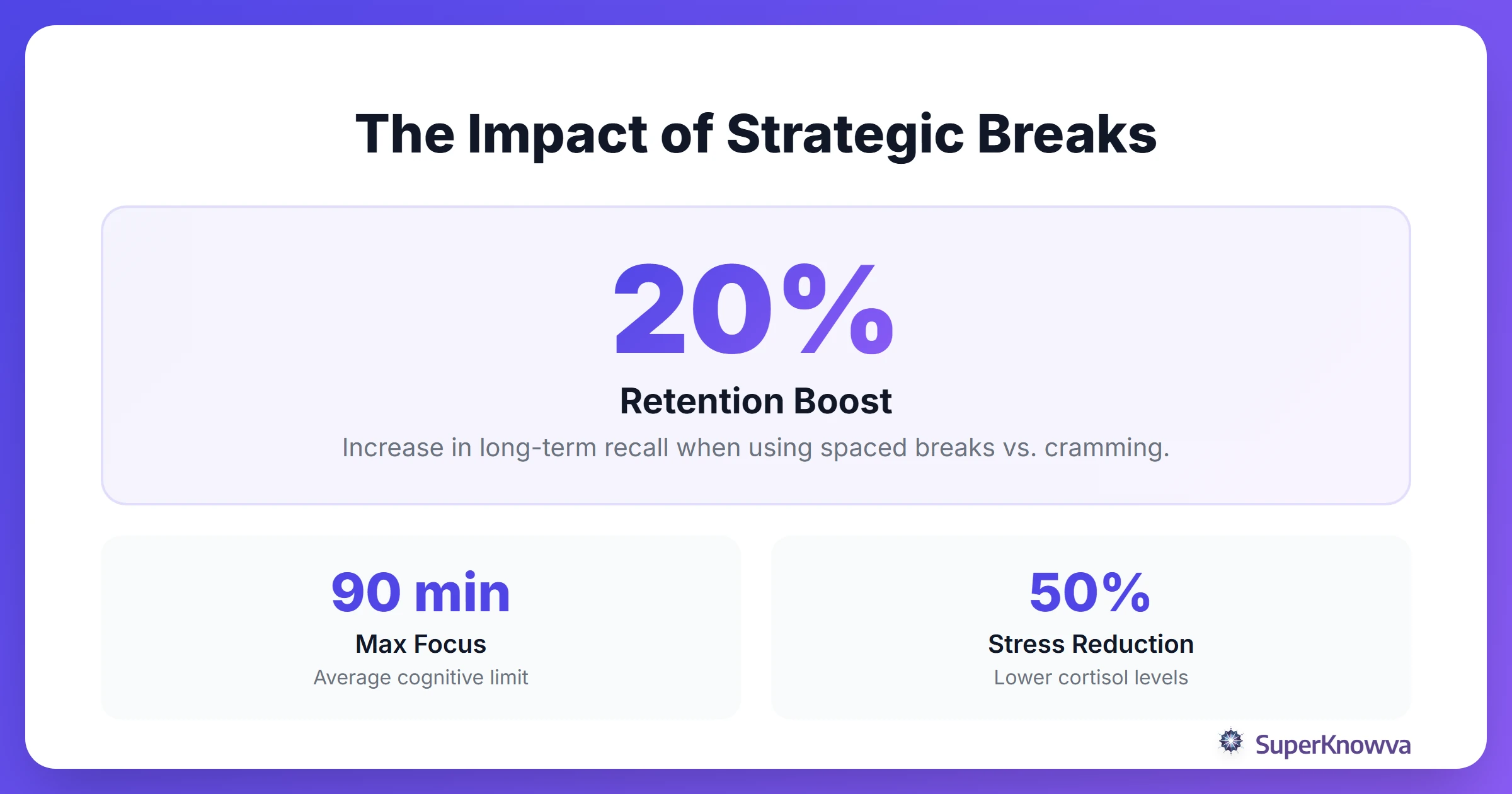
This is a process called memory consolidation. During these quiet moments, your brain strengthens the neural pathways associated with what you just learned.
However, there’s a catch. There is a world of difference between passive rest (closing your eyes or stretching) and active distraction (checking your notifications). If you refuse to take a real break, you hit the "law of diminishing returns." This is that frustrating point where every extra hour of study yields less and less actual learning. By integrating strategic rest, you keep your cognitive gears from grinding to a halt.
Pomodoro vs. Flowtime: Finding Your Ideal Rhythm
Not every student, and certainly not every subject, works on the same clock. When timing breaks, choosing between Pomodoro vs. Flowtime impacts your momentum.
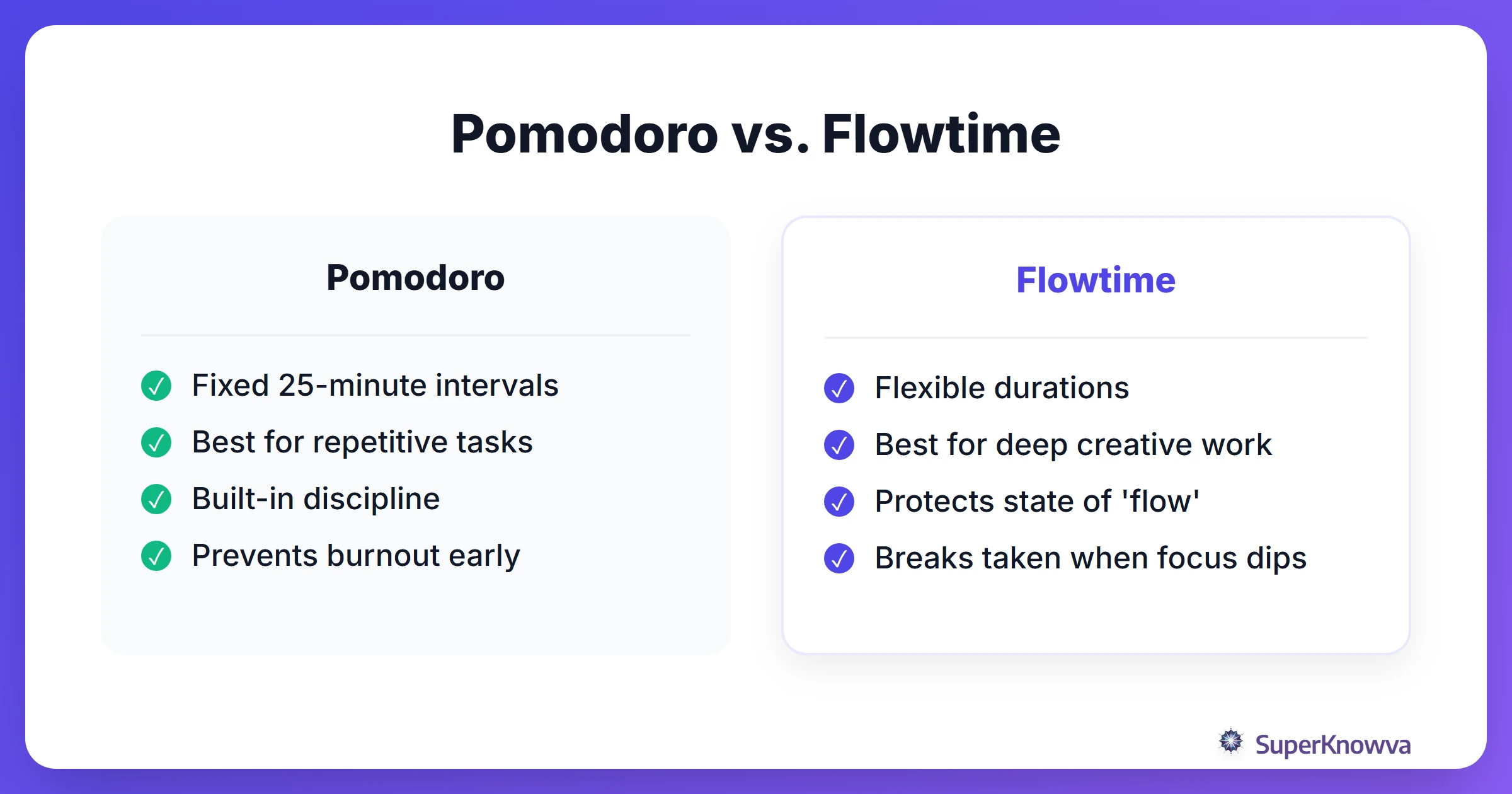
- The Pomodoro Technique: Work for 25 minutes, then break for 5. This is effective for rote tasks, flashcards, or difficult subjects. It builds momentum to keep you moving.
- The Flowtime Method: If you are deep in an essay or a complex physics problem, a 25-minute buzzer is an interruption. Flowtime lets you work as long as you are focused, whether that is 40 minutes or 90. You only break when you feel your concentration start to fade.
Want to find your sweet spot? Track your "focus endurance" for a few days. If you find yourself reaching for your phone at the 30-minute mark, that’s your brain telling you its limit. Match your break frequency to the material; the harder the concept, the more often you should step away.
High-Quality vs. Low-Quality Breaks
Let's be honest: most of us spend our "breaks" scrolling through TikTok. This is what we call a low-quality break. Digital scrolling triggers "doomscrolling" habits that actually drain your dopamine and leave your eyes more strained than before. You aren't resting; you're just switching one type of mental fatigue for another.
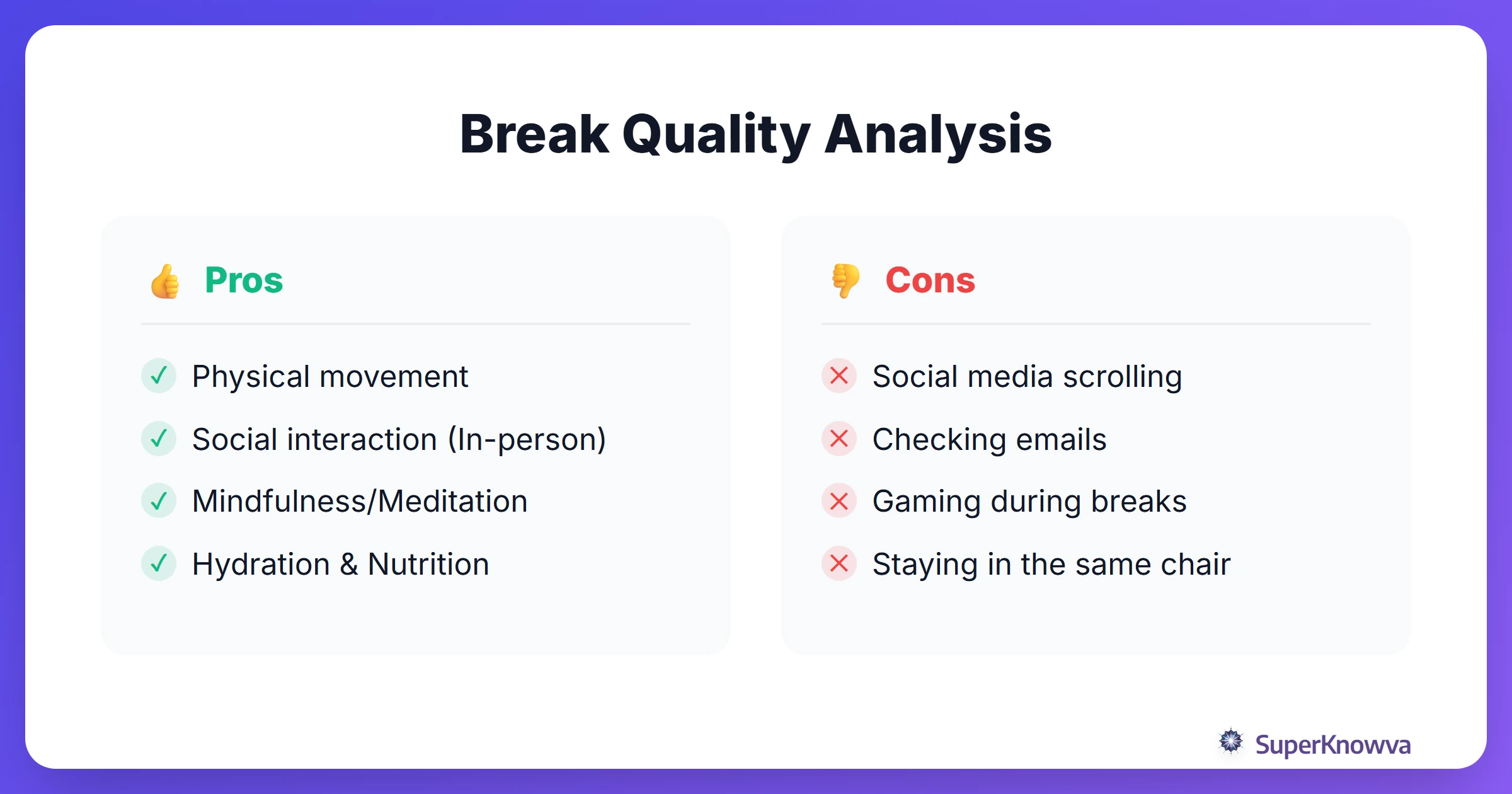
To practice true digital minimalism and actually recharge, aim for high-quality breaks:
- Get Moving: Even a two-minute walk or some quick stretching sends a fresh surge of oxygen to your brain.
- The 20-20-20 Rule: Every 20 minutes, look at something 20 feet away for 20 seconds. Your eyes will thank you.
- Nature Exposure: It sounds "woo-woo," but Attention Restoration Theory suggests that just looking at a tree or a houseplant can significantly reset your focus.
- Hydrate: Brain fog is often just hidden dehydration. Go get a glass of water.
Micro-Breaks: The 30-Second Brain Reset
You don’t always need a 15-minute walk to reset. Micro-breaks, pauses lasting just 30 to 60 seconds, prevent the "zoning out" feeling during long reading sessions.
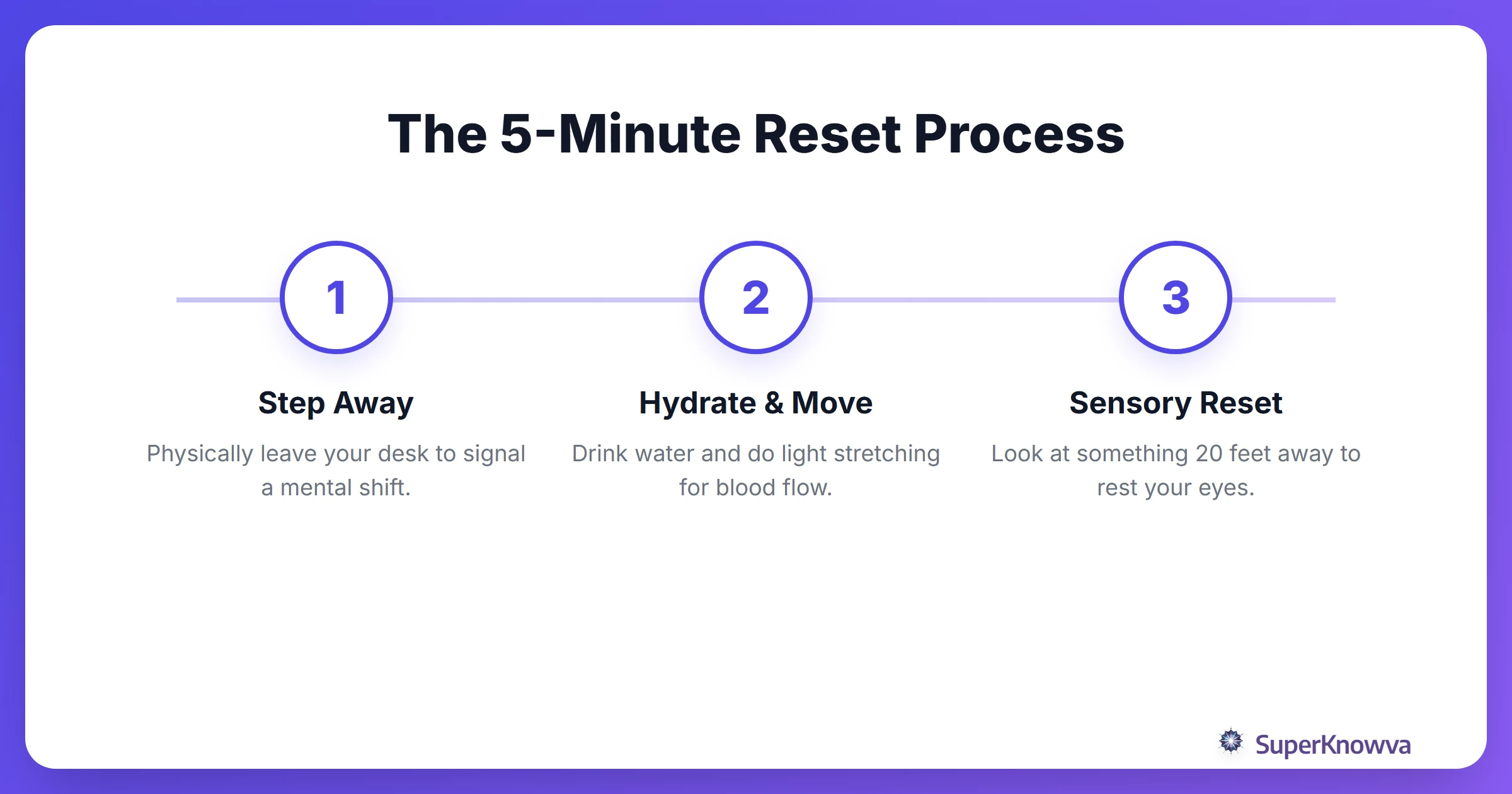
These are easy to slip in without breaking your flow. Try these:
- Deep Breathing: Three slow breaths to oxygenate your blood.
- The Window Gaze: Look at the horizon to reset your depth perception.
- The Ceiling Stretch: Reach for the sky to decompress your spine after hours of slouching.
Think of these as a "refresh button" for your brain. They keep your attention from drifting during the final stretch of a study block.
Strategic Timing for Memory Consolidation
Timing is everything. If you’ve just wrestled with a particularly brutal concept, take a break immediately afterward. This prevents the interference effect, where new information "overwrites" what you just learned because your brain didn't have a second to stabilize the first memory.
Just like the relationship between sleep and memory consolidation, short breaks provide a window for your brain to process data. This is vital when you're managing review frequency in high-volume subjects like med school or law.
Engineering memory requires a system. Try using breaks as a reward: "Once I solve these three problems, I get 10 minutes of fresh air." It builds a positive feedback loop that makes long-term study feel effortless.
Overcoming the Restart Lag
The biggest fear? "If I stop now, I’ll never start again." We’ve all had a 5-minute break turn into a 50-minute YouTube rabbit hole.
Deep work strategies for students offer a simple fix for this: the "re-entry task."
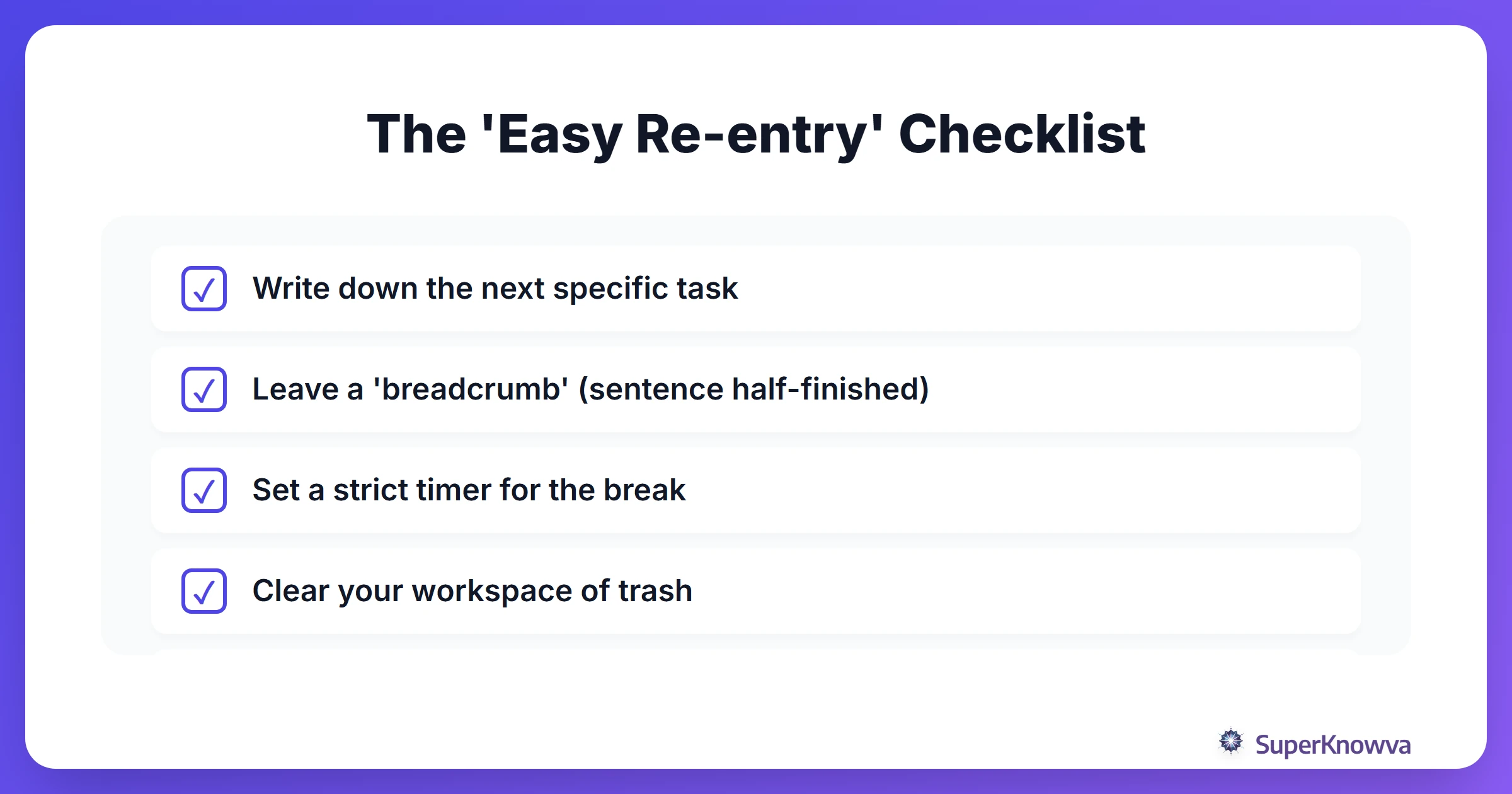
Before you stand up, leave yourself a "breadcrumb." Leave a sentence half-finished or write a sticky note that says exactly what the next step is. This lowers the "activation energy" needed to get back to work. You won't have to wonder where you left off; you'll just dive right back in.
Conclusion
Optimizing your study breaks isn't about being lazy; it is about working with your brain instead of against it. By replacing marathon sessions with intervals of focus and quality rest, you will remember more and reduce stress. Take five minutes for yourself right now.