The sun is out, the pool is calling, and your textbooks are... gathering dust in the corner. We’ve all been there. You worked hard all year and you deserve a break, but that nagging feeling in the back of your mind? That’s the "summer slide." It’s a real phenomenon where students lose significant academic ground during the hiatus.
But here’s the problem: forcing yourself into a rigid, soul-crushing schedule usually leads to total abandonment by the Fourth of July. The solution isn't working harder or sacrificing your tan; it's implementing a summer study plan ai optimization strategy that balances real academic growth with the relaxation you’ve actually earned.
Learn how to use technology to build a schedule that adapts to your life, not the other way around.
The Summer Study Dilemma: Efficiency vs. Enjoyment
Why is studying in July harder than studying in January? It is a psychological hurdle. When the rest of the world is on vacation, motivation often drops. Traditional "static" study plans like paper calendars or rigid spreadsheets fail because they do not account for summer spontaneity. One missed afternoon for a last-minute road trip can disrupt a manual schedule and lead to burnout.
There's also the issue of cognitive load. Without the structure of daily classes, it’s easy to try and cram too much into a single "productive" day, leaving you mentally fried. This is where AI optimization bridges the gap. By using data rather than sheer willpower, you can maintain your momentum without sacrificing the summer vibes.
Why AI Optimization is the Secret to Summer Success
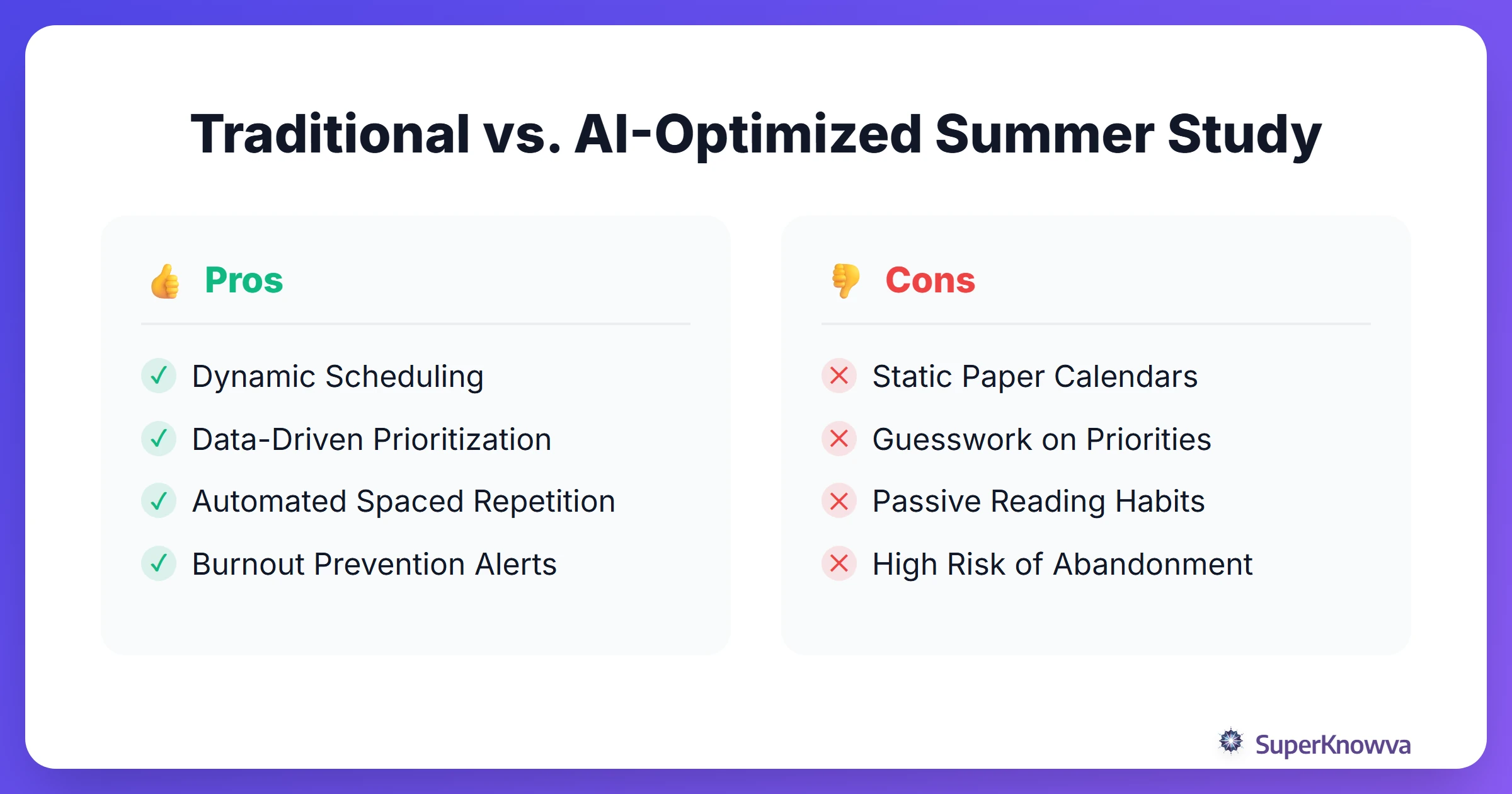
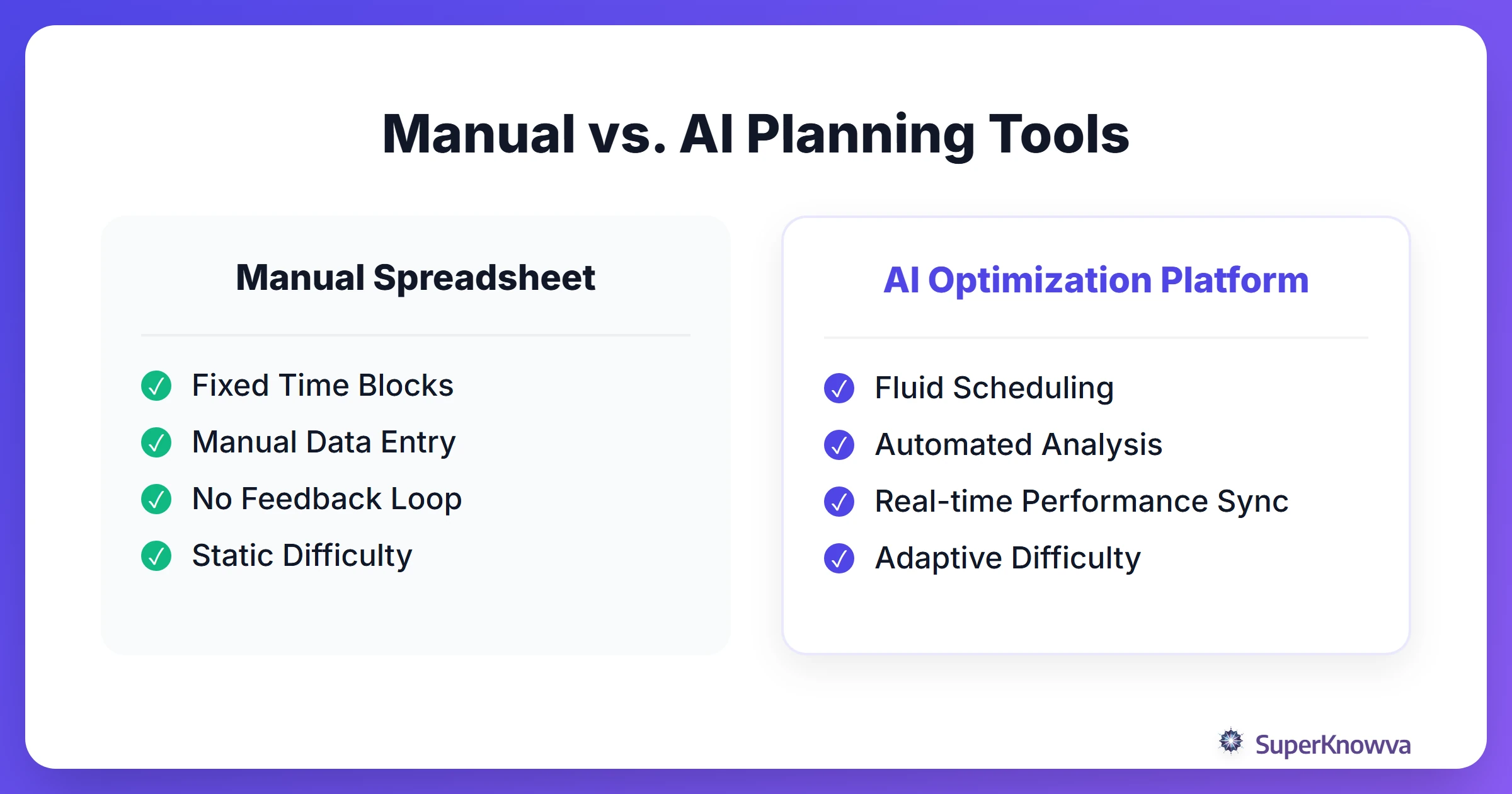
The difference between a standard calendar and an AI-optimized plan comes down to the algorithm. A calendar just tells you when to do something. An AI analyzes the volume of your material against your actual available time to create goals that are actually achievable.
AI study tools use data-driven prioritization to ensure you’re hitting high-impact subjects first. Instead of mindlessly reading a textbook cover-to-cover, the AI identifies foundational concepts versus secondary details. Even better? These tools use predictive analytics to anticipate "forgetting curves." Since summer breaks are long, AI can calculate exactly when you’re likely to lose a concept and schedule a quick review session just in time to lock it into your long-term memory.
The field of automated planning and scheduling is a major area of research. Look at programs like the International Optimisation and Planning Summer School. These principles are now available to students through platforms like SuperKnowva.
Step-by-Step: Designing Your AI-Powered Summer Schedule
Ready to automate? Building an effective plan requires a few high-quality inputs to get the best results.
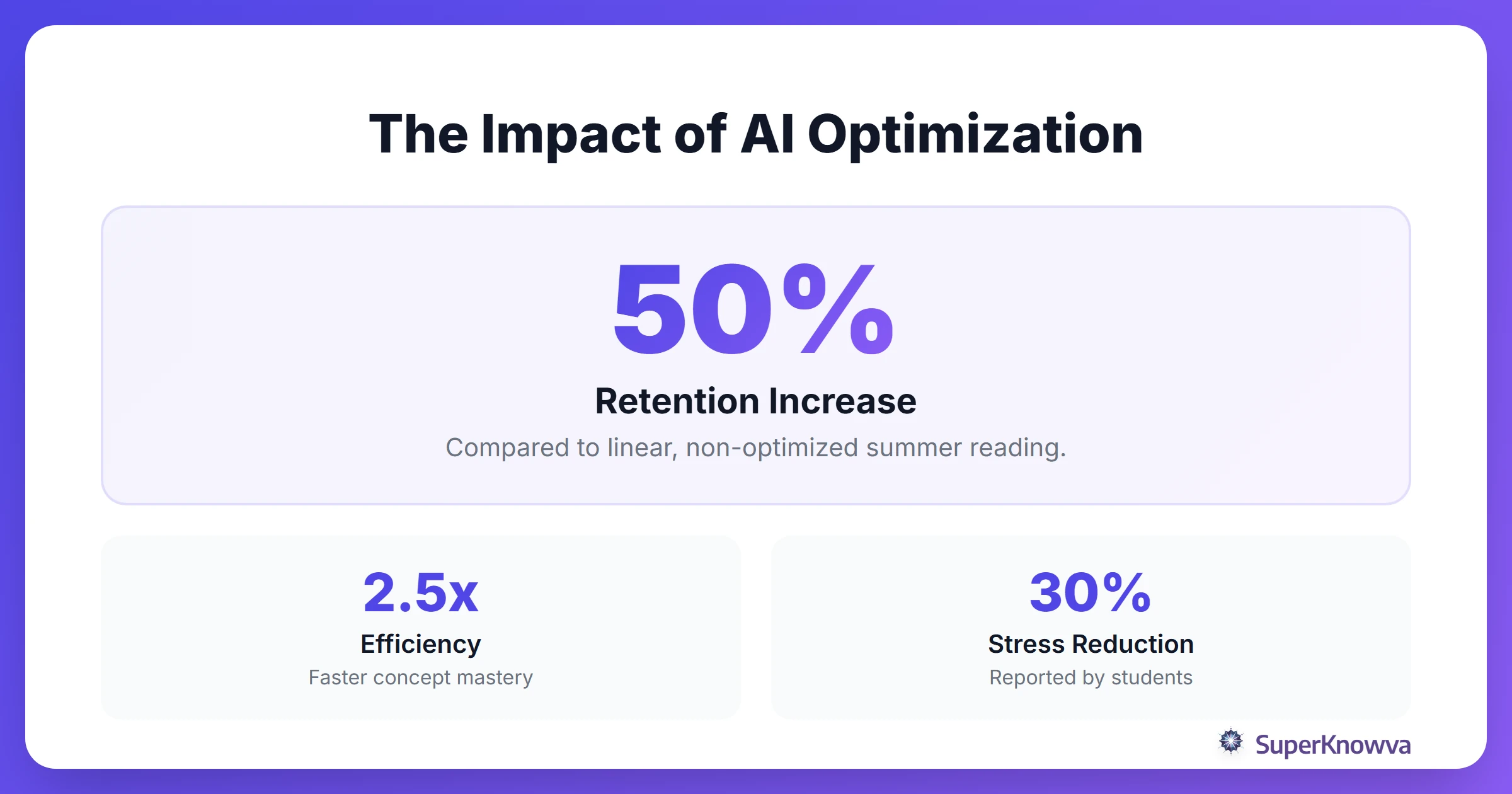
- Audit Your Summer: Be honest about your "deep work" windows. Do you have focus at 9:00 AM, or are you a night owl? Mastering deep work is the foundation here. It ensures the hours you do spend studying actually count.
- Input Your Data: Feed your syllabi, past exams, or digital textbooks into your AI planner. The more data the AI has, the better it can distribute your workload across the weeks.
- Set Target Scores: What’s the goal? A general refresh, or a 95% mastery score for a placement exam? The AI works backward from your goal to set your daily tasks.
- Integrate Active Recall: AI-optimized plans often use interleaving practice techniques to prevent the "illusion of competence." By mixing different topics in one session, your brain stays sharper and more engaged.
Balancing Retention and Recovery: The AI Advantage
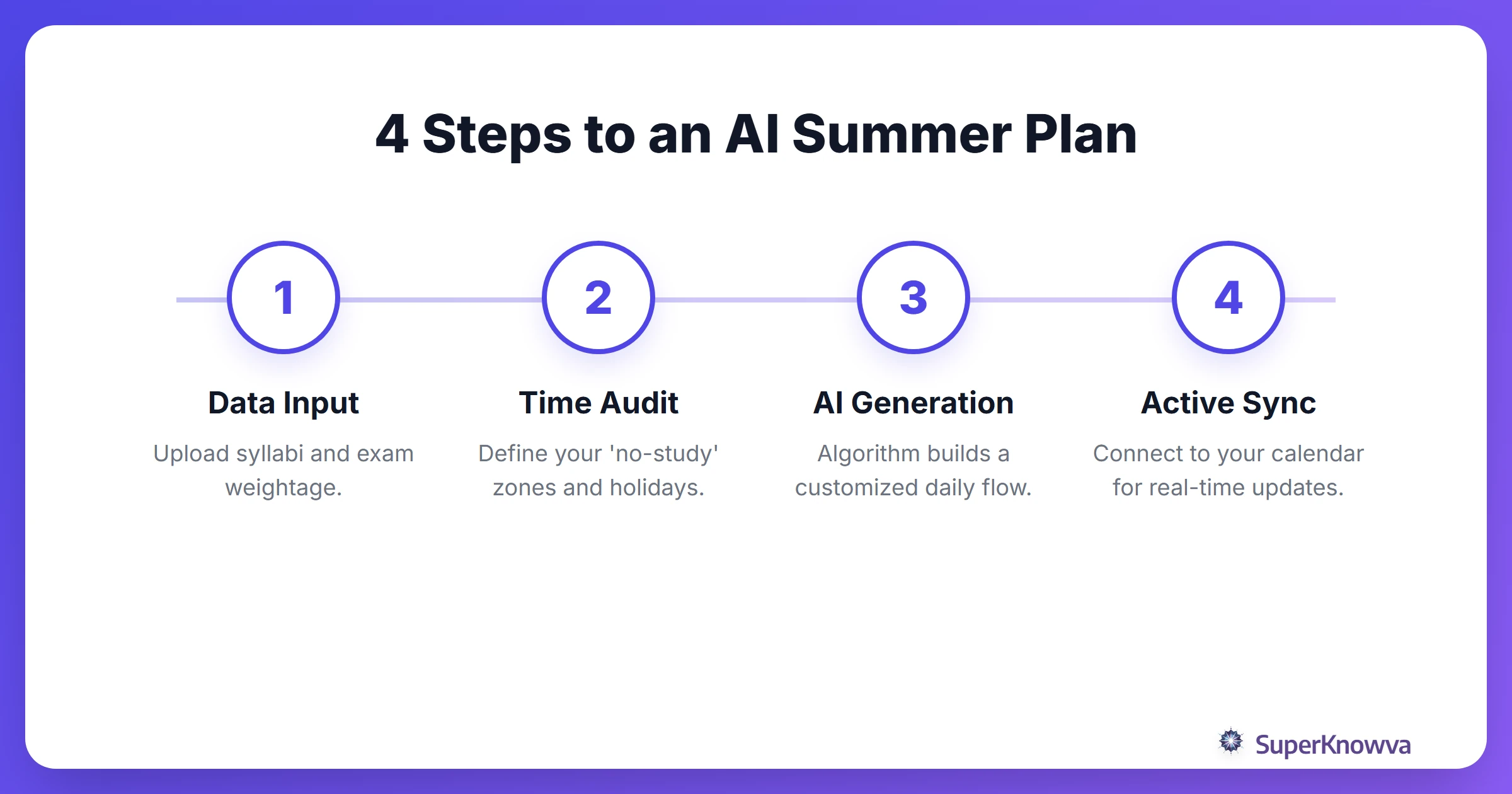
One of the biggest perks of AI is its ability to schedule breaks that actually improve memory. Rather than grinding for five hours straight, an AI might suggest three 45-minute bursts with specific "recovery" intervals.
When you're deciding how to structure these sessions, consider this Pomodoro vs. Flowtime comparison to see which fits your rhythm. Machine learning algorithms can even identify your peak productivity hours based on how quickly you move through tasks, automatically shifting harder subjects to your high-energy zones.
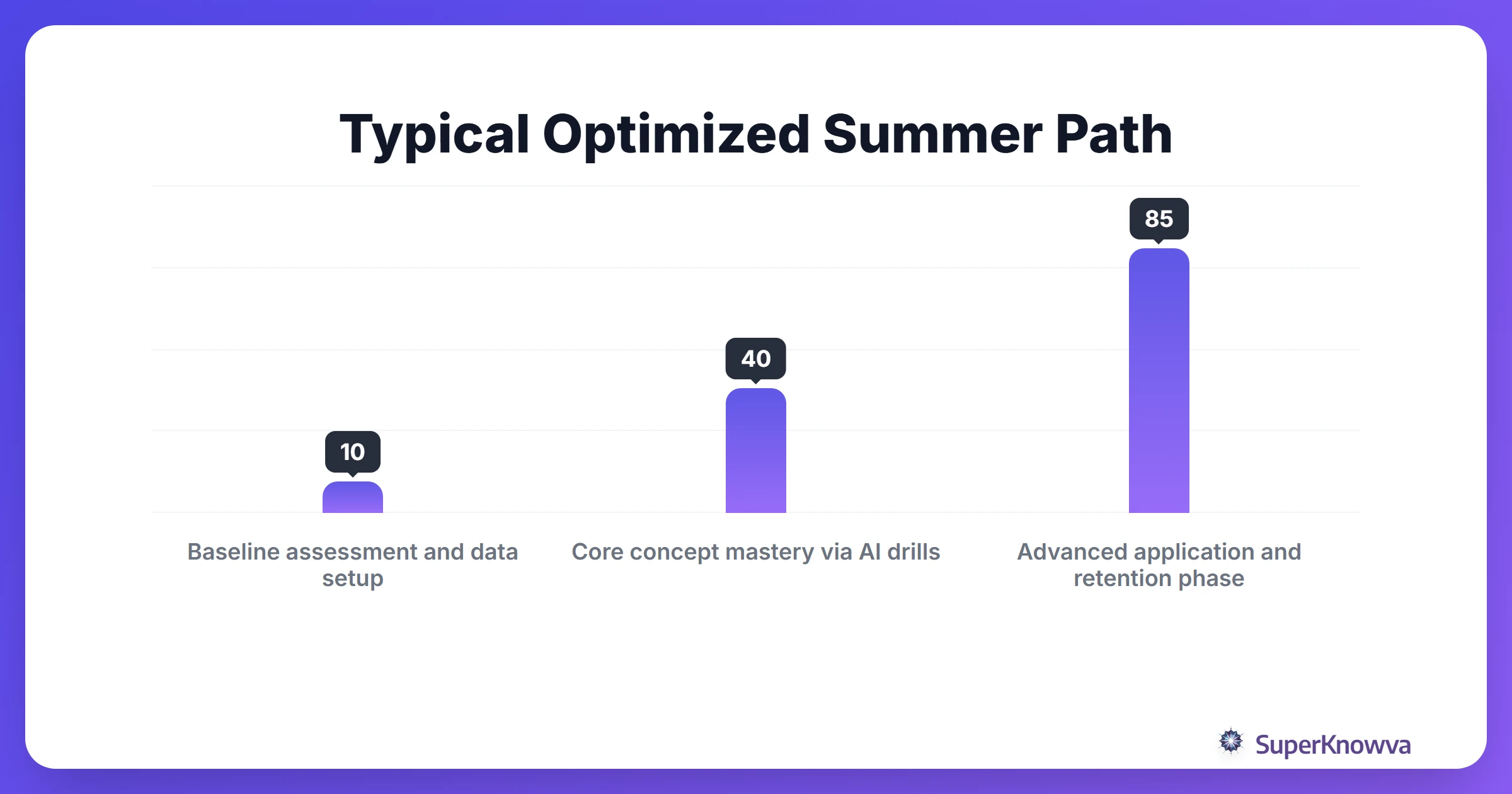
Perhaps most importantly, AI allows for dynamic adjustments. If you miss a Tuesday because of a beach trip, you don't have to "catch up" by doubling your work on Wednesday. The AI reshuffles the entire remaining summer duration to absorb that missed time. This keeps your daily workload manageable and prevents that "all-or-nothing" mentality that leads to quitting.
Top AI Platforms for Study Task Optimization
Not all AI is created equal. While general chatbots are great for explaining a concept, they aren't built for the complex logic of scheduling and automated planning.
- Logic-Driven Engines: Look for platforms that specialize in resource allocation. These tools use mathematical optimization to ensure your path to mastery is the shortest one possible.
- Education-Specific AI: Tools like SuperKnowva are built specifically for the student lifecycle. They don't just give you a "to-do" list; they integrate the study material directly into the schedule.
- The SuperKnowva Platform: By using SuperKnowva, you automate the manual work. You upload your materials, and the platform generates the quizzes, the schedule, and the retention tracking automatically.
Organizations like the AI Institute for Advances in Optimization (AI4OPT) Seth Bonder Camp teach the fundamentals of optimization and data science, the very principles SuperKnowva uses to make your studying more efficient.
Tracking and Iterating: Your Data-Driven Feedback Loop
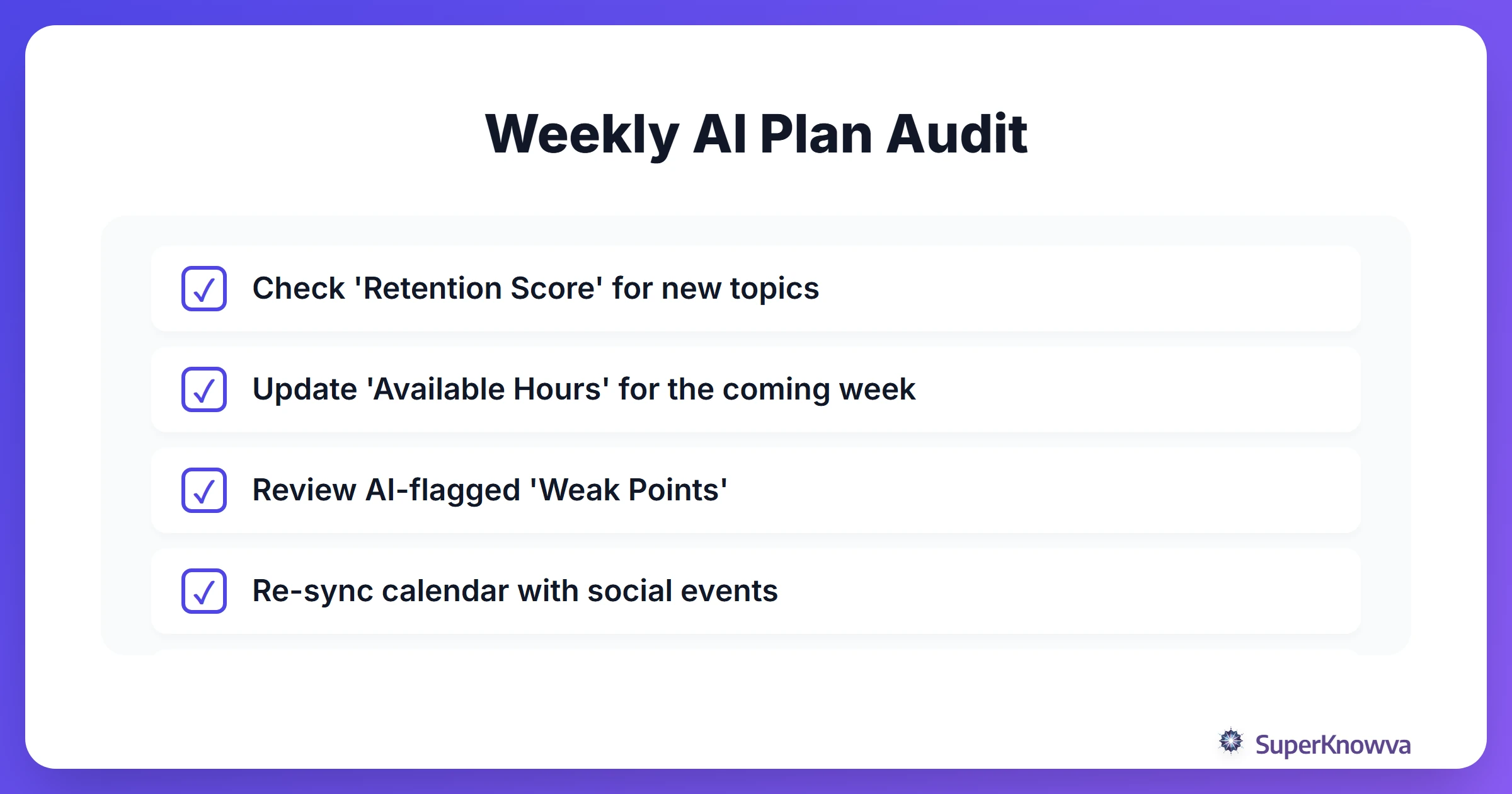
The final piece of a summer study plan ai optimization is the feedback loop. Every Sunday, take five minutes to review the progress reports generated by your AI. Are you falling behind in Biology but cruising through Calculus? The AI will suggest adjusting difficulty levels or shifting time weights based on how you’re actually performing.
To ensure your summer efforts aren't lost by August, focus on building a second brain to organize your digital resources. This acts as a repository for the insights your AI generates, making it easy to review everything when the fall semester finally arrives.
By treating your summer study plan as a dynamic, data-driven system rather than a static chore, you can enjoy your break. Let the AI handle the logistics and the organization. Focus on the learning and the sunshine.