Earning a degree is rarely simple. Many students struggle with rising tuition, complex paperwork, and demanding coursework. Every year, a significant number of undergraduates leave their programs before finishing. This is a loss for the schools and a setback for the students who put their futures on hold.
But what if we could see the "exit" signs before a student even considers leaving? A new wave of ai and student retention initiatives is doing exactly that.
By using student success technology, universities are finally moving away from "too-late" reactive fixes. Instead, they are building a future where every student gets the personalized support they need to actually cross the finish line.
The "Wicked Problem" of Student Attrition
In higher education, retention has long been called a "wicked problem." Why? Because traditional solutions usually show up too late. Most schools rely on mid-term grades or end-of-semester reports to flag a struggling student. By the time an advisor sees a failing grade, the student may have already checked out mentally or physically.
AI flips the script. Instead of waiting for the crash, it looks for the skid marks. By analyzing data in real-time, AI helps educators spot patterns of disengagement weeks before a student fails a class. It’s a shift toward higher education retention strategies that act as a safety net, catching students before they even realize they’re falling.
Early Warning Systems: Spotting the Red Flags
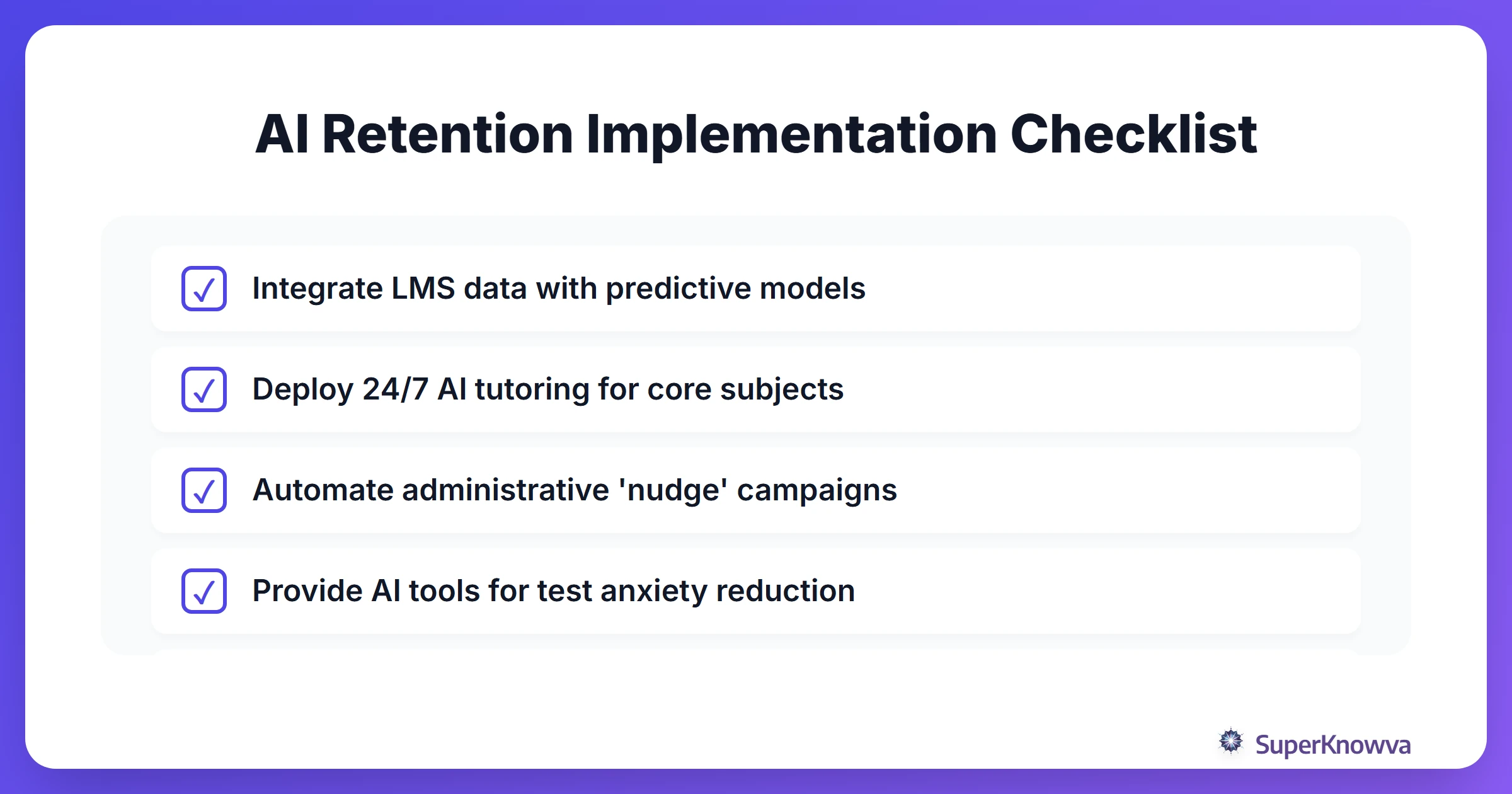
A primary advantage of AI in the classroom is the "early warning system." These are not simple filters; they are machine learning models that look at small details: how often a student logs into the Learning Management System (LMS), how they use library resources, or how they performed on the first low-stakes quiz.
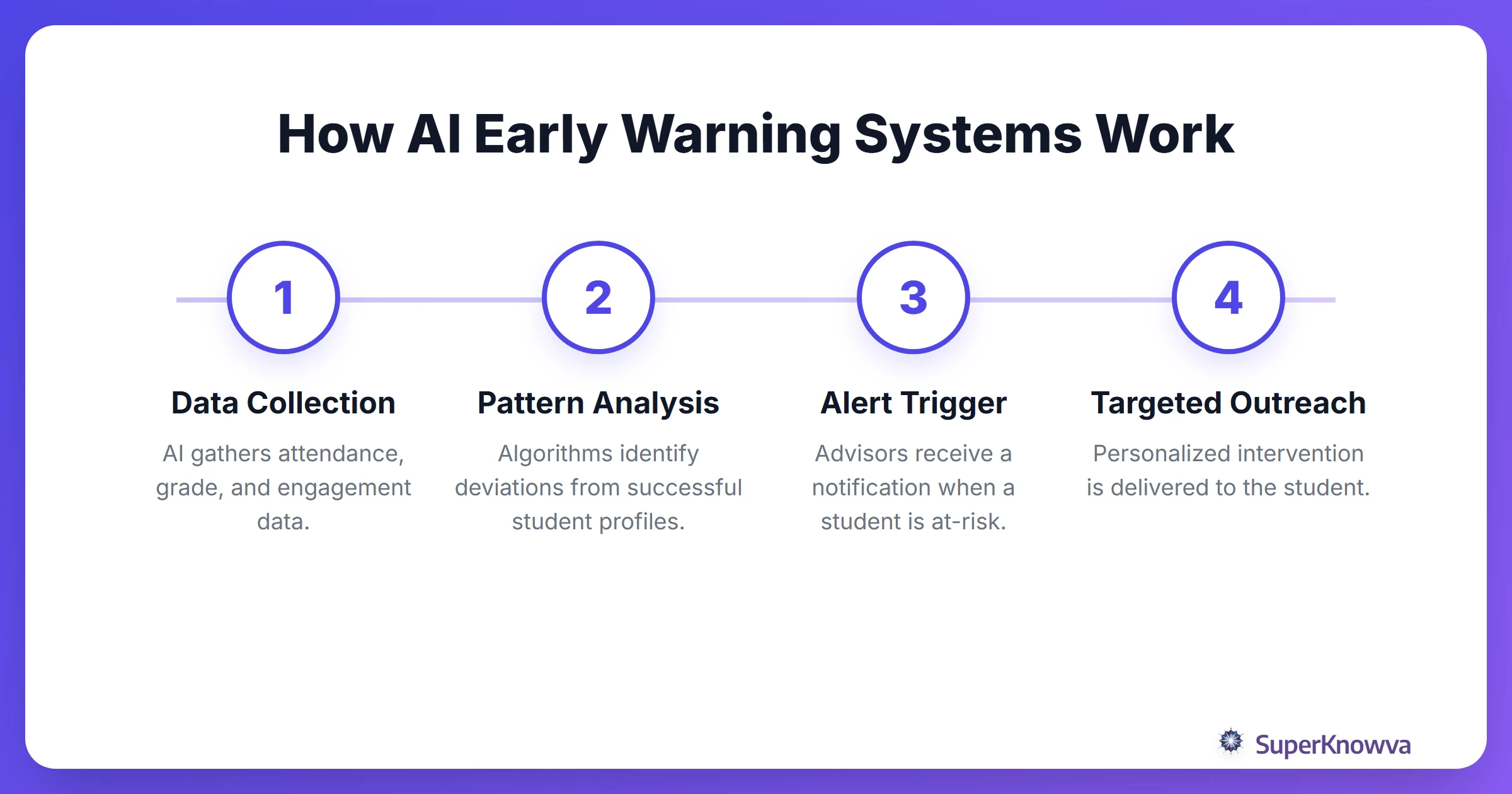
Timing is everything. Imagine an advisor getting an automated alert because a student’s engagement dropped for three days straight. They don't have to wait for a final exam to go south. According to AI Strategies for Undergraduate Student Retention, these data-backed insights allow faculty to reach out with a helping hand exactly when it’s needed most, making sure no one slips through the cracks simply because they weren't "seen."
Learning That Adapts to the Learner
Let’s be honest: academic burnout is real. When you’re staring at a textbook at 2:00 AM and nothing is clicking, it’s easy to feel like you don’t belong in the program. This is where the adaptive learning impact of AI changes the game. Platforms like SuperKnowva act as a 24/7 bridge, filling in learning gaps when office hours are long over.
When institutions look at how to keep students engaged, they often weigh the pros and cons of AI Tutors vs. Human Tutors. While you can't replace the inspiration of a human mentor, AI provides the scale and instant response that modern students crave.
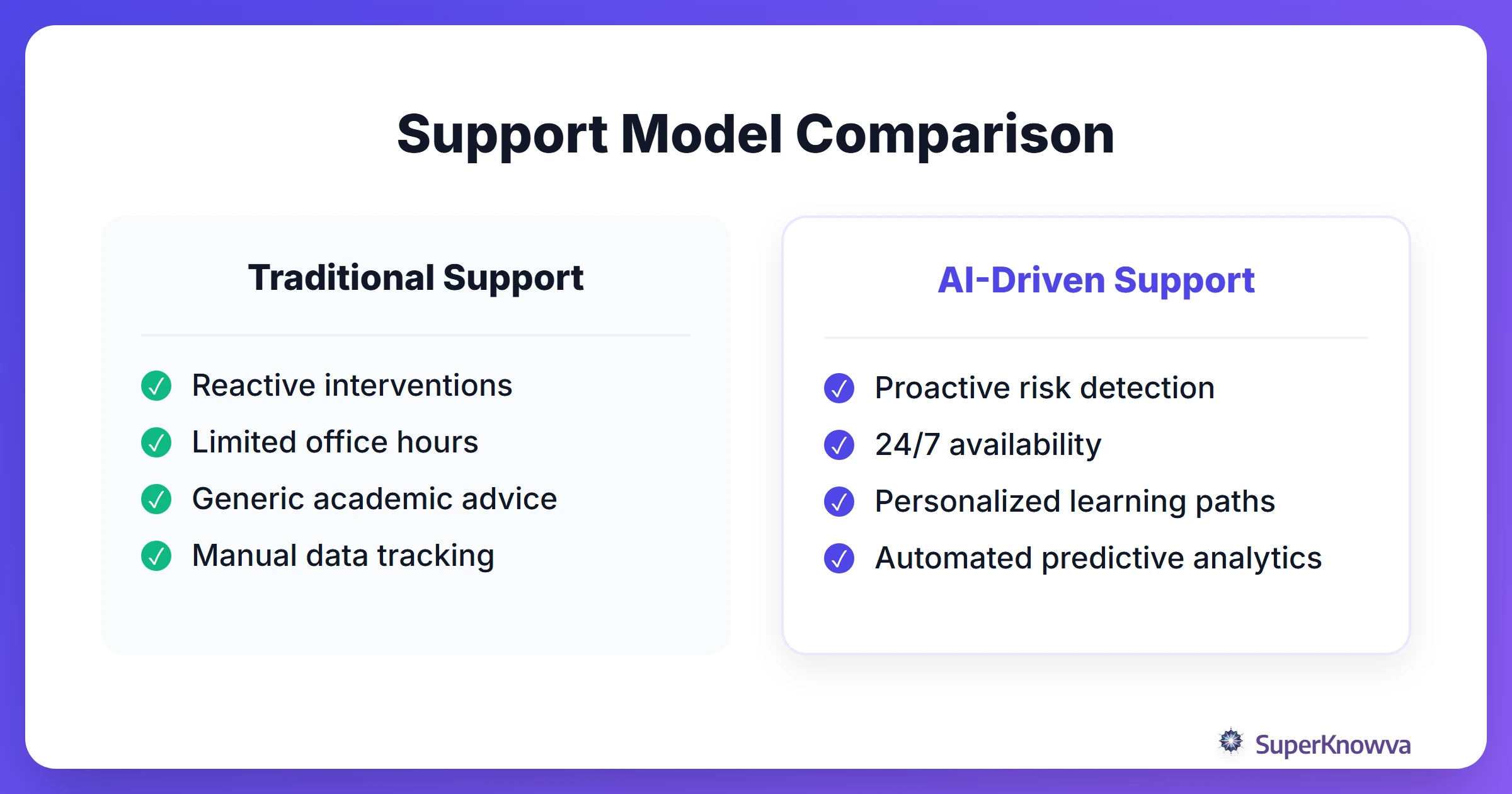
If a student is hitting a wall in organic chemistry, an AI doesn't just tell them they're wrong. It pivots. It offers a new explanation, a different practice problem, or a supplemental video, staying with the student until the concept is mastered. It prevents the frustration that so often leads to a dropout.
Cutting Through the Bureaucratic Red Tape
Retention extends beyond the lecture hall. Sometimes the "administrative nightmare" wins. Navigating financial aid or missing a registration deadline can lead to "summer melt," where students intend to return but get lost in the logistics.
AI chatbots are now stepping in to handle these non-academic hurdles. They provide:
- Answers Right Now: No more waiting in line at the registrar's office for a simple deadline question.
- Navigating the FAFSA: Helping students secure the funding they need to stay enrolled without the headache.
- Gentle Nudges: Sending personalized reminders about milestones so students stay on track without feeling overwhelmed.
Real Results: The WVU Success Story
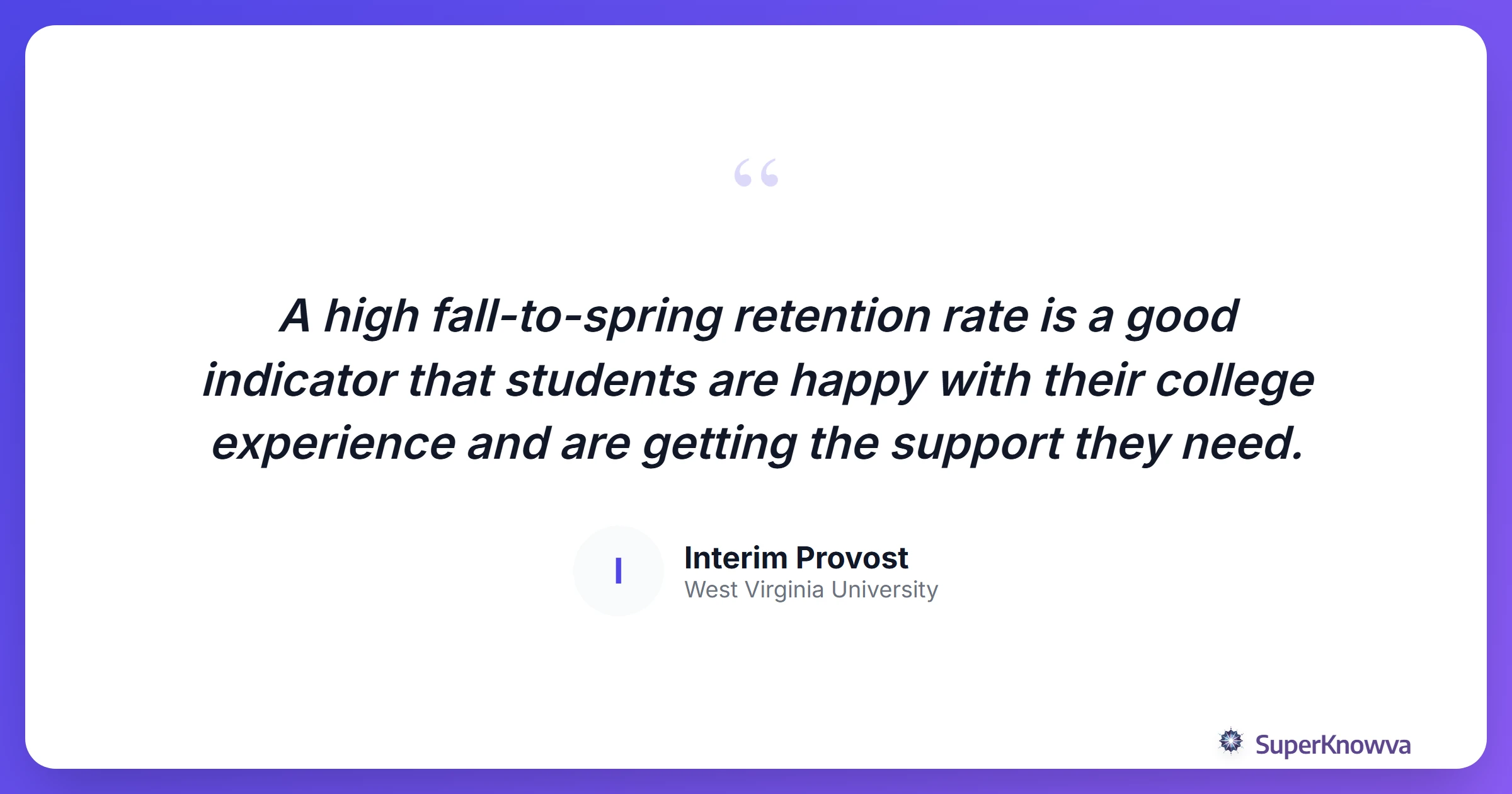
This isn't just theoretical. We are seeing these results in real-time. Look at West Virginia University, which recently set a student retention record after investing heavily in student success programs. WVU is projecting a record 93.8% fall-to-spring retention rate for first-time freshmen.
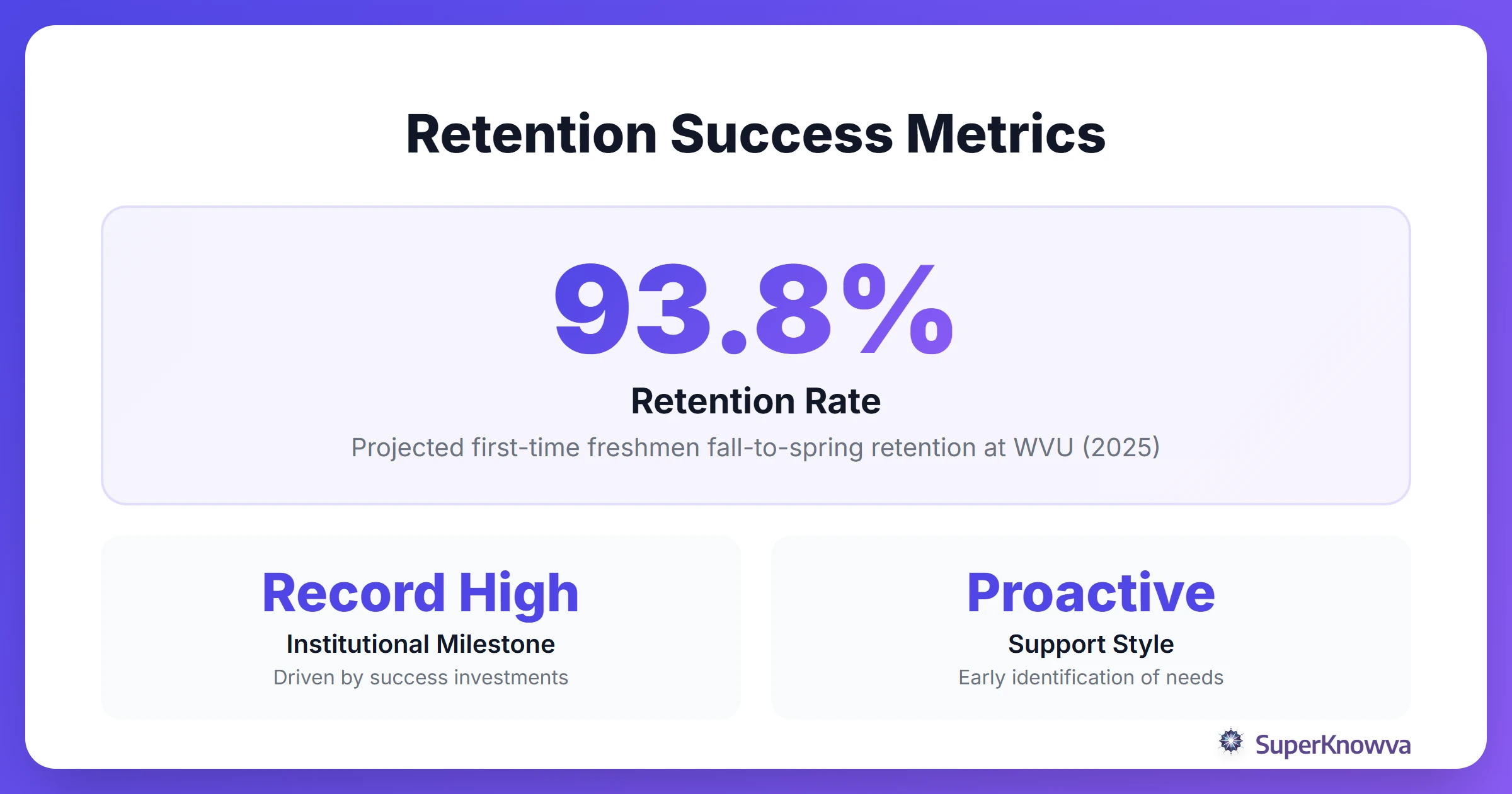
How did they do it? By moving toward data-backed support. When students feel seen and supported by their institution, they stay. It's that simple.
Tackling the Hidden Barriers: Anxiety and Accessibility
We also have to talk about the mental toll of college. High-stakes testing is a massive trigger for withdrawal, but using AI for Test Anxiety Reduction can help students keep their confidence. By providing low-stakes feedback and simulated practice environments, AI helps students feel prepared rather than panicked.
True retention must be inclusive. Understanding how AI Supports Students with Disabilities is essential for institutional success. Through speech-to-text services or personalized pacing, AI ensures that every student, regardless of how they learn, has the opportunity to earn their degree.
By combining predictive analytics in education with a genuine focus on human well-being, we can finally stop treating student dropouts as an inevitability. AI isn't just about numbers on a spreadsheet; it’s about clearing the path so every student can reach the finish line.