Five students squeezed around a single library table, three different versions of the same lecture notes, and a scheduling nightmare that took two weeks to solve. While the goal is collective success, traditional study groups often feel more like a logistical hurdle than a learning boost.
That’s where ai for study groups changes the game.
By bringing tools like SuperKnowva into your routine, you can turn those fragmented, "who has the notes?" discussions into high-octane learning sessions. In this guide, we’ll look at how AI acts as the ultimate facilitator, helping you and your peers study smarter, not just longer.
The Evolution of Study Groups: From Libraries to AI
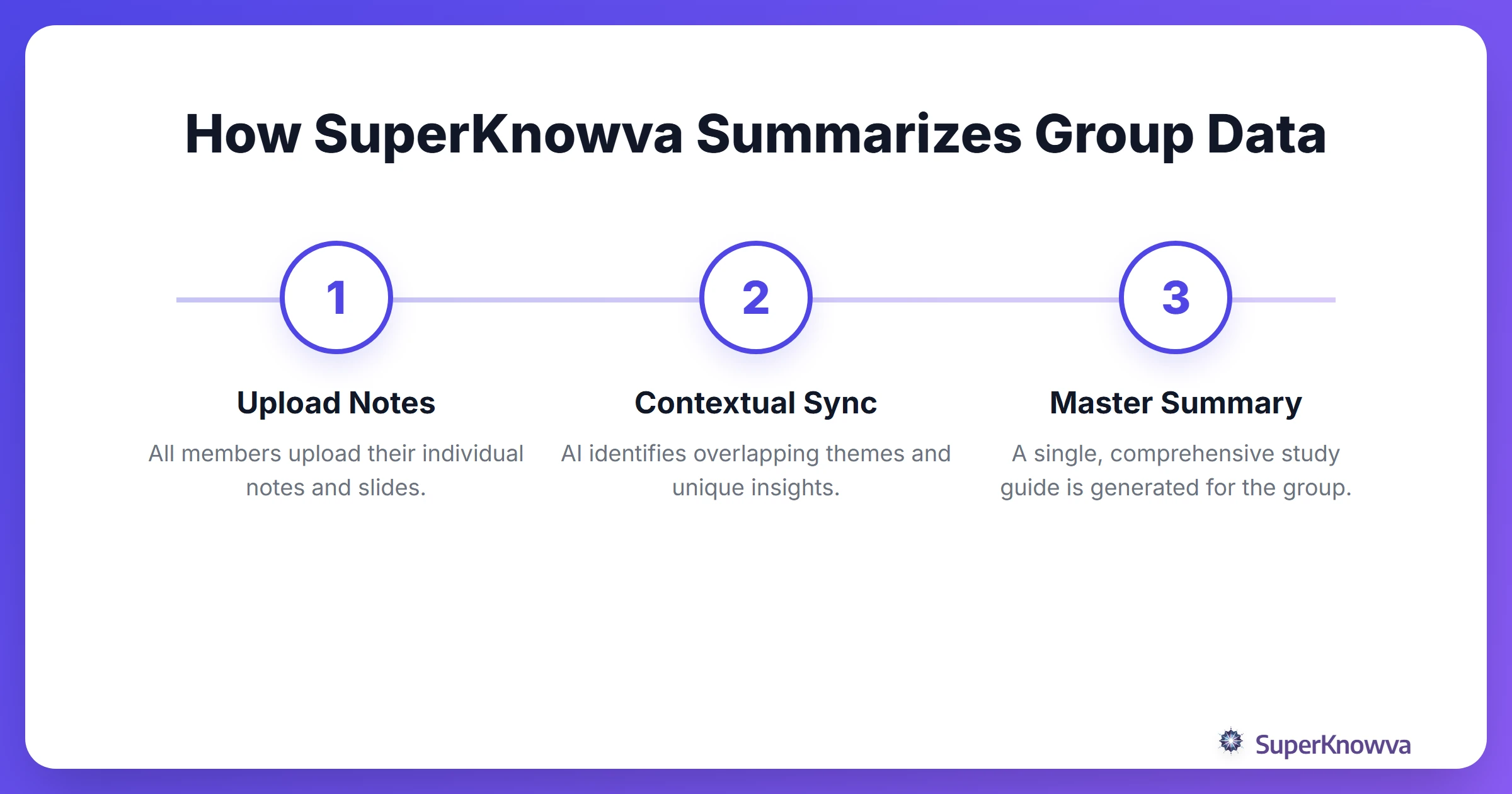
The traditional study group is a campus staple, but it’s far from perfect. Between coordinating busy calendars, dealing with that one person who didn't do the reading, and trying to decipher messy, fragmented notes, you can easily waste more time than you save.
Moving from physical meetups to AI-enhanced digital collaboration fixes these friction points. Think of AI as a neutral facilitator rather than a group leader struggling to keep everyone on track. It keeps the group focused on the core objectives by organizing data and highlighting what actually matters. When your sessions are this efficient, it's a lot easier to balance a high GPA with a social life without burning out.
Breaking Down Complex Topics with AI-Powered Summaries
The biggest hurdle in collaborative learning? Ensuring everyone is actually on the same page. When five people take notes on the same lecture, you often end up with five completely different interpretations of the material.
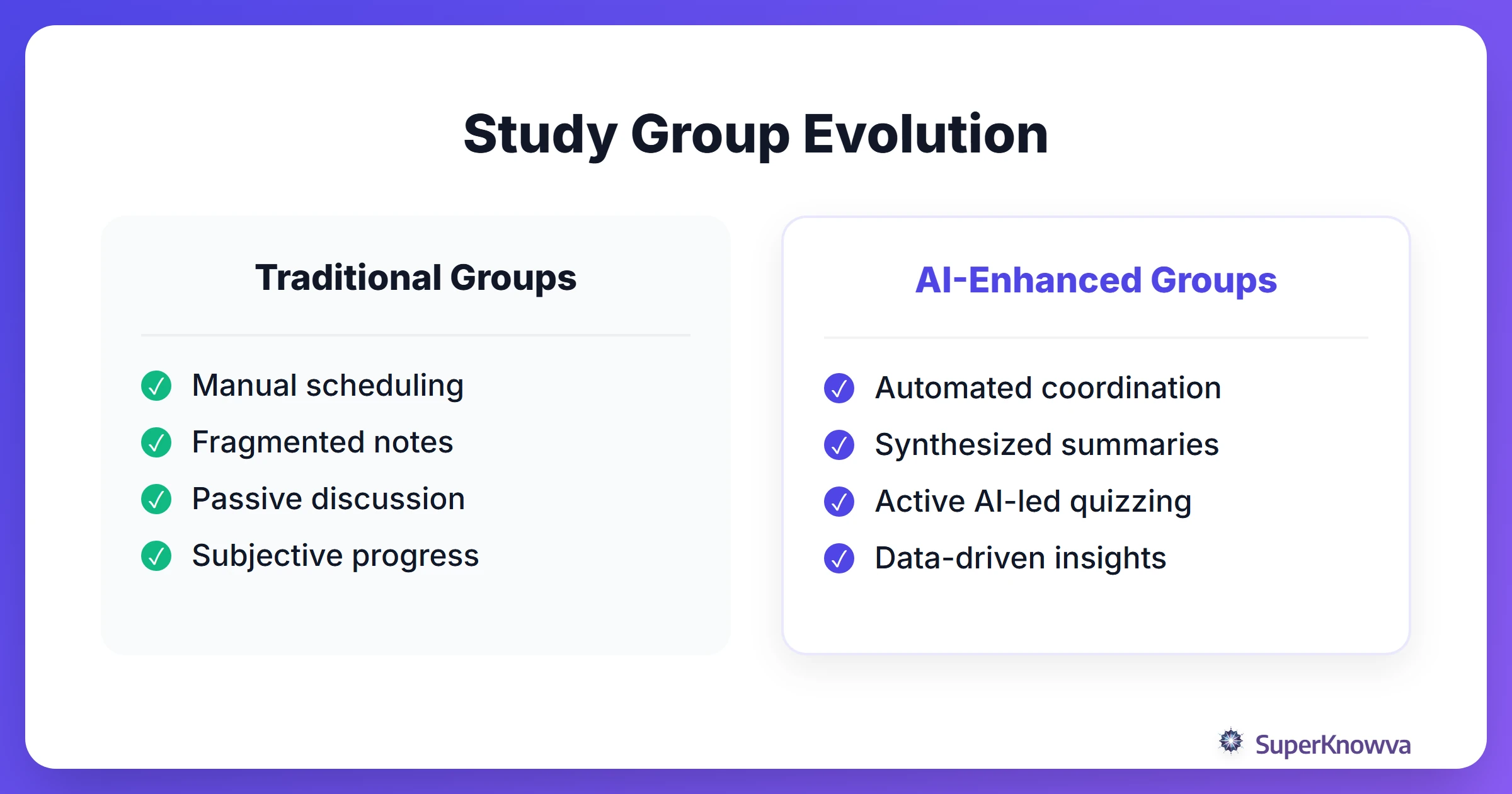
SuperKnowva solves this by combining group notes and shared lecture slides into a single, clear guide. It identifies key concepts across multiple perspectives, ensuring that important insights buried in private notebooks are not lost. It creates a centralized resource for the group. If a debate breaks out over a complex topic, the group can reference a master summary built on verified facts. This technology is why SuperKnowva is consistently ranked among the best study apps for students looking to improve their study habits.
Peer-to-Peer Quizzing: How AI Generates Group Challenges
Passive reading is the enemy of retention. If you want to master a subject, you have to test each other. But let’s face it: manually creating flashcards for an entire group is a grueling task that most people skip.
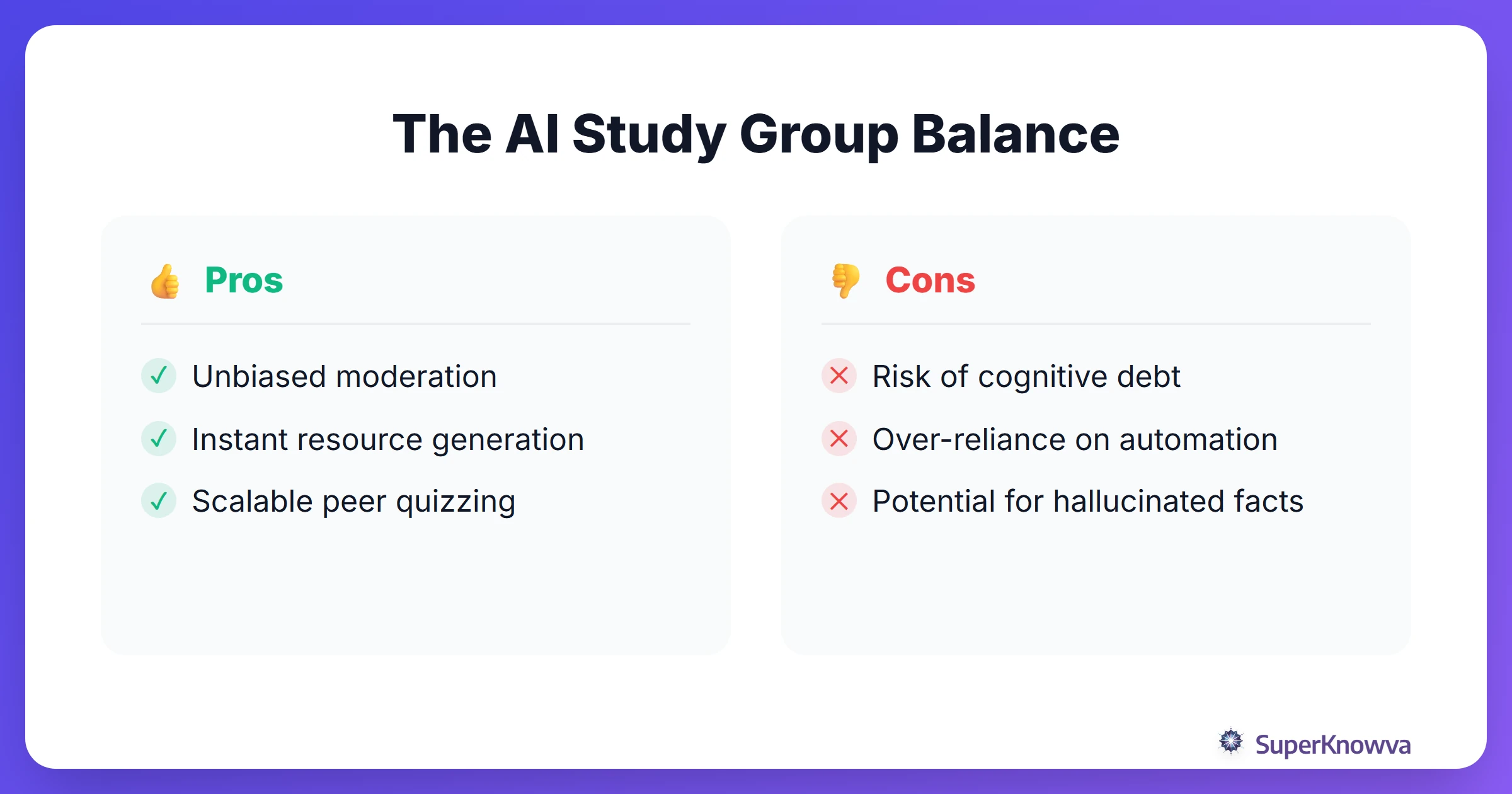
With SuperKnowva study groups, you can ditch the manual prep. The AI can instantly generate challenges and quizzes based on your specific course materials. This creates a competitive, high-energy environment where you can spot collective knowledge gaps in real-time. If the whole group misses a question on "mitosis," the AI flags it as a priority for the next session. No more guessing what you need to review.
Avoiding 'Cognitive Debt': Using AI as a Co-pilot, Not a Substitute
AI is a powerful tool, but it shouldn't replace your own thinking. A recent MIT Media Lab research on cognitive debt highlights a real risk: "cognitive debt" occurs when we outsource our thinking so completely to LLMs that we lose the ability to critically analyze information ourselves.
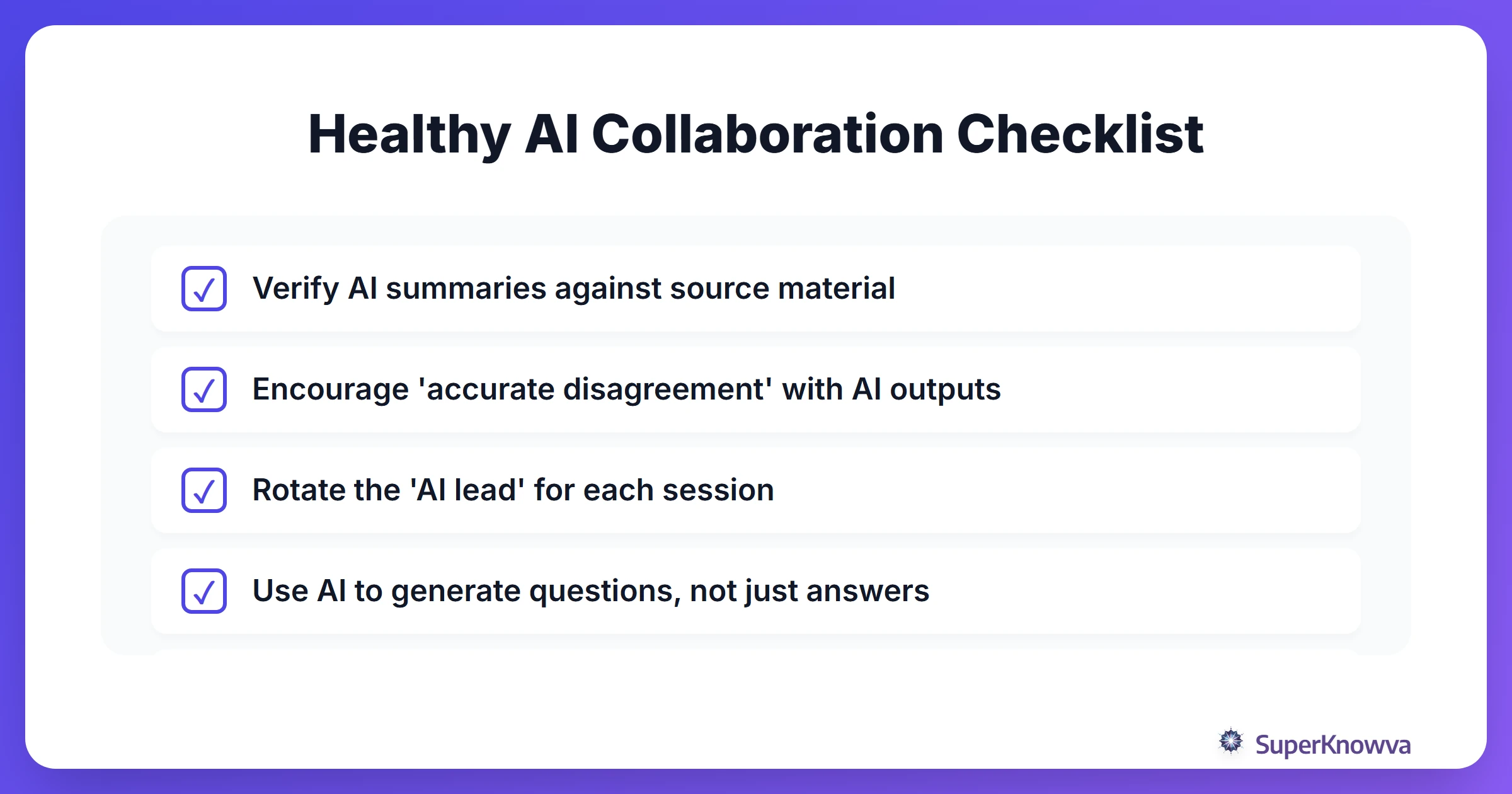
To avoid this, treat AI as a co-pilot. Active engagement is still the secret sauce. While AI helps organize the data, understanding the active recall vs. re-reading science remains the foundation of long-term memory. Make sure every group member is contributing original thoughts and questioning the AI’s suggestions rather than just accepting them at face value.
Collaboration Principles for AI-Enhanced Groups
To get the most out of AI group study tools, your team needs a few ground rules. The IAS AI Policy and Governance Working Group suggests that the best collaboration is built on open-mindedness and candor.
In an AI-enhanced group, this means using the AI’s output as a springboard for deeper discussion, not the final word. Set expectations early: use AI to generate questions and clarify concepts, but never to ghostwrite assignments. Keep the academic integrity intact while using the tech to work through the "heavy lifting" of organization.
Measuring Group Success with AI Analytics
How do you know when your group is actually ready for the final? Instead of just "feeling" prepared, look at the data. SuperKnowva provides performance metrics that track your group’s progress over time.
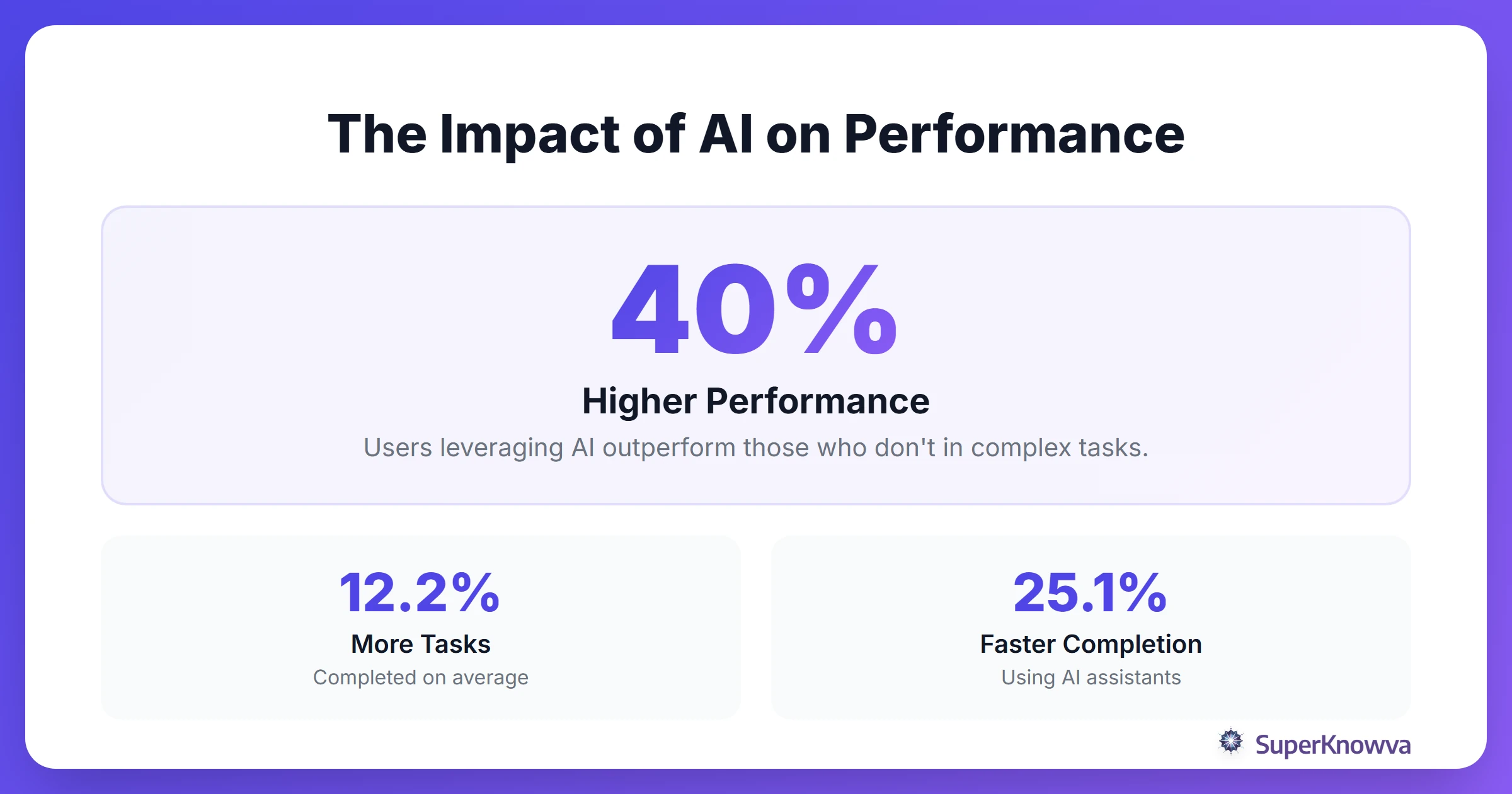
This is what experts call the "Centaurs and Cyborgs" approach, a concept from Ethan Mollick's study on AI performance. It shows that the greatest performance gains go to those who use AI as a partner. By analyzing quiz scores and engagement, the AI identifies which topics the group has mastered and which ones need more review before exam day.
Conclusion
The point of peer learning AI is to clear away logistical clutter so you can focus on the material. By using SuperKnowva to summarize notes, generate quizzes, and track progress, your study group can spend less time on organization and more time on learning.
Ready to change the way you study? Start building your group’s "centralized brain" today and see how much more you can achieve when you work together.