The cap and gown are tucked away in the back of your closet. The diploma is framed, and the celebratory dinners are a memory. Now comes the part they didn't, and honestly couldn't, fully prepare you for in the lecture hall: the transition from college to career.
For the Class of 2026, this jump feels a little different. You aren't just entering a new office; you’re entering a workforce that’s shifting under your feet, driven by tech breakthroughs and a total rewrite of social norms. It’s okay if the "real world" feels a bit daunting right now. But here’s the good news: navigating this change is completely doable with the right strategy. At SuperKnowva, we believe the same AI-powered agility you used to crush your finals is exactly what will help you launch your professional life.
The 2026 Job Market: What’s Actually Happening?
The 2026 job market focuses on collaborative AI. We have moved past the fear of displacement and settled into the era of AI-augmented roles. As an entry-level professional, your value is not just about what you know; it is about how you use AI tools to deliver effective results.
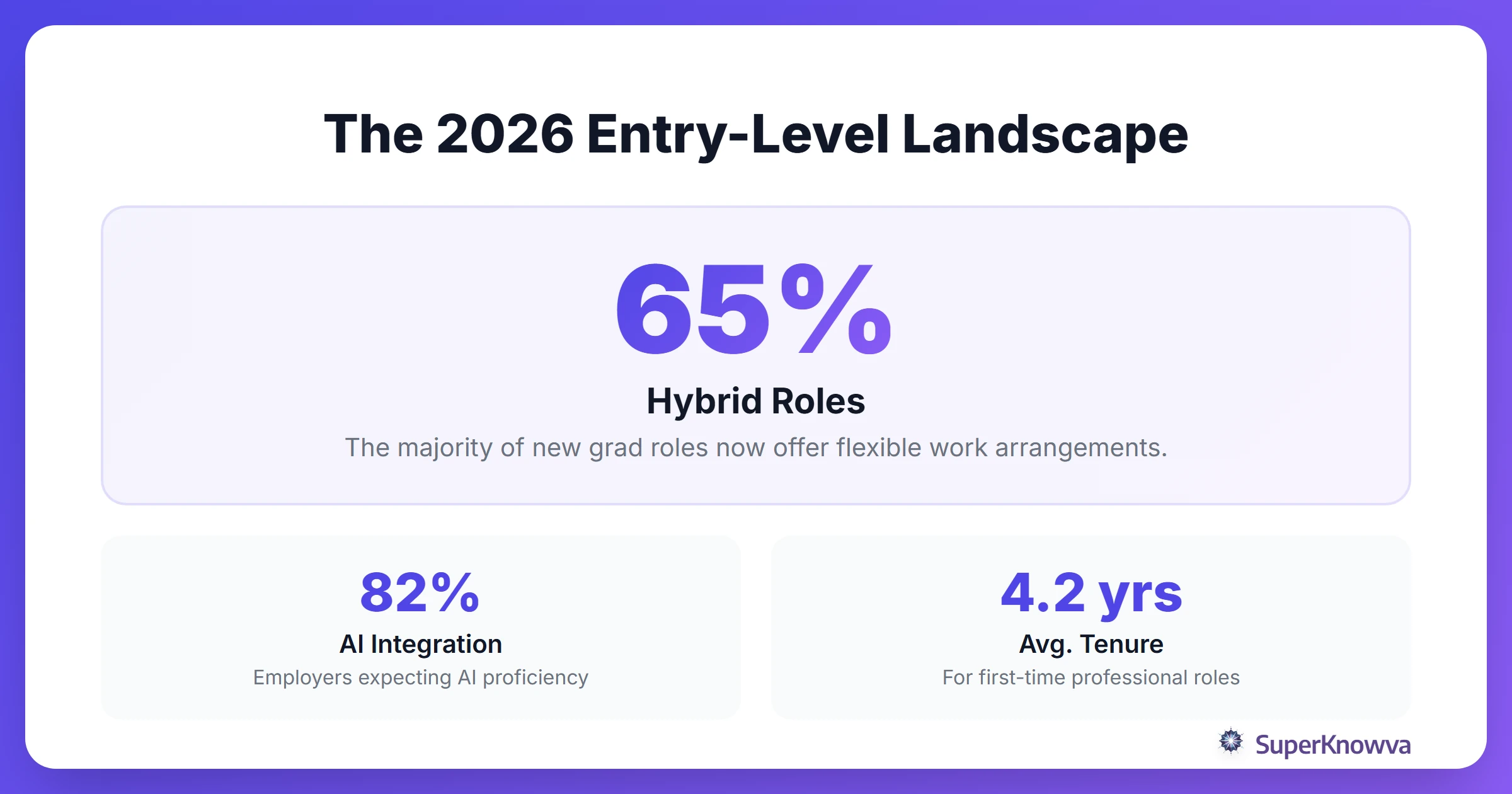
Beyond the tech, 2026 job market trends show that hybrid and remote work are no longer "perks"; they are the baseline. This gives you freedom, but it also demands serious self-discipline. In this high-tech environment, "human-centric" skills like empathy, complex negotiation, and ethical judgment are the new standard. Employers want graduates who can connect cold data with human needs. Can you tell the story behind the numbers? That is your competitive edge.
Bridging the Skills Gap: From Theory to Practice
One of the biggest hurdles in workplace integration is the culture shock. In college, success is following a rubric to get an A. In your first job, success is measured by the value you add to the team. There is no syllabus.
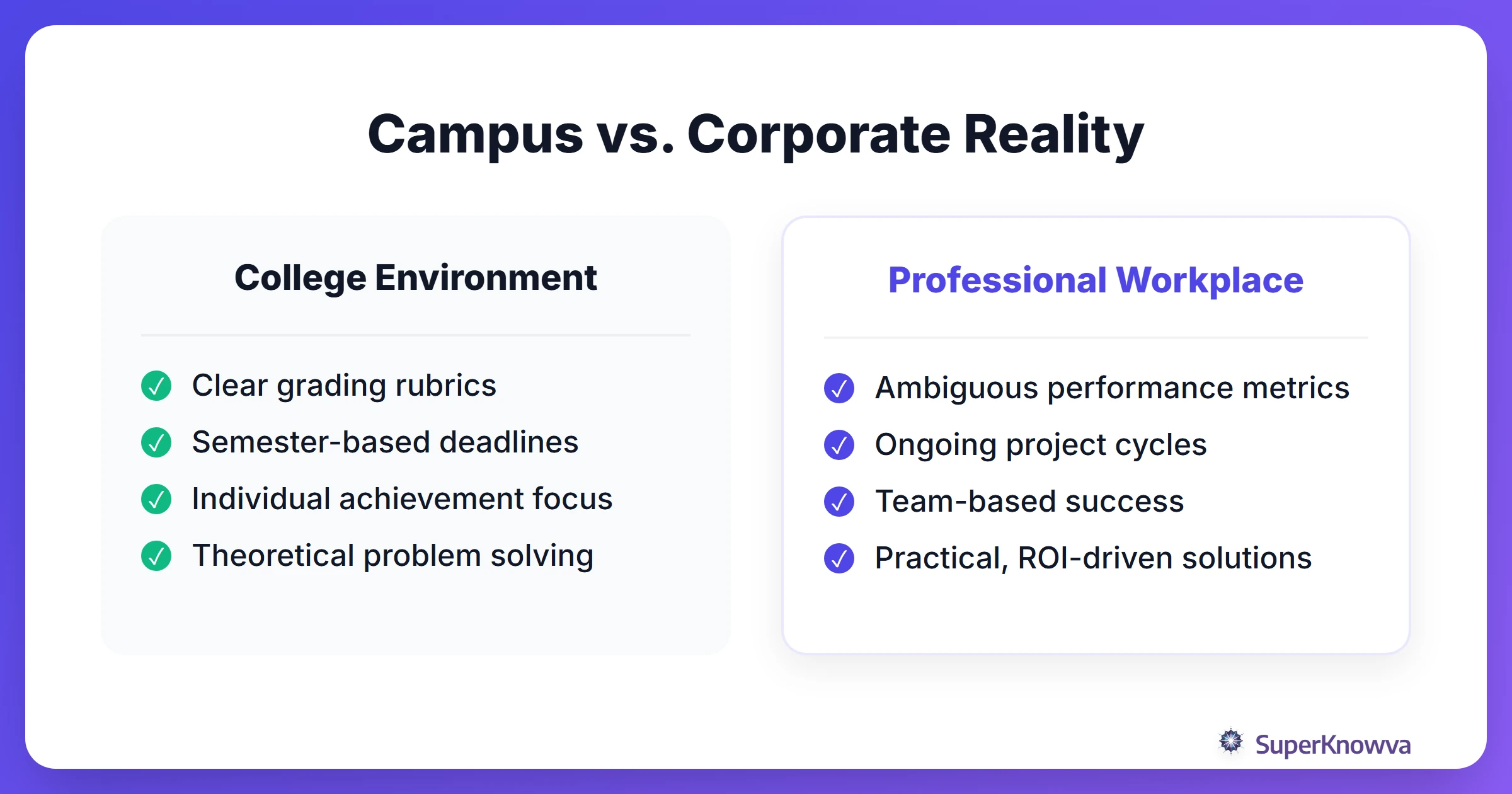
To close this gap, you need to lean into the soft skills employers want in 2026. When a project scope changes at 4:30 PM on a Friday, adaptability matters more than your GPA. You can also use AI to flatten the learning curve. Just like you used SuperKnowva to simplify complex study guides, use similar tools at work to summarize hour-long meeting transcripts or draft your first project outlines. This frees you up to focus on high-level execution during those critical first 90 days.
Building Your Professional Identity Online
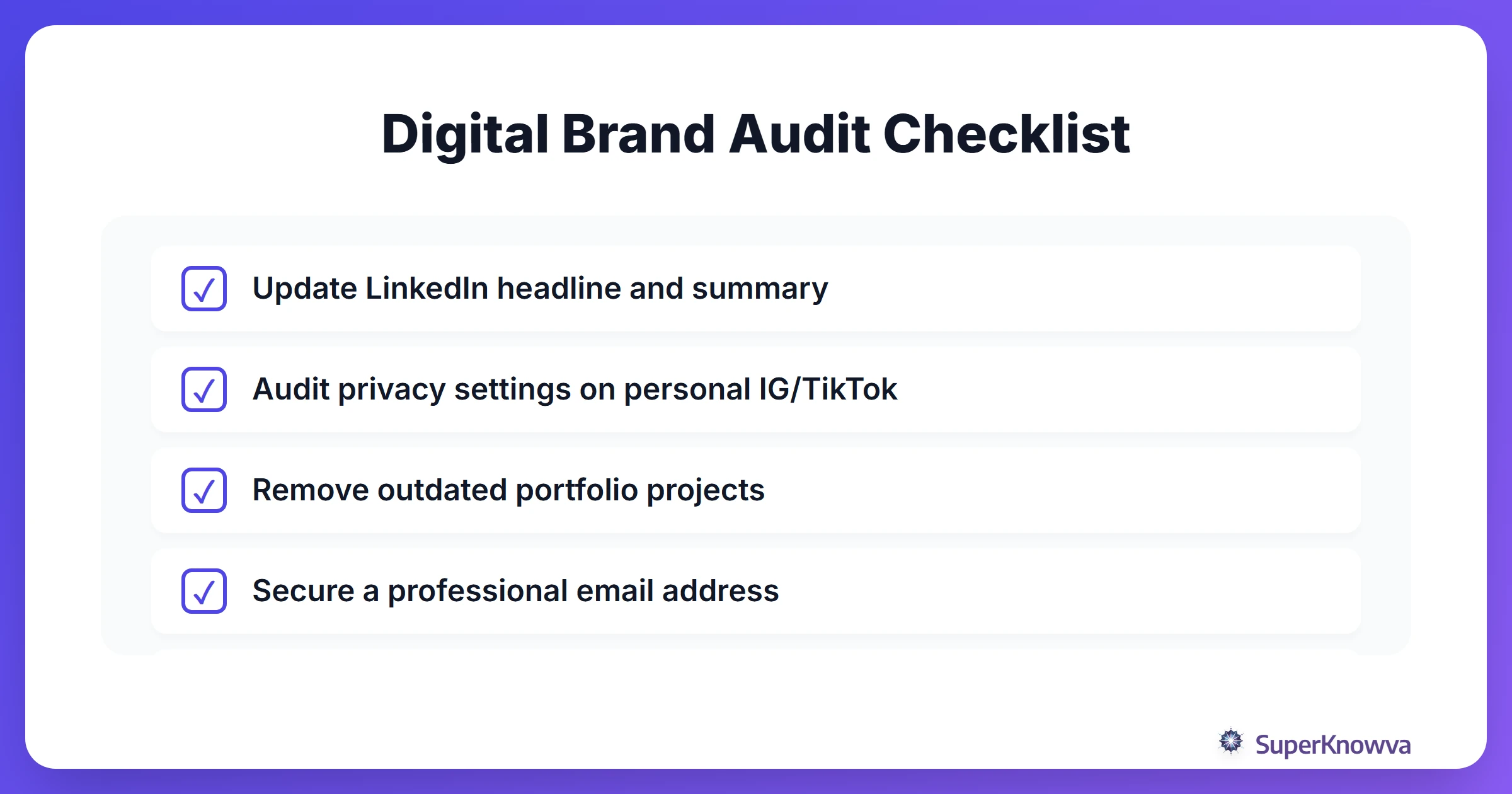
In 2026, your "resume" is more than a PDF: it is your digital footprint. Before you show up for your first day, perform a digital audit. Recruiters and your new coworkers will Google you. Make sure they like what they find.
- Clean up your socials: Does your public-facing persona match your new professional role? It might be time to archive those sophomore-year spring break photos.
- Optimize for the bots: Use resume optimization for 2026 techniques on your LinkedIn profile. Use the keywords that 2026 recruitment algorithms are actually looking for.
- Consistent Branding: Ensure building a professional online presence highlights your unique "human" contributions alongside your technical skills.
The Mental Shift: Dealing with Post-Grad Blues
If you’ve been scrolling through Reddit lately, you’ve seen the threads. Many new grads feel lonely, untethered, and a little hopeless. It’s called the "post-grad blues," and it’s a real side effect of losing the built-in community of a college campus.
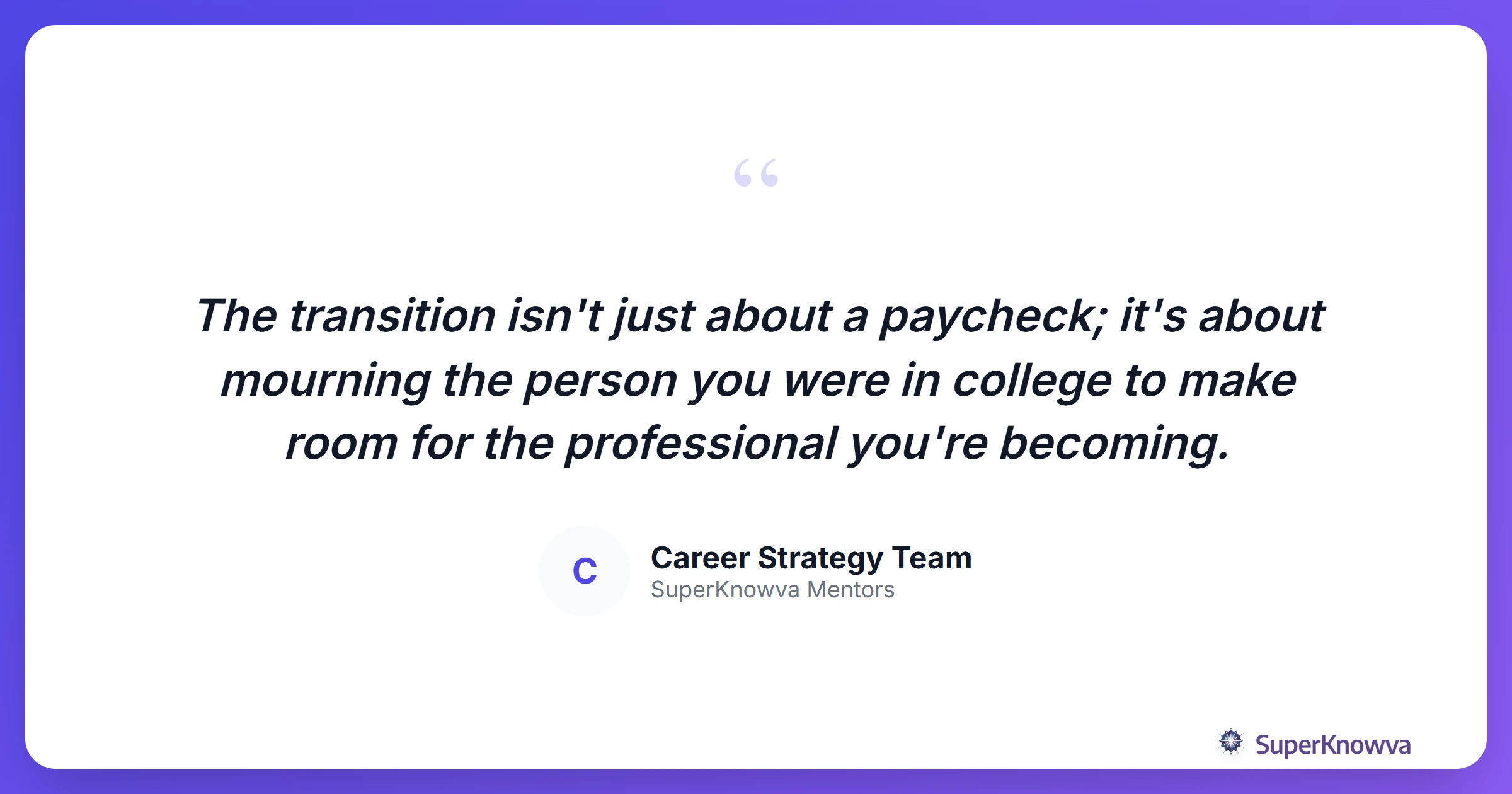
Post-graduation mental health is as important as your job performance. This transition involves identity mourning: letting go of your student self to make room for your professional self.
To fight the isolation, be intentional. Join a local run club, volunteer, or find a professional interest group. Your coworkers are great, but don't rely on them to be your entire social battery.
Networking in a Hybrid World
Networking isn't just awkward career fairs anymore. In a virtual-first world, the "informational interview" is your best friend. Reach out to alumni on LinkedIn for a 15-minute "coffee chat" over Zoom. Most people are surprisingly happy to help if you’re respectful of their time.
Looking for more structure? Check out Workforce Readiness Programs or professional associations in your niche. Once you’re in the door, don't wait for a mentor to tap you on the shoulder. Use networking strategies for new grads to find a mentor within your company and ask them how the "unwritten rules" of the office actually work.
Money Talk: Financial Literacy 101
That first "real" paycheck is a rush until you see the taxes taken out. Reviewing your first benefits package can feel overwhelming. Focus on these areas:
- The 401(k): If your company offers a match, take it. This is extra compensation for your future.
- Health Insurance & HSAs: Learn the difference between a premium and an out-of-pocket max before you need a doctor.
- The "Cost of Working": Commuting, professional clothes, and daily expenses add up. Budget for them.
Don't forget student loan repayments. They are still a reality for the Class of 2026. College and Career Transition Services provide financial resources for alumni. These first full time job tips help you build a financial foundation.
Your First 90 Days: A Roadmap
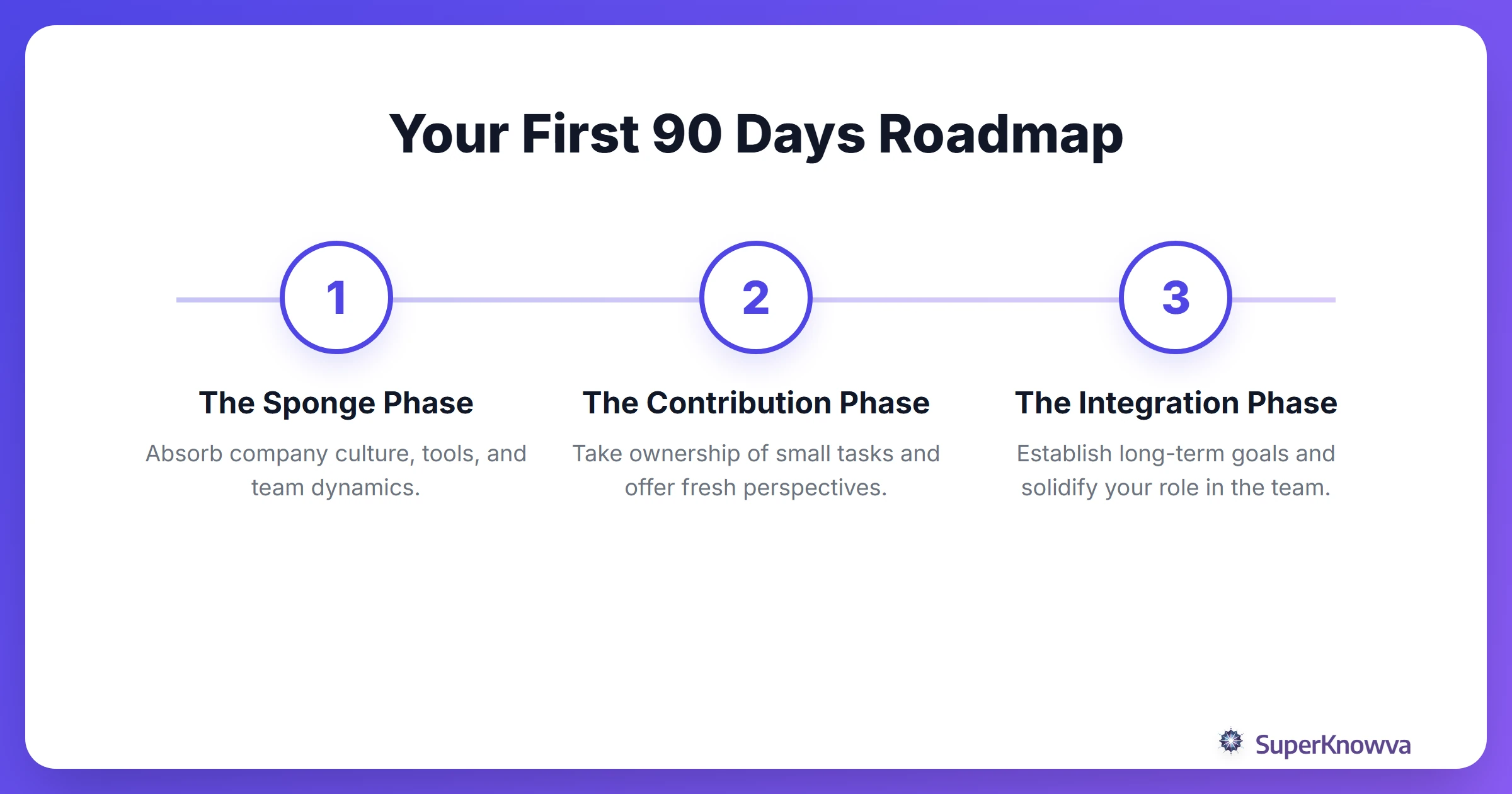
Your first three months set the tone for your entire reputation. Here’s how to handle navigating the campus to corporate jump like a pro:
- Month 1: Be a Sponge. Listen more than you speak. Ask: "What does success look like for me in this role?"
- Month 2: Find a Quick Win. Identify a small problem you can fix or a process you can streamline. Build that credibility early.
- Month 3: Get Feedback. Don't wait for an annual review. Ask for a formal check-in to discuss your growth. This is the hallmark of great entry level career advice.
Moving from the classroom to the boardroom is a marathon, not a sprint. Stay adaptable, use the tech tools at your disposal, and take care of your head. You’ve got this, Class of 2026. Welcome to the show!