The end-of-summer countdown has started. You have survived the first few weeks of learning internal jargon, navigating the office coffee machine, and figuring out what your team actually does. As the finish line nears, the pressure increases. You don’t just want a line item for your resume; you want a permanent role.
Turning an internship to full time job is the ultimate goal for most students, but it doesn't happen by accident. It requires a strategic pivot. In these final weeks, you need to stop acting like a guest and start acting like a fixture.
In this guide, we’ll walk through the exact moves you need to make to prove your workplace value and walk away with that signed return offer.
Adopt the 'Full-Time Employee' Mindset
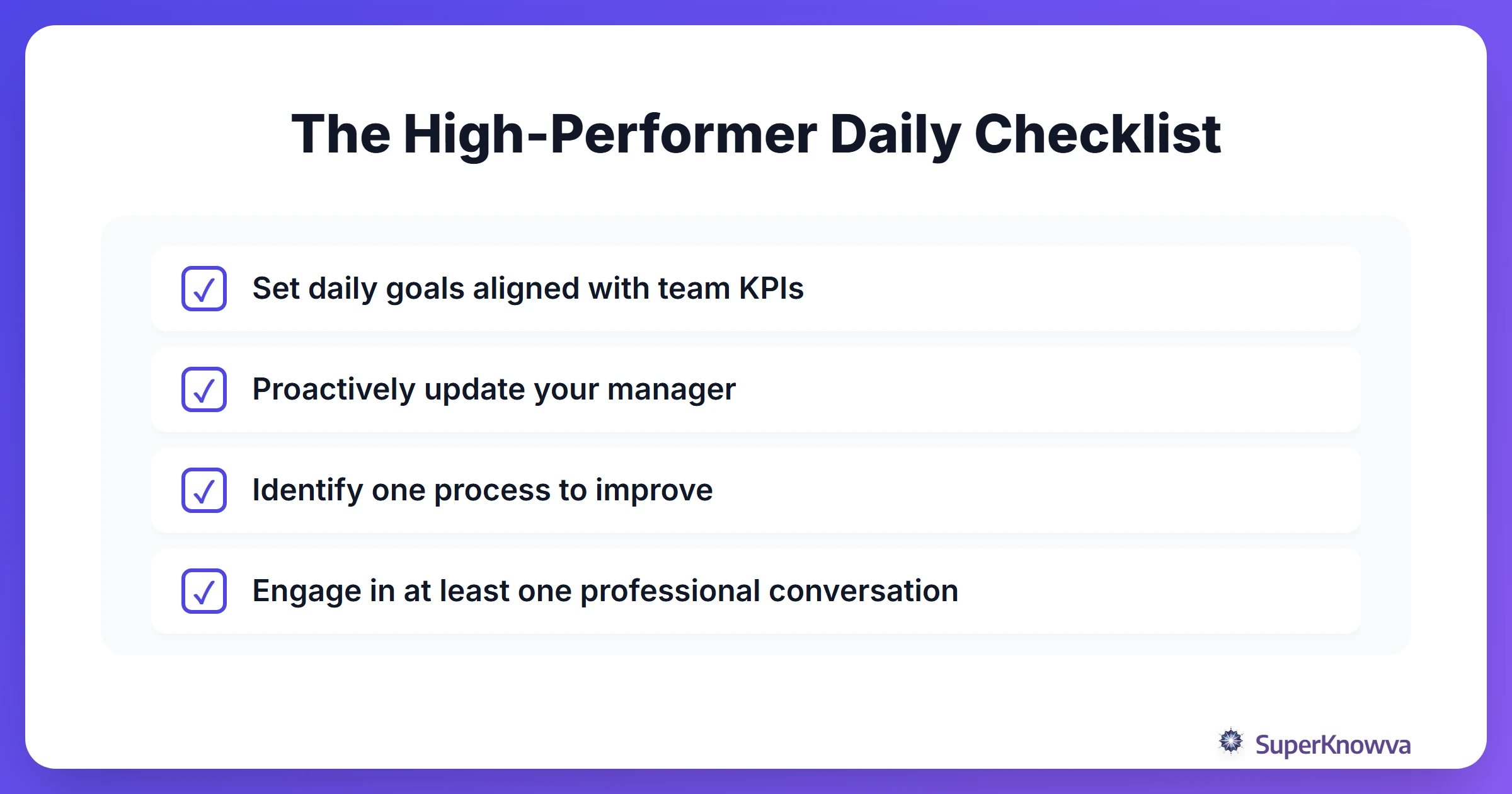
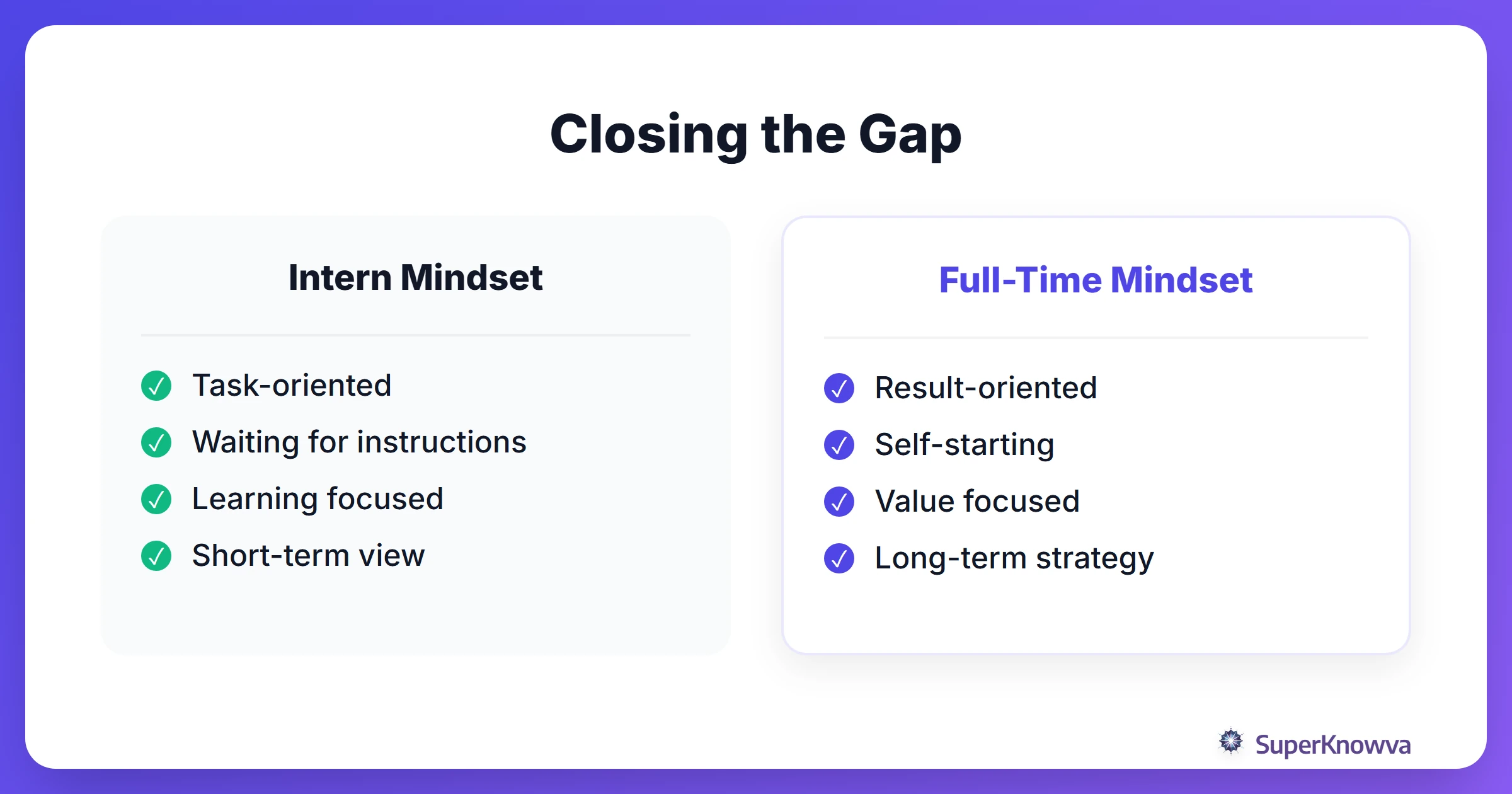
The most successful interns are the ones who make their managers forget they’re still in school. To pull off a successful career transition from intern to employee, you have to stop waiting for permission. Students wait for instructions; professionals seek out solutions.
Start by taking real ownership. Instead of just checking a task off your list and staring at your phone, ask yourself: What’s the next logical step here? How does this project actually help the company make money or save time? When you understand the "why" behind your work, you can align your output with what the leadership team actually cares about. This proactive shift is the secret sauce for a smooth transition to the corporate workplace.
Mastering the Art of Proactive Networking
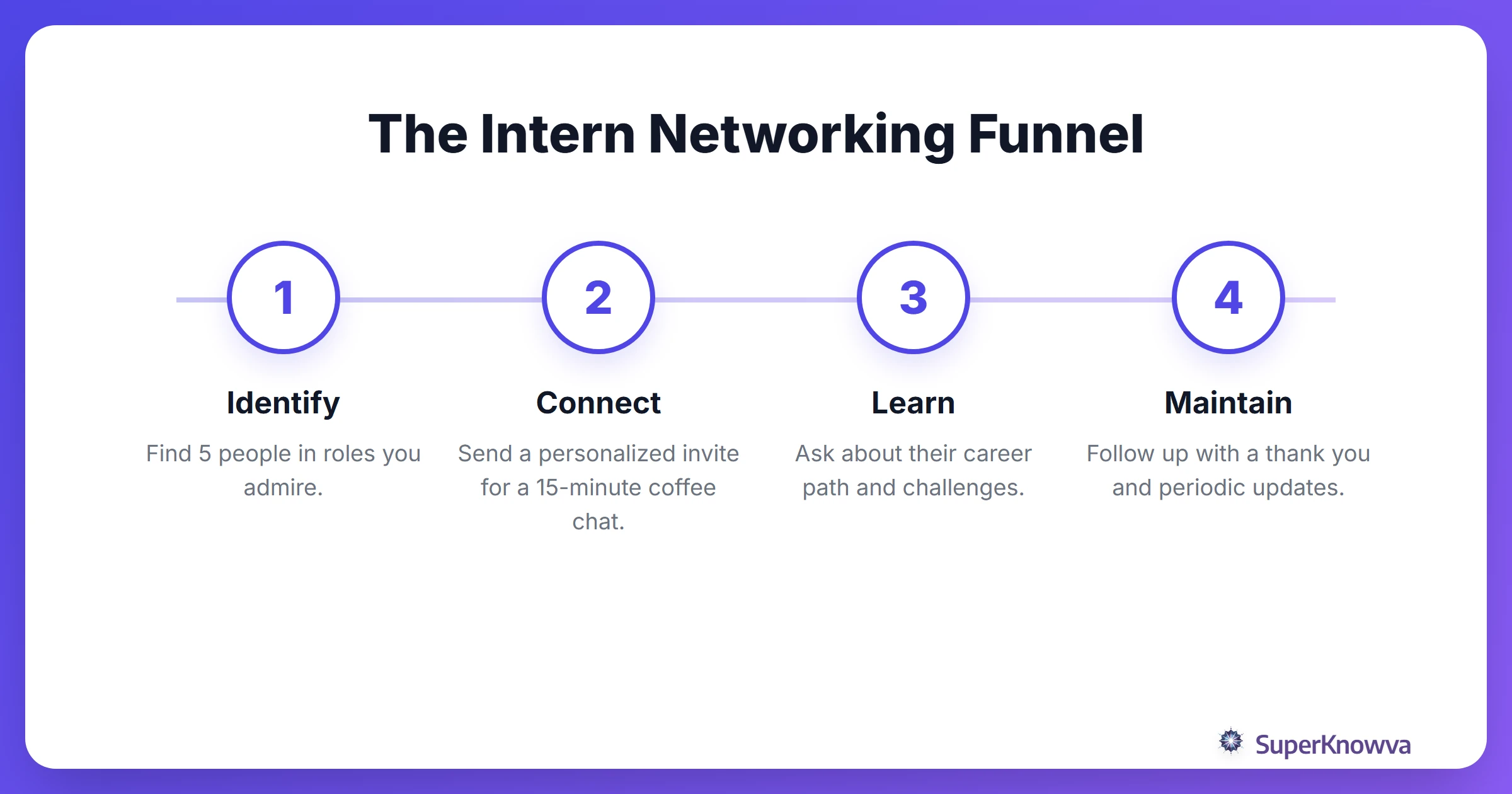
Doing great work is only half the battle. If the only person who knows you’re talented is your direct supervisor, you’re at a disadvantage. Internal professional networking is often what tips the scales during hiring meetings.
Don't be afraid to "cold-Slack" people. Schedule 15-minute coffee chats with people in different departments. Ask them about their biggest challenges and how their roles intersect with yours. Finding a mentor who isn't your boss is invaluable; they can offer unfiltered advice and advocate for you when you're not in the room. Use your company’s internal tools to map out how the organization operates. For more on how to do this without feeling awkward, check out our Networking 101 for students.
Quantifying Your Impact and Value
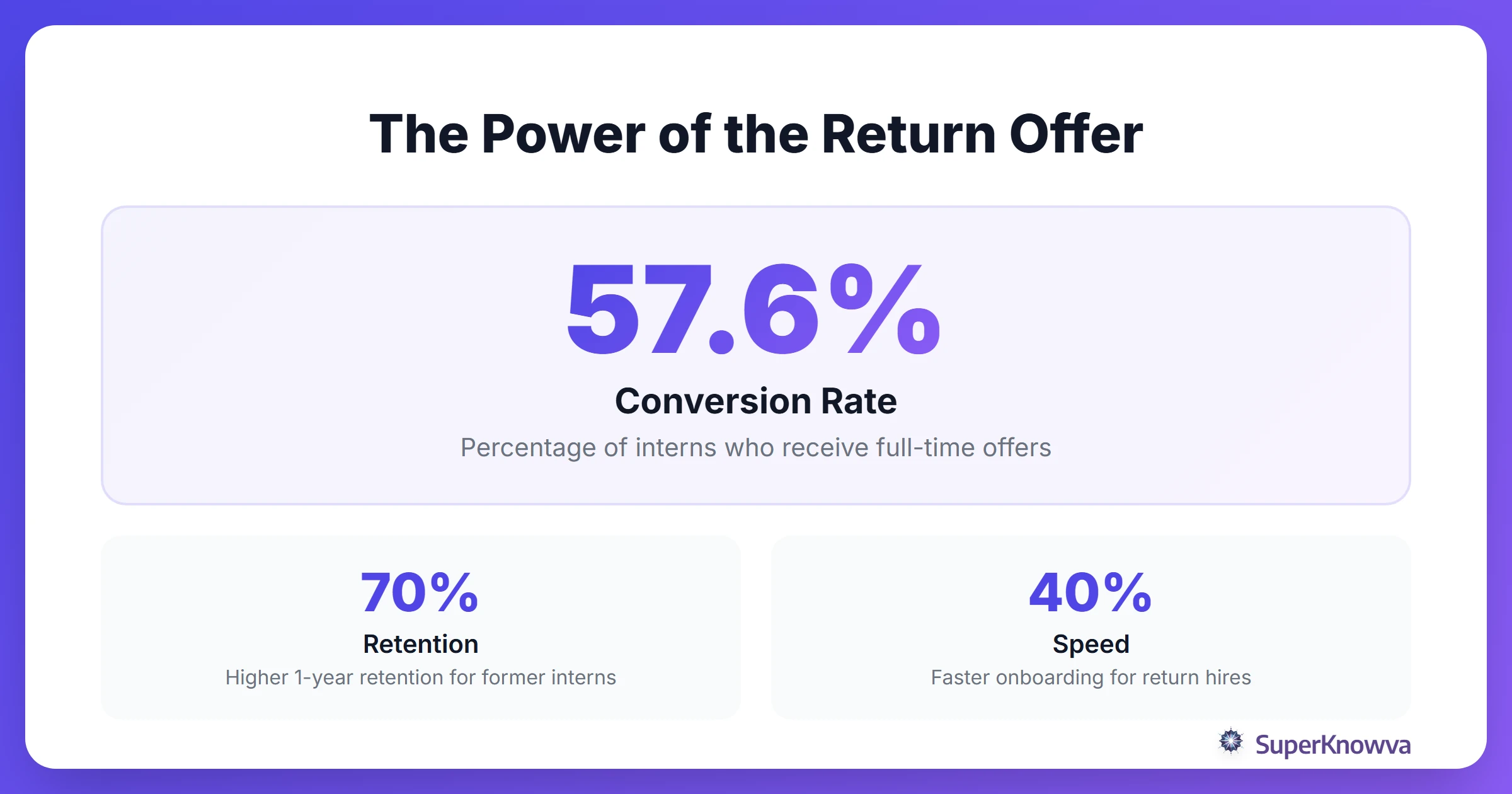
Hiring is a business decision. Your manager needs to see a return on investment (ROI). It’s not enough to be "hardworking"; you need to be effective, and you need the receipts to prove it.
Start a "wins log" immediately. Document every project you touched, every bug you fixed, and every process you improved. Whenever you can, use hard numbers. Did you automate a spreadsheet that saved the team four hours a week? Did your research help the sales team land a new lead?
When your internship wraps up, don't just say goodbye. Present a final summary of these wins. It makes it incredibly easy for your manager to justify your headcount to the people holding the purse strings.
Seeking and Implementing Feedback Early
The biggest mistake you can make? Waiting for your formal exit interview to ask how you’re doing. By then, it’s too late to change anyone’s mind.
High-performers crave feedback. Ask questions like, "What’s one thing I could have done better on that last deck?" or "Where am I falling short of expectations?" This shows a growth mindset, but more importantly, it gives you a chance to prove you’re coachable. Employers value essential soft skills like adaptability way more than raw technical talent. As the Harvard Business Review: How I Turned My Internship Into a Full-Time Job points out, showing you can learn from a mistake is often more impressive than being perfect from day one.
Cultural Fit: The Underrated Key to the Offer
You can teach someone how to use a CRM or write a report, but you can't teach them how to not be a jerk. Often, the decision to hire an intern comes down to the "airport test": Would I want to be stuck in an airport with this person for six hours?
To prove you fit the culture, show up. Go to the awkward team lunches. Volunteer for the office charity day. Pay attention to the communication style. If everyone is casual on Slack, don't be the person sending stiff, formal emails. Above all, be reliable. Being the person who always hits deadlines and keeps a positive attitude during a crunch goes a long way. This process might have started with landing your dream internship, but it ends with proving you’re a teammate people actually want to work with.
The Final Pitch: Asking for the Job
Here is the hard truth: Your manager isn't a mind reader. If you want to stay, you have to say it out loud.
During your final 1-on-1, be direct. Express how much you’ve enjoyed the work and explicitly state that you’d love to return full-time after graduation. Ask about the timeline for return offers and what the next steps look like. Even if there isn't an immediate opening on your team, ask for referrals to other departments.
As this LinkedIn article on transitioning from internship to full-time highlights, being your own advocate is the only way to ensure your hard work doesn't go unnoticed.
Conclusion
Securing an internship to full time job offer requires preparation. Show the team you are already doing the work of a full-time staffer. By building professional relationships and tracking your wins, you demonstrate your value to the company. Finish your term strong. Your career is just one conversation away.