Sixteen weeks of material. Six weeks to learn it. One massive, looming exam. Sound familiar?
Summer semesters move fast, and standard study habits often fail to keep pace. When time is limited, you don't just need to work harder; you need a strategy built for speed and long-term retention. Mastering active recall for intensive exams is the difference between "looking at" your notes and actually understanding the information.
In this guide, we’re going to look at how to use cognitive science and AI-powered tools to crush your summer courses without burning out.
The Summer Sprint: Why Passive Reading Fails Intensive Exams
There is zero room for error in an intensive revision course. In a standard semester, you might get away with highlighting a textbook or re-reading your notes until they feel familiar. But in a summer sprint, those methods lead straight to the "illusion of competence." You know the feeling: you recognize the words on the page, so you think you know the material. Then the exam starts, the page is blank, and your mind follows suit.
Active recall is the cure. Instead of trying to shove information into your brain through repetition, you practice pulling it out. By forcing your mind to retrieve a fact from scratch, you’re essentially "paving" the neural pathways to that data. It’s harder work, sure. But when time is your scarcest resource, retrieval practice is the most efficient way to spend it.
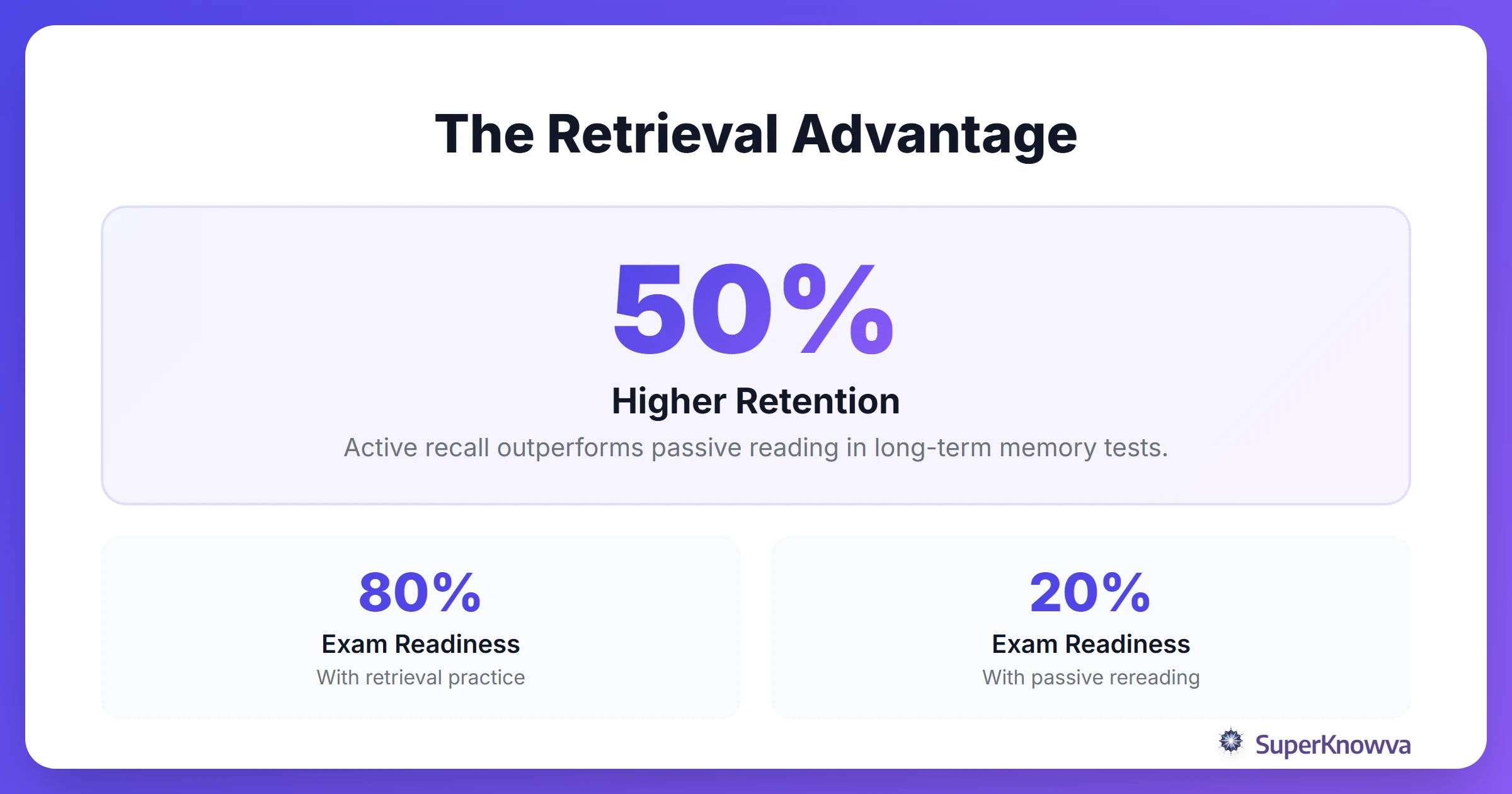
The neuroscience of memory consolidation is clear: the harder your brain has to work to find a memory, the stronger that memory becomes.
The Blurting Method: High-Speed Revision for Dense Subjects
Studying Anatomy or Organic Chemistry requires identifying your knowledge gaps now. The Blurting Method helps you find them. According to Birmingham City University, it is one of the fastest ways to map out what you actually know versus what you are just guessing at.
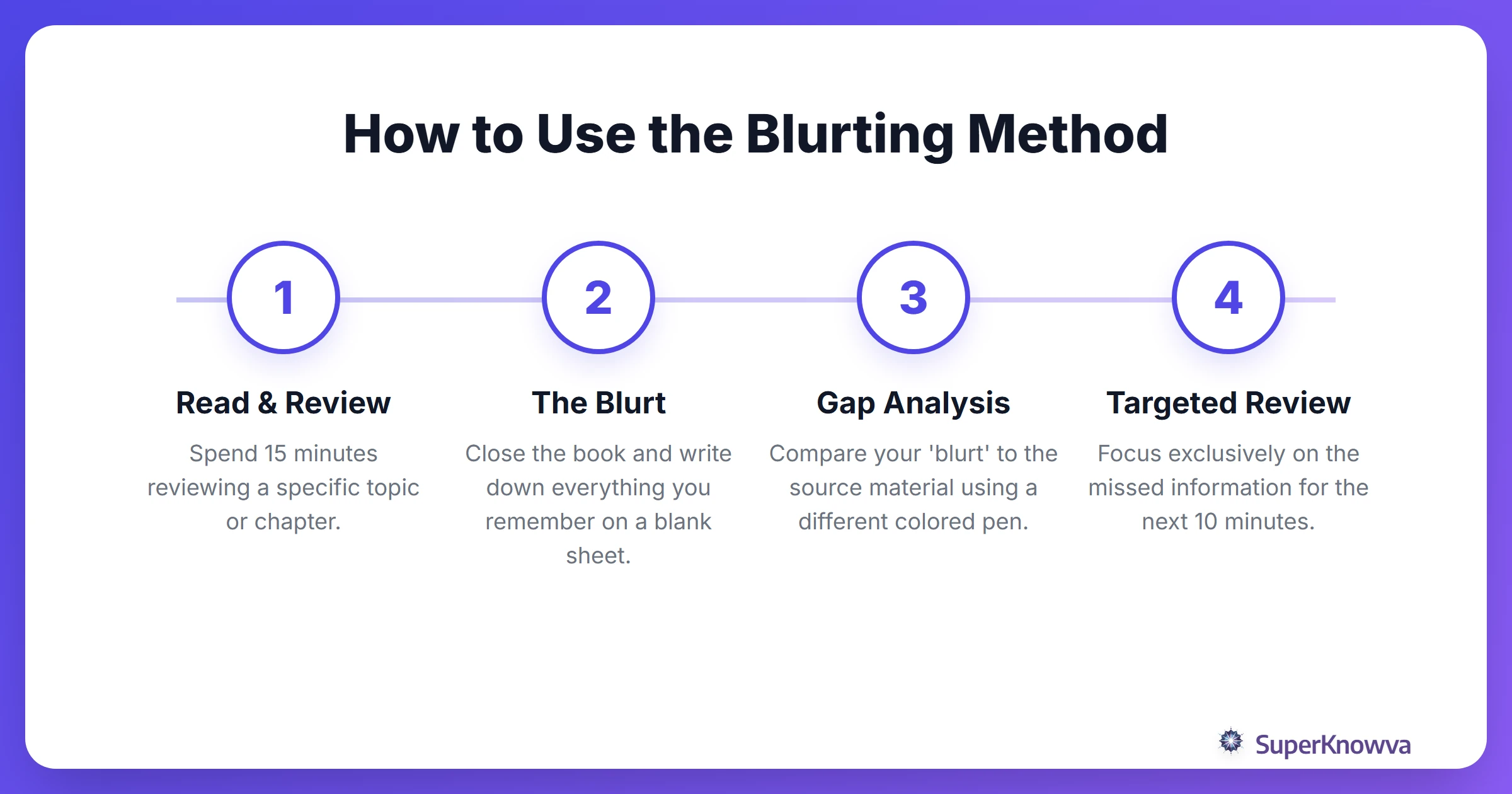
How to execute a "Blurt" during a time-crunch:
- Quick Review: Spend 15 minutes focused on one specific topic.
- The Blurt: Close the book. Grab a blank sheet of paper and dump every single thing you remember. Don’t worry about being neat; just go.
- The Audit: Open your notes. Use a red pen to add the facts you missed and a green pen to check off what you got right.
- Targeted Fix: Your next study block should focus only on those red sections.
If you’re in STEM, adapt this by "blurting" formulas and the exact conditions where they apply. For Biology, focus on the "why" behind the systems. Integrating this into a "10-to-10" intensive schedule ensures you’re always testing your limits, not just killing time.
AI-Enhanced Active Recall: Studying Smarter, Not Harder
Manual study methods are great, but let’s be real: when you have an exam in three days, you don't have time to spend five hours hand-writing flashcards. This is where AI study tools like SuperKnowva change the game.
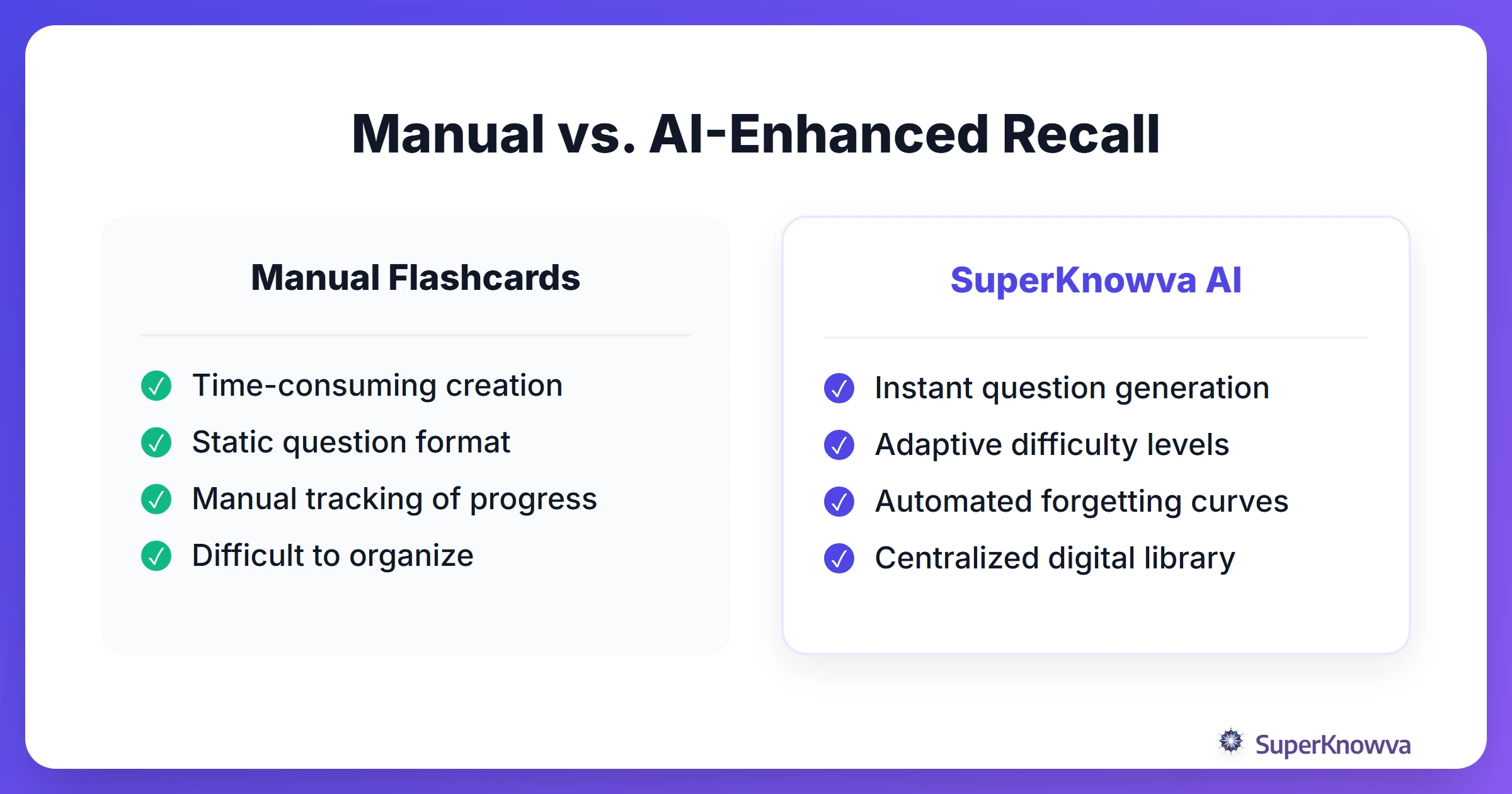
SuperKnowva uses a neural network to predict exactly when you’re about to forget a concept. You upload your lecture slides or PDFs, and the AI instantly generates high-yield questions. It takes the "administrative" busywork out of studying. Instead of making the deck, you spend your time actually answering questions that adapt to how you're performing.
Pairing Deep Work strategies with AI ensures that every minute you spend at your desk actually moves the needle.
Subject-Specific Retrieval: STEM vs. Humanities
Active recall isn't a one-size-fits-all hat. How you prep for a physics final is worlds away from how you tackle a 3,000-word history essay.
- STEM & Medicine: Focus on problem-solving under pressure. Instead of reviewing solved equations, complete a "blind" practice test. Use interleaving practice to mix different types of problems. This mimics the unpredictability of the exam.
- Humanities & Social Sciences: Use the Feynman Technique. Explain a complex concept to an empty room. If you cannot explain a historical cause-and-effect chain without checking notes, you have not mastered the material.
As highlighted in DAT Bootcamp Success Stories, the secret to high scores is using materials that mirror the actual exam environment. Just a heads up, though: Reddit community discussions suggest that while retrieval is king, you need to actually understand the concept first before you start blurting. Don't memorize what you don't comprehend.
Compressing Spaced Repetition into a Short Window
The biggest hurdle in a summer course is the "Forgetting Curve." If you learn something on Monday, you might lose 70% of it by Friday if you don't touch it again. But you don't have months to space things out.
You have to compress your spaced repetition cycles. Instead of weeks, use a 2-3-5-7 day cycle:
- Day 1: Learn it + First Blurt.
- Day 2: First Review (use an AI-generated quiz).
- Day 3: Second Review.
- Day 5: Third Review.
- Day 7: Final Review/Mock Exam.
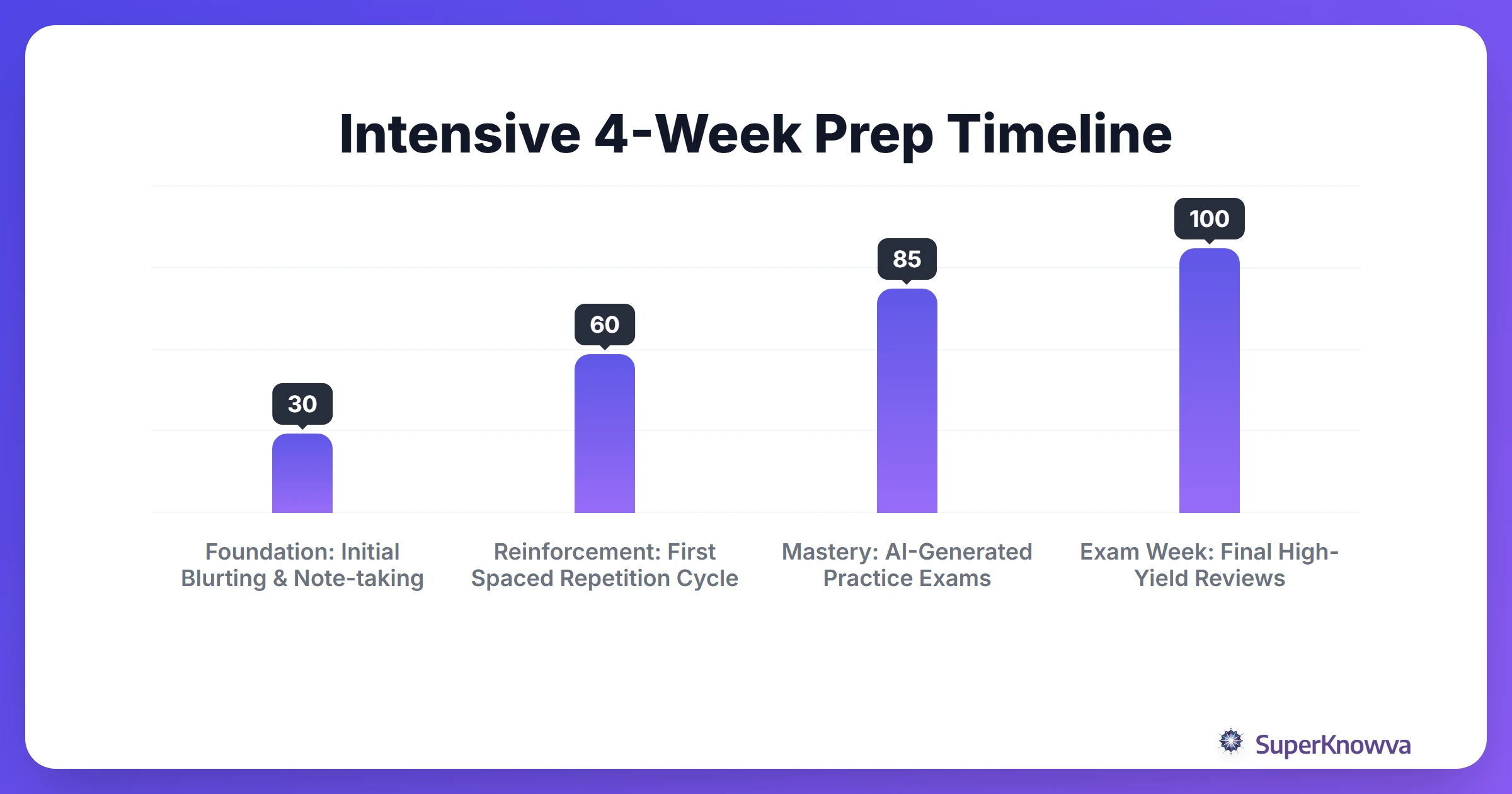
Consistency is everything. A 30-minute high-intensity recall session will always beat a 4-hour marathon of passive reading.
The Role of Recovery: Sleep is Part of the Job
When you're in the heat of exam preparation, it’s tempting to live on caffeine and pull all-nighters. Don't. Science shows that's a losing battle. Active recall builds the pathways, but sleep is the "glue" that cements them.
Without sleep, your brain can't move info from short-term to long-term storage. To maximize memory retention, you need to shut down after your final recall session. A tired brain cannot retrieve information effectively, no matter how many hours you "studied" the night before.
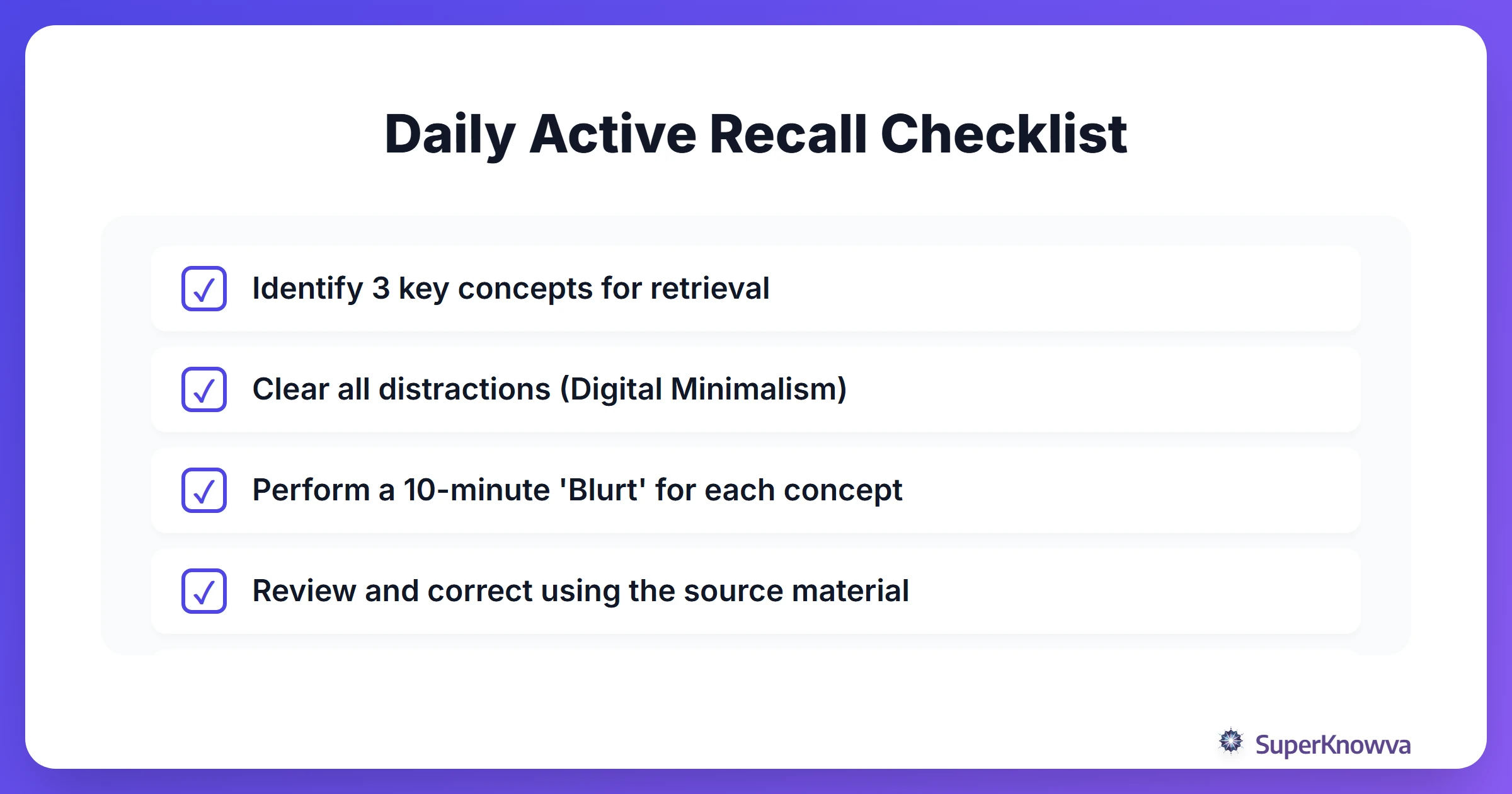
Your Daily Success Routine:
- Finish your "Deep Work" recall blocks before 6:00 PM.
- Use the evening for light organization or setting up tomorrow’s AI schedule.
- Get 7-8 hours of sleep. Give your brain time to file the data away.
By combining the blurting method, AI tools like SuperKnowva, and a disciplined approach to recovery, you can turn summer exam stress into a massive academic win. Ready to see what you actually know? Open your notes, close the book, and start your first blurt.