Every July 4th, we celebrate independence and the courage required to break away from systems that no longer work. For students, no system is more outdated or physically heavy than the traditional thousand-page textbook.
It’s time to declare your own academic freedom.
By mastering self directed learning strategies, you can finally move beyond the "one-size-fits-all" curriculum and take full ownership of your education. In this guide, we’re going to show you how to trade passive reading for active mastery, using metacognition and AI to build a study routine that actually works for you.
The Declaration of Academic Independence
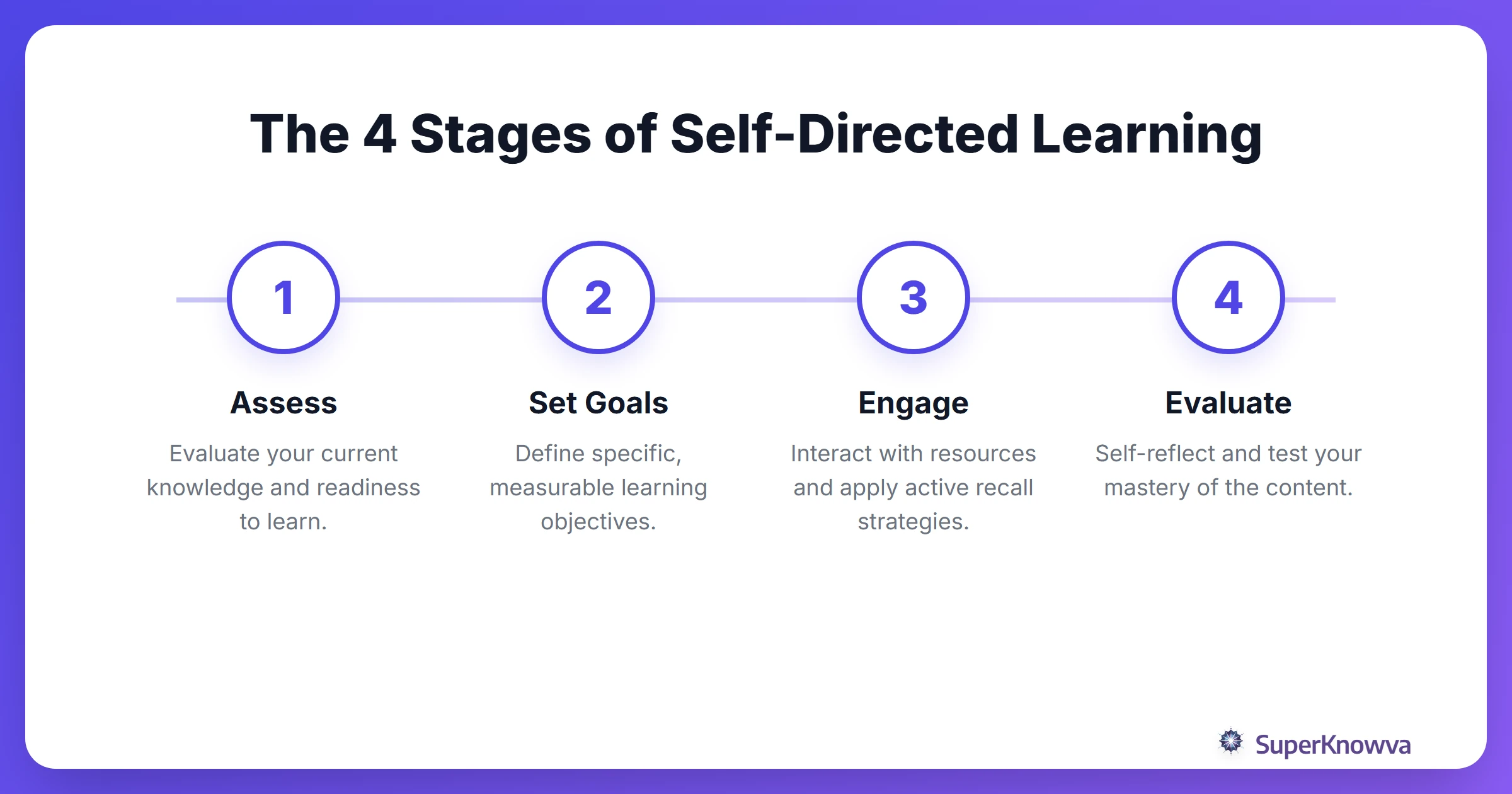
Self-directed learning (SDL) is more than a buzzword. It is a survival skill. It is the shift from being a passive consumer of information to becoming an active owner of knowledge. Just as Independence Day celebrates the right to self-governance, SDL allows you to govern your own mind.
When you adopt self-directed learning strategies, you stop waiting for a syllabus to tell you what matters. You start following your own goals. This autonomy is fueled by motivation. When you choose the "why" behind your study session, the "how" becomes easier to manage. If you’re struggling to find that initial spark, try the 5-minute rule to stop procrastinating to start your new routine.
Why Traditional Textbooks are Holding You Back
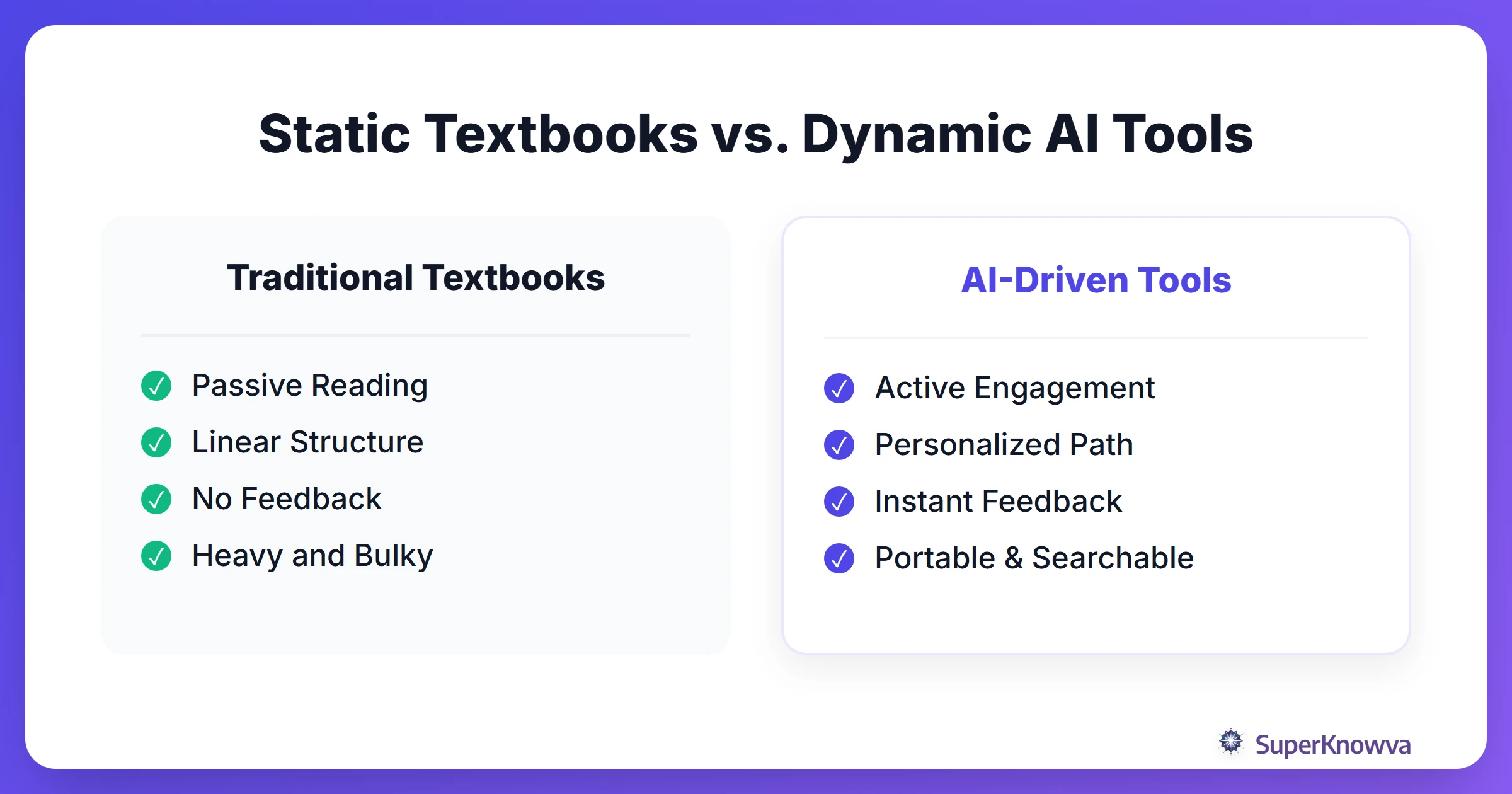
For decades, textbooks have acted as the gatekeepers of knowledge. But they have a major flaw: they are static. A printed book can’t adapt to your pace, and it certainly can’t answer a follow-up question when you’re stuck on page 402 at 11:00 PM.
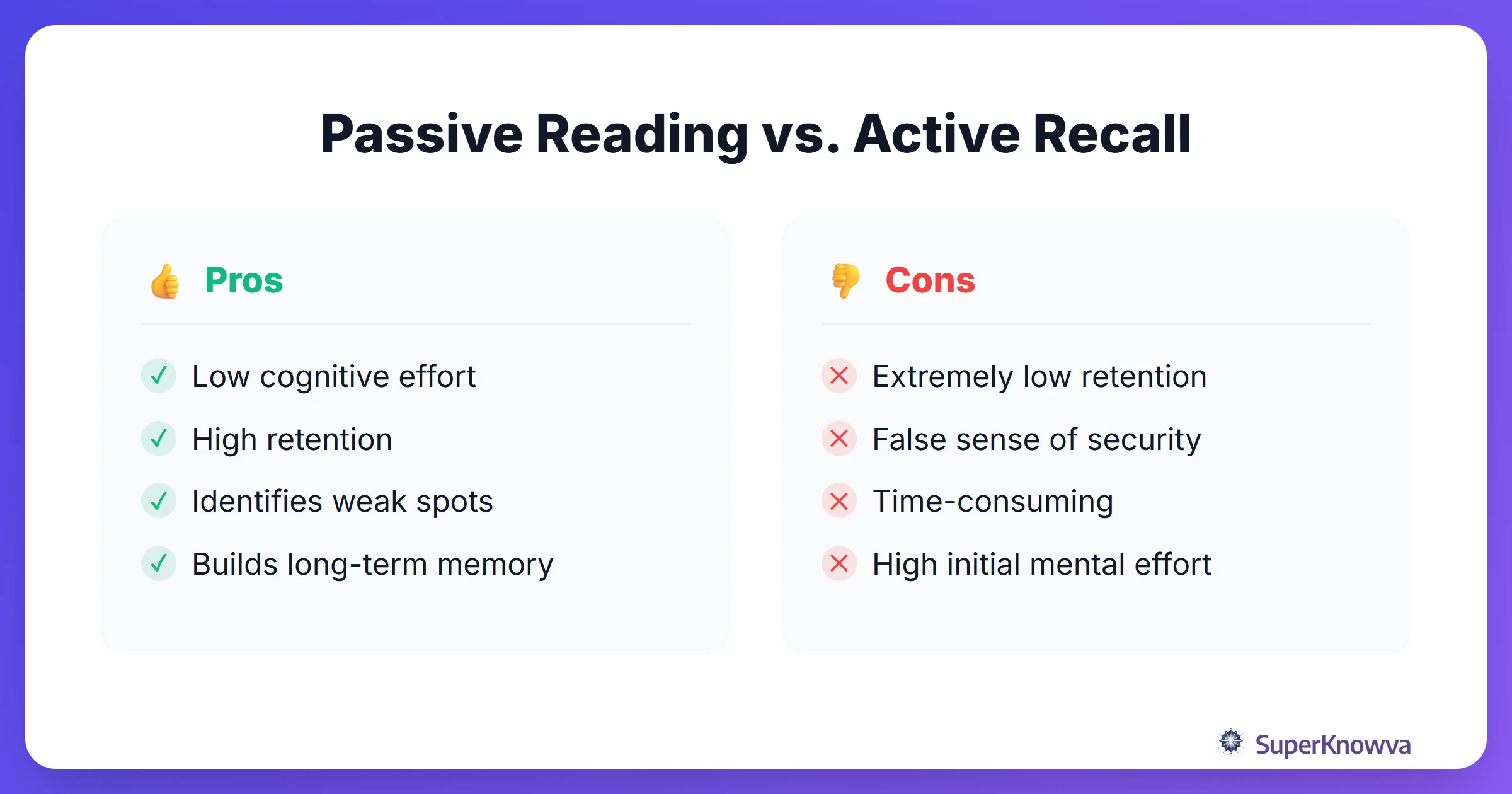
The "Illusion of Competence" is a common trap. It occurs when you spend hours highlighting text and re-reading chapters until the page looks like a neon yellow crime scene. You feel like you’re learning, but you’re actually just becoming familiar with the words. To truly learn, you must understand the difference between active recall vs. re-reading.
Plus, let’s talk about the physical reality. Heavy books are the opposite of a flexible, modern lifestyle. They lack the immediate feedback you need to improve quickly, leaving you to wait until exam day to find out if you actually "got it."
Metacognition: The Secret to Studying Smarter
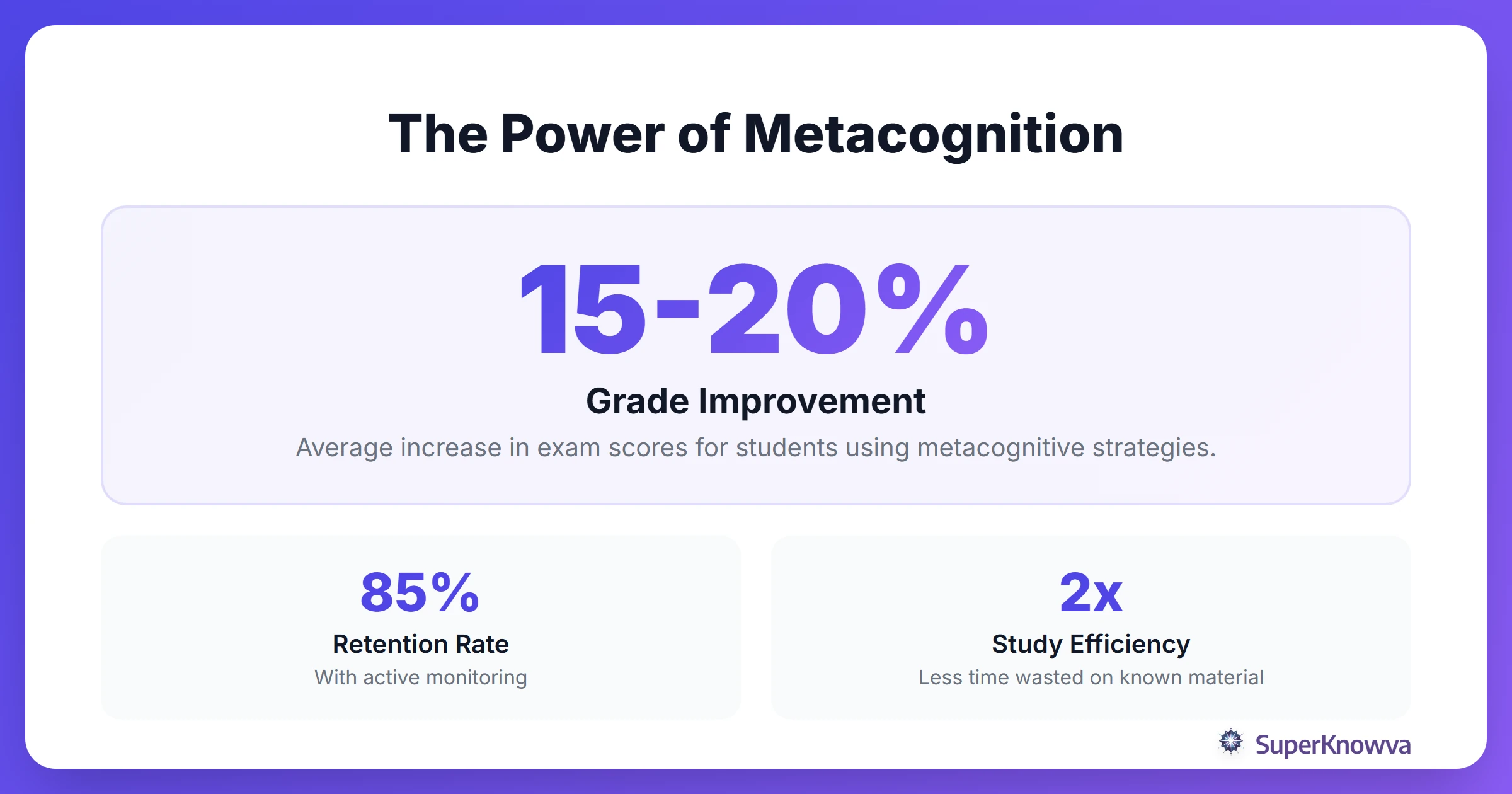
If self-directed learning is the vehicle, metacognition is the person behind the wheel. Put simply, metacognition for students is just "thinking about thinking." It’s the habit of checking in on your own brain in real-time.
Instead of mindlessly turning pages, a metacognitive learner asks: "Do I actually understand this concept, or am I just recognizing the words?"
Metacognition as the Key to Independence allows you to pivot. If a concept is easy, you fly through it. If it’s complex, you slow down and find a different way to look at it. This self-reflection helps you spot knowledge gaps long before you ever sit down for a test.
The AI Revolution: Your 24/7 Digital Tutor
The real "digital study transformation" happened when AI tools became accessible to everyone. AI-driven study tools like SuperKnowva act as a 24/7 digital tutor, personalizing your learning in a way a textbook never could.
- Automated Active Recall: Use smart algorithms to generate flashcards and quizzes the moment you finish reading.
- Interactive PDFs: Why just read a document? Chat with your notes, ask for summaries, or request a list of key takeaways.
- Instant Explanations: Stuck on a complex theory? Ask an AI to explain it like you’re five years old.
By automating the boring parts of studying, like scheduling your spaced repetition, you free up your brain for deep work. If you're ready to upgrade your toolkit, check out our list of the best study apps for 2026.
5 Essential Self-Directed Learning Strategies
Ready to take the lead? Here are five self directed learning strategies you can start using today:
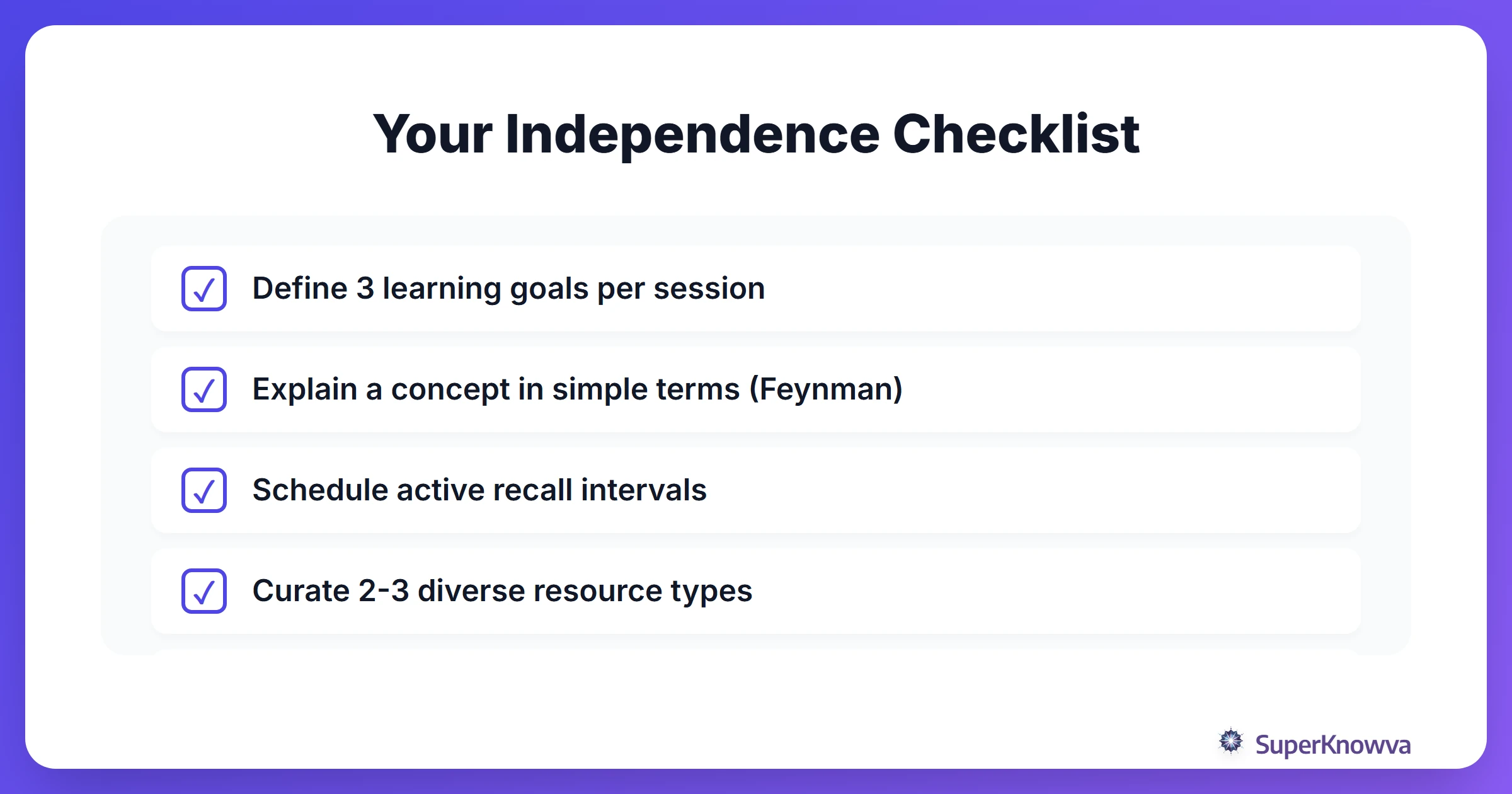
- Set SMART Objectives: Don't just "study biology." Say: "I will be able to explain the three laws of thermodynamics from memory by 4:00 PM."
- The Feynman Technique: Try to explain a concept to a friend (or your cat). If you can’t explain it simply, you don't understand it yet.
- Curate a Multi-Modal Library: Don't stick to one book. Mix video lectures, podcasts, and AI-generated summaries to create a personalized learning path.
- Build a Feedback Loop: Quiz yourself constantly. It’s the only way to know if the info is actually sticking.
- Master Your Time: Use time-blocking to tackle your hardest subjects when your brain is at its sharpest.
As highlighted in Self-Directed Learning in Practice, this approach is the fastest way to achieve deep understanding.
From Classroom-Led to Student-Led Study
Ditching the "roadmap" of a classroom or a textbook can feel a little scary at first. You might feel lost without a table of contents telling you what to do next. But here’s the secret: that discomfort is exactly where the growth happens.
To succeed, you have to become a savvy curator. Find reliable sources, vet your digital info, and build a study environment that keeps you focused. You don't have to throw away your curriculum entirely, but you can enhance it with note-taking strategies from textbooks that prioritize making connections over just transcribing words.
This Independence Day, move beyond celebrating history and make your own. Replace traditional textbooks with AI-powered, self-directed learning. Academic freedom starts with a clear strategy.