Stepping into a Master’s or PhD program is usually a massive wake-up call. Remember those 200-level survey courses where you cruised to an A just by highlighting a few lines in a textbook? That strategy won't work here. In the big leagues, trying to keep up with the workload feels like trying to catch a waterfall with a thimble.
Grad school note taking isn't just about transcribing a lecture. It’s about survival. You aren't just recording data; you’re building an engine to generate original thought.
Evolve your note-taking systems for advanced research and use AI-powered tools like SuperKnowva to connect complex concepts throughout your academic career.
The Shift: Why Undergraduate Note-Taking Fails in Grad School
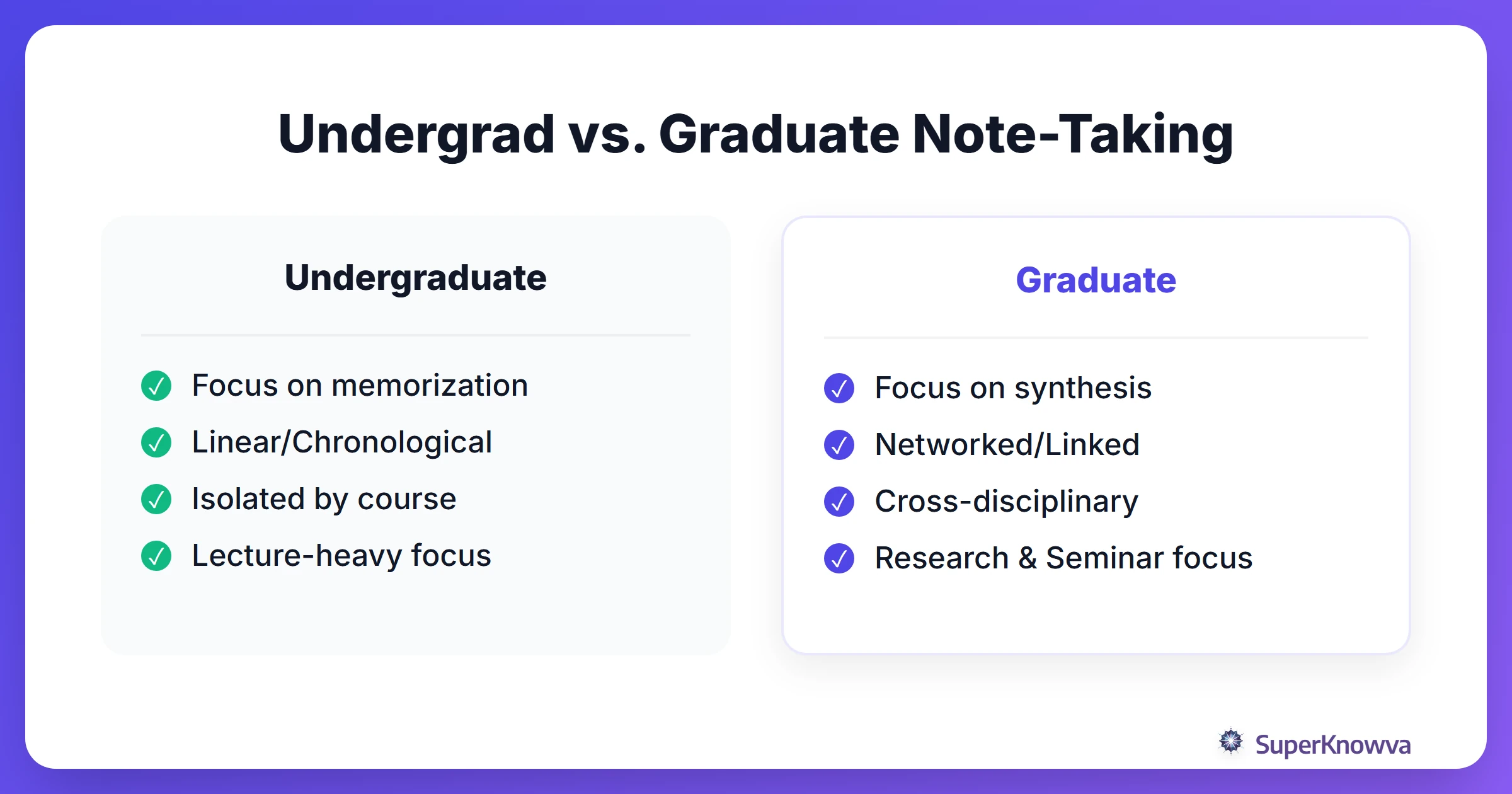
In your undergrad years, note-taking was a race to copy the professor’s slides before they clicked "next." In grad school, that "lecture" is now a high-stakes seminar, and that "textbook" has been replaced by a stack of fifty primary sources you were supposed to read by yesterday.
The volume of reading doesn't just increase; it explodes. You’re no longer skimming the surface of a broad subject; you’re scuba diving into a hyper-specific niche. If you’re just writing down what people say, you’re missing the point. You’re missing the synthesis.
Success at this level depends on intertextuality. Can you see how a paper you read in your first-semester theory course actually refutes a finding in your current methodology seminar? To do that, you have to stop thinking of notes as "class records" and start treating them as a Personal Knowledge Management (PKM) system. If you don't build this system early, you’ll hit a wall of "knowledge silos" that lead to total burnout by the time comprehensive exams roll around.
Advanced Methodologies: Beyond the Cornell Method
The Cornell Method is great for basic recall, but for a dissertation? You need something heavier. You need a system that supports long-form research and complex writing.
- The Outline Method: This is your bread and butter for structured seminars. Nest sub-arguments under main themes so you can actually see the logical skeleton of a professor’s argument.
- The Zettelkasten Method: This is the "gold standard" for digital note taking for phd candidates. Often called a "slip-box," this method involves creating small, interconnected notes. Instead of filing things by "Date" or "Course," you link them by "Idea." It’s about building a web, not a list.
- The Matrix Method: When you’re deep in an academic literature review notes session, use a table to compare authors side-by-side. Set your columns to "Methodology," "Core Argument," and "Gaps." It makes spotting trends effortless.
- Atomic Notes: Keep one idea per note. That’s it. By keeping notes "atomic," they stay modular. You can "plug" them into different chapters of your dissertation years later without having to dig through a 50-page Word doc.
If the transition feels overwhelming, don't sweat it. Mastering taking notes from complex textbooks is a foundational skill that makes these advanced frameworks much easier to handle.
Digital vs. Handwritten: Choosing Your Tech Stack
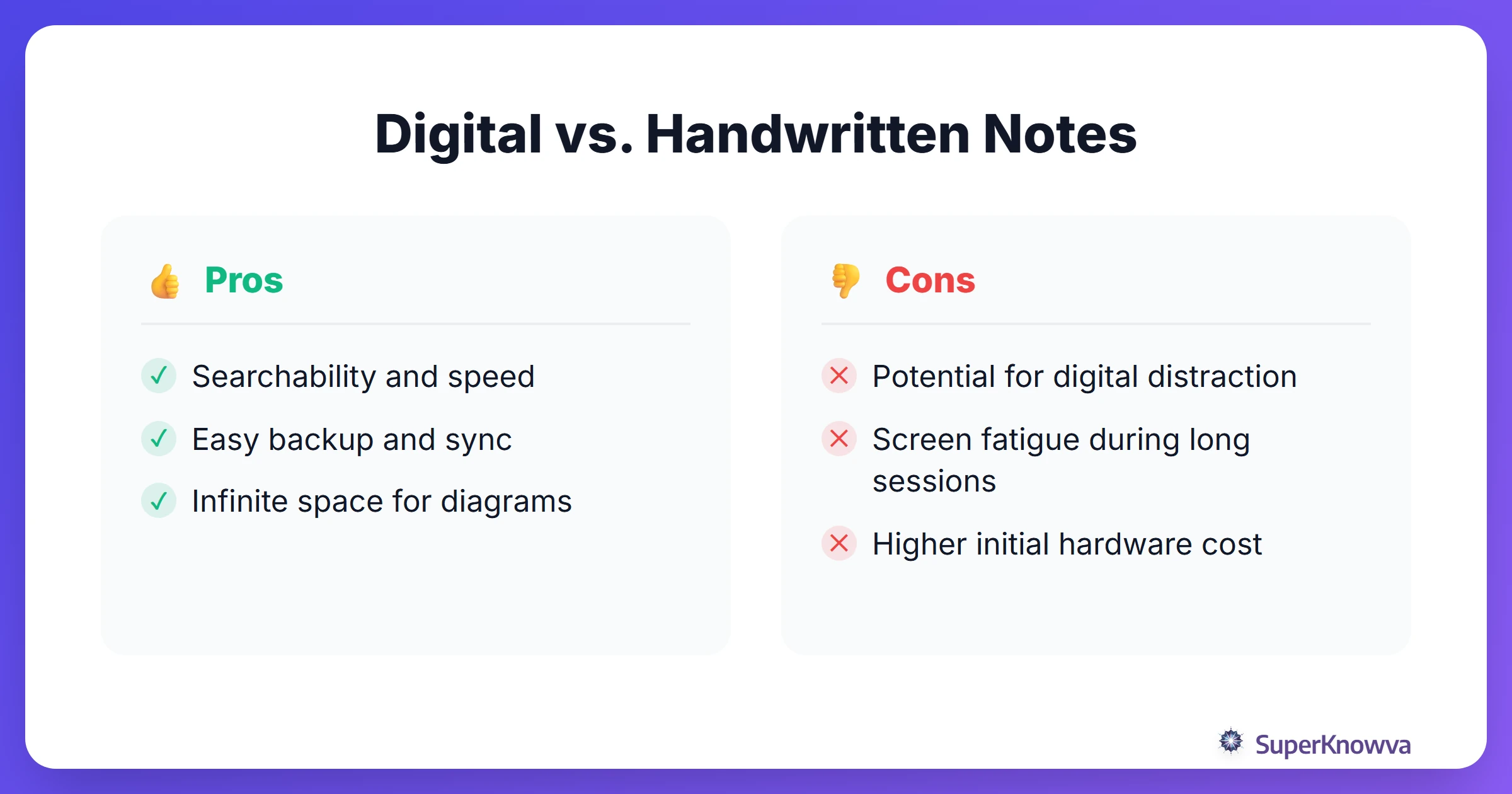
The "pen vs. keyboard" debate is a classic academic trope. Science tells us that handwriting helps with memory retention. But let's be real: the sheer speed of typing is often the only way to keep up in a fast-paced seminar.
Most PhD students eventually land on a middle ground. They use an iPad Pro with an Apple Pencil to annotate PDFs by hand, then use OCR (Optical Character Recognition) to turn those handwritten scribbles into searchable text.
Whatever you choose, syncing is non-negotiable. Your notes need to be everywhere: on your phone for a quick review on the bus, on your tablet for deep reading at the library, and on your desktop when it’s time for heavy writing.
The Literature Review: Taking Notes on Academic Papers
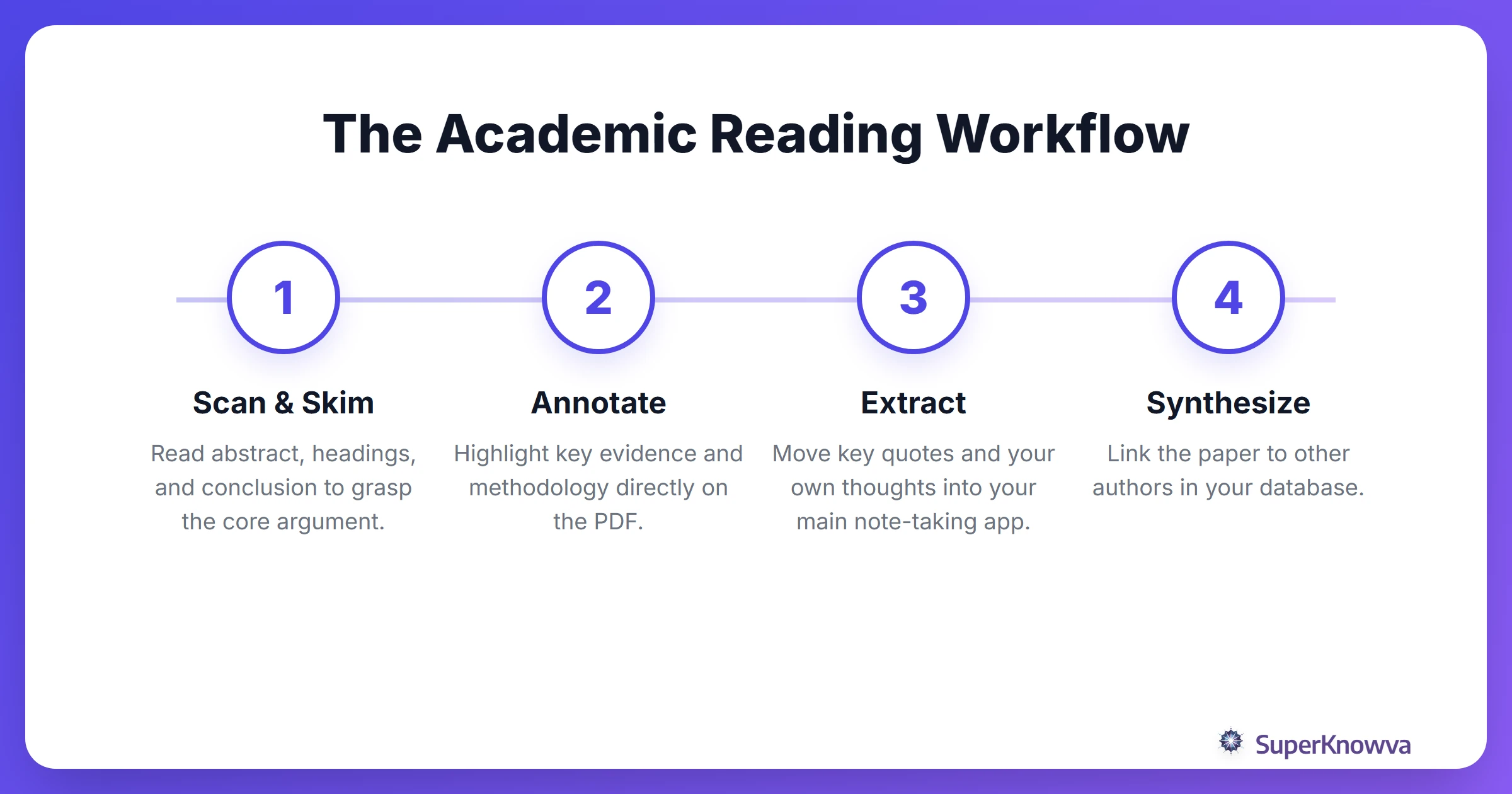
The literature review is the heart of your graduate work. To keep from drowning in a sea of PDFs, try the "Three-Pass" approach:
- The Scan: Read the abstract, intro, and conclusion. Is this paper actually worth your time? If not, toss it.
- The Content: Dig into the main body. Focus on the data and the "how" (methodology).
- The Critical Analysis: This is where you talk back. Annotate the limitations and note exactly where this connects to your own project.
Pro tip: Make sure your note-taking app talks to your reference manager (like Zotero). You want every note to be automatically linked to a perfect citation. Looking for the right tools? Check out our list of the best study apps for 2026.
Leveraging AI to Link Concepts and Organize Thoughts
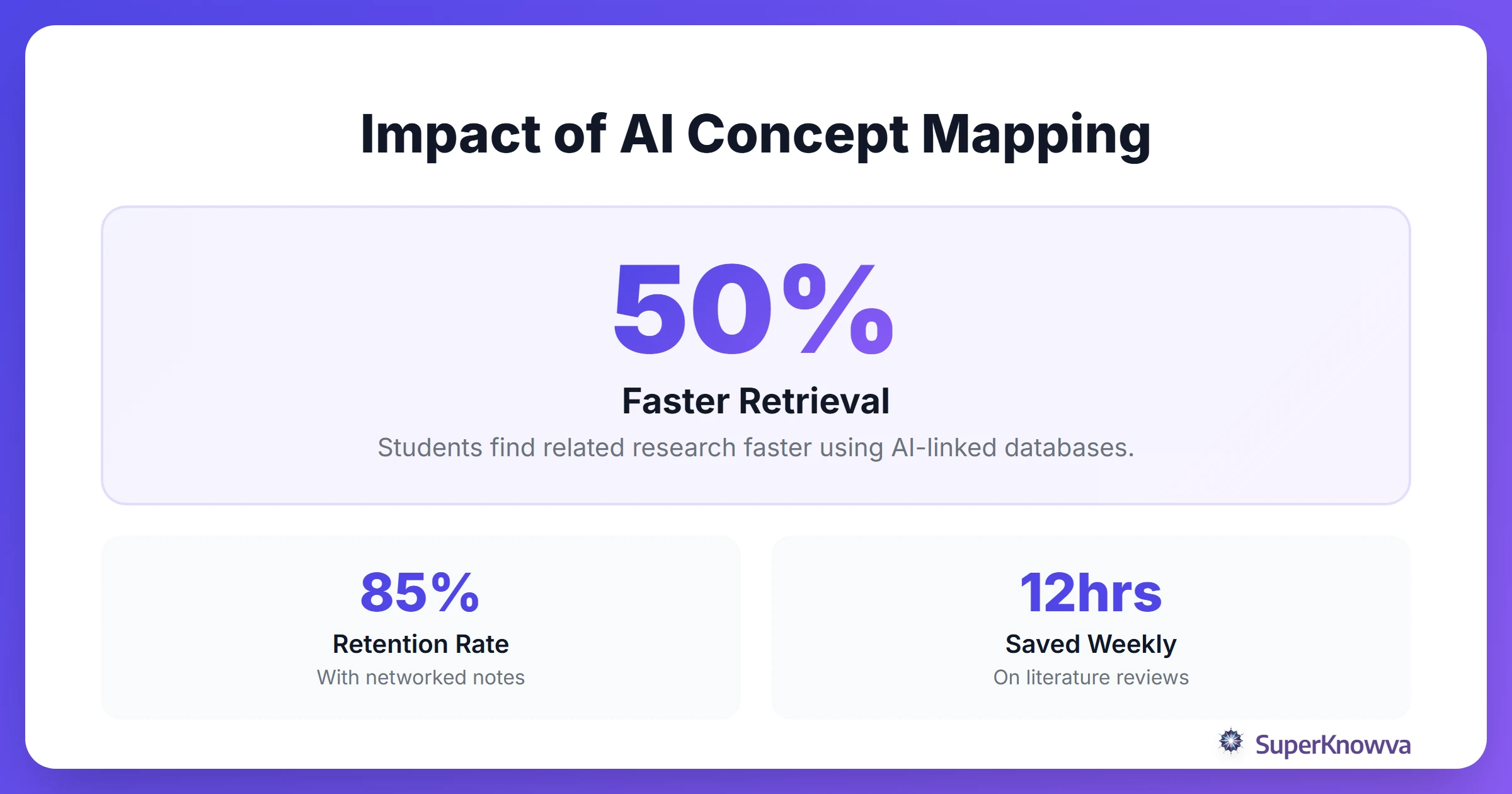
Ever experienced "folder fatigue"? It’s that moment when you have so many files that searching for a specific quote feels like looking for a needle in a haystack. This is where AI note organization changes everything.
Modern AI doesn't just store text; it identifies hidden connections. For instance, SuperKnowva can look at your notes on "19th-century economics" and "modern urban planning" and suggest links you might have completely missed.
- Automated Tagging: Stop wasting hours manually tagging. Let AI categorize your thoughts based on the actual context.
- Seminar Summaries: Record a three-hour seminar, upload the transcript, and have AI pull out the key debates and action items in seconds.
- Intelligent Mapping: SuperKnowva creates a visual web of your knowledge, showing you how your old notes support your new ideas.
Using these tools effectively means you spend less time on administrative filing and more time managing focus during deep work.
Building Your 'Second Brain' for the Dissertation
Think of your notes as "Lego bricks" for your dissertation. A "Second Brain" is just a digital workspace designed to support a project that spans years, not weeks.
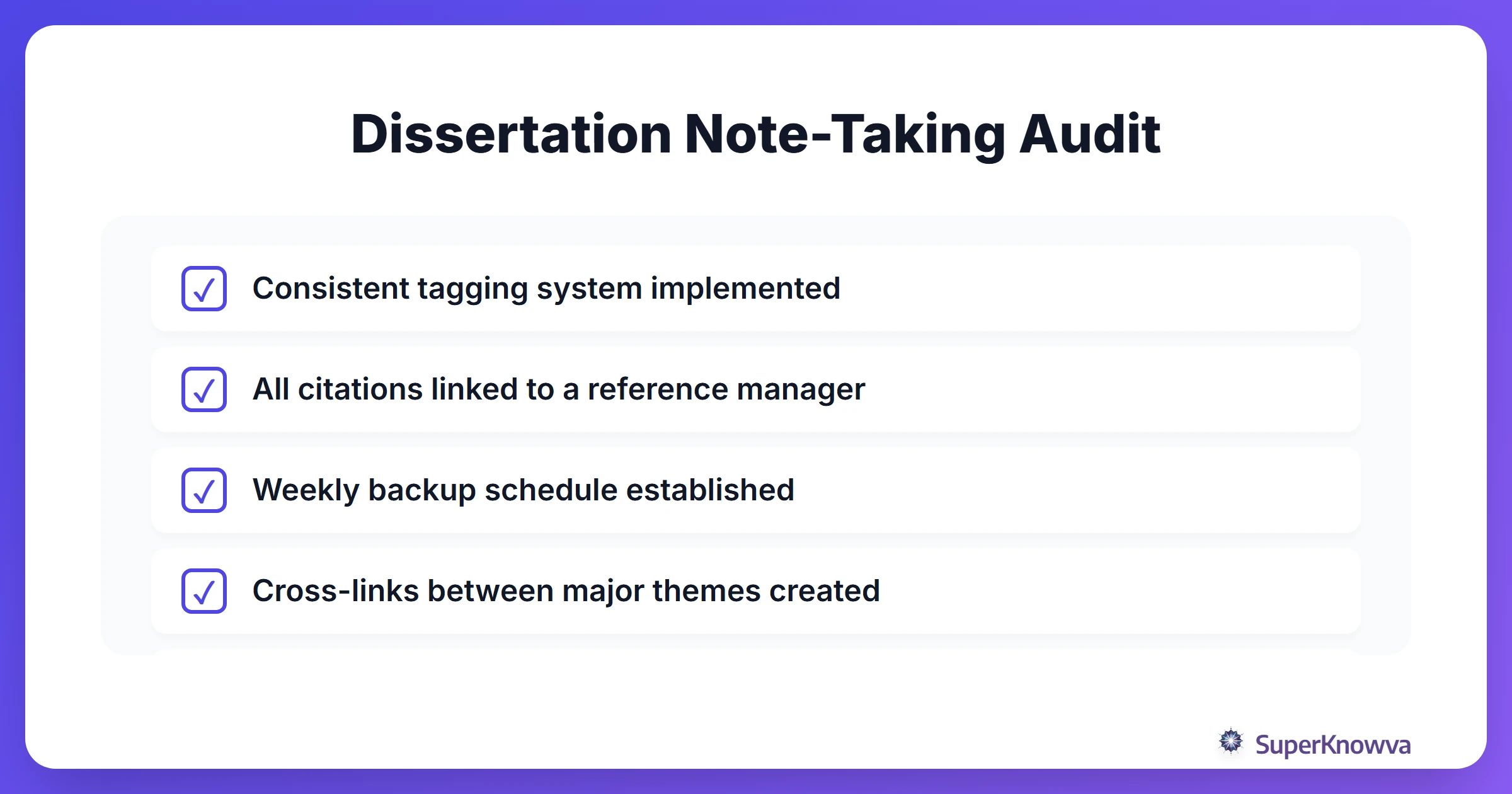
To maintain this system, you need a weekly review. Every Friday, take 30 minutes to clean up your tags, link new notes to old ones, and back everything up. Your intellectual property is valuable. Treat it that way. Use cloud storage, but keep local backups too.
When your system is dialed in, the transition from "taking notes" to "writing a chapter" is direct. You aren't staring at a terrifying blank page; you’re just assembling the atomic notes you’ve been collecting for years. This is the ultimate goal of active recall methods: turning raw information into usable, accessible knowledge.
For a deeper look at the specific software that can handle this, see this review of the Top Notetaking Apps for Grad Students.
Conclusion
By moving away from passive transcription and embracing active synthesis, and by using AI-driven platforms like SuperKnowva, you can turn a cluttered archive into a research powerhouse. Master your notes today to simplify the process of writing your final chapters.