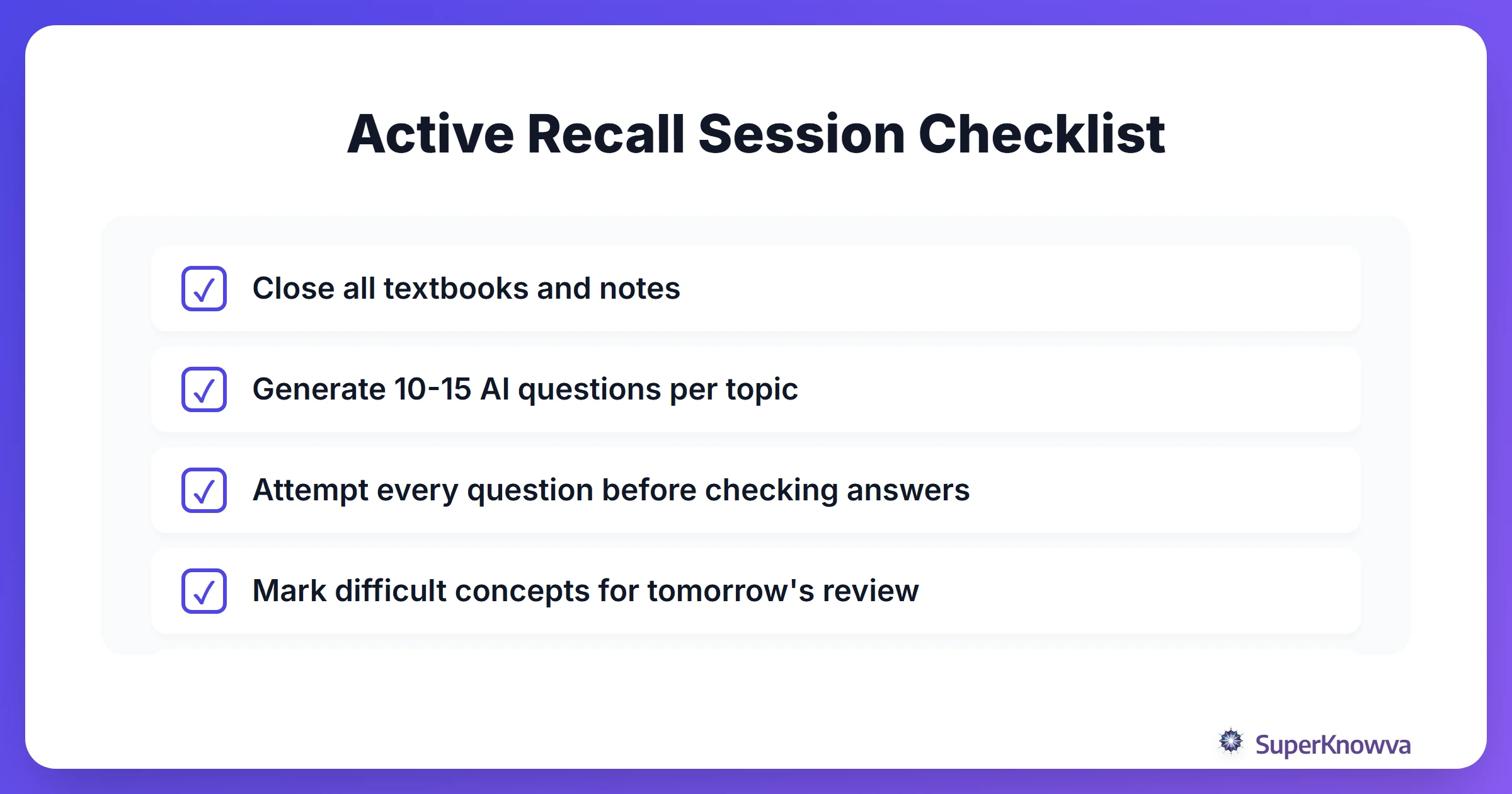
Stop wasting your summer "painting" your textbooks with yellow highlighter. If you’ve ever spent three hours scanning a chapter only to realize you can’t remember a single heading the next morning, you aren't bad at studying. You're just using a method that doesn't work. To actually master complex subjects, you have to stop reading and start retrieving. It’s time to switch to the active recall study method.
At SuperKnowva, we’re over the idea that learning has to be a grueling chore. By using an AI quiz generator, you can flip the script. You can turn those boring, passive reading sessions into high-intensity brain training that actually sticks.
The Science of Active Recall: Why Your Brain Needs a Challenge
Active recall is pretty simple: it’s the process of pulling information out of your head instead of trying to hit it in. Think of your brain like a muscle. It doesn't get stronger by watching a fitness influencer lift weights; it gets stronger when you do the heavy lifting yourself.
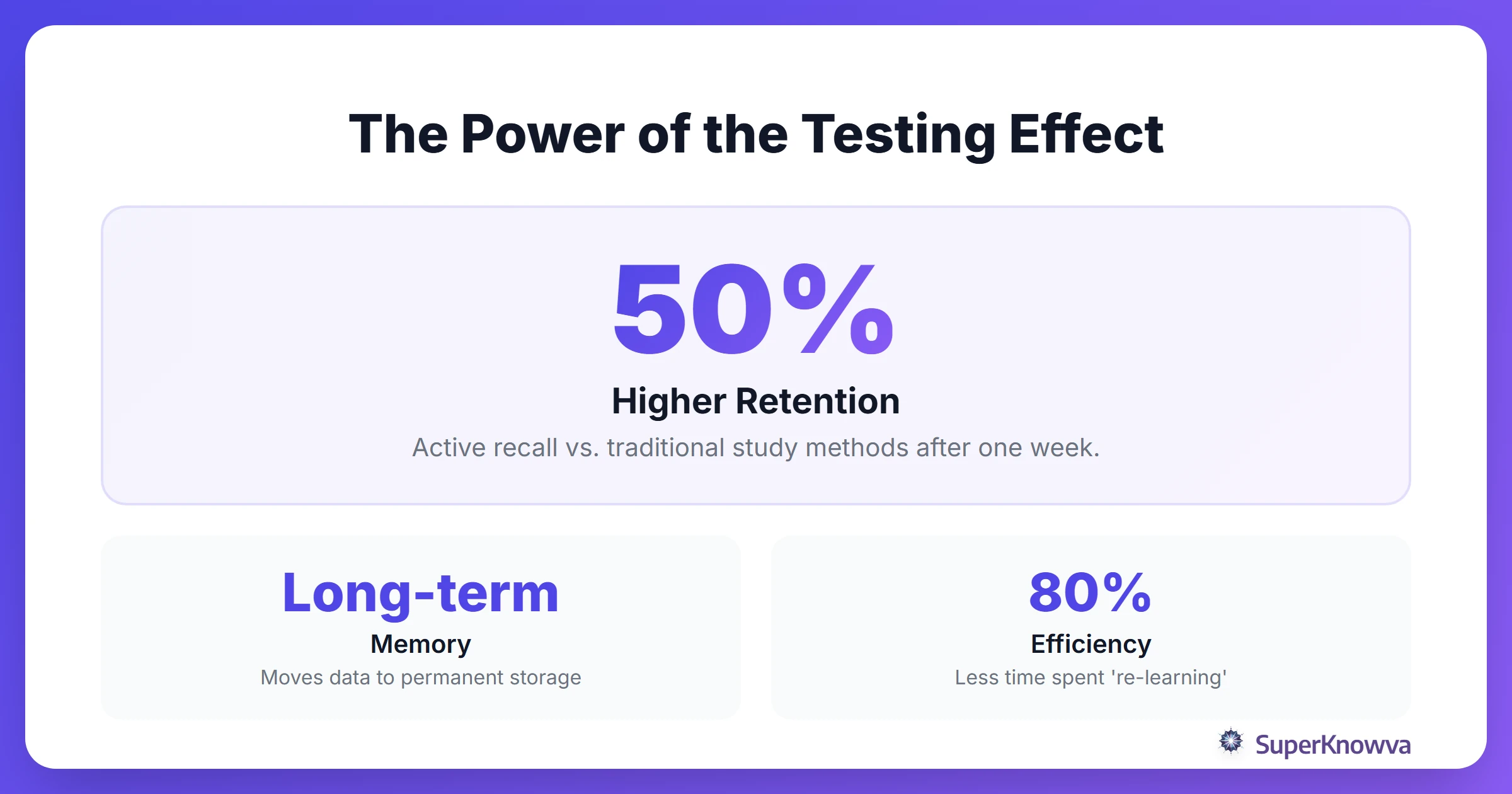
When you force your brain to dig for a fact, you trigger the "testing effect." That momentary struggle, the "tip of my tongue" feeling, is actually a signal to your brain that this information matters. It moves data from your shaky short-term memory into long-term storage. Research from the University of Arizona shows that active recall is the ultimate "memory rescue," drastically improving memory retention techniques compared to just looking at your notes again.
Active Recall vs. Passive Reading: Breaking the Illusion of Competence
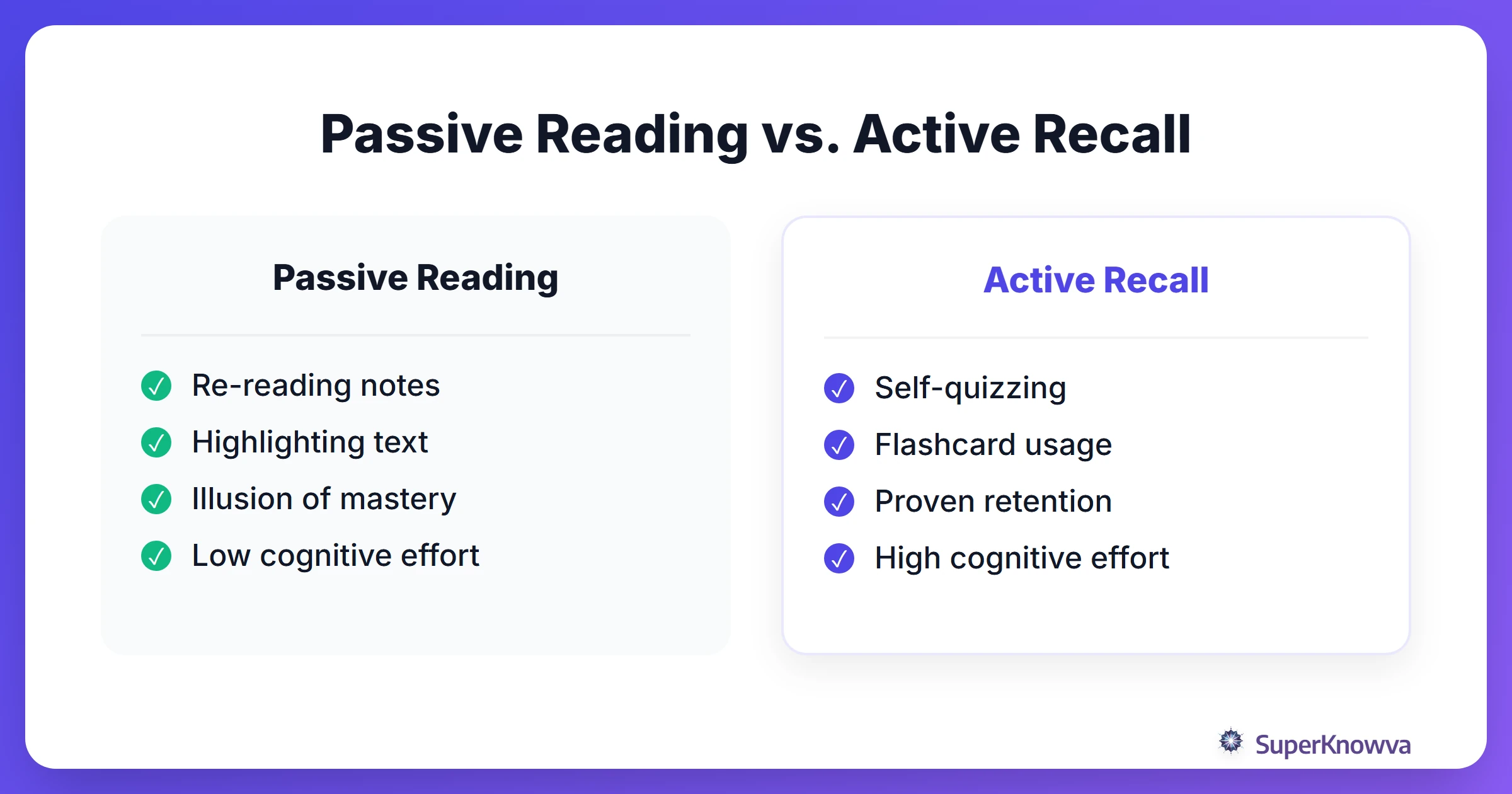
So, why do we keep re-reading? Honestly? Because it feels easy. When you read a page for the fourth time, the words look familiar. Your brain whispers, "I know this," but it’s lying to you. This is the "Illusion of Competence." You don't actually know the material; you just recognize the font.
Recognition is what happens when the answer is right in front of you. Recall is what happens during an exam when you’re staring at a blank page. As we dive into in our guide on Active Recall vs. Re-reading: Why Your Current Method is Failing You, the efficiency gap is massive. Passive methods take more time and yield worse results. Active retrieval, on the other hand, builds genuine study efficiency.
The AI Revolution: No More Making Your Own Flashcards
The biggest problem with the active recall study method has always been the "busy work." Manually writing out 50 flashcards for a single lecture takes forever. Most students spend so much time making the study materials that they have no energy left to actually use them.
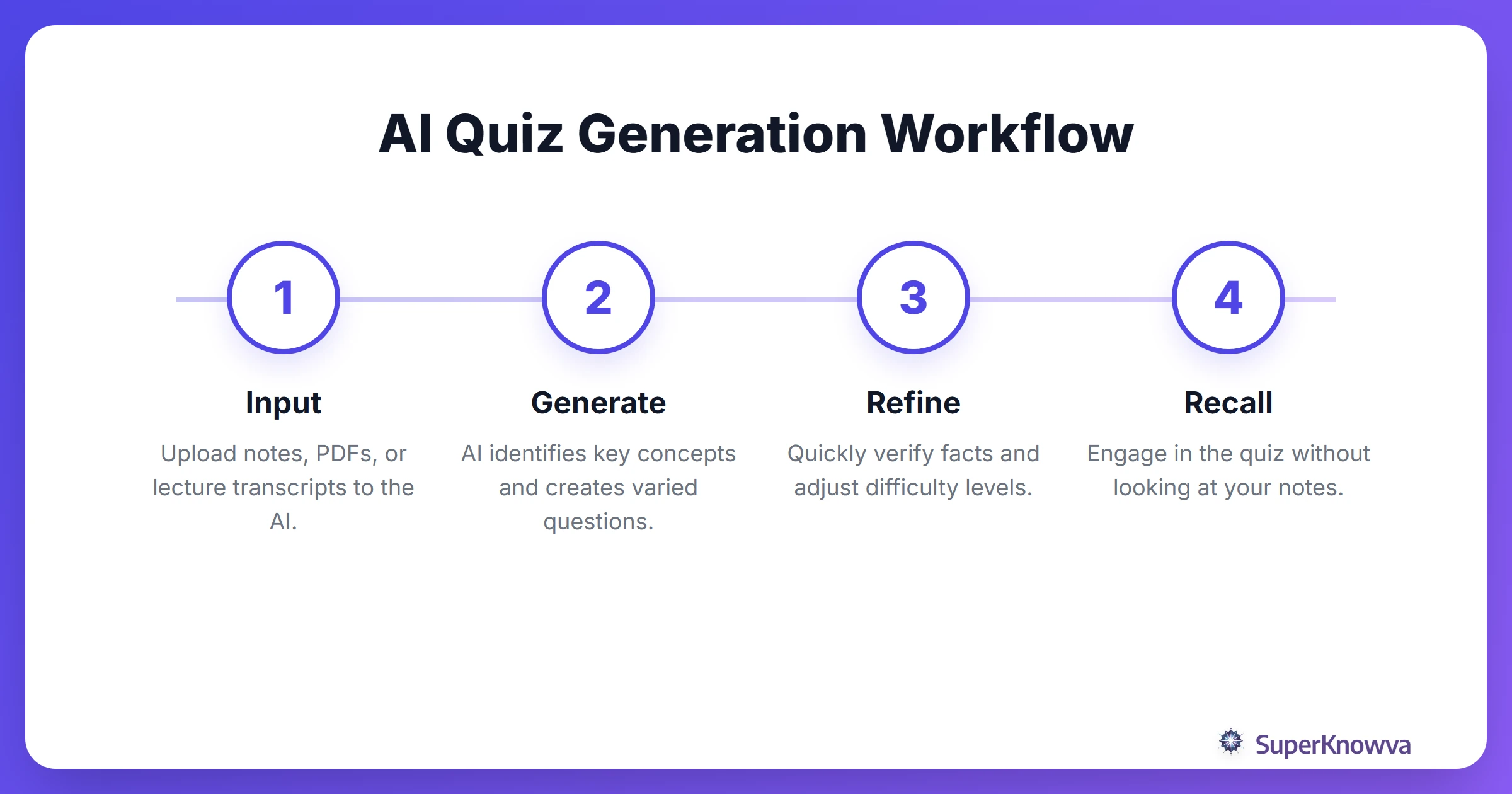
This is where an AI quiz generator changes everything. Instead of spending your Sunday night typing out questions, you can have SuperKnowva scan your lecture slides, PDFs, or textbook chapters in seconds. It identifies the core concepts for you and generates:
- Multiple Choice Questions (MCQs) to test the fine details.
- Short Answer prompts to make sure you actually understand the "why."
- Fill-in-the-blanks for those annoying terms and definitions.
By automating the setup, you spend 100% of your time in the "active" phase of learning.
Step-by-Step: How to Generate High-Quality AI Quizzes
Ready to upgrade? Here is the workflow to make sure your AI-generated study sessions are actually effective:
- Gather Your Source Material: Upload your notes, a PDF of the chapter, or even a transcript from a YouTube lecture.
- Focus on "High-Yield" Concepts: Tell the AI to focus on the 20% of the material most likely to be on the exam. If your notes are a mess, check out How to Take Notes from a Textbook Without Copying Everything to clean up your input.
- Audit the Output: You’re still the boss. Quickly scan the questions to make sure they match what your professor actually cares about.
- Make it a Habit: Don’t just quiz yourself once and call it a day.
Looking for more ways to stay on top of things? Explore The Best Study Apps for Students in 2026.
Supercharging Results with Spaced Repetition
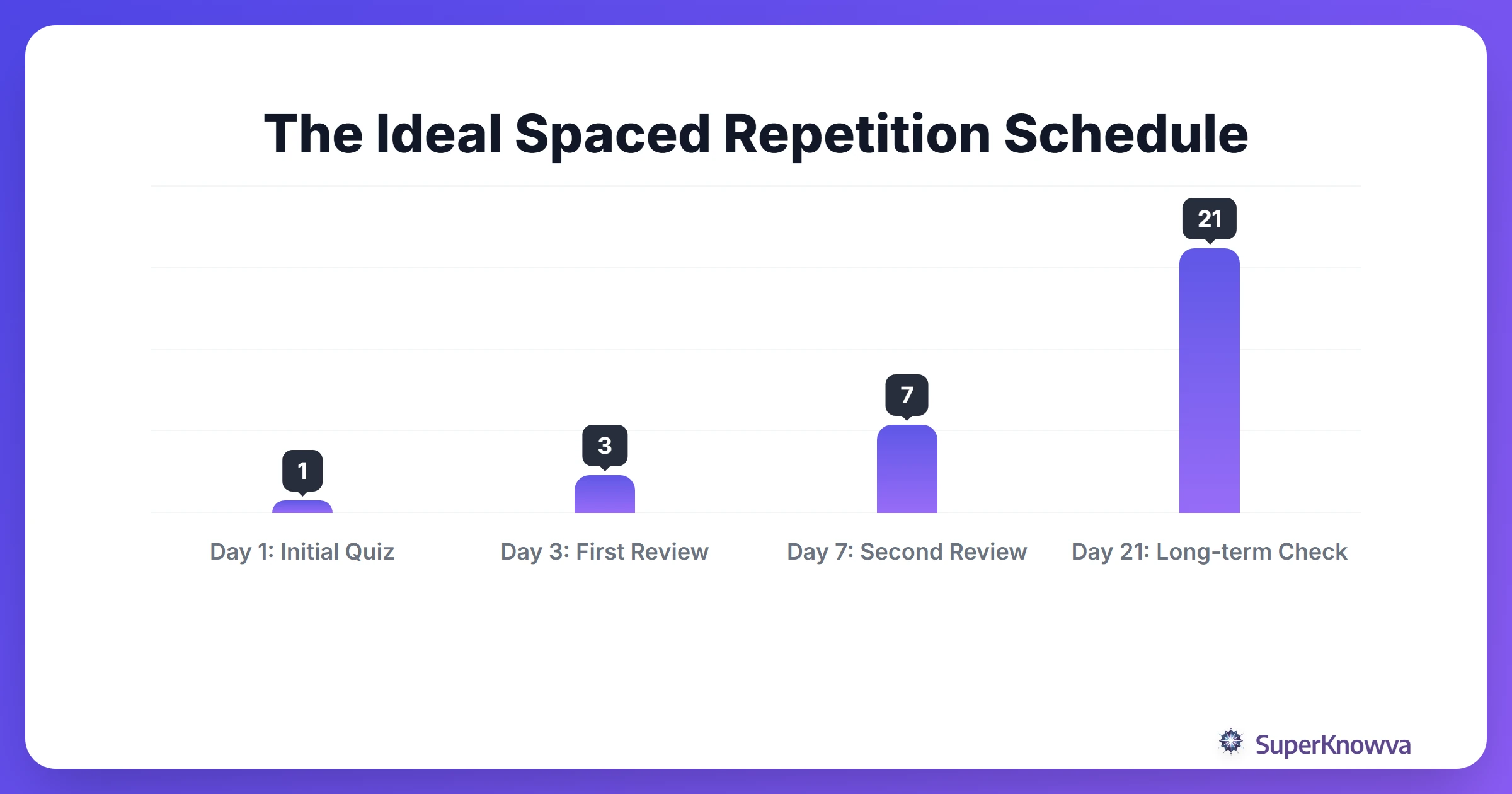
If active recall is the "what" of studying, spaced repetition is the "when." Your brain is literally designed to forget things it doesn't use. It’s called the Forgetting Curve. To beat it, you need to review information just as you’re about to forget it (e.g., 1 day later, then 3 days later, then a week later).
AI is perfect for this. It can track which questions you keep missing and hit you with them more often, while letting the easy stuff slide to the back of the deck. This keeps "at-risk" memories fresh without wasting your time on things you already know by heart. For a deeper look at this, see 7 Practical Ways to Apply Active Recall When Studying.
Feeling Drowned in Material? You're Not Alone.
We see the posts on Reddit every day: students in Anatomy, Law, or Organic Chemistry feeling like they’re underwater. When you have 1,000 pages to memorize, active recall feels impossible.
The secret? Prioritization. Use AI to find the "big wins," the 20% of material that accounts for 80% of the test. Focus your energy there first. This keeps you from burning out and keeps your cognitive load under control. And if you’re struggling with focus specifically, our Practical Tips for Studying with ADHD has some great strategies for staying locked in.
Ultimately, the best study sessions are the ones that make you sweat a little. By combining the science of the testing effect with the speed of AI, you aren't just memorizing; you're actually mastering the material.