Think back to the last time you sat for a high-stakes exam. The rows of silent desks, the scratch of No. 2 pencils, and that rhythmic, agonizing ticking of the wall clock. For decades, this has been the universal "student experience." But the future of standardized testing ai is moving away from that rigid, one-size-fits-all pressure cooker. We’re finally entering an era where assessments aren't just hurdles; they’re becoming dynamic tools that actually measure your potential, not just your ability to stay calm in a quiet room.
At SuperKnowva, we believe technology should support you, not just sort you into a category. In this post, we’re looking at how AI is shaking up the old testing regime and replacing it with something far more personal and, frankly, much more effective.
The Evolution: From Static Exams to Adaptive AI Assessments
Traditional standardized tests have always had a "snapshot" problem. They measure what you know at 9:00 AM on a specific Tuesday. They don't care if you had a bad night's sleep, if you're a slow reader, or if you just have a bad case of test-day nerves.
The biggest shift we’re seeing right now is the move toward adaptive testing algorithms. Unlike those old-school exams where everyone sees the same set of questions, Computer Adaptive Testing (CAT) uses AI to adjust the difficulty on the fly. It’s a conversation, not a monologue. Answer a question correctly? The next one gets a bit tougher. Struggle with a concept? The system scales back to find exactly where your knowledge "ceiling" sits.
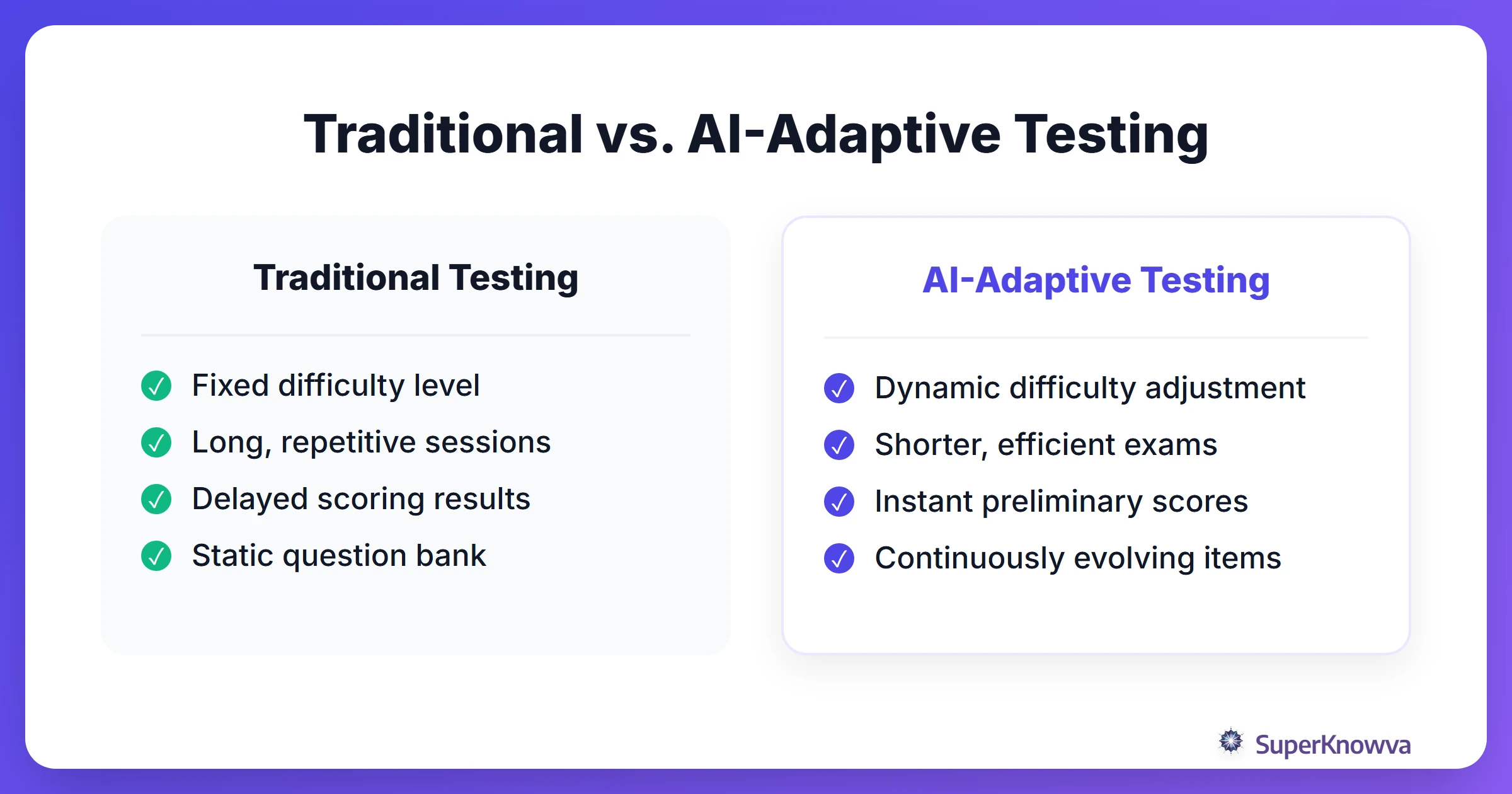
You’ve likely already seen this in action if you’ve looked at the GRE, GMAT, or the new Digital SAT. The results are hard to argue with: the tests are shorter, more precise, and way less exhausting for the student.
AI-Powered Test Design and Item Generation
Writing a high-quality test question is part art, part science, and usually, a whole lot of time. Historically, it took months for experts to draft, test, and validate a single question. Today, Large Language Models (LLMs) are acting as a co-pilot for experts in AI in education assessment, generating massive "banks" of quality questions in a fraction of the time.
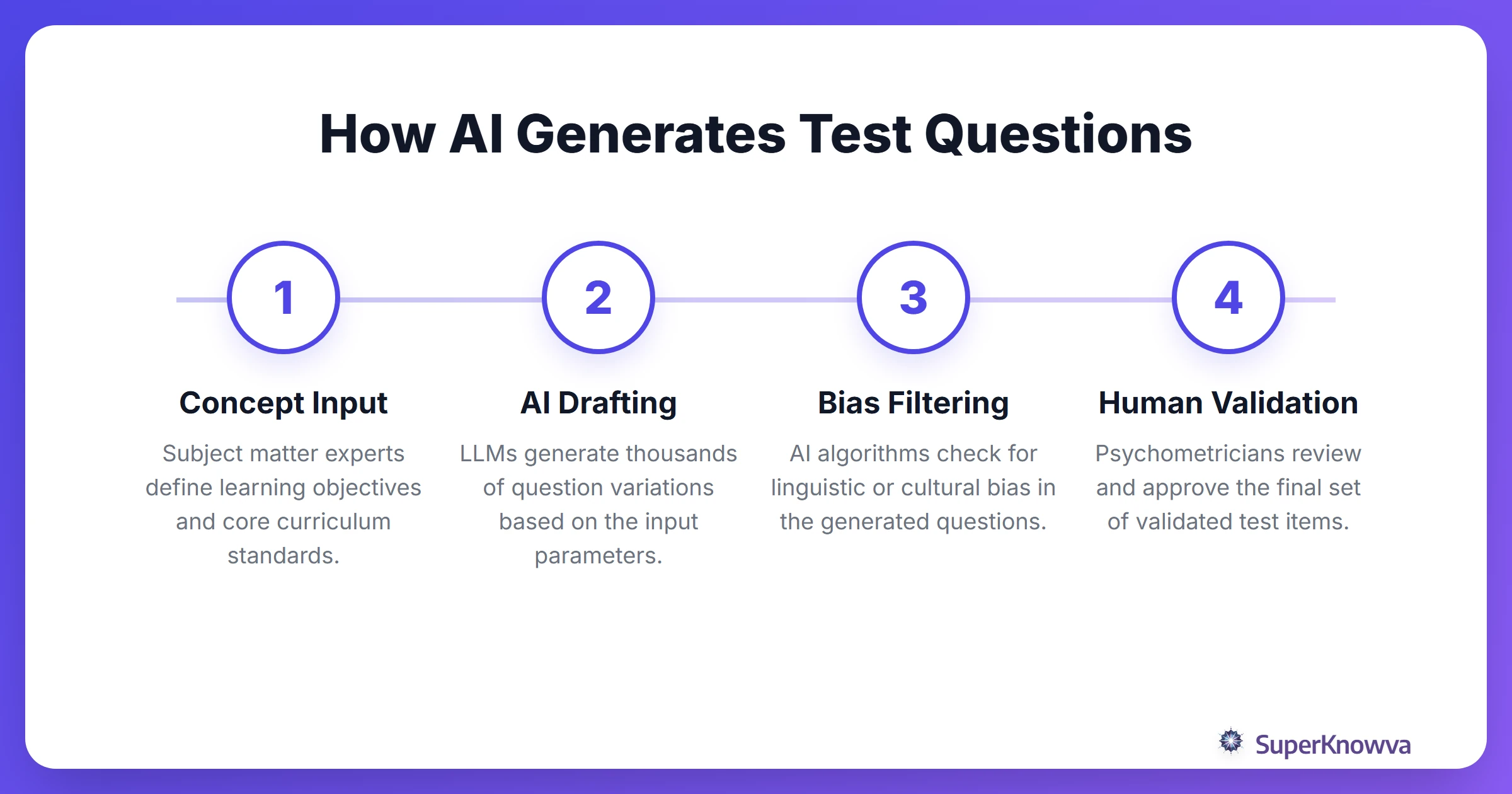
This isn't just about speed, though. It’s about fairness. AI can scan questions for subtle linguistic or cultural biases that might accidentally disadvantage certain students. Plus, it allows us to move past boring multiple-choice bubbles. We’re seeing a shift toward interactive, performance-based tasks that actually look like real-world challenges. And because the question bank is constantly evolving, the old problems of "leaked" test papers and cheating are becoming a thing of the past.
Beyond the Score: Measuring Higher-Order Thinking
We’ve all heard the complaint: standardized tests reward rote memorization, not actual intelligence. AI is finally changing that narrative by enabling automated test scoring for complex, open-ended answers.
Instead of just checking if you filled in the right circle, AI can now:
- Trace your logic: It can track the specific steps you took to solve a problem, not just the final answer.
- Read between the lines: It can grade essays with a level of consistency that matches human scorers, focusing on how you structure an argument and your capacity for AI for creative problem solving.
- Test your grit: Through simulations, AI can evaluate how you handle critical thinking under pressure.
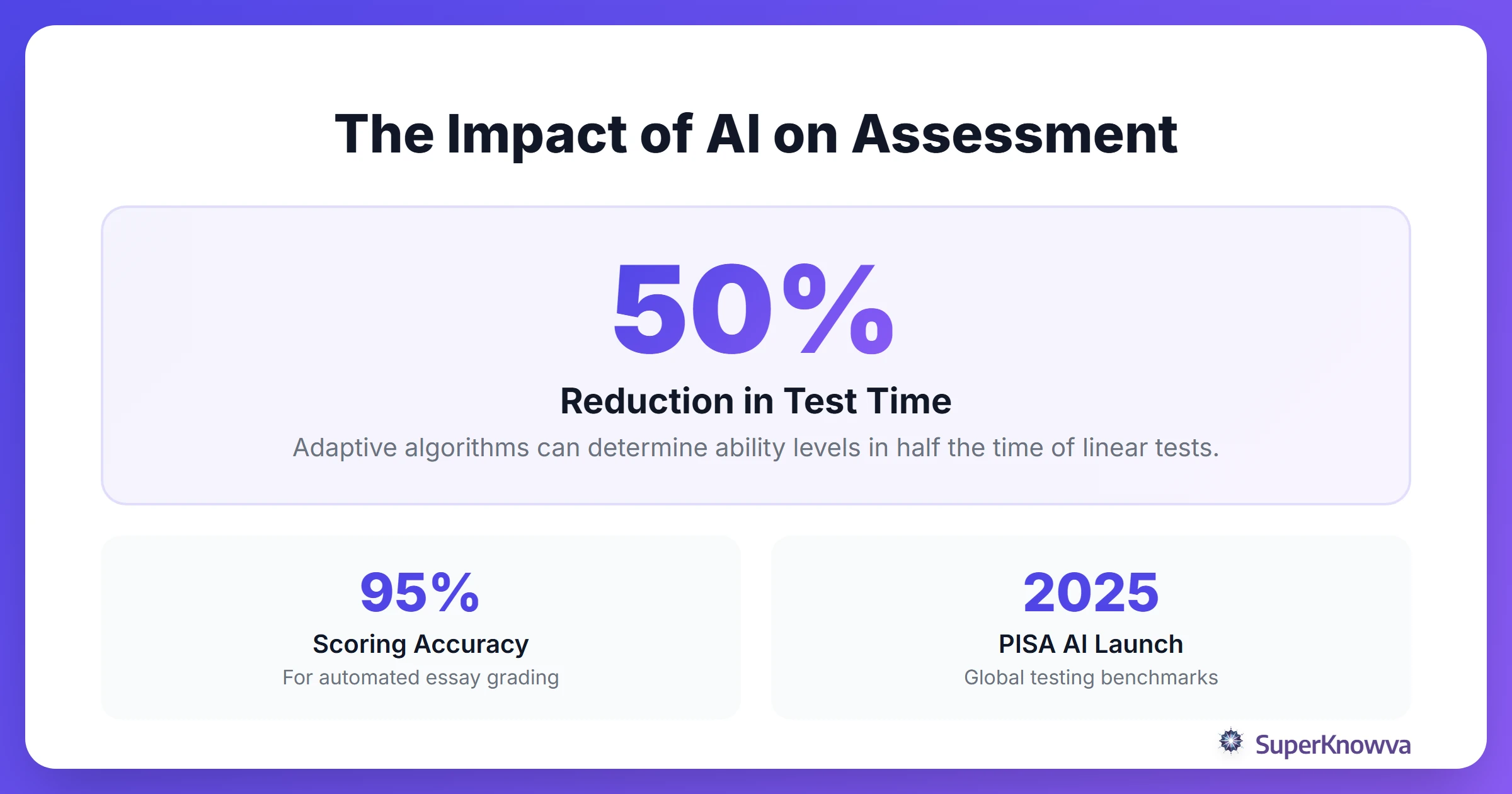
Look at the PISA 2025 experiment. They’re using AI-driven tasks to set new global benchmarks for what students can actually do with their knowledge, rather than just what they can remember for an hour.
The Role of AI in Test Security and Remote Proctoring
Let’s be honest: remote testing can feel a little "Big Brother." As education moves online, maintaining integrity is a huge hurdle. AI-proctored exams have become the standard fix, using webcams to monitor environments for unauthorized materials or "outside help."
But there’s a delicate balance to strike here. No one wants to feel like a robot is judging their every eye movement. The goal for the next generation of proctoring is to be "invisible," detecting actual patterns of cheating without spiking a student’s stress levels. By focusing on behavior patterns rather than just flagging every blink, AI helps keep the playing field level for everyone.
Improving Accessibility and Reducing Test Anxiety
This is arguably the most important part of the AI revolution: making testing inclusive. For too long, standardized tests have acted as a wall for students with different learning needs. Now, AI supports students with disabilities by providing accommodations that used to be impossible to do at scale.
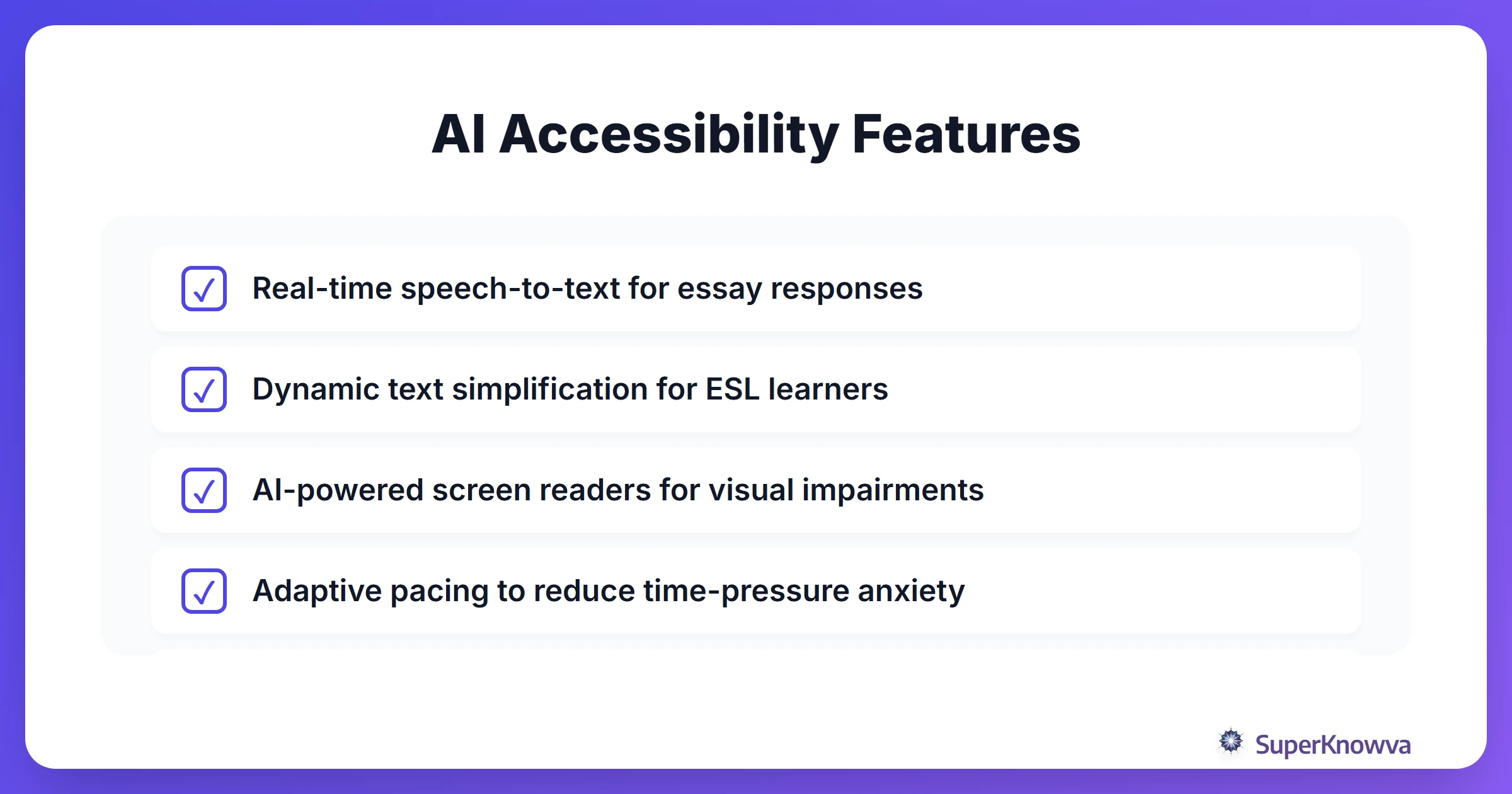
AI interfaces adapt to a student’s specific needs in real-time by offering text-to-speech, simplifying complex language for ESL learners, or adjusting the pace. Because AI provides instant feedback, the stress of waiting weeks for a score is decreasing. Students can use AI for test anxiety reduction tools to practice in a low-pressure setting, building confidence before an exam.
The Future: Will Standardized Testing Become Obsolete?
So, is the "big test" going away for good? Not quite, but it is changing shape. Many experts believe we’re moving toward something called "stealth assessment." In this world, learning and testing happen at the same time within your educational software. Instead of one giant exam at the end of the semester, your progress is measured continuously as you master new concepts.
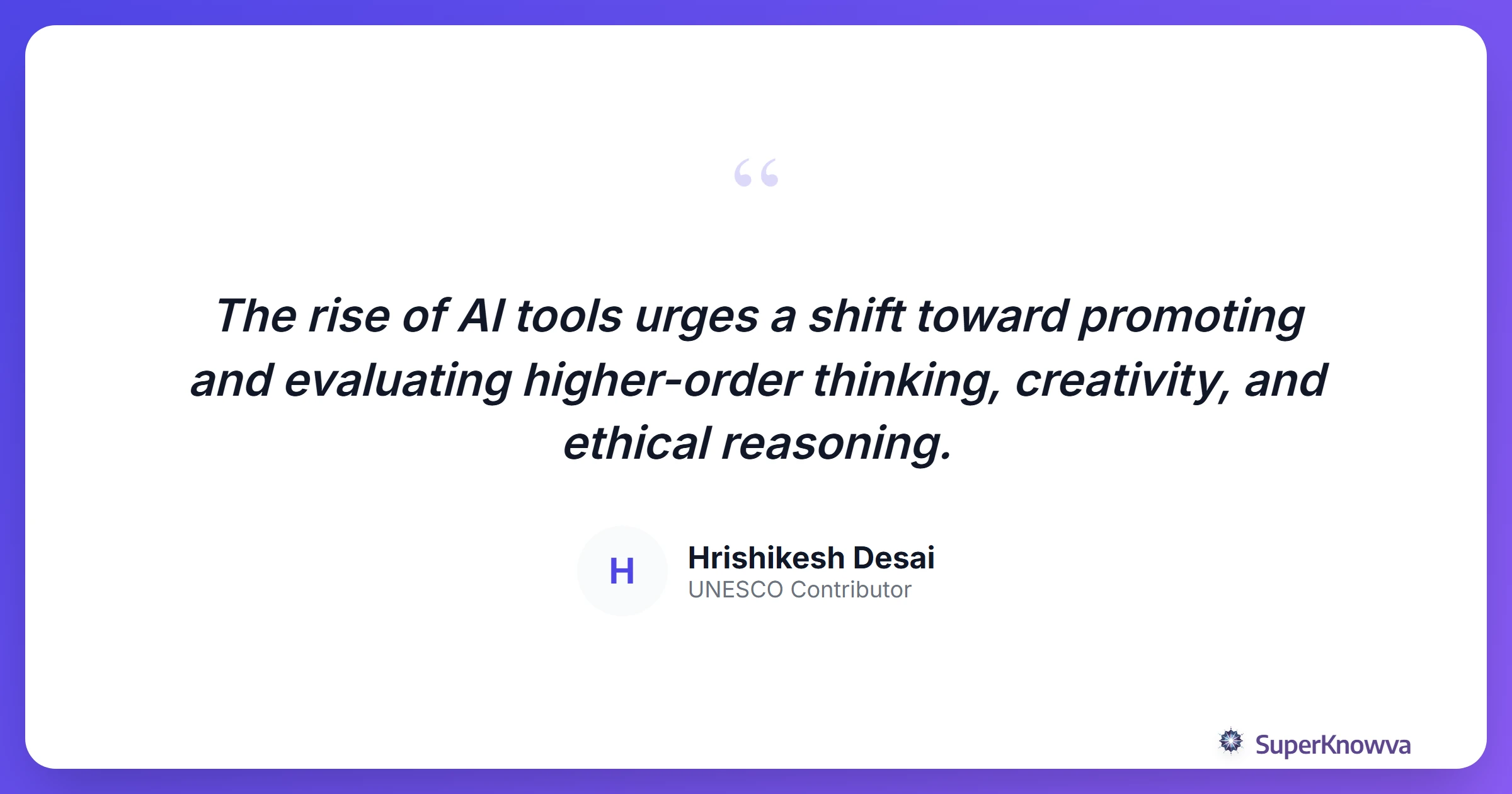
While the tech is impressive, human oversight is still the heart of the system. Whether we’re looking at AI tutors vs. human tutors or AI graders vs. human professors, the best results come from a partnership. Technology handles the data; humans provide the context, the empathy, and the "why."
If you want to see how these global conversations are unfolding, take a look at UNESCO: The Future of Assessment in the AI Age or dive into the debate at EdSurge: Will AI Make Standardized Tests Obsolete?.
Effective testing focuses on making questions smarter instead of harder. AI helps students demonstrate their actual capabilities.