Walk into almost any classroom and you will see a system built for a person who does not exist: the "average" student. For decades, education has been designed for a theoretical student who processes information linearly and thrives under standardized instruction. For those with ADHD, dyslexia, or autism, this rigid model is a barrier.
We are finally moving past the era of "fitting in." With AI for neurodivergent students, we aren't just adding another gadget to the backpack; we are fundamentally leveling the playing field. It’s about moving away from a rigid system and using technology to mold that system around your unique cognitive profile.
Beyond the 'Average' Student: The Shift to Personalized AI
Traditional education has a major flaw: when the curriculum is fixed, students who think outside the box are the ones who get left behind. AI is flipping the script by making Universal Design for Learning (UDL) the new standard.
Think of UDL as a framework that offers different ways to engage with a subject. AI is the engine that makes this possible for everyone, not just those with a specialized tutor.
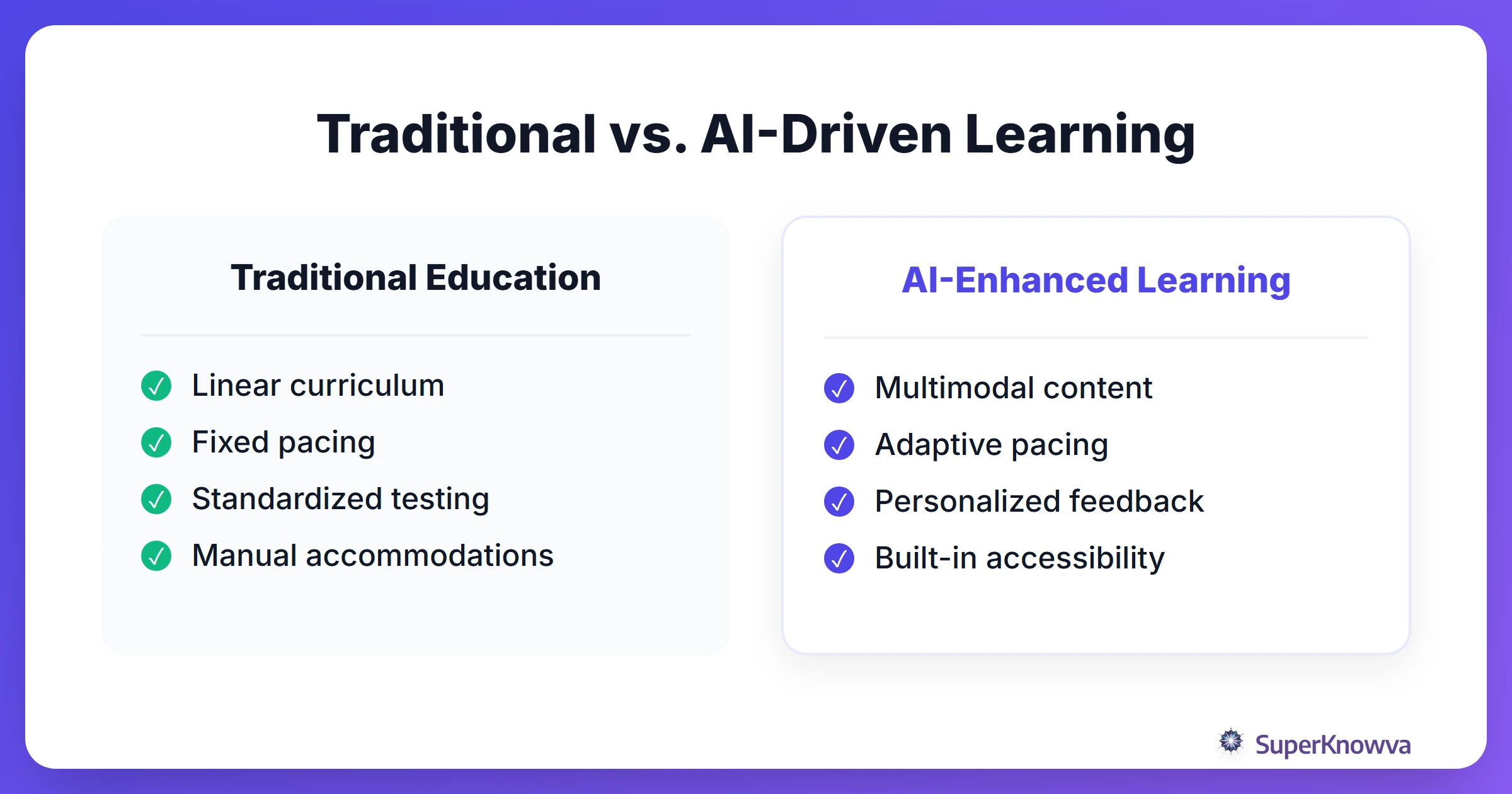
Think of AI as an "auxiliary brain." It isn’t there to do the work for you. Instead, it provides the structural support and scaffolding that neurodivergent learners often need to reach their potential. This move toward inclusive learning for students with disabilities ensures that your grade reflects how well you know the material, not how well you can handle a system that wasn't built for you.
Personalized Paths: Supporting ADHD and Executive Function
If you have ADHD, you know the struggle isn't about intelligence. It’s about executive dysfunction. It’s that "task paralysis" where a single assignment feels like an unclimbable mountain, and you can’t even figure out where to put your first step.
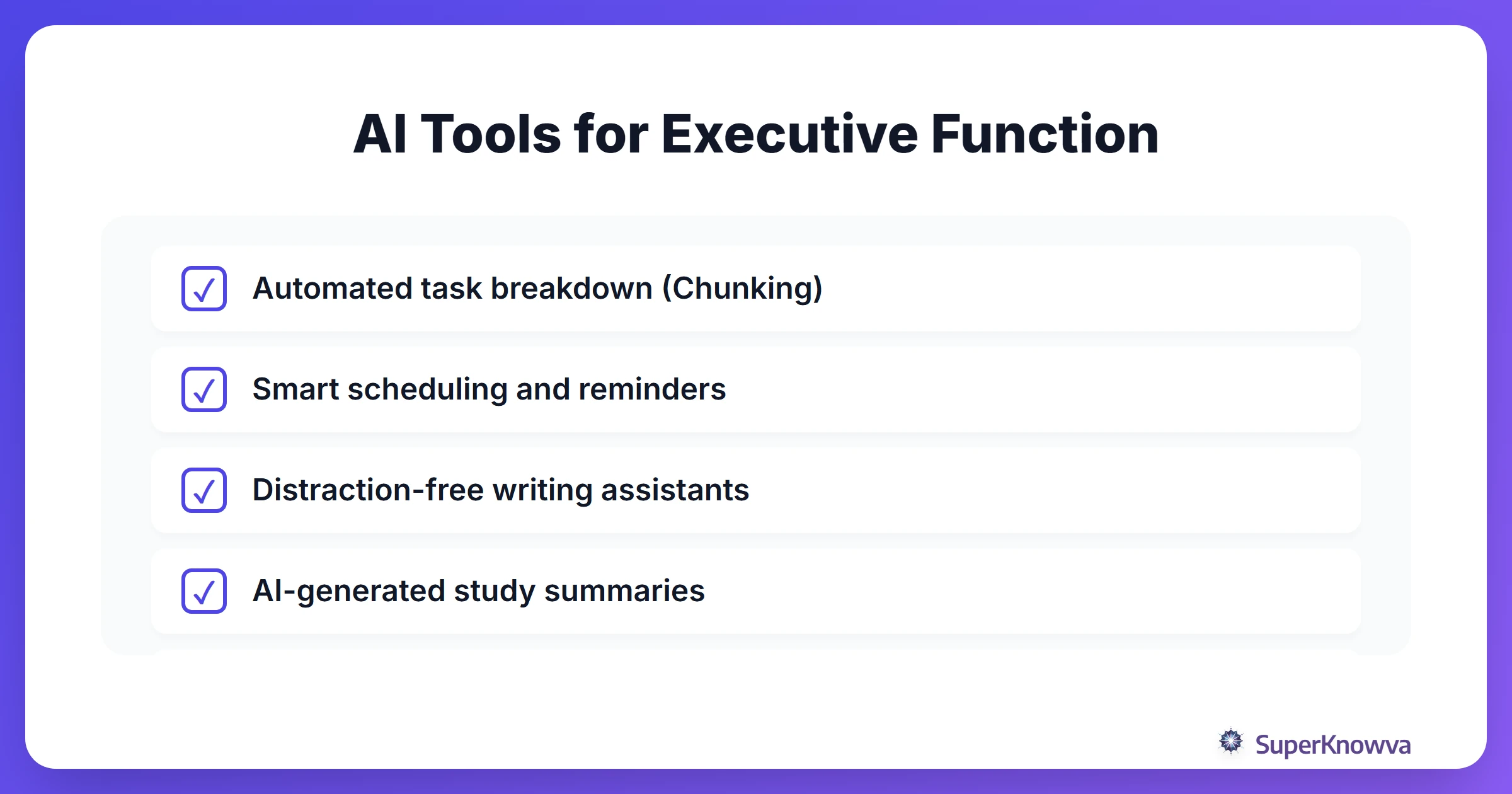
AI tools are changing the game for executive function:
- Smart Chunking: AI can take a terrifying 10-page syllabus and instantly break it down into tiny, bite-sized steps. It turns "Write Thesis" into "List three main arguments."
- Realistic Time Management: Ever lose track of time? Smart scheduling tools use AI to predict how long a task will actually take based on your past habits, cutting down that last-minute deadline panic.
- The Safety Net: An AI-powered note-taking guide acts as a backup. If your mind wanders for five minutes during a lecture, you don't have to worry about missing the core concepts. The AI has your back.
Breaking Barriers: AI for Dyslexia and Visual Learning
Did you know that 70% of neurodivergent children thrive with visual supports? Despite this, most academic content is still just... walls of text. For students with dyslexia, decoding those walls is exhausting. By the time you’ve finished reading the paragraph, you’re often too tired to actually process what it meant.
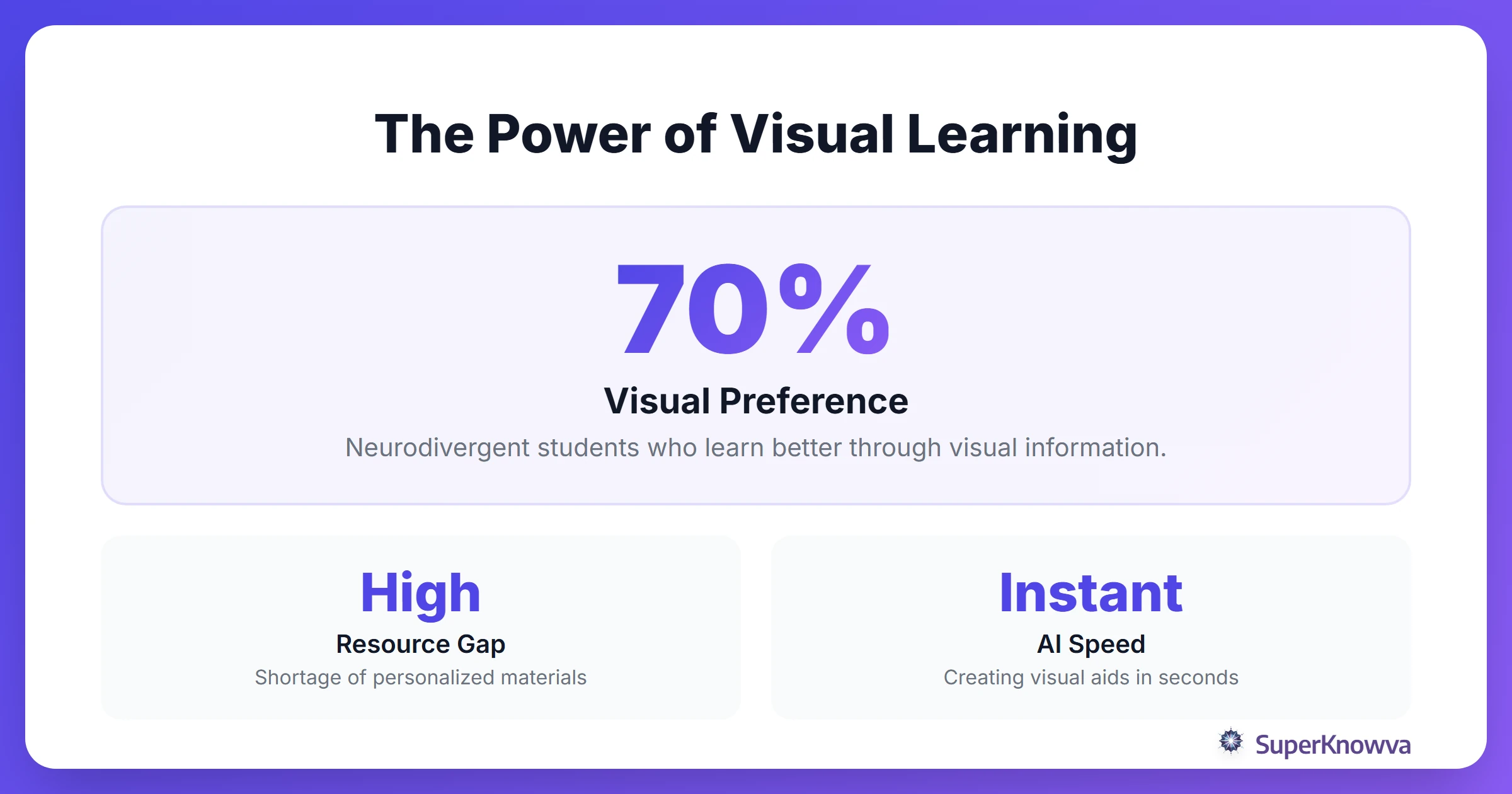
AI is bridging this gap. It can instantly transform a dense chapter into an interactive mind map, a diagram, or a visual summary. Plus, text-to-speech (TTS) technology has evolved past the "robot voice" stage. Modern AI tools for visual learners allow you to consume information through your strongest senses, turning a frustrating reading chore into a multimodal experience that actually sticks.
The Detection Dilemma: When AI Bias Flags Neurodivergent Writing
As we integrate these tools, we have to talk about a new hurdle: AI writing detection bias.
It’s a frustrating paradox. Many neurodivergent students, particularly those on the autism spectrum, naturally write in a way that is direct, highly structured, and formal. Ironically, these are the exact traits that many "AI detectors" are trained to flag as "non-human."
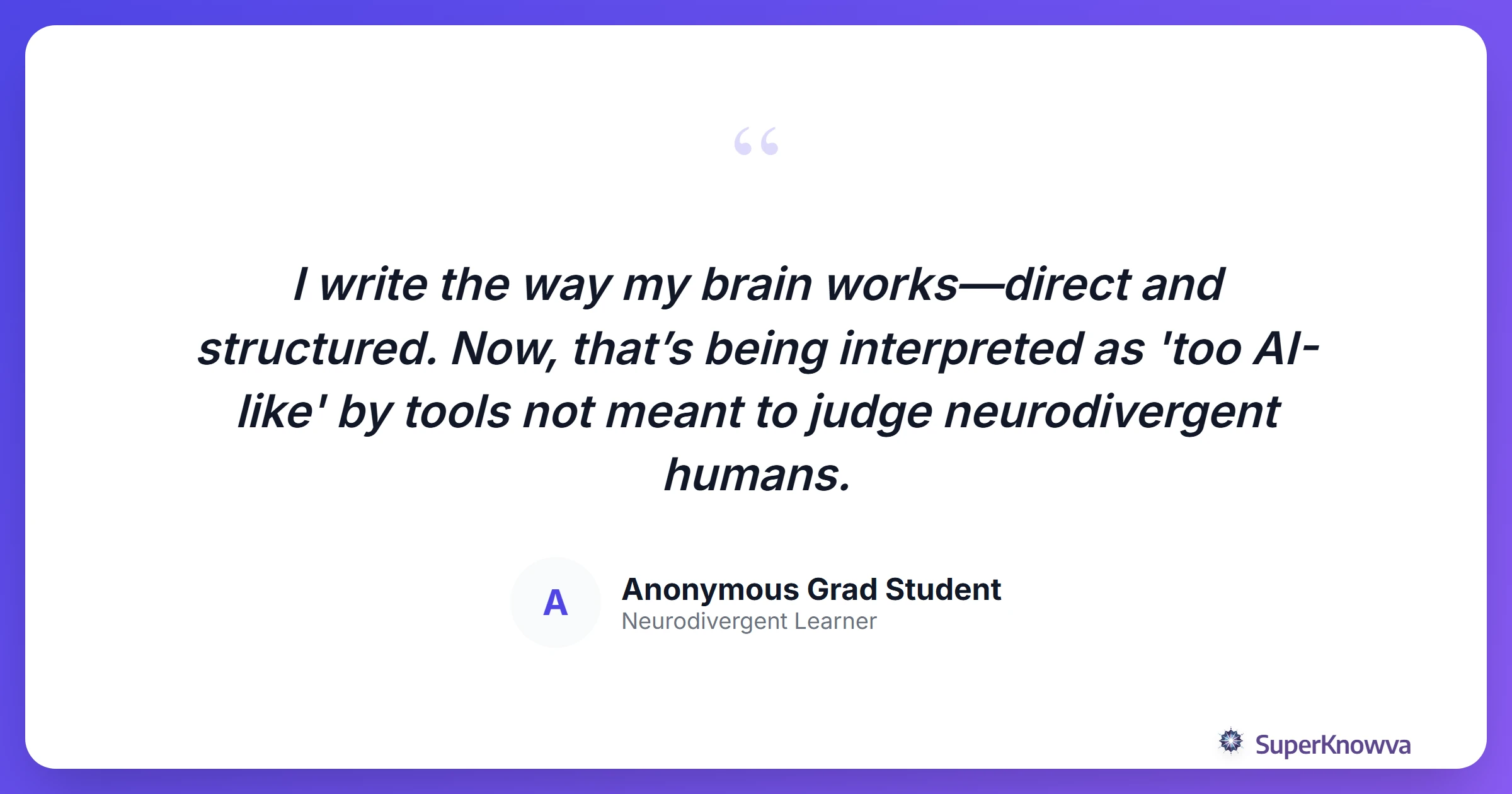
This creates a "Detection Dilemma." Students who are already working twice as hard are being unfairly accused of cheating just because of their natural writing style. This added stress is a massive contributor to student burnout. While we work on reducing test anxiety with AI, we must also advocate for academic policies that recognize that "standard" writing looks different for everyone.
STEM Accessibility: Making Science and Math Interactive
STEM subjects (Science, Technology, Engineering, and Math) are often full of abstract formulas that can feel impossible to visualize. Organizations like Benetech are now using AI to make these materials accessible for everyone.
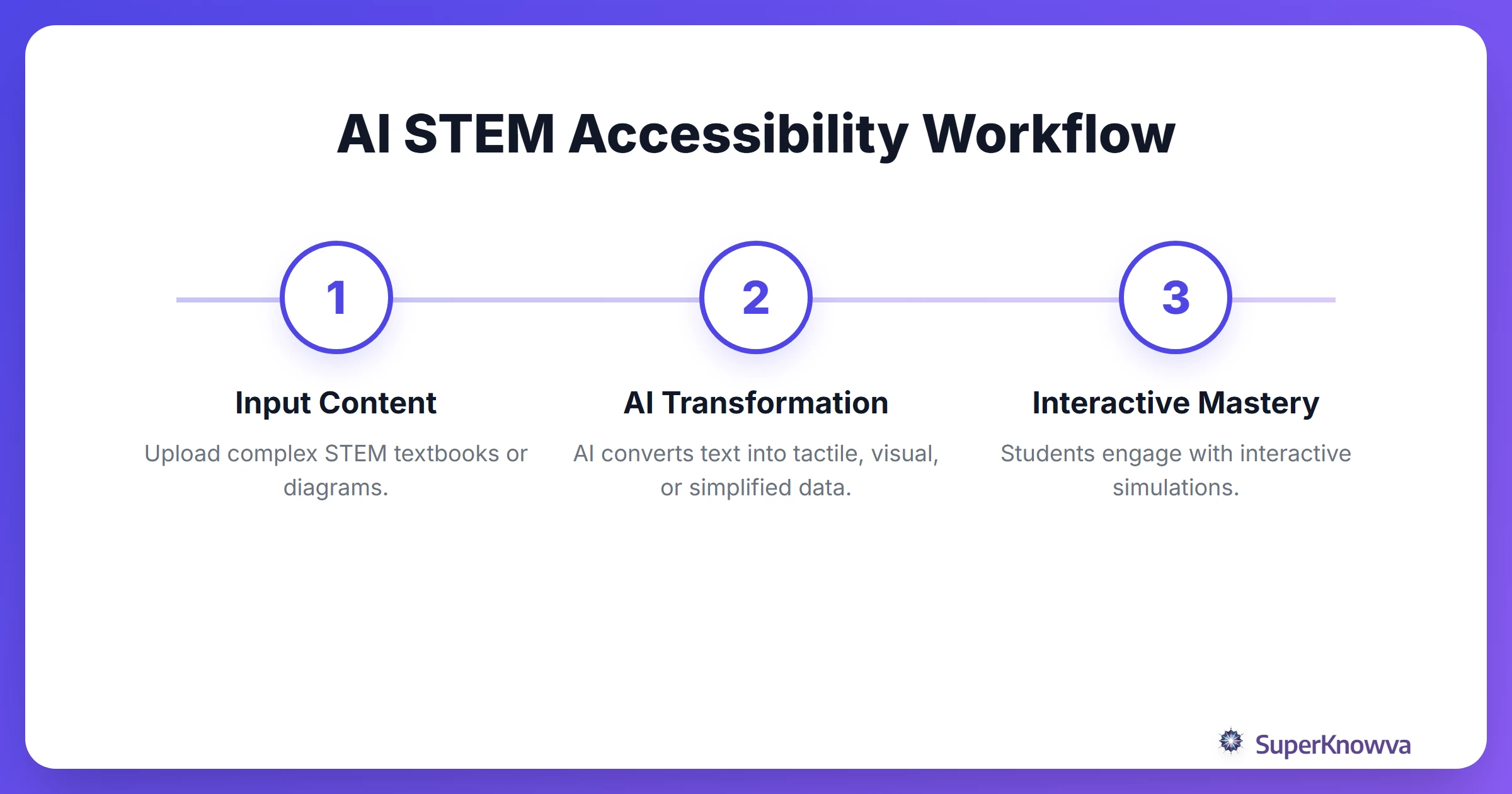
AI transforms static physics equations into interactive simulations. Students can visualize gravity or manipulate variables directly. As noted by GovTech: AI for STEM Accessibility, these tools are essential infrastructure for an inclusive lab, not just optional features.
Building an Inclusive Future: Strategies for Parents and Educators
How do we make sure this technology actually helps? It takes a bit of strategy:
- Look for Customization: When picking a tool, check for "distraction-free" modes or adjustable fonts (like OpenDyslexic).
- Keep a 'Human-in-the-Loop': AI is a brilliant assistant, but it’s not a replacement for a mentor. Use AI to generate study guides, then review them with a teacher to make sure they hit the right marks.
- Own the Accommodations: Encourage students to see AI as a legitimate tool, no different from a calculator or a quiet room for testing.
As this Forbes article on AI transforming education points out, the goal is to give students agency. It’s about helping students understand how their brain works and giving them the tools to let it shine.
AI-driven personalization ensures every student, no matter how their brain is wired, has the opportunity to succeed.