For a long time, academic success was something you could buy. If a student struggled with calculus or the SAT, the solution was simple for those with deep pockets: hire a private tutor. For millions of other students, that door was locked.
We are finally seeing those walls come down. By democratizing education through AI, we’re shifting the focus away from how much a student can pay and toward how much they want to learn. At SuperKnowva, we believe your zip code or your parents' bank account shouldn't decide your future.
Here is how AI is finally leveling the playing field.
The End of the 'Private Tutor' Privilege
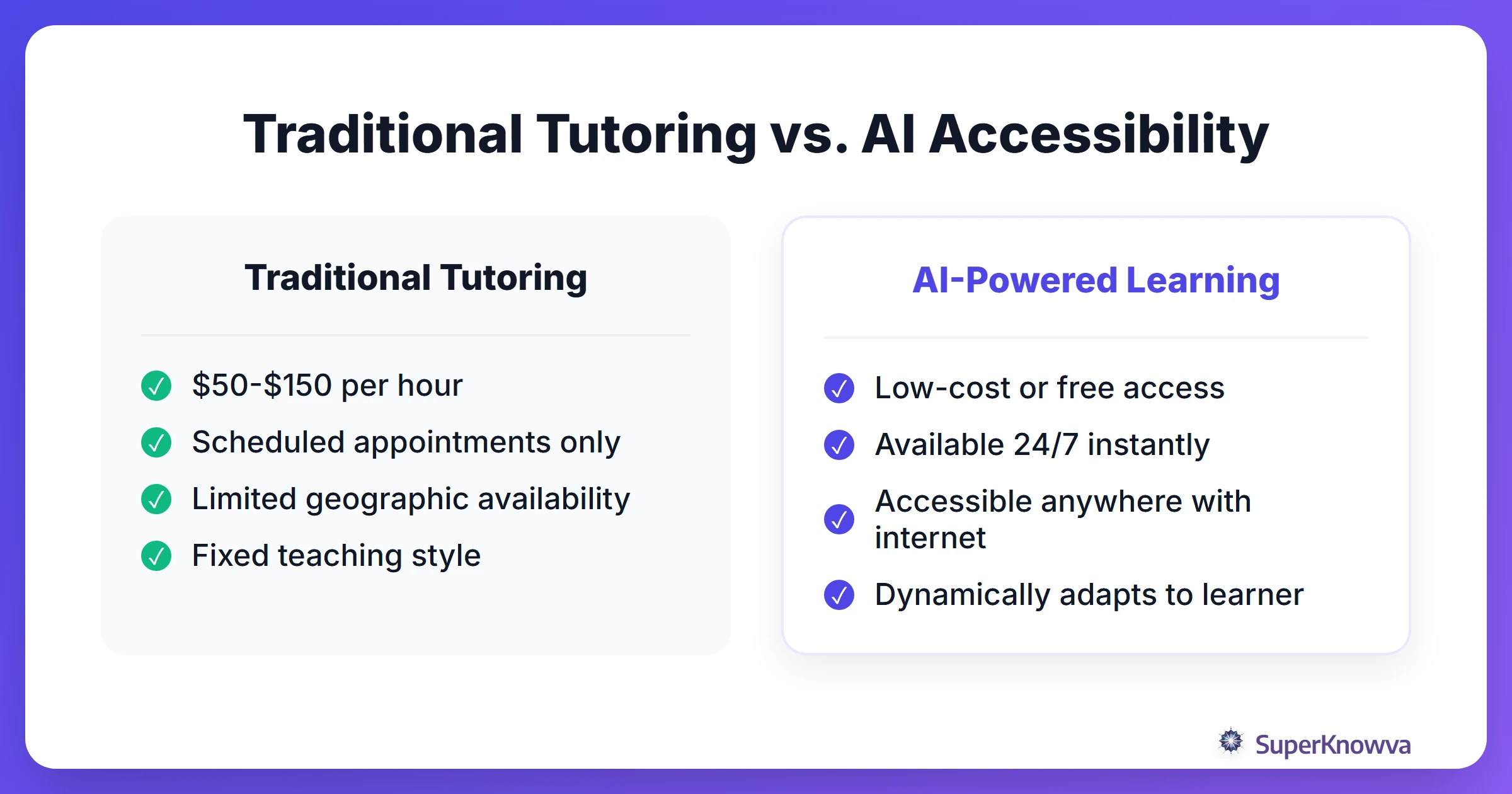
Let’s be honest: there has always been a "tutoring gap." High-quality, one-on-one instruction used to be a luxury reserved for the wealthy. Everyone else was left to sink or swim. AI is flipping that script. It provides 24/7 personalized support for a tiny fraction of what a human tutor costs.
When you look at AI tutors vs. human tutors, the biggest difference is availability, not just the price tag. A human tutor doesn’t answer the phone at 3:00 AM when you are panicking before a final. AI does. Whether it’s a quick question during a lunch break or a thorough study of a complex theory in the middle of the night, high-quality resources are now available to anyone with an internet connection.
Personalized Learning That Actually Scales
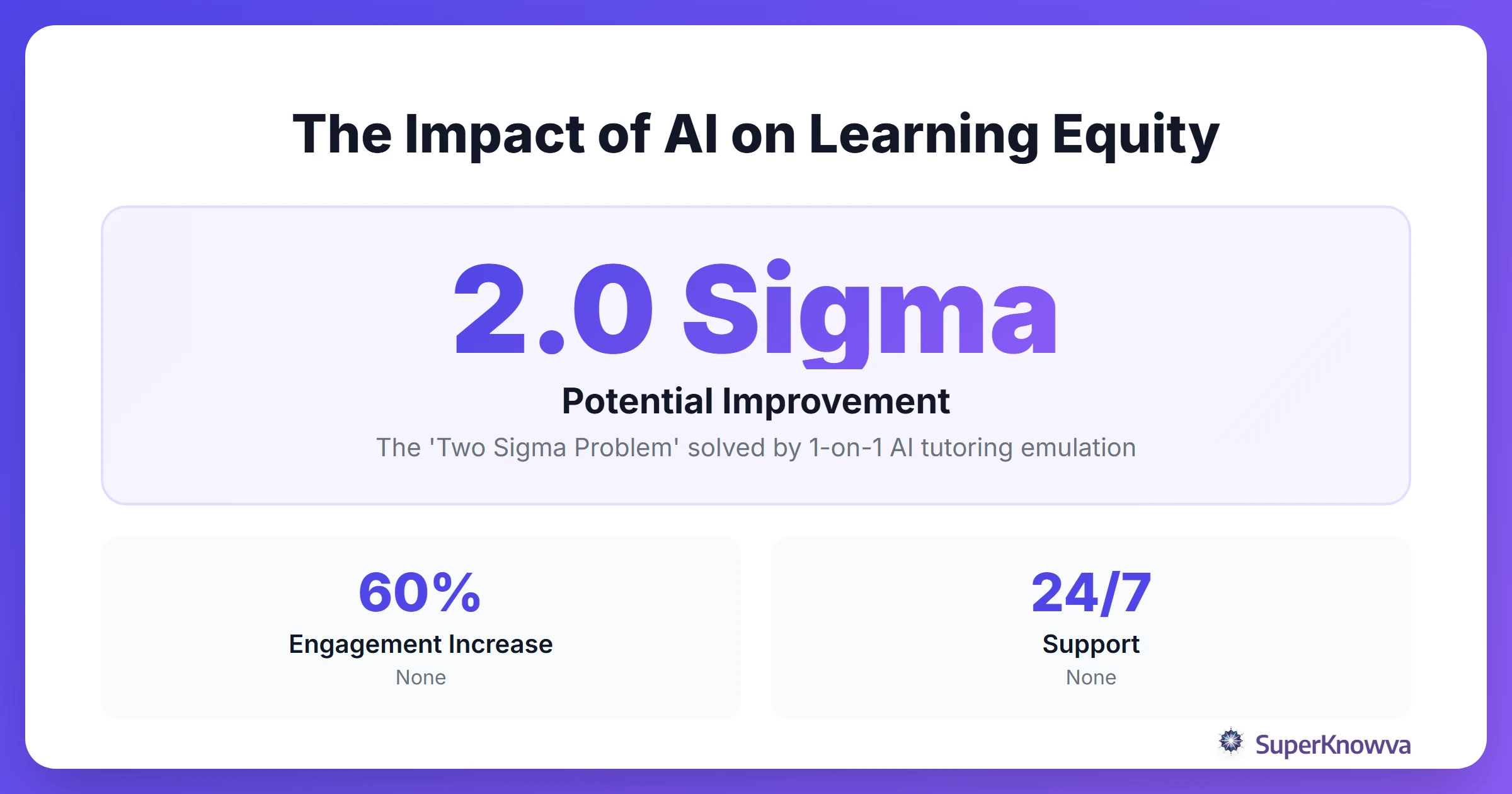
Back in the 80s, psychologist Benjamin Bloom pointed out a massive problem: students who received one-on-one tutoring performed two standard deviations better than those in a traditional classroom. He called it the "2 Sigma Problem." For decades, we knew what worked, but we couldn't figure out how to give every child a personal tutor.
AI is the answer we’ve been waiting for. It adapts to you. If you’re a visual learner who needs a diagram to "get" a concept, the AI provides it. If you prefer a step-by-step spoken explanation, it can do that too. Plus, using AI tools for reducing test anxiety allows students to practice in a low-stakes environment. You can make mistakes, ask "dumb" questions, and struggle productively without ever feeling judged. That’s how real mastery happens.
Inclusive Education: No Student Left Behind
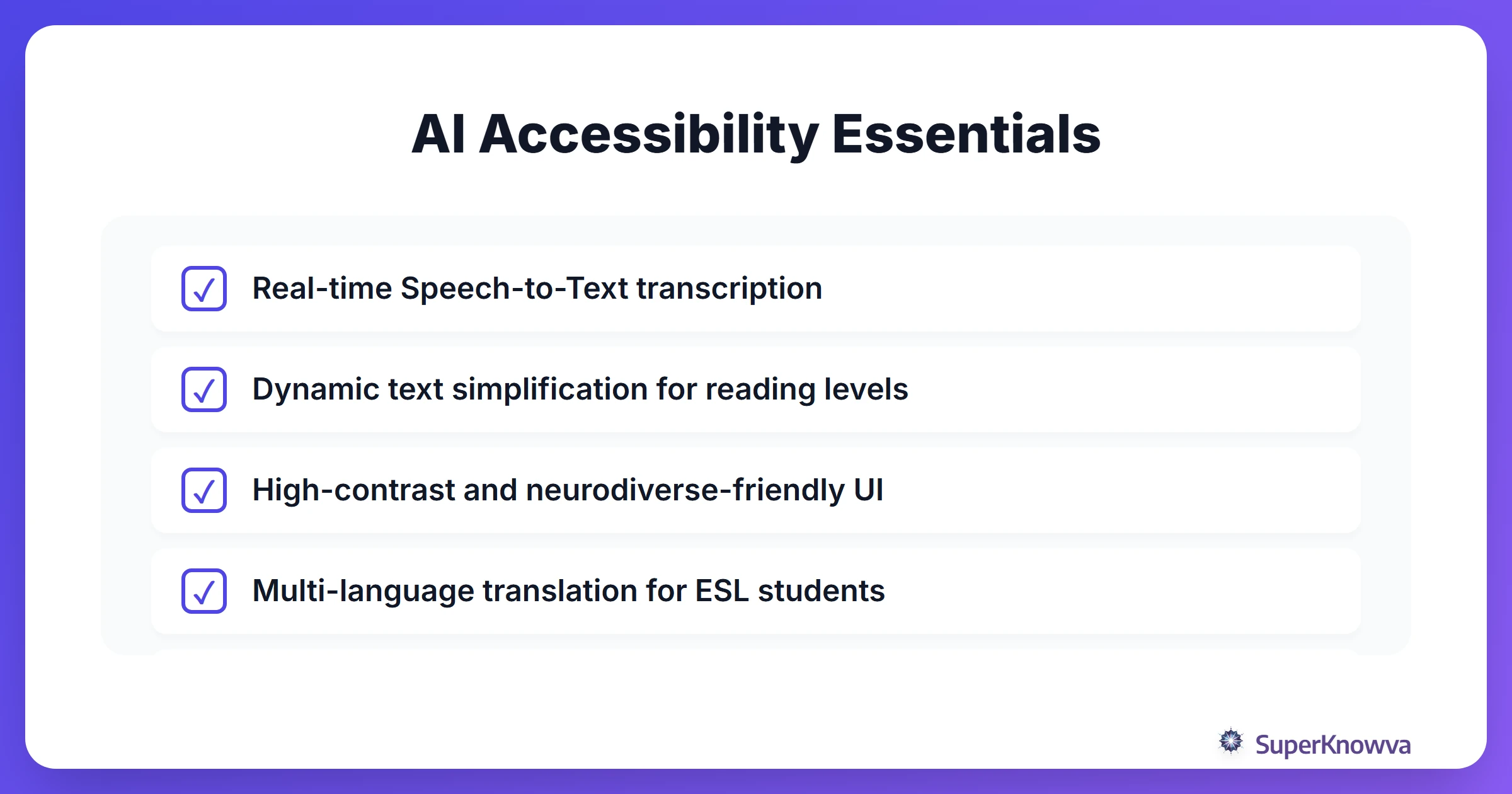
Perhaps the most important part of this tech revolution is happening in special education. AI isn't just a convenience; it’s a lifeline for inclusive learning for students with disabilities.
Think about a student with dyslexia. AI can instantly simplify a wall of text or change the interface to be neurodiverse-friendly. For students with ADHD, AI-powered note taking removes the stress of trying to write and listen at the same time, allowing them to actually engage with the material. By translating speech to text and back again in real-time, AI ensures that physical or neurological barriers no longer stand in the way of a great education.
The Rise of Generative Textbooks
We’ve all been there: shelling out hundreds of dollars for a textbook that’s already out of date by the time you buy it. The traditional textbook industry is broken.
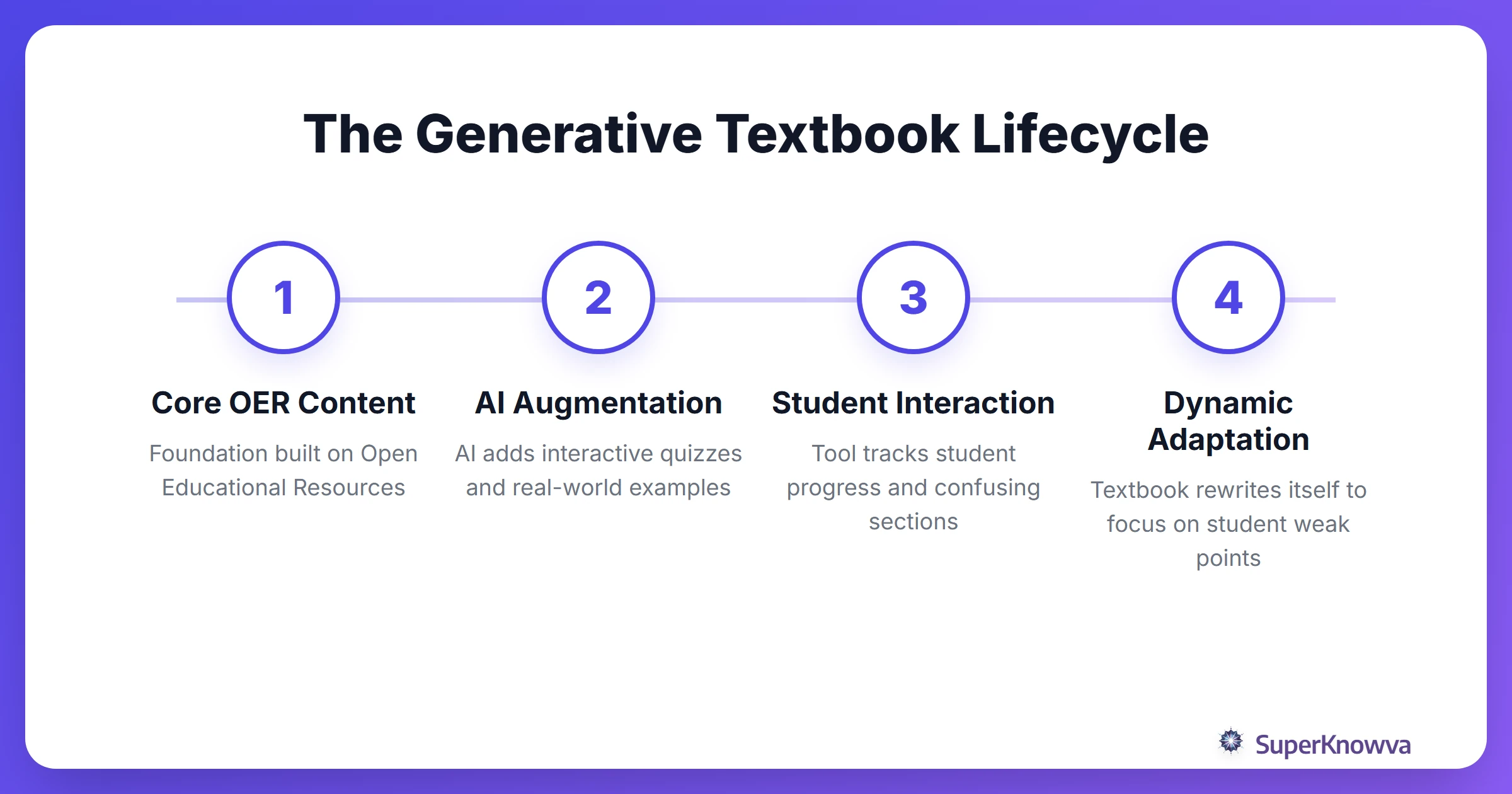
Enter the Generative Textbook. These aren't static pages; they are dynamic, AI-updated materials that grow with the learner. By combining generative AI with Generative Textbooks and OER, we can create custom learning paths. Imagine a textbook that pulls in the latest scientific breakthroughs from this morning or explains a political event that happened yesterday. It keeps the curriculum fresh without forcing families to buy "New Editions" every single year.
AI Literacy: The New Survival Skill
As AI weaves its way into every career path, AI literacy is becoming just as vital as reading and writing. To truly democratize education, we have to teach students how these tools actually work.
Projects like the MIT Impact.AI Project show why K-12 AI literacy is urgent. It is not just about using tools; it is about using them ethically. Students need to know how to spot errors, how to fact-check outputs, and how to use effective prompts to get the best results. In the 2030s, career readiness will involve more than what you know; it will depend on how well you work with AI.
Facing the Paradox and the Digital Divide
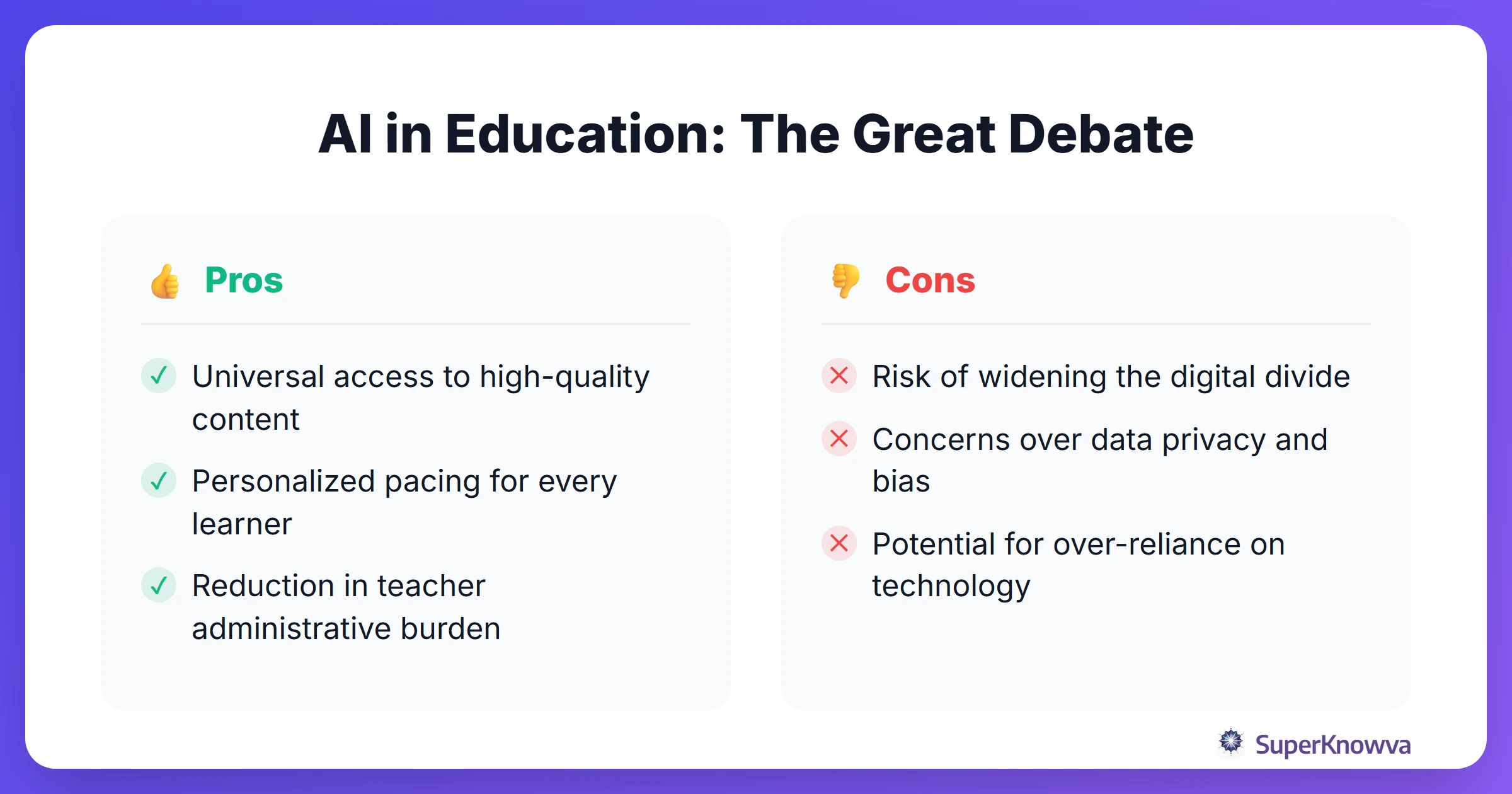
Of course, it’s not all sunshine and rainbows. We have to talk about the "AI Paradox." There is a tension between schools using AI to catch "cheaters" and students using AI to actually learn. We need to stop focusing on automation and start focusing on AI-augmented learning.
And we can't talk about democratization without talking about the digital divide. High-tech tools don't mean much if you don't have high-speed internet. We have to keep pushing for better infrastructure in rural and underserved areas. At the same time, we must be obsessed with data privacy to ensure that a student's information is never the price of their education.
Conclusion
The days of education being an "exclusive club" are numbered. We are stepping into a world where world-class tutoring and personalized curriculums are available to every student, everywhere.
At SuperKnowva, we are part of this shift. We do more than help students pass their next test; we are building a future where curiosity drives learning.