Ever feel like your brain is operating on a completely different frequency than the classroom around you? For many, the traditional school setup feels less like a place to learn and more like a rigid maze. Whether it’s the paralyzing fog of a chaotic schedule or the sheer frustration of staring at a "wall of text" that just won't sink in, the standard approach to education often leaves brilliant thinkers behind.
AI for neurodivergent learners provides personalized tools that move away from "one-size-fits-all" instruction. These resources turn overwhelming academic hurdles into manageable steps.
At SuperKnowva, we believe your learning environment should adapt to you, not the other way around. By using AI, we can build the structure, visual clarity, and flexibility you need to stop just surviving your classes and start actually thriving in them.
Bridging the Executive Function Gap with AI
Executive function is basically the "air traffic control" system of your brain. It’s what helps you plan, focus, and juggle three different assignments at once. But for many, especially when looking at AI for ADHD students, those signals can get crossed. "Time blindness" is real, and a vague syllabus can feel like a mountain you have no idea how to climb.
Think of AI as an external "backup brain." It provides the scaffolding you need to manage the messy parts of student life. Instead of staring at a deadline in a panic, you can use AI to:
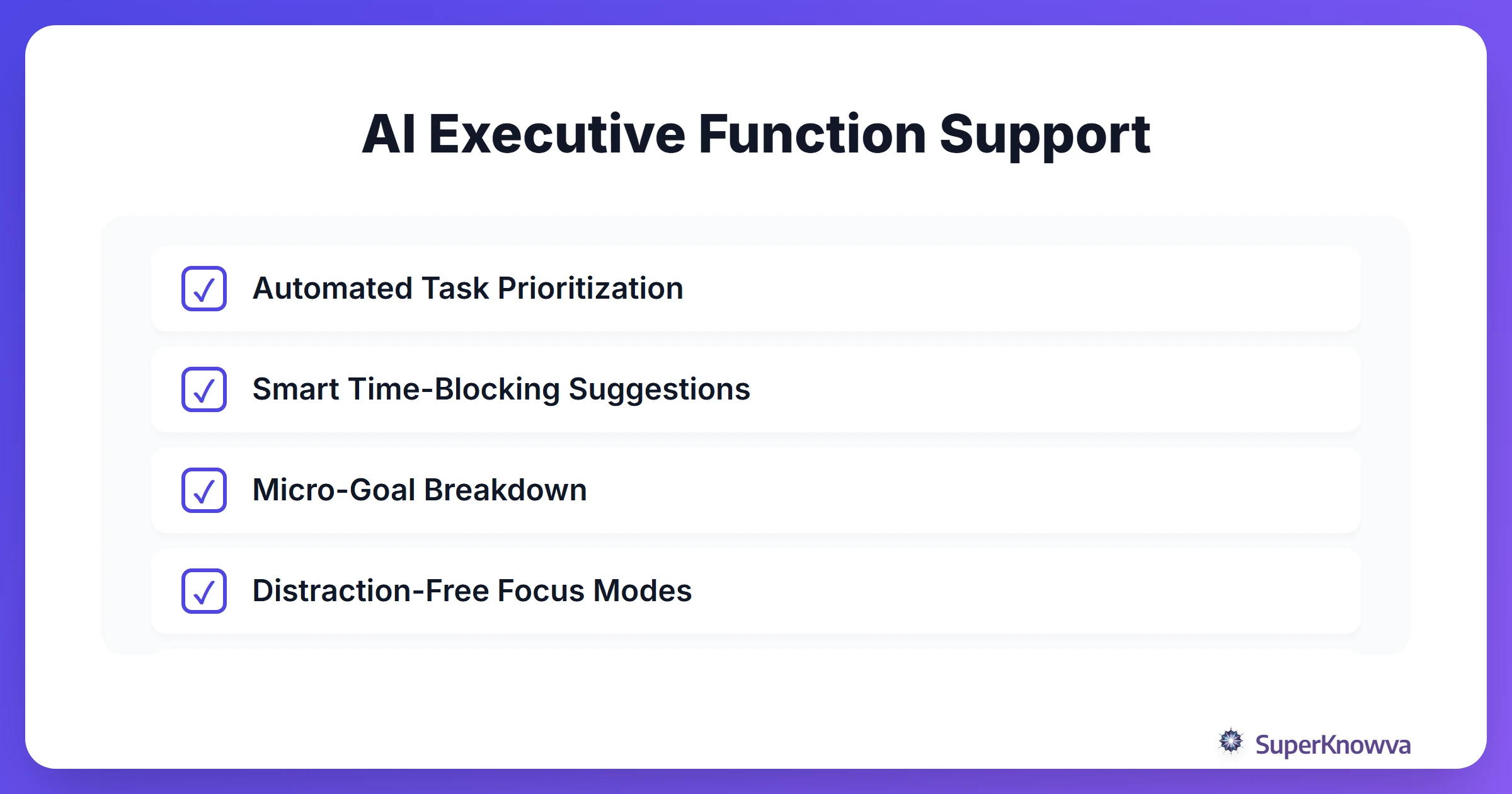
- Prioritize the Chaos: Automatically sort your to-do list by what’s actually due first and what’s going to take the most brainpower.
- Deconstruct Projects: Turn a scary "10-page research paper" into twenty 15-minute micro-tasks. It’s much easier to start when the first step is just "write three sentences."
- Adaptive Reminders: Get nudges that actually make sense. If you’re ahead of schedule, the AI stays quiet. If you’re stalling, it steps in to help you get back on track.
When you reduce the mental energy required just to start a task, you save your best work for the actual learning.
Visual Learning and STEM Accessibility
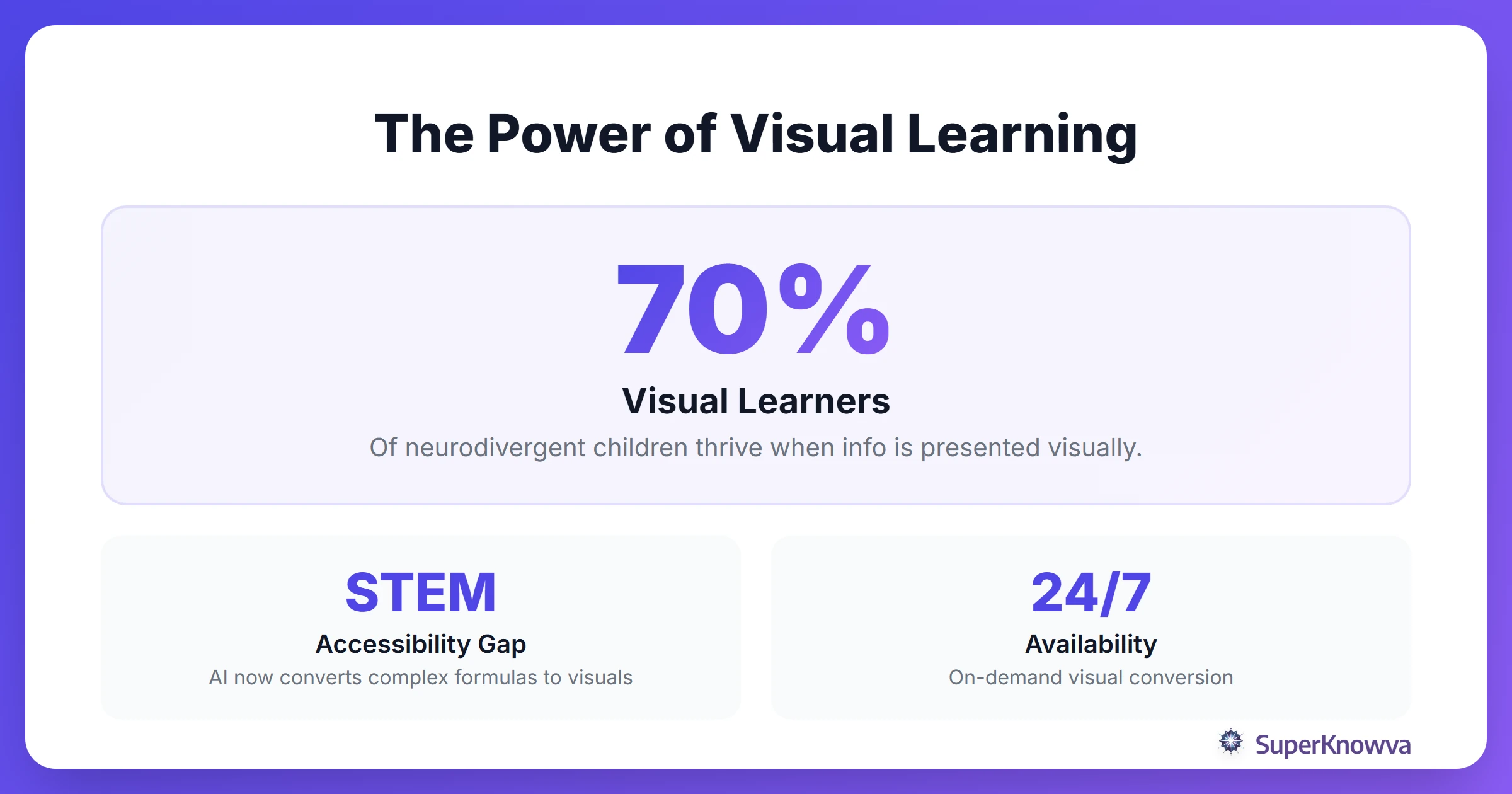
Does a page of dense text make your eyes glaze over? You aren't alone. Research shows that 70% of neurodivergent children thrive when information is presented visually, according to recent findings published in Forbes. This is a huge deal in STEM, where abstract formulas and complex theories can feel impossible to parse in a standard textbook.
AI is finally closing this gap. There are now specific AI for Visual Learners: Tools and Techniques that transform the way we see data. Modern platforms can take a confusing physics chapter and instantly turn it into an interactive diagram or a 3D model. For instance, Benetech is using artificial intelligence to rewrite STEM materials into accessible formats, ensuring your math skills aren't held back just because you struggle to read a static PDF.
AI-Powered Note Taking: Ending the "Dual-Tasking" Struggle
For dyslexic learners, the classroom can feel like a constant tug-of-war. You’re trying to listen to the professor, but you’re also trying to spell "photosynthesis" correctly in your notebook. By the time you’ve finished writing the sentence, you’ve missed the next three points the teacher made. It’s exhausting.
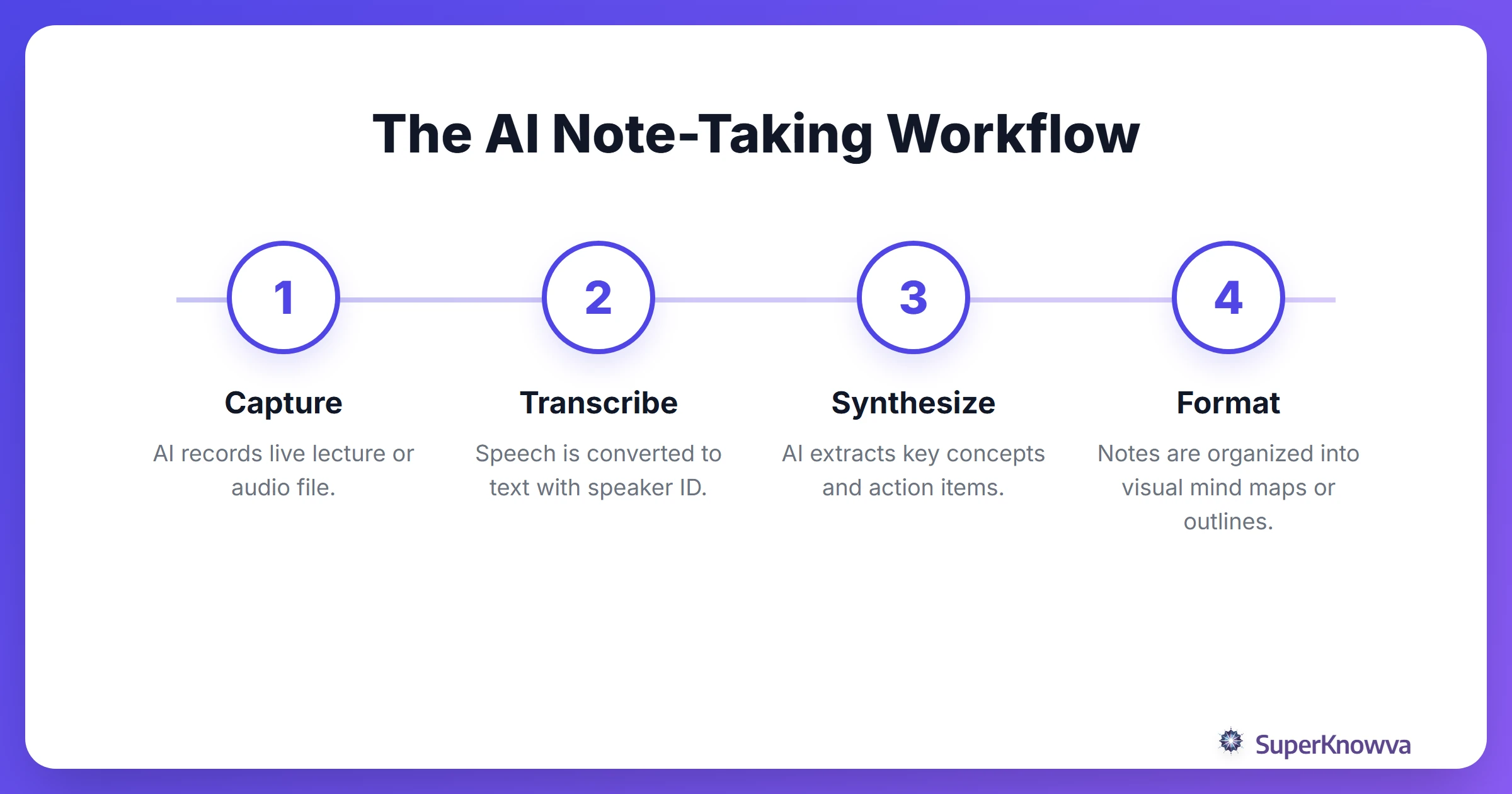
This is where AI-Powered Note Taking: A Comprehensive Guide changes everything. Dyslexia support tools allow you to record the lecture while the AI handles the heavy lifting of transcription in real-time.
Once class is over, the AI can:
- Summarize the "Big Ideas" so you don't have to listen to an hour of audio again.
- Pull out action items like "Exam on Friday" or "Read Chapter 4."
- Build a custom study guide based on what was actually said, letting you focus on understanding the concept rather than just transcribing it.
Reducing Anxiety with a Patient AI Tutor
Social anxiety is a massive, often invisible barrier. Many neurodivergent students hesitate to raise their hands. Maybe you’re worried you’re moving too slowly, or you’re tired of asking for the same thing to be explained one more time.
AI tutors offer a judgment-free zone. They don't get tired, they don't have a bus to catch, and they never get frustrated. This is particularly helpful for AI for Test Anxiety Reduction: Strategies and Tools. You can ask the same question ten different ways until it finally clicks.
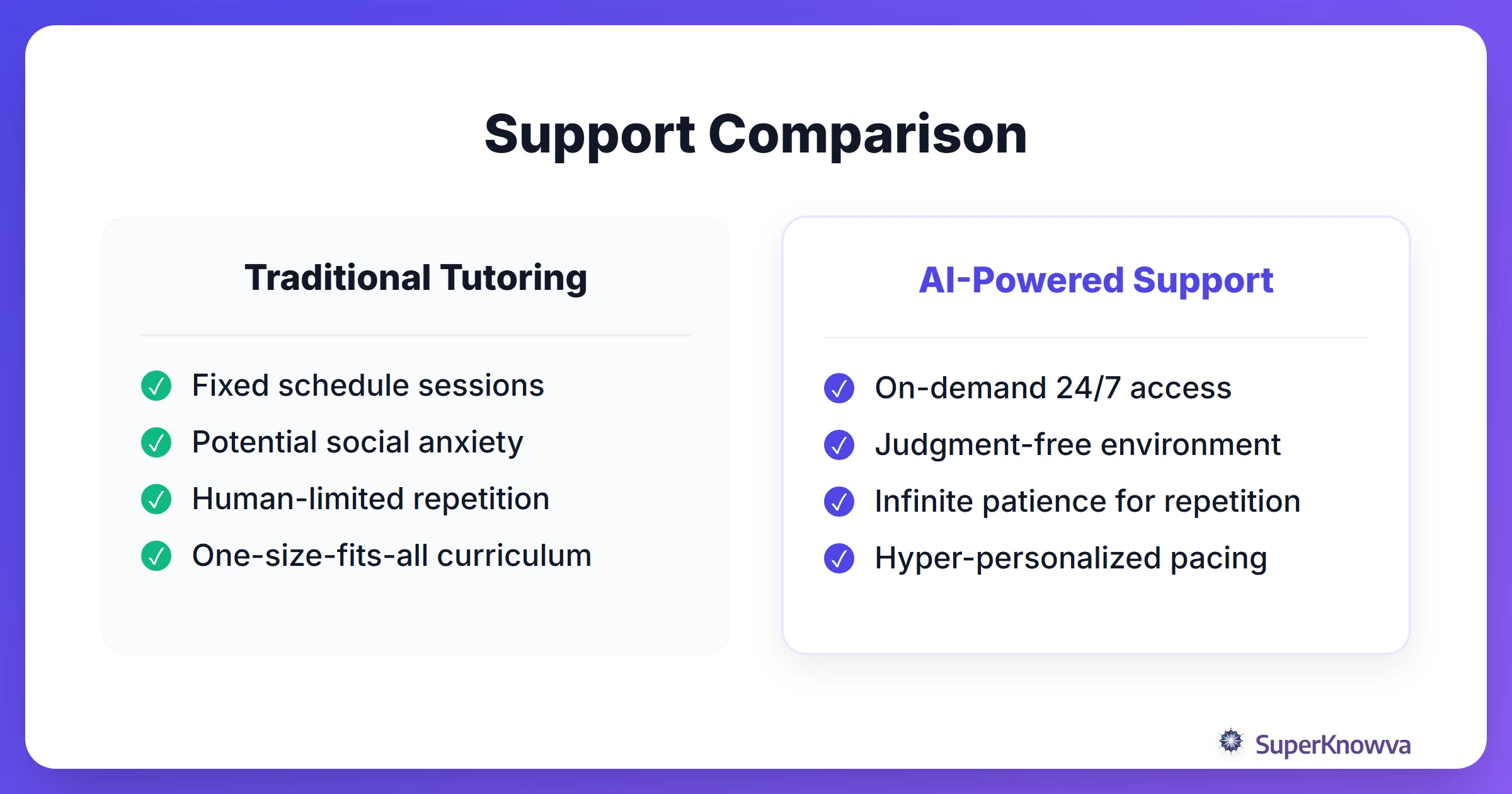
This personalized learning AI meets you where you are. It slows down when you’re struggling and speeds up when you’ve got it, building the confidence you need to show up to class ready to go.
Designing for Everyone: Universal Design for Learning (UDL)
The best part about AI in school? It’s pushing us toward Universal Design for Learning (UDL). We’re moving away from "special" tools that make students feel isolated and toward universal tools that help everyone.
When a platform offers text-to-speech or simplified reading levels, it doesn't just help a neurodivergent student; it helps the student whose first language isn't English, the student who stayed up too late, and the student who learns better by listening while they walk.
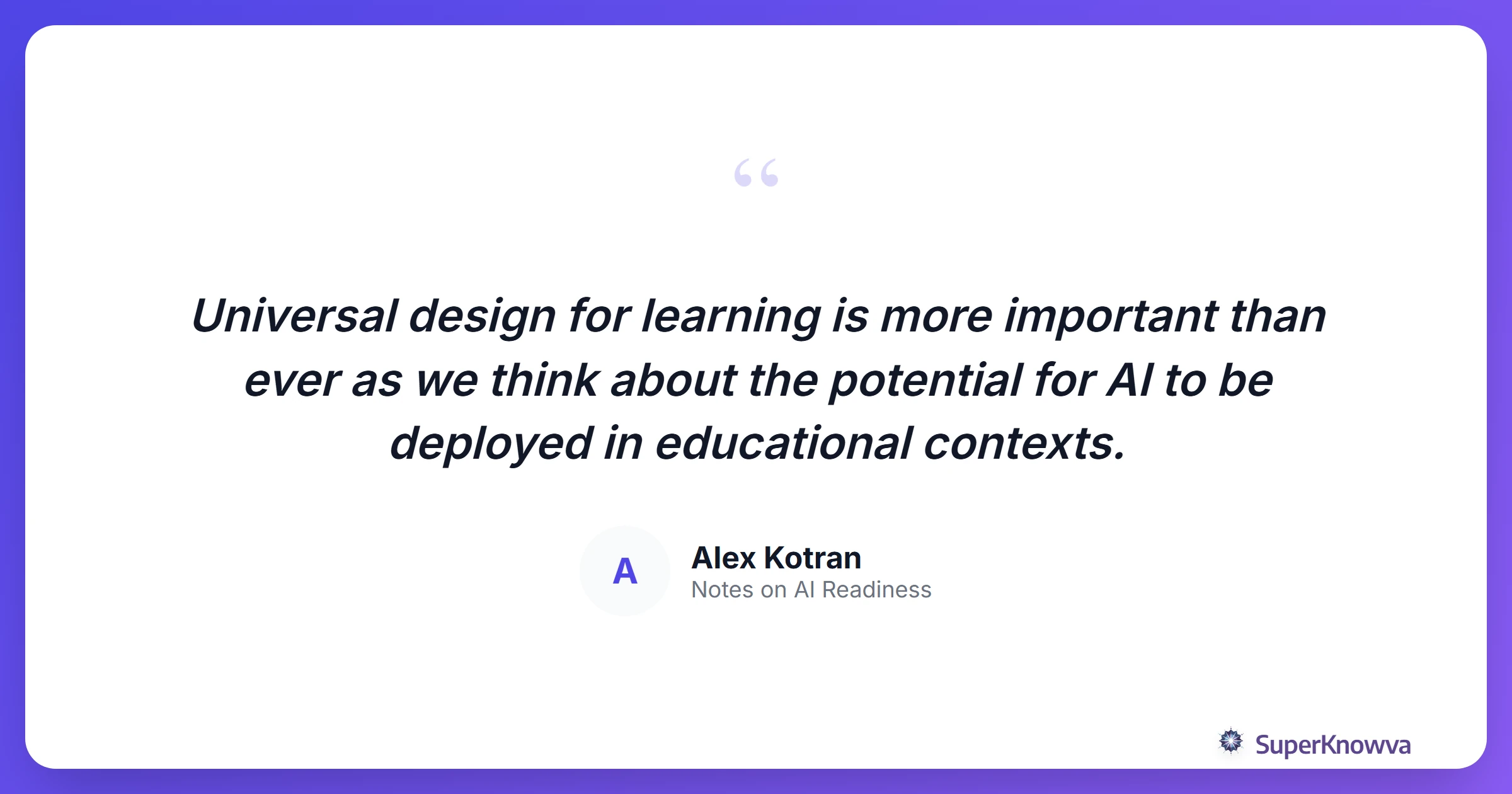
By building these features in from the start, we create Inclusive Learning: How AI Supports Students with Disabilities. This neuro-inclusive education model makes flexibility the standard, not an afterthought.
Navigating the Challenges
Technology is not a complete solution yet. These tools must be affordable to ensure broad access. Privacy is a priority. Student data, especially regarding learning disabilities, must be kept secure.
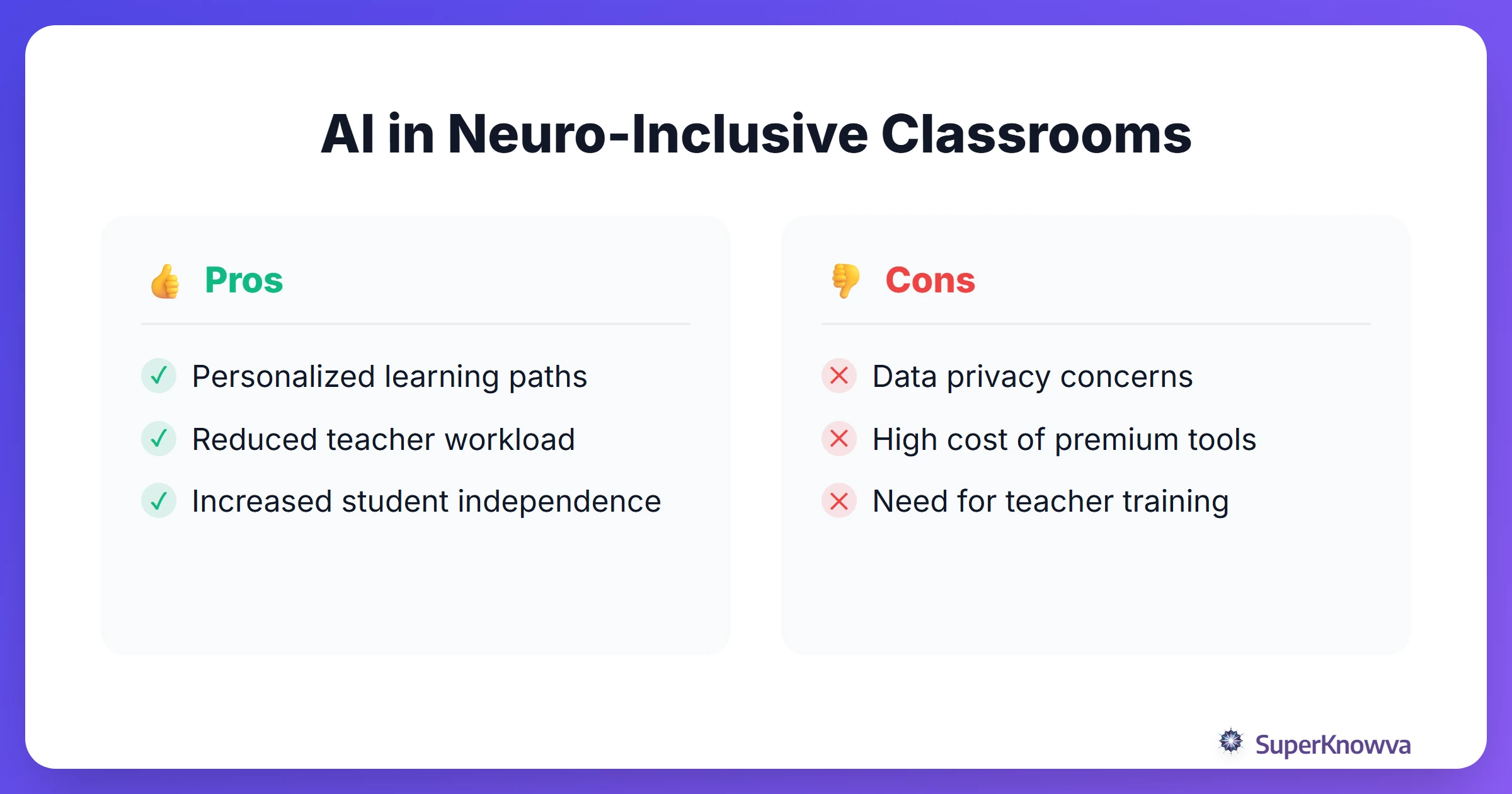
Finally, we need to support our teachers. They need the training to weave these tools into Individualized Education Programs (IEPs) effectively. When teachers and AI work together, we get a classroom where every brain has a fair shot.
Conclusion
Bringing AI into the study process is about more than just fancy software; it’s a shift toward a more empathetic way of teaching. By offering executive function AI, visual aids, and a safe space to ask questions, we are finally building a world where neurodiversity is seen as a strength, not a problem to be solved.
Ready to change the way you learn? Explore the future with SuperKnowva and see how the right tools help you achieve what you’re truly capable of.