You’ve survived the sleepless rotations. You’ve conquered the board exams. Now, only one hurdle stands between you and your white coat: the interview. For many medical students, this is the most nerve-wracking part of the application process. With NRMP and CaRMS match cycles becoming more competitive every year, "winging it" isn't an option. You need an edge.
Fortunately, the rise of ai for medical residency interviews is changing the game. High-level coaching, once a luxury for those who could afford private consultants, is now available to everyone with an internet connection.
The Evolution of Residency Prep: The Impact of AI
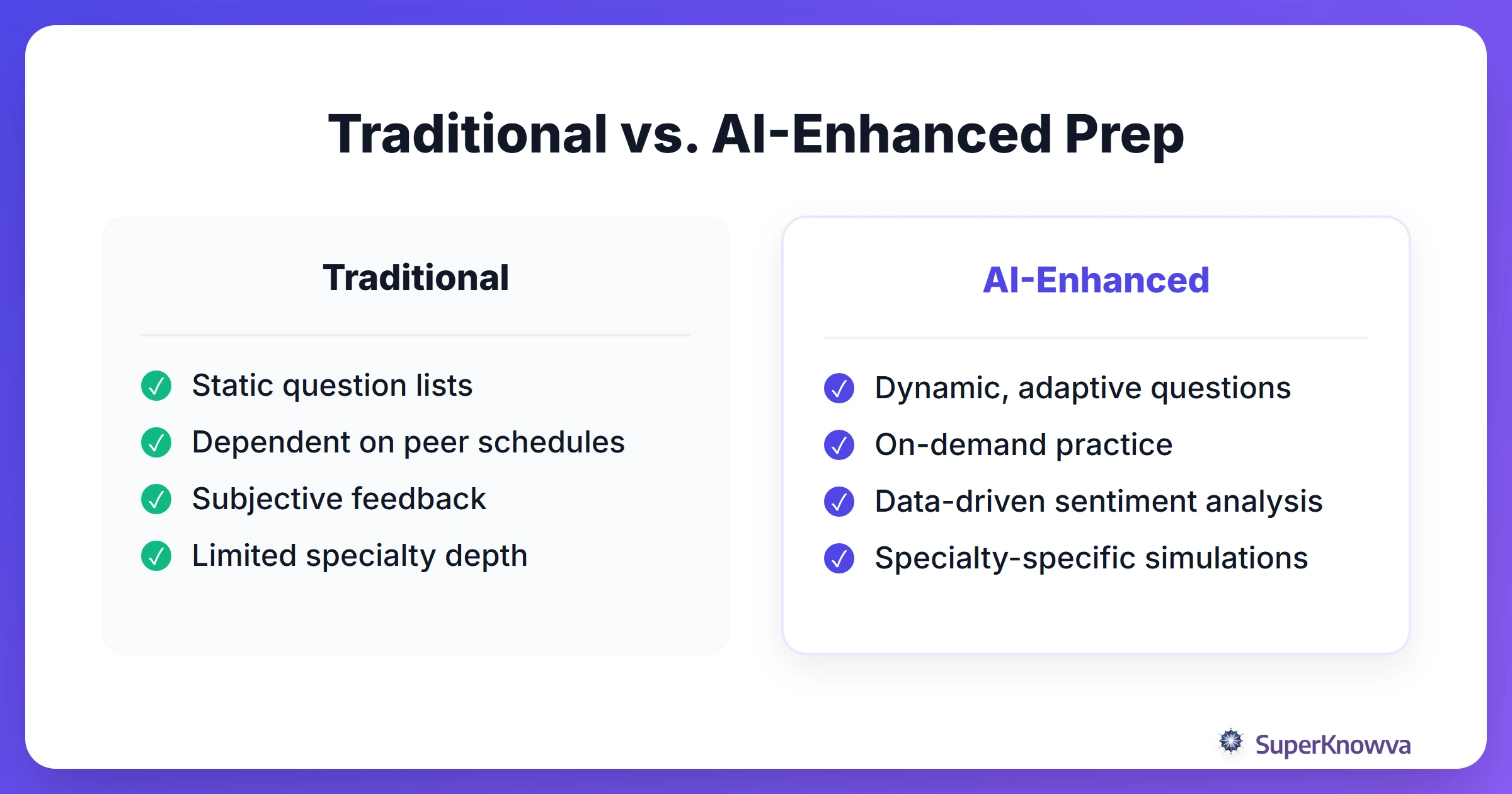
It used to be that ERAS interview prep meant begging a busy resident for twenty minutes of their time or talking to your own reflection in a mirror. While those methods have their place, they do not simulate the pressure of the real thing. AI offers a platform for residency interview practice that is objective, data-driven, and, most importantly, available at any time.
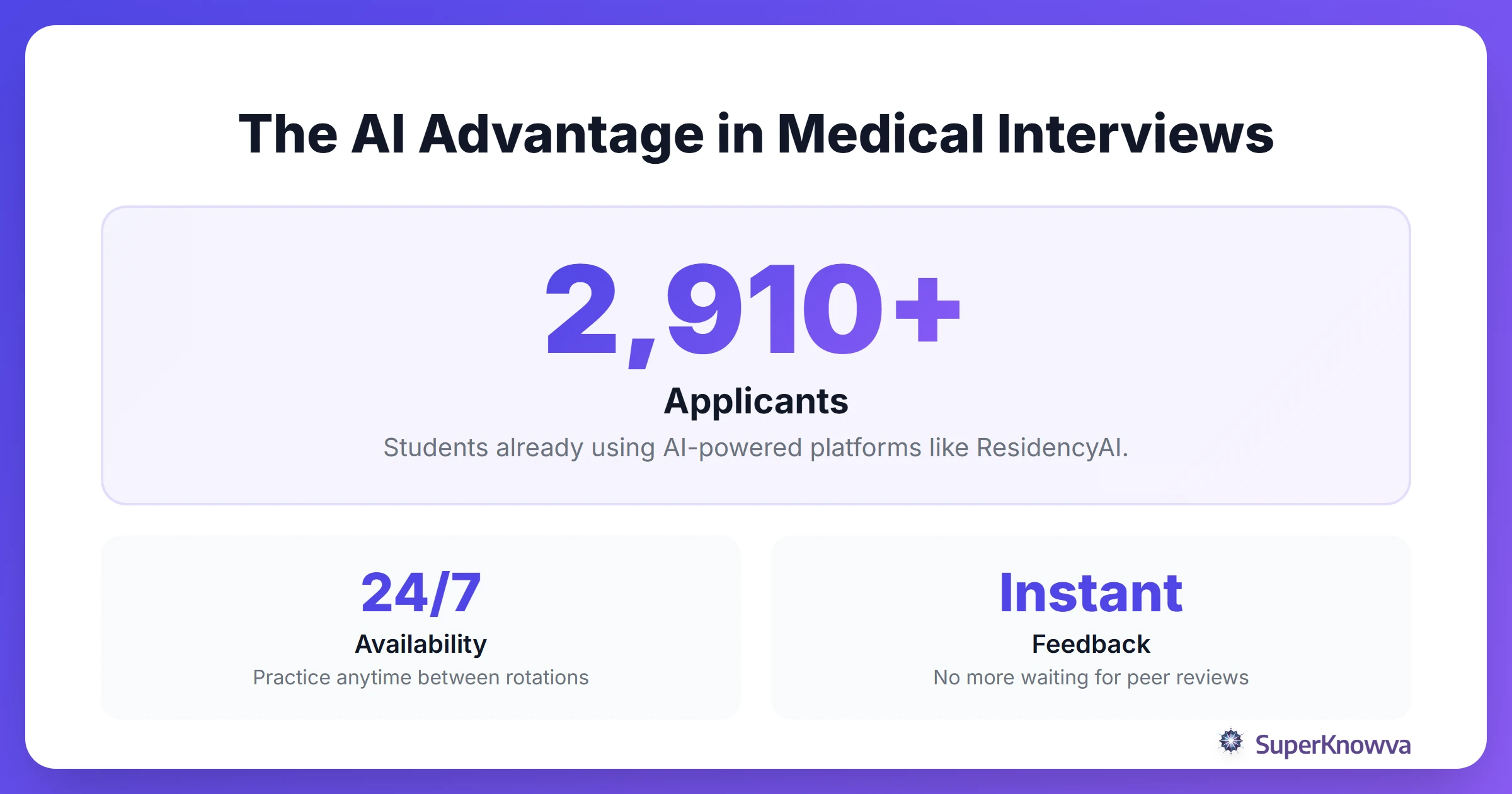
We’re moving away from memorizing "Top 50 Questions" lists and toward dynamic, responsive simulations. Even the AAMC has established principles on the responsible use of AI, acknowledging its role in the selection process while reminding us all that personal integrity still matters most.
Simulating Realistic Mock Interviews with LLMs
How do you actually use this tech? Think of Large Language Models (LLMs) like ChatGPT or specialized platforms like the ResidencyAI Platform as a virtual Program Director (PD) who is always on call.
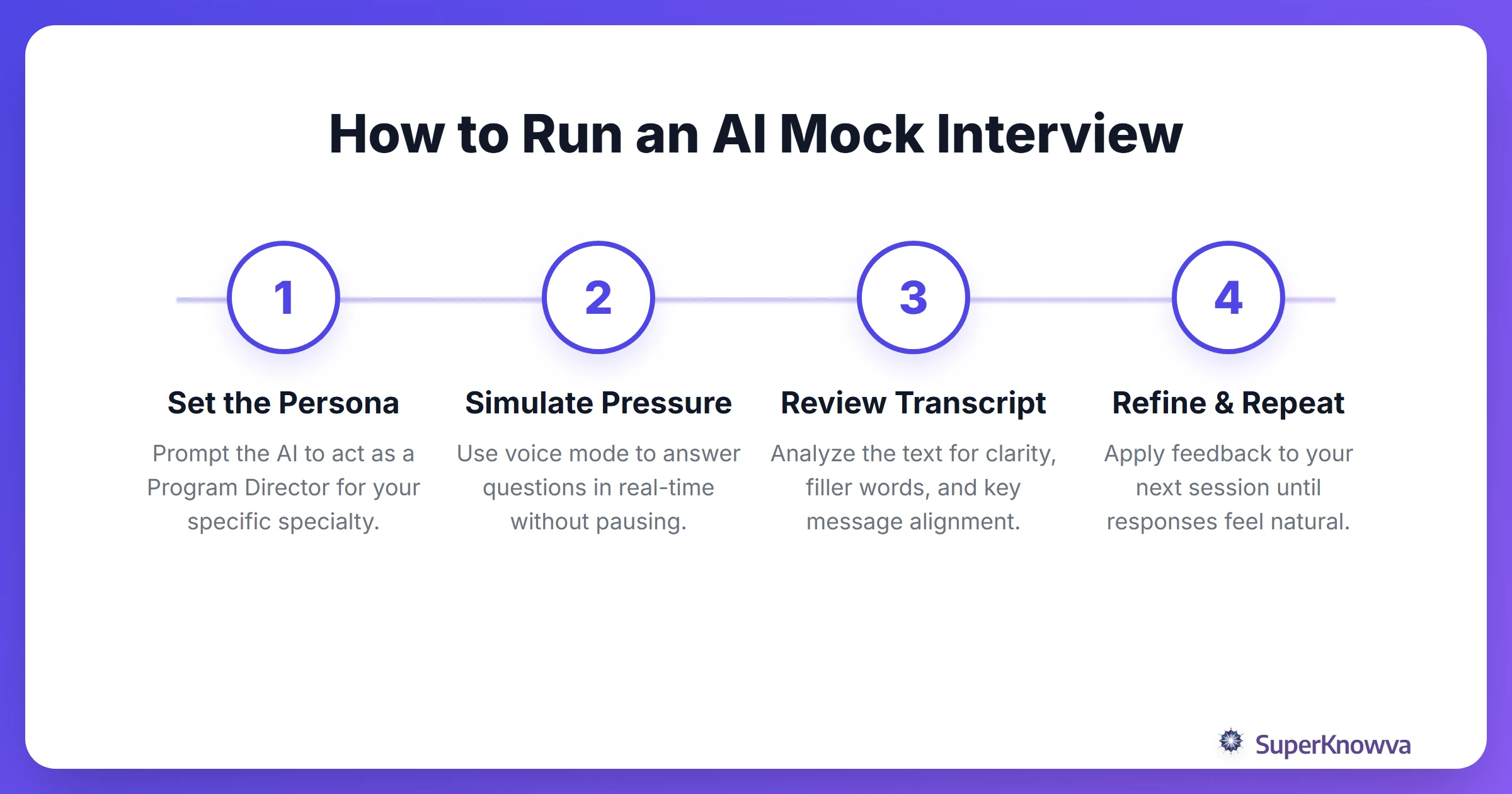
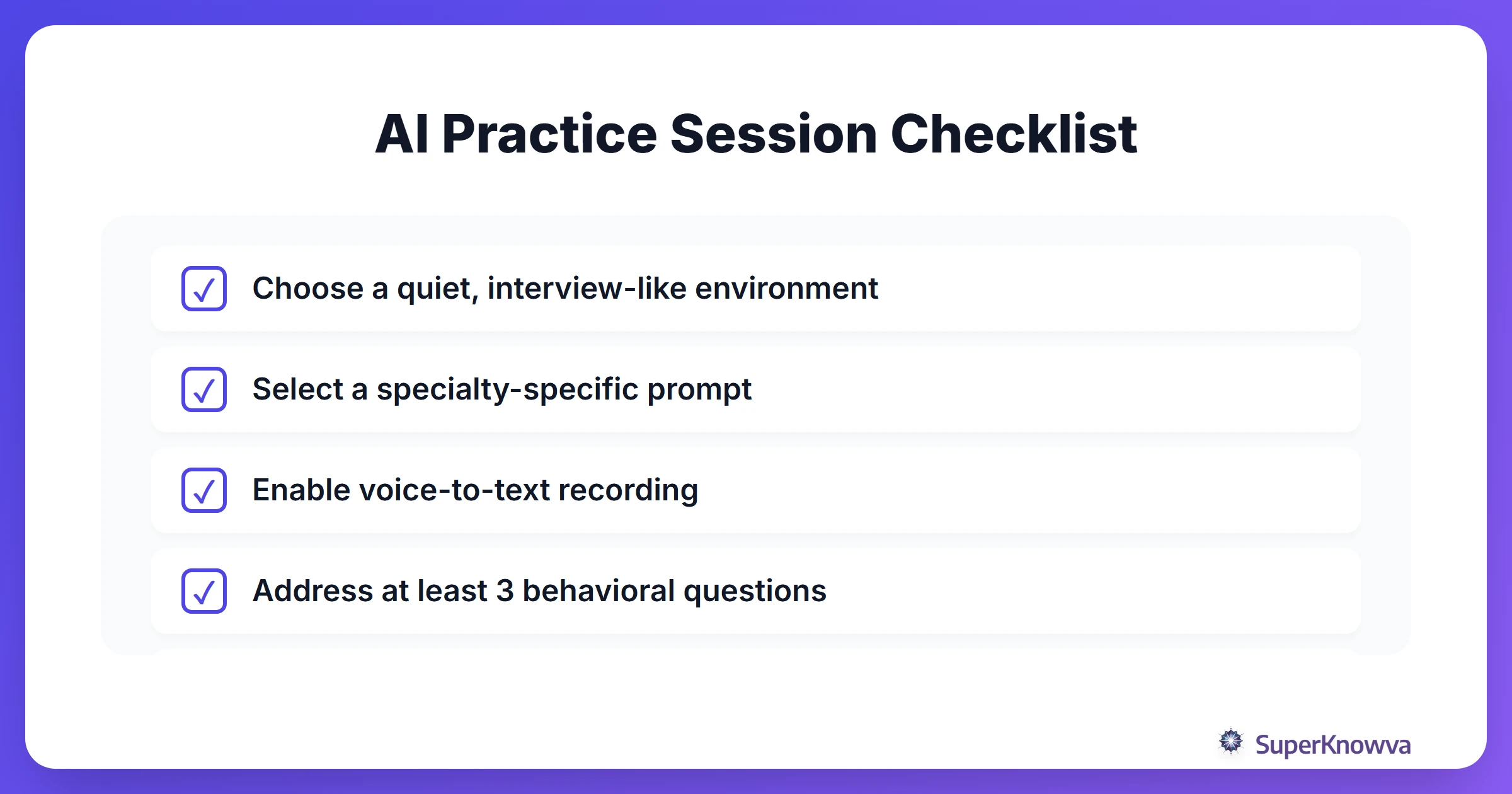
Instruct the AI to adopt a specific persona. To practice for a high-intensity specialty, ask it to be a "stern Surgery PD." For a community-based program, set it to a "supportive Pediatrics faculty member." This helps you practice difficult behavioral questions, such as "Tell me about a time you failed," in a safe environment.
To get the most out of your medical residency match prep, try these strategies:
- Talk, Don't Just Type: Use voice-to-text features on mobile AI apps. It’s one thing to write a perfect answer; it’s another to say it out loud without stumbling.
- The 3:00 AM Study Buddy: Your peers are asleep and your mentors are on shift. AI is always ready. You can dive into Using AI Tools to Practice and Prepare whenever you have a spare fifteen minutes between rounds.
Specialty-Specific Prep: Tailoring AI to Your Field
A "one-size-fits-all" approach is a recipe for a mediocre interview. A conversation for Interventional Radiology has a completely different vibe than one for Family Medicine. You can use AI to generate scenarios that actually test your "fit" for your specific field.
If you’re gunning for Radiology, use niche tools or prompt your AI to focus on visual communication and workflow efficiency. Want to go the extra mile? Feed the AI a program’s mission statement from their website and ask: "Based on these values, what are they going to grill me on?"
Analyzing Performance: The AI Feedback Loop
The real "magic" of this technology is the AI interview feedback. After a mock session, you can look at a transcript and see things a human friend might be too polite to point out.
- The "Um" Count: AI can instantly flag filler words like "like," "uh," or "you know."
- The STAR Method Check: Did you actually explain the "Result" of your story, or did you stop at the "Action"? Ask the AI to critique your structure.
- Consistency Check: AI can cross-reference your spoken answers with your ERAS application. Does your spoken narrative match your written one?
As you tighten up your delivery, don't forget that AI for Resumes and Applications can help ensure your written profile is just as polished as your interview persona.
Maintaining Authenticity in the Age of AI
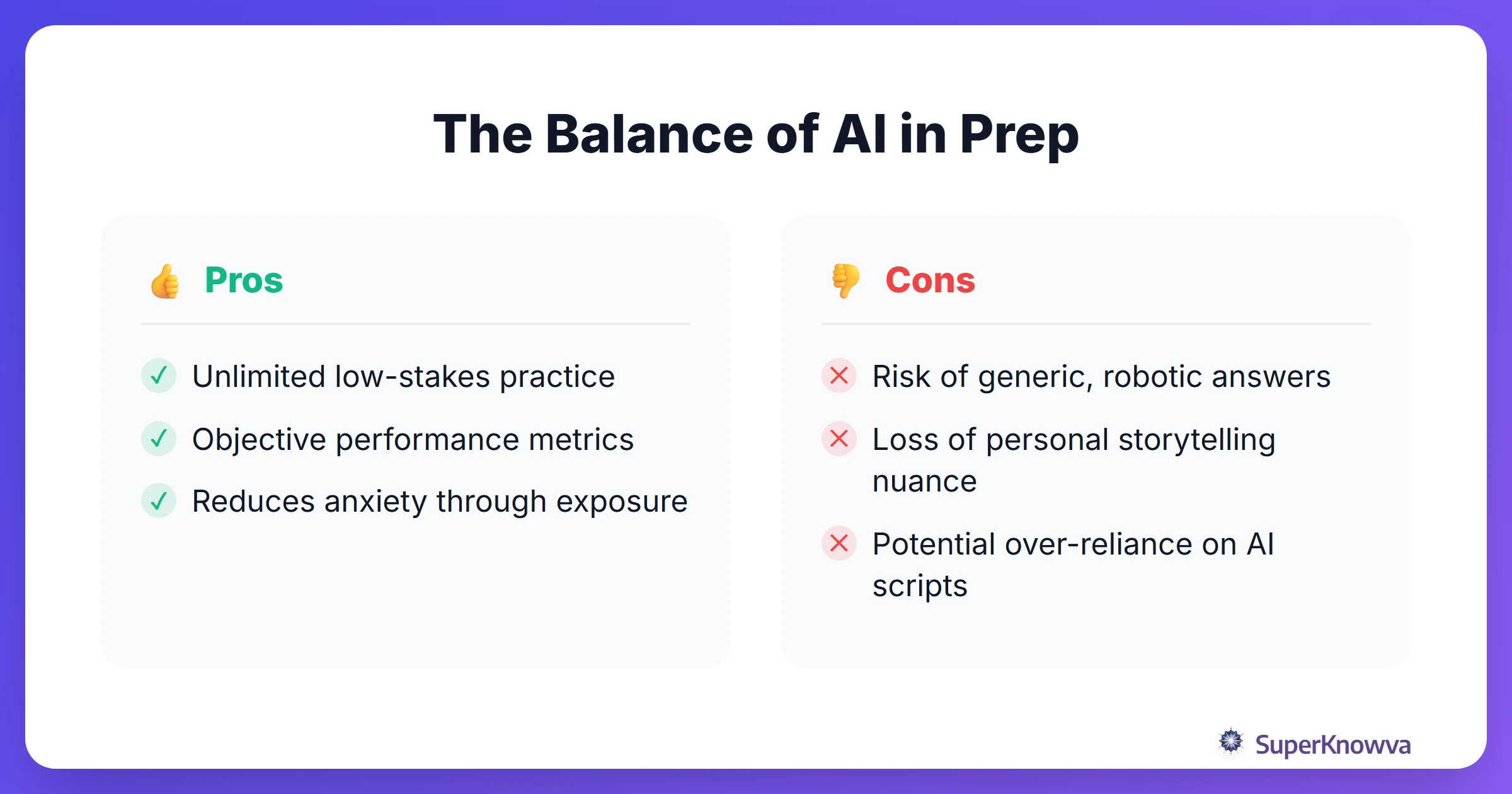
Here’s the catch: don’t let the AI turn you into a robot. Program Directors aren't looking for a perfectly rehearsed script; they’re looking for a future colleague they can trust at 2:00 AM. They want empathy, personality, and human connection.
Use AI as a framework, not a teleprompter. Focus on your Soft Skills in the AI Era. Use the feedback to sharpen your delivery, but make sure the stories, the "why" behind your path into medicine, remain yours. Always balance software feedback with a "vibe check" from real-life residents and faculty.
Post-Interview Strategy and AI Organization
The work isn't over when you hit "Leave Meeting." Managing thank-you notes and keeping track of your thoughts on different programs is essential for your rank order list.
AI can help you summarize your post-interview notes while the details are still fresh. When drafting thank-you emails, use AI to help with the structure, but always drop in a specific detail from your conversation to show you were actually listening. Just remember to stay within the NRMP communication code of conduct.
Effective follow-up is the first step in Building Professional Connections that will last your entire career. For more on those final steps, check out these AAFP Post-Interview Tips.
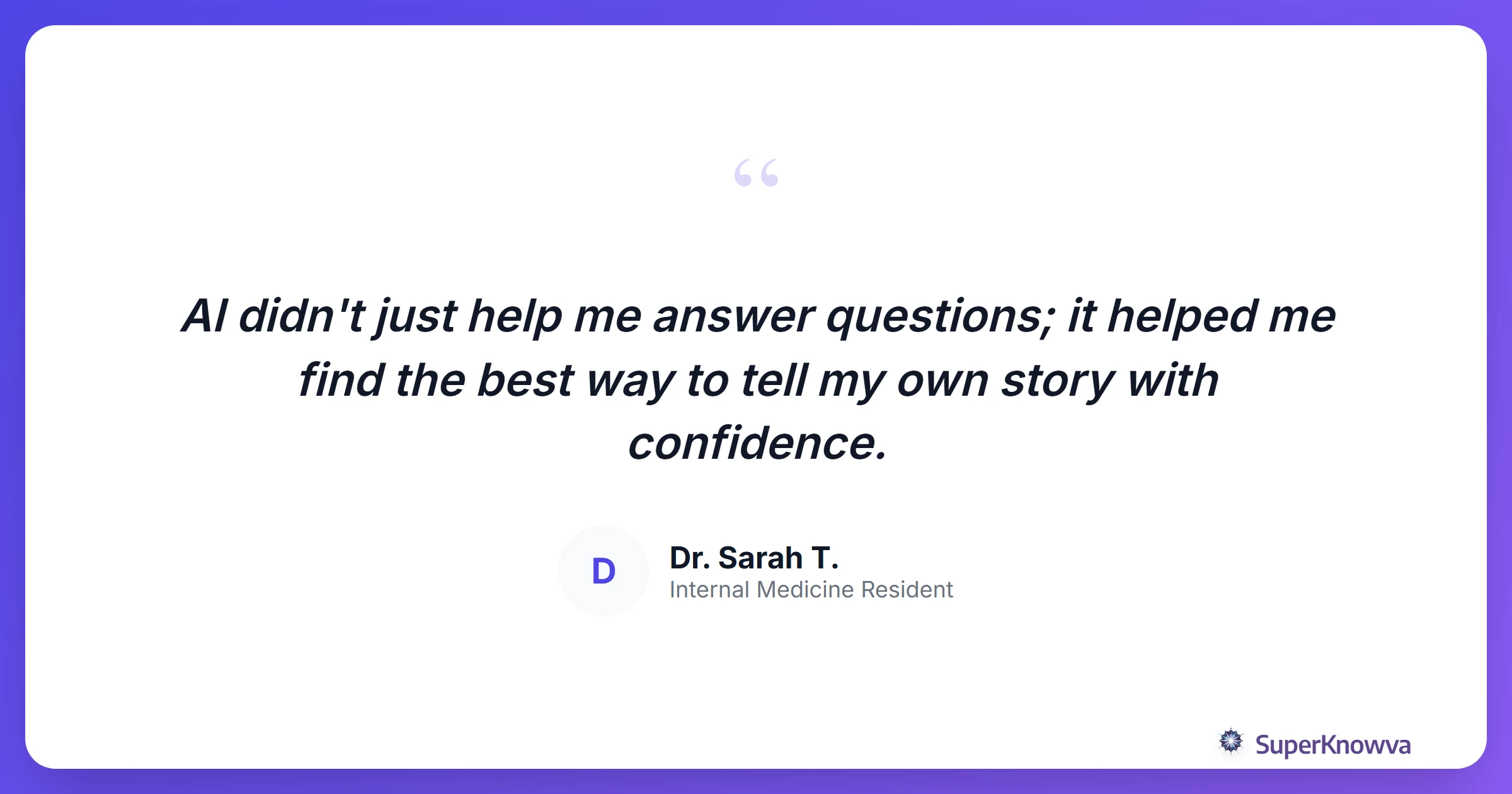
By integrating AI into your preparation, you are doing more than just practicing questions. You are building the confidence to succeed in your interview. Refine your story and prepare for your career as a physician with SuperKnowva.