"Summer break" usually sounds like a vacation. For the most ambitious students, it is anything but. Instead of lounging by the pool, you are likely working a 40-hour week while trying to keep your academic skills sharp.
Let’s be honest: balancing a high-stakes internship with studying for professional certifications feels like a high-wire act. It’s exhausting, and the pressure to perform in both worlds is real. But if you can stick the landing, you’ll be miles ahead of the competition by the time graduation rolls around.
How do you survive the grind without burning out? It’s about more than just "working harder." You need a strategy that respects your time and your brain’s limits.
The Dual-Track Challenge: Why Balance Matters
You landed your dream internship. But once you are in the door, the internship is only the beginning. If the internship provides the "how" of your career, certifications provide the "what": specialized, high-level proof that you know your stuff.
The problem? Learning a new office culture while memorizing complex exam modules is a massive mental lift. You won’t have the luxury of those 10-hour library marathons you relied on during finals week. To succeed, you have to shift your mindset from effort to efficiency. As noted in Internships: A Balancing Act for Students, finding a sustainable rhythm is the only way to avoid hitting a wall by July.
Finding Your 'Golden Hours': Morning vs. Evening Study
When do you feel most alive? This is more than a philosophical question. It is the key to your schedule. In a 9-to-5, your peak hours (the times when your brain is sharpest) are limited. You must protect them.
Many successful interns swear by the "Eat the Frog" method. The idea is simple: tackle your hardest study task before the workday even starts. If you can squeeze in a session from 6:30 AM to 8:00 AM, you’re giving your certification prep your best energy. By the time you sit down for your first meeting, the hardest part of your day is already behind you.
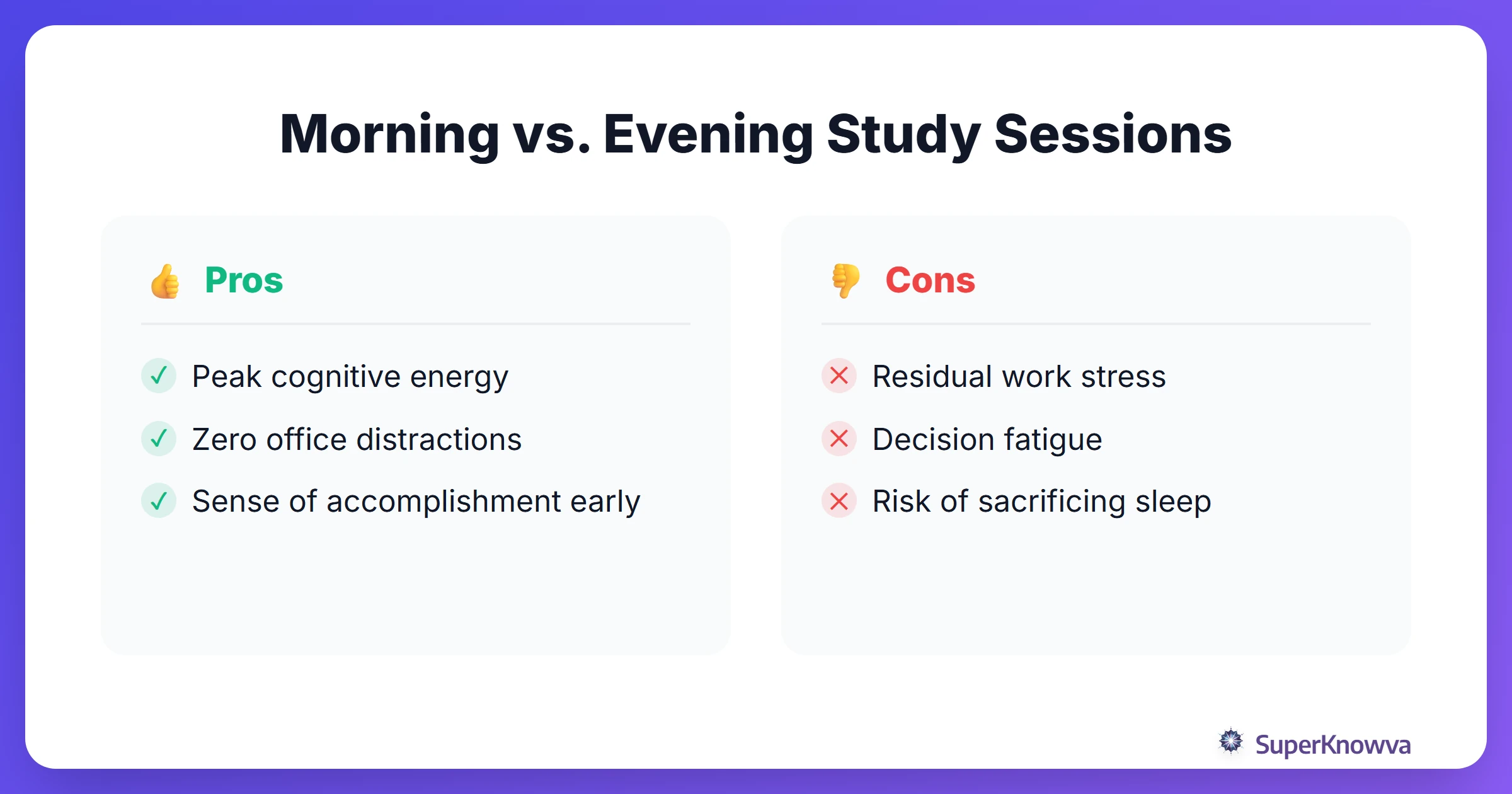
If you study best at night, the hardest part is the transition. You can’t just close your work laptop and immediately open a textbook; your brain needs a "reset." Create a ritual, such as a 20-minute walk, a specific playlist, or even just a change of clothes, to signal that the workday is over and your academic focus has begun.
Micro-Learning: Turning Your Commute into a Classroom
Think about your day. How much "dead time" do you have? Whether you’re on the train, waiting for an Uber, or sitting through a lunch break, those small pockets of time are gold mines for your summer internship productivity.
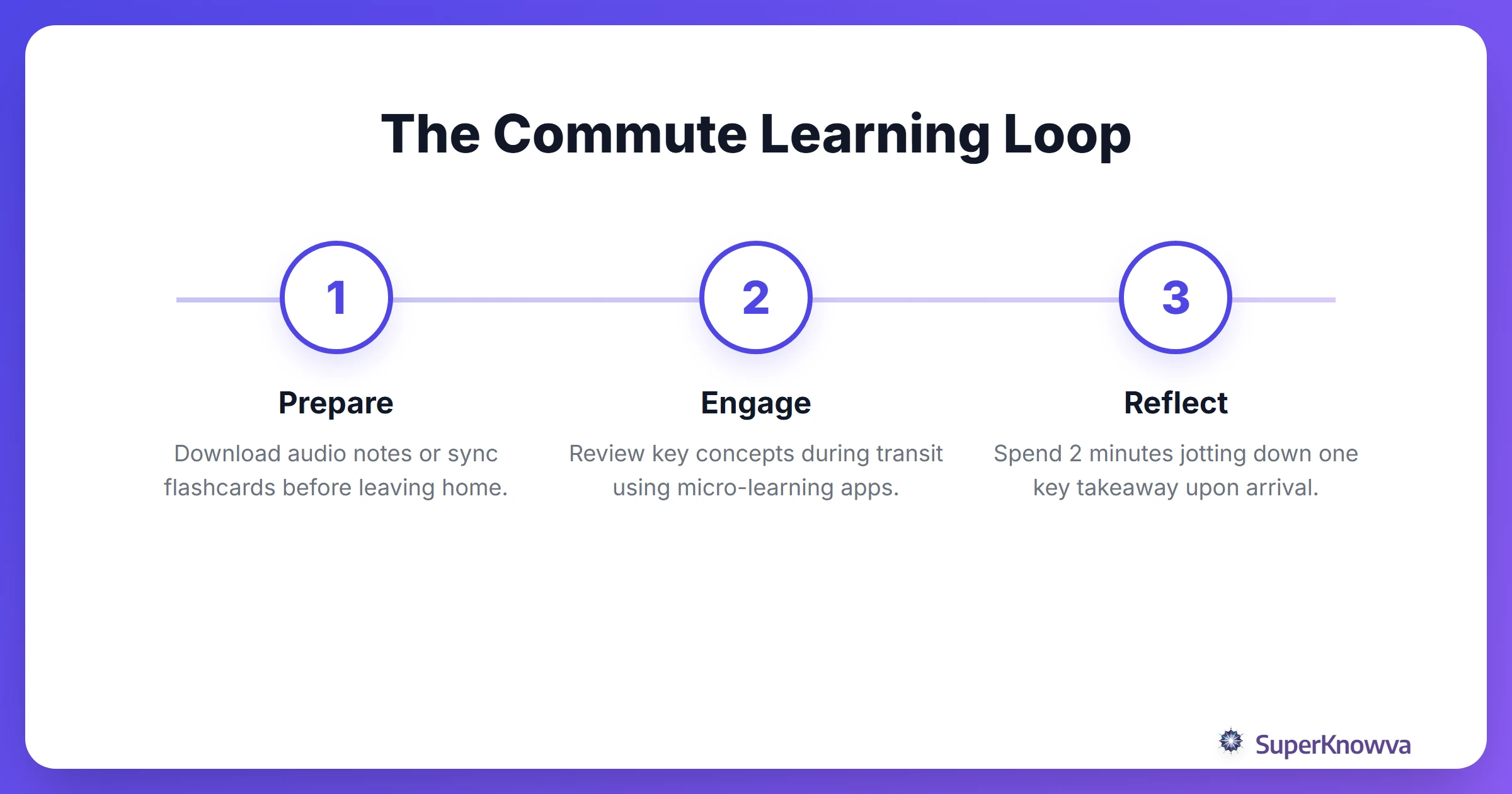
Mastering internship time management is really about accumulating small wins. Use audio-based learning or flashcard apps to review concepts in 15-minute bursts. By the time you reach the office, you’ve already completed a mini-review. These "micro-learning" blocks keep the information fresh and take the pressure off your main study sessions later in the day.
Communicating Boundaries with Your Internship Manager
It’s tempting to be the "first one in, last one out" intern to prove your worth. But you also have to be the intern who passes their exams. This is where navigating the transition to the workplace gets tricky.
Early on, mention your professional certification prep to your manager. Most supervisors appreciate seeing this because it shows initiative. Frame it as a benefit to the company. Try saying something like: "I’m currently studying for my AWS Cloud Practitioner exam. I’m hoping to apply what I’m learning to our cloud migration project next month."
When your boss knows you have a goal, they’re more likely to respect your boundaries and less likely to ask you to stay late for non-essential tasks.
The Power of Spaced Repetition for Busy Professionals
When you're working full-time, "cramming" is a recipe for disaster. Your brain is already tired; it simply can't absorb a 50-page chapter in one sitting. This is where the science of the forgetting curve becomes your best friend.
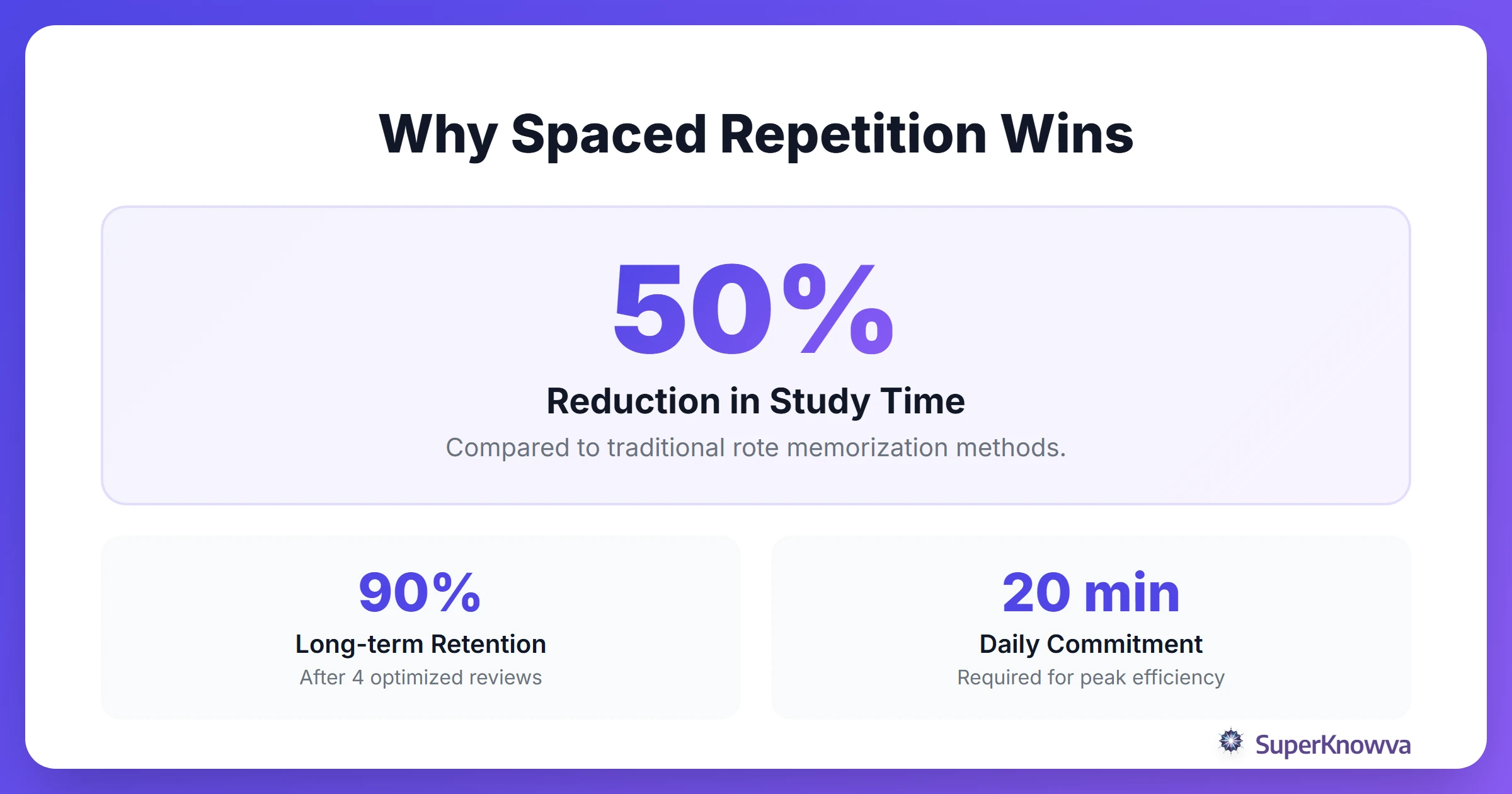
This is exactly why we built SuperKnowva. Instead of mindlessly re-reading highlighted text, SuperKnowva uses AI-powered spaced repetition to quiz you on the specific topics you’re about to forget. Spending 20 minutes on personalized, AI-generated quizzes is more effective than three hours of passive reading. It’s about studying with a scalpel, not a sledgehammer.
Weekend Sprints vs. Daily Consistency
Daily habits keep the knowledge alive, but the weekend is for the deep dives. However, be careful: many students fall into the "weekend-only" trap, which is a fast track to burnout.
The best approach is a hybrid. Use your weekdays for maintenance (30–60 minutes) and your Saturdays for a "Study Sprint."
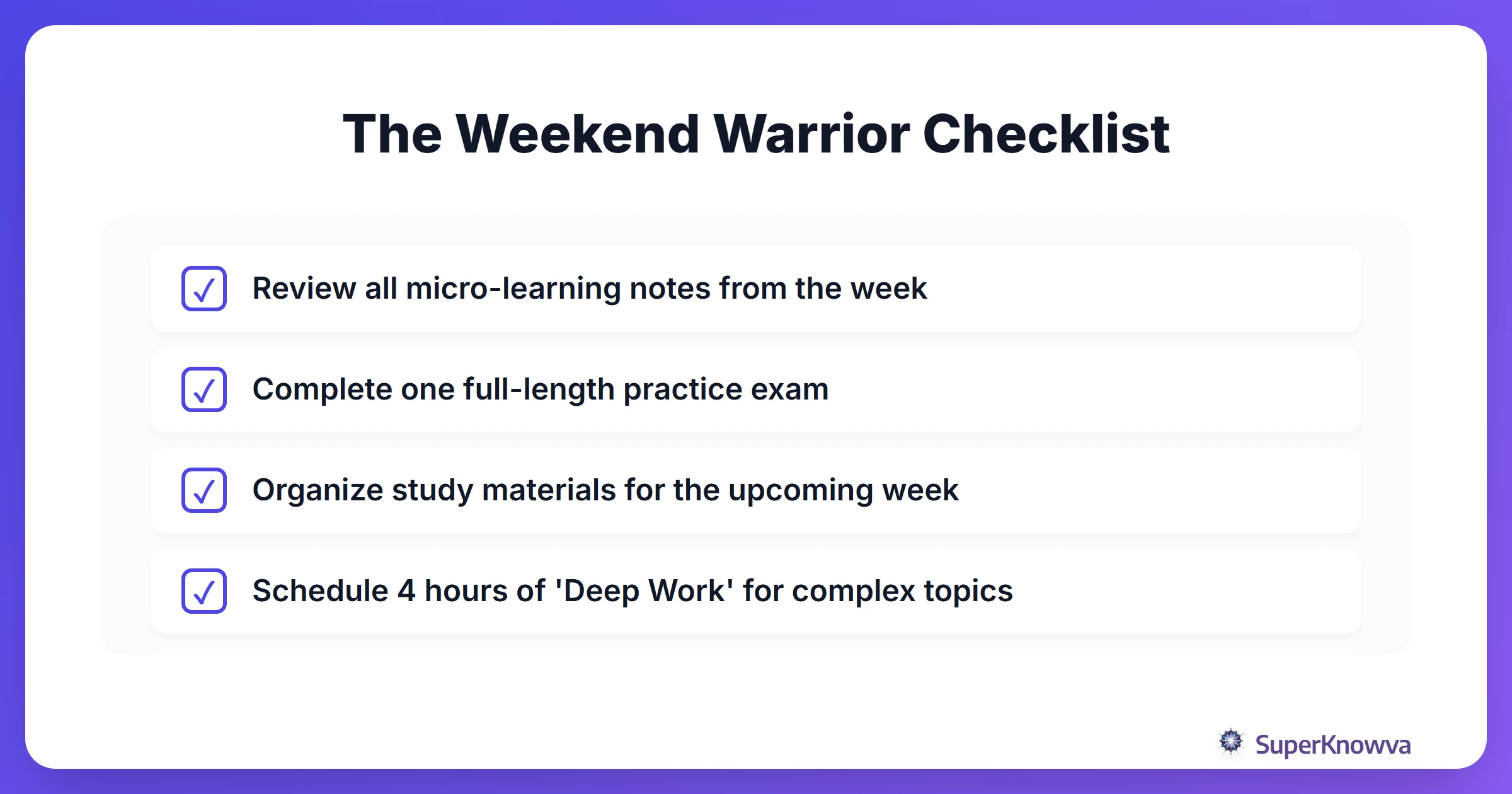
A "Sprint" should focus on heavy lifting: the complex topics that require "Deep Work." Sunday is for rest. Having at least one full day of zero study and zero work is non-negotiable to finish the summer in one piece.
Avoiding Burnout: Protecting Your Mental Energy
As many Student Discussions on Balancing Work and College point out, the biggest threat to your success isn't the difficulty of the material; it is exhaustion.
Watch for the warning signs: are you more irritable than usual? Is it getting harder to focus on simple emails? To keep your performance high, you have to prioritize the basics:
- Sleep: Your brain literally cleans itself and consolidates memories while you sleep. Don't skip it.
- Nutrition: Office snacks and caffeine aren't a meal plan. Fuel your brain properly.
- Networking: Don't get so buried in your books that you forget to talk to people. Building professional connections is just as vital as the letters after your name.
This period of intensity is temporary. By combining the real-world experience of an internship with the technical mastery of a certification and the soft skills employers are looking for, you are building a competitive professional profile. Stay consistent and use the right tools to reach your goals.