It is 2026. AI drafts complex Python scripts, summarizes 50-page legal briefs, and generates photorealistic marketing campaigns. It is natural to feel uncertain about your professional role. When machines handle the technical work, where do you fit in?
The answer isn't in trying to out-calculate the computer. It’s in leaning into the traits that a machine simply cannot replicate. While technical skills get you in the door, soft skills for students have become the real currency of the modern workforce.
Your "human" side is your greatest professional asset. Here is how you can build the skills that make you indispensable.
The Rise of the "Human" Advantage
For decades, the path to success was clear: master a "hard" skill like coding, accounting, or a foreign language, and you were set. These were the gatekeepers to high-paying roles. But as AI begins to automate the technical "how-to," the value of interpersonal excellence is skyrocketing.
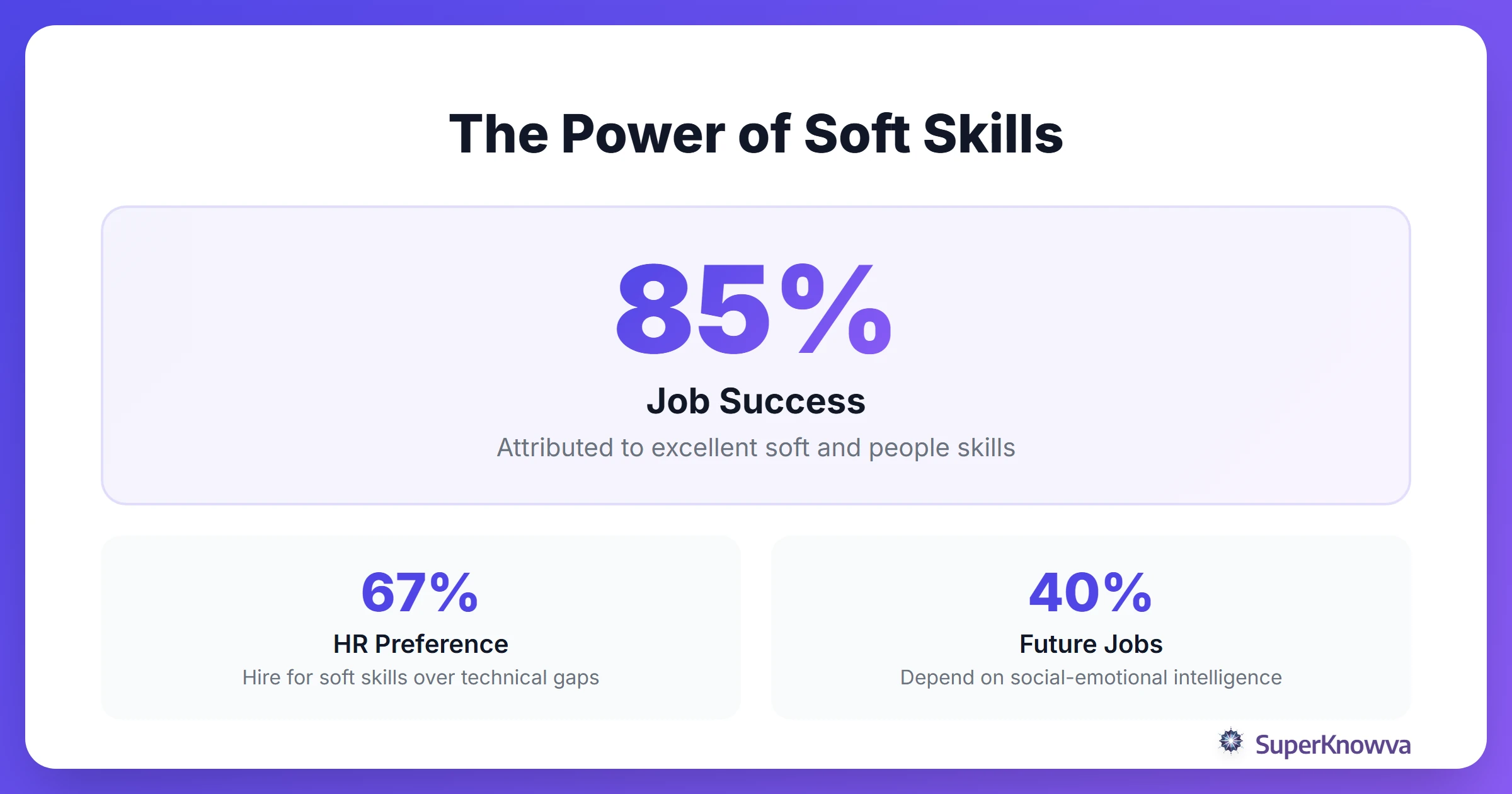
The focus is moving from technical proficiency to human advantage. Research from Stanford and Harvard indicates that soft skills account for 85% of career success, while only 15% comes from technical knowledge. As hard skills become commoditized, meaning anyone with an AI prompt can perform them, traits like empathy and leadership become high-value assets employers prioritize.
Communication: Reading Between the Lines
In a world where AI can draft an email in three seconds, communication is no longer just about moving information from point A to point B. It’s about connection, nuance, and influence.
Active listening is a vital skill. It’s the ability to hear what isn’t being said, such as the slight hesitation in a client’s voice or the unspoken frustration of a teammate. As AI generates more data, we need people who can interpret the results. You can be the person who takes complex, AI-generated insights and turns them into a story that drives action. A spreadsheet provides numbers, but a leader explains the purpose. Building these professional connections requires strong interpersonal communication and active listening.
Emotional Intelligence (EQ) vs. Artificial Intelligence
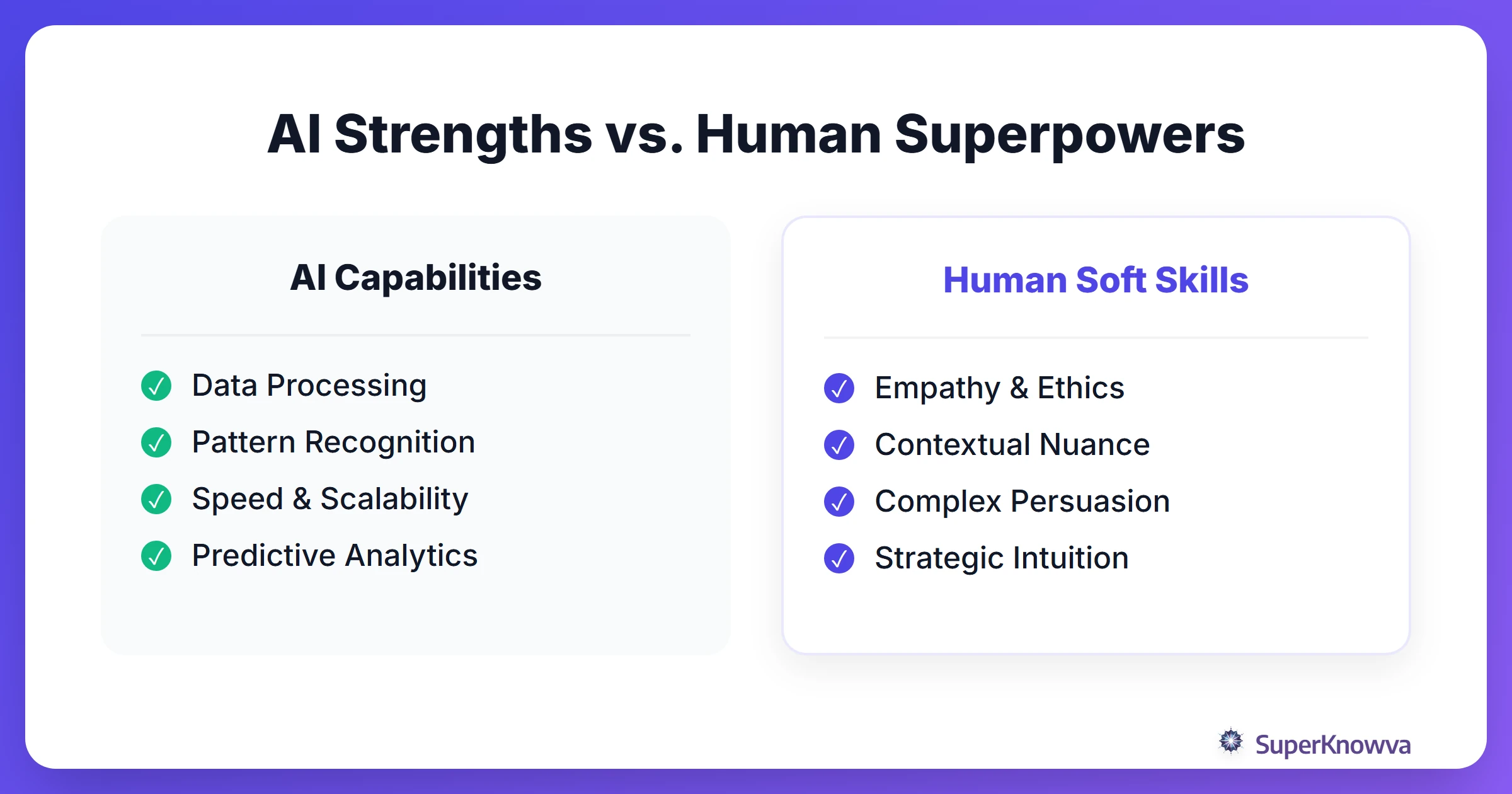
AI can simulate a conversation, but it cannot read a room. It does not know why your project partner is suddenly quiet, and it does not understand the cultural weight of a specific gesture. This is where Emotional Intelligence (EQ) becomes your competitive advantage, protecting your career from automation.
AI doesn't feel stress. Your teammates do. High EQ allows you to build teams where people feel seen, valued, and motivated. It’s also your best defense against your own burnout. A study published in Nature highlights that over-professional competencies are now assessed on par with technical skills. Being "good with people" isn't a soft hobby; it’s a rigorous professional requirement.
Critical Thinking: Don’t Just Take AI’s Word for It
The role of a student is shifting from "data retrieval" to "data synthesis." In the past, knowing the answer was enough to get an A. Today? You need to know if the answer provided by an AI is ethical, accurate, or even relevant to the real world.
Questioning AI outputs is no longer optional; it is a necessity. This requires skepticism and ethical judgment. You will be tasked with solving "messy" problems, such as real-world dilemmas that lack clean datasets or clear histories. As automation reshapes industries, certain roles remain distinctly human. Learn more in our guide to Future-Proofing Your Degree.
Adaptability: The Art of Unlearning
By 2026, the "half-life" of a skill will be shorter than ever. What you master in your freshman year might be old news by graduation. This makes adaptability the most critical survival skill you can possess.
Cultivating a growth mindset means being willing to "unlearn" old habits when technology changes. It is about resilience, or the ability to handle the friction of constant change without losing your drive. Understanding what employers are really looking for can give you a significant advantage. Most of the time, they aren't looking for the person who knows everything; they are looking for the person who can adapt quickly.
How to Actually Build Your Soft Skill Portfolio
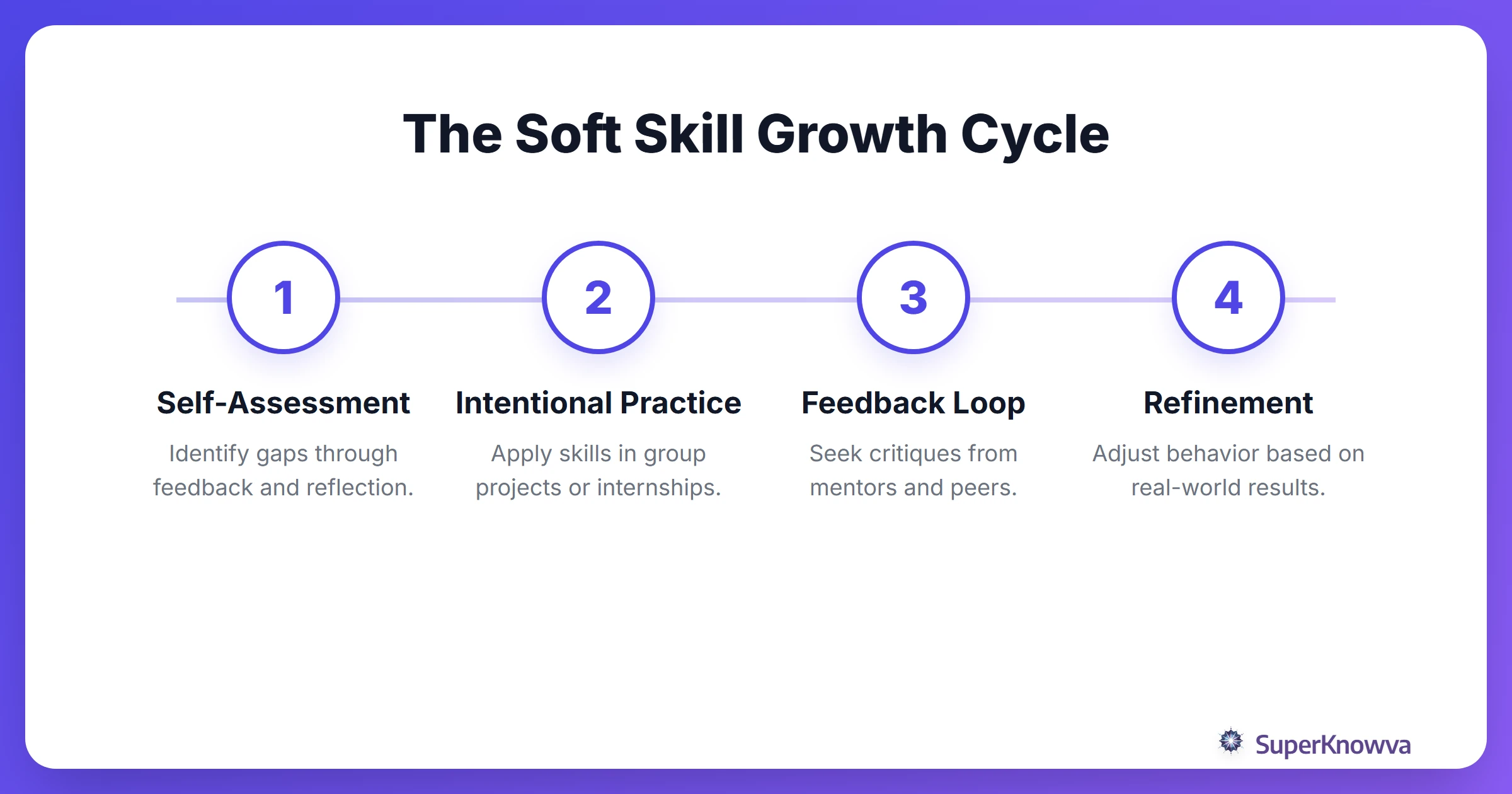
You can’t learn empathy or leadership from a textbook. You learn them by getting your hands dirty. Here is how to start today:
- Lean into Group Projects: Stop dreading them. Treat group work as a laboratory for conflict resolution and negotiation.
- Seek "Human-First" Internships: Look for roles that prioritize strategy and interaction over repetitive data entry (which AI will likely be doing anyway).
- Volunteer for Leadership: Whether it’s a campus club or a local non-profit, leading a group of volunteers is the best EQ training money can’t buy.
When you finally sit down for an interview, don’t just put "good communicator" on your resume. Prove it. Use specific examples: "I resolved a conflict between three team members during a capstone project" or "I translated complex data analysis into a presentation that helped our club secure funding."
AI technology complements human potential. By focusing on soft skills, you are not just looking for a job; you are building a career that is resilient, meaningful, and uniquely yours.