Ever tried to memorize complex equations when your room feels like an oven? It is not just difficult; it is exhausting. As the July sun blazes and temperatures climb toward record highs, staying focused usually starts to feel more like a slow burn.
Whether you’re grinding through summer resits or trying to get a head start on next semester, studying in hot weather is a battle against biology. When the thermometer hits 30°C (86°F), your brain isn't just "uncomfortable." It’s struggling to stay functional. At SuperKnowva, we know that the right strategy can save your GPA when the weather is trying to tank it.
In this guide, we’re moving past the basic "drink water" advice. Let’s look at the science of heat and the practical hacks you need to stay sharp when things get sweltering.
The Science of Heat: Why Your Brain Slows Down
It’s not your imagination: heat literally makes you less intelligent in the moment. A landmark UCLA Luskin Study on Heat and Learning tracked 10 million students over 13 years and found a chilling (or rather, warming) trend. Higher temperatures directly correlate to lower test scores. In fact, for every 1°F increase in temperature throughout the school year, learning decreased by about 1%.
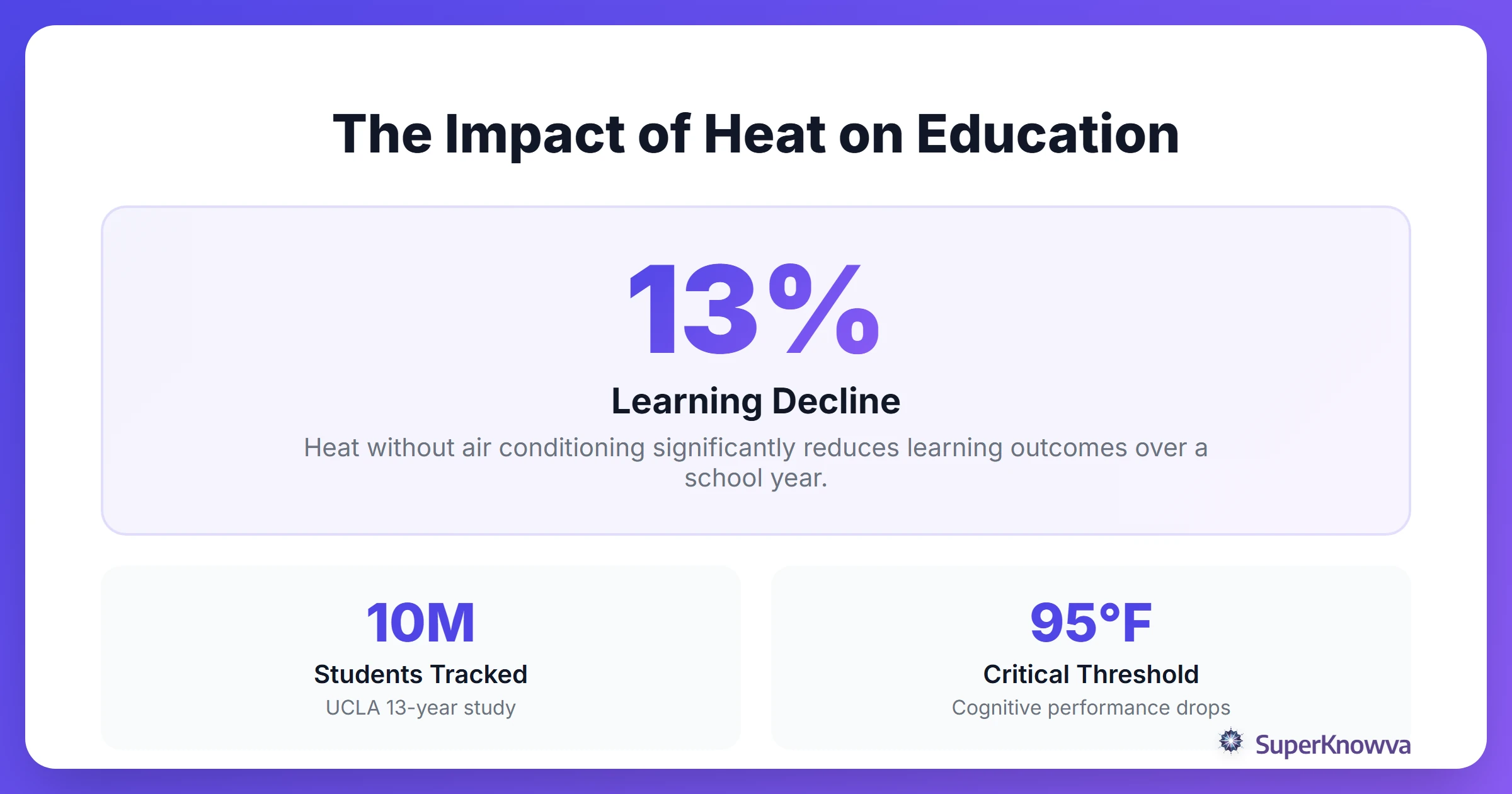
Why does this happen? Think of it as "cognitive load." Your brain has to divert massive amounts of energy toward regulating your internal temperature. That leaves fewer resources for memory retention and complex problem-solving. While we know that regular exercise boosts cognitive function, doing a heavy workout in high heat can actually backfire, draining your mental reserves before you even open a book.
This isn't just a comfort issue; it’s an educational equity issue. Students in older dorms or low-income areas without climate control face a much steeper uphill climb during a heatwave than those with central air.
Creating a Cool Study Zone (Without AC)
Don't have the luxury of air conditioning? You’ll need to get a little MacGyver with your setup. The Reddit community tips for studying in 40°C+ offer some surprisingly effective "low-tech" solutions for students trapped in sweltering apartments.
- The DIY Swamp Cooler: Place a large bowl of ice or frozen water bottles directly in front of a desk fan. It won't cool the whole room, but it creates a localized stream of chilled air right at your desk.
- The Vampire Method: Keep windows and curtains tightly closed during the day to block out radiant heat. Only open them at night or in the early morning to catch the cross-breeze.
- Pulse Point Cooling: Drape a damp, cool towel over your shoulders or the back of your neck. If you’re really struggling, run cold water over your wrists for 30 seconds. This is the fastest way to lower your perceived body temperature.
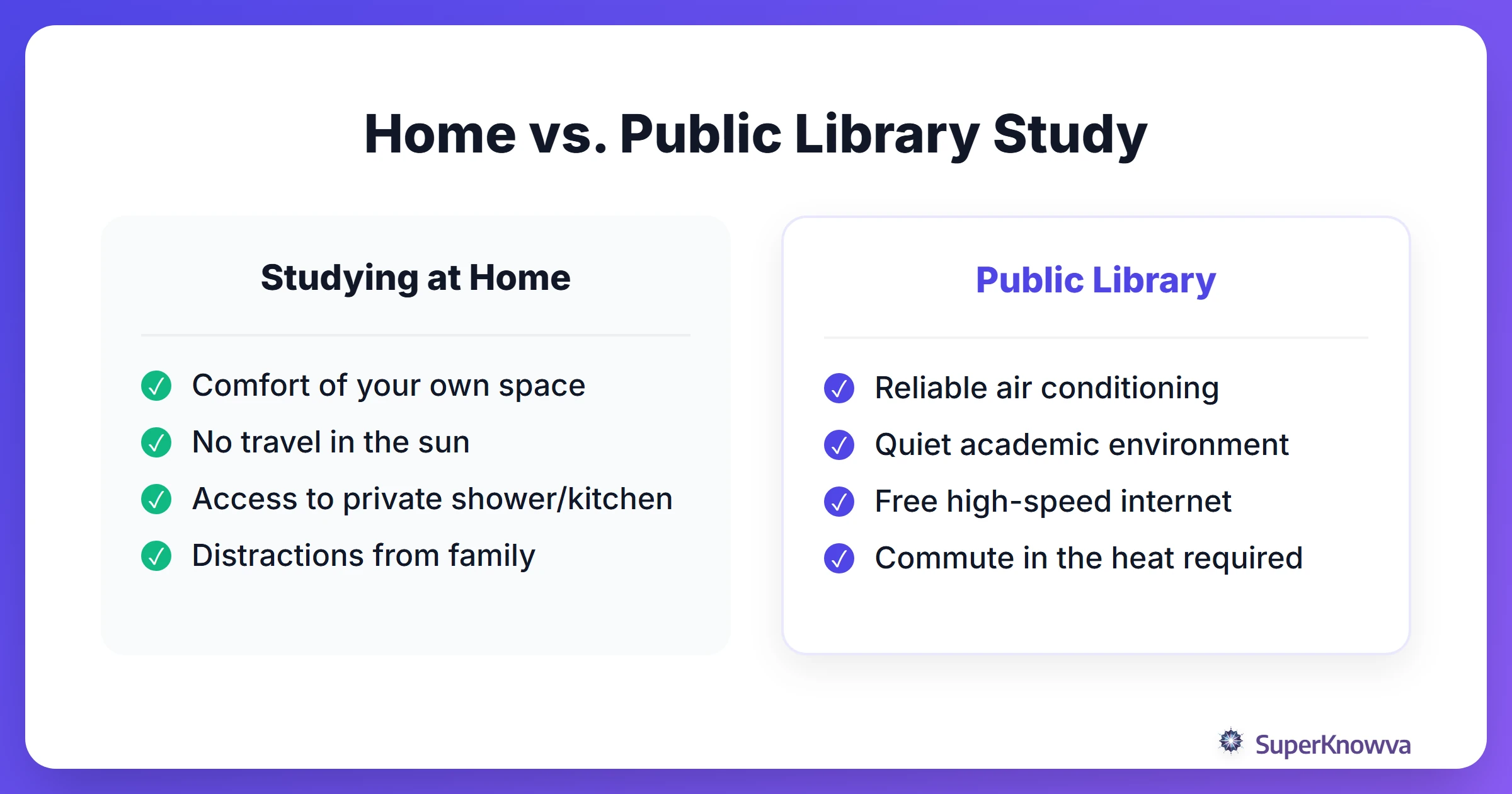
Sometimes, the best way to study during heatwave conditions is to admit defeat and leave the house. Check out "cooling centers" like local libraries, university common rooms, or modern cafes. Yes, changing your environment can be a hassle, but the relief of a climate-controlled space usually pays for itself in 20 minutes of high-focus work.
Hydration and Nutrition: Fueling the Heatwave Grind
When you're sweating through a study session, your body is losing more than just water; it’s losing essential minerals. Chugging plain water can actually lead to an electrolyte imbalance, which results in that familiar "brain fog" and lethargy.
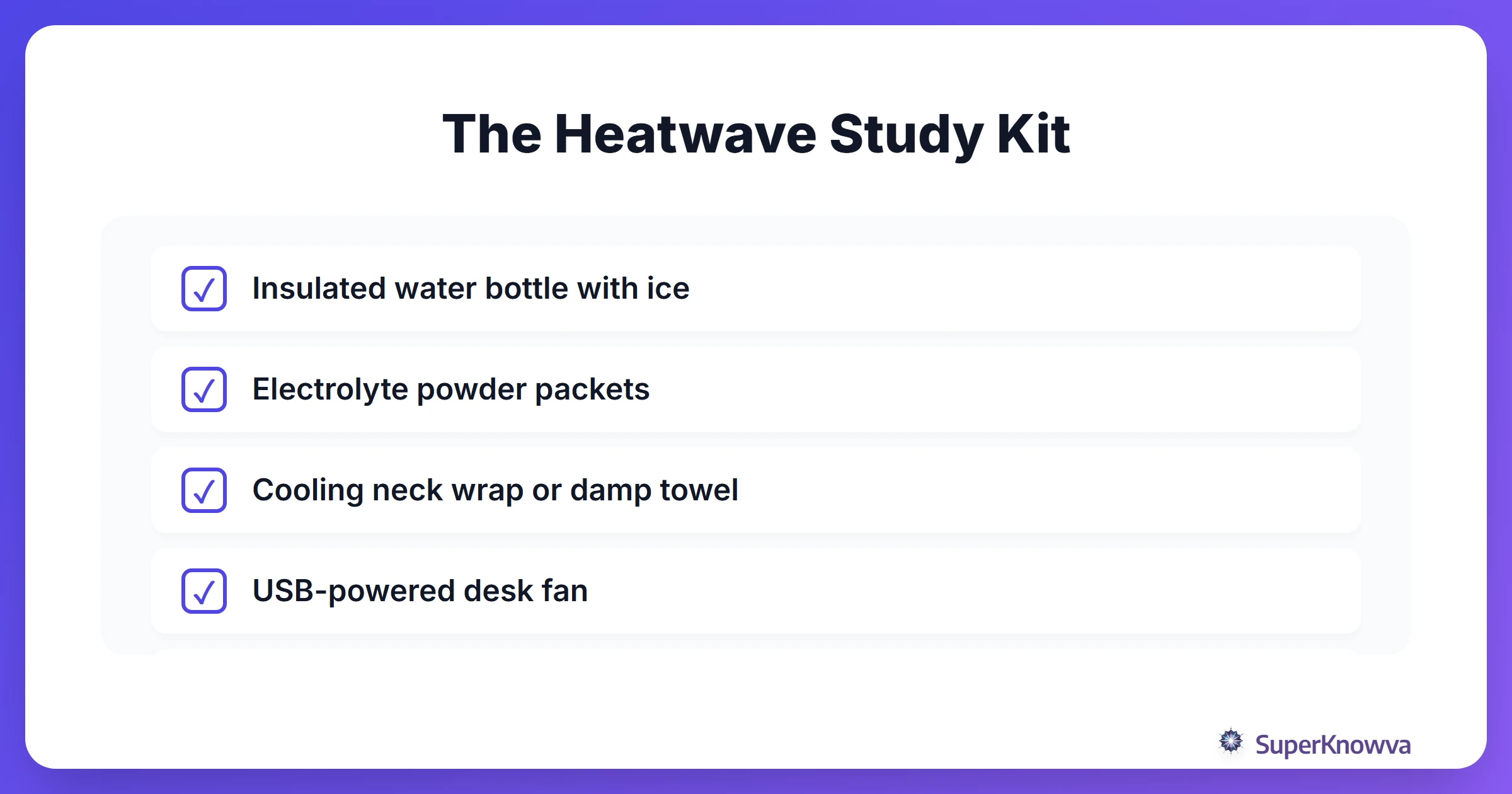
Choosing the best diet for studying is non-negotiable during a heatwave.
- Ditch the Oven: This isn't the time for a roast dinner. Use the microwave or stick to raw foods like salads and chilled fruits. Watermelon and cucumber are over 90% water and help keep you hydrated from the inside out.
- Think Small: Eat frequent, light snacks rather than three heavy meals. Large meals require a lot of metabolic energy to digest, which actually raises your internal body temperature (a process called thermogenesis).
- Watch the Caffeine: An iced latte feels like a savior, but too much caffeine acts as a diuretic. It speeds up dehydration and usually ends in a massive energy crash right when you need to be productive.
Mastering the Heatwave Study Schedule
The standard 9-to-5 routine is your enemy right now. To stay productive, you have to adapt to the "rhythm" of the sun.
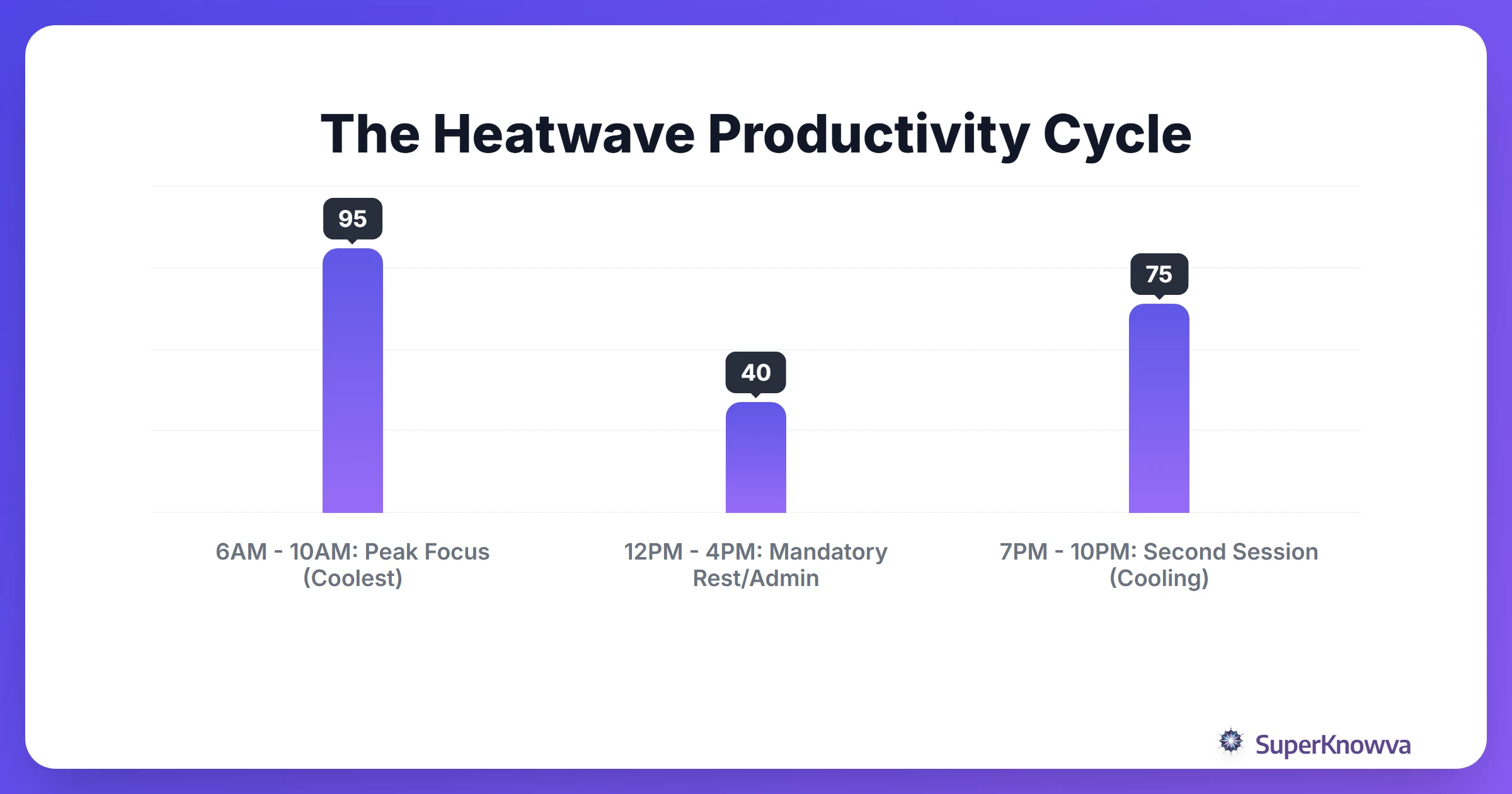
- The Early Bird Strategy: Shift demanding tasks, such as writing essays or learning new concepts, to the coolest window of the day. This is usually between 6:00 AM and 10:00 AM.
- The Afternoon Siesta: Between 2:00 PM and 5:00 PM, the heat usually peaks. Use this time for routine tasks like organizing files, cleaning your desk, or taking a nap.
- Modified Pomodoro: Stick to the Pomodoro technique, but stretch out the breaks. Try 25 minutes of work followed by a 10-minute cooling break (splash cold water on your face or grab a frozen treat).
- Manage Your Expectations: If it’s 40°C (104°F) and you have no AC, your productivity will drop. Focus on maintenance rather than mastering an entire syllabus until the peak of the heat passes.
Mindfulness and Mental Focus Under Pressure
Heat makes us irritable. It makes a simple math problem feel like a personal insult. Using simple meditation techniques can help lower your heart rate and keep your stress levels from boiling over.
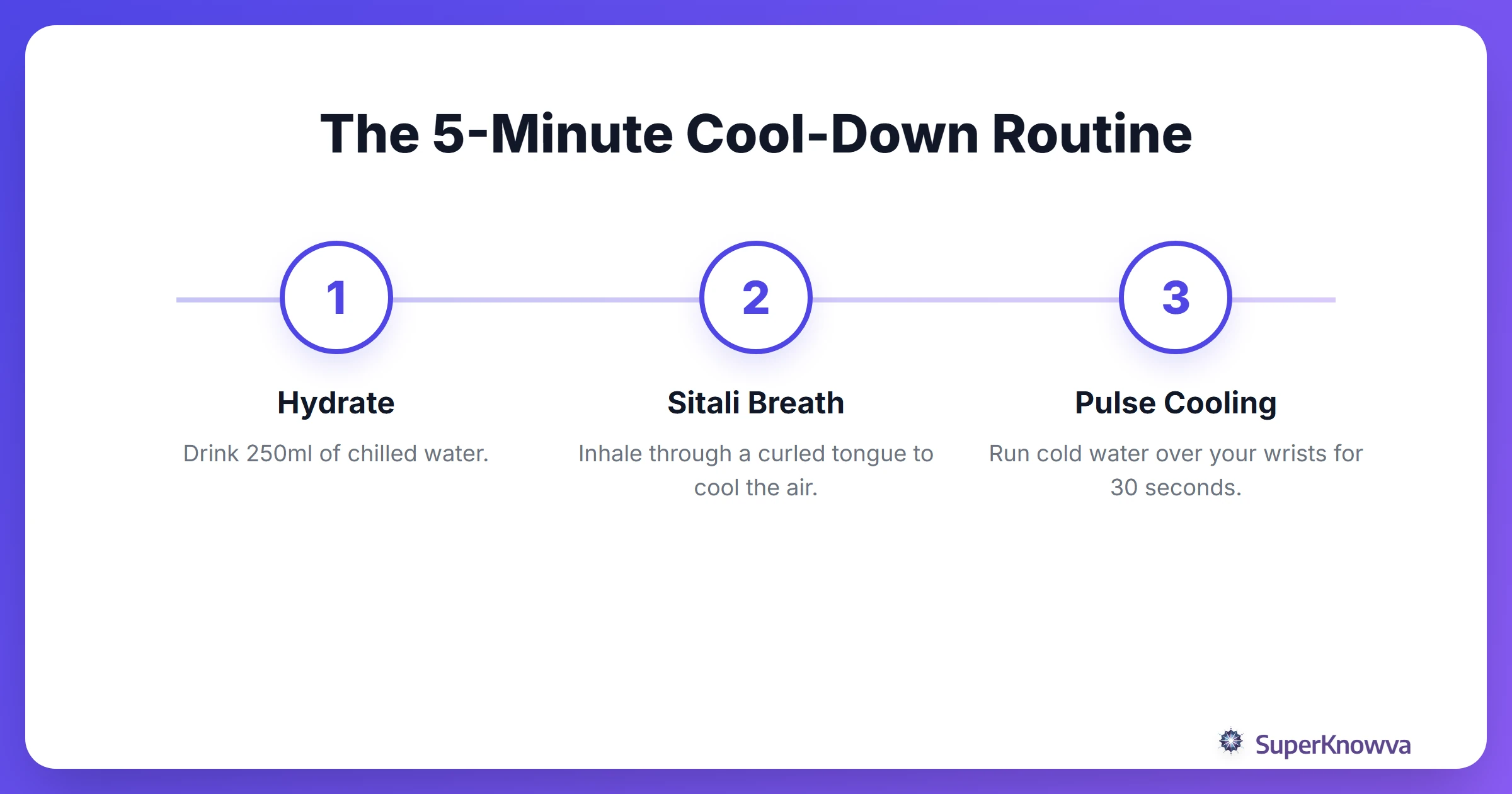
Have you heard of Sitali Breath? It’s a yogic breathing technique designed to cool the body. Curl your tongue into a tube (or purse your lips) and inhale deeply through the mouth. The air is cooled as it passes over the moisture of your tongue, providing an instant internal cooling sensation.
Also, practice single-tasking. Trying to multitask in the heat is like running too many programs on a laptop that is already overheating. Eventually, the system will crash. Use tools like SuperKnowva to break your material into small, manageable chunks so you can focus on one concept at a time.
Heat Exhaustion vs. Study Burnout: Knowing the Difference
It’s easy to confuse heat-induced lethargy with the signs you're exhausted from academic burnout. But confusing the two can be dangerous. You need to know when your "lack of focus" is actually a medical warning.
Signs of Heat Exhaustion:
- Heavy sweating and a rapid, weak pulse.
- Dizziness, lightheadedness, or fainting.
- Nausea or "heat cramps" in your legs/stomach.
- Cool, moist skin with goosebumps, even in the heat.
Signs of Academic Burnout:
- Cynicism or a "what's the point" attitude toward your studies.
- Feeling inadequate or like you aren't accomplishing anything.
- Emotional exhaustion and irritability.
If you feel dizzy or nauseous, stop studying immediately. This isn't about "pushing through." Move to a cool area, hydrate with electrolytes, and rest. No exam is worth a trip to the ER. Once you’ve recovered, you can use AI-powered tools to make your next session more efficient so you can spend less time under the hot desk lamp.
Stay cool, stay hydrated, and remember: this heatwave is temporary, but your education is a marathon. Pace yourself!