Ever spent three hours staring at the same page of a history textbook, only to realize you haven’t absorbed a single word? We’ve all been there. You think the solution is to stay glued to your chair until the information finally sticks, but the secret to better grades might actually be sitting in your gym bag.
There’s a powerful, science-backed connection between exercise and academic performance that most students completely ignore.
As we hit the middle of July, it’s the perfect time to audit your study routine. By mixing even light physical activity into your schedule, you can sharpen your focus and actually remember what you read. Let’s look at how moving your body reworks your brain for success.
The Biological Link: How Movement Rewires the Brain
When you exercise, you aren't just building muscle; you are fertilizing your brain. Physical activity releases Brain-Derived Neurotrophic Factor (BDNF). Neuroscientists call this protein "Miracle-Gro" for the brain. BDNF keeps existing neurons healthy and encourages new ones to grow, creating the foundation of brain health for students.
But it’s not just about growth; it’s about delivery.
Cardiovascular activity pumps more blood and oxygen directly to the hippocampus, the part of your brain that handles verbal memory and learning. This extra circulation improves your cognitive function, leading to faster processing and better recall when answering difficult exam questions. Exercise provides a biological reset. By flushing out cortisol, the stress hormone that causes mental strain, movement clears brain fog and leaves you with a focused mind.
Academic Performance by the Numbers
Is the "fitness and finals" link just a theory? Not even close. The data is pretty staggering. Research from the University of Southern California (USC) found a direct correlation between active students and higher GPAs. Simply put: students who move more consistently outperform their sedentary peers on both standardized tests and daily assignments.
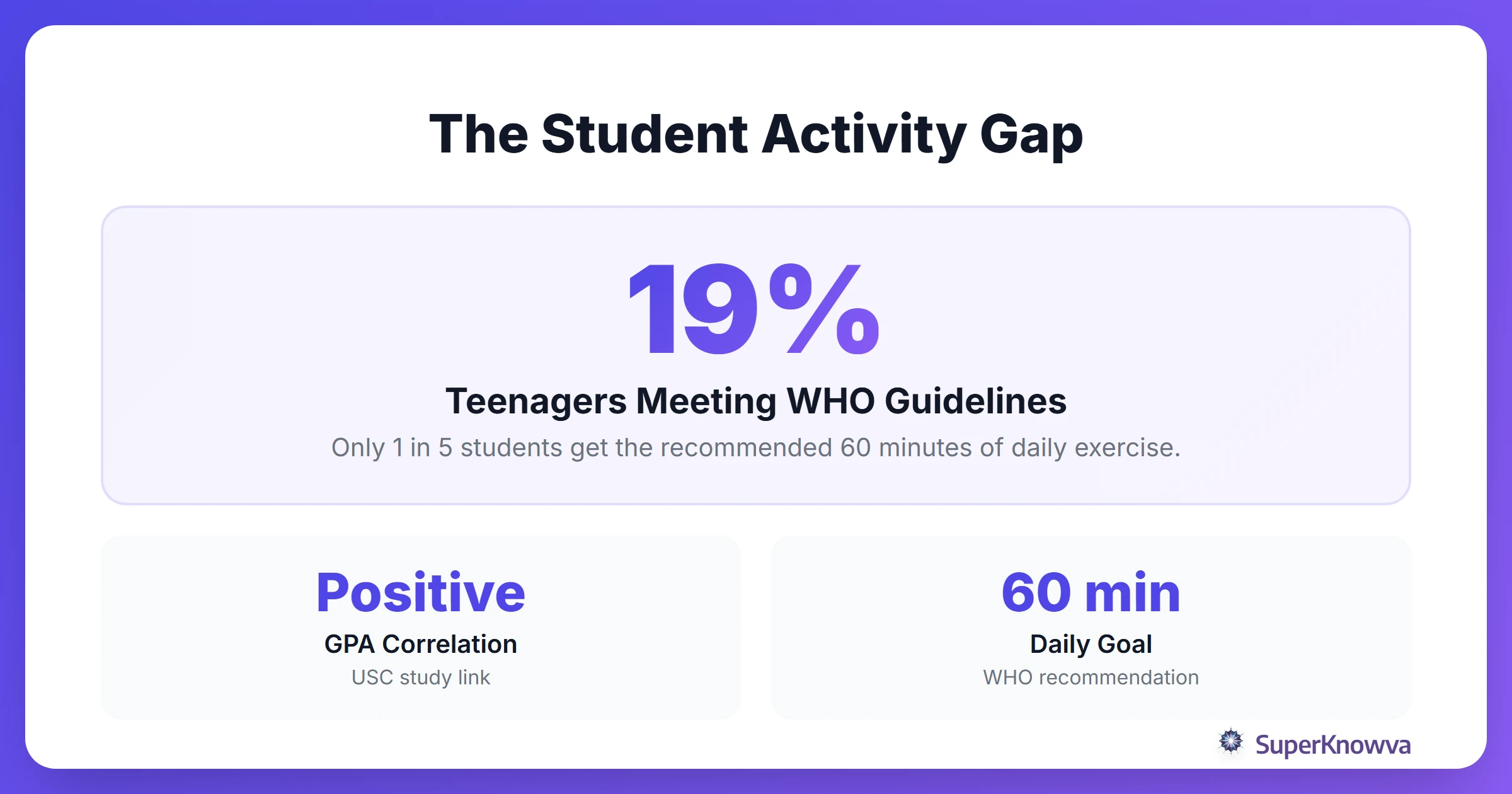
Despite this, we’re seeing a massive "activity gap." The World Health Organization (WHO) recommends 60 minutes of moderate-to-vigorous activity daily, yet only about 19% of teenagers actually hit that mark.
It’s easy to fall into the "grind culture" trap, thinking that every hour not spent at a desk is an hour wasted. But research shows that’s a recipe for diminishing returns. When you sacrifice movement for extra hours of sitting, your brain’s ability to absorb information eventually hits a plateau. For a deeper look at this, check out our guide on Exercise and Grades: How Physical Activity Boosts Cognitive Function. As the NCBI: Effects of Physical Activity on Academic Performance notes, the long-term cognitive gains of staying active far outweigh that "extra" hour of distracted, exhausted studying.
Aerobic vs. Anaerobic: Which is Best for Memory?
You don't need to train for a marathon to see results. Finding the right intensity is key. You want to wake your brain up, not leave yourself so exhausted that you need a three-hour nap.
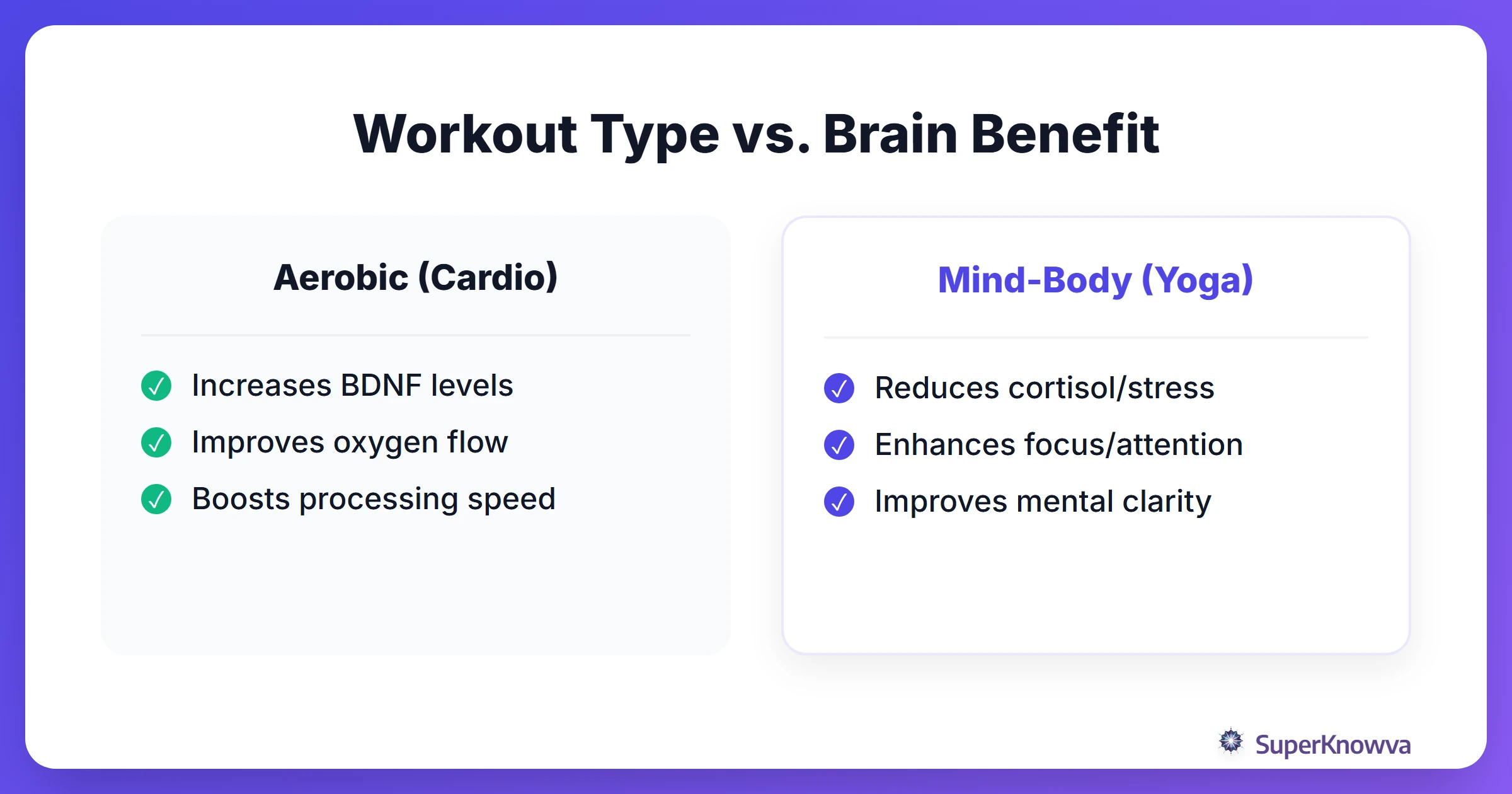
- Aerobic Exercise (Cardio): Brisk walking, jogging, or cycling increase BDNF production. These activities improve processing speed and mental energy.
- Mind-Body (Yoga & Stretching): Yoga helps manage stress and anxiety. It lowers cortisol levels and supports sustained attention during long lectures.
- Anaerobic (Strength Training): Lifting weights or bodyweight resistance improves executive function, the part of your brain that handles planning, organization, and self-discipline.
The goal? Keep it manageable. A 20-minute light jog or a focused yoga flow is often more effective for physical activity and learning than a grueling gym session that leaves you drained.
The Perfect Timing: When to Move for Maximum Retention
When you move can be just as important as how you move. To get the most out of your memory retention, try aligning your activity with your study phases:
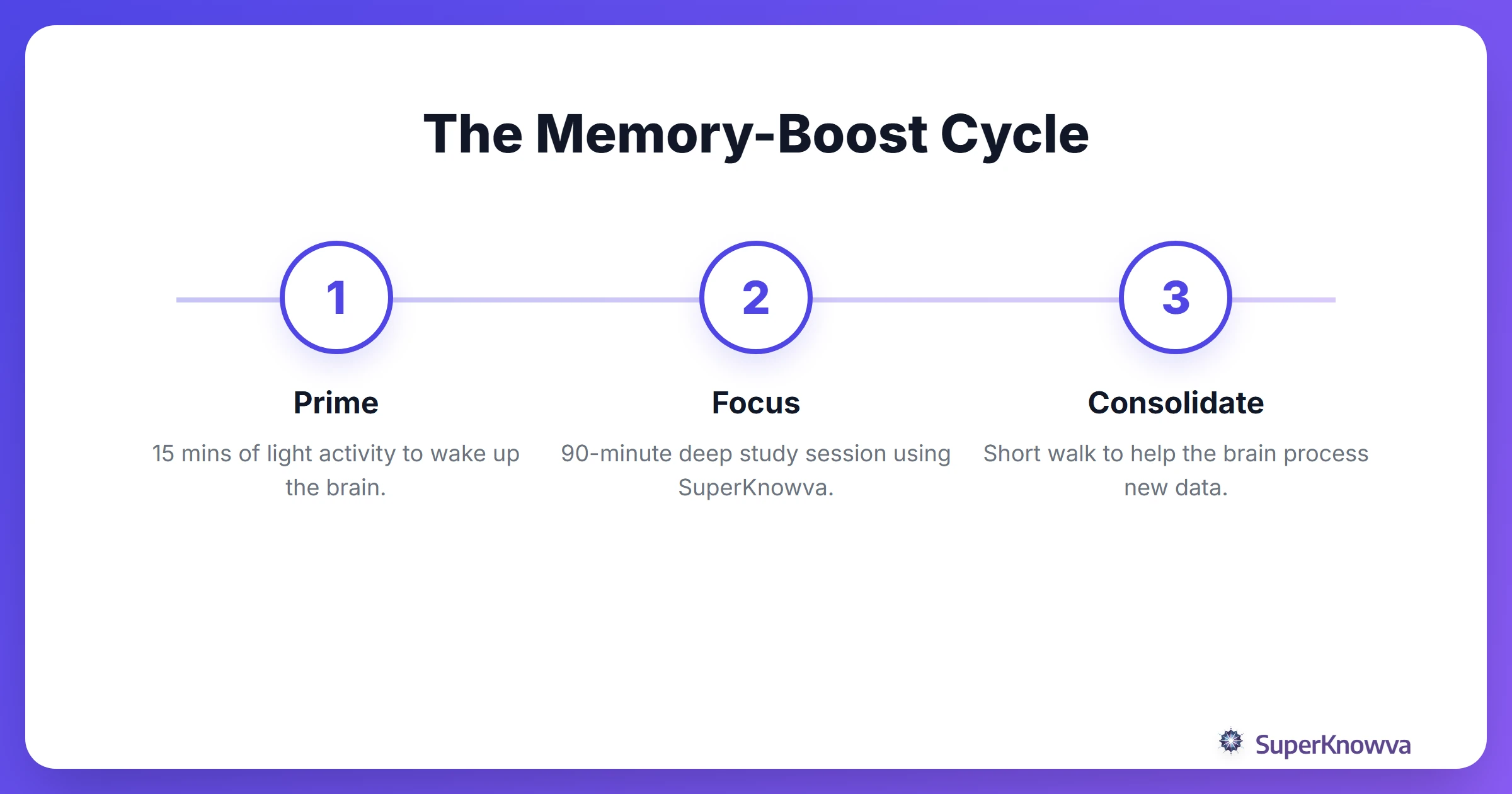
- Pre-Study (The Prime): A quick 15-minute burst before you open your books "wakes up" your brain and readies it for new information.
- During Breaks (The Consolidation): Using light activity during breaks helps your brain shift information from short-term to long-term memory.
- Post-Study (The Encoding): Exercising after a heavy session acts as a "lock," helping encode the facts you just learned.
Don't fight your circadian rhythms, either. If you’re a morning person, a sunrise walk is your power move. If you hit a wall at 3:00 PM, that’s the perfect time for a "movement snack" to recharge your focus.
Micro-Workouts for Busy Students
"I don't have time" is the most common reason students skip the gym. But here’s the truth: you don’t need a gym membership or an hour of free time. Study break exercises can be squeezed into even the most frantic schedules.
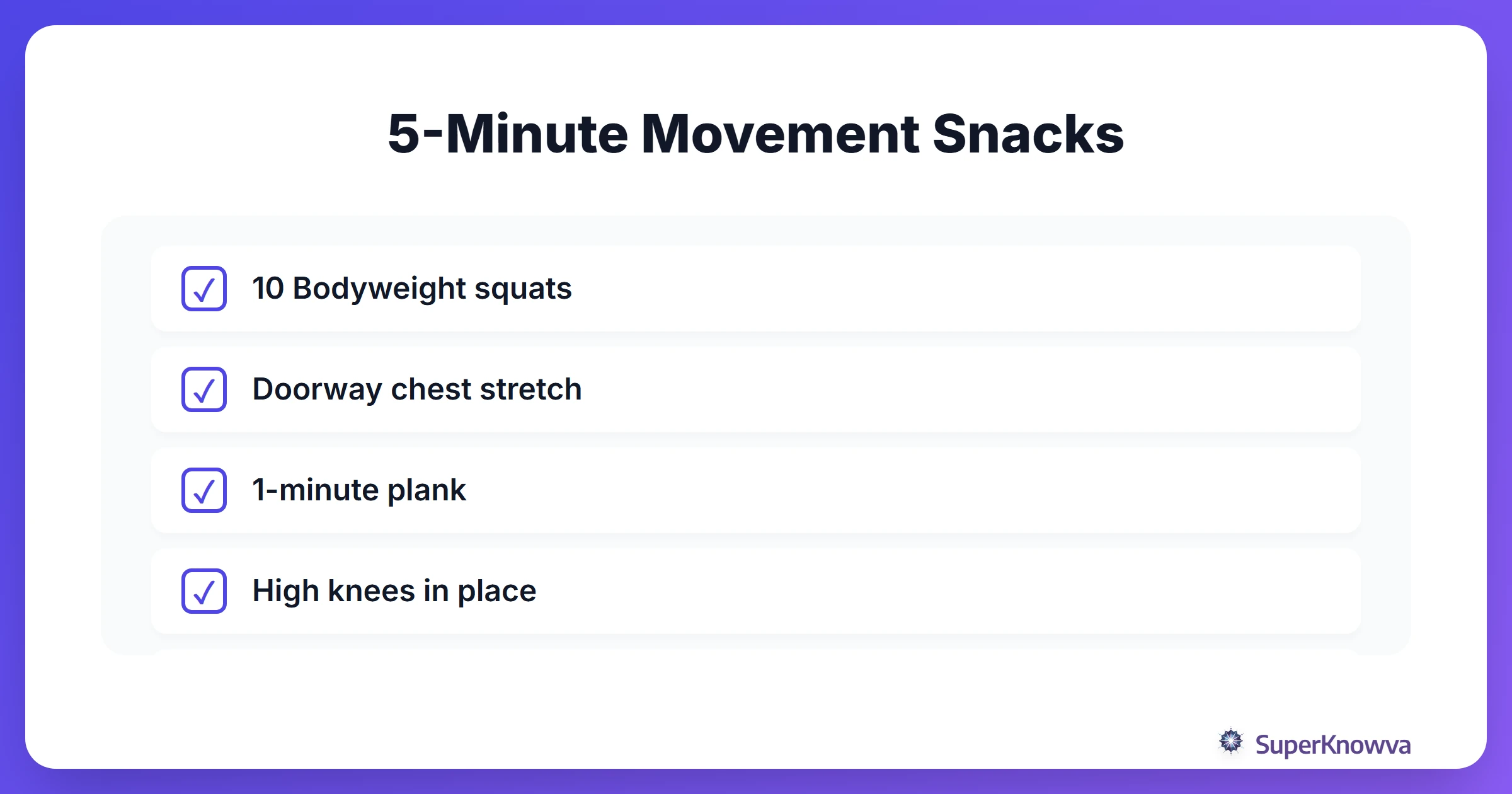
Try these 5-10 minute "movement snacks":
- The Desk Reset: Doorway chest stretches and neck rolls to fix the "study slouch" and get blood flowing to your head.
- Active Recovery: Use household chores or the walk between classes as a chance to pick up the pace and get your heart rate up.
- The 5-Minute Blast: 10 squats and a 1-minute plank. It’s just enough of a physiological shift to break through a mental block.
Small movements are a surprisingly effective way of recovering from student burnout and keeping your momentum high throughout the week.
Integrating Exercise into Your SuperKnowva Routine
At SuperKnowva, we’re all about studying smarter. Our AI tools are built to make your study sessions more efficient, which actually frees up time for you to take care of yourself. Here’s how to pair your fitness goals with your grades:
- Audio-Based Review: Use SuperKnowva’s summary features to listen to your course materials while you go for a walk or a bike ride.
- The Reward System: Use movement as a "treat." Tell yourself, "Once I finish this quiz module, I’m heading out for a 10-minute walk."
- Track Your Progress: Start noticing the link between your activity and your quiz scores. You’ll likely find that on the days you move, your scores climb.
By building a sustainable wellness habit, you are not just cramming for an exam. You are improving your health and focus. For more tips on staying centered, check out our guide on mindfulness techniques for focus. As the Stanford Lifestyle Medicine Study suggests, the link between staying active and higher test scores is a significant advantage for academic success.
Ready to boost your brainpower? Grab your water bottle, take a quick lap around the block, and then log back into SuperKnowva to see the difference for yourself!