It’s mid-July. The sun is blazing outside, but you are stuck indoors, hunched over a desk trying to memorize complex formulas or dates that won't stick. That familiar mental fog sets in. Your head feels heavy, your motivation is gone, and you realize you have read the same paragraph four times without processing a single word.
Before you reach for another double espresso, stop. The real culprit behind your fading concentration might be much simpler than a lack of caffeine. When it comes to hydration for brain power, most students underestimate how much a few missing glasses of water can cost them during peak exam season.
Let’s break down why staying hydrated is the ultimate "unfair advantage" for your summer studies.
The Science of the "Water Brain"
To understand why water matters for your GPA, you have to look at the biology of the organ doing the heavy lifting. The human brain isn't a solid, static mass. It’s actually about 75% water.
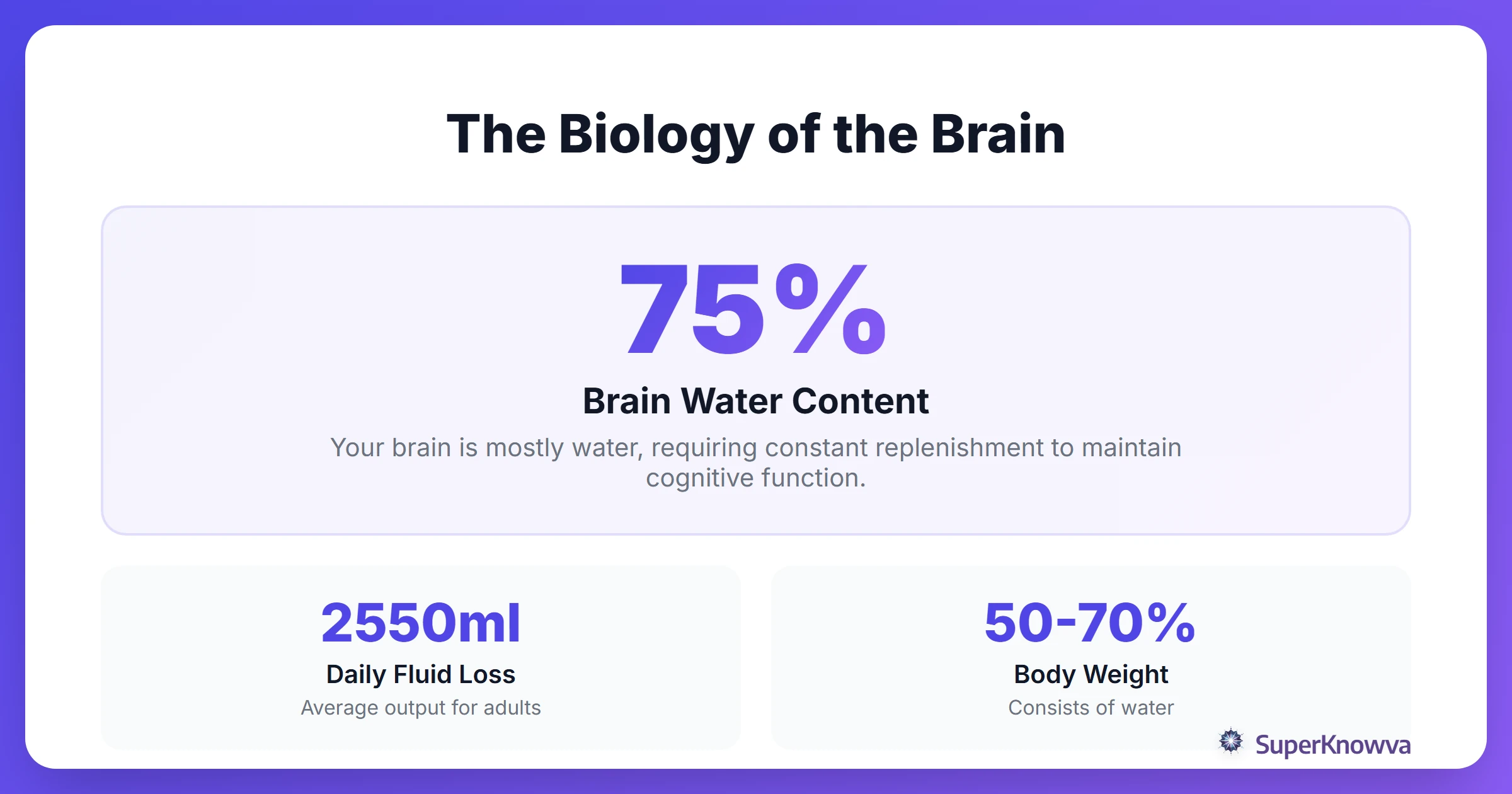
This high fluid content provides more than cushioning; it is the foundation of how you think. Water maintains the electrolyte balance within your neurons. These electrolytes, such as sodium and potassium, carry the electrical signals that allow brain cells to communicate.
Think of water as the primary nutrient transporter. It delivers essential glucose to the brain while simultaneously flushing out metabolic "trash." When your fluid levels drop, your internal communication network begins to lag. Your brain cells literally lose their shape, and your mental processing speed takes a nose dive.
How Dehydration Drains Your Mental Energy
Dehydration impacts mental performance even in everyday environments, causing dehydration and focus issues. Even mild dehydration, the kind you barely notice, can significantly impair cognitive function and water retention in the brain.
Research, such as that discussed in Levels of Hydration and Cognitive Function, shows that when you're dehydrated, your brain has to work significantly harder to achieve the same results. It’s like your "engine" is redlining just to keep up with basic tasks.
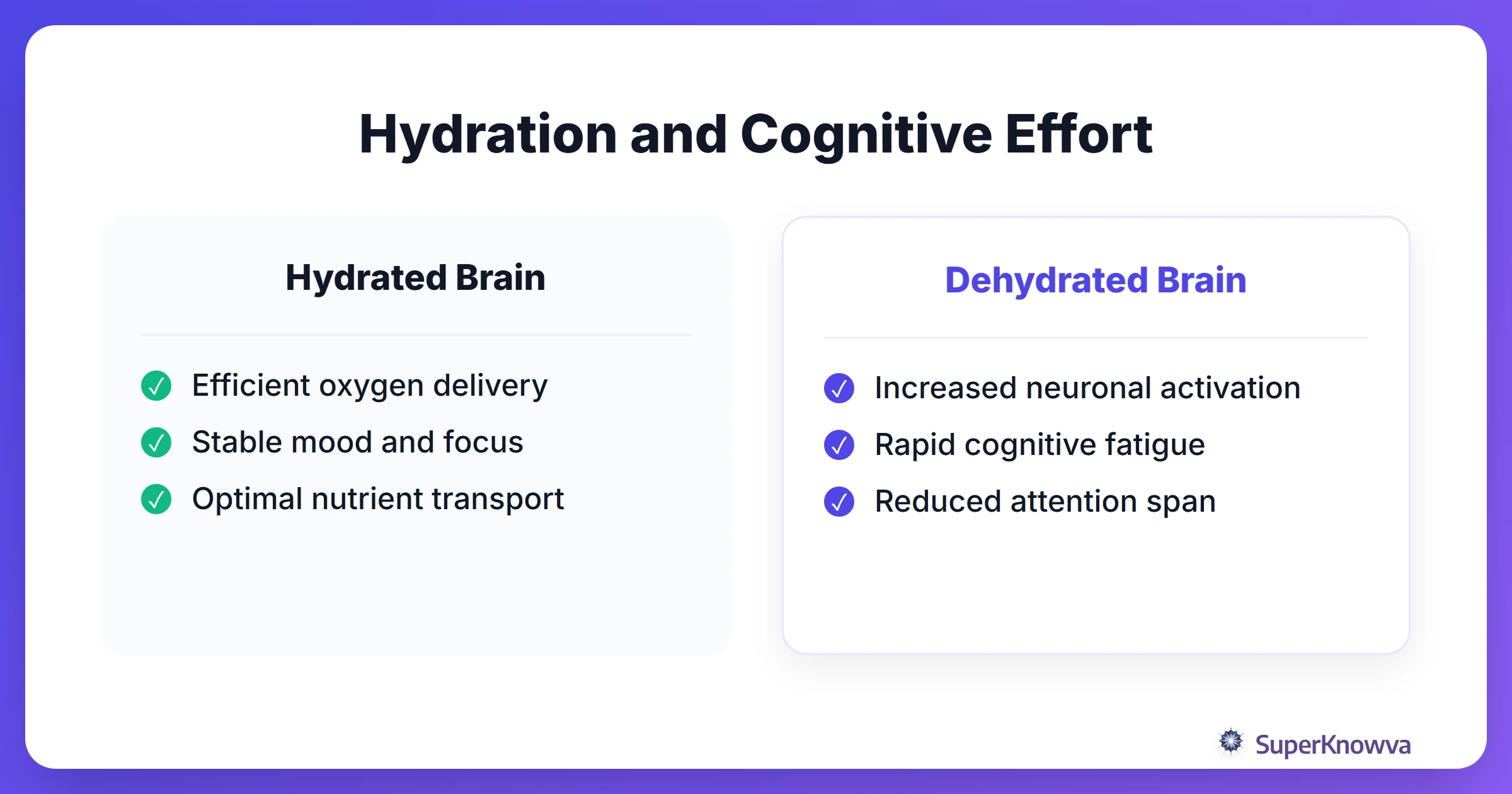
This extra effort drains your cognitive reserve, leading to:
- Rapid Fatigue: You feel "done" with studying after only 30 minutes.
- Mood Swings: Irritability makes it nearly impossible to stay disciplined.
- Reduced Attention Span: Your mind wanders to your phone or the window every few seconds.
The Summer Exam Trap: Why Heat Multiplies the Risk
Studying in July presents a unique challenge for student wellness. Under normal conditions, your body loses about 2.5 liters of fluid a day through breath and skin. But throw in a summer heatwave, and that number skyrockets.
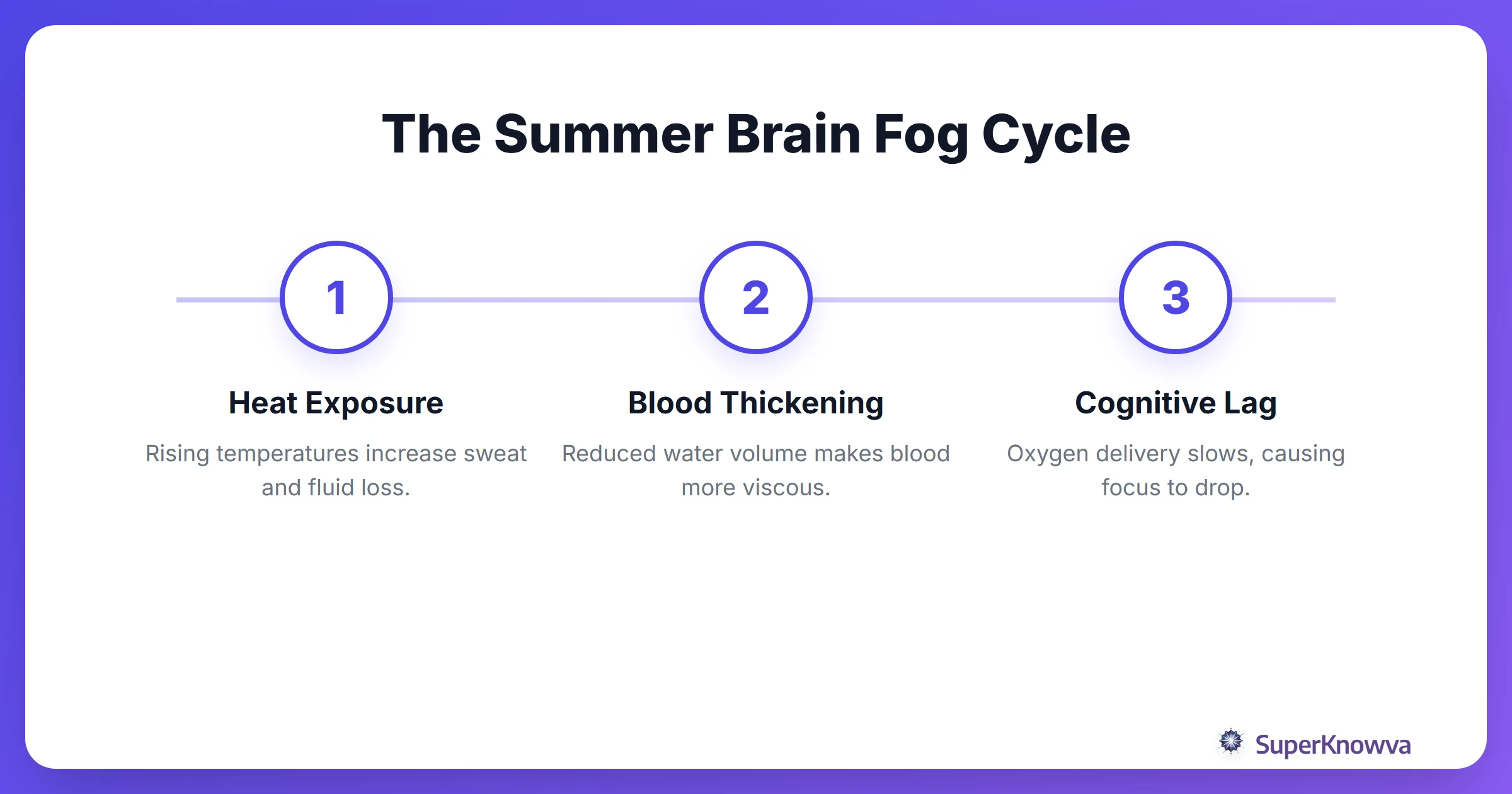
As you sweat, your total blood volume decreases, making your blood thicker and more viscous. This is a disaster for focus. It makes it much harder for your heart to pump oxygen-rich blood to your brain. This "thick blood" effect is exactly why summer study sessions can feel so physically exhausting. Without a steady stream of oxygen, your brain simply cannot maintain the high-speed processing required for intense revision. If you're already feeling the strain, learning about recovering from student burnout can help you reset your approach.
Water vs. Caffeine: Choosing the Right Study Fuel
It’s the classic student dilemma: do you grab a massive iced latte or a bottle of water? While caffeine offers a temporary hit of alertness, relying on it as your primary "fuel" is a dangerous game in the heat.
Caffeine is a diuretic, meaning it tells your body to expel fluids faster. If you’re already sweating, that third cup of coffee is actually accelerating your dehydration.
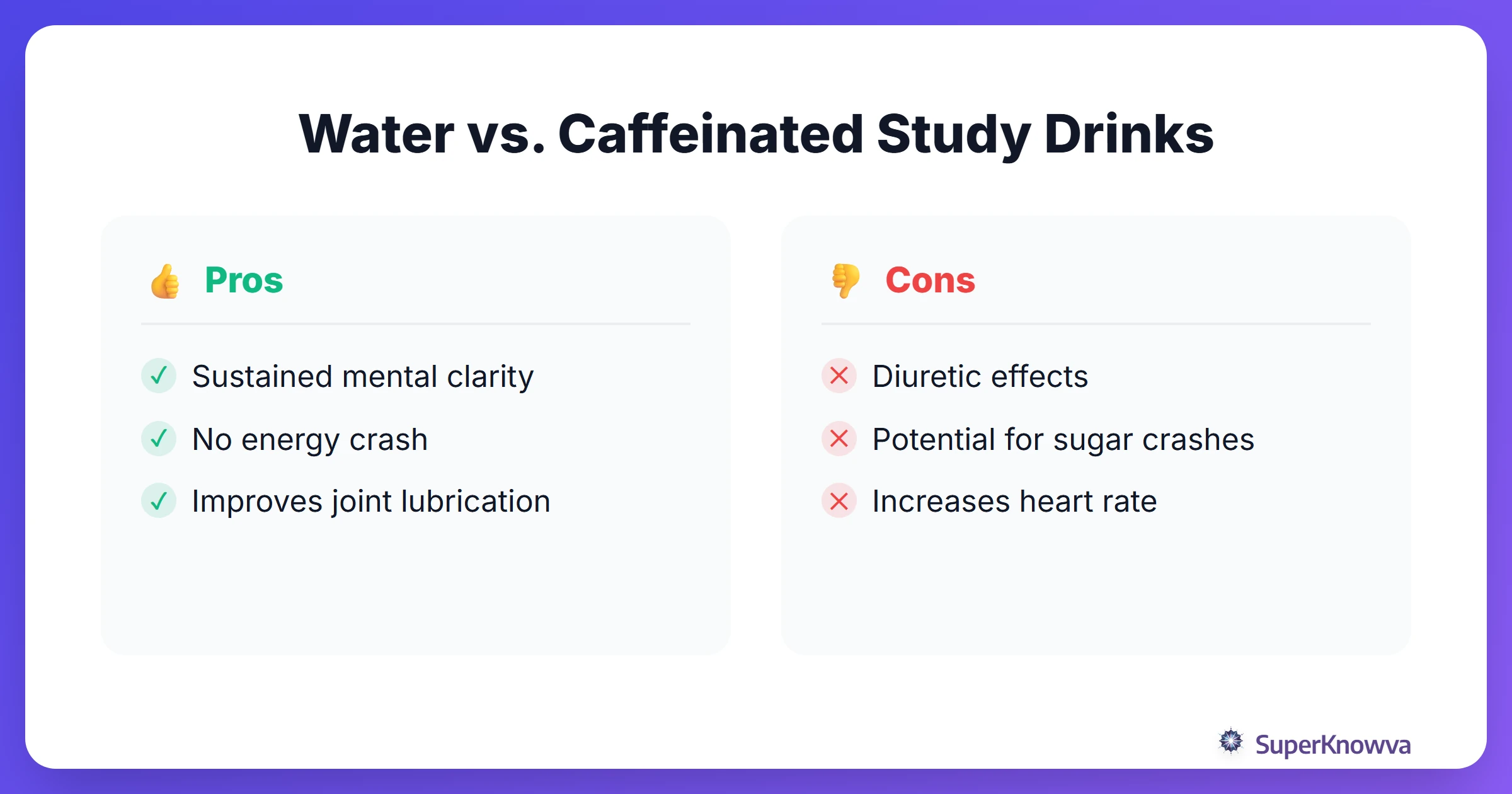
Unlike the "crash" that follows sugary energy drinks, proper hydration provides sustained mental clarity. You don't have to quit coffee. Just be smart about it. For every cup of caffeine, try to match it with two cups of water. Pairing this habit with the best diet for studying will ensure your body has everything it needs to perform.
5 Hydration Habits for High-Stakes Study Sessions
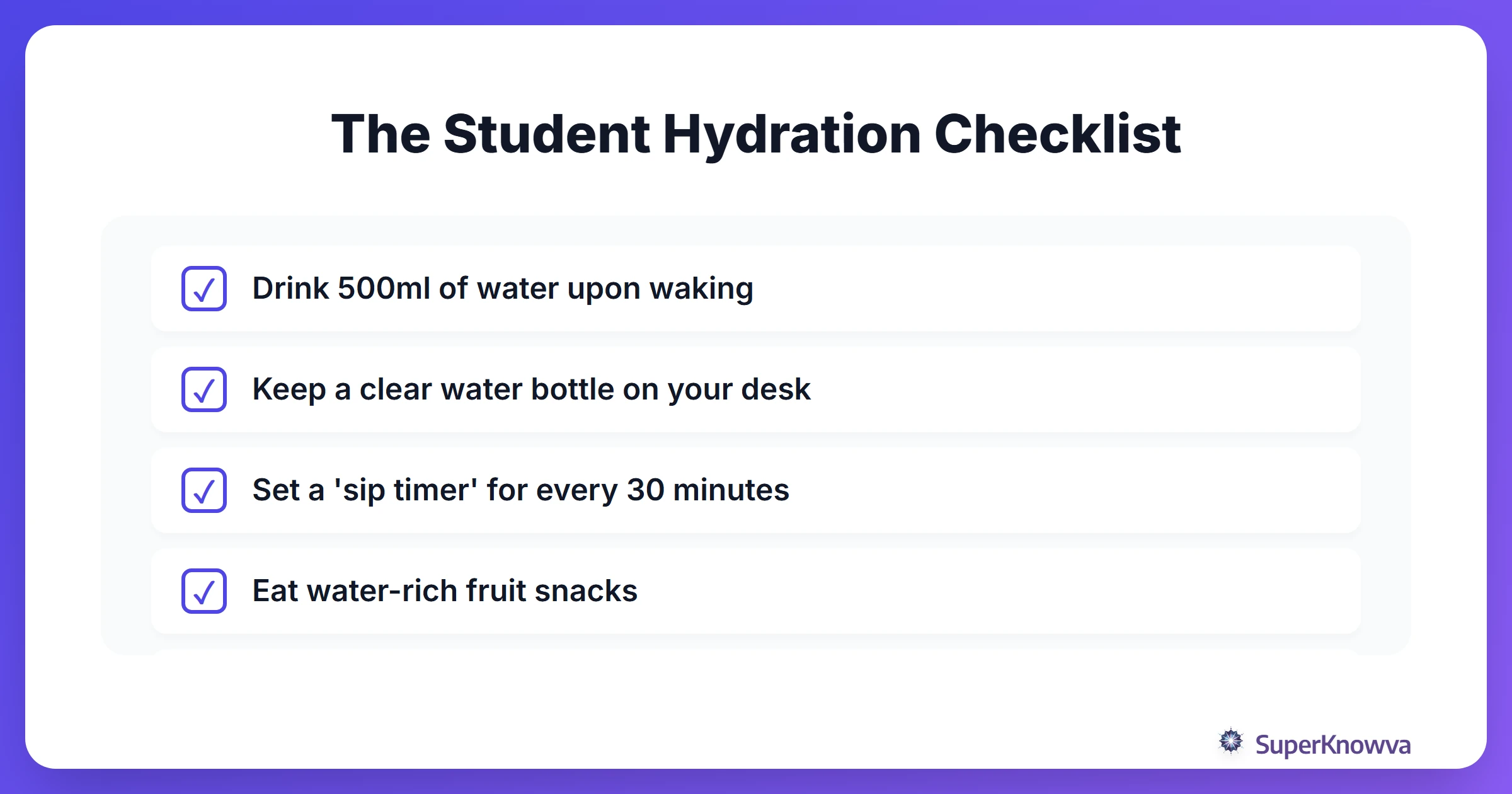
Knowing you need water is easy. Remembering to drink it when you're deep in a textbook is the hard part. Here are five summer study tips to keep your brain hydrated:
- The Morning Ritual: Drink 500ml of water as soon as you wake up. Your brain has been fasting for 8 hours and needs an immediate "reboot."
- The Timer Method: Use a "sip timer." Every 30 minutes, when your pomodoro timer goes off, take three long sips.
- Eat Your Water: Swap dry crackers for water-rich snacks like watermelon, cucumbers, or strawberries.
- Visual Cues: Keep a clear, reusable water bottle right in your line of sight. If you see it, you’ll drink it.
- The "Color Test": It’s basic but effective. Pale yellow is the goal; anything darker means your brain is likely struggling.
If you find it hard to stay calm and focused, incorporating meditation for focus can help you stay mindful of your body’s signals, like thirst, before they turn into a headache.
Measuring the Impact on Grades and Memory
Hydration is about more than health; it is about results. Multiple studies have linked proper hydration to better exam performance. Because water supports memory recall and processing speed, a well-hydrated student can retrieve information faster and more accurately under pressure.
As experts note, the connection between our physical state and our mental output is inseparable.
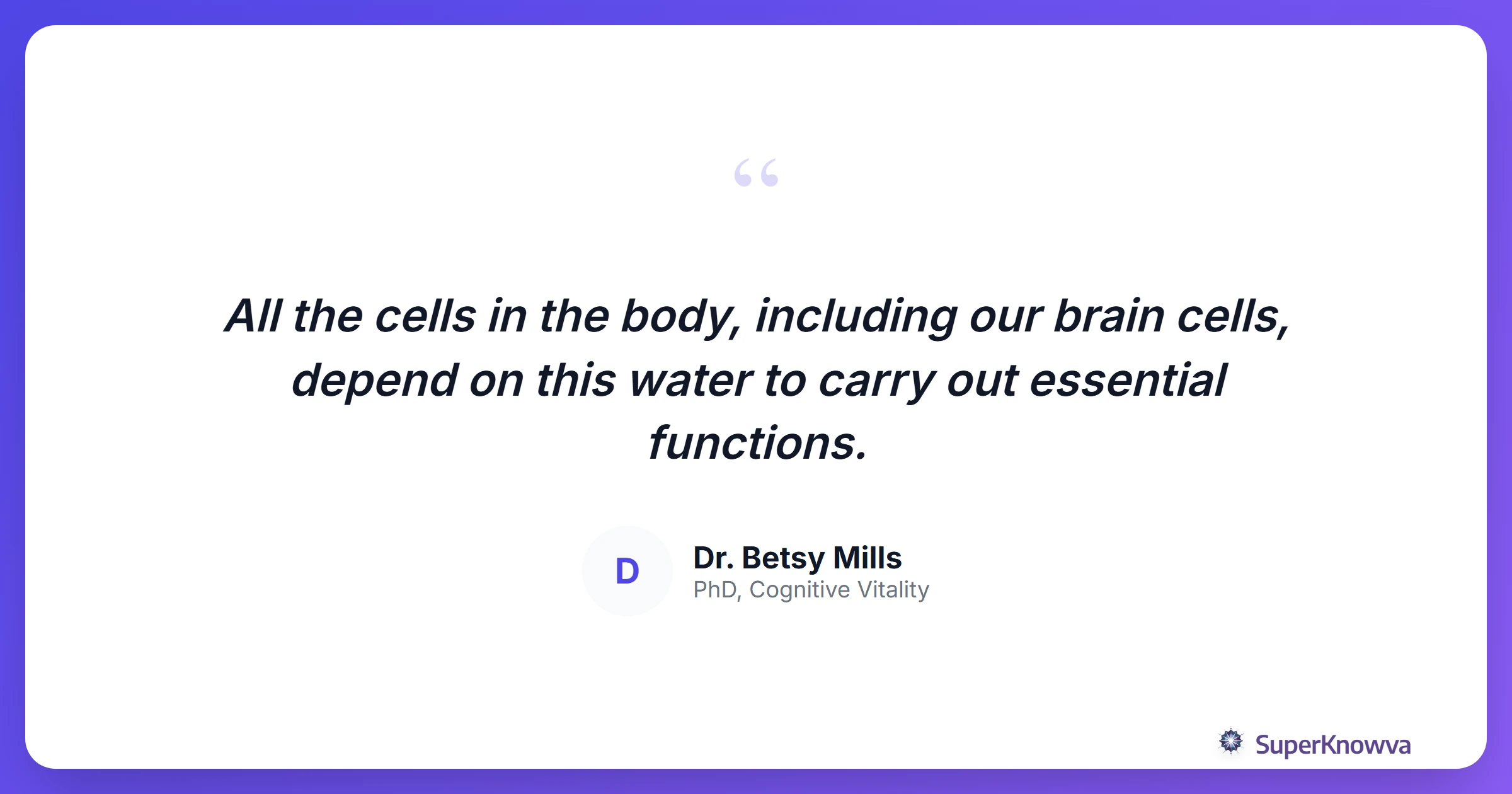
According to the article Can dehydration impair cognitive function?, even a 2% loss in body water can lead to significant errors in tasks requiring attention and psychomotor skills.
By treating water as a "cognitive supplement" rather than just a way to quench thirst, you give your brain health the foundation it needs to succeed. Don't let the heat tank your hard work this summer. Keep your bottle full, your brain hydrated, and your focus sharp.