Summer is a massive contradiction for anyone trying to stay productive. Outside, the sun is out, the beach is calling, and everyone seems to be on a permanent vacation. But your academic goals? They don’t just hit the pause button because it’s July.
Achieving deep work for students during these months is notoriously difficult. It feels like you’re fighting an uphill battle against the weather and your own social life. But here’s the truth: mastering the art of intense focus right now is your secret weapon. Whether you’re catching up on credits or getting a head start on next semester’s exam preparation, you need a plan that allows you to crush your goals without sacrificing your entire summer.
The Summer Paradox: Why Your Brain Wants to Quit
During the semester, you have a rhythm. Classes, labs, and library sessions provide a natural structure. In the summer? That structure vanishes.
This leads to "Summer FOMO." It is the frustration you feel when seeing friends post reels from a boat while you are stuck at a desk. This is not just a mood; it is a cognitive drain. Every time you wonder what you are missing, your cognitive load increases. You are physically in your room, but your mind is at the pool.
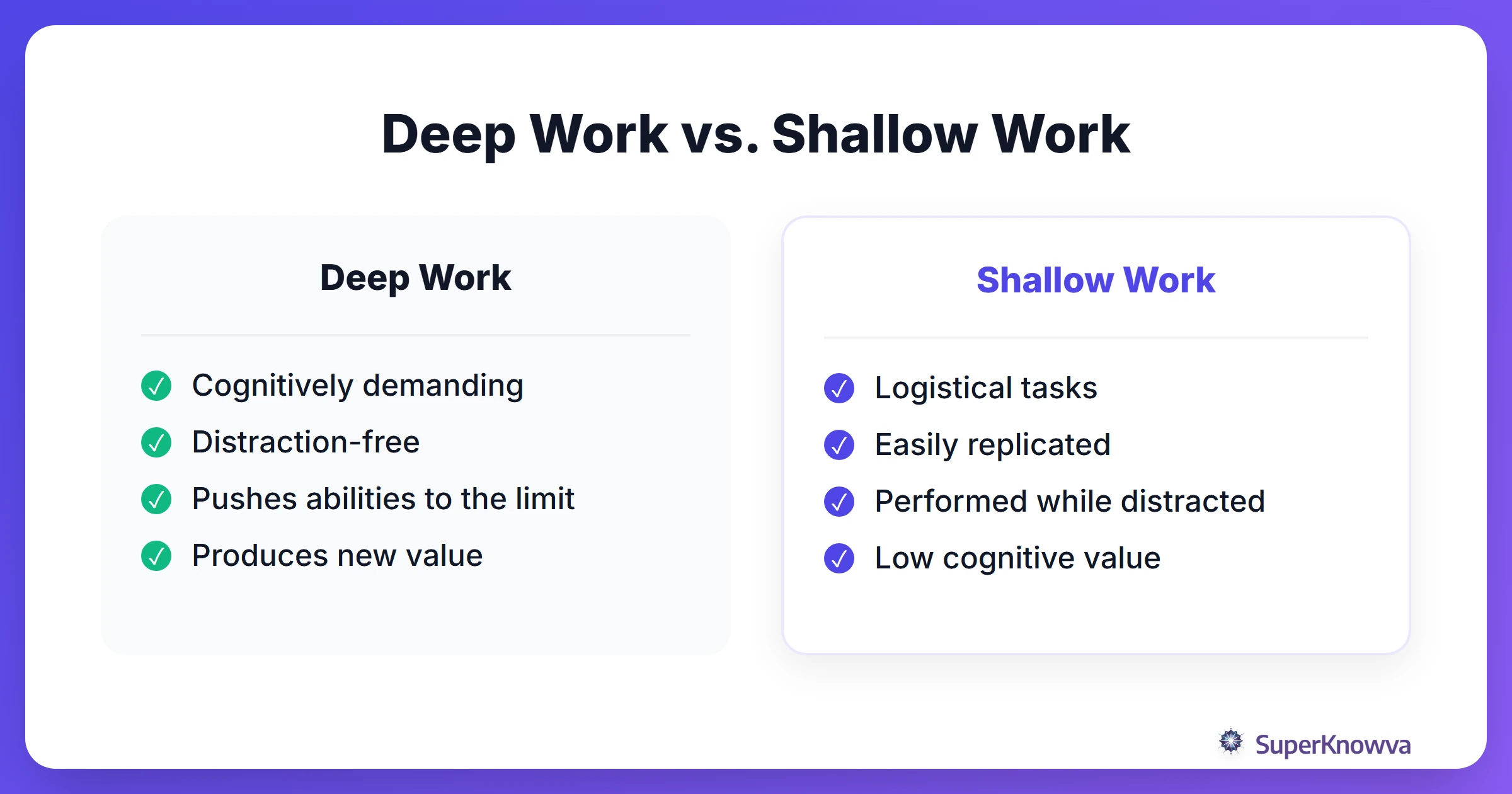
The result is usually a day filled with context switching. You study for ten minutes, check a group chat about dinner plans, and then spend another ten minutes trying to remember where you left off. That’s "shallow work." It feels like you’re busy, but you aren’t actually moving the needle. To make real progress, you have to prioritize Deep Work for Students: Mastering Focus. It’s about pushing your brain to its limit in a distraction-free zone so you can finish early and actually go outside.
The Architecture of a Summer Deep Work Session
You can’t just sit down and hope for the best. Hope isn't a productivity strategy. You have to design your session before you even open your laptop.
First, ditch the vague goals. "I’ll study biology" is a recipe for procrastination. Instead, try: "I will finish the practice problems for Chapter 4." Be specific. Be ruthless.
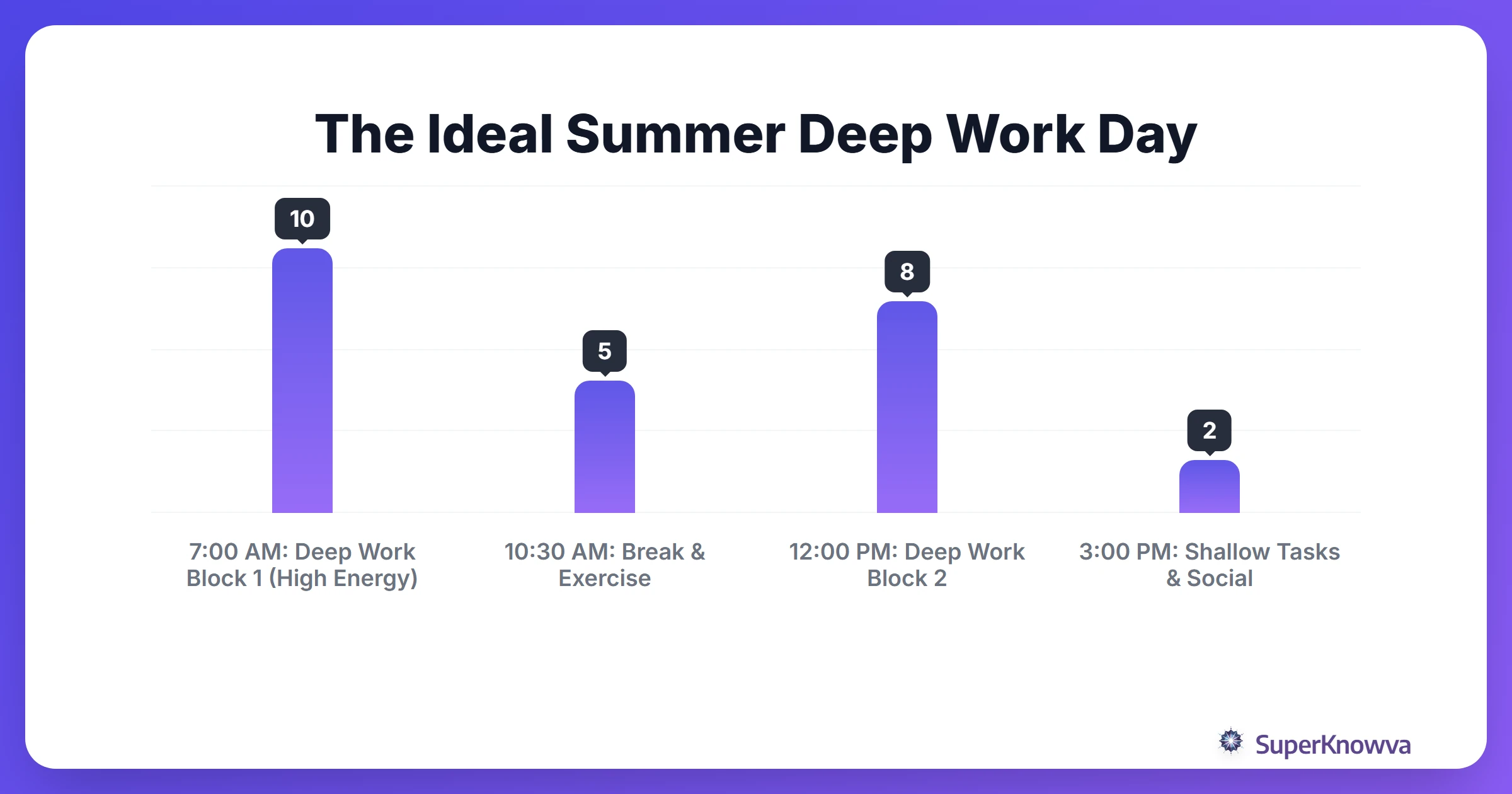
Keep in mind that even the most high-achieving humans only have about 3 to 4 hours of deep work in them per day. If you try to grind for eight hours in the summer heat, you’re going to burn out by Tuesday. To make that four-hour window count:
- Set a hard stop time: Knowing you’re "done" at 1:00 PM creates a healthy sense of urgency.
- Eat the frog: Do not check your email. Do not "organize" your files. Go straight to the hardest, most annoying task on your list.
As noted in this Deep Work for Studying Discussion on Reddit, many students find that treating these blocks as "non-negotiable appointments" is the only way to stay consistent when the weather is perfect.
Digital Minimalism: Guarding Your Attention
The biggest threat to your focus? It’s sitting right next to you. Your smartphone is a masterpiece of distraction.
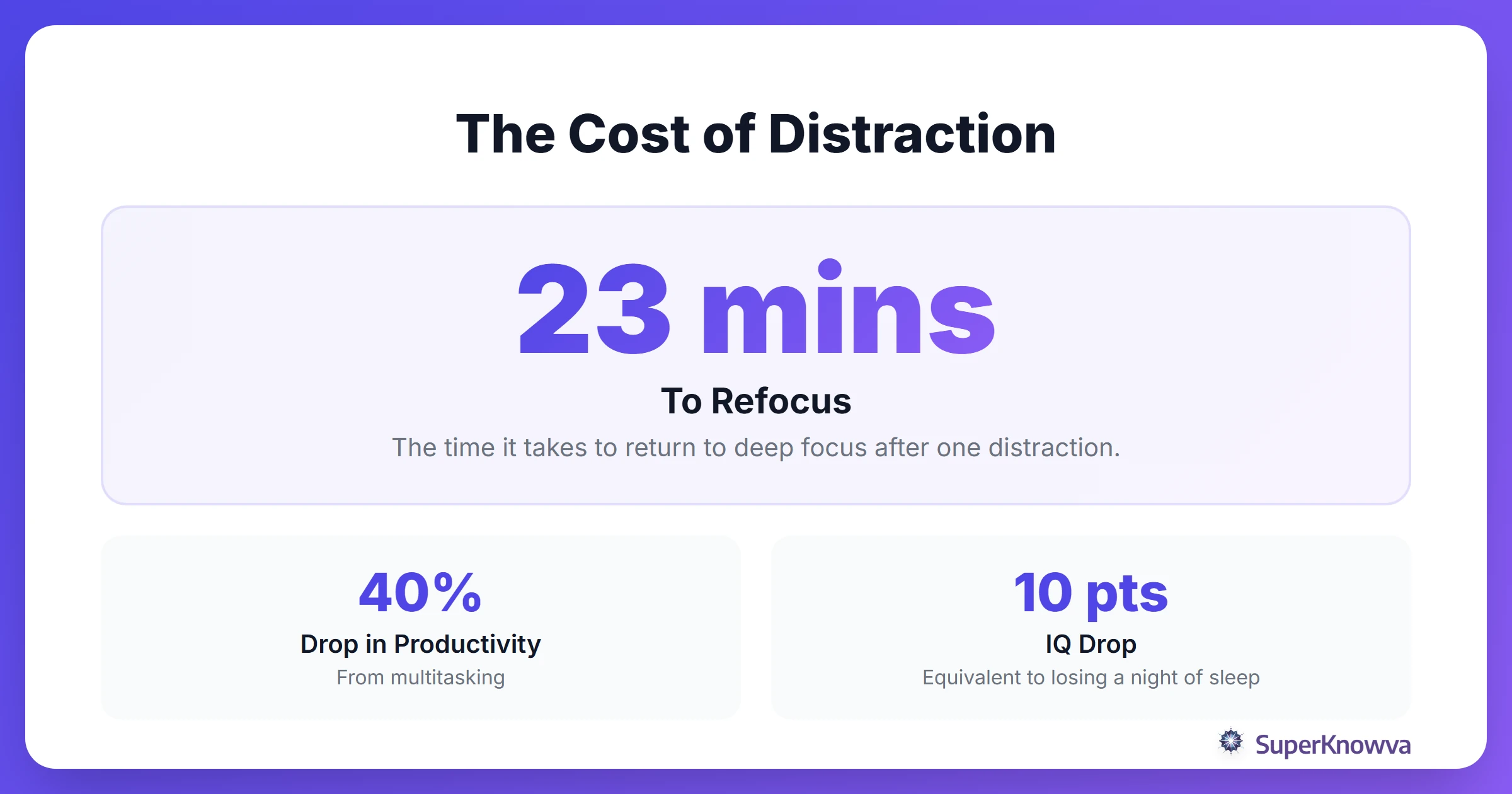
Every time you glance at a notification, you suffer from "cognitive residue." Even after you put the phone down, a part of your brain is still thinking about that text or that Instagram comment. You aren't fully back in the work. To fight back, you need to embrace Digital Minimalism for Students:
- Use the "Nuclear" Option: Use apps like Freedom or Forest to literally lock yourself out of social media.
- The Digital Sunset: Turn off your screens an hour before bed. This isn't just for your eyes; it’s to stop your brain from racing so you can actually get the rest you need for tomorrow’s session.
- Physical Distance: If your phone is in the room, it’s winning. Put it in a drawer, or better yet, a different room entirely.
Morning Mastery: Beating the Heat and the Noise
As the day goes on in the summer, the world gets louder. The temperature rises, neighbors start mowing lawns, and the temptation to quit gets stronger.
The early morning is your "Golden Hour." By starting at 7:00 AM or 8:00 AM, you’re working when it’s cool and quiet. Plus, getting that early morning light helps set your internal clock, making it easier to wake up energized the next day.
Try creating a "Deep Work Ritual." Maybe it’s a specific cup of coffee or a certain playlist. These small cues tell your brain: The summer fun is on pause. It’s time to work. For more on this, check out how high-performance students are Applying Deep Work as a Student in their morning routines.
Pomodoro vs. Flowtime: What’s Your Style?
Not every study session should look the same. You need to pick the framework that matches your energy level.
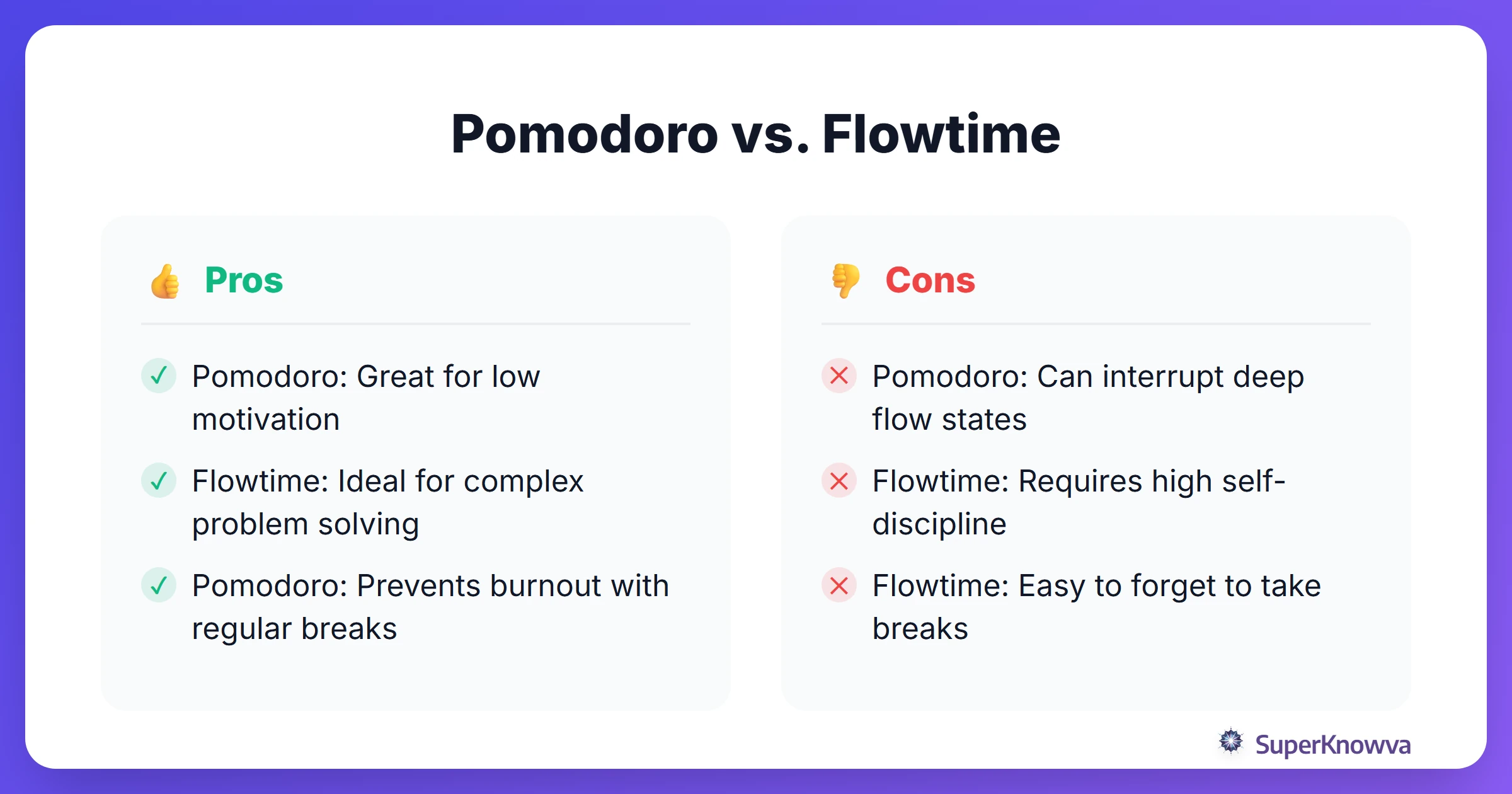
- The Pomodoro Technique: (25 mins work / 5 mins break). This is perfect for when you’re dreading a subject. It gives you frequent "escape hatches" so the work feels less overwhelming.
- Flowtime: This is for when you’re "in the zone." You work until you feel your focus start to flicker, then you take a break. This is much better for deep, creative tasks like writing an essay or coding.
Whatever you choose, make your breaks count. Scrolling TikTok isn't a break. It’s more input for your brain. Try a quick stretch or a glass of water instead. Not sure which one fits you? Read our breakdown of Pomodoro vs. Flowtime.
Environment Design: Building Your Summer Sanctum
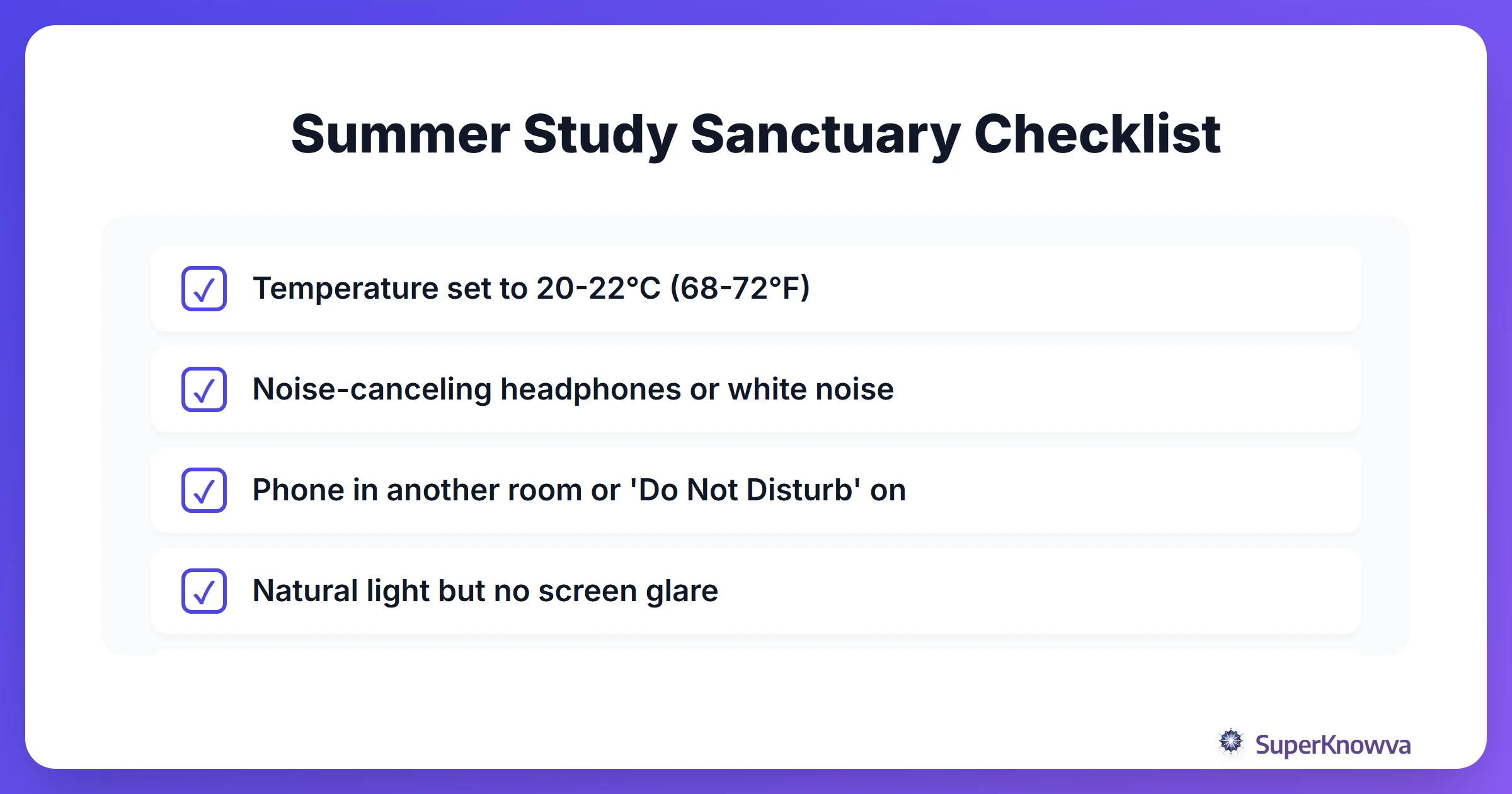
Your environment is either helping you or hurting you. To stay productive, you need a workspace: not too hot, not too loud, and definitely not your bed.
- Watch the Thermometer: Research suggests we work best when the room is between 20-22°C (68-72°F). If you're sweating, you're not focusing.
- The One-Task Table: Designate a specific spot for work. No eating, no scrolling, no lounging. When you sit there, your brain should know it’s time to perform.
- Noise Control: If you’re at a busy cafe, use white noise or Lo-Fi beats to drown out the chatter.
The Social Contract: How to Talk to Your Friends
The hardest part of summer studying isn't the calculus; it's the people. Your friends will ask you to go to the beach. Your family will ask you to run errands.
You have to set boundaries. Tell them: "I’m going dark between 8:00 AM and 11:00 AM. I’ll be back online after that."
By batching your social life into the afternoon and evening, you protect your brain's best hours. The best part? The beach feels ten times better when you aren't feeling guilty about the work you didn't do. If you’re still struggling to say "no," it might be worth looking into The Science of Overcoming Procrastination.
Conclusion
Summer doesn’t have to be a choice between "failing your classes" and "having no life." By using these summer study tips and leaning into deep work for students, you can get more done in three focused hours than most people do in a whole week of distracted "studying."
Set your goal, lock your phone, and earn your summer fun. You've got this.