The sun is blazing, the local pool is calling, and your Instagram feed is a non-stop parade of beach trips and European vacations. Meanwhile, you’re sitting at your desk with a mounting pile of course material and a fan that’s just pushing warm air around. Let’s be honest: trying to maintain consistent deep work study techniques in July feels like an uphill battle against the "summer slump."
Academic excellence does not require sacrificing your summer. Focus effectively so you can enjoy the sunshine without the guilt of unfinished work.
Ready to beat the heat and stay sharp? Here is how you reclaim your focus.
The Summer Focus Paradox: Why Your Brain Wants to Quit
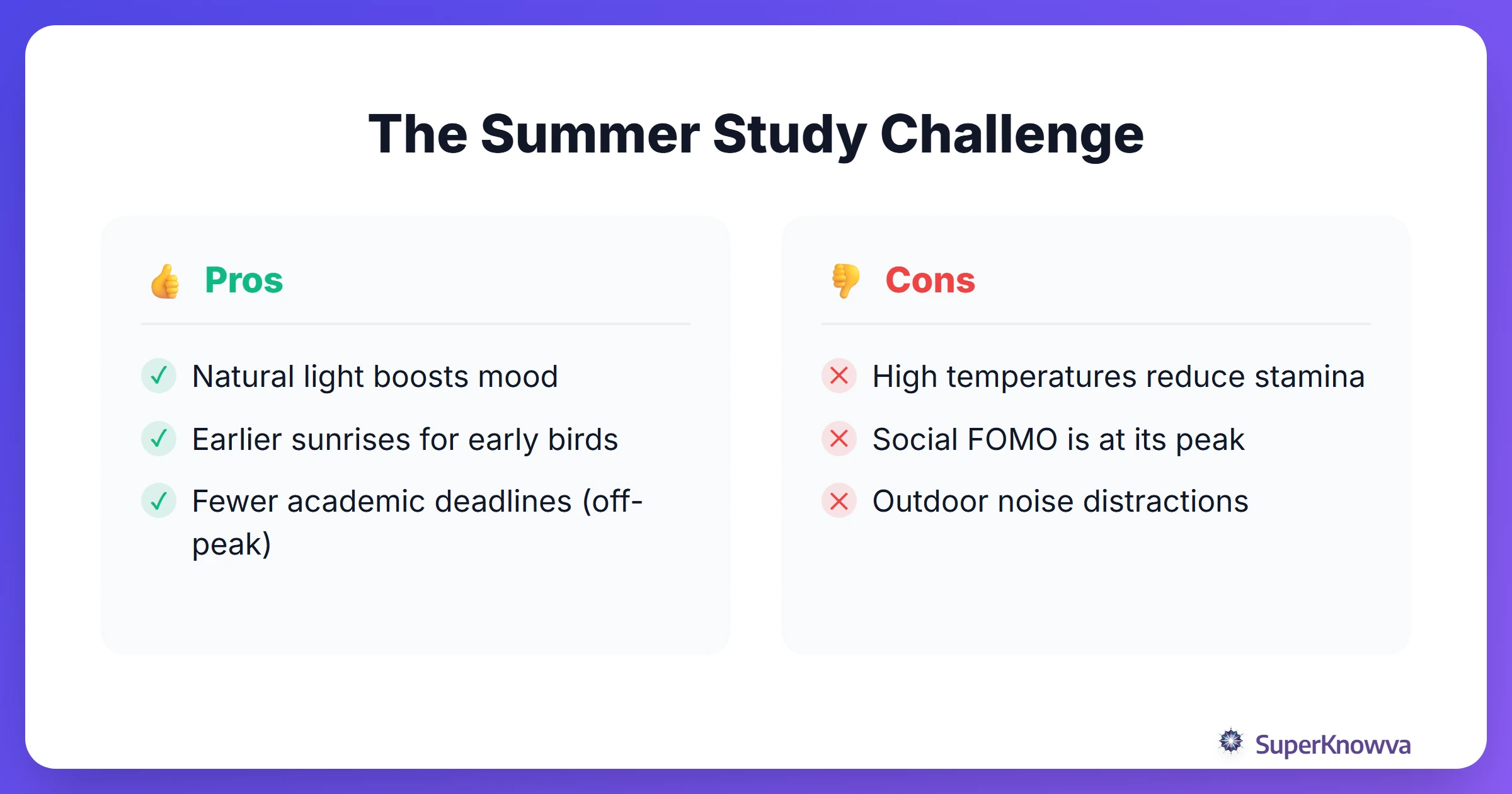
We’ve all felt it: Summer FOMO (Fear of Missing Out). When the weather is perfect, your brain naturally gravitates toward social rewards and being outdoors. Sitting still for a three-hour study session starts to feel less like a choice and more like a punishment.
But it’s not just a mental struggle; it’s biological. High temperatures put a massive strain on your body’s internal regulation. This siphons energy away from your prefrontal cortex, the part of your brain responsible for complex problem-solving and staying on task. Basically, your brain is too busy trying to keep you cool to care about organic chemistry.
Despite the sweat, mastering Deep Work for Students: Mastering Focus in a Distracted World during the "off-season" provides a significant advantage. While everyone else lets their habits slide, you can make progress by simply adjusting your expectations and your environment.
Brain Fog is Real: The Science of Heat and Concentration
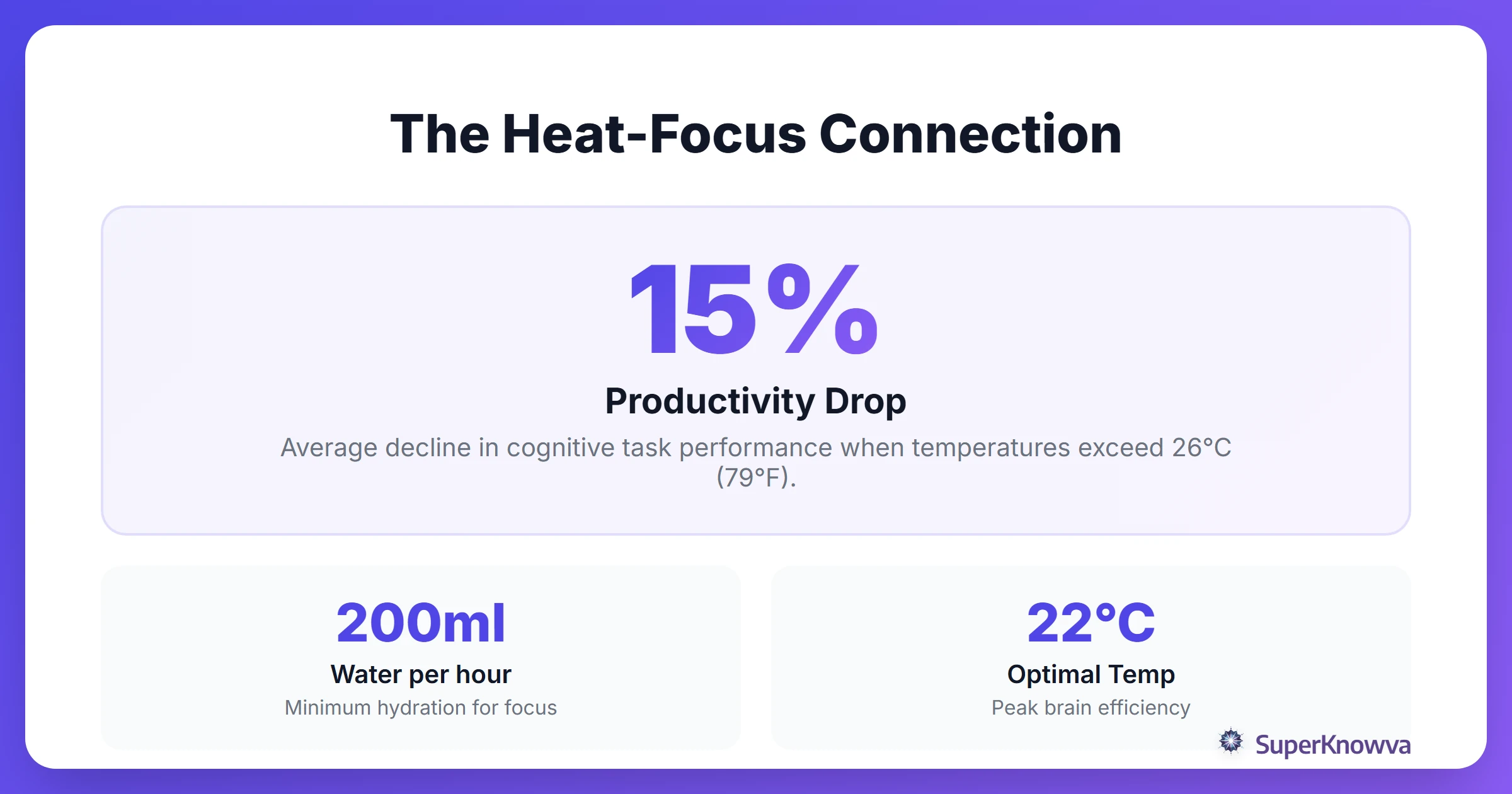
Heat impairs cognitive function. This is not laziness; it is science. Research shows that high temperatures increase cognitive load, slowing decision-making and hindering memory retrieval. When temperatures exceed 26°C (79°F), intellectual performance can drop by as much as 15%.
According to experts on how deep work makes you smarter, the "sweet spot" for cognitive efficiency is a crisp 22°C (72°F).
And don't ignore your water bottle. Even mild dehydration can kill your mental clarity and shorten your attention span. If you want to keep your concentration levels high, aim for at least 200ml of water for every hour you’re in the zone.
Building Your 'Cool' Deep Work Sanctuary
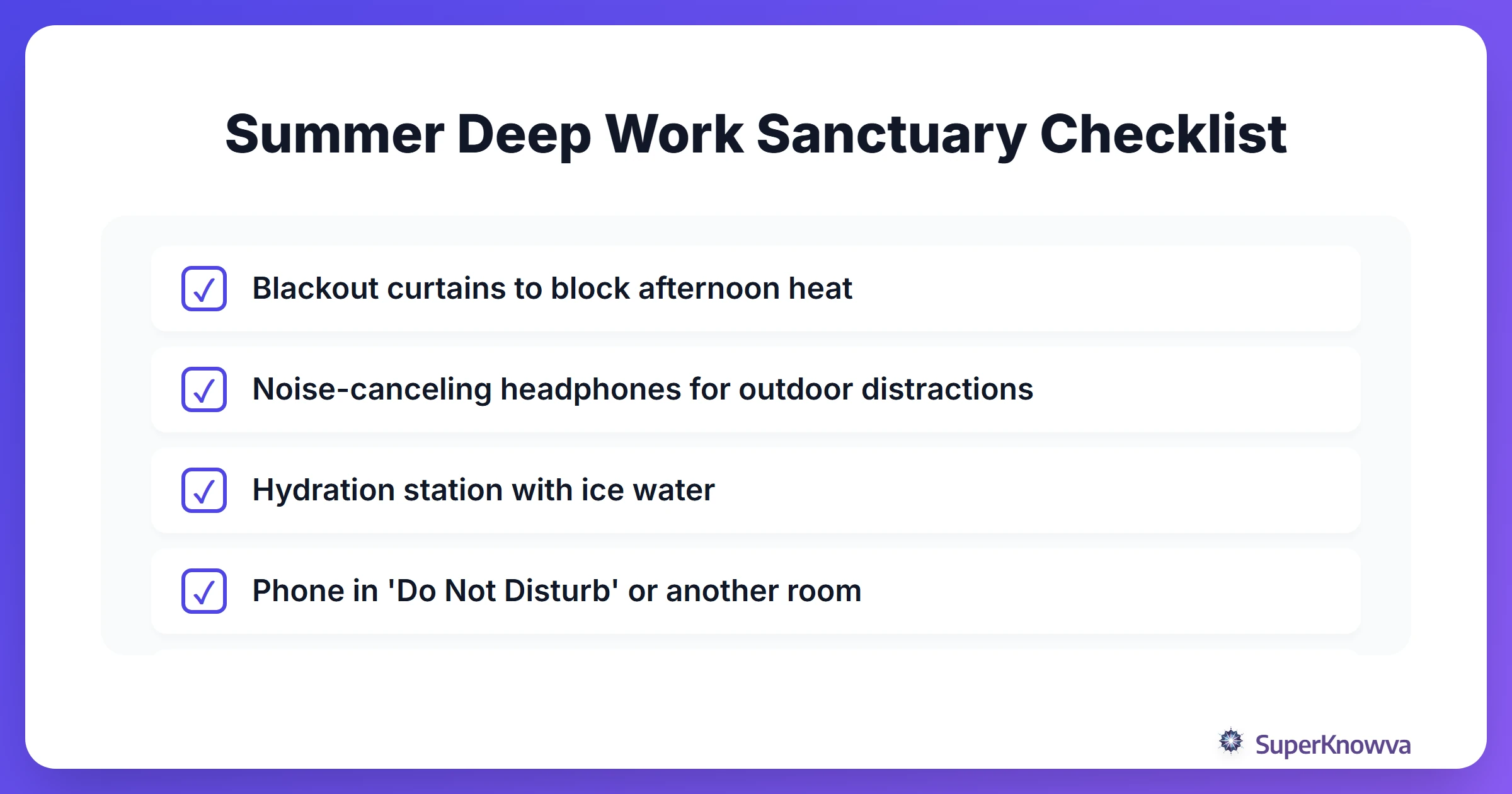
If you want to win, you have to control your environment. Your study space needs to be a "cool" sanctuary that tells your brain, “Okay, it’s time to work now.”
- Block the Sun: Use blackout curtains during the day. It feels a bit like living in a cave, but it keeps the room temperature stable and prevents the afternoon spike.
- Watch the Glare: Natural light is a mood booster, but screen glare is a recipe for headaches. Position your desk perpendicular to the window rather than facing it.
- Ghost the World: Summer distractions are loud. Seeing a friend’s beach story can wreck your flow state in seconds. Practice Digital Minimalism for Students by deleting social apps or using site blockers until your work is done.
- Mask the Noise: Drown out the sound of lawnmowers and ice cream trucks with white noise or "brown noise." It creates a consistent auditory backdrop that helps you stay submerged in your work.
The 5 AM Advantage: Beat the Thermometer
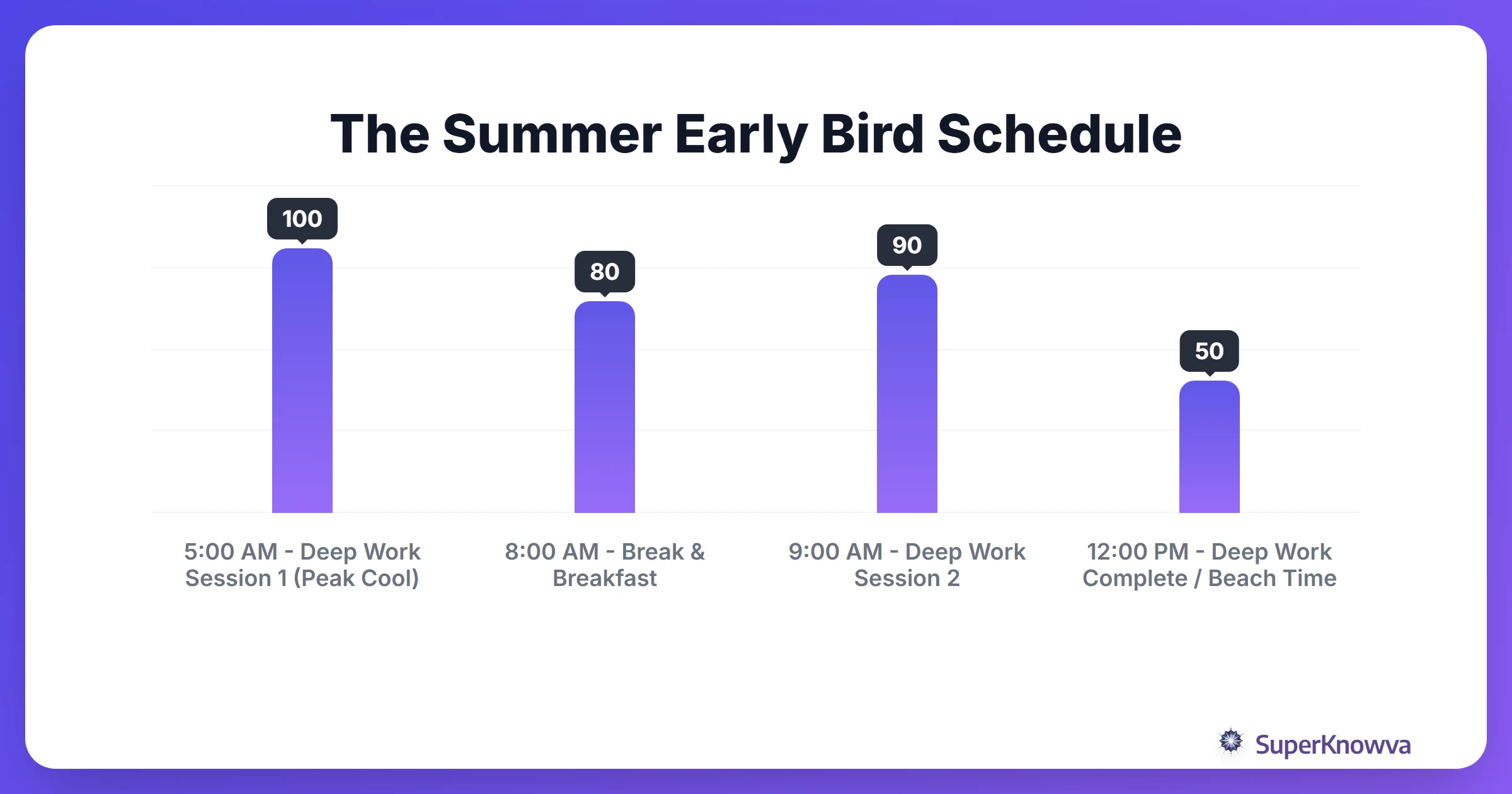
An effective deep work study technique for summer is shifting your schedule to match the temperature. The "5 AM Advantage" isn’t about being a "morning person" for the sake of it; it’s about using the naturally coolest and quietest part of the day.
By knocking out a 3-hour deep work block before 9:00 AM, you bypass the peak heat. You get your hardest, most cognitively demanding tasks done while your brain is fresh and the rest of the world is still asleep. The best part? By the time the sun is truly scorching, you’re already finished.
Summer Sprints: Shorter, Sharper, Better
In extreme heat, a four-hour marathon session is a one-way ticket to burnout. Instead, try the "Summer Sprint." This is all about shorter, high-intensity bursts of focus followed by mandatory cooling breaks.
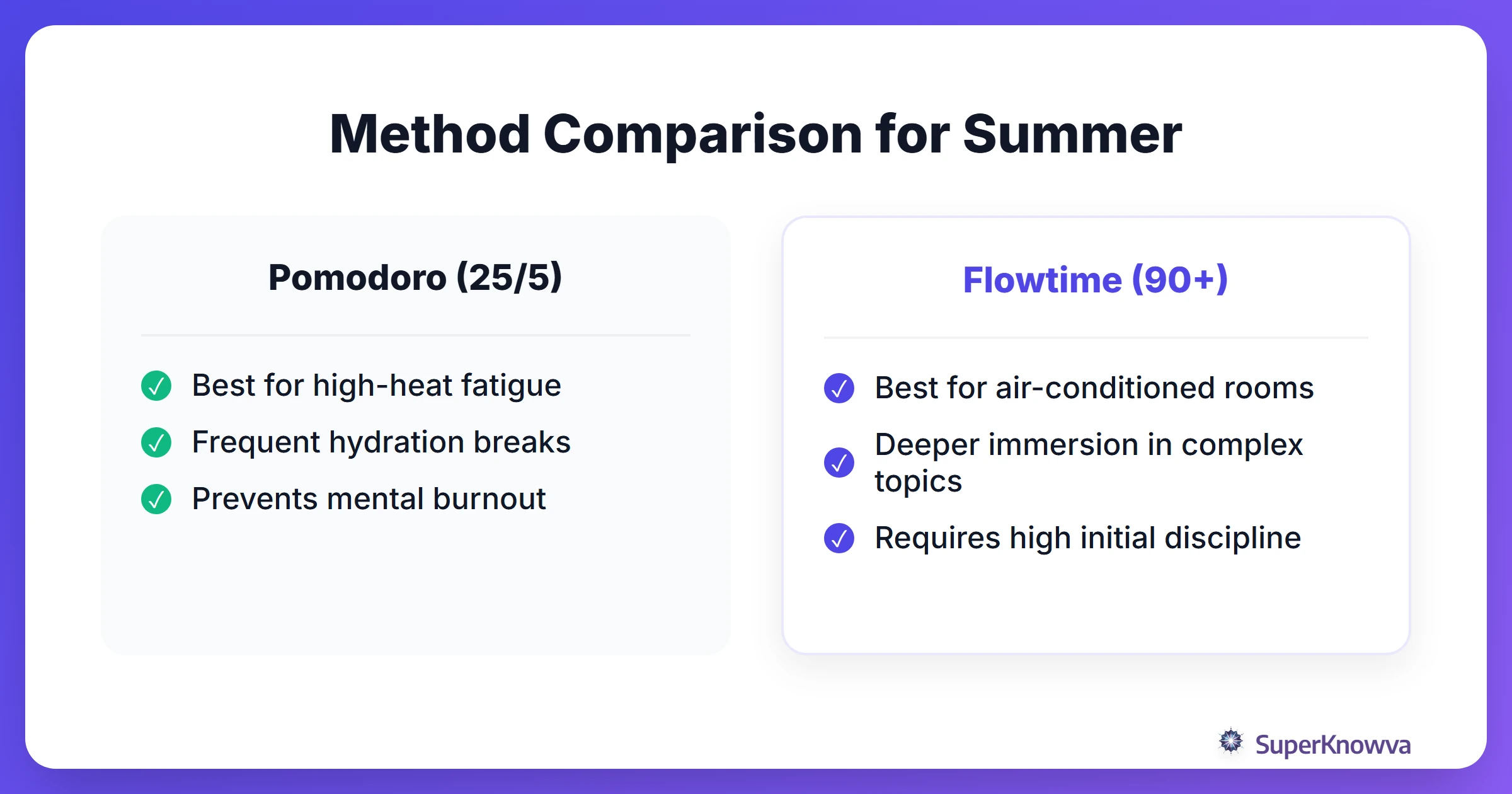
Which method fits your day?
- The Pomodoro Technique: Perfect for high-heat days when you need frequent breaks to hydrate and move around. You can learn more about the Pomodoro Technique to see if it fits your rhythm.
- Flowtime: Better if you’re lucky enough to have air conditioning. This allows you to focus on complex topics for 90 minutes or more without the timer interrupting you.
The choice between Pomodoro vs. Flowtime depends on your energy and your environment. Regardless of what you choose, always use a "Shut Down" ritual to mentally signal that work is over and summer fun has begun.
Stop Passive Reading, Start Active Recalling
Passive reading, just highlighting a textbook while sweating, is a waste of time. Your brain is already lethargic from the heat; you need to force it to engage.
Try The Blurting Method. After you finish a section of your notes, close the book and "blurt" everything you remember onto a blank page. It’s active, it’s intense, and it prevents your mind from wandering toward the nearest swimming pool.
If you’re using SuperKnowva, this is the perfect time to fire up the AI-generated flashcards. Using digital tools for active recall keeps you in a flow state, ensuring that even a short 90-minute session leads to maximum retention.
The Reward Loop: Work Hard, Play Harder
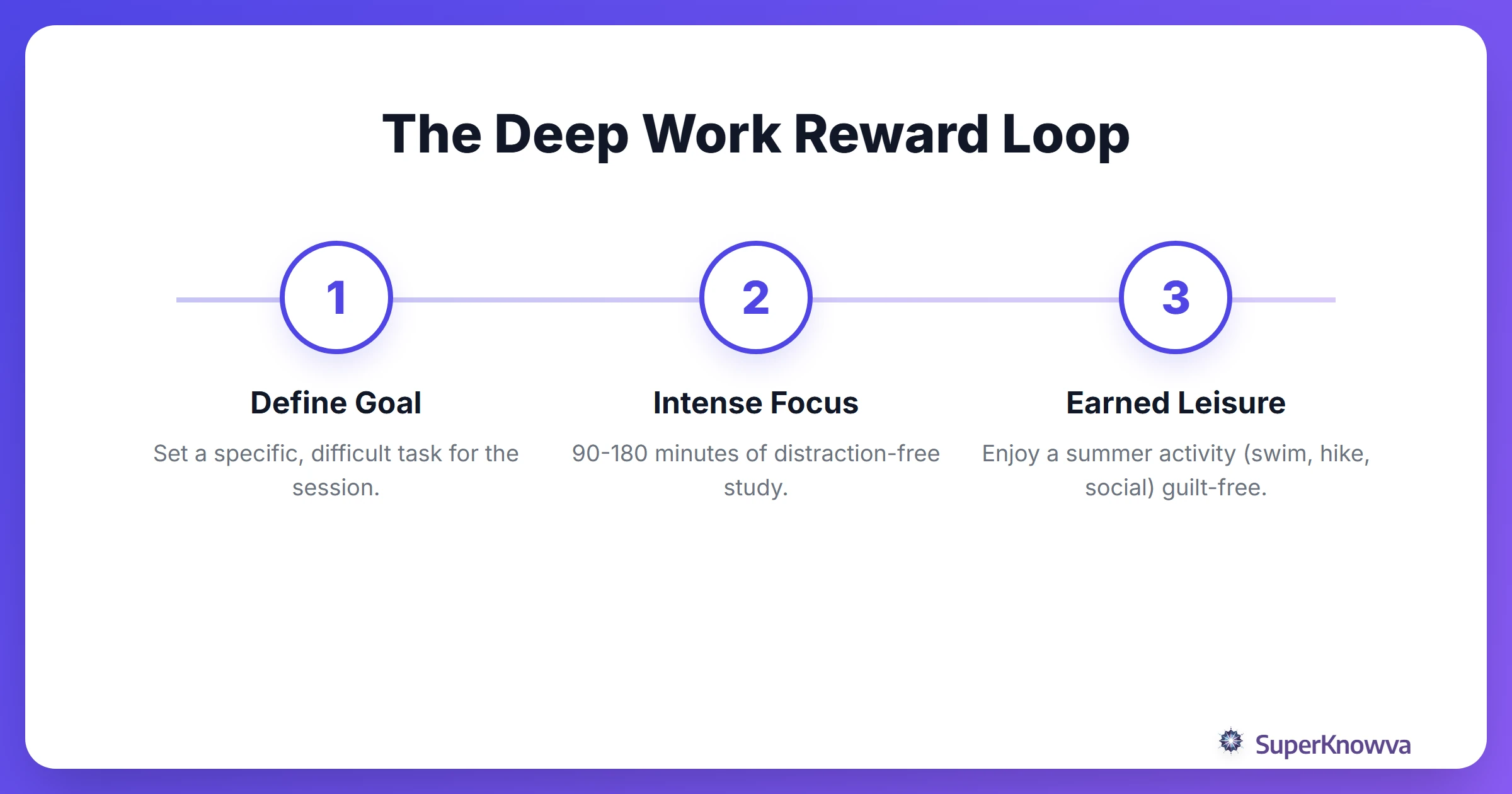
The key to surviving summer productivity? The reward loop. If you spend all day inside and never see the sun, you’ll eventually start to hate your work.
Instead, use summer activities, like a swim, a BBQ, or a late-night walk, as rewards. Unstructured time in the sun benefits your brain by aiding neuroplasticity and memory consolidation. By planning your week to include both intense focus and scheduled fun, you remove the guilt. You have earned your time off.
Don't let the July heat melt your academic goals. By shifting your schedule, hacking your environment, and staying active with your study methods, you can crush your coursework and still have the best summer yet.