Ever found yourself staring at a textbook at 2:00 AM, wondering why nothing is sticking? Or maybe you’ve tried to pull a "rise and grind" session at dawn, only to realize you’ve been reading the same paragraph for twenty minutes.
We’ve all been told that "the early bird gets the worm," but when it comes to learning, that's not always true. Is there actually a best time to study, or are we all just chasing a schedule that doesn't fit?
The reality is that your brain isn't a machine; it doesn't run at 100% efficiency from sunup to sundown. At SuperKnowva, we’re big believers in working with your biology, not against it. By aligning your heaviest study sessions with your internal clock, you can stop the constant uphill battle and actually start remembering what you read.
The Science of Chronotypes: Why One Size Doesn't Fit All
Your energy levels aren't random. They are governed by circadian rhythms, the internal 24-hour cycles that dictate when you feel alert and when you are ready to rest. Everyone’s clock is set differently. These variations are what scientists call chronotypes.
Most students fall into one of three camps:
- Lions (The Early Birds): You’re wide awake at 6:00 AM and do your best thinking before lunch.
- Bears (The Sunny Middle): You follow the sun. You’re most productive from mid-morning through the early afternoon.
- Wolves (The Night Owls): You’re a zombie until noon, but you find a "second wind" of intense focus once the sun goes down.
Trying to force a "Wolf" to master organic chemistry at 7:00 AM is a recipe for burnout. It’s not about laziness; it’s about genetics. In fact, most teenagers and young adults naturally drift toward a "Wolf" schedule due to hormonal shifts. Understanding your chronotype is the first step toward study schedule optimization that actually feels sustainable.
The Case for Morning Studying: Clarity and Willpower
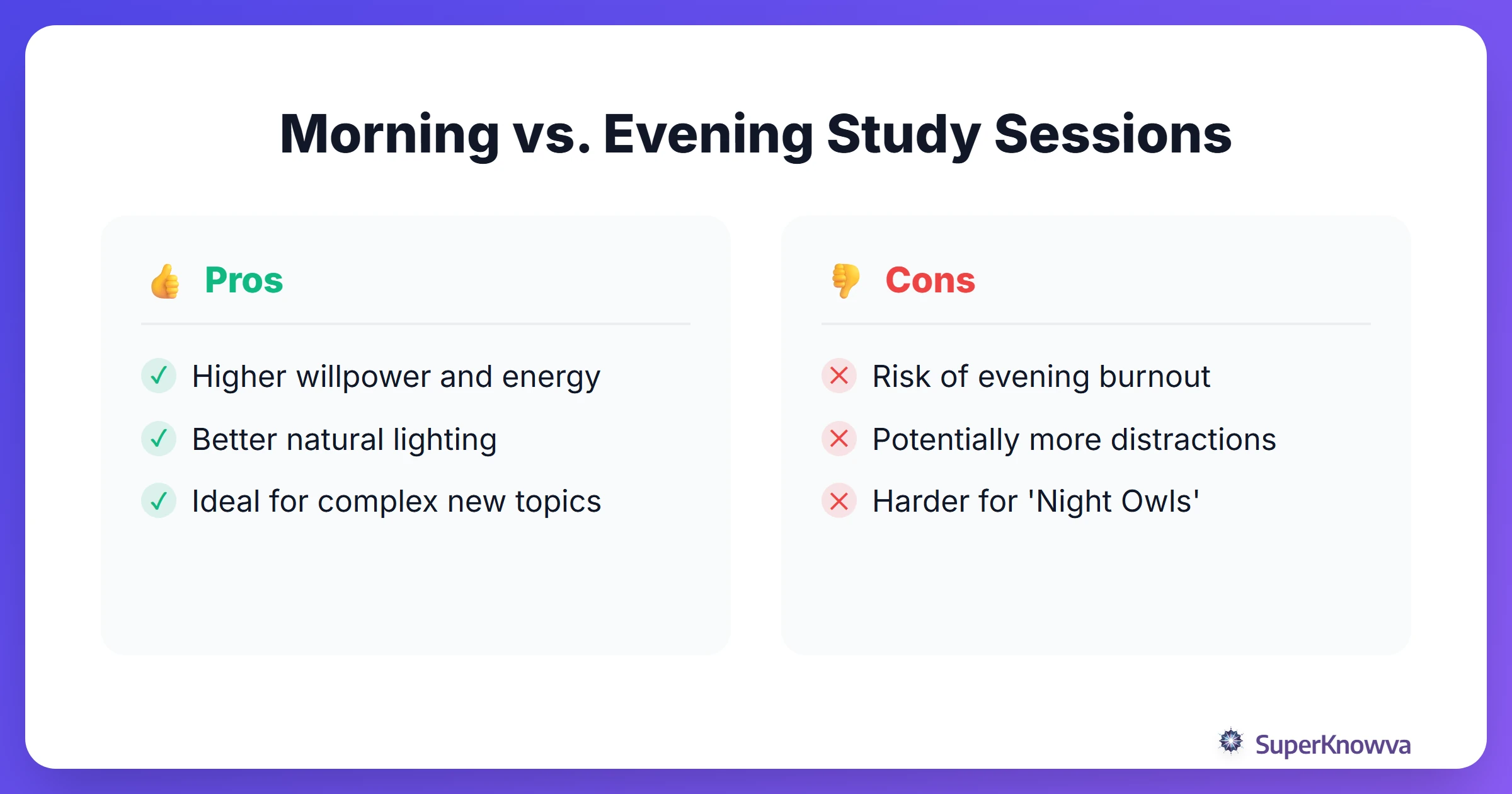
There’s a reason why so many high-achievers swear by the morning. Sunlight triggers a release of serotonin and cortisol, which act like a natural "on" switch for your brain’s alertness.
The primary benefit of a productive morning is avoiding decision fatigue. Willpower is a finite resource. Every choice you make throughout the day, from what to wear to what to eat, depletes this energy. In the morning, mental capacity is at its peak. This makes it the ideal time to tackle significant tasks, including the complex concepts and demanding work that require discipline.
By using the science of getting started early, you knock out the hardest part of your day before the world starts demanding your attention. Plus, morning learners often have a slight edge in visual memory and alertness, according to Scientific Research on Study Times.
The Case for Night Studying: Creativity and Consolidation
If you hit your stride when the rest of the house is asleep, don't feel guilty. Night-time studying offers several advantages. The main benefit is the absolute peace and quiet. No Slack notifications, no texts, and no "quick questions" from friends. It’s the easiest time to reach a state of "flow."
There’s also a powerful neurological benefit: Sleep-Dependent Memory Consolidation. Your brain is incredibly good at "tagging" the last things you learned for long-term storage while you sleep. Because there’s less "input interference" (new info coming in) after a late-night session, your brain can focus entirely on moving those facts from your short-term memory to the "permanent" files.
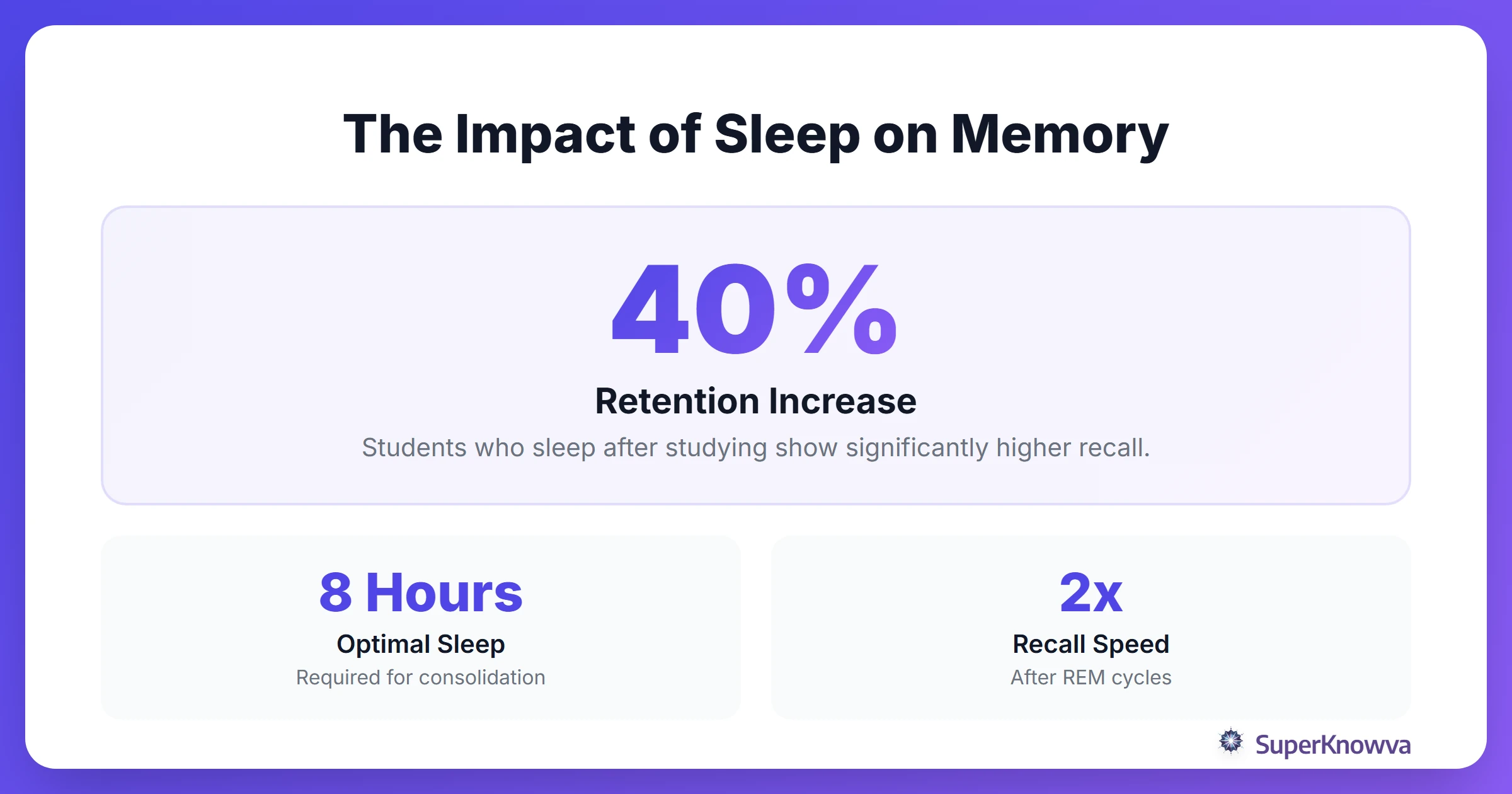
As explored in The Best Time To Study So You Remember Much More, the evening is also a goldmine for creative thinking. As your brain tires, the "filter" in your prefrontal cortex relaxes, allowing for more "out of the box" ideas. Many students use the neuroscience of memory consolidation to review their toughest flashcards right before bed to let their subconscious do the heavy lifting overnight.
The 'Post-Lunch Dip' and Cognitive Troughs
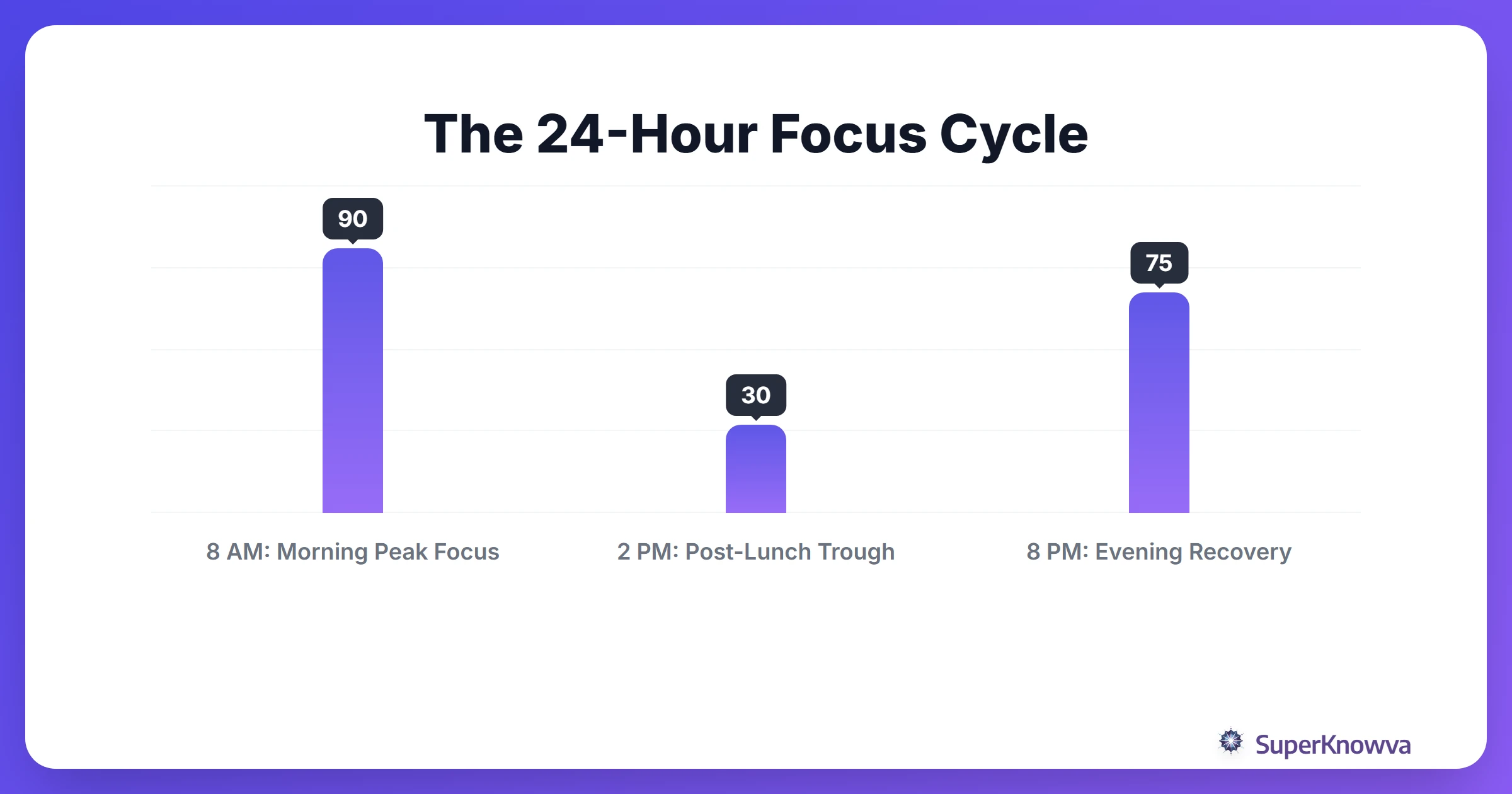
Whether you’re a Lion or a Wolf, almost everyone hits a wall between 2:00 PM and 4:00 PM. This is the "Post-Lunch Dip." Your body temperature drops slightly, melatonin levels tick up, and your focus usually goes out the window.
This is the absolute worst time for "Deep Work." If you try to write an essay now, you’ll likely spend more time staring at the cursor than typing. Instead, try matching your tasks to your energy:
- High Energy (Peak): Learning new concepts, solving hard problems, active recall.
- Low Energy (Trough): Organizing notes, answering emails, scheduling, or filing.
By practicing Deep Work for Students, you can protect your "power hours" for the hard stuff and save the "busy work" for when you’re feeling sluggish.
Memory Consolidation: The Bridge Between Study and Sleep
Here’s the truth: learning doesn't actually happen while you’re staring at the book. It happens while you’re asleep.
During the night, your hippocampus (the temporary waiting room for memories) and the neocortex (the long-term warehouse) start talking.
- Slow-Wave Sleep: This is where factual info and vocab get "locked in."
- REM Sleep: This is where your brain makes creative connections between different ideas.
This is exactly why all-nighters are a scam. Without sleep, that bridge between temporary and permanent memory is never built. You might "pass" the test the next morning, but that information will be gone within 48 hours.
How to Identify Your Personal Peak Performance Window
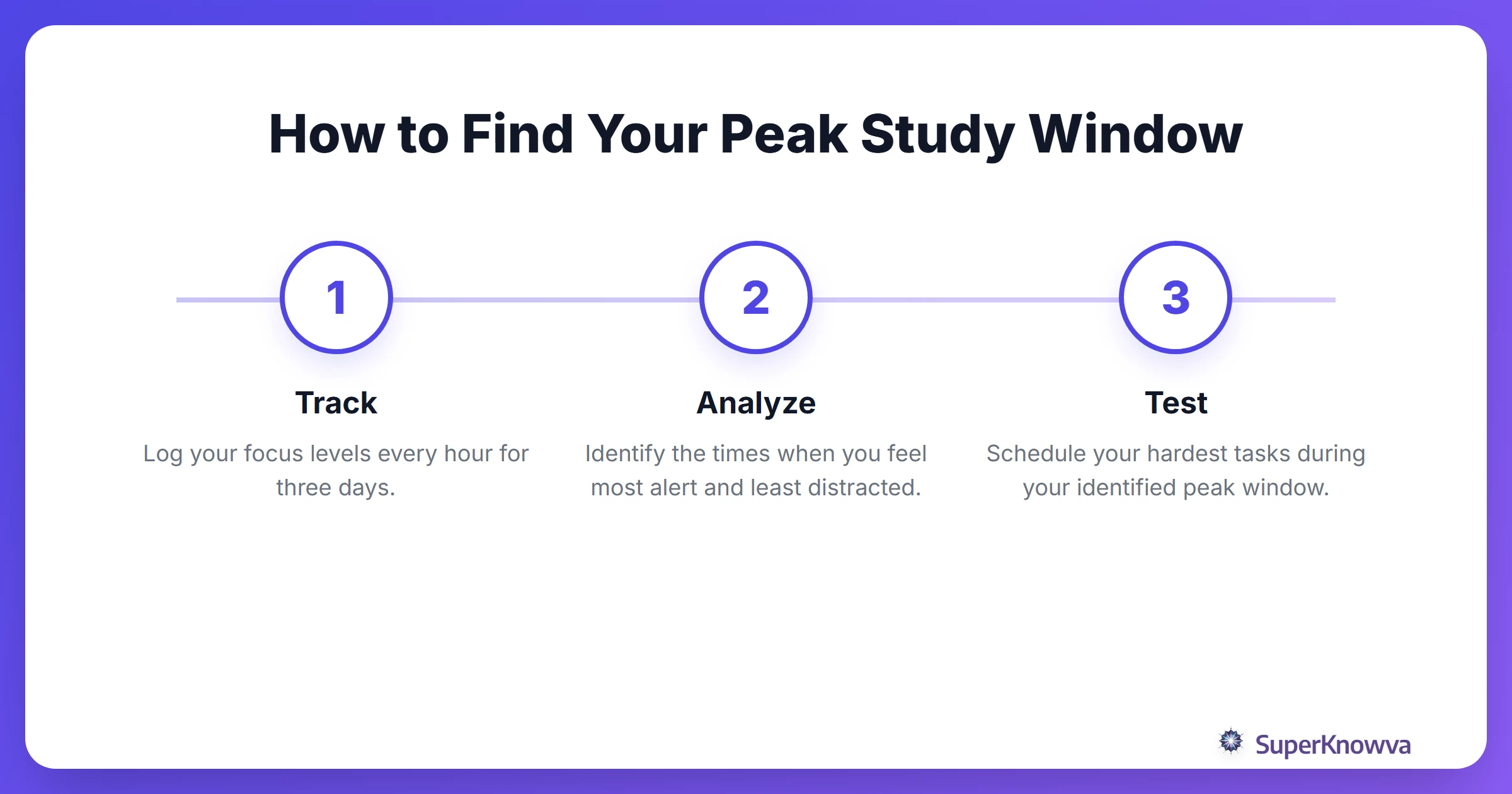
When should you study? Don't guess: test it. Try this 3-day experiment:
- Track: Every hour, rate your focus from 1 to 10.
- Analyze: Look for the trends. Are you a consistent 9 at 10:00 AM? Or do you only hit those numbers after dinner?
- Test: Use different productivity methods, like Pomodoro vs. Flowtime, to see which timing gives you the highest output.
At SuperKnowva, our AI-powered tools help you track these trends automatically. By seeing when you perform best on quizzes and active recall, the platform helps you visualize your personal "power hours."
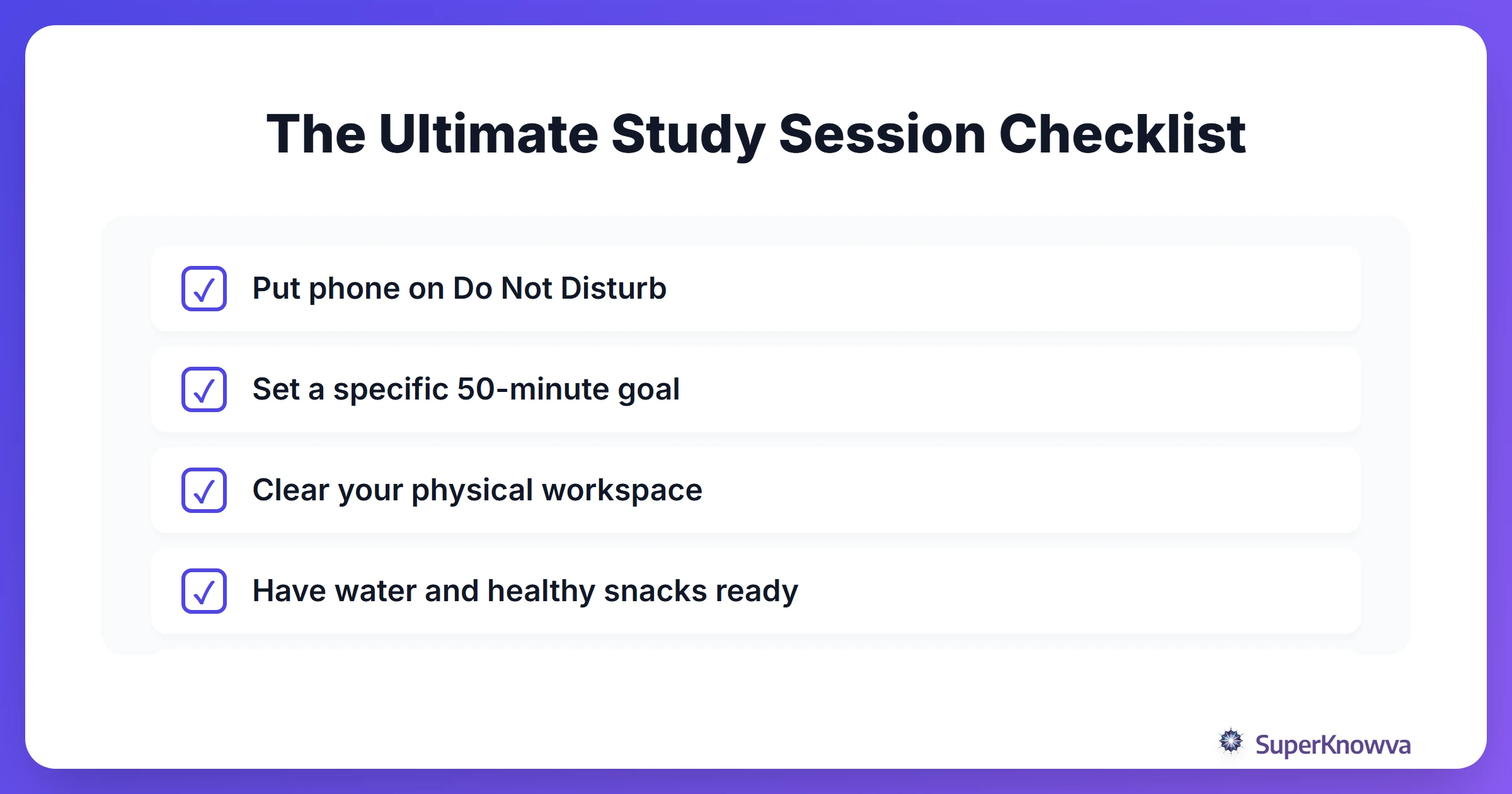
Consistency beats timing every time. Use the checklist below to make sure every session counts, no matter what time it is:
Conclusion
Research shows there is no single time that works for everyone. Academic success does not require waking up at 5:00 AM; it depends on understanding your own body. Whether you use morning willpower or nighttime memory consolidation, the goal is to work with your brain instead of against it.
Ready to stop guessing and start growing? Let SuperKnowva’s AI help you turn your peak focus windows into high-retention study sessions.