You sit down, laptop open, coffee ready. Then, a notification blinks. Forty minutes later, you’re deep in a TikTok rabbit hole or refreshing your inbox for the tenth time. Your essay? Still a blank page.
For the modern student, the biggest hurdle isn't a lack of information. It's the exhausting overabundance of it. Adopting digital minimalism for students isn't just a trendy lifestyle choice. It's a strategic advantage. It's about reclaiming your focus so you can actually get things done.
In this guide, we’re going to strip away the digital noise and build a study environment that actually allows for deep, uninterrupted focus.
Understanding Digital Minimalism in Academia
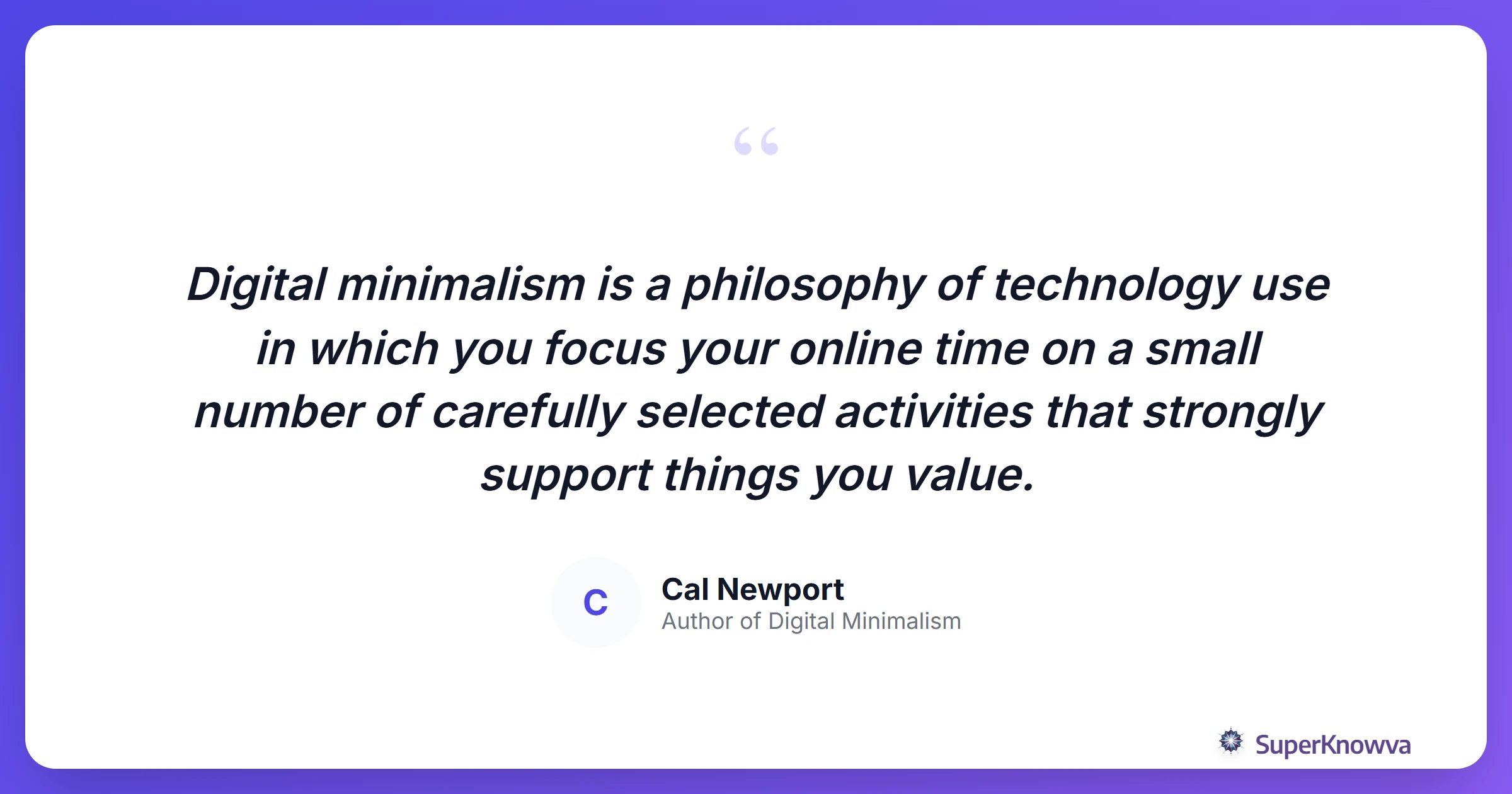
Digital minimalism doesn't mean you have to become a Luddite or toss your MacBook into the nearest lake. According to the Cal Newport digital minimalism philosophy, it’s a deliberate way of using technology where you "focus your online time on a small number of carefully selected activities that strongly support things you value."
For students, this requires a mindset shift. Most "study hacks" suggest quick fixes, like hiding your phone in a drawer. Digital minimalism goes deeper. It asks you to rewrite your entire relationship with your devices. This is vital for the "always-on" generation. Constant connectivity has created a baseline of anxiety that makes focusing feel like an uphill battle. By becoming a minimalist, you stop being a passive consumer of distractions and start becoming the architect of your own attention.
The High Price of "Quickly Checking"
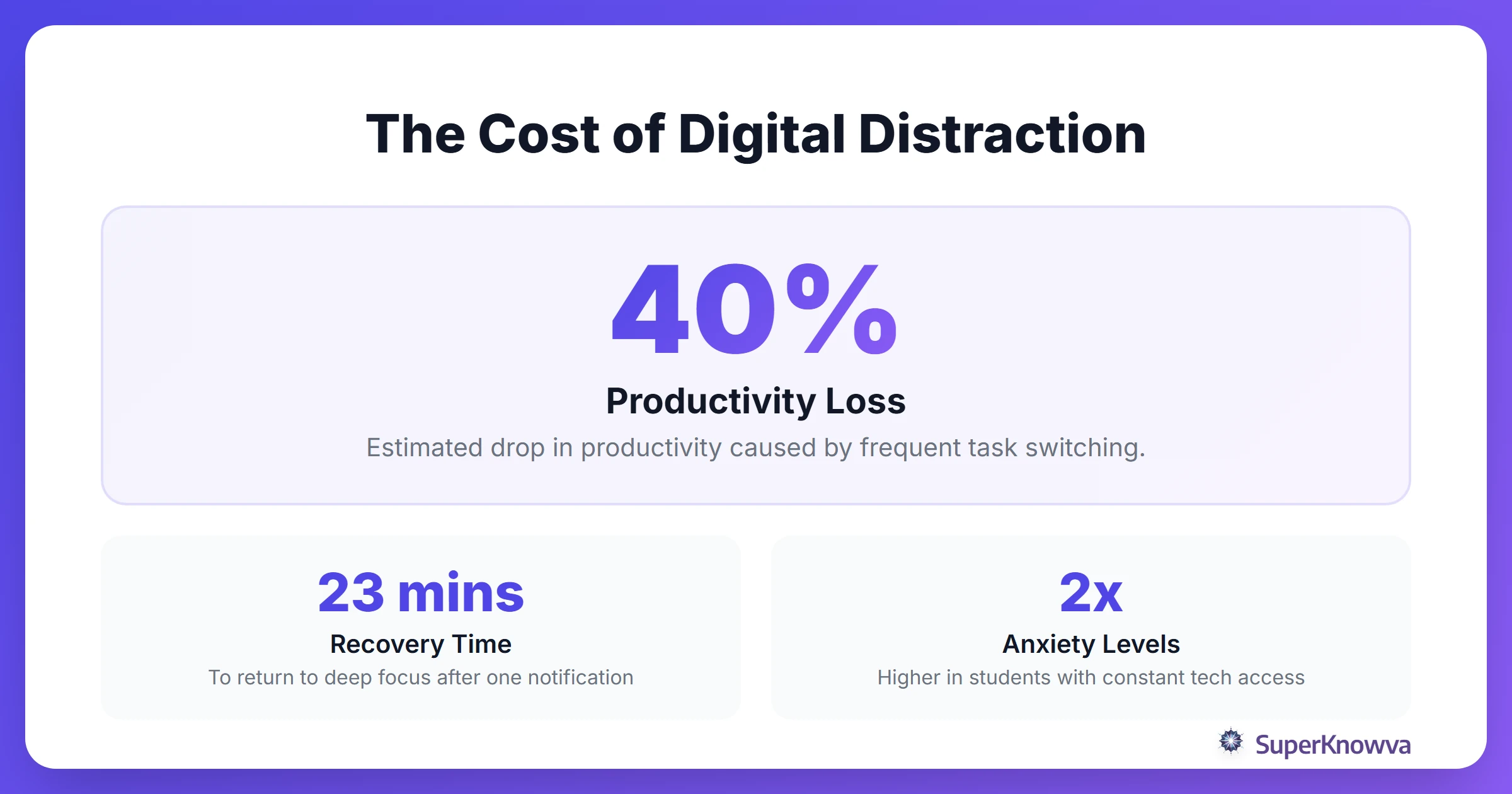
Every time you "quickly check" a text, you pay a "switching cost." It sounds harmless, but research suggests it can take upwards of 23 minutes to get back into a state of deep focus after a single interruption. This constant jumping back and forth destroys your "flow" and makes it impossible to wrap your head around complex topics.
Then there’s the digital clutter. Think about your browser right now: how many tabs are open? How many unread pings are sitting in the corner of your screen? This creates "cognitive load." When your brain is busy processing background noise, it has zero energy left for memory or learning. This is exactly why you can "study" for five hours and walk away remembering absolutely nothing. Often, the science of overcoming procrastination starts with clearing the digital field so your brain can actually breathe.
Conducting Your Digital Audit
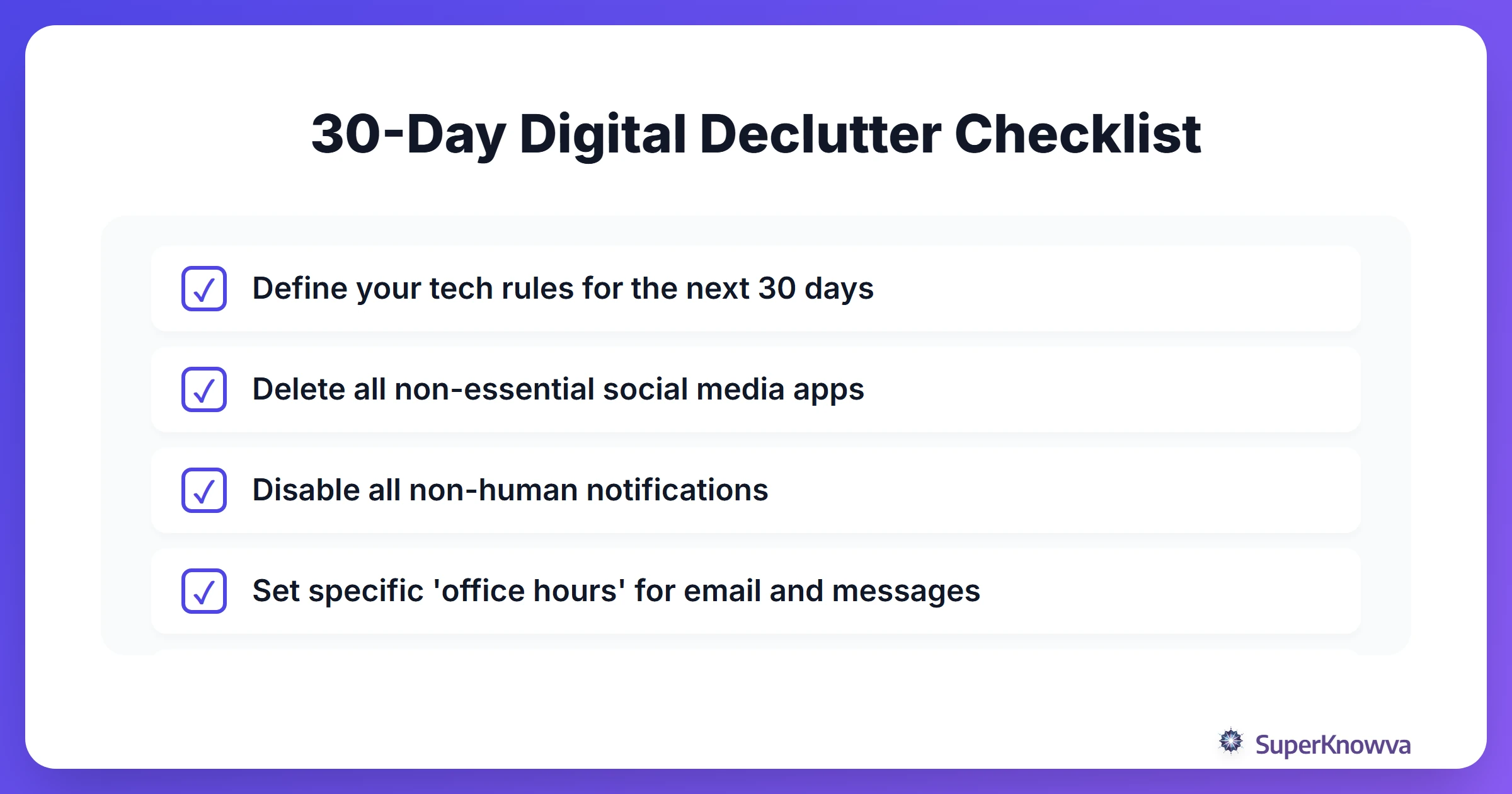
Ready to fix it? You need a digital declutter. Think of this as a 30-day experiment where you aggressively audit your tools.
Look at every app on your phone and laptop. Ask yourself: does this truly help me get my degree or maintain my closest friendships? If it’s just "convenient" or "something to do when I'm bored," it’s a "zombie app." It’s eating your mental energy and giving you nothing in return. Be ruthless. If it doesn't serve a high-utility purpose, delete it.
The Minimalist Tech Stack for Students
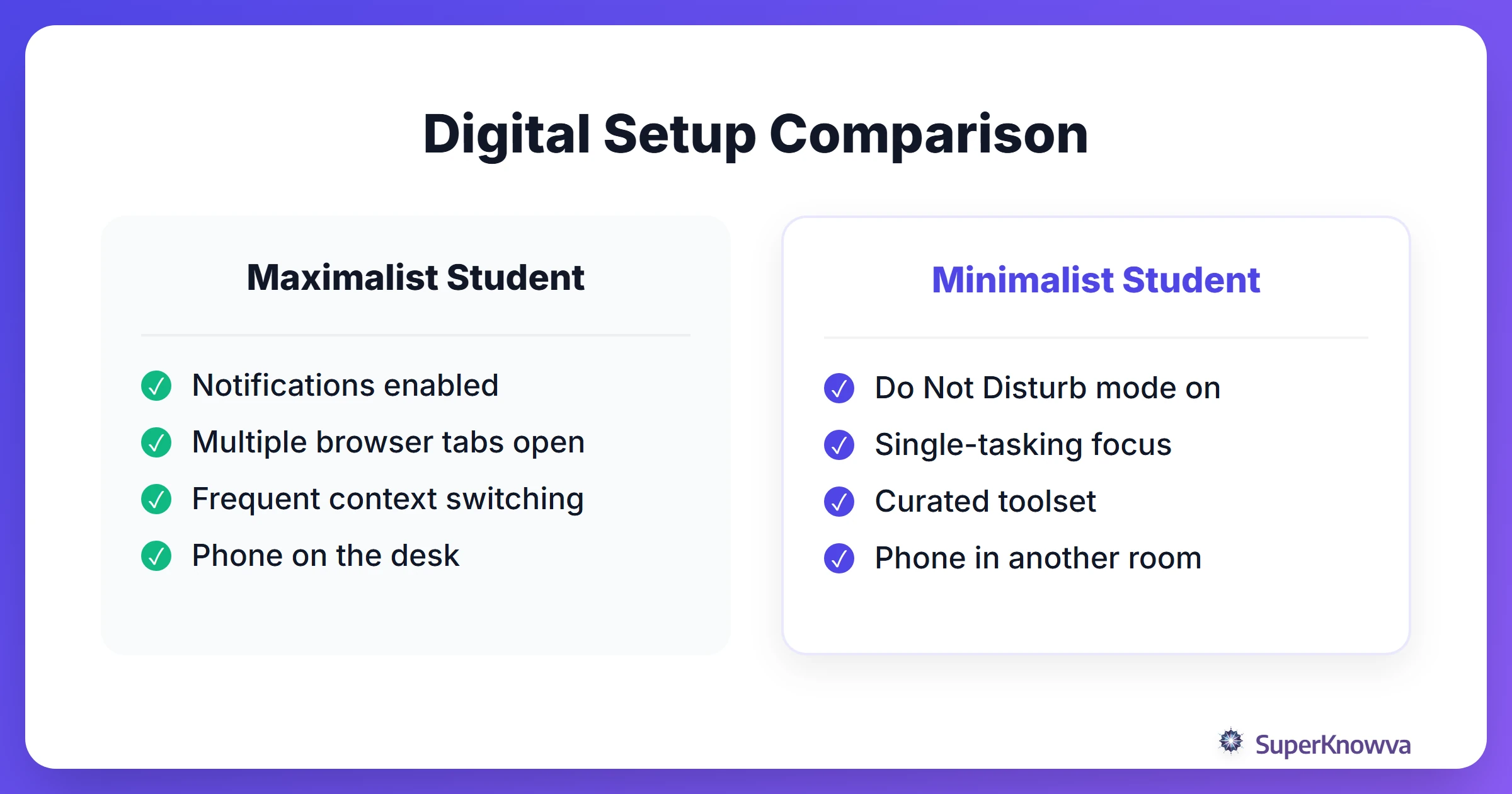
High-performing students don't need fifty different productivity apps. In fact, having too many tools usually leads to more procrastination. You want a minimalist study setup that keeps everything in one place.
- Consolidate Your Devices: Try to do the bulk of your heavy lifting on one powerful device.
- Enforce Focus: Don't rely on willpower. Use tools like StayFocusd or Freedom to hard-block distracting sites during your peak study hours.
- Optimize Your Workflow: Instead of scattered notebooks and random Google Docs, use a unified system for building a second brain to store your notes and research.
- The Smartphone Debate: It sounds extreme, but many top students are switching to "dumbphones" or minimalist devices (like the Light Phone) during the semester to kill the urge to scroll.
Navigating the "Mandatory" Digital Noise
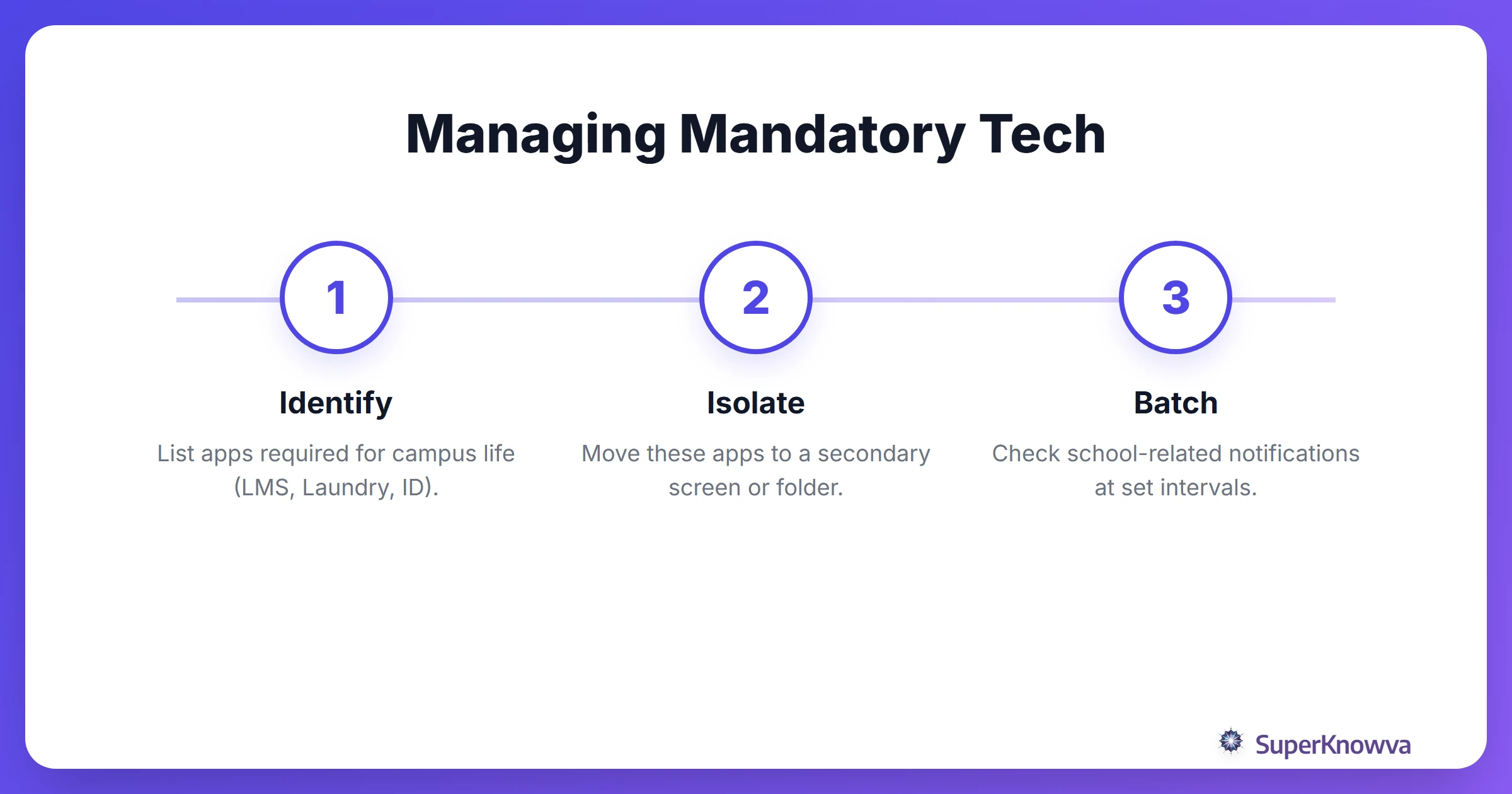
The hardest part of digital minimalism for college students is the stuff you have to use. You need the LMS for assignments, QR codes for the dining hall, and specific apps for campus security.
The trick is isolation. Don't let these "mandatory" apps sit on your home screen next to Instagram. Hide them in a folder labeled "Utility" on a secondary screen. Also, start "batching." Stop checking your school email every time your phone buzzes. Check it twice a day, perhaps at 10:00 AM and 4:00 PM. This kills notification anxiety and teaches people that you aren't available 24/7.
Creating a High-Performance Study Environment
Your physical space should match your digital one. If your desk is a mess, your mind probably is, too. To hit peak performance, you need deep work strategies that prioritize long, quiet stretches of concentration.
When you sit down to work, your technology should be a tool, not your master. Whether you’re using Pomodoro vs. Flowtime, the goal is the same: use tech mindfully to hit a specific goal. When you’re done, close the laptop and walk away. By only using tech when it has a purpose, you create the mental space you need to actually excel.
Digital minimalism for students isn't about missing out; it's about gaining freedom. It’s the freedom to think clearly, learn deeply, and succeed without being tethered to a screen. Start your declutter today. Your grades (and your sanity) will thank you.