Studying in July feels like a losing battle. When the sun is blazing and your Instagram feed is a constant loop of beach trips and iced coffee, cracking open a textbook is the last thing you want to do. It is not just the FOMO, either. The heat makes your brain feel like it is operating through a thick fog.
If you want to keep your academic momentum without burning out before August, you need a strategy. Implementing deep work for students during the summer isn't about grinding harder; it’s about being surgical with your energy.
Here is how you can stay cool, stay focused, and actually get ahead of your syllabus while everyone else is distracted.
The July Focus Challenge: Why Deep Work Matters Now
July presents a brutal double-whammy: physical lethargy from the rising temperatures and the psychological itch of "Summer FOMO." Your attention is under constant siege. This is where the philosophy of Cal Newport deep work becomes your secret weapon.
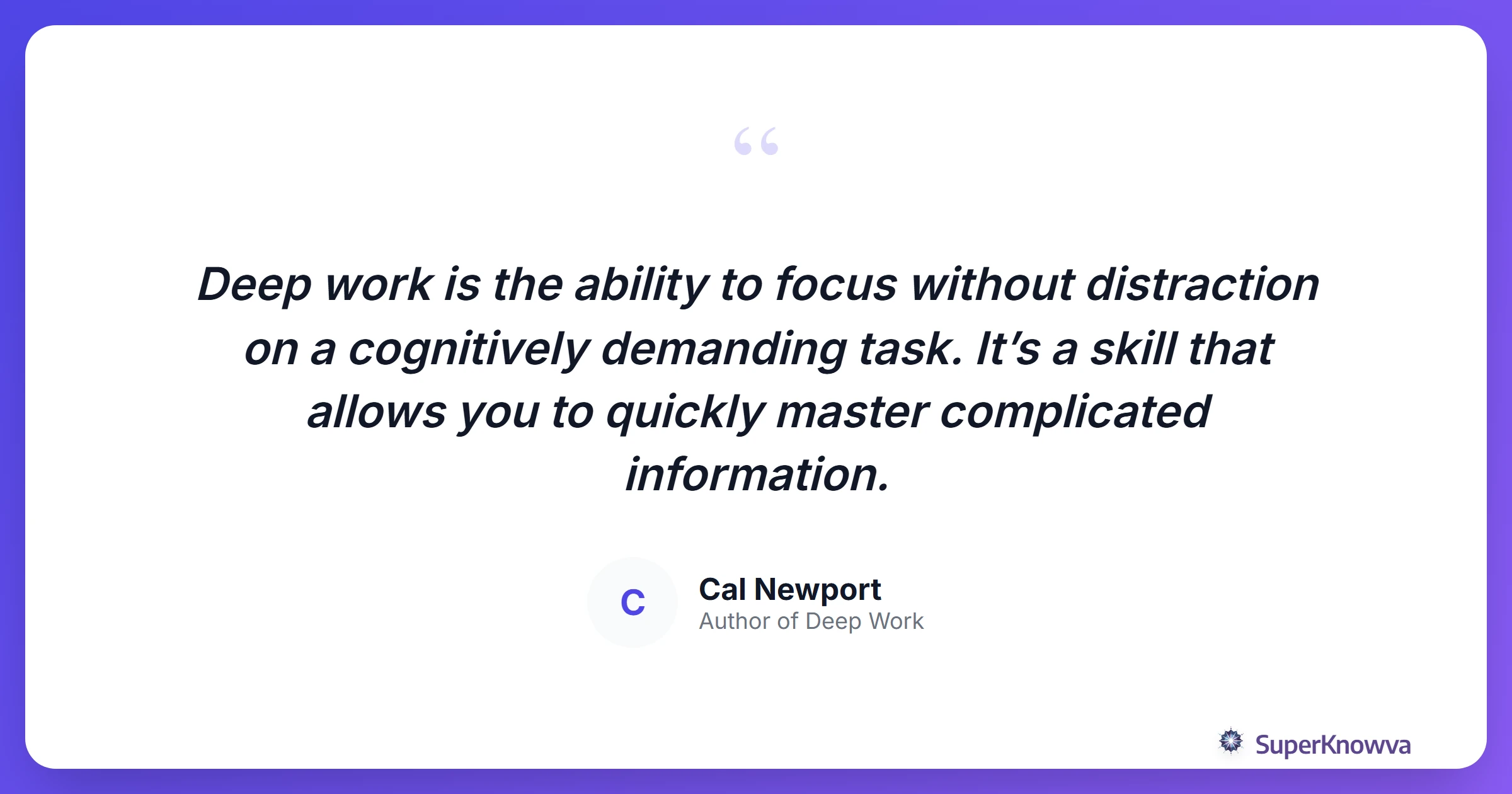
Newport, who wrote the book on modern focus, defines deep work as distraction-free concentration that pushes cognitive limits. For students, this means ditching "half-study" habits like checking TikTok between pages in favor of intense, high-output sessions. Cal Newport discusses how students can apply deep work principles to their daily routines by treating focus like a muscle. In the summer, that muscle needs specific conditions to perform.
The Science of Heat and Concentration
It’s not all in your head. The heat is actively sabotaging your brain. When you’re hot, your body diverts massive amounts of energy toward cooling you down. That’s energy that should be going toward processing complex information.
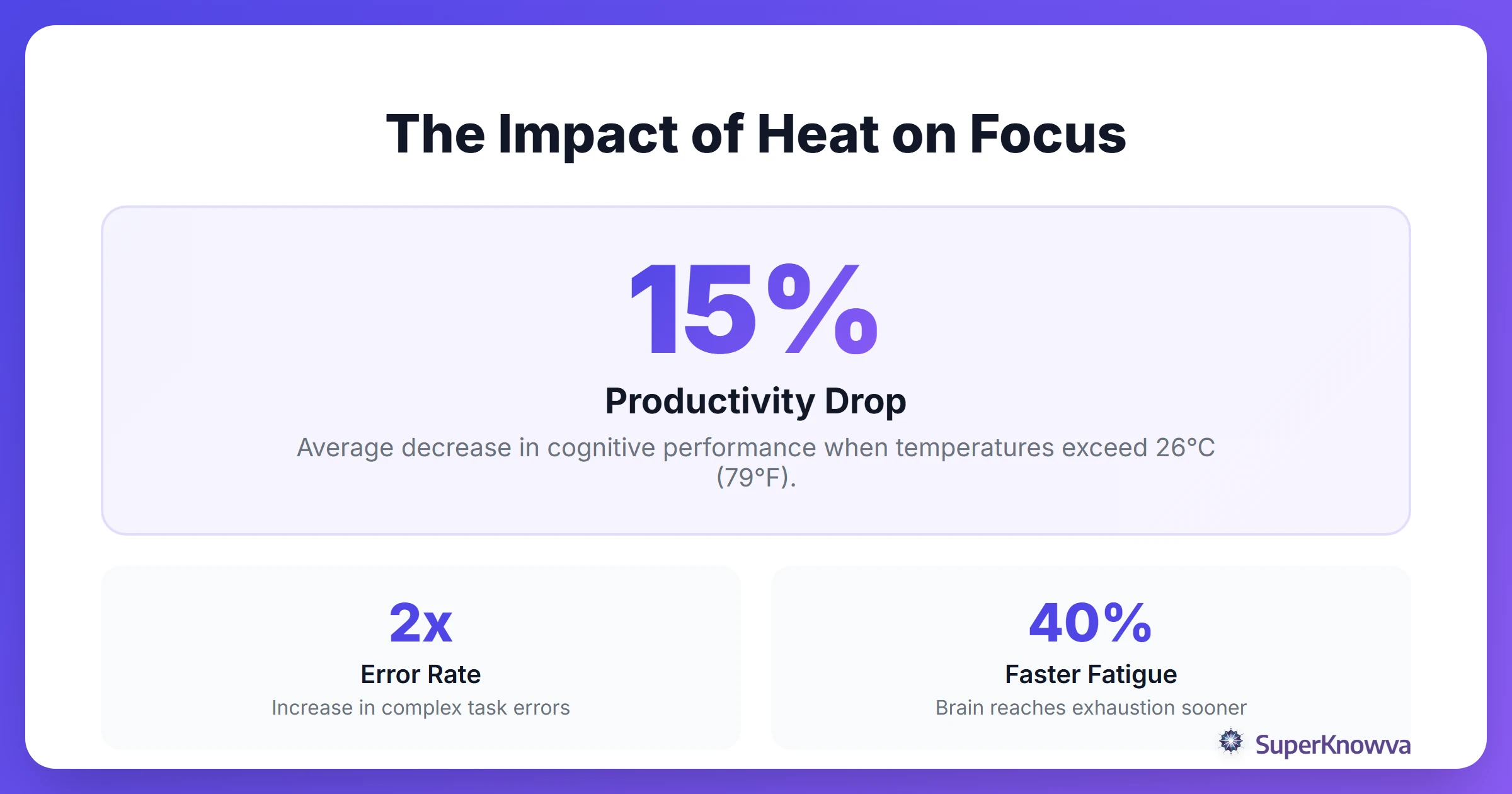
Shallow work, such as organizing folders or clearing out emails, is fine in the heat. Trying to reach a "flow state" while sweating and fatigued leads to frustration. Research shows that productivity drops during the summer months because the brain reaches exhaustion much faster than it does in a climate-controlled room.
Adapting Deep Work for Multi-Subject Students
Ever feel like your brain is "lagging" when you switch from Math to History? That’s what Newport calls attention residue. A part of your mind stays stuck on the last subject, making it impossible to focus fully on the new one.
For a foundational understanding of these principles, check out our guide on Deep Work for Students: Mastering Focus in a Distracted World.
To beat summer lag when managing multiple subjects, try these adjustments:
- The 90-Minute Sprint: Avoid 4-hour sessions. In the heat, 90 minutes is the ideal length. This matches your body’s natural energy rhythms and prevents fatigue.
- The 15-Minute "Cool Down": Between subjects, step away. Grab a cold drink, splash water on your face, and let the mental load from the previous subject fade.
- Know Your Level: If you’re in high school, try two 90-minute blocks on different subjects. If you’re in college, consider "bimodal" scheduling by dedicating an entire Tuesday to one project so you do not have to switch gears.
If you’re struggling with the transition between topics, this Reddit thread explores practical solutions from students who have been there.
The 'Cool' Routine: Timing Your Deep Work Blocks
To master productivity in heat, you have to stop fighting the sun and start working around it. Your internal clock and the thermometer should be your guide.
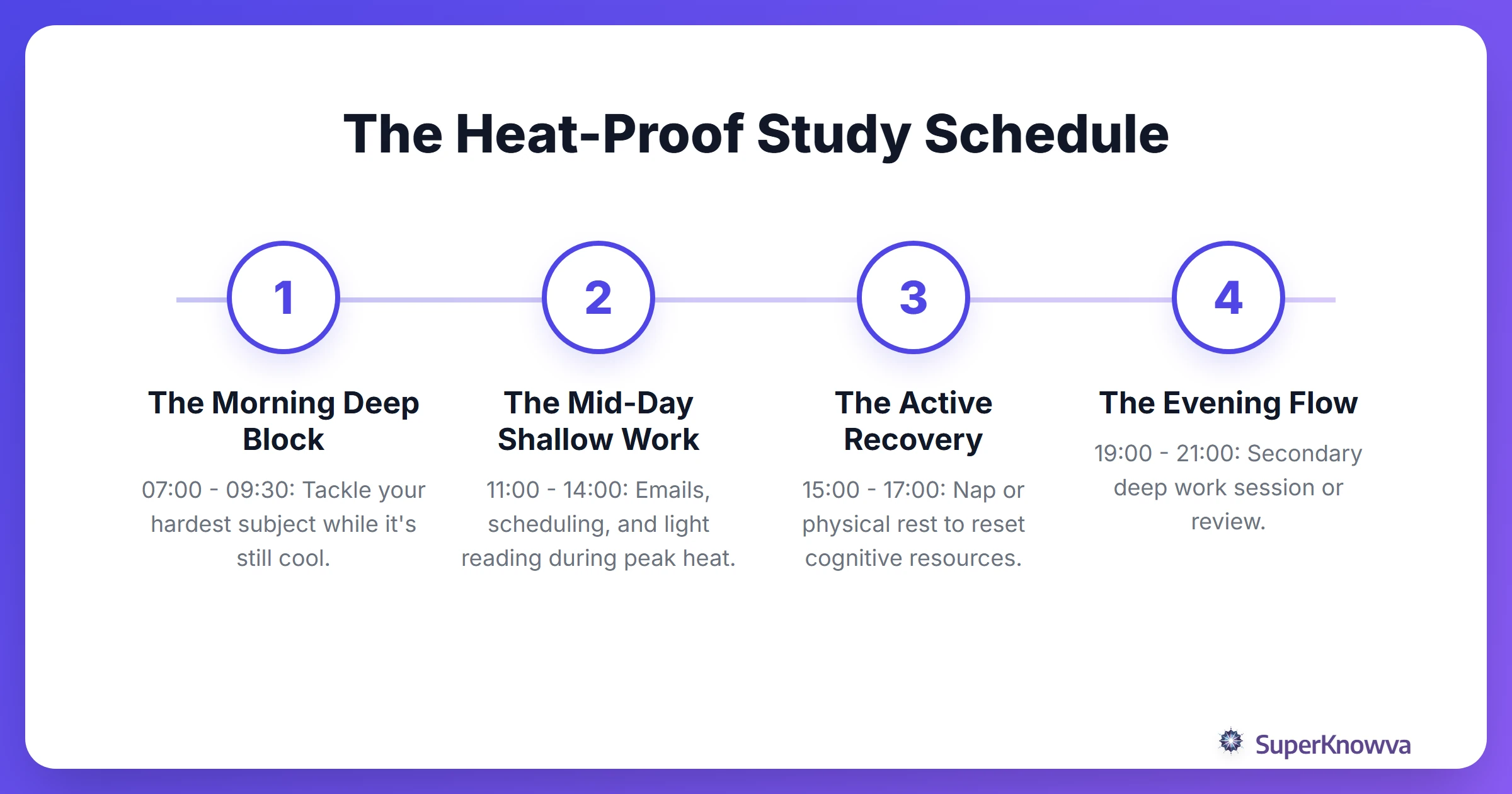
- The Early Bird Window (6:00 AM – 9:00 AM): The air is still cool, the house is quiet, and you have more energy before the day's heat. This is your most productive window.
- The Night Owl Shift (After 8:00 PM): If you are not a morning person, wait until the sun sets. The drop in temperature can help you focus.
- The Administrative Afternoon: Use the hottest part of the day (2:00 PM – 4:00 PM) for "shallow work." This is the time for emails, organizing your desk, or light reading that does not require 100% of your brainpower.
- The Library Escape: If your home is too hot, go to a library. The quiet environment and air conditioning help you stay productive.
Digital Minimalism: Fighting Summer FOMO
Summer social media is a different beast. Seeing your friends at a pool party while you’re staring at a laptop is a motivation killer. Combatting this is much easier when you adopt a philosophy of Digital Minimalism for Students.
Try these student focus strategies:
- Monastic Mode: During your deep work block, your phone stays in another room. No exceptions. If it's within arm's reach, you've already lost.
- Scheduled Fun: Use a bimodal approach. Tell yourself, "Tuesday and Thursday are for the grind. Wednesday is for the beach." This removes the guilt and the constant "should I be doing something else?" feeling.
- Lock it Down: Use tools like Freedom or Cold Turkey to physically block social media during your peak morning hours.
Pomodoro vs. Flowtime: What Works in the Heat?
Which timing method should you use? Check out our breakdown of Pomodoro vs. Flowtime. In the summer, the "best" method usually depends on the temperature.
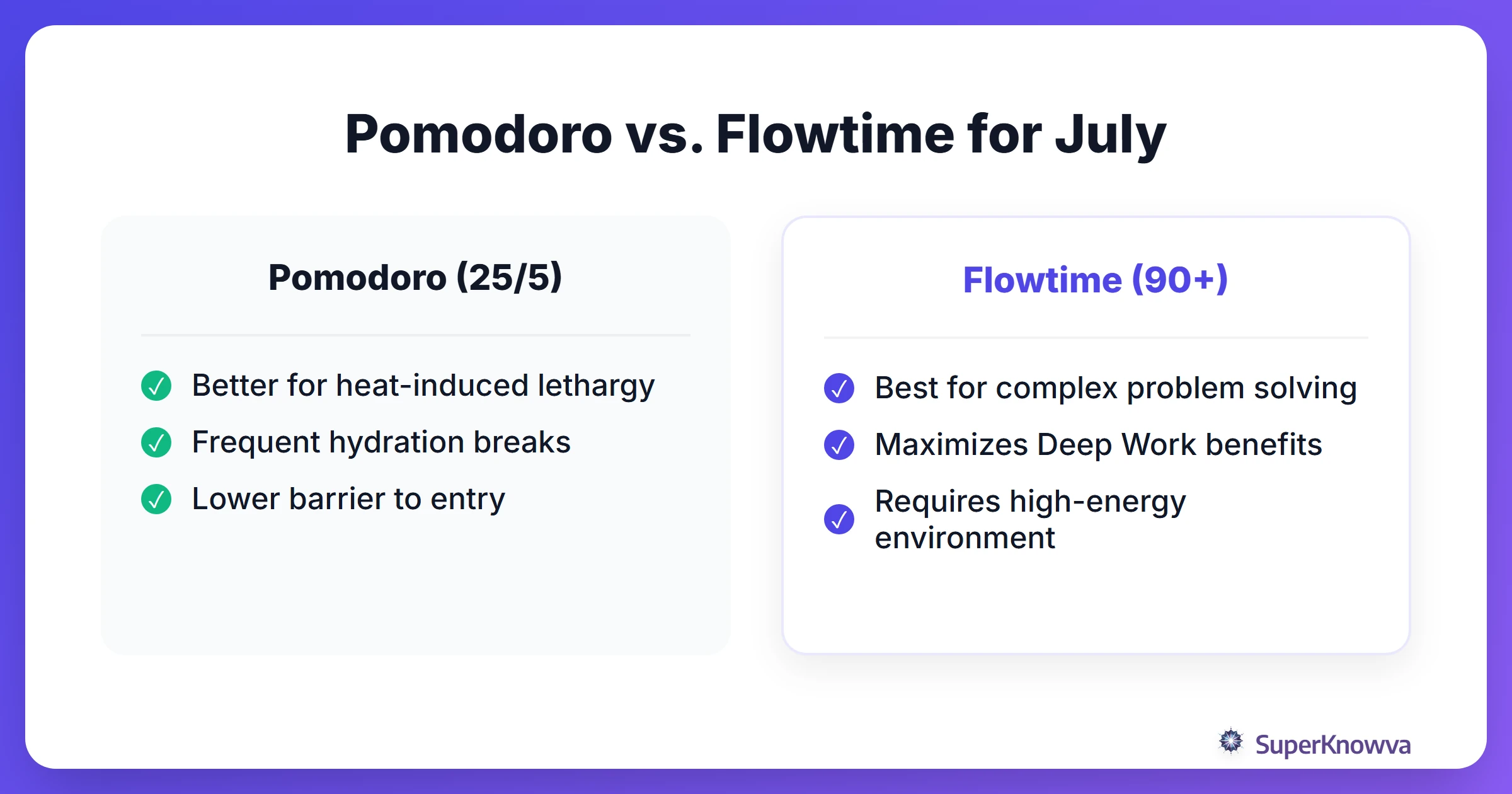
The Pomodoro Technique (25 on / 5 off) is great for those sluggish, humid days. The frequent breaks let you hydrate and reset often. But if you’ve managed to find a "cool zone" and you’re tackling a massive, complex problem, Flowtime (working until you actually feel like you need a break) is better for maintaining deep immersion.
A Checklist for Your July Deep Work Sessions
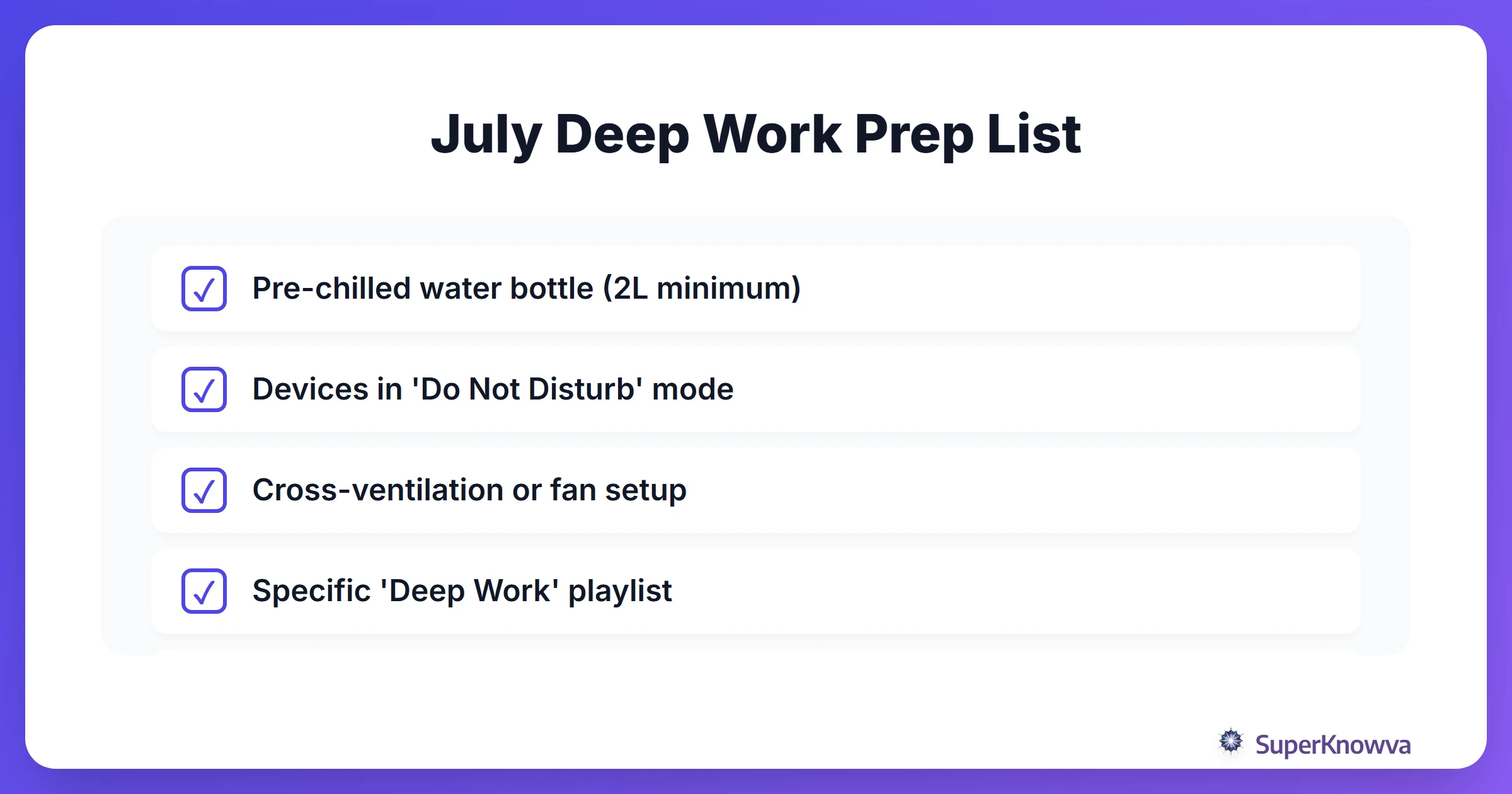
Before you sit down, make sure your environment isn't working against you.
Use this time blocking for students checklist to prep your space:
Finally, don't skip the Shutdown Ritual. When you’re done for the day, say it out loud: "I am done." Close the laptop, clear the desk, and walk away. This ritual tells your brain it’s okay to stop worrying about school and actually enjoy those long summer evenings. You’ll wake up much more recharged for the next session.
By pairing these summer study tips with the power of SuperKnowva’s AI-driven tools, you can turn a sticky, distracting July into your most productive month yet. Stay cool, stay focused, and keep pushing the boundaries.