Ever sat in a 2 PM lecture with a million-dollar idea bouncing around your brain, only to realize you have a midterm in three hours? We’ve all been there. Usually, those ideas get shelved. But summer break is different. It’s more than just a gap between semesters or a time to snag a generic internship. For the ambitious, it’s the ultimate launchpad for entrepreneurship for students.
Whether you’re dreaming of commercializing a breakthrough from the lab or just launching a niche service to solve a local problem, these three months offer a rare, low-risk window to pivot from researcher to founder.
In this guide, we’ll break down how to use your academic foundation to build a real, viable business before the fall semester kicks back into gear.
Why Summer is the Perfect Sandbox for Student Entrepreneurs
The biggest killer of student startups isn't a lack of talent; it is a lack of time. During the semester, credit hours, group projects, and exams consume your capacity.
Summer changes the math.
It provides a "zero-risk" environment. If the business flops by August, you haven't lost a career; you've gained a world-class story for your resume. If it takes off, you’ve changed your life.
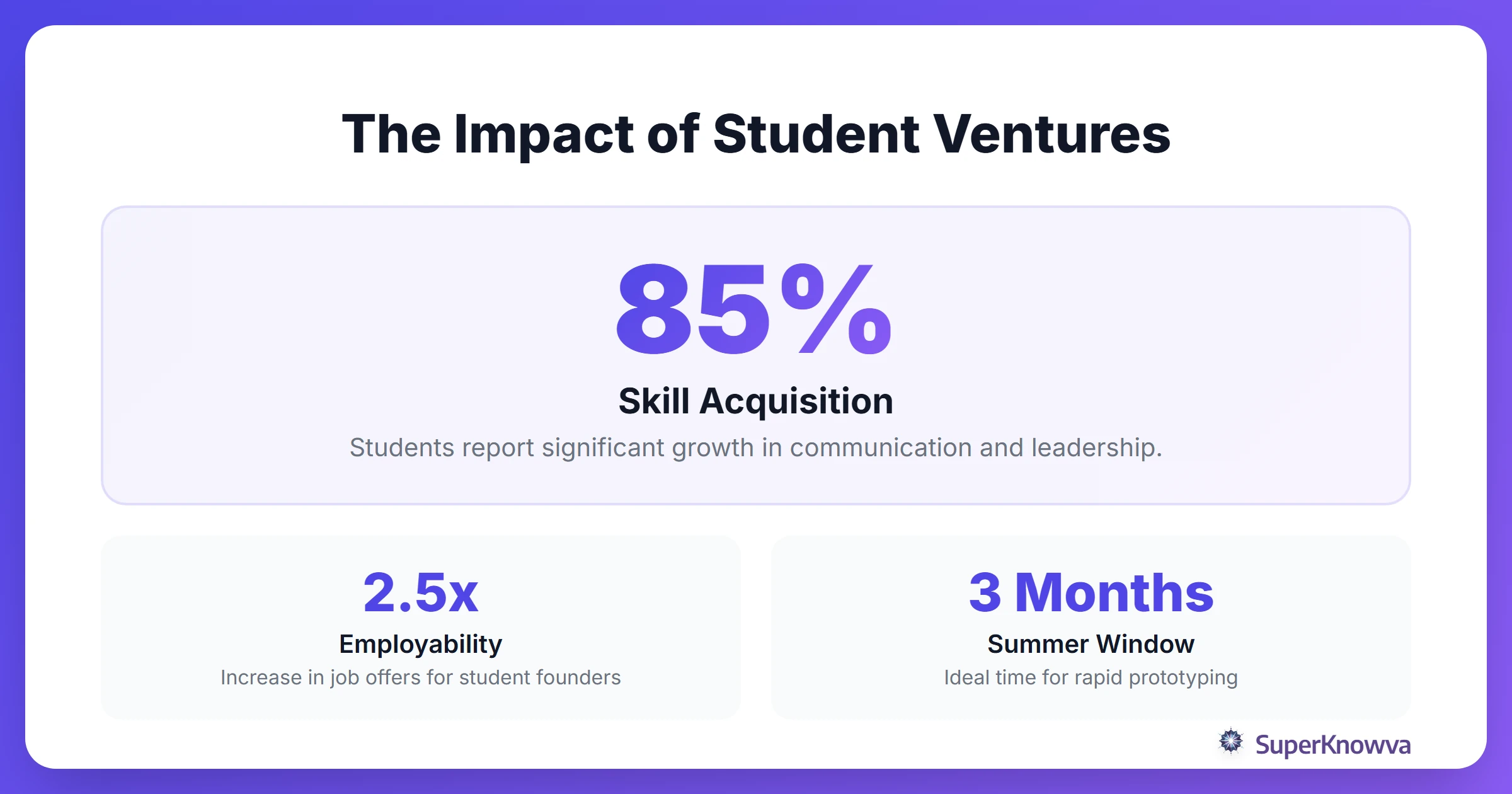
Deep creative work requires focus. You can't build a company in 15-minute gaps between classes. You need the mental headspace that only a wide-open summer calendar provides. Plus, your student status is a massive "golden ticket." Industry veterans who would ignore a professional salesperson will almost always take a coffee chat with a "student researcher looking for advice."
Networking 101: A Student's Guide explains exactly how to use this status to build a high-level professional circle before you even graduate. To make it work, keep your ego in check and set 90-day goals. Don't worry about an IPO by August. Aim for a validated prototype and ten people who actually care about what you're building.
From Lab to Market: Shifting from Researcher to Founder
If you’re coming from a heavy academic background, your work ethic isn't the problem. Your mindset might be. Academic research often demands theoretical perfection and years of peer review. Entrepreneurship is different. It demands "good enough to test."
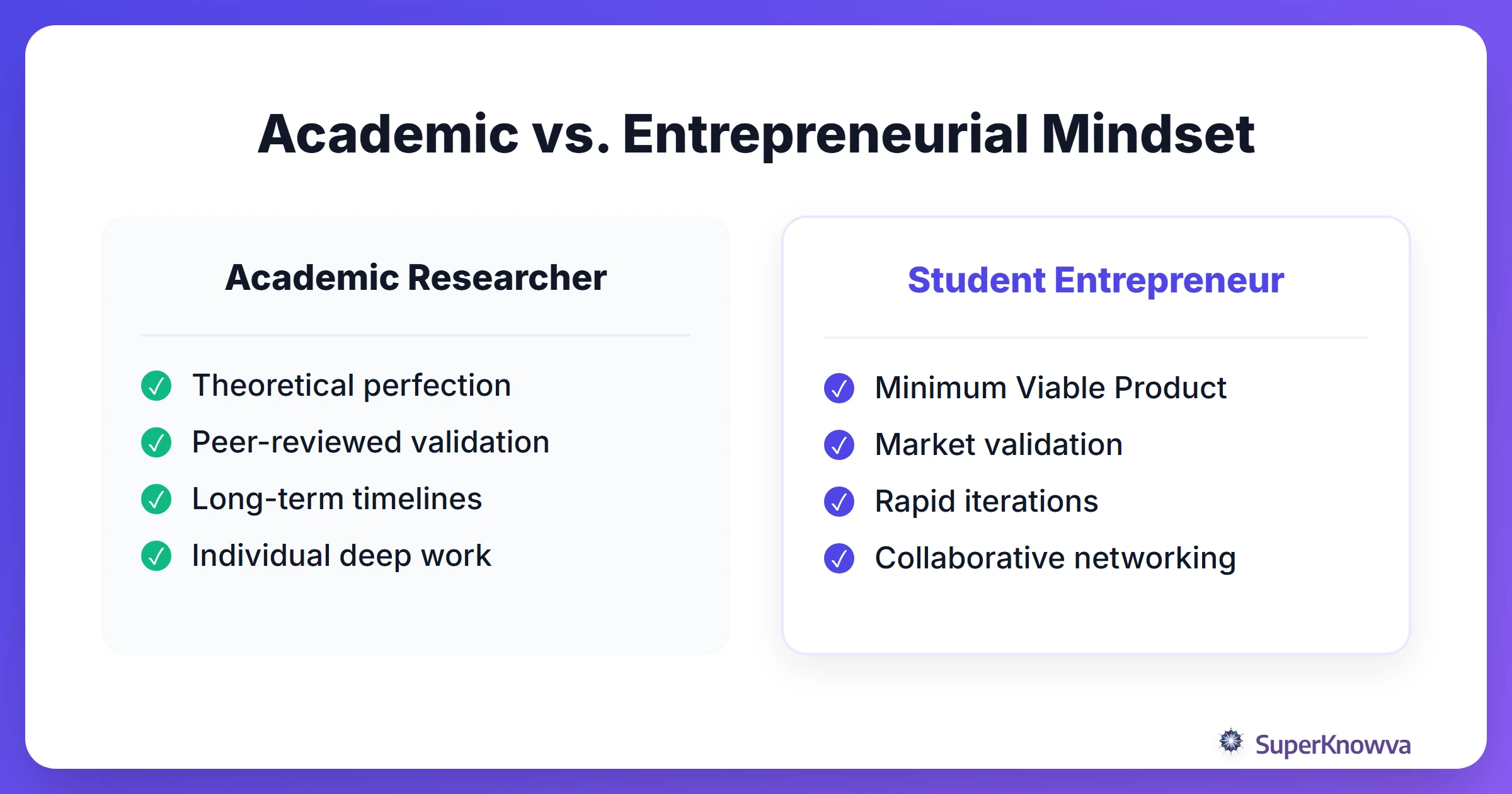
To move from the lab to the market, you have to find the problem-solution fit. Stop asking if the tech is cool. Start asking: Does this solve a pain point that someone is actually willing to pay for?
- Customer Discovery: Spend your first three weeks just talking. Conduct interviews. Don’t pitch your idea; just listen to people complain about their problems.
- Value Proposition: Strip away the jargon. If your research is on "biopolymer degradation rates," your business is "eco-friendly packaging that disappears in 30 days." Keep it simple.
The 3-Month Summer Startup Sprint
Without a syllabus, it’s easy to let June slip away. You need a self-imposed structure to stay on track. Treat your summer like a 12-week sprint.
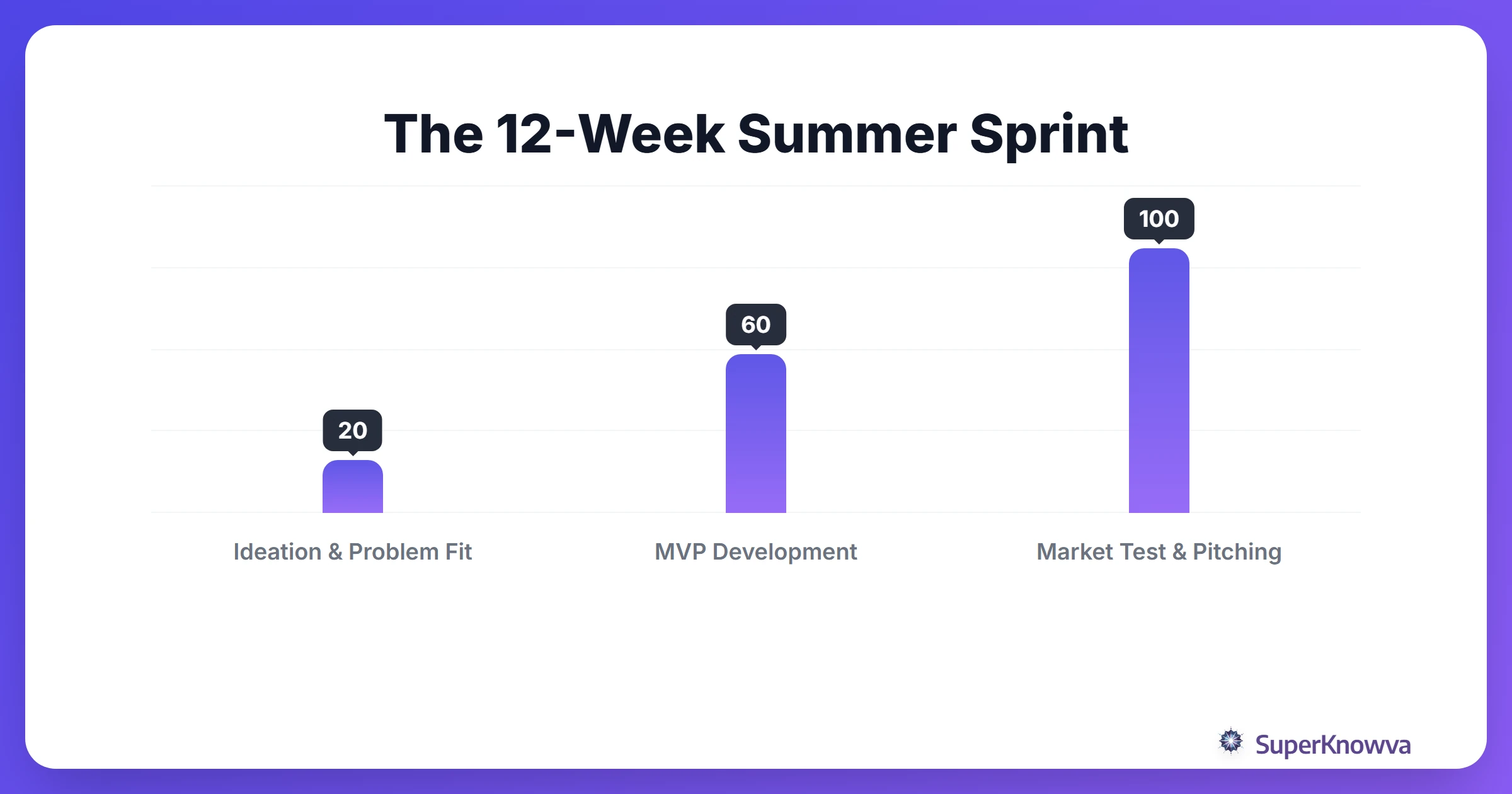
- Month 1: Ideation and Validation. This is the "reality check" phase. Talk to users and refine your summer business ideas for students. If no one wants it, pivot now.
- Month 2: Building the MVP. Build a Minimum Viable Product. Don't over-engineer it. While you're building an online presence, use low-code tools or rapid prototyping to get a functional version into the wild.
- Month 3: Pitching and Planning. Use August to network with investors or apply for campus accelerators. This is also when you decide: is this a side hustle, or are you going all-in this fall?
Balancing Academic Rigor with Business Agility
Can you be a straight-A student and a CEO? It’s a tightrope walk, but it’s possible. It just requires "dual-track" thinking. The discipline you use to master organic chemistry is the same discipline you need to drive business growth.
Balancing research and business is about integration, not sacrifice. The analytical skills you hone in the library allow you to dissect market data with more precision. On the flip side, the soft skills employers are looking for, such as high-stakes negotiation and clear communication, are developed much faster in a boardroom than a classroom.
Academic founders must address Intellectual Property (IP). If you use university labs or equipment, check your school’s IP policy early. Negotiating these rights is a standard part of the student founder guide. Finalize this before seeking outside investment.
Leveraging Campus Resources and Student Networks
You don't have to build this in your dorm room alone. Most universities have a hidden network designed to give you free help. Organizations like the Business Association of Stanford Entrepreneurial Students (BASES) are built specifically to support the next generation of makers.
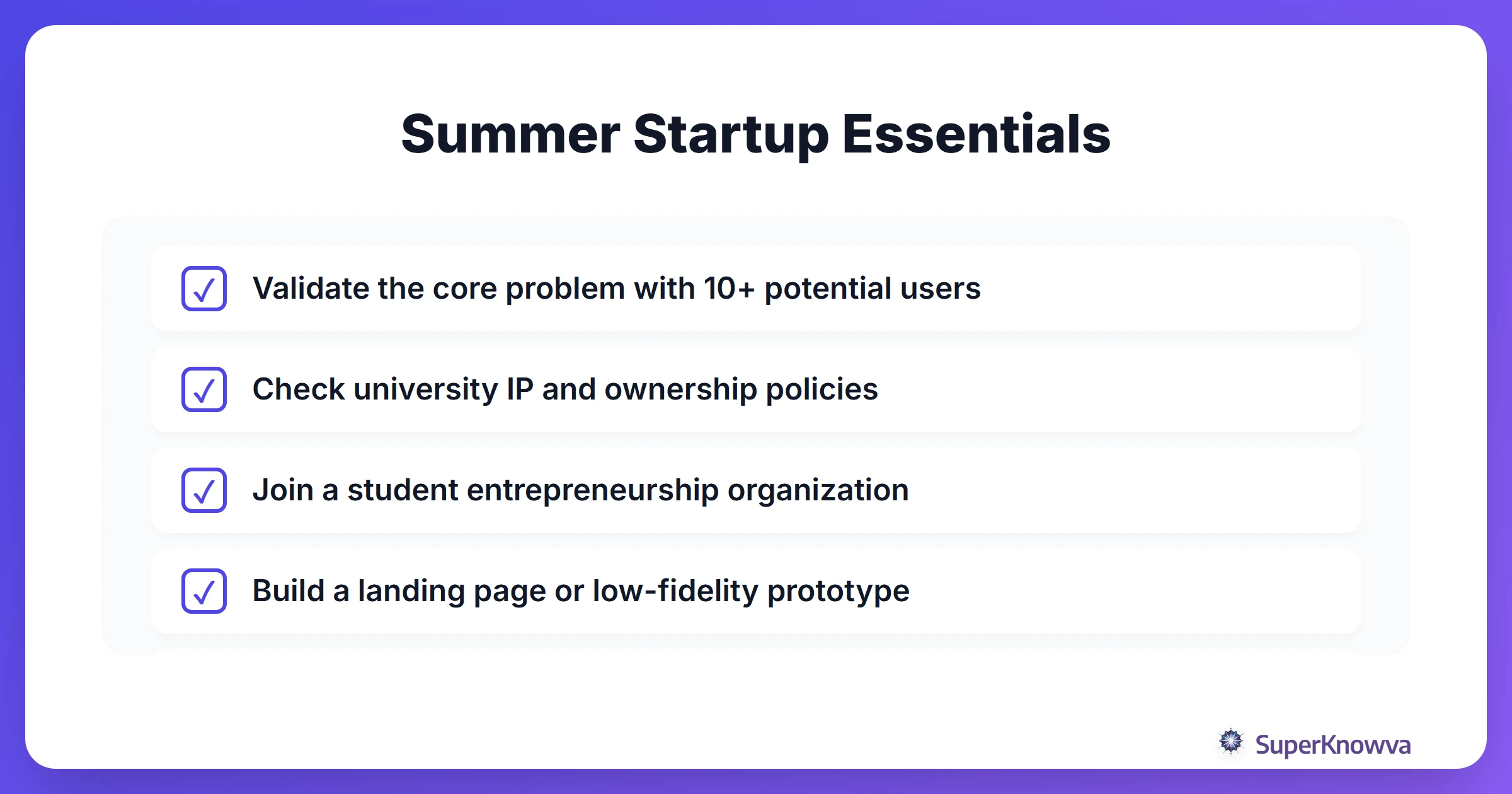
Look for these "hidden" perks:
- University Grants: Many schools offer "no-equity" seed money. It's basically free cash to test your idea.
- Hackspaces: Get free access to 3D printers, expensive software, and hardware labs that would cost thousands elsewhere.
- Flexible Learning: Institutions like the OSU School of Entrepreneurship offer programs and certificates that teach you how to vet opportunities properly.
Future-Proofing Your Career Through Entrepreneurship
Even if your startup doesn't become the next unicorn, the experience is a significant asset. Corporate recruiters are tired of seeing identical resumes. They want "intrapreneurs" who can take initiative and solve problems without a manual.
Along the way, you’ll develop a thick skin. You'll learn how to handle rejection and how to build a network that lasts far beyond graduation. In today's economy, having a "failed" startup on your resume is often more impressive than a standard internship. It proves you have the guts to build something from nothing.
Entrepreneurship for students is about more than just a paycheck; it’s about taking ownership of your future. This summer, don't just study the world. Start changing it.