You read the same paragraph for the fifth time, but nothing sticks. You have the highlighters, the perfect playlist, and three hours of blocked-out time, yet your brain feels heavy and slow.
Before you reach for a third cup of coffee, stop. The fix might be simpler than you think. You might just need a glass of water.
Understanding the link between hydration and cognitive performance is one of the easiest ways to give yourself a competitive edge. It’s not just about health; it’s about how fast you think. Research shows that even a tiny dip in your body’s water levels can cause your focus and memory to tank. Let’s look at why your brain is so "thirsty" and how you can stay hydrated to crush your academic goals.
The Science: Your Brain is Basically a Sponge
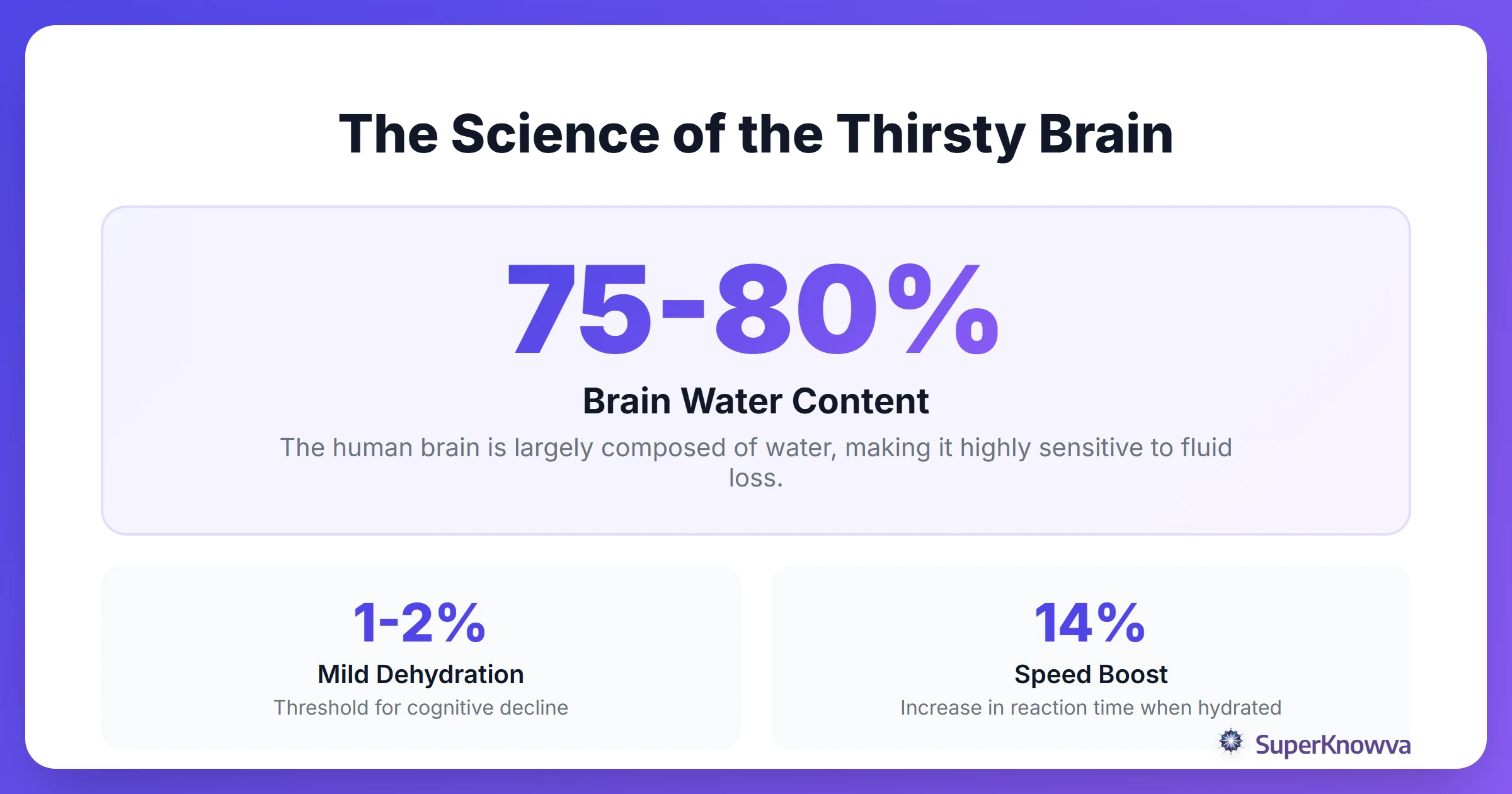
Your brain is a demanding organ. Even though it only makes up about 2% of your body weight, it hogs 20% of your total energy. To keep up with that workload, it needs a very specific environment. Specifically, the human brain is roughly 75-80% water.
Water is more than filler in your skull. It is the medium that allows your neurons to communicate. It maintains the electrolyte balance, primarily sodium and potassium, that allows your brain cells to fire. When you are hydrated, nutrients and oxygen flow to your cells and metabolic waste is removed.
But here’s the kicker: the brain is incredibly sensitive. Mild dehydration (losing just 1-2% of your body’s water) can immediately throw a wrench in these gears. When fluid levels drop, neural activity slows down. Suddenly, your brain has to work twice as hard to get half as much done.
How Dehydration Drains Your Processing Speed
That "brain fog" you feel during a late-night study session? It’s often just a physical symptom of an electrolyte imbalance. When you aren't drinking enough, your attention span is usually the first thing to go. Research indicates that water deficits cause serious cracks in your brain's cognitive architecture.
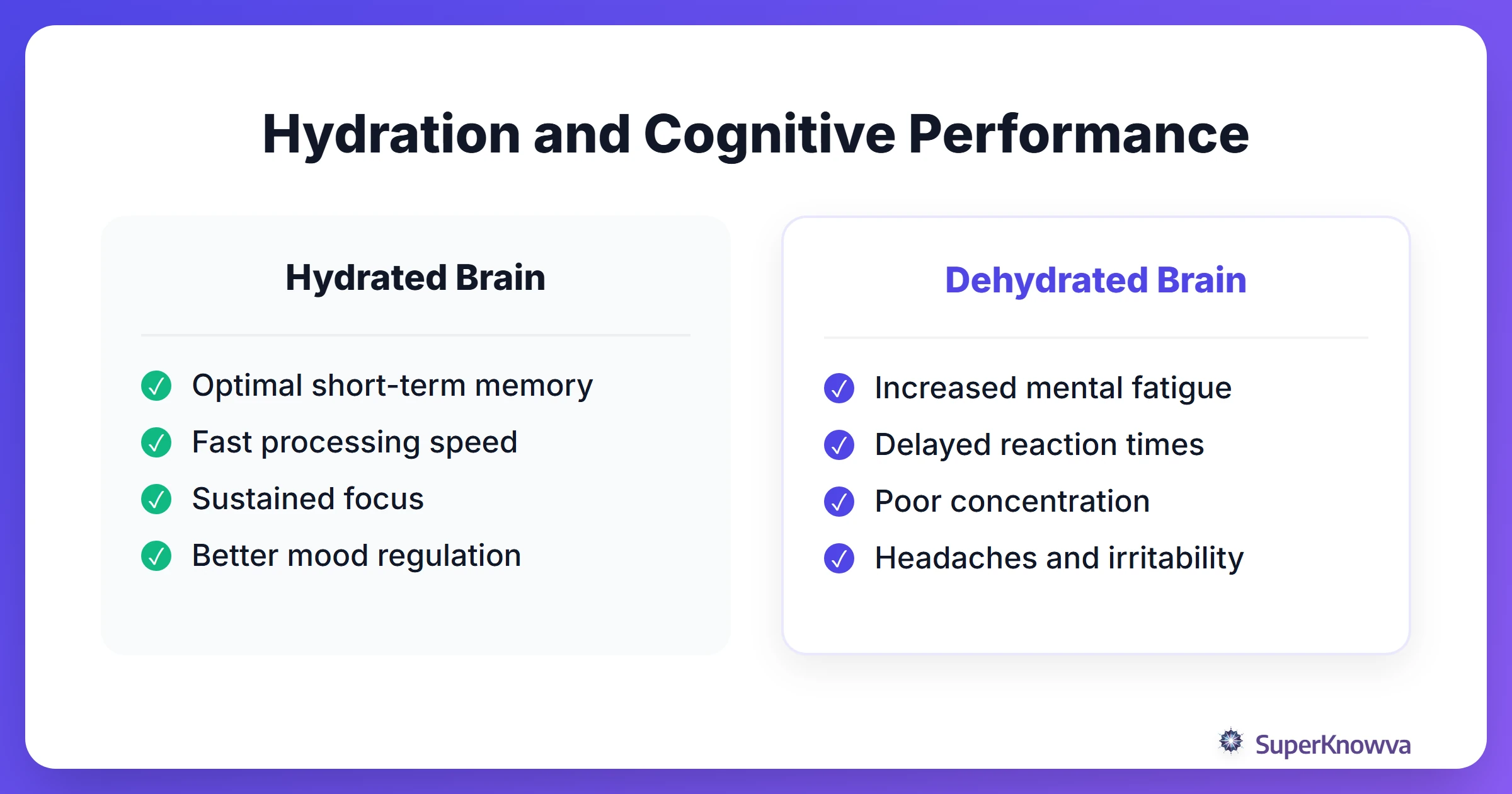
Dehydration has a measurable impact on:
- Short-term memory: Good luck remembering those dates you just memorized.
- Visual-motor tracking: Your eyes move slower across the page, and your reaction times lag.
- Processing Speed: It takes longer to "connect the dots" between complex concepts.
In fact, scientific studies have shown that even 1% dehydration impairs task-switching. On the flip side, students who bring water into exams consistently perform better than those who don't. Sometimes, what looks like signs of student burnout is actually just chronic dehydration messing with your mood and energy.
Calculating Your Personal Hydration Needs
We’ve all heard the "8 glasses a day" rule. Forget it. That’s a myth. Your actual needs are highly personal, based on your weight, metabolism, and how much you move.
The biggest mistake? Waiting until you’re thirsty. Thirst is a liar. By the time you actually feel it, your brain is already feeling the effects of dehydration.
To stay ahead of the curve, use the "Pee Test." Your urine should look like pale straw. If it’s dark yellow, you’re already behind. Also, watch your environment. Library AC in the winter and humid heat in the summer both suck moisture out of you through your breath and skin, even if you aren't sweating.
Strategic Hydration for Exam Success
Staying sharp isn’t just about drinking water; it’s about timing. While water is the foundation, pairing it with the best diet for exam performance ensures your brain has the fuel it needs to cross the finish line.
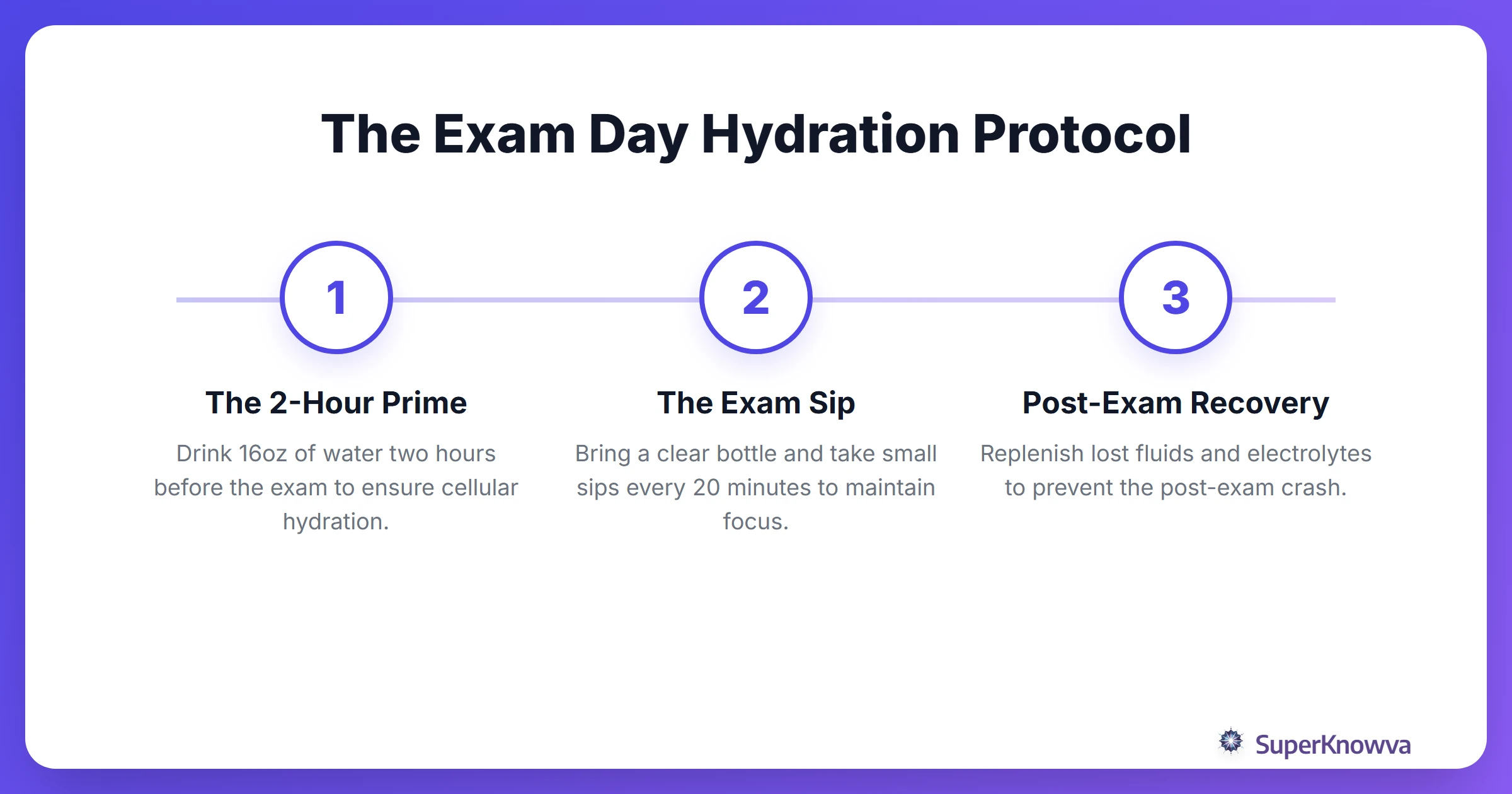
For the best results on test day, try this protocol:
- The 2-Hour Rule: Drink about 16oz of water two hours before the exam. This gives your body time to absorb it (and gives you time to hit the restroom before the clock starts).
- Sip, Don’t Chug: During the exam, take small, frequent sips. If you chug a liter at once, your body will likely just flush it out immediately rather than actually hydrating your cells.
- The Clear Bottle Advantage: Most exam halls allow water if it's in a clear, label-free bottle. Keep it on your desk. It’s a visual cue to keep your brain fueled.
The Caffeine Trap: Water vs. Energy Drinks
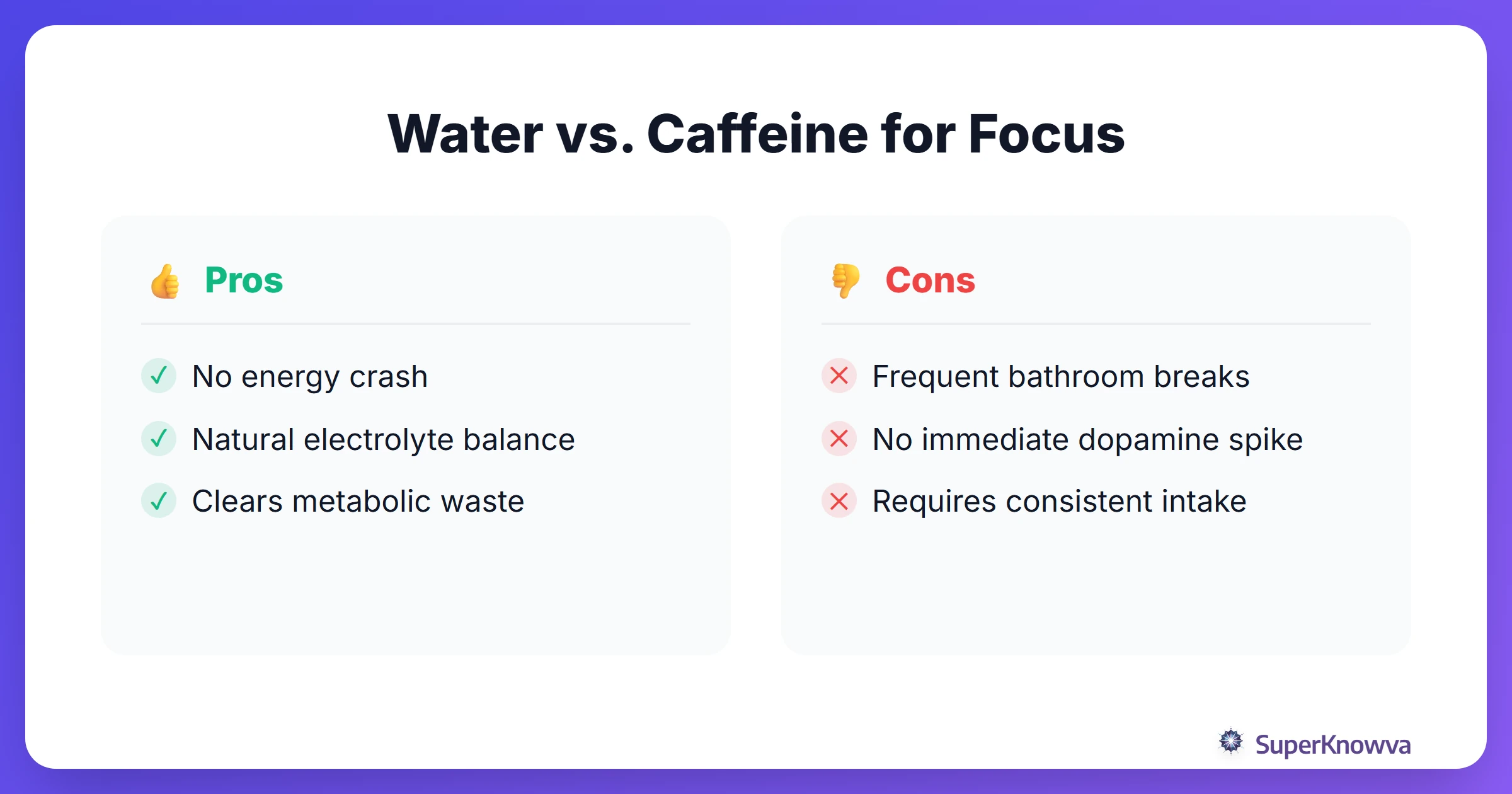
It’s tempting to survive on coffee and energy drinks during finals. High-caffeine drinks are diuretics. They tell your body to get rid of water faster. This often leads to "jittery focus," where you feel busy and wired but aren't actually doing deep, productive work.
Caffeine gives you a dopamine spike, sure, but the "crash" that follows can leave you more exhausted than when you started. Water provides sustained clarity by actually cleaning out metabolic waste.
Can't live without your coffee? Use the 1:1 ratio: for every cup of coffee, drink one full glass of water. This is especially vital when physical activity boosts cognitive function, as sweat loss plus caffeine is a recipe for a mental crash.
Actionable Habits for the Busy Student
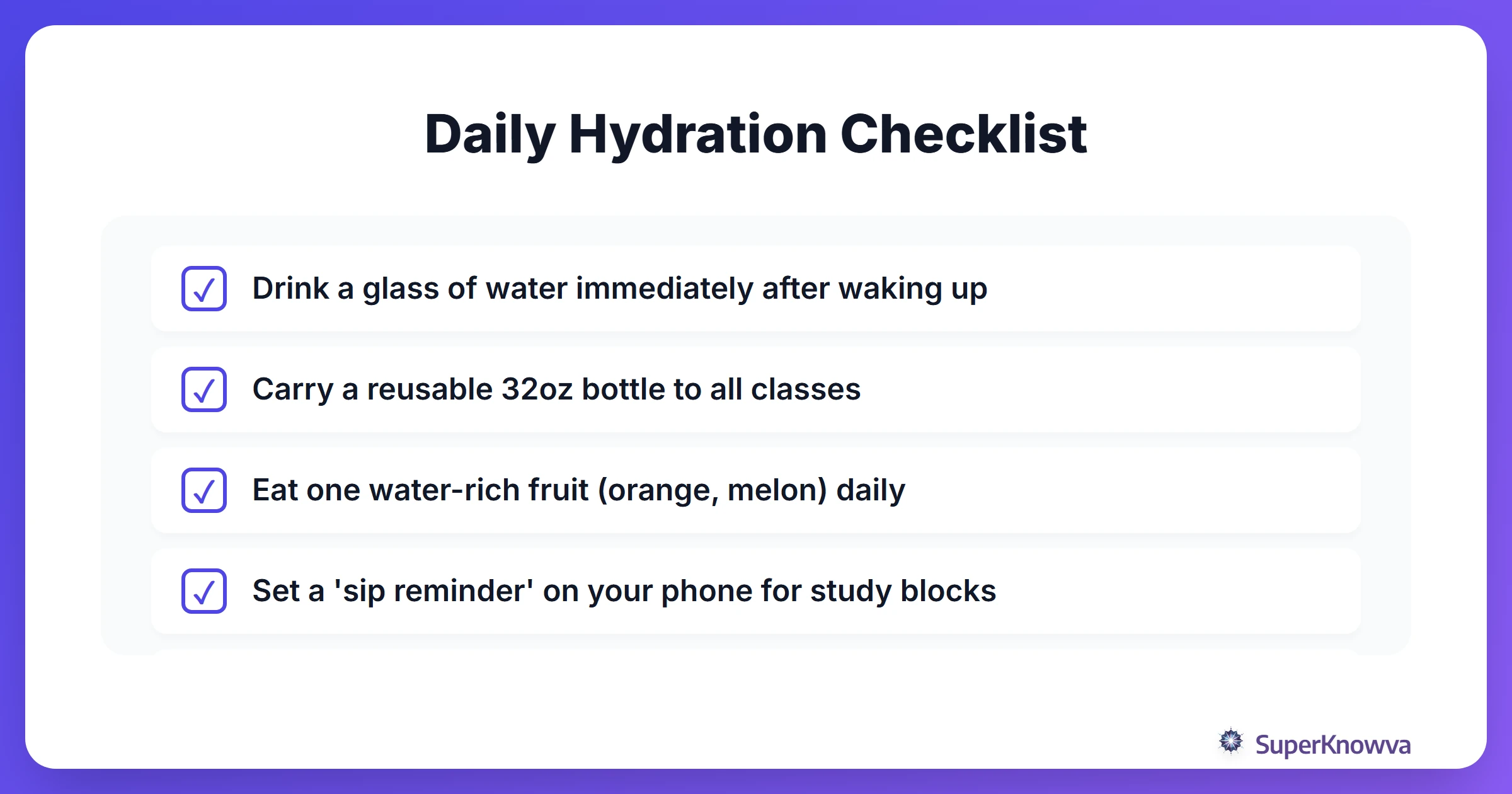
Building a hydration habit doesn't have to be another chore on your to-do list. Try "habit stacking." Every time you finish a chapter or a Pomodoro block, drink a few ounces of water.
A few more ways to keep your brain sharp:
- Eat Your Water: Snacks like cucumbers, watermelon, and oranges are over 90% water. They provide a slow-release form of hydration plus a vitamin boost.
- Natural Infusions: If plain water is boring, throw in some lemon, mint, or cucumber. It makes it feel less like a "requirement" and more like a treat.
- Tech Support: Use a tracking app or a smart bottle that glows when you haven't taken a sip in a while.
When you combine proper hydration with meditation techniques for focus, you create the perfect internal environment for deep, effective study.
The Bottom Line
Hydration is essential for brain function. Don't let a lack of water be the reason your grades slip or your thinking slows down. By staying hydrated, you aren't just quenching thirst; you're supporting your memory and focus. Fill up your bottle and get to work!