Juneteenth is more than a date on the calendar; it’s a heavy, beautiful reminder of the long walk toward freedom. But if you look closely at that history, you’ll notice something: liberation and learning have always been two sides of the same coin. For centuries, knowledge was a gatekept privilege, guarded by those in power. Today, we’re standing at the edge of a new chapter. The history of educational technology is finally moving away from a story of "who is allowed in" to a reality of "how can we include everyone?"
AI is the engine behind this shift, but to understand where we’re going, we have to look at how we got here.
The Long Arc of Educational Technology
Think the history of educational technology started with the Silicon Valley boom? Think again. It actually began the moment the first human tried to store a thought outside their own brain. Arguments about the role of technology in education go back at least 2,500 years, as detailed in A Short History of Educational Technology.
From Mesopotamian clay tablets to the world-altering printing press, we’ve always looked for ways to scale knowledge. But even the "greats" were skeptical. Did you know Socrates actually hated the idea of writing? He worried that this "new technology" would rot our memories and kill deep understanding.
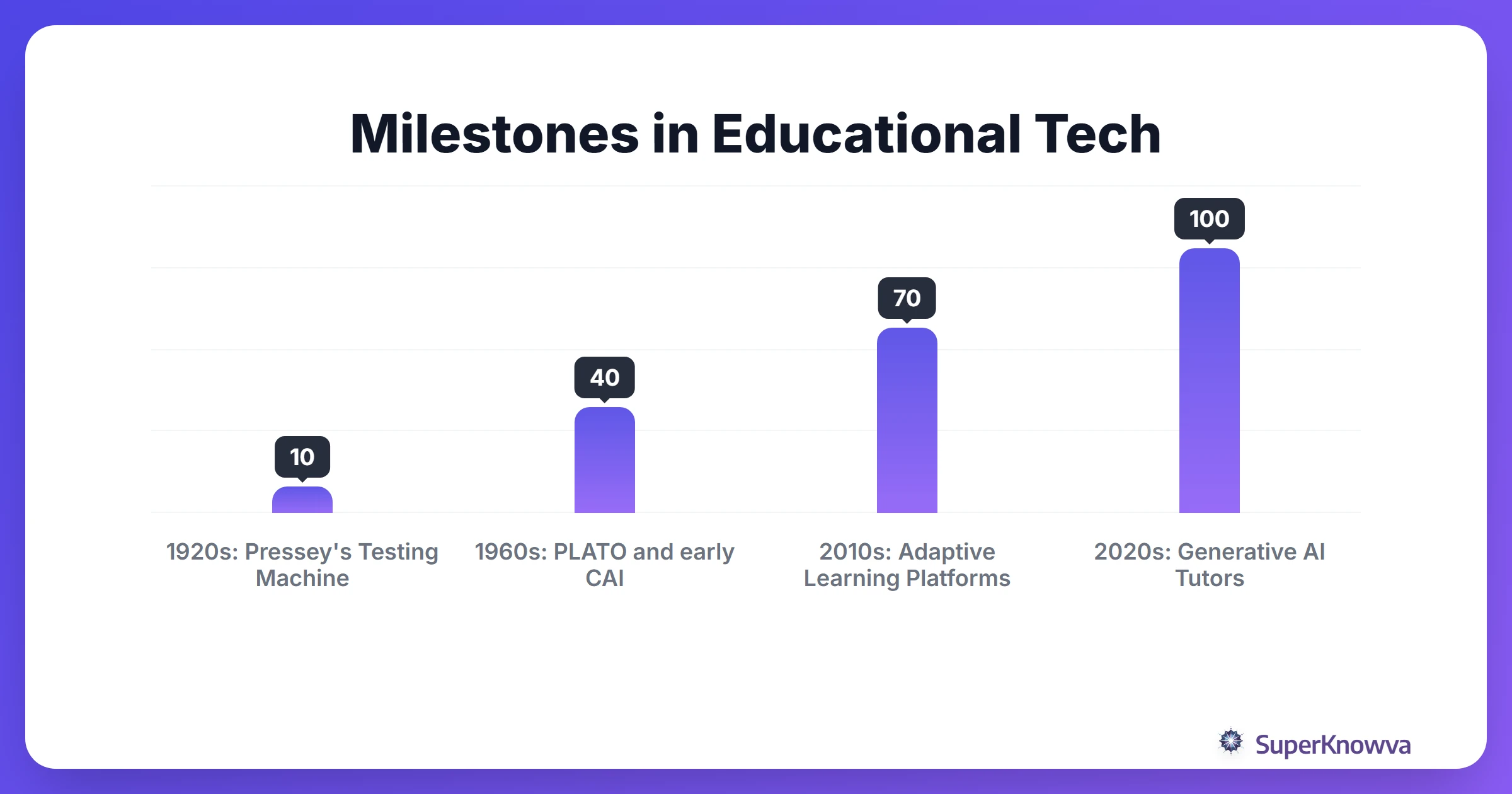
Fast forward to the 1920s, long before the first microchip, and you’ll find Sidney Pressey’s "teaching machines." These were mechanical beasts that used multiple-choice questions to guide students. You couldn't even move to the next page until you got the right answer. It was clunky, sure, but it proved one thing: the hunger for personalized, self-paced learning is nearly a century old.
Juneteenth and the Struggle for Educational Access
On Juneteenth, we confront our history. We reflect on a time when literacy was a crime for enslaved people. Back then, learning to read was not a school requirement; it was a radical act of rebellion.
Even after emancipation, the walls didn't just crumble. They changed shape. We saw it in the era of segregation and the systemic underfunding of schools in Black communities. As we entered the digital age, the barrier moved again, this time from physical books to digital access.
The history of AI in education history can’t be told without talking about social equity. If a tool is only available to the kids in the wealthiest zip codes, it’s not progress; it’s just a high-tech way to enforce an old divide. We have to ensure AI acts as a key, not a new gate.
From Mainframes to Personalized AI Tutors
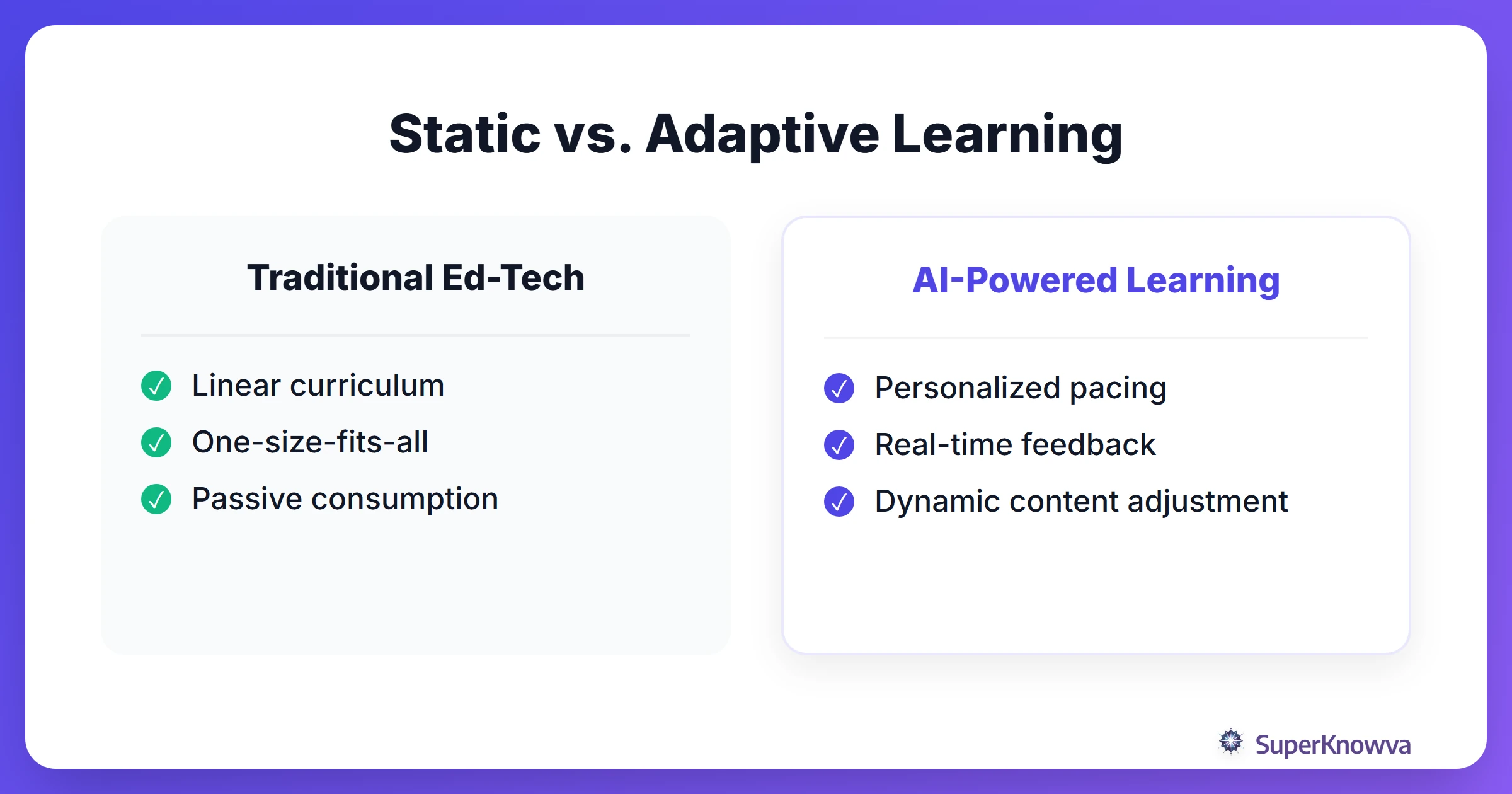
The 1960s gave us PLATO (Programmed Logic for Automatic Teaching Operations). It was the first real attempt at interactive learning using massive mainframe computers. It tried to act like a tutor, but it was basically a digital "choose your own adventure" book. If you chose A, you went to slide B. It wasn't "intelligent"; it was just a script.
Now? We’ve left those static scripts in the rearview mirror. We’ve moved into the era of adaptive algorithms. The old debate used to be "man vs. machine," but we know better now. As we discuss in our guide on AI Tutors vs. Human Tutors, the magic happens in the middle. Modern AI doesn't just follow a path; it watches how you learn, spots where you’re struggling, and adjusts in real-time. It’s like having a tutor that never gets tired and knows exactly when you need a break.
The Digital Divide: What Went Wrong in the 80s and 90s
Remember the "computer revolution" of the 90s? We were promised it would fix everything. Instead, the digital divide in learning actually got wider. Wealthy districts got the high-speed labs, while underfunded schools got left with outdated tech or nothing at all.
Early educational software presented a human problem. It felt cold, processing students rather than teaching them. Critics in The Teacher in the Machine argue these tools failed to expand access to education by neglecting the student. We are integrating emotional intelligence into modern AI because you cannot learn without feeling supported.
AI as an Equalizer: Breaking Down Modern Barriers
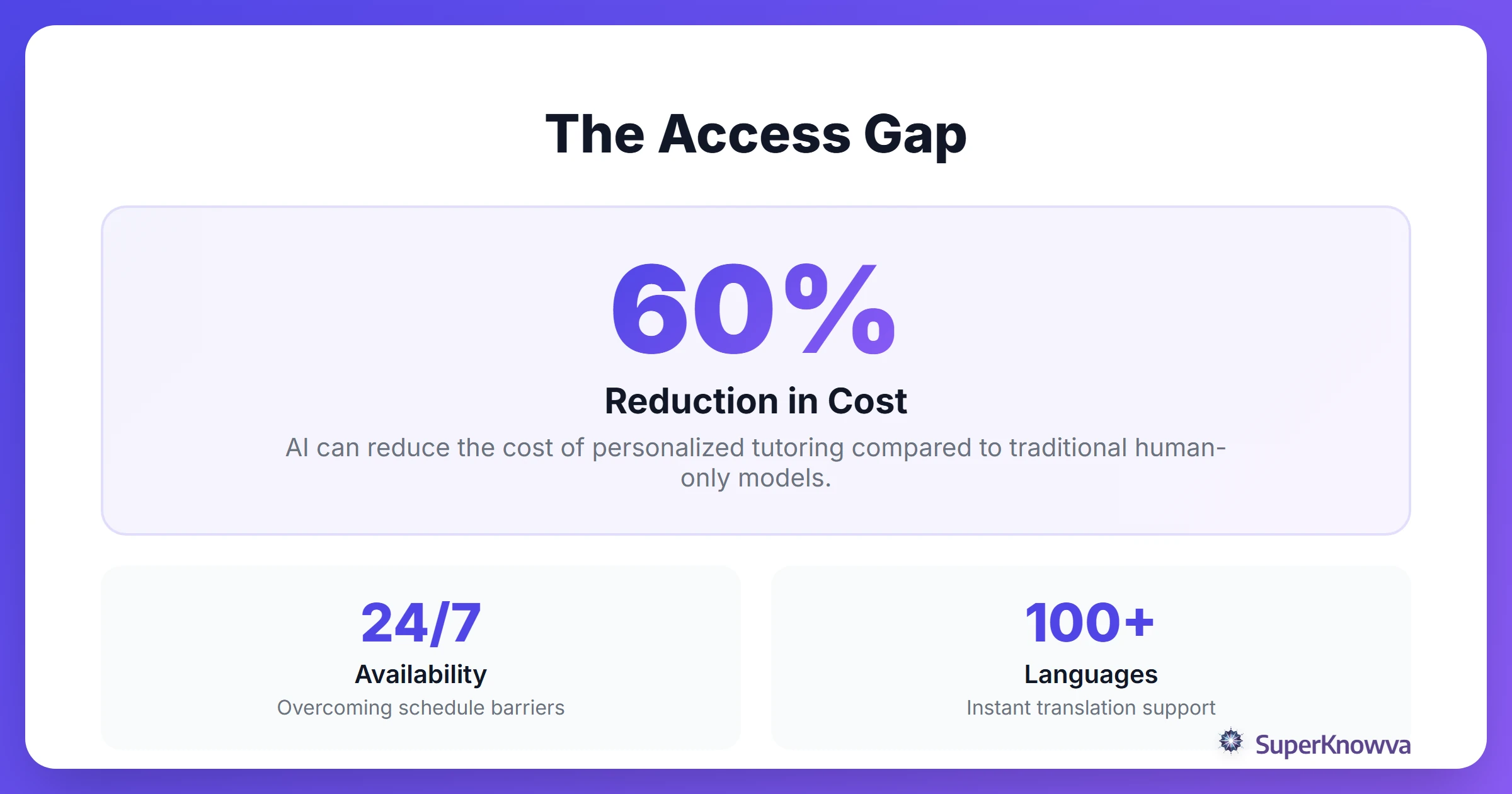
For decades, educators have chased the "2-sigma problem": the fact that students who receive one-on-one tutoring perform significantly better than those in a standard classroom. However, one-on-one tutoring has always been a luxury most families cannot afford.
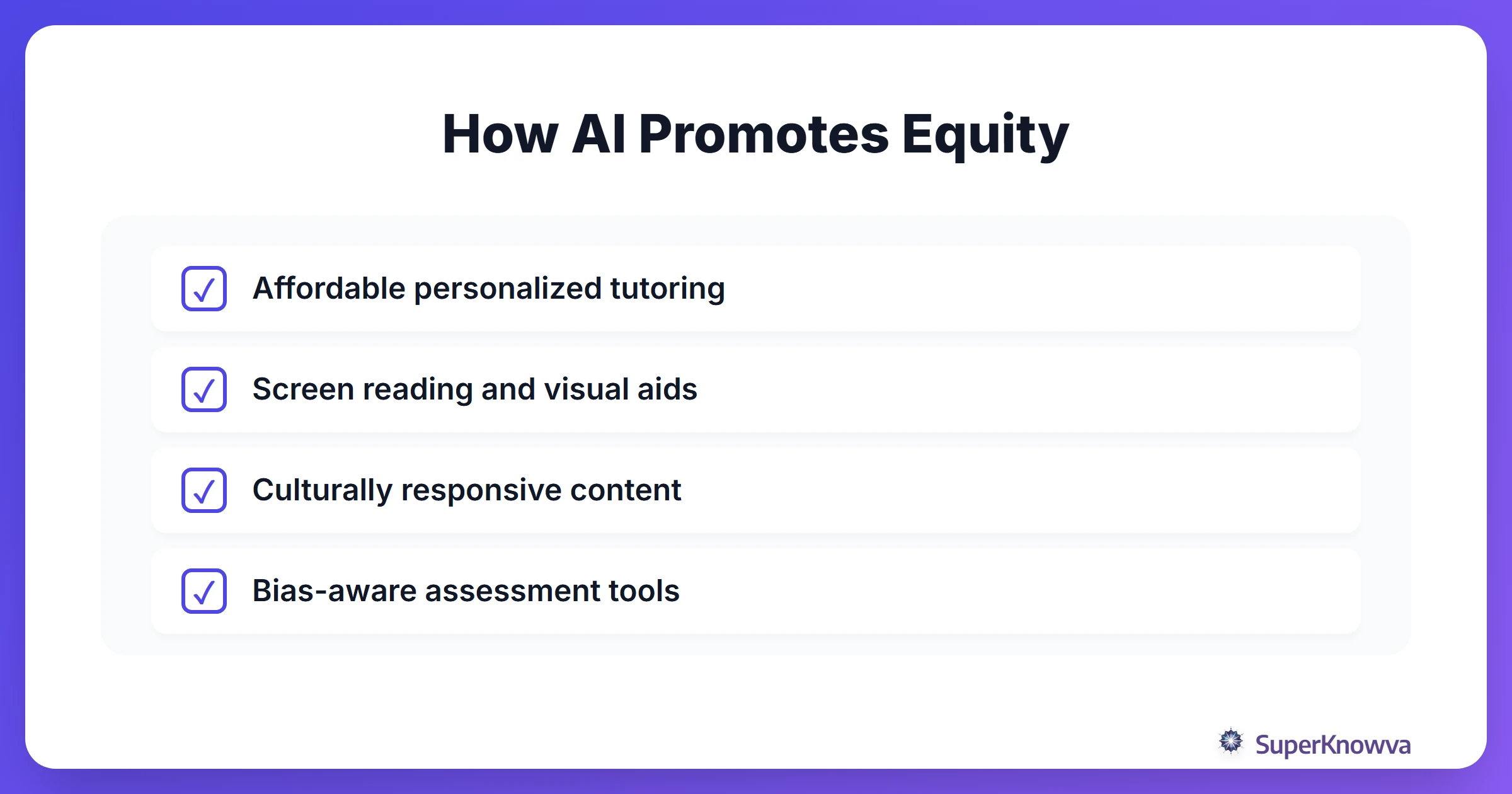
AI tutors for inclusion are flipping the script. They offer that high-level, personalized support at a fraction of the cost. Whether it’s providing real-time speech-to-text for a student who can't type or instant translation for someone learning in their second language, AI is filling the gaps. We’ve seen incredible results in how AI supports students with disabilities, turning what used to be a barrier into a bridge.
The Future of Inclusive Learning
The future of education isn't just about "learning by doing." It’s about "learning by being understood."
To make sure the history of educational technology doesn't repeat its old mistakes, we have to be intentional. AI is only as fair as the data we feed it. If we want a future that celebrates diverse cultural contexts, we have to build it that way from the ground up.
As we celebrate Juneteenth, we’re doubling down on the promise of education for everyone. By stripping away the barriers of cost, language, and accessibility, we can make sure the next chapter of this history is the one where everyone finally gets to participate.