Juneteenth is more than just a date on the calendar. It is a celebration of a long-overdue arrival of freedom, but it’s also a sobering reminder of how long justice can be delayed. At SuperKnowva, we believe this day serves as a vital mirror for our current society. While the physical chains were broken over a century and a half ago, the pursuit of true equality is still playing out in our classrooms and digital learning spaces.
Is freedom realized if the path to knowledge remains blocked? We examine the historical roots of Juneteenth and how modern technology, specifically AI, helps close the educational achievement gap.
The Historical Context of Juneteenth
On June 19, 1865, Union General Gordon Granger arrived in Galveston, Texas, to deliver a message that should have arrived years prior. He announced that all enslaved people were free. The catch? President Abraham Lincoln had signed the Emancipation Proclamation two and a half years earlier.
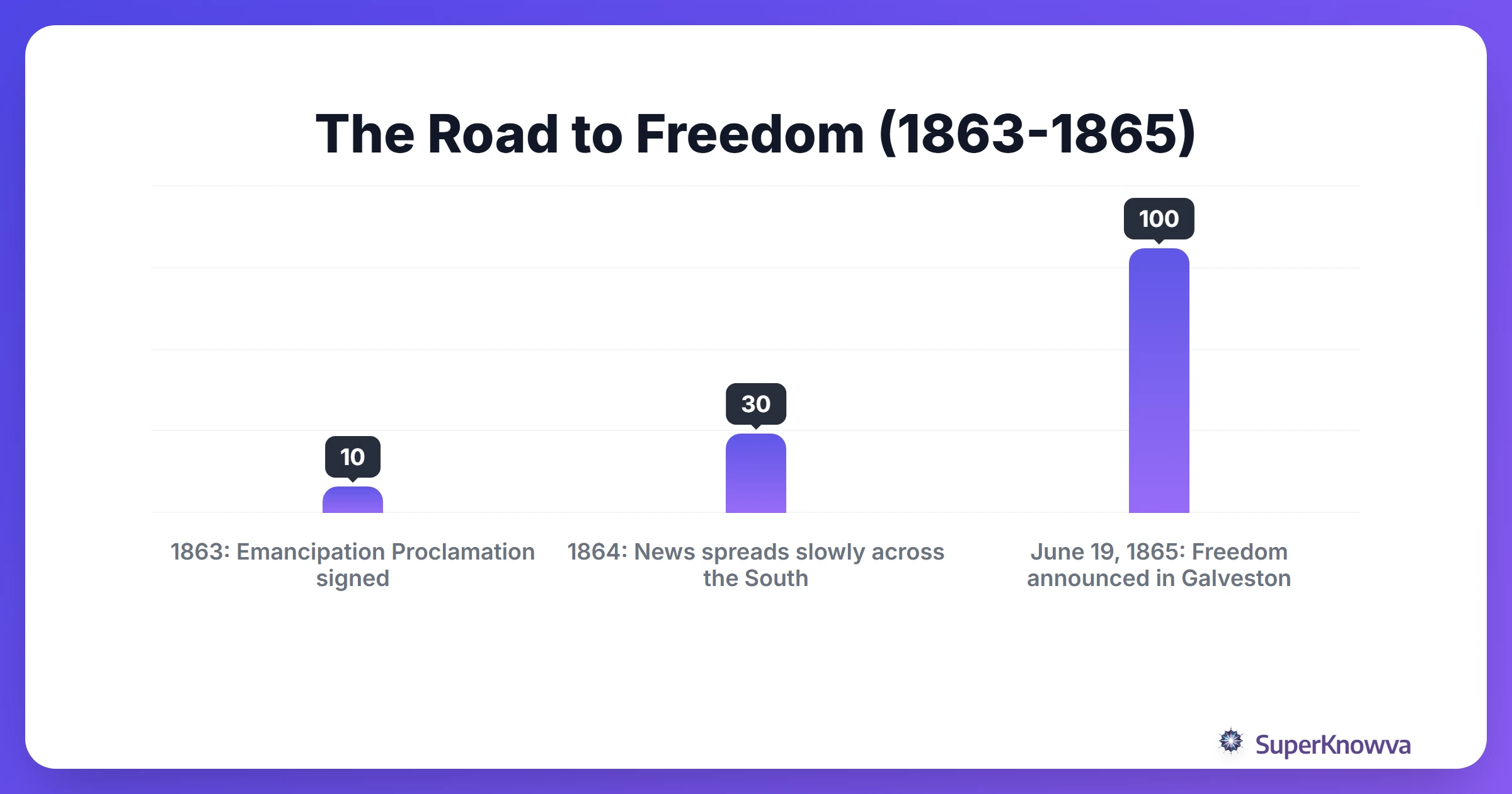
Consider the delay. For two and a half years, people labored under a lie. This gap between promised rights and actual enforcement appears throughout American history. For the Black community, "Freedom Day" became a symbol of resilience. Historical barriers to physical movement existed alongside barriers to education. Restricting the right to learn restricts the future. The legacy of systemic exclusion did not vanish overnight. We are still dismantling it.
The Link Between Freedom and Literacy
For centuries, literacy was a revolutionary act. In many states, "anti-literacy" laws made it a crime to teach enslaved people how to read or write. These laws weren't accidental. Those in power understood a fundamental truth: education is a tool for liberation.
Once freedom was won, the hunger for education was unstoppable. Formerly enslaved people built schools and universities from the ground up. However, as legal bans faded, they were replaced by systemic hurdles: segregation, redlining, and the chronic underfunding of minority school districts. As noted in the Path to Juneteenth: Promoting Equity in Education, Juneteenth is a celebration of joy, but it’s also a reminder that the work isn't finished. Every student needs the tools to succeed, not just the "right" to try.
Identifying the Modern Educational Achievement Gap
We’ve made progress, but let’s be real: a massive educational achievement gap still exists. This isn't because some students are less capable than others. It’s because there is a "chasm" in access to high-quality resources and advanced coursework.
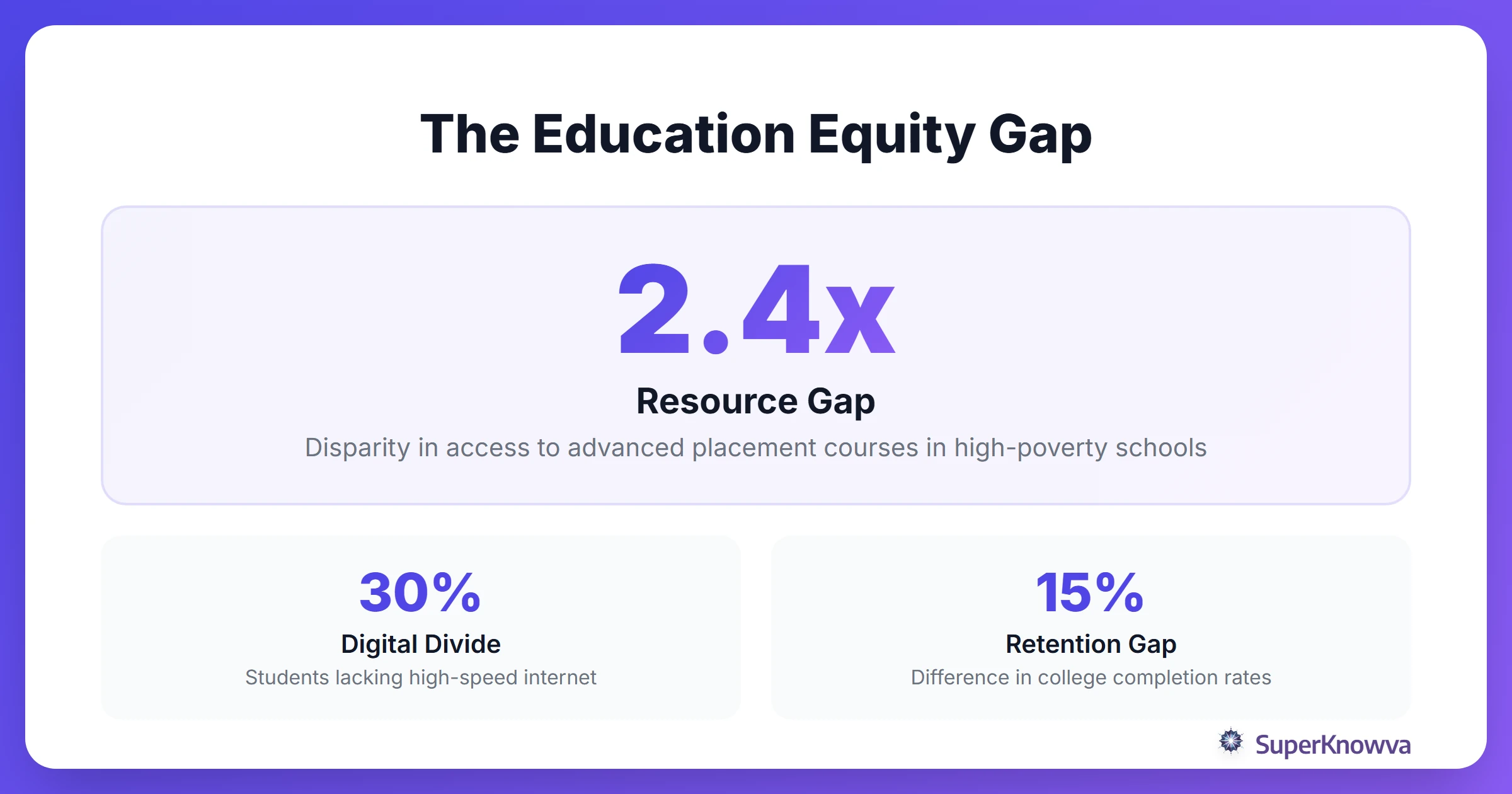
Students in high-poverty or minority-majority schools often have significantly less access to AP courses or veteran educators. The digital divide creates a gap between those with modern technology and those without. Closing this gap requires looking at the "whole student." We must consider how AI and Emotional Intelligence in Learning can help address the psychological and systemic barriers that hinder student progress.
AI as a Tool for Educational Equity
This is where the conversation shifts. AI in education isn't just about flashy gadgets; it’s about democratization. Technology has the potential to be the "great equalizer," putting elite-level resources into the hands of students who have historically been sidelined.
- Scaling Personalized Learning: AI doesn't get tired. It can provide 1-on-1 tutoring at a scale we’ve never seen before, giving students in under-resourced neighborhoods 24/7 support.
- Breaking Barriers: Tools like Inclusive Learning: How AI Supports Students with Disabilities show how tech can pivot to meet diverse needs, whether that’s offering multilingual support or adapting to different cognitive styles.
- Reducing Bias: By using diverse datasets, AI can help deliver a curriculum that reflects the real world, moving past the human biases often baked into traditional textbooks.
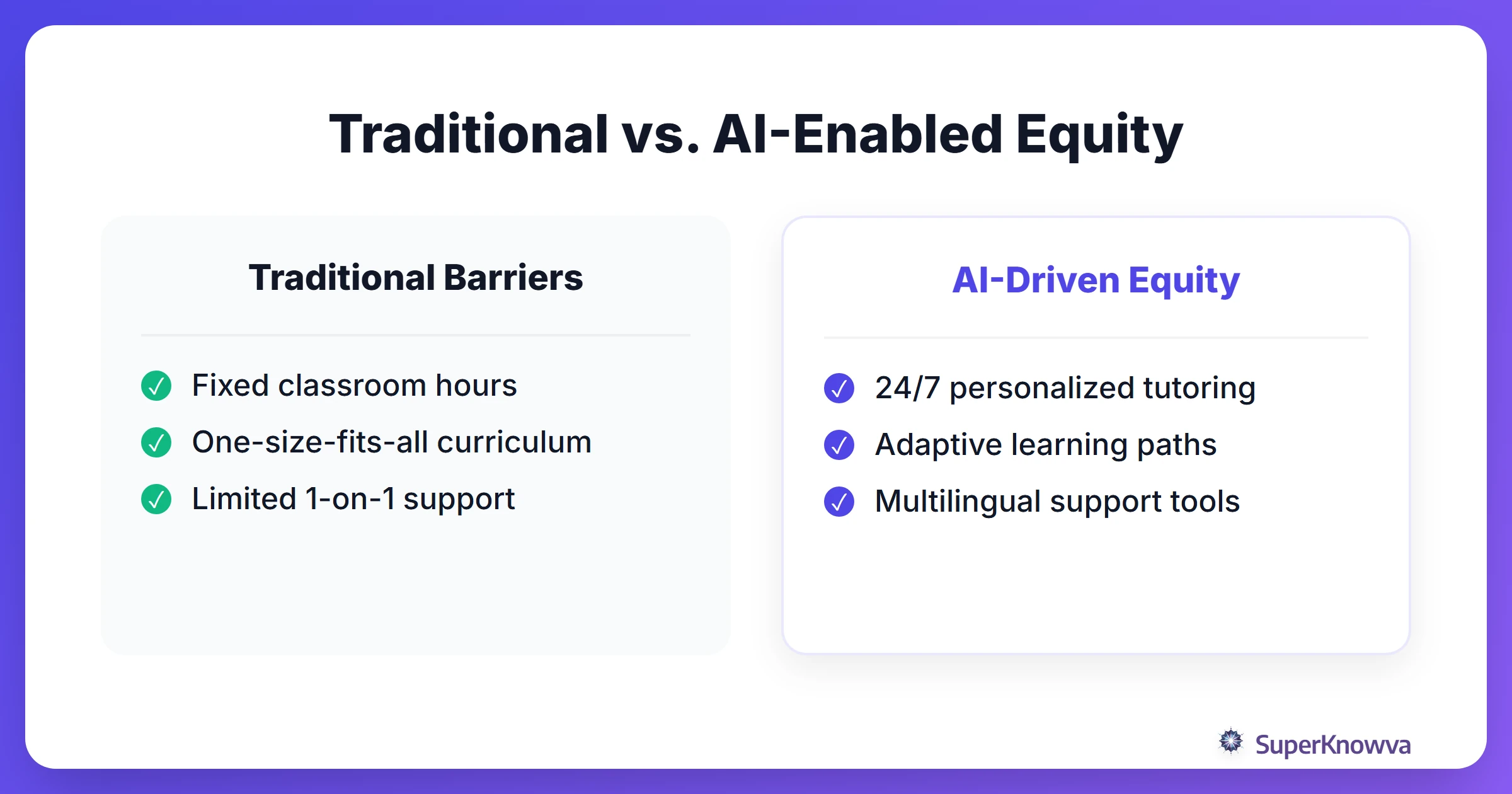
When you weigh AI Tutors vs. Human Tutors: Which is Best for Your Learning Style?, you see that AI offers a level of consistency and accessibility that can bridge the resource gap in underserved districts.
Fostering Inclusive Learning Environments
Tools are great, but they aren't enough. We need a shift in mindset. True inclusive learning happens when educators weave Juneteenth and Black history into the curriculum all year long, not just during a single week in June.
Technology makes this easier. For example, AI-Powered Note Taking: A Comprehensive Guide shows how students can organize information in ways that suit their individual brains. As discussed in Juneteenth, Higher Education, and Advancing Educational Equity, this day should inspire us to look at our policies and ensure equity is baked into the system, not added as an afterthought.
Actionable Steps for Closing the Gap
Awareness is the first step, but action is what moves the needle. We have to move toward true digital equity.
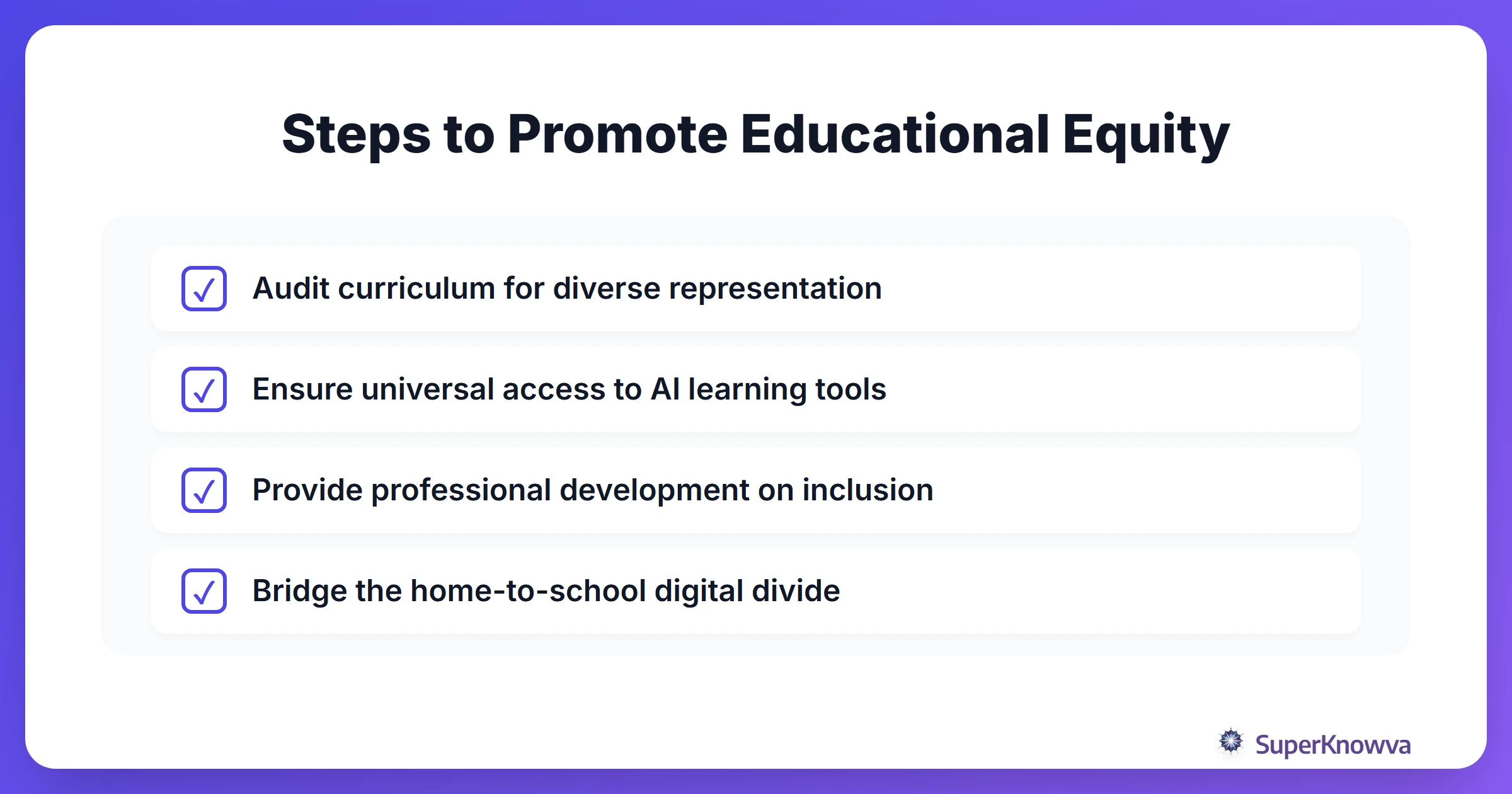
How do we actually get there?
- Invest in Infrastructure: High-speed internet and hardware shouldn't be a luxury. They are basic requirements for modern learning.
- Adopt Inclusive AI: We must prioritize tools built with accessibility and diversity as core features, not "add-ons."
- Policy Reform: We need to push for funding models that prioritize student needs over property tax brackets.
- Support Student Voices: Give learners the microphone. Let them advocate for the representation and tools they need.
History shows that freedom and education are linked. You cannot have one without the other. At SuperKnowva, we use AI to ensure "education for all" is a reality for every learner, regardless of their location.