You’ve spent years hitting the books, pulling all-nighters, and drinking way too much coffee. But now comes the real test: the post-grad job hunt. And let’s be honest, it’s a grind. You aren't just competing with thousands of other hungry graduates; you're navigating a digital-first job market where algorithms often act as the gatekeepers. To get noticed, you need to use AI for your job search without losing your soul in the process.
In this guide, we’ll show you how to turn generative AI from a "cheat code" into a legitimate career-building partner, transforming a grueling manual process into a streamlined, high-conversion strategy.
The New Era of the Post-Grad Job Search
The entry-level market is facing its biggest shift in decades. Tools like generative AI for job hunting, including ChatGPT, Claude, and Gemini, have transformed the process. Job seekers no longer spend hours manually tweaking a single cover letter only to receive a "no-reply" email.
Today’s smartest graduates are moving faster. They use AI-assisted efficiency to handle the repetitive stuff, but they don't just "set it and forget it." This isn't about gaming the system; it’s about using post-grad career tools to bridge the gap between your academic achievements and what a recruiter actually needs to see. If you want to stay competitive, you have to adopt these tools early. Why spend your time on administrative data entry when you could be networking?
AI Resume Optimization: Beating the ATS
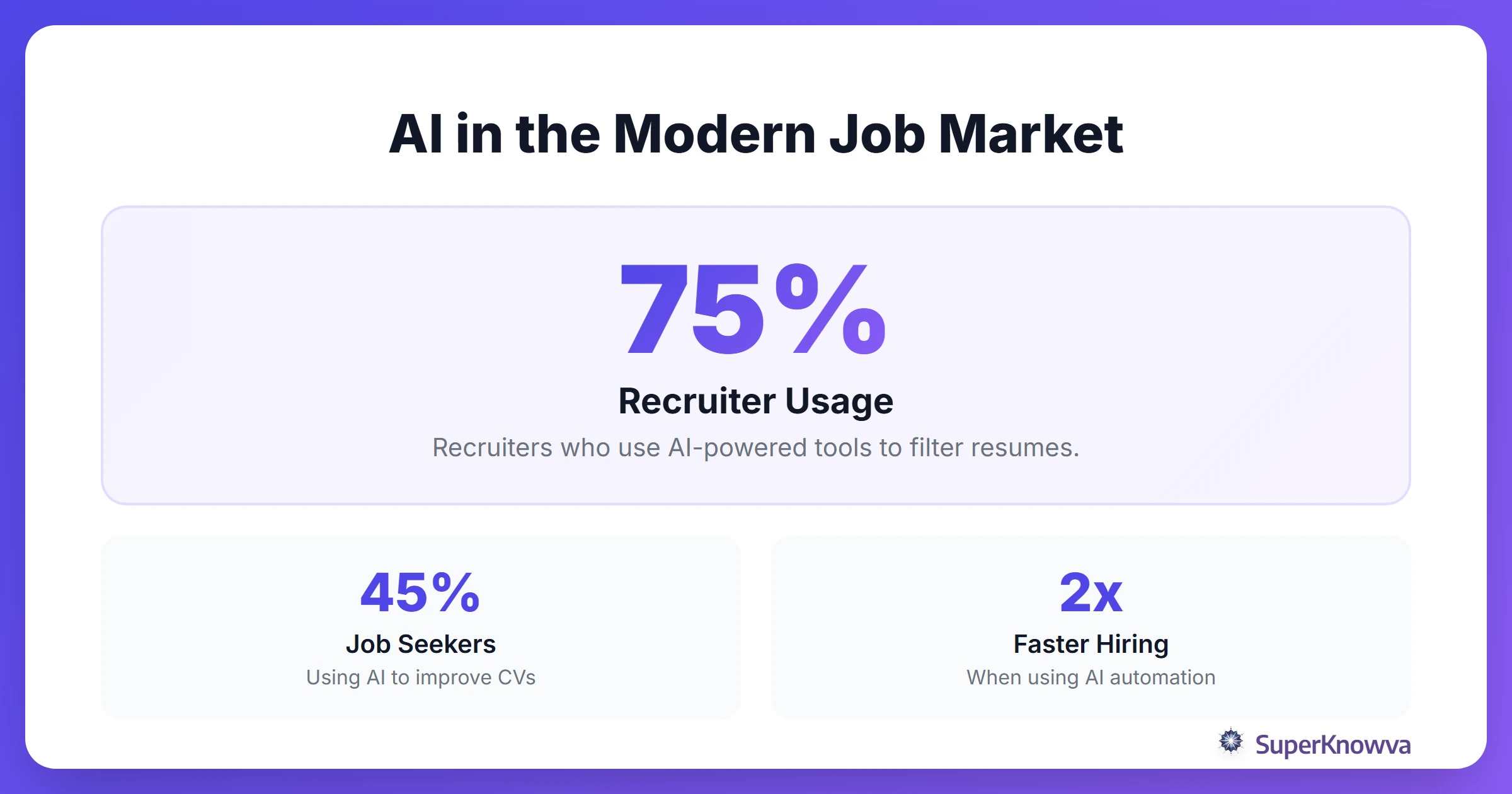
Ever feel like your resume disappears into a black hole? It probably did. Most large companies use an Applicant Tracking System (ATS) to filter through the noise before a human ever lays eyes on a CV. If your resume isn't optimized, it won't matter how high your GPA was. This is where AI resume optimization becomes your secret weapon.
You can use AI to:
- Extract Keywords: Paste a job description into an AI tool and ask: "What are the top 10 most critical skills this company is looking for?"
- Tailor Bullet Points: Instead of saying you "helped with social media," ask the AI to rewrite your internship experience to highlight specific metrics and keywords found in the job posting.
- Maintain Readability: Use AI to check if your formatting is bot-friendly. Before you hit "apply," make sure your document is ready by reviewing our guide on AI for Resumes: How to Optimize Your CV for Applicant Tracking Systems.
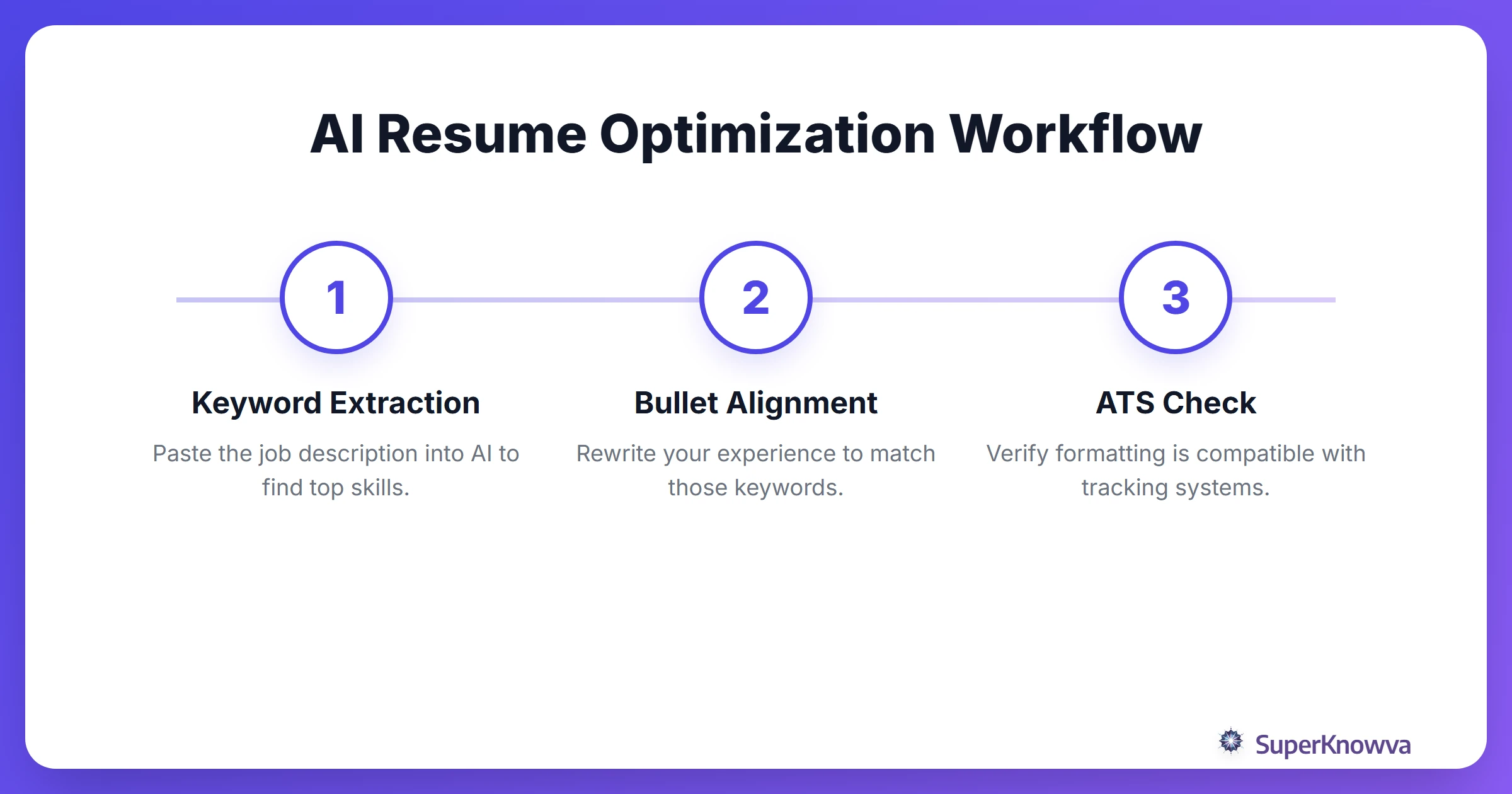
By focusing on ATS optimization, you ensure your resume is "bot-friendly" while remaining sharp enough to impress the human manager who eventually reads it.
Crafting High-Conversion Cover Letters with AI
Let's be real: cover letters are the worst. While AI can draft them in seconds, the trick is to treat the AI as a drafting partner, not a ghostwriter. If you copy-paste a generic AI response, recruiters will smell it a mile away.
The key is effective prompt engineering. Instead of a lazy prompt like "Write a cover letter for a marketing role," try being specific: "Write a professional but punchy cover letter for a Junior Marketing Associate role at [Company]. Highlight my experience with social media analytics and my passion for sustainable branding. Keep the tone authentic and human."
As The Muse highlights in their guide, AI can take the pain out of the first draft, but you must humanize the output. Add a personal anecdote. Mention a specific project the company recently launched. Make it sound like you, not a server farm.
AI-Powered Interview Preparation
You landed the interview. Now what? The pressure is on, and your heart is probably racing. AI interview prep is easily the most underrated way to use this tech. Think of it as a low-stakes rehearsal.
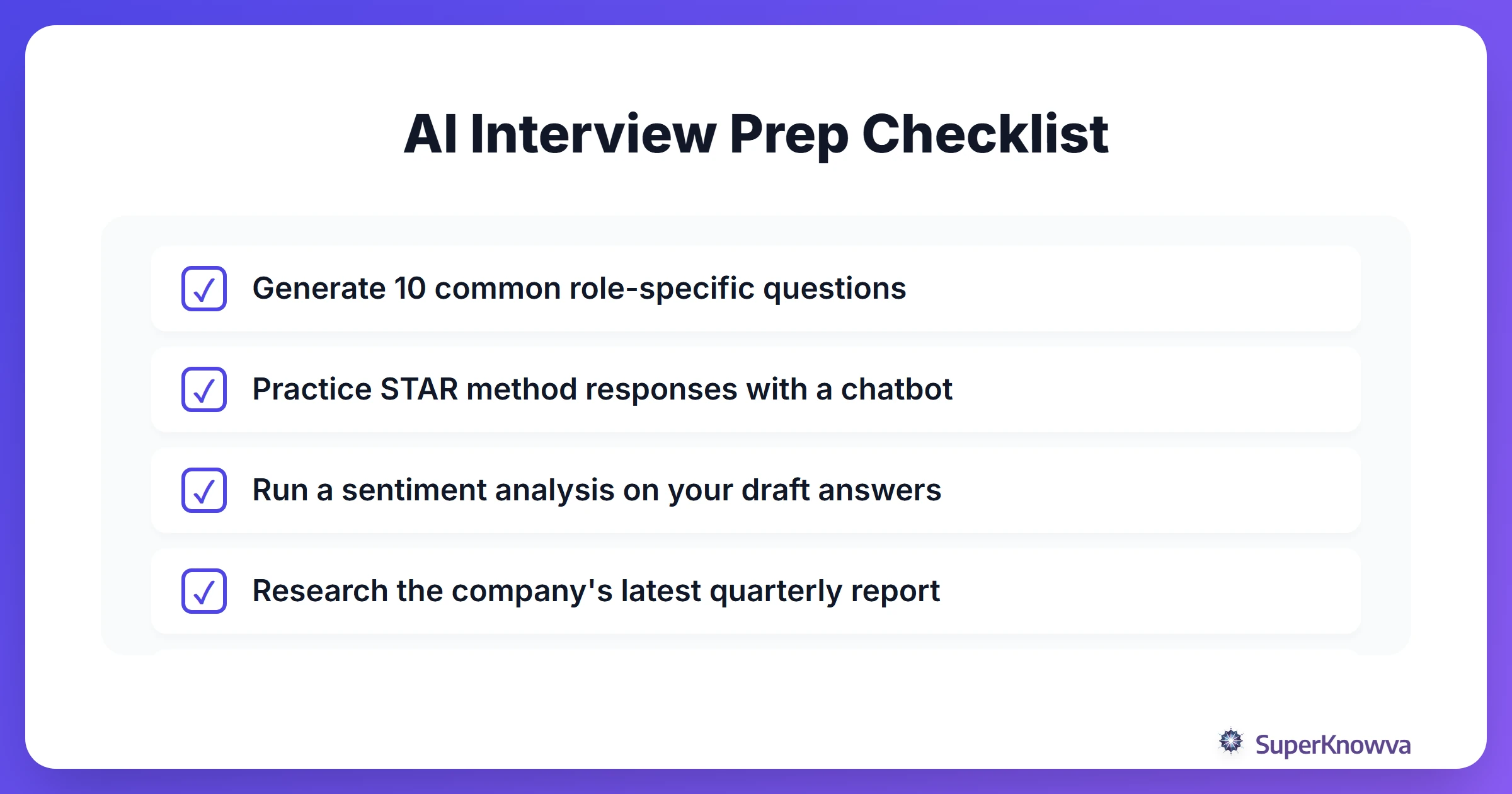
For a deeper dive into specific tools, check out our full guide on Acing the Interview: Using AI Tools to Practice and Prepare. In the meantime, try these three things:
- Simulate Pressure: Ask the AI to act as a "tough, skeptical interviewer" for a specific role.
- Master the STAR Method: Paste your draft answers and ask the AI to critique your structure. Does your "Result" actually show impact?
- Company Research: Use AI to summarize a company’s recent news, quarterly reports, and values so you can ask questions that actually impress.
Finding the Right Roles: AI Job Matching
Finding the right role is difficult when thousands of candidates compete for the same positions. AI features on LinkedIn and specialized job boards simplify the search. AI analyzes your profile and suggests roles that fit your skills while spotting skill gaps you might have missed.
If the AI suggests a role that feels like a reach, ask it: "Based on this job description and my current resume, what three specific technical skills should I learn this month to become a competitive candidate?" This turns a "no" into a roadmap. As career experts at Bentley University emphasize, AI is a tool to help you find the path, not a replacement for your own intuition.
The Human Element: What AI Can’t Do
AI processes data efficiently but lacks human intuition. Recruiter "red flags" often include applications that feel robotic or entirely machine-generated. Networking and personal branding remain the most effective strategies.
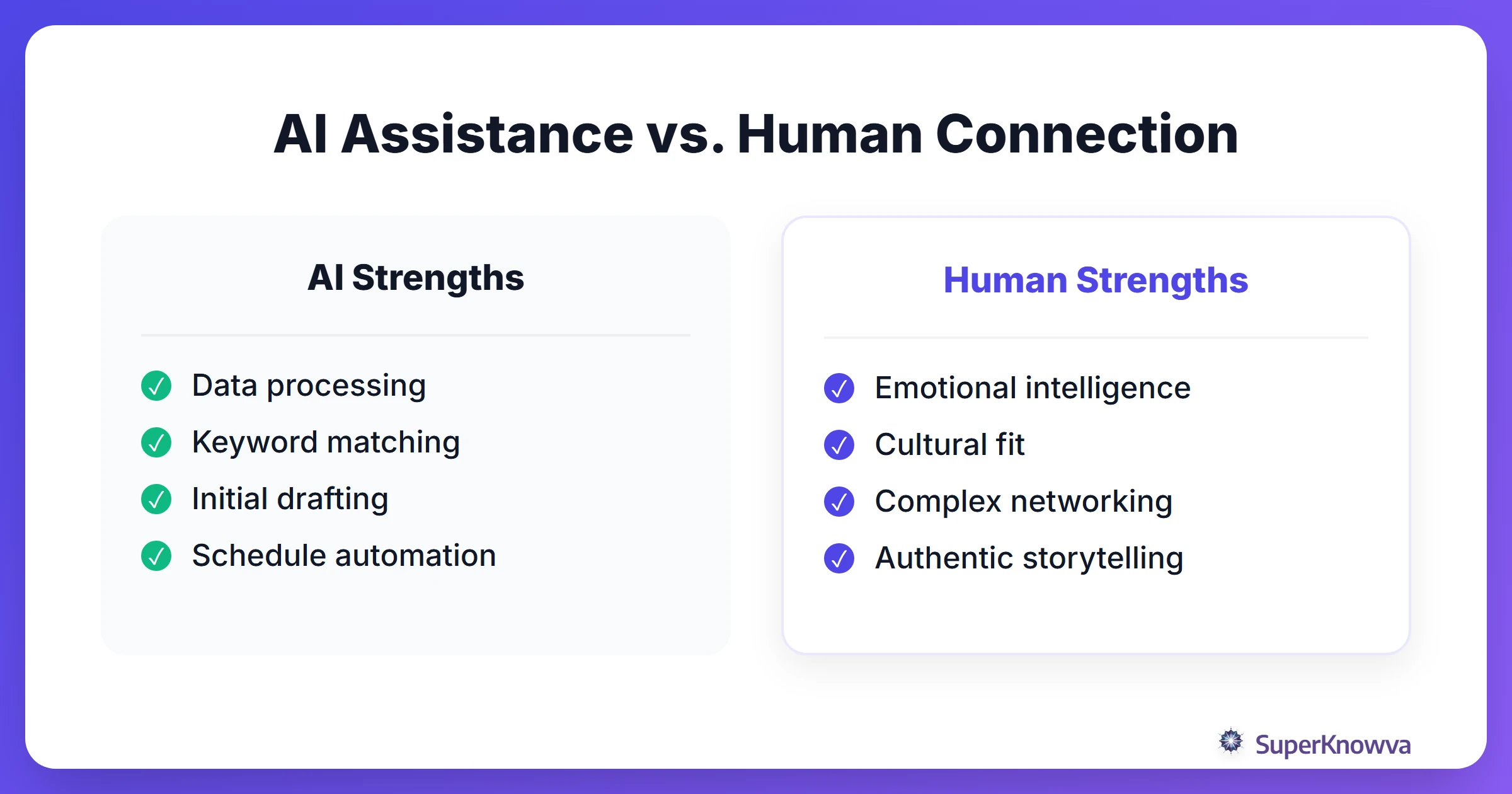
AI can help you find jobs, but networking is what often gets you in the door. Similarly, even with the best tech, you need to master the soft skills that employers still prioritize. We're talking about emotional intelligence, cultural adaptability, and complex problem-solving. AI can’t look an interviewer in the eye and convey genuine passion for a company's mission. That part is entirely up to you.
Conclusion
Embracing AI in your post-grad career isn't about cutting corners; it's about working smarter. By letting these tools handle resume tailoring and initial research, you free up mental energy for building real relationships and refining your craft.
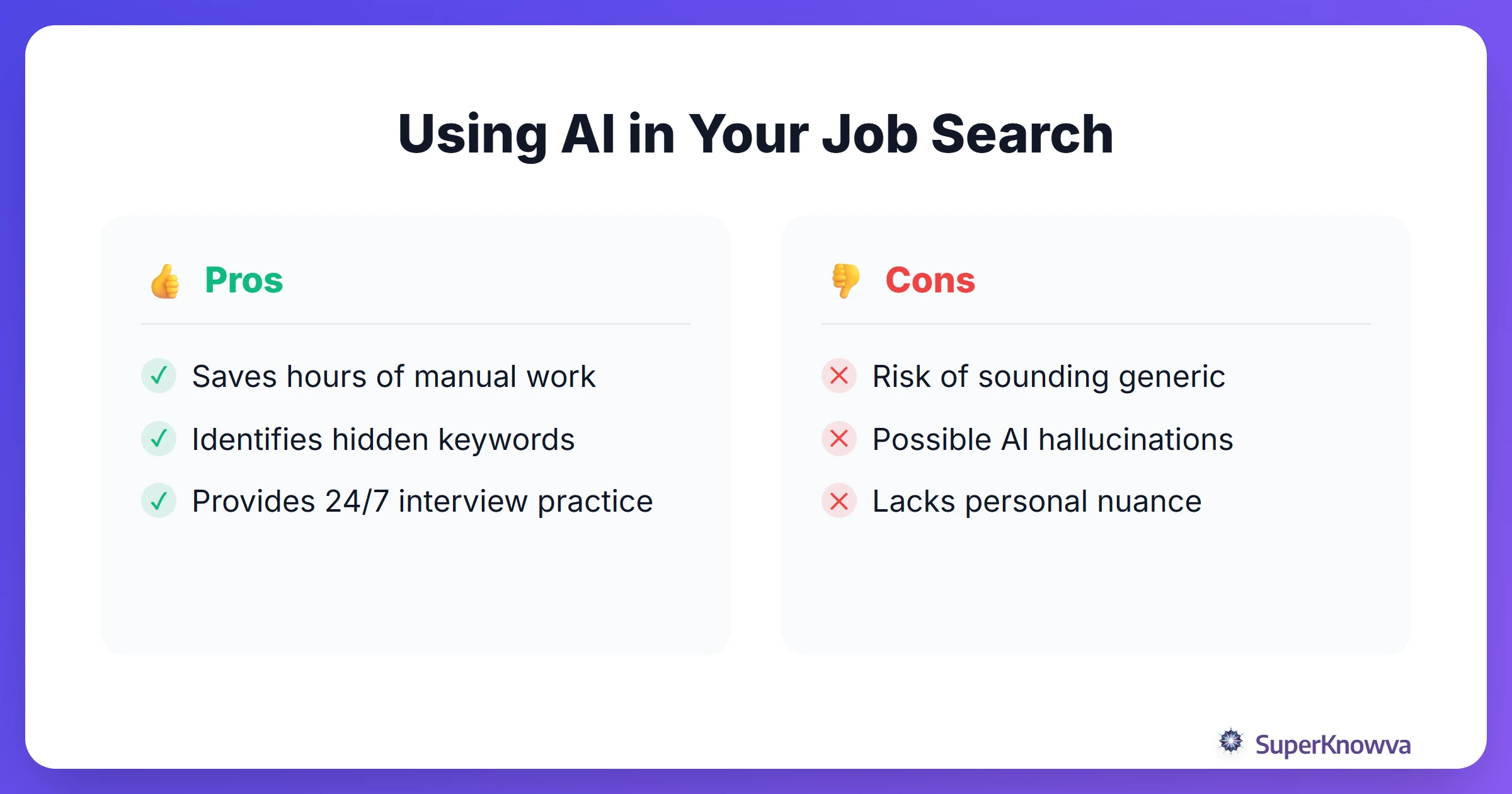
Don't let the technology intimidate you. Use it as your secret weapon, stay human, and you'll be well on your way to landing that first big role.