The July heat is brutal, but for thousands of students staring down the Bar or the LSAT, the real burn is internal. You’ve likely spent the last few months buried in case law or untangling complex logic games. By now, your outlines are highlighted into oblivion and your coffee intake is probably questionable.
But here’s the reality: your most valuable asset on exam day isn't your stack of flashcards. It’s your brain.
Effective exam stress management is often the invisible line between performing at your peak and hitting a wall of total burnout just 48 hours before the big event. If you want to arrive at the testing center with clarity and confidence, you need a strategy that protects your mental health during this final, high-pressure push.
Spotting the Red Flags of "Toxic" Stress
Stress isn't always the enemy. In small doses, that adrenaline spike is exactly what keeps you alert during a four-hour practice MBE. However, when you’re prepping for a monumental milestone like the Bar, that "motivational" stress can quickly mutate into something much more destructive.
According to the HSE: Managing Exam Stress, maintaining a rigid routine and taking actual breaks are non-negotiable for staying sane. But how do you know when you’ve crossed the line from "focused" to "failing"?
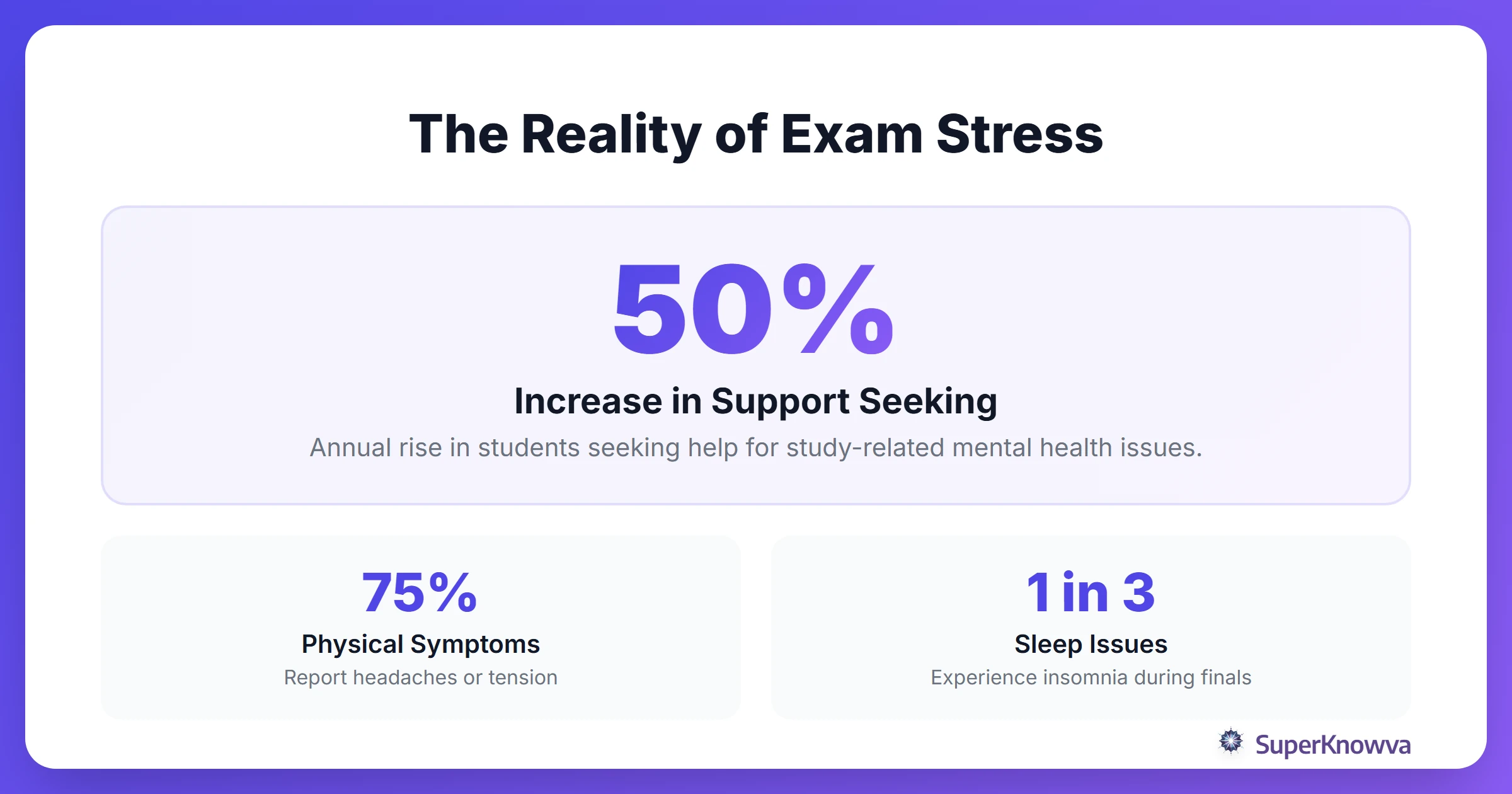
Keep an eye out for these red flags:
- The Physical Toll: A racing heart when you aren't even studying, persistent tension headaches, a clenched jaw, or the "tired but wired" feeling where sleep feels impossible.
- The Emotional Shift: Snapping at your partner or friends over nothing, a total loss of interest in anything that isn't a textbook, or forgetting to eat (or overeating for comfort).
- The Mental Wall: If you find yourself reading the same paragraph five times without absorbing a single word, you might be facing the common signs of student burnout.
The Power of the "Non-Negotiable" Routine
When your brain processes complex information, it needs predictability. A structured daily schedule organizes your time and reduces decision fatigue. You should not waste mental energy wondering what to study next. Save that energy for the actual law.
However, "structured" doesn't mean a 12-hour marathon. Science actually favors the short-burst approach.
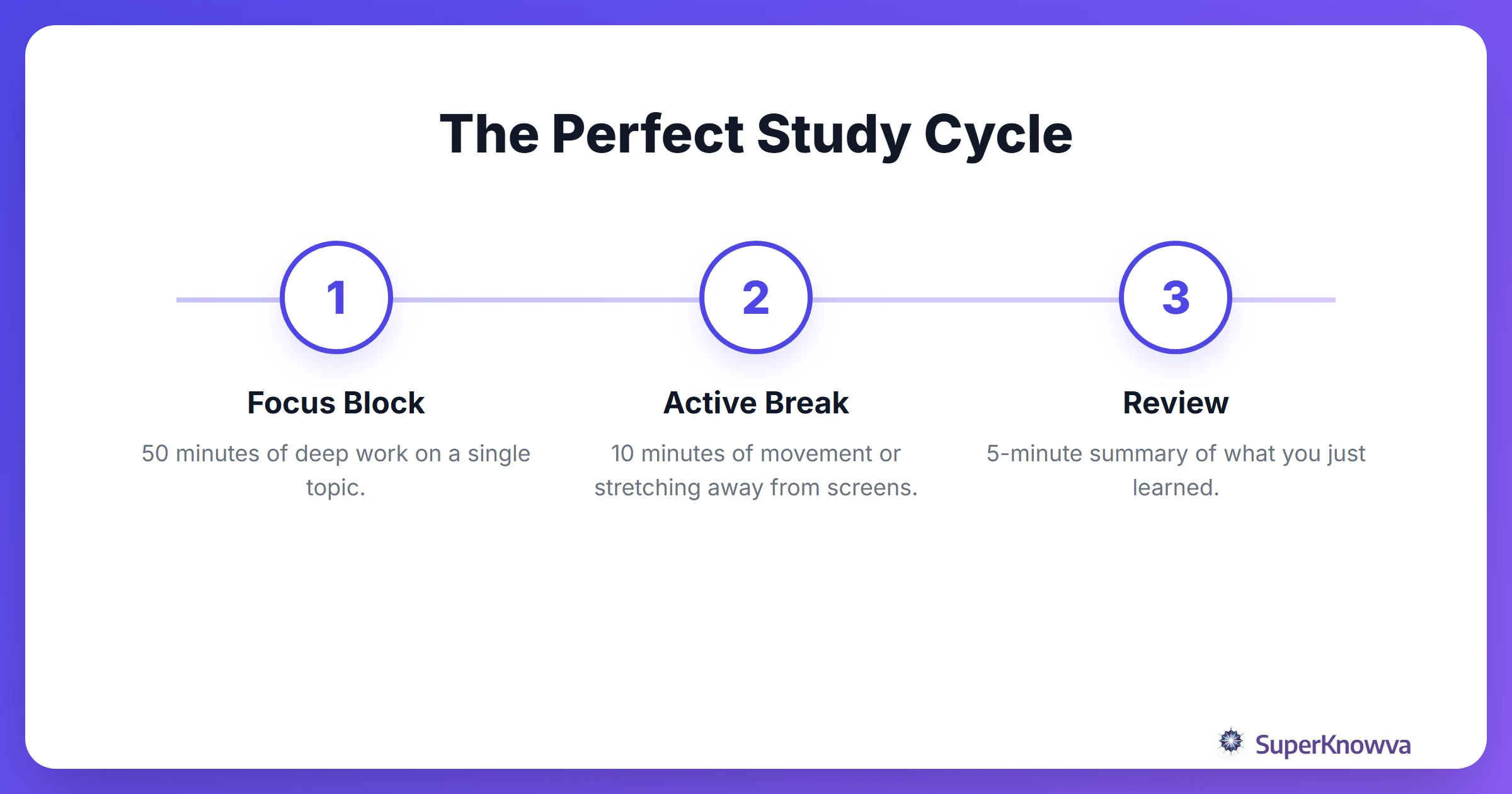
Manage exam stress with the Pomodoro Technique scaled for high-stakes prep:
- Study intensely for 50 minutes (no phone, no tabs).
- Take a 10-minute "active break" (stand up, stretch, or grab water; do not switch to scrolling social media).
- Repeat.
By scheduling "non-negotiable" relaxation, such as a 30-minute walk at sunset or an hour of a favorite show after dinner, you give your brain the permission it needs to rest. This prevents the exhaustion that leads to mistakes on exam day.
Grounding Yourself When Panic Hits
High-stakes exams are designed to be intimidating. They often trigger a "fight or flight" response, which is the last thing you want when you're trying to analyze a property law question. Mindfulness techniques for focus are about more than just "zen." They are practical tools to keep your prefrontal cortex online when your anxiety tries to take over.
UCL experts recommend carving out a few minutes daily for breathing exercises to anchor yourself in the present.
If you feel a wave of panic rising during a mock exam or the real thing, try the "5-4-3-2-1" Grounding Technique to reset your nervous system:
- Acknowledge 5 things you can see.
- 4 things you can touch (the texture of your desk, your pen).
- 3 things you can hear.
- 2 things you can smell.
- 1 thing you can taste.
This simple exercise pulls your brain out of a "what if I fail" spiral and back into the room, allowing you to refocus on the question in front of you.
Don't Forget the "Hardware": Exercise and Nutrition
Your brain is an organ, not a hard drive. It’s entirely dependent on your physical health. While it’s tempting to live on caffeine and protein bars during these final weeks, that's a recipe for a "crash and burn" cycle.
Fueling your body with the right nutrients can significantly impact your cognitive stamina. Looking into the best diet for exam performance ensures your brain has the steady supply of glucose and omega-3s it needs to handle an 8-hour testing day.
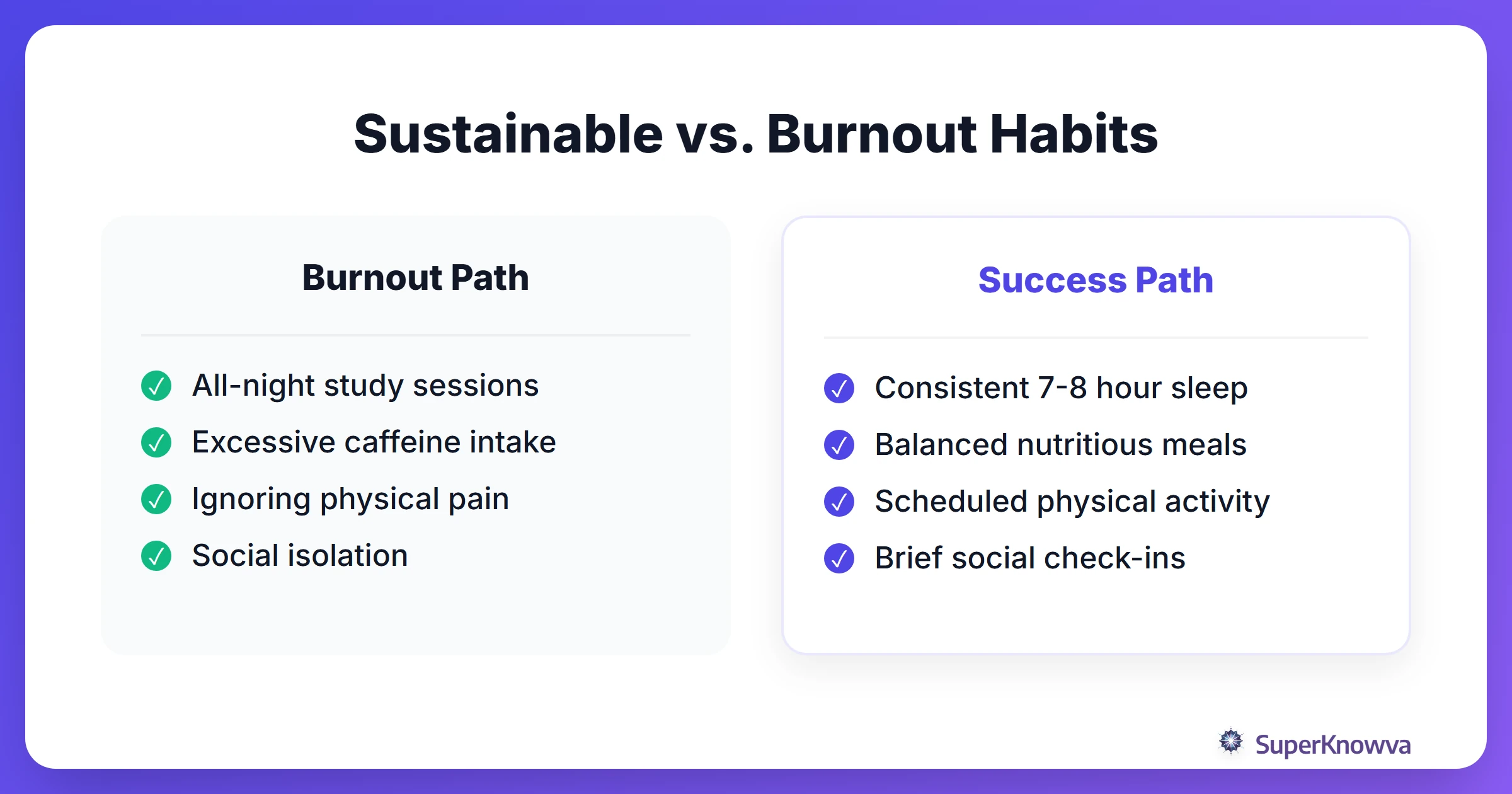
And don't skip the movement. Research consistently shows that exercise boosts cognitive function by increasing blood flow to the brain. Even a 15-minute brisk walk can clear "mental fog" and improve memory recall. Finally, establish a strict "no-screen" rule 30 minutes before bed. Your brain needs REM sleep to encode everything you learned that day; blue light only gets in the way.
Dealing with Imposter Syndrome
The Bar and LSAT are as much a test of mental fortitude as they are of knowledge. It’s incredibly common for law students to feel like they haven't done enough, but overcoming imposter syndrome is a vital part of your preparation.
YoungMinds highlights that a lot of our pressure is self-imposed. When your inner critic tells you that a low score on a practice quiz means you’ll fail the real exam, reframe that score as a data point. It isn't a reflection of your intelligence; it’s just a signal that you need a 15-minute review of a specific topic.

Lean on your support system. Sometimes, talking to a friend who isn't in law school is the best medicine. They can provide a necessary reality check and remind you that there is a whole world waiting for you outside of the testing center.
The Final Countdown: A Sustainable Strategy
As you enter the final 14 days, your strategy has to change. You aren't learning new concepts anymore; you're building "mental muscle" and stamina.
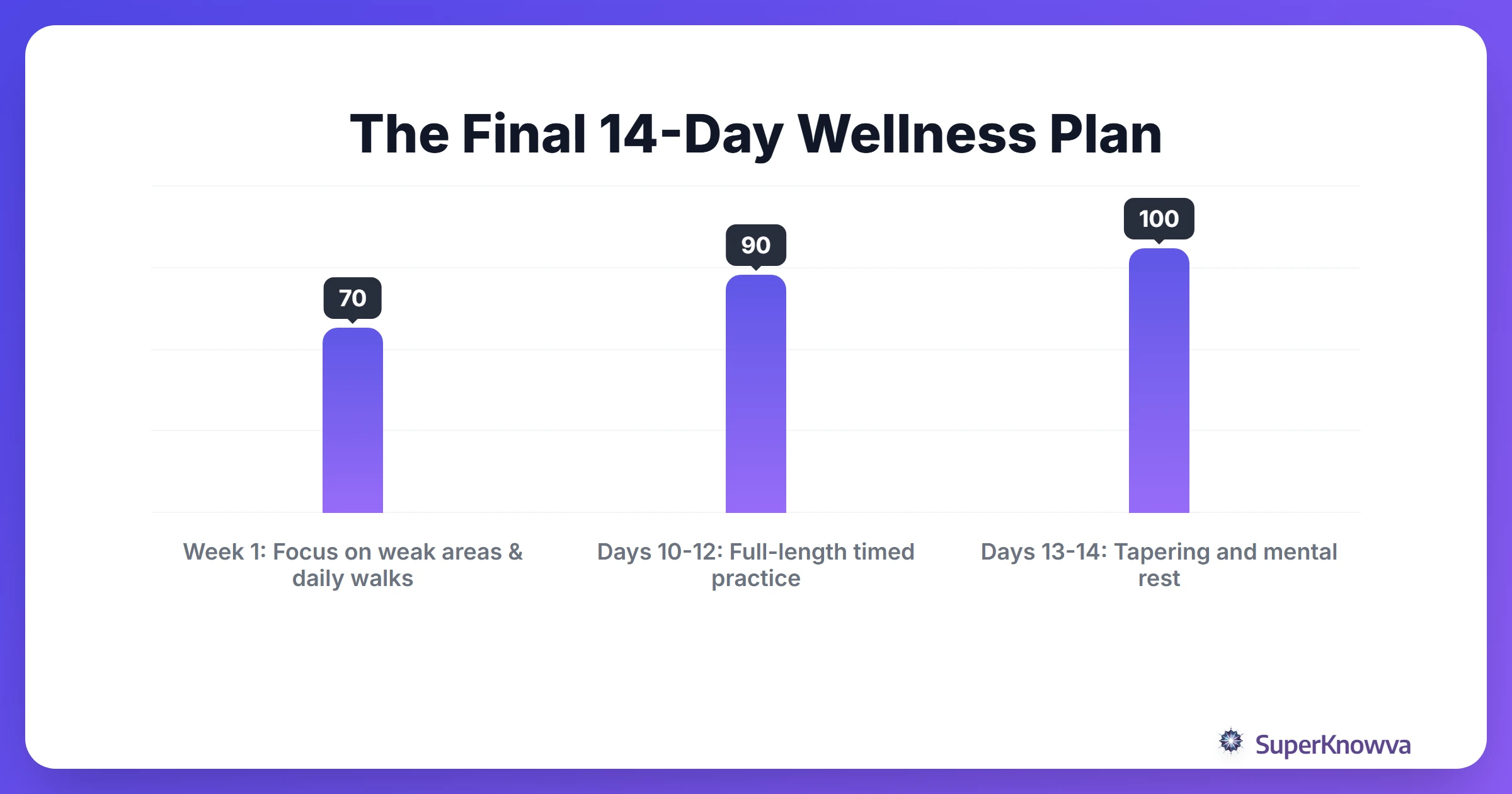
Try the Tapering Method, the same way a marathon runner prepares:
- 14-7 Days Out: Full-length, timed practice exams. Build your endurance.
- 7-2 Days Out: Review weak areas and focus on high-yield topics only. Avoid starting complex new material.
- 48 Hours Out: Significantly reduce your hours. Focus on mental rest.
- The Day Before: Put the books away. Do not open a textbook. Trust your preparation.
By setting realistic goals and simulating exam conditions early on, you build a sense of calm accomplishment. You have prepared for this. Protect your peace, trust your process, and take it one question at a time.