The clock counts down. The room is quiet enough to hear your own heartbeat. You flip to the next page of the exam and find nothing. The questions look like a foreign language. Your palms are sweating, your chest feels tight, and the information you spent weeks memorizing has evaporated.
Sound familiar? You aren’t alone. Whether it’s a final, the SAT, the GRE, or the bar exam, high-stakes testing creates a specific kind of pressure that can hijack your brain and trigger a "freeze" response.
But here’s the good news: you don't have to be a victim of your own nerves. By using mindfulness for high stakes testing, you can train your brain to stay sharp, analytical, and calm, even when the pressure is at its peak.
Understanding the High-Stakes Pressure Cooker
What makes a test "high stakes"? Usually, it is the cost of failure: college admissions, a professional license, or a grade that determines a semester. When the stakes feel this high, your brain stops seeing the exam as a mental challenge and treats it as a physical threat.
When panic sets in, your body enters "fight-or-flight" mode. Your amygdala, the brain’s emotional alarm system, takes control and directs energy away from the prefrontal cortex. That is the part of your brain responsible for logic, math, and memory. This is why students "blank out." Your brain has prioritized survival over calculus.
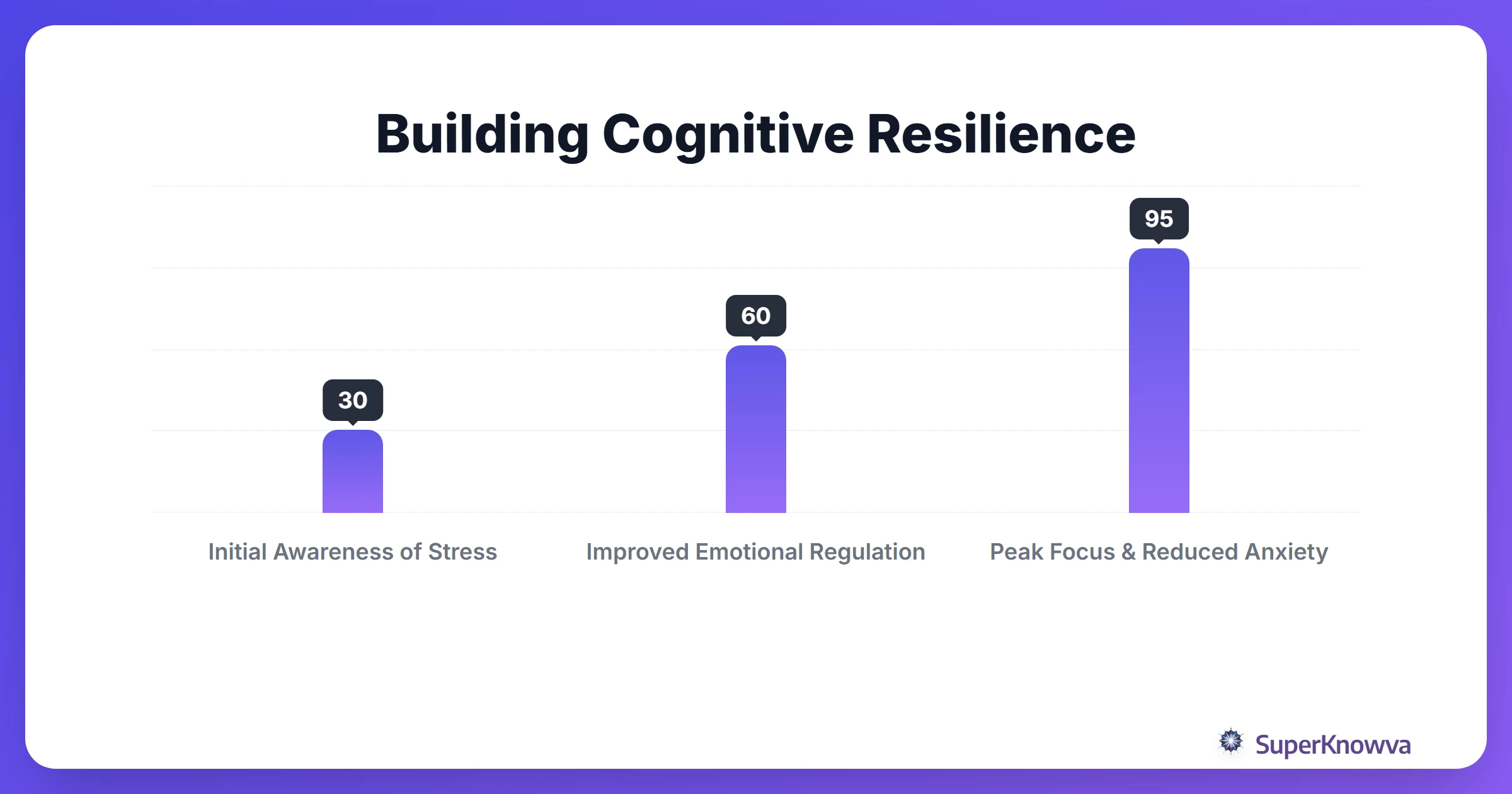
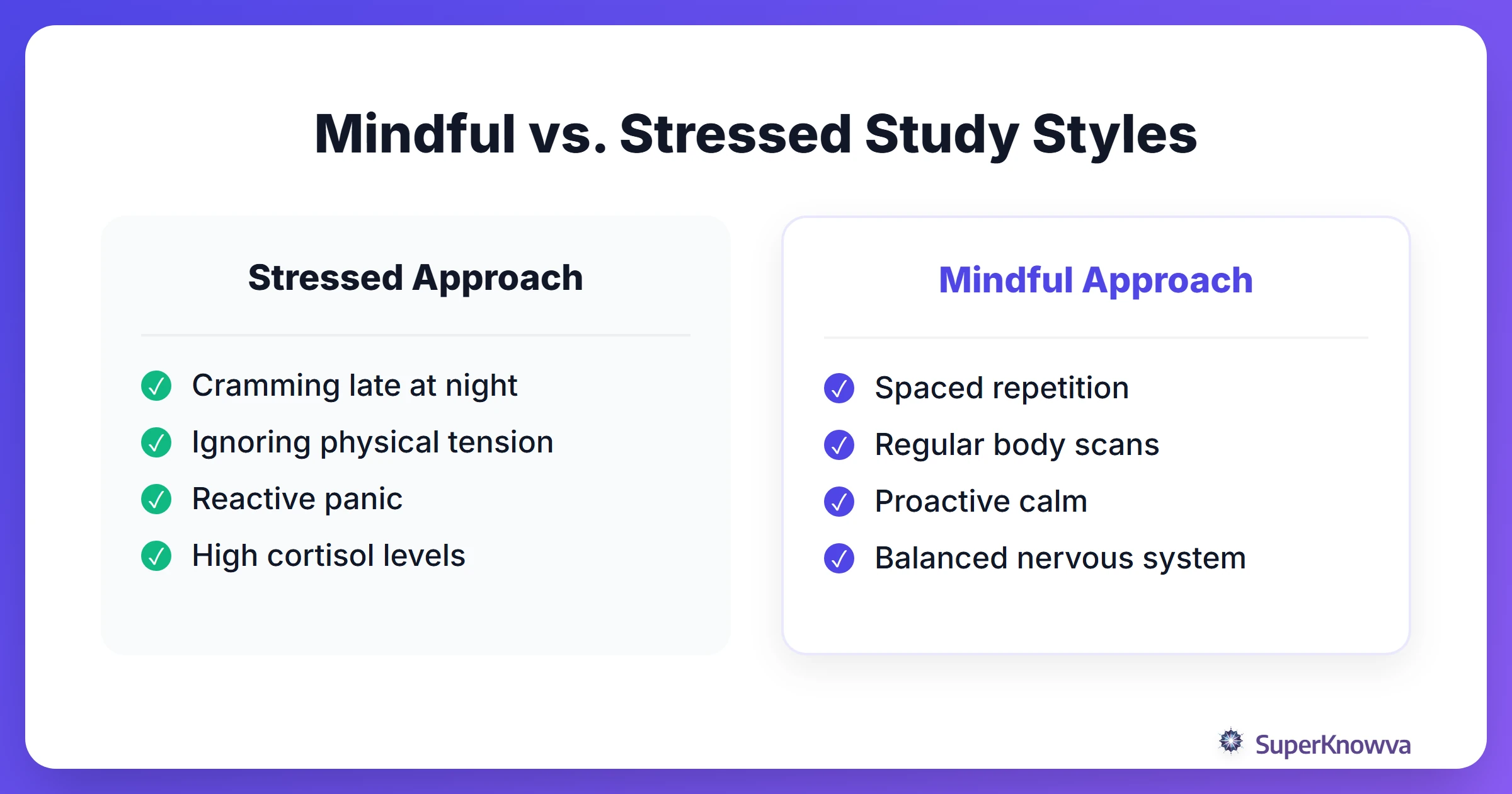
Mindfulness is your buffer. By practicing student stress management, you learn to notice those physical spikes of panic without letting them take over. You move from a state of reactive fear to proactive focus, allowing you to actually access the information you’ve been studying on SuperKnowva.
The Science: Why a Calm Mind Wins
Mindfulness isn't just "positive thinking." It’s a scientifically backed performance enhancer. A 2023 study published in Frontiers in Psychology found a direct link between mindfulness and higher math scores. It turns out, a quiet mind is a high-performing mind.
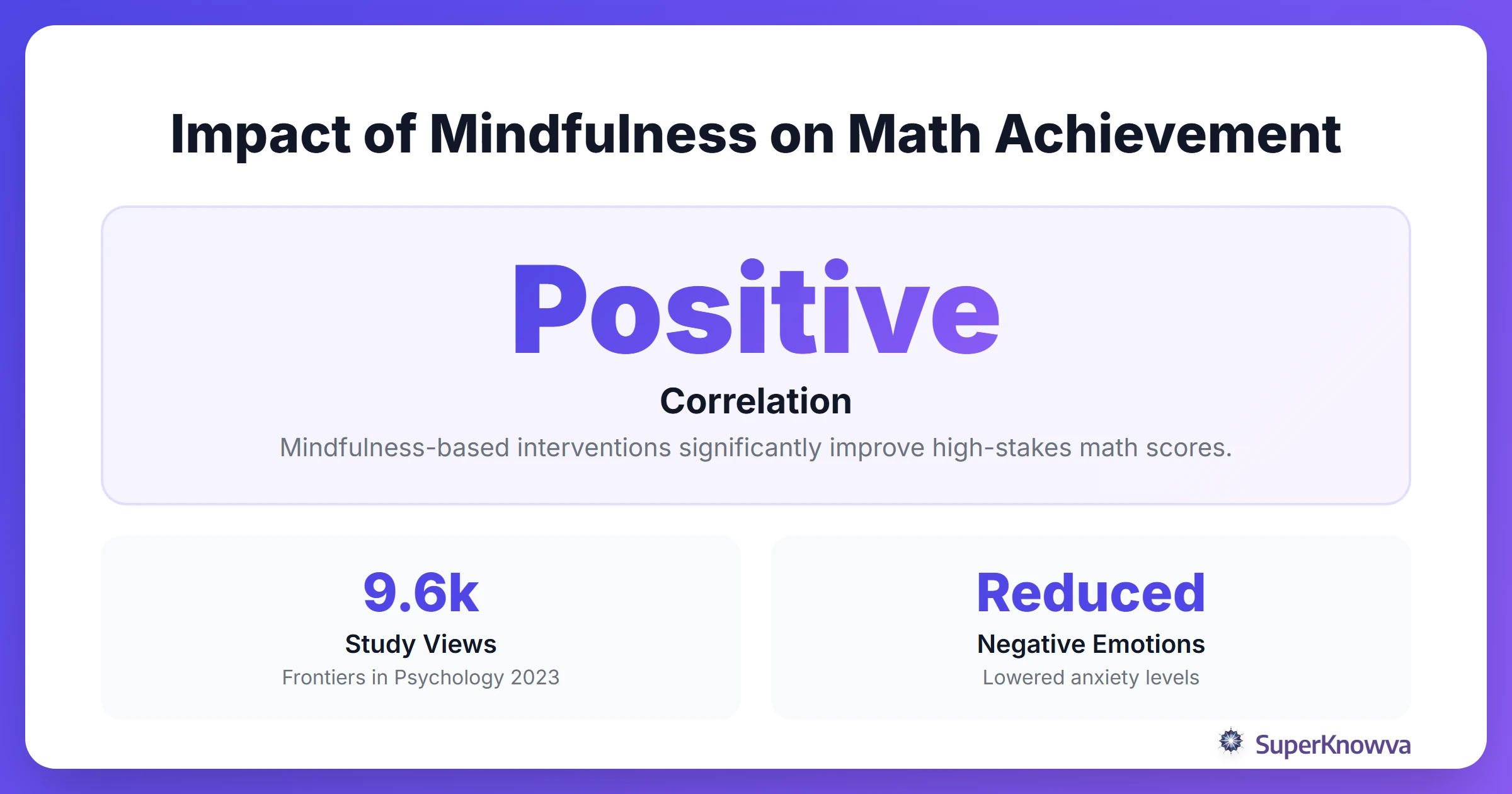
Research shows that Mindfulness-Based Interventions (MBI) reduce negative emotions like fear and frustration. When you clear out emotional "noise," your working memory, the mental scratchpad you use to solve complex problems, has more room to work. By lowering the cognitive load caused by anxiety, you improve test performance by letting your brain do what it was trained to do.
Pre-Exam Mindfulness Rituals
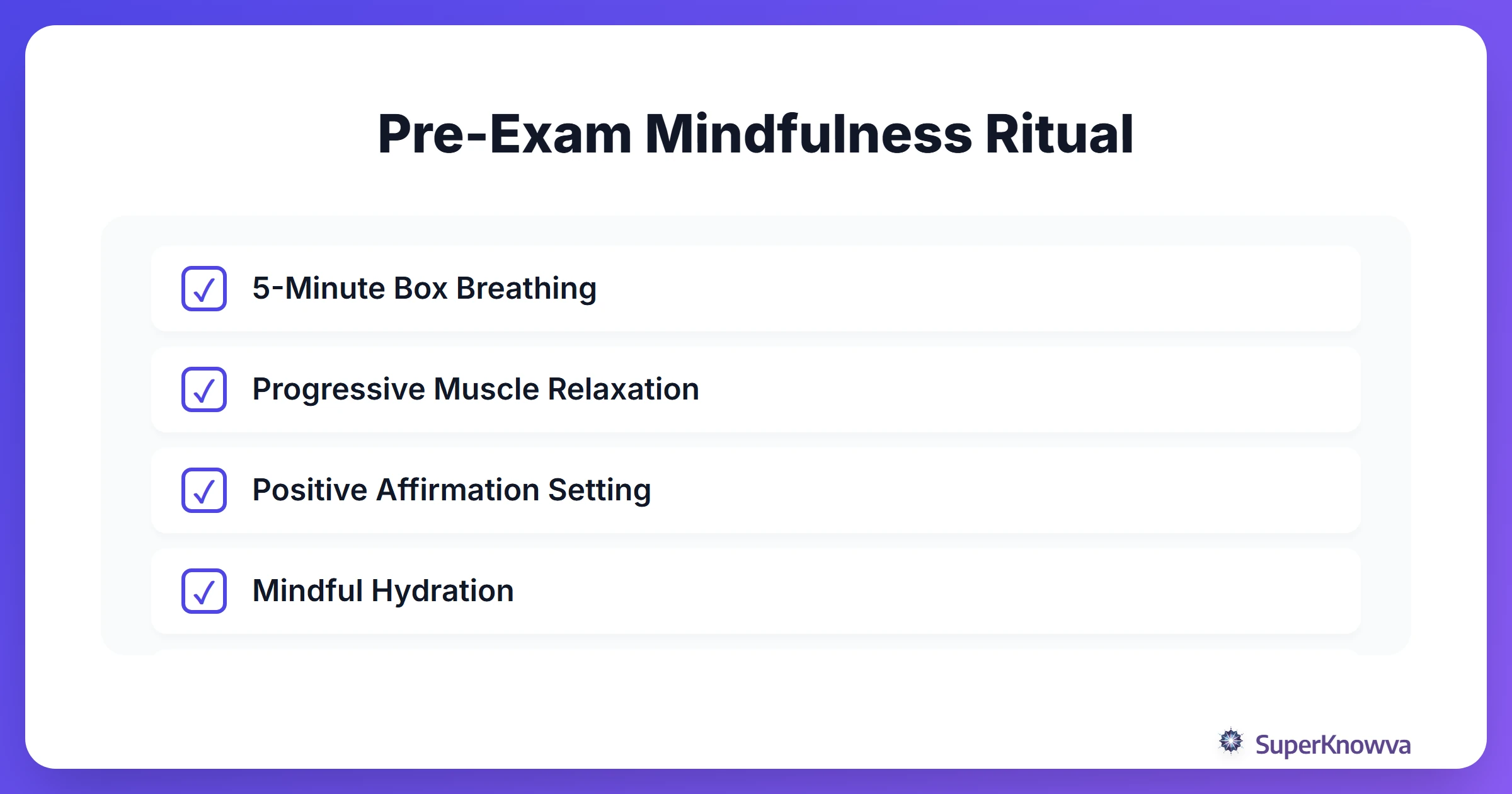
Success on exam day starts long before you sit down. Your morning routine sets the tone for your nervous system. Instead of doom-scrolling or frantically re-reading notes (which usually just spikes your cortisol), try a more intentional approach.
- Box Breathing: This is a 4-4-4-4 technique used by Navy SEALs to stay cool under fire. Inhale for 4 seconds, hold for 4, exhale for 4, and hold for 4. It’s a physical "kill switch" for stress.
- The Body Scan: Take five minutes to sit quietly and mentally scan your body from your toes to your head. Are you clenching your jaw? Are your shoulders up to your ears? Notice the tension and consciously let it go.
- Intentions over Expectations: Expectations ("I must get a 1600") create pressure. Intentions ("I will stay curious and calm even when I hit a hard question") create a path. Focus on the process, not just the result.
In-the-Moment Grounding During the Test
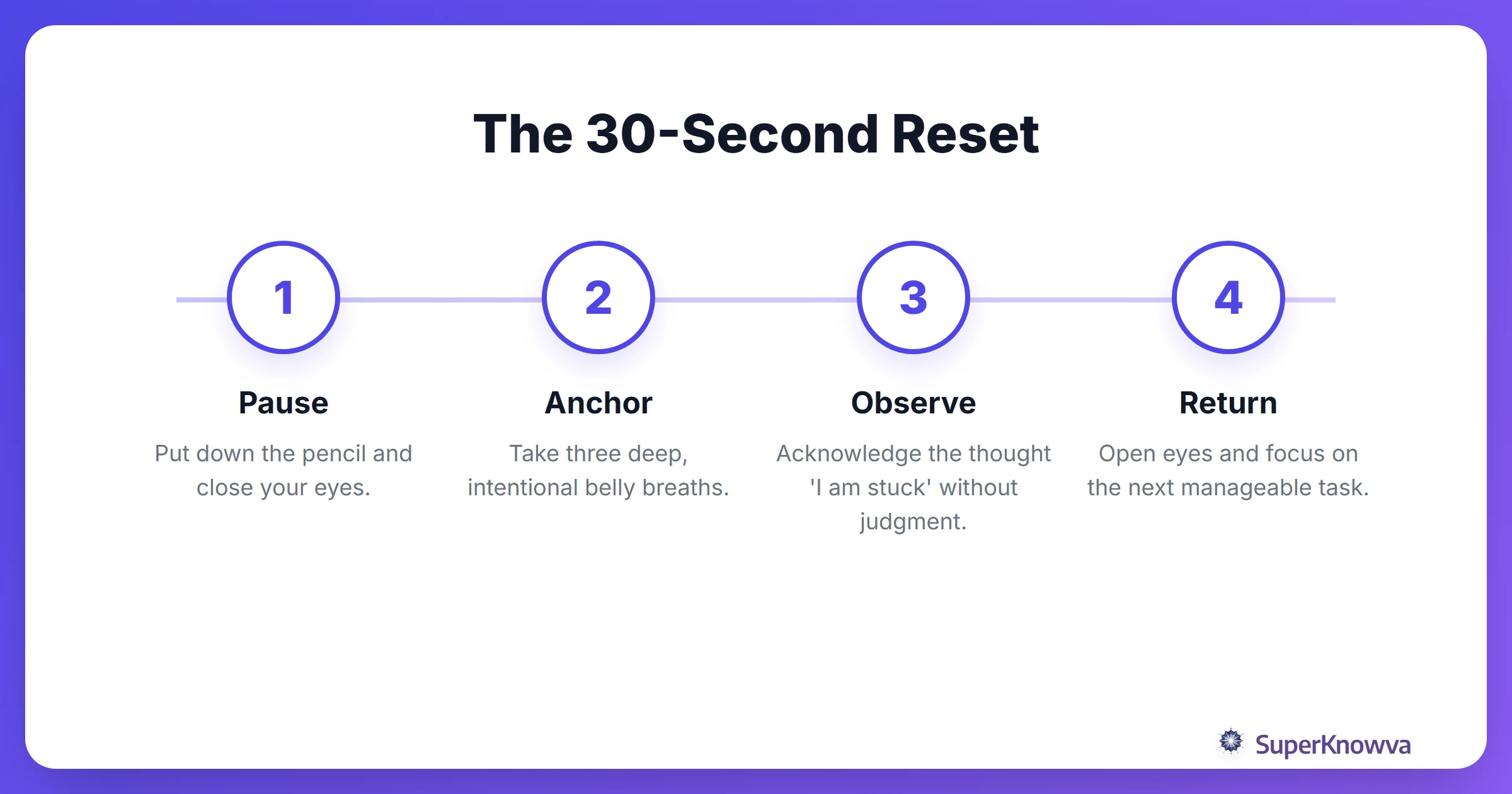
What happens when you hit a wall during a test? If you feel panic rising, you need to ground yourself quickly.
Try an adapted 5-4-3-2-1 grounding technique. It’s subtle enough to do in a silent room without anyone noticing. Silently identify:
- 5 things you can see (the texture of the desk, the font on the page).
- 4 things you can feel (your feet solid on the floor, the pen in your hand).
- 3 things you can hear (the hum of the AC, a distant car).
- 2 things you can smell (or your two favorite scents).
- 1 thing you can taste (or one positive, encouraging thought).
You can also try cognitive reframing. Instead of thinking, "My heart is racing because I’m failing," tell yourself, "My heart is racing because my body is pumping oxygen to my brain to help me focus." That shift from "fear" to "energy" can stop a panic attack in its tracks.
Building a Sustainable Meditation Practice
You wouldn't run a marathon without training, right? The same logic applies here. You can’t expect your brain to stay perfectly calm during a high-pressure final if you haven't practiced. Meditation for exam anxiety works best when it's a habit.
Consistency changes your brain’s physical structure through a process called neuroplasticity. Regular practice strengthens the prefrontal cortex and shrinks the amygdala. You don’t need an hour; 5 minutes a day is enough. Add these sessions to your study breaks to help prevent student burnout. Using meditation techniques for focus while you study helps you reach a state of "relaxed alertness" where retention is at its highest.
The Big Picture: Beyond the Cushion
Mindfulness isn't just about breathing; it’s about how you treat your "hardware." To master high-stakes testing, you have to look at the big picture.
- Sleep is Non-Negotiable: Mindfulness is nearly impossible when you’re sleep-deprived. Sleep is when your brain "saves" what you learned that day.
- Fuel Your Brain: Your brain is a high-energy organ. Check out our guide on the best diet for exam performance to keep your blood sugar and your mood stable.
- Fight the Inner Critic: Many high-achievers struggle with overcoming imposter syndrome. Remind yourself that you belong in that room.
- Social Balance: Don't go into total isolation. A quick conversation with a friend can provide the mental reset you need to head back to the books with fresh eyes.
When you combine the AI-powered efficiency of SuperKnowva with these science-backed mindfulness techniques, you aren’t just passing a test. You’re building a brain that can handle anything.
Take a breath. You’ve got this.